Глава IV. ПРОЦЕДУРА АДАПТАЦИИ К ТЕХНИЧЕСКОМУ ПРОГРЕССУ
Статья 24Директива № 2002/24/ЕС Европейского парламента и Совета Европейского Союза
Документ утратил силу 03.11.2026.
Актуально на 03.11.2026.
Как цитировать: Статья 24. Директива N 2002/24/ЕС Европейского парламента и Совета Европейского Союза. 2002/24/ЕС. https://bukva.ai/docs/direktiva-200224es/statya-24
Настоящая Директива адресована государствам-членам ЕС.
Совершено в Брюсселе 18 марта 2002 г.
| Приложение I | Перечень требований для одобрения типа транспортного средства |
|---|---|
| Приложение II | Информационный документ |
| Приложение III | Сертификат ЕС одобрения типа |
| Приложение IV | Сертификаты соответствия |
| Приложение V | Нумерация и маркировка |
| Приложение VI | Положения о проверке соответствия продукции |
| Приложение VII | Результаты испытаний |
| Приложение VIII | Транспортные средства, снятые с серийного производства |
| Приложение IX | Корреляционная таблица |
ПЕРЕЧЕНЬ ТРЕБОВАНИЙ ДЛЯ ОДОБРЕНИЯ ТИПА ТРАНСПОРТНОГО СРЕДСТВА
Напротив компонентов и характеристик транспортных средств, содержащихся в приведенном ниже исчерпывающем перечне, ставится «CONF», если требуется проверка их соответствия данным, представленным производителем, и «SD», если требуется проверка их соответствия требованиям, установленным законодательством Сообщества.
(При необходимости указаны сфера действия и последнее изменение каждой специальной Директивы, перечисленной ниже)
| Номер пункта | Наименование раздела | Термин | Номер Директивы (если применимо) |
| 1 | Модель | CONF | |
| 2 | Тип/вариация/версия | CONF | |
| 3 | Наименование и адрес производителя транспортного средства | CONF | |
| 4 | Наименование и адрес уполномоченного представителя производителя транспортного средства (если имеется) | CONF | |
| 5 | Категория транспортного средства <*> | CONF | 2002/24/ЕС |
| 6 | Количество колес и их расположение в случае трехколесного транспортного средства | CONF | |
| 7 | Габаритный чертеж рамы | CONF | |
| 8 | Название и адрес производителя двигателя (если он не является производителем транспортного средства) | CONF | |
| 9 | Модель и описание двигателя | CONF | |
| 10 | Тип зажигания двигателя | CONF | |
| 11 | Рабочий цикл двигателя <**> | CONF | |
| 12 | Тип охлаждения двигателя | CONF | |
| 13 | Тип смазки двигателя <**> | CONF | |
| 14 | Количество и расположение цилиндров или статоров (в случае роторно-поршневого двигателя) в двигателе <**> | CONF | |
| 15 | Диаметр и ход поршня, объем цилиндра или объем камер сгорания (для роторно-поршневого двигателя) в двигателе <**> | CONF | |
| 16 | Полная схема индукционной системы двигателя <**> | CONF | |
| 17 | Коэффициент сжатия двигателя <**> | CONF | |
| 18 | Максимальный крутящий момент и максимальная полезная выходная мощность двигателя в случае: | SD | 95/1/ЕС |
| - двигателя с искровым или компрессионным зажиганием; или - электродвигателя | CONF | ||
| 19 | Средства защиты мопедов и мотоциклов от несанкционированного доступа | SD | 97/24/ЕС C7 |
| 20 | Топливный бак <**> | SD | 97/24/ЕС C6 |
| 21 | Тяговая батарея(и) | CONF | |
| 22 | Карбюратор или другая система подачи топлива (тип и модель) <**> | CONF | |
| 23 | Электрическая система (номинальное напряжение) | CONF | |
| 24 | Генератор (тип и максимальная мощность) <**> | CONF | |
| 25 | Максимальная конструктивная скорость транспортного средства | SD | 95/1/ЕС |
| 26 | Масса и габаритные размеры | SD | 93/93/ЕЭС |
| 27 | Прицепные устройства и их крепления | SD | 97/24/ЕС C10 |
| 28 | Средства предотвращения загрязнения воздуха <**> | SD | 97/24/ЕС C5 |
| 29 | Шины | SD | 97/24/ЕС C1 |
| 30 | Трансмиссия | CONF | |
| 31 | Тормозная система | SD | 93/14/ЕЭС |
| 32 | Установка осветительных и световых сигнальных устройств на транспортном средстве | SD | 93/92/ЕЭС |
| 33 | Осветительные и световые сигнальные устройства на транспортном свете, обязательное или факультативное наличие которых обусловлено требованиями пункта 32 | SD | 97/24/ЕС C2 |
| 34 | Звуковое предупредительное устройство | SD | 93/30/ЕЭС |
| 35 | Место крепления заднего регистрационного знака | SD | 93/94/ЕЭС |
| 36 | Электромагнитная совместимость | SD | 97/24/ЕС C8 |
| 37 | Уровень шума и выхлопная система <**> | SD | 97/24/ЕС C9 |
| 38 | Зеркало(а) заднего вида | SD | 97/24/ЕС C4 |
| 39 | Общий вид в проекциях | SD | 97/24/ЕС C3 |
| 40 | Подставка (за исключением транспортных средств, имеющих три или более колеса) | SD | 93/31/ЕЭС |
| 41 | Устройства для предотвращения несанкционированного использования транспортного средства | SD | 93/33/ЕЭС |
| 42 | Окна; стеклоочистители ветрового стекла; омыватели ветрового стекла; устройства для борьбы с обледенением и запотеванием стекол для трехколесных мопедов и моторных трициклов и квадроциклов с кузовом | SD | 97/24/ЕС C12 |
| 43 | Пассажирские поручни для двухколесных транспортных средств | SD | 93/32/ЕЭС |
| 44 | Точки крепления ремней безопасности и ремни безопасности для трехколесных мопедов и моторных трициклов и квадроциклов с кузовом | SD | 97/24/ЕС C11 |
| 45 | Спидометр | SD | 2000/7/ЕС |
| 46 | Описание обозначений приборов управления, сигнальных приборов и индикаторов | SD | 93/29/ЕЭС |
| 47 | Обязательные надписи (содержание, месторасположение и способ крепления) | SD | 93/34/ЕЭС |
<*> В случае транспортных средств с гибридным приводом, если две системы привода таковы, что транспортное средство подпадает под определение мопеда или мотоцикла, моторного трицикла или квадроцикла, к нему должны применяться последние определения.
<**> Транспортные средства с электрическим приводом не должны соответствовать требованиям, относящимся к настоящему пункту. Это не распространяется на транспортные средства с гибридным приводом, одна из систем привода которых электрическая, а другая тепловая.
В специальных Директивах будут изложены специальные требования к маломощным мопедам, то есть мопедам с педалями, со вспомогательным двигателем мощностью не более 1 кВт и максимальной конструктивной скоростью не более 25 км/ч. Эти специальные требования будут применяться, в частности, к компонентам и характеристикам, указанным в пунктах 18, 19, 29, 32, 33, 34, 41, 43 и 46 настоящего Приложения.
Все информационные документы в настоящей Директиве и в специальных Директивах должны состоять только из фрагментов этого общего перечня и придерживаться его системы нумерации.
Следующая информация о транспортном средстве, представленном на одобрение типа, и систем, отдельных технических элементов или компонентов, представленных на одобрение типа, должна предоставляться в трех экземплярах с описью. Все чертежи должны быть в достаточной мере подробными и выполненными в соответствующем масштабе на листах формата A4 или листах, свернутых до этого формата. Фотографии также должны быть в достаточной мере подробными. Там, где для осуществления определенных функций применяются микропроцессоры, необходимо предоставить соответствующую информацию относительно их работы. Информационный документ должен иметь исходящий номер, присвоенный заявителем.
| A. | ИНФОРМАЦИЯ, КАСАЮЩАЯСЯ МОПЕДОВ, МОТОЦИКЛОВ, МОТОРНЫХ ТРИЦИКЛОВ И КВАДРОЦИКЛОВ | |||||||||
| 0. | Общая информация | |||||||||
| 0.1. | Модель: | |||||||||
| 0.2. | Тип (указываются все возможные вариации и версии: каждая вариация и каждая версия должны быть обозначены кодом, состоящим из цифр или комбинации цифр и букв): | |||||||||
| 0.2.1. | Коммерческое наименование (где применимо): | |||||||||
| 0.3. | Средства идентификации типа, если нанесены на транспортное средство b: | |||||||||
| 0.3.1. | Месторасположение таких средств идентификации: | |||||||||
| 0.4. | Категория транспортного средства c: | |||||||||
| 0.5. | Наименование и адрес производителя: | |||||||||
| 0.5.1. | Наименование(я) и адрес(а) сборочного(ых) завода(ов): | |||||||||
| 0.6. | Наименование и адрес уполномоченного представителя производителя (если имеется): | |||||||||
| 0.7. | Месторасположение и способ крепления обязательных надписей на шасси: | |||||||||
| 0.7.1. | Серийная нумерация данного типа начинается с N: | |||||||||
| 0.8. | Месторасположения и способы крепления знаков одобрения типа на компонентах и отдельных технических элементах: | |||||||||
| 1. | Общие характеристики транспортного средства | |||||||||
| 1.1. | Фотографии и/или чертежи типового транспортного средства: | |||||||||
| 1.2. | Габаритный чертеж: | |||||||||
| 1.2.1. | Колесная база: | |||||||||
| 1.3. | Количество осей и колес (в соответствующих случаях — количество гусеничных лент): | |||||||||
| 1.4. | Месторасположение двигателя: | |||||||||
| 1.5. | Количество сидячих мест: | |||||||||
| 1.6. | Расположение руля — справа или слева <*>: | |||||||||
| 1.6.1. | Транспортное средство оборудовано для движения в условиях правостороннего или левостороннего движения <*>: | |||||||||
| 2 | Масса (в кг) <**>: | |||||||||
| 2.0. | Ненагруженная масса d, : | |||||||||
| 2.1. | Масса снаряженного транспортного средства : | |||||||||
| 2.1.1. | Распределение этой массы между осями: | |||||||||
| 2.2. | Масса снаряженного транспортного средства вместе с водителем: | |||||||||
| 2.2.1. | Распределение этой массы между осями: | |||||||||
| 2.3. | Максимальная технически допустимая масса, заявленная производителем: | |||||||||
| 2.3.1. | Разделение этой массы между осями: | |||||||||
| 2.3.2. | Максимальная технически допустимая масса для каждой из осей: | |||||||||
| 2.4. | Максимальная способность преодолевать подъем при максимальной технически допустимой массе, заявленной производителем: | |||||||||
| 2.5. | Максимальная технически допустимая масса для буксирования (где применимо): | |||||||||
| 2.6. | Максимальная масса такого состава: | |||||||||
| 3. | Двигатель e | |||||||||
| 3.0. | Производитель: | |||||||||
| 3.1. | Модель: | |||||||||
| 3.1.1. | Тип (указан на двигателе или иным способом): | |||||||||
| 3.1.2. | Месторасположение номера двигателя (если применимо) | |||||||||
| 3.2. | Двигатель с искровым или компрессионным зажиганием <*>: | |||||||||
| 3.2.1. | Особые характеристики двигателя | |||||||||
| 3.2.1.1. | Рабочий цикл (два или четыре такта, искровое или компрессионное зажигание) <*> | |||||||||
| 3.2.1.2. | Количество, расположение и последовательность зажигания цилиндров: | |||||||||
| 3.2.1.2.1. | Диаметр: мм f | |||||||||
| 3.2.1.2.2. | Ход поршня: мм f | |||||||||
| 3.2.1.3. | Объем цилиндра: куб. см <g> | |||||||||
| 3.2.1.4. | Коэффициент сжатия <**>: | |||||||||
| 3.2.1.5. | Чертежи головки цилиндра, поршня(ей), поршневых колец и цилиндра(ов): | |||||||||
| 3.2.1.6. | Скорость холостого хода <**>: мин-1 | |||||||||
| 3.2.1.7. | Максимальная полезная выходная мощность: кВт при мин-1 | |||||||||
| 3.2.1.8. | Максимальный крутящий момент: Н/м при мин-1 | |||||||||
| 3.2.2. | Топливо: дизель/бензин/смесь/сжиженный газ/другое <*> | |||||||||
| 3.2.3. | Топливный бак | |||||||||
| 3.2.3.1. | Максимальная вместимость <**>: | |||||||||
| 3.2.3.2. | Чертеж бака с указанием использованного материала: | |||||||||
| 3.2.3.3. | Схема с точным указанием на транспортном средстве места размещения бака | |||||||||
| 3.2.3.4. | Номер одобрения установленного топливного бака: | |||||||||
| 3.2.4. | Подача топлива | |||||||||
| 3.2.4.1. | С помощью карбюратора(ов): да/нет <*> | |||||||||
| 3.2.4.1.1. | Модель(и): | |||||||||
| 3.2.4.1.2. | Тип(ы): | |||||||||
| 3.2.4.1.3. | Номер: | |||||||||
| 3.2.4.1.4. | Параметры <**> | |||||||||
| то есть | ||||||||||
| 3.2.4.1.4.1. | Диффузоры: | |||||||||
| 3.2.4.1.4.2. | Уровень в поплавковой камере: | |||||||||
| 3.2.4.1.4.3. | Масса поплавка: | |||||||||
| 3.2.4.1.4.4. | Поплавковая игла: | |||||||||
| или | ||||||||||
| 3.2.4.1.4.5. | Кривая расхода топлива в зависимости от воздушного потока и параметры настройки, необходимые для поддержания этой кривой | |||||||||
| 3.2.4.1.5. | Система холодного запуска: ручной режим/автомат <*> | |||||||||
| 3.2.4.1.5.1. | Принцип(ы) работы: | |||||||||
| 3.2.4.2. | За счет впрыска топлива (исключительно в случае компрессионного зажигания): да/нет <*> | |||||||||
| 3.2.4.2.1. | Описание системы: | |||||||||
| 3.2.4.2.2. | Принцип работы: впрыск прямой/непрямой/через вихревую камеру <*> | |||||||||
| 3.2.4.2.3. | Инжекторный насос | |||||||||
| либо | ||||||||||
| 3.2.4.2.3.1. | Модель(и): | |||||||||
| 3.2.4.2.3.2. | Тип(ы): | |||||||||
| либо | ||||||||||
| 3.2.4.2.3.3. | Максимальный расход топлива <**> куб. мм на такт или цикл <**> при скорости вращения насоса: мин-1 или график характеристик: | |||||||||
| 3.2.4.2.3.4. | Опережение впрыска <**>: | |||||||||
| 3.2.4.2.3.5. | Кривая опережения впрыска <**>: | |||||||||
| 3.2.4.2.3.6. | Процедура калибровки: стенд испытаний/двигатель <*> | |||||||||
| 3.2.4.2.4. | Регулятор | |||||||||
| 3.2.4.2.4.1. | Тип: | |||||||||
| 3.2.4.2.4.2. | Момент отсечки | |||||||||
| 3.2.4.2.4.2.1. | Момент отсечки при нагрузке: мин-1 | |||||||||
| 3.2.4.2.4.2.2. | Момент отсечки при отсутствии нагрузки: мин-1 | |||||||||
| 3.2.4.2.4.3. | Скорость холостого хода: мин-1 | |||||||||
| 3.2.4.2.5. | Топливопровод высокого давления | |||||||||
| 3.2.4.2.5.1. | Длина: мм | |||||||||
| 3.2.4.2.5.2. | Внутренний диаметр: мм | |||||||||
| 3.2.4.2.6. | Инжектор(ы) | |||||||||
| либо | ||||||||||
| 3.2.4.2.6.1. | Модель(и): | |||||||||
| 3.2.4.2.6.2. | Тип(ы): | |||||||||
| либо | ||||||||||
| 3.2.4.2.6.3. | Давление в момент открытия клапана <**>: кПа или график характеристик <**>: | |||||||||
| 3.2.4.2.7. | Система холодного запуска (если применимо) | |||||||||
| либо | ||||||||||
| 3.2.4.2.7.1. | Модель(и): | |||||||||
| 3.2.4.2.7.2. | Тип(ы): | |||||||||
| либо | ||||||||||
| 3.2.4.2.7.3. | Описание: | |||||||||
| 3.2.4.2.8. | Дополнительное пусковое устройство (если применимо) | |||||||||
| либо | ||||||||||
| 3.2.4.2.8.1. | Модель(и): | |||||||||
| 3.2.4.2.8.2. | Тип(ы): | |||||||||
| либо | ||||||||||
| 3.2.4.2.8.3. | Описание системы: | |||||||||
| 3.2.4.3. | За счет впрыска топлива (исключительно в случае искрового зажигания): да/нет <*> | |||||||||
| либо | ||||||||||
| 3.2.4.3.1. | Описание системы: | |||||||||
| 3.2.4.3.2. | Принцип работы: впрыск во впускной коллектор (одна/несколько точек) <*>/прямой впрыск/другое (указать, что именно) <*>: | |||||||||
| либо | ||||||||||
| 3.2.4.3.2.1. | Модель(и) инжекторного насоса: | |||||||||
| 3.2.4.3.2.2. | Тип(ы) инжекторного насоса: | |||||||||
| 3.2.4.3.3. | Инжекторы: давление в момент открытия клапана <**>: кПа | |||||||||
| или график характеристик <**>: | ||||||||||
| 3.2.4.3.4. | Опережение впрыска: | |||||||||
| 3.2.4.3.5. | Система холодного запуска | |||||||||
| 3.2.4.3.5.1. | Принцип(ы) работы: | |||||||||
| 3.2.4.3.5.2. | Пределы работы/настройки <*>, <**>: | |||||||||
| 3.2.4.4. | Топливный насос: да/нет <*> | |||||||||
| 3.2.5. | Электрическое оборудование | |||||||||
| 3.2.5.1. | Номинальное напряжение: B, положительное/отрицательное заземление <*> | |||||||||
| 3.2.5.2. | Генератор: | |||||||||
| 3.2.5.2.1. | Тип: | |||||||||
| 3.2.5.2.2. | Номинальная мощность: Вт | |||||||||
| 3.2.6. | Зажигание | |||||||||
| 3.2.6.1. | Модель(и): | |||||||||
| 3.2.6.2. | Тип(ы): | |||||||||
| 3.2.6.3. | Принцип работы: | |||||||||
| 3.2.6.4. | Кривая опережения зажигания или заданное рабочее значение <**>: | |||||||||
| 3.2.6.5. | Статическая синхронизация <**>: перед ВТМ | |||||||||
| 3.2.6.6. | Зазор между контактами <**>: мм | |||||||||
| 3.2.6.7. | Угол замкнутого состояния контактов <**>: градусов | |||||||||
| 3.2.6.8. | Система противодействия радиопомехам: | |||||||||
| 3.2.6.8.1. | Терминология и схема оборудования для противодействия радиопомехам: | |||||||||
| 3.2.6.8.2. | Указание номинального значения сопротивления постоянному току и (при наличии проводки зажигания повышенного сопротивления) указание номинального значения сопротивления в расчете на метр: | |||||||||
| 3.2.7. | Система охлаждения (жидкостная/воздушная) <*> | |||||||||
| 3.2.7.1. | Номинальная настройка прибора контроля температуры двигателя: | |||||||||
| 3.2.7.2. | Жидкость | |||||||||
| 3.2.7.2.1. | Вид жидкости: | |||||||||
| 3.2.7.2.2. | Циркуляционный(ые) насос(ы): да/нет <*> | |||||||||
| 3.2.7.3. | Воздух | |||||||||
| 3.2.7.3.1. | Нагнетатель: да/нет <*> | |||||||||
| 3.2.8. | Система впуска | |||||||||
| 3.2.8.1. | Наддув: да/нет <*> | |||||||||
| 3.2.8.1.1. | Модель(и): | |||||||||
| 3.2.8.1.2. | Тип(ы): | |||||||||
| 3.2.8.1.3. | Описание системы [например: максимальное давления нагнетания кПа, перепускной клапан (при необходимости)] | |||||||||
| 3.2.8.2. | Интеркулер: с/без <*> | |||||||||
| 3.2.8.3. | Описание и чертежи впускного трубопровода и его компонентов (накопительная камера, нагревательный элемент, дополнительные отверстия для впуска воздуха и т.д.): | |||||||||
| 3.2.8.3.1. | Описание впускного коллектора (с чертежами и/или фотографиями): | |||||||||
| 3.2.8.3.2. | Воздушный фильтр, чертежи: | |||||||||
| или | ||||||||||
| 3.2.8.3.2.1. | Модель(и): | |||||||||
| 3.2.8.3.2.2. | Тип(ы): | |||||||||
| 3.2.8.3.3. | Входной глушитель, чертежи: | |||||||||
| или | ||||||||||
| 3.2.8.3.3.1. | Модель(и): | |||||||||
| 3.2.8.3.3.2. | Тип(ы): | |||||||||
| 3.2.9. | Выхлопная система | |||||||||
| 3.2.9.1. | Чертеж всей выхлопной системы: | |||||||||
| 3.2.10. | Минимальное поперечное сечение впускных и выпускных отверстий: | |||||||||
| 3.2.11. | Система впуска или аналогичные данные | |||||||||
| 3.2.11.1. | Максимальная высота подъема клапана, углы открытия и закрытия относительно неподвижных центров или данные, касающиеся установочных параметров других аналогичных систем: | |||||||||
| 3.2.11.2. | Нормированная область значений и/или диапазон установок <*>: | |||||||||
| 3.2.12. | Меры, принимаемые для предотвращения загрязнения воздуха | |||||||||
| 3.2.12.1. | Устройство для утилизации картерных газов, исключительно в случае четырехтактных двигателей (описание и чертежи): | |||||||||
| 3.2.12.2. | Дополнительные устройства очистки воздуха (если имеются, и если их описания нет в других пунктах) | |||||||||
| 3.2.12.2.1. | Каталитический конвертер: да/нет <*> | |||||||||
| 3.2.12.2.1.1. | Количество каталитических конвертеров и элементов: | |||||||||
| 3.2.12.2.1.2. | Габаритные размеры, форма и объем каталитического(их) конвертера(ов): | |||||||||
| 3.2.12.2.1.3. | Тип каталитического действия: | |||||||||
| 3.2.12.2.1.4. | Суммарная масса драгоценного металла: | |||||||||
| 3.2.12.2.1.5. | Относительная концентрация: | |||||||||
| 3.2.12.2.1.6. | Субстрат (структура и материал): | |||||||||
| 3.2.12.2.1.7. | Плотность упаковки элементов: | |||||||||
| 3.2.12.2.1.8. | Тип корпуса каталитического(их) конвертера(ов): | |||||||||
| 3.2.12.2.1.9. | Месторасположение каталитического(их) конвертера(ов) (место и расстояние в выхлопной системе) | |||||||||
| 3.2.12.2.2. | Датчик содержания кислорода: да/нет <*> | |||||||||
| 3.2.12.2.2.1. | Тип: | |||||||||
| 3.2.12.2.2.2. | Месторасположение: | |||||||||
| 3.2.12.2.2.3. | Диапазон регулирования: | |||||||||
| 3.2.12.2.3. | Впрыск сжатым воздухом: да/нет <*> | |||||||||
| 3.2.12.2.3.1 | Тип (поток воздуха, нагнетатель воздух и т.д.): | |||||||||
| 3.2.12.2.4. | Рециркуляция выхлопного газа: да/нет <*> | |||||||||
| 3.2.12.2.4.1. | Характеристики (количество газа, протекающего за единицу времени через сечение и т.д.): | |||||||||
| 3.2.12.2.5. | Прочие системы (описание и работа): | |||||||||
| 3.2.13. | Месторасположение отметки коэффициента поглощения (только для двигателей с компрессионным зажиганием): | |||||||||
| 3.3. | Тяговый электродвигатель | |||||||||
| 3.3.1. | Тип (обмотка, возбуждение): | |||||||||
| 3.3.1.1. | Номинальная максимальная мощность в режиме длительной нагрузки <k> кВт | |||||||||
| 3.3.1.2. | Рабочее напряжение: B | |||||||||
| 3.3.2. | Батарея | |||||||||
| 3.3.2.1. | Количество элементов: | |||||||||
| 3.3.2.2. | Масса: кг | |||||||||
| 3.3.2.3. | Емкость: А/ч (ампер/часов) | |||||||||
| 3.3.2.4. | Месторасположение: | |||||||||
| 3.4. | Другие двигатели или комбинации двигателей (специальная информация, касающаяся деталей этих двигателей): | |||||||||
| 3.5. | Значения температур системы охлаждения, которые допускаются производителем: | |||||||||
| 3.5.1. | Охлаждающая жидкость | |||||||||
| 3.5.1.1. | Максимальная температура на выходе: °C | |||||||||
| 3.5.2. | Охлаждающий воздух | |||||||||
| 3.5.2.1. | Контрольная точка: | |||||||||
| 3.5.2.2. | Максимальная температура в контрольной точке: °C | |||||||||
| 3.6. | Система смазки | |||||||||
| 3.6.1. | Описание системы: | |||||||||
| 3.6.1.1. | Месторасположение масляного резервуара (при наличии): | |||||||||
| 3.6.1.2. | Система подачи (насос/впрыск в систему впуска/смешивание с топливом и т.д.) <*>: | |||||||||
| 3.6.2. | Смесь смазки с топливом | |||||||||
| 3.6.2.1. | Процентное соотношение: | |||||||||
| 3.6.3. | Охладитель масла: да/нет <*> | |||||||||
| 3.6.3.1. | Чертеж(и): | |||||||||
| или | ||||||||||
| 3.6.3.1.1. | Модель(и): | |||||||||
| 3.6.3.1.2. | Тип(ы): | |||||||||
| 4. | Трансмиссия <h> | |||||||||
| 4.1. | Схема системы трансмиссии: | |||||||||
| 4.2. | Тип (механическая, гидравлическая, электрическая и т.д.): | |||||||||
| 4.3. | Сцепление (тип): | |||||||||
| 4.4. | Коробка передач: | |||||||||
| 4.4.1. | Тип: автоматическая/ручная <*> | |||||||||
| 4.4.2. | Переключение передач: рукой/ногой <*> | |||||||||
| 4.5. | Передаточные числа | |||||||||
| N | R1 | R2 | R3 | Rt | ||||||
| Минимум для бесступенчато регулируемой трансмиссии | ||||||||||
| 1 | ||||||||||
| 2 | ||||||||||
| 3 | ||||||||||
| ... | ||||||||||
| Максимум для бесступенчато регулируемой трансмиссии | ||||||||||
| Реверсивная передача | ||||||||||
| N = передаточное число R1 = передаточное число первичной передачи (отношение скорости двигателя к скорости вращения первичного вала коробки передач). R2 = передаточное число вторичной передачи (отношение скорости вращения первичного вала к скорости вращения вторичного вала коробки передач). R3 = передаточное число конечной передачи (отношение скорости вращения выходного вала коробки передач к скорости вращения ведомых колес). Rt = общее передаточное число | ||||||||||
| 4.5.1. | Краткое описание электрических и/или электронных компонентов, использованных в трансмиссии: | |||||||||
| 4.6. | Максимальная скорость транспортного средства и передача, на которой она достигается (в км/ч) <*>: | |||||||||
| 4.7. | Спидометр | |||||||||
| 4.7.1. | Модель(и): | |||||||||
| 4.7.2. | Тип(ы): | |||||||||
| 4.7.3. | Фотографии и/или чертежи всей системы | |||||||||
| 4.7.4. | Диапазон отображаемых скоростей: | |||||||||
| 4.7.5. | Допустимые отклонения измерительного механизма спидометра: | |||||||||
| 4.7.6. | Техническая константа спидометра: | |||||||||
| 4.7.7. | Принцип работы с описанием механизма привода: | |||||||||
| 4.7.8. | Общее передаточное число механизма привода: | |||||||||
| 5. | Подвеска | |||||||||
| 5.1. | Чертеж системы подвески: | |||||||||
| 5.1.1. | Краткое описание электрических и/или электронных компонентов, использованных в подвеске: | |||||||||
| 5.2. | Шины (категория, габаритные размеры и максимальная нагрузка) и обода (стандартный тип): | |||||||||
| 5.2.1. | Номинальная окружность качения: | |||||||||
| 5.2.2. | Значения давления в шинах, рекомендованные производителем: кПа | |||||||||
| 5.2.3. | Комбинации шин/колес: | |||||||||
| 5.2.4. | Самая низкая отметка категории скорости, соответствующая теоретической максимальной проектной скорости транспортного средства: | |||||||||
| 5.2.5. | Минимальный индекс нагрузки с максимальной нагрузкой на каждую шину: | |||||||||
| 5.2.6. | Допустимые сферы использования транспортного средства: | |||||||||
| 6. | Рулевое управление | |||||||||
| 6.1. | Рулевое управление и передача | |||||||||
| 6.1.1. | Тип передачи: | |||||||||
| 6.1.2. | Краткое описание электрических и/или электронных компонентов, использованных в системе рулевого управления: | |||||||||
| 7. | Тормоза | |||||||||
| 7.1. | Чертеж тормозных устройств: | |||||||||
| 7.2. | Передние и задние тормоза, дисковые и/или барабанные <*> | |||||||||
| 7.2.1. | Модель(и): | |||||||||
| 7.2.2. | Тип(ы): | |||||||||
| 7.3. | Чертеж составляющих частей тормозной системы | |||||||||
| 7.3.1. | Колодки и/или накладки <*> | |||||||||
| 7.3.2. | Накладки (указать модель, класс материала или идентификационную метку) <*> | |||||||||
| 7.3.3. | Тормозные рычаги и/или педали <*>: | |||||||||
| 7.3.4. | Гидравлические резервуары (где применимо): | |||||||||
| 7.4. | Другие устройства (где применимо): чертежи и описание: | |||||||||
| 7.5. | Краткое описание электрических и/или электронных компонентов, использованных в тормозной системе: | |||||||||
| 8. | Осветительные и световые сигнальные устройства | |||||||||
| 8.1. | Перечень всех устройств (с указанием их номеров, модели(ей), знака(ов) одобрения типа компонентов, максимальной интенсивности ламп дальнего света, цвета, соответствующего сигнального прибора): | |||||||||
| 8.2. | Схема расположения осветительных и световых сигнальных устройств: | |||||||||
| 8.3. | Лампы аварийной сигнализации (при наличии): | |||||||||
| 8.4. | Дополнительные требования, касающиеся транспортных средств специального назначения: | |||||||||
| 8.5. | Краткое описание электрических и/или электронных компонентов, использованных в осветительной системе и системе световых сигнальных устройств: | |||||||||
| 9. | Оборудование: | |||||||||
| 9.1. | Прицепные устройства (где применимо): | |||||||||
| 9.1.1. | Тип: крюк/кольцо/другое <*> | |||||||||
| 9.1.2. | Фотография и/или чертежи с указанием расположения и конструкции прицепных устройств: | |||||||||
| 9.2. | Расположение и обозначения приборов управления, сигнальных приборов и индикаторов: | |||||||||
| 9.2.1. | Фотографии и/или чертежи расположения символов, приборов управления, сигнальных приборов и индикаторов): | |||||||||
| 9.3. | Обязательные надписи | |||||||||
| 9.3.1. | Фотографии и/или чертежи с указанием расположения обязательных надписей и номера шасси: | |||||||||
| 9.3.2. | Фотографии и/или чертежи с указанием расположения официальной части надписи (с указанием размеров): | |||||||||
| 9.3.3. | Фотографии и/или чертежи номера шасси (с указанием размеров): | |||||||||
| 9.4. | Устройство(а) для предотвращения несанкционированного использования транспортного средства: | |||||||||
| 9.4.1. | Тип(ы) устройства (устройств): | |||||||||
| 9.4.2. | Краткое описание использованного(ых) устройства (устройств): | |||||||||
| 9.5. | Звуковое(ые) предупредительное(ые) устройство(а): | |||||||||
| 9.5.1. | Краткое описание использованного(ых) устройства (устройств) и их назначение: | |||||||||
| 9.5.2. | Модель(и): | |||||||||
| 9.5.3. | Тип(ы): | |||||||||
| 9.5.4. | Знак одобрения типа: | |||||||||
| 9.5.5. | Чертеж(и) с указанием расположения звукового(ых) предупредительного(ых) устройства (устройств) на транспортном средстве: | |||||||||
| 9.5.6. | Подробное описание способа крепления, включая часть транспортного средства, к которой крепится звуковое(ые) предупредительное(ые) устройство(а): | |||||||||
| 9.6. | Расположение заднего регистрационного знака (при необходимости указать варианты; в соответствующих случаях могут быть использованы чертежи): | |||||||||
| 9.6.1. | Наклон знака относительно вертикальной плоскости: | |||||||||
| B. | ИНФОРМАЦИЯ, КАСАЮЩАЯСЯ ИСКЛЮЧИТЕЛЬНО ДВУХКОЛЕСНЫХ МОПЕДОВ И МОТОЦИКЛОВ | |||||||||
| 1. | Оборудование | |||||||||
| 1.1. | Зеркало(а) заднего вида (пожалуйста, предоставьте следующую информацию для каждого зеркала заднего вида): | |||||||||
| 1.1.1. | Модель: | |||||||||
| 1.1.2. | Знак одобрения типа компонента: | |||||||||
| 1.1.3. | Вариация: | |||||||||
| 1.1.4. | Чертеж(и) с указанием расположения зеркала (зеркал) заднего вида на транспортном средстве: | |||||||||
| 1.1.5. | Подробное описание типа крепления с указанием части транспортного средства, к которой крепится зеркало заднего вида: | |||||||||
| 1.2. | Подставка: | |||||||||
| 1.2.1. | Тип: центральная и/или боковая <*> | |||||||||
| 1.2.2. | Схема расположения подставки (подставок) на транспортном средстве: | |||||||||
| 1.3. | Крепления для мотоциклетных колясок (где применимо) | |||||||||
| 1.3.1. | Фотографии и/или чертежи с указанием расположения и конструкции: | |||||||||
| 1.4. | Поручень для пассажира | |||||||||
| 1.4.1. | Тип: ремень и/или рукоятка <*> | |||||||||
| 1.4.2. | Фотографии и/или чертежи с указанием расположения: | |||||||||
| 1.5. | Для мопедов, оснащенных педалями и, если применяется Директива 97/24/ЕС, глава 3, Приложение I, пункт 3.5, описание мер, принятых для обеспечения безопасности: | |||||||||
| 1.6. | Вид и расположение отметки, указанной в Директиве 97/24/ЕС, глава 7: | |||||||||
| C. | ИНФОРМАЦИЯ, КАСАЮЩАЯСЯ ИСКЛЮЧИТЕЛЬНО ТРЕХКОЛЕСНЫХ МОПЕДОВ, МОТОРНЫХ ТРИЦИКЛОВ И КВАДРОЦИКЛОВ | |||||||||
| 1. | Габаритные размеры и масса (в мм и кг) (при необходимости дается ссылка на чертежи) | |||||||||
| 1.1. | Габаритные размеры, которым должны соответствовать производимые шасси без кузова | |||||||||
| 1.1.1. | Длина: | |||||||||
| 1.1.2. | Ширина: | |||||||||
| 1.1.3. | Высота при отсутствии нагрузки: | |||||||||
| 1.1.4. | Передний свес: | |||||||||
| 1.1.5. | Задний свес: | |||||||||
| 1.1.6. | Предел расположения центра тяжести для транспортного средства с кузовом: | |||||||||
| 1.2. | Масса d | |||||||||
| 1.2.1. | Максимальная полезная грузоподъемность, заявленная производителем: | |||||||||
| 2. | Оборудование | |||||||||
| 2.1. | Кузов | |||||||||
| 2.1.1. | Тип кузова: | |||||||||
| 2.1.2. | Общий чертеж интерьера в масштабе: | |||||||||
| 2.1.3. | Общий чертеж экстерьера в масштабе: | |||||||||
| 2.1.4. | Материалы и способы производства: | |||||||||
| 2.1.5. | Пассажирские двери, замки и петли: | |||||||||
| 2.1.6. | Конфигурация, габаритные размеры, направление и максимальный угол открывания дверей: | |||||||||
| 2.1.7. | Чертежи замков и петель и их расположение в дверях: | |||||||||
| 2.1.8. | Техническое описание замков и петель: | |||||||||
| 2.2. | Ветровое стекло и другие окна | |||||||||
| 2.2.1. | Ветровое стекло | |||||||||
| 2.2.1.1. | Использованные материалы: | |||||||||
| 2.2.2. | Другие окна | |||||||||
| 2.2.2.1. | Использованные материалы: | |||||||||
| 2.3. | Стеклоочиститель(и) ветрового стекла | |||||||||
| 2.3.1. | Подробное техническое описание (с фотографиями или чертежами): | |||||||||
| 2.4. | Омыватель(и) ветрового стекла | |||||||||
| 2.4.1. | Подробное техническое описание (с фотографиями или чертежами): | |||||||||
| 2.5. | Устройства для борьбы с обледенением и запотеванием стекол | |||||||||
| 2.5.1. | Подробное техническое описание (с фотографиями или чертежами): | |||||||||
| 2.6. | Зеркало(а) заднего вида (пожалуйста, предоставьте следующую информацию для каждого зеркала заднего вида): | |||||||||
| 2.6.1. | Модель: | |||||||||
| 2.6.2. | Знак одобрения типа: | |||||||||
| 2.6.3. | Вариация: | |||||||||
| 2.6.4. | Чертежи с указанием расположения зеркала (зеркал) заднего вида на транспортном средстве: | |||||||||
| 2.6.5. | Подробное описание типа крепления с указанием части транспортного средства, к которой крепится зеркало заднего вида: | |||||||||
| 2.7. | Сиденья | |||||||||
| 2.7.1. | Количество: | |||||||||
| 2.7.2. | Расположение: | |||||||||
| 2.7.3. | Координаты или чертеж точки R <j> | |||||||||
| 2.7.3.1. | Сиденье водителя: | |||||||||
| 2.7.3.2. | Другие сиденья: | |||||||||
| 2.7.4. | Заданный наклон спинки сиденья: | |||||||||
| 2.7.4.1. | Сиденье водителя: | |||||||||
| 2.7.4.2. | Другие сиденья: | |||||||||
| 2.7.5. | Диапазон регулировки сидений, при наличии возможности | |||||||||
| 2.7.5.1. | Сиденье водителя: | |||||||||
| 2.7.5.2. | Другие сиденья: | |||||||||
| 2.8. | Система обогрева салона (где применимо) | |||||||||
| 2.8.1. | Краткое описание типа транспортного средства в отношении его системы обогрева, если в ней используется жидкий охладитель двигателя. | |||||||||
| 2.8.2. | Подробное описание типа транспортного средства в отношении его системы обогрева, если в ней в качестве источника тепла используется охлаждающий воздух или выхлопные газы, включая: | |||||||||
| 2.8.2.1. | Общий чертеж системы обогрева, из которого понятно ее расположение на транспортном средстве (и расположение глушителей (включая расположение точек теплового обмена)): | |||||||||
| 2.8.2.2. | Общий чертеж теплообменника в системах, использующих тепло от выхлопных газов, или тех частей, где происходит теплообмен (в случае систем обогрева, использующих тепло от воздуха, охлаждающего двигатель): | |||||||||
| 2.8.2.3. | Чертеж в разрезе теплообменника или тех частей, где происходит теплообмен, с указанием толщины стенок, использованных материалов и характеристик их поверхности: | |||||||||
| 2.8.2.4. | Спецификации относительно способа производства и технических характеристик других основных компонентов системы обогрева, таких как вентилятор: | |||||||||
| 2.9. | Ремни безопасности | |||||||||
| 2.9.1. | Количество и расположение ремней безопасности с указанием сидений, где этот тип оборудования может быть установлен: | |||||||||
| В/П | Отметка о полном одобрении типа | Вариация (при наличии) | ||||||||
| Передние сиденья | ||||||||||
| Задние сиденья | ||||||||||
| Центральное заднее и центральное переднее сиденья | ||||||||||
| Специальные устройства (например, регулятор высоты сиденья, устройство предварительной загрузки и т.д.). -------------------------------- B = сторона водителя. П = сторона переднего пассажирского сиденья. | ||||||||||
| 2.10. | Анкеры | |||||||||
| 2.10.1. | Количество и расположение анкеров: | |||||||||
| 2.10.2. | Фотографии и/или чертежи кузова с указанием действительного, оптимального расположения и габаритных размеров анкеров, а также позиции точки R: | |||||||||
| 2.10.3. | Чертежи анкеров и частей транспортного средства, где они расположены (с указанием используемых материалов): | |||||||||
| 2.10.4. | Назначение типов ремней <*>, разрешенных для крепления анкерами на транспортном средстве: | |||||||||
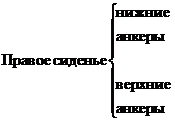
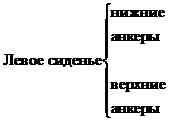
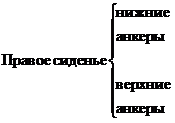
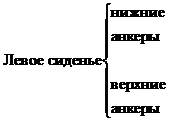
| Расположение анкеров | ||||||||||
| Конструкция транспортного средства | Конструкция сиденья | |||||||||
| Передняя часть | ||||||||||
 |  | |||||||||
 |  | |||||||||
 |  | |||||||||
| Задняя часть | ||||||||||
 |  | |||||||||
 |  | |||||||||
 |  | |||||||||
| <*> «A»: для ремня с креплением в трех точках. «B»: для поясного ремня. «S»: для специальных типов ремней (в этом случае предоставьте специальную информацию о свойствах этих ремней). «Ar», «Br» или «Sr»: для ремня с инерционной катушкой. «Arе», «Brе» и «Srе»: для ремня, оснащенного инерционной катушкой и механизмом поглощения энергии хотя бы на одном анкере | ||||||||||
| 2.10.5. | Описание специального типа ремня, один анкер которого расположен на спинке сиденья или оборудован механизмом диссипации энергии: | |||||||||
<*> Удалить, если неприменимо.
<**> Отметить допустимое(ые) отклонение(я).
a Если устройство получило одобрение типа компонента, описание можно заменить ссылкой на это одобрение типа компонента. Аналогичным образом нет необходимости в описании, когда конструкция компонента понятна из схем или чертежей, приложенных к сертификату. Следует отметить номера соответствующих Приложений для каждого пункта, который предусматривает добавление фотографий и чертежей.
b При использовании средств идентификации они могут присутствовать только на транспортных средствах, отдельных технических элементах или компонентах, попадающих в сферу действия специальных директив, регулирующих одобрение типа компонентов.
Если методика идентификации типа включает символы, которые не относятся к символам для описания типов транспортных средств, отдельных технических элементов или компонентов, указанным в настоящем информационном документе, то такие символы необходимо заменить в документации на знак «?» (например, ABC??123??).
c Классификация в соответствии со следующими категориями, указанными в статье 1:
- двухколесный мопед (L1e);
- трехколесный мопед (L2e);
- мотоцикл (L3e);
- мотоцикл с коляской (L4e);
- моторный трицикл (L5e);
- легкие квадроциклы (L6e);
- квадроциклы, помимо легких квадроциклов, как указано в статье 1, параграф 3 «b» (L7e).
d 1. Ненагруженная масса: масса транспортного средства, готового к обычному использованию и оснащенного:
- дополнительным оборудованием, необходимым исключительно для соответствующей нормальной эксплуатации;
- полным комплектом электрического оборудования, включая осветительные и световые сигнальные устройства, поставляемые производителем;
- инструментами и устройствами, необходимыми в соответствии с законодательством, которое устанавливает процедуру измерения ненагруженной массы;
- соответствующим количеством жидкостей для обеспечения нормальной работы всех частей транспортного средства.
NB: топливо и смесь топлива с маслом не учитываются при измерении ненагруженной массы, но компоненты, такие как аккумуляторная кислота, гидравлическая жидкость, охладитель и смазка двигателя должны учитываться.
2. Масса снаряженного транспортного средства: ненагруженная масса, к которой добавлена масса следующих компонентов:
- топлива в баке, заполненного не менее чем до 90% емкости, установленной производителем;
- дополнительного оборудования, как правило, поставляемого изготовителем в дополнение к оборудованию, необходимому для нормальной эксплуатации (контейнер для инструментов, багажник, ветровой щиток, защитное оборудование и т.д.).
NB: в случае транспортного средства, работающего на смеси топлива с маслом:
a) в том случае, когда топливо заранее смешивают с маслом, термин «топливо» подразумевает такую предварительно подготовленную смесь;
- в том случае, когда топливо и масло заправляют раздельно, термин «топливо» означает только топливо. В этом случае масса масла уже учтена при определении ненагруженной массы.
3. Технически допустимая максимальная масса: масса, вычисленная производителем для особых условий эксплуатации с учетом таких факторов, как прочность материалов, нормы нагрузки на шины и т.д.
4. Максимальная полезная грузоподъемность, заявленная производителем: нагрузка, полученная путем вычитания массы, указанной в разделе 2 (с водителем), из массы, указанной в разделе 3.
5. Масса водителя принимается равной 75 кг.
e При установке нетиповых двигателей и систем производителем должна быть предоставлена информация, аналогичная указанной в данном пункте.
f Значение должно быть округлено до десятой доли миллиметра.
Допускается отклонение до 5% при условии, что не превышены предельные значения, указанные в статье 1 (3).
- имеет определенные координаты по отношению к конструкции транспортного средства;
- соответствует теоретическому месту точки вращения туловища/бедер (точка H) при минимальной скорости нормального движения или положению использования и крайнему заднему положению сиденья, указанному производителем транспортного средства для каждого сиденья;
- может при желании использоваться компетентными органами в качестве ссылки для каждого из сидений, кроме передних, если для них «точку Н» невозможно определить с помощью «трехмерной системы координат» или методик определения «точки H».
На транспортное средство, подлежащее одобрению типа, должна быть представлена следующая информация, касающаяся существующих систем, отдельных технических элементов или компонентов <*>:
| Пункт N | Специальная Директива N | Предмет | Одобрение N <**> | Дата продления | Вариации и версии, подпадающие под действие |
|---|---|---|---|---|---|
| 18 | 95/1/ЕС | Максимальный крутящий момент и максимальная полезная мощность двигателя | |||
| 19 | 97/24/ЕС (C7) | Средства защиты мопедов и мотоциклов от несанкционированного доступа | |||
| 20 | 97/24/ЕС (C6) | Топливный бак | |||
| 25 | 95/1/ЕС | Максимальная конструктивная скорость транспортного средства | |||
| 26 | 93/93/ЕЭС | Масса и габаритные размеры | |||
| 27 | 97/24/ЕС (C10) | Прицепные устройства | |||
| 28 | 97/24/ЕС (C5) | Средства предотвращения загрязнения воздуха | |||
| 29 | 97/24/ЕС (C1) | Шины | |||
| 31 | 93/14/ЕЭС | Тормозная система | |||
| 32 | 93/92/ЕЭС | Установка осветительных и световых сигнальных устройств на транспортном средстве | |||
| 33 | 97/24/ЕС (C2) | Осветительные и световые сигнальные устройства | |||
| 34 | 93/30/ЕЭС | Звуковое предупредительное устройство | |||
| 35 | 93/94/ЕС | Место крепления заднего регистрационного знака | |||
| 36 | 97/24/ЕС (C8) | Электромагнитная совместимость | |||
| 37 | 97/24/ЕС (C9) | Уровень шума и выхлопная система | |||
| 38 | 97/24/ЕС (C4) | Зеркало(а) заднего вида | |||
| 39 | 97/24/ЕС (C3) | Общий вид в проекциях | |||
| 40 | 93/31/ЕЭС | Подставка (за исключением транспортных средств, имеющих три или более колеса) | |||
| 41 | 93/33/ЕЭС | Устройства для предотвращения несанкционированного использования транспортного средства | |||
| 42 | 97/24/ЕС (12) | Окна; стеклоочистители ветрового стекла; омыватели ветрового стекла и т.д. | |||
| 43 | 93/32/ЕЭС | Пассажирские поручни для двухколесных транспортных средств | |||
| 44 | 97/24/ЕЭС (C11) | Точки крепления ремней безопасности и ремни безопасности | |||
| 45 | 2000/7/ЕС | Спидометр | |||
| 46 | 93/29/ЕЭС | Описание обозначений приборов управления, сигнальных приборов и индикаторов | |||
| 47 | 93/34/ЕЭС | Обязательные надписи |
<*> Информация не требуется для систем, отдельных технических элементов или компонентов, которые должны быть включены в обследования или испытания в рамках предоставления одобрения типа транспортного средства в целом.
<**> Образец приведен в Приложении V.
Примечание: нумерация пунктов соответствует нумерации пунктов Приложения I (перечень требований).
| Штамп административного органа |
|---|
| Сообщение, касающееся: | |
| - одобрения типа <1>; - расширения сферы действия одобрения типа <2>; - отказа в одобрении типа <3>; - отзыва одобрения типа <4> | |
| транспортного средства с учетом Директивы 2002/24/ЕС | |
| Номер одобрения: ................................................................................... | |
| Основание для расширения сферы действия: ........................................ | |
| 0. ОБЩАЯ ИНФОРМАЦИЯ | |
| 0.1 Модель(и) (торговое название, присвоенное производителем): .................................................................................................................. | |
| 0.2. Тип: ................................................................................................... | |
| 0.2.1. Коммерческое(ие) название(я): ...................................................... | |
| 0.3. Средства определения типа, если нанесены на транспортное средство: ................................................................................................................... ................................................................................................................. | |
| 0.3.1. Месторасположение такой маркировки: ....................................... | |
| 0.4. Категория <5>: .................................................................................. | |
| 0.5. Наименование и адрес производителя транспортного средства: ................................................................................................................. | |
| 0.5.1. Наименование(я) и адрес(а) сборочного(ых) завода(ов): ............................................................................................................ | |
<1> Удалить, если неприменимо.
<2> Удалить, если неприменимо.
<3> Удалить, если неприменимо.
<4> Удалить, если неприменимо.
<5> В соответствии с классификацией, представленной в статье 1.
Нижеподписавшийся настоящим удостоверяет точность описания, представленного производителем в прилагаемом информационном документе на тип транспортного средства, описанного выше, один или несколько образцов которого, отобранных компетентными органами, занимающимися одобрением типа, представлен(ы) в качестве прототипа(ов) данного типа транспортного средства, а приведенные результаты испытаний применимы к типу транспортного средства.
Тип транспортного средства удовлетворяет/не удовлетворяет <*> техническим требованиям всех соответствующих специальных Директив (с последними поправками), перечисленных в таблице Приложения I к Директиве 2002/24/ЕС.
<*> Удалить, если неприменимо.
Одобрение предоставлено/в одобрении отказано/одобрение отозвано <*>.
<*> Удалить, если неприменимо.
| .................................. | .................................... | .................................... |
|---|---|---|
| (Место) | (Подпись) | (Дата) |
Приложения: Информационный документ, части 1 и 2 (Приложение II).
Результаты испытаний (Приложение VII).
Имя (имена) и образец (образцы) подписи лиц, уполномоченных подписывать сертификаты соответствия и документ, удостоверяющий их должность в компании.
Образец сертификата соответствия.
A. СЕРТИФИКАТ СООТВЕТСТВИЯ, КОТОРЫЙ ПРИЛАГАЕТСЯ К КАЖДОМУ
ТРАНСПОРТНОМУ СРЕДСТВУ СЕРИИ ОДОБРЕННОГО ТИПА
(Максимальный формат: A4 (210 x 297 мм)
или сложенный до формата A4)
| Нижеподписавшийся: | |
| .................................................................................. (ФИО полностью) | |
| настоящим подтверждает, что следующее транспортное средство: | |
| 0.1 Модель: ........................................................ (торговое название, присвоенное производителем) | |
| 0.2. Тип: .................................................................................................... | |
| Вариация <1>: ....................................................................................... | |
| Версия <1>: ....................................................................................... | |
| 0.2.1. Коммерческое(ие) название(я) (при необходимости): ................... | |
| 0.4. Категория транспортного средства <2>: ........................................ | |
| 0.4.1. Категория транспортного средства в соответствии с Директивой 97/24/ЕС, глава 7 (если применимо) A/B/C/D <3>: .................................. | |
| 0.5. Наименование и адрес производителя: ............................................ | |
| 0.6. Месторасположение таблички с обязательными надписями <4>: ........................................................................................................ | |
| Идентификационный номер транспортного средства (VIN): .................... | |
| 0.7. Месторасположение идентификационного номера на шасси <4>: ........................................................................................................... | |
| полностью соответствует типу, описанному в одобрении ЕС типа | |
| - Номер одобрения ЕС типа: ................................ | |
| - Дата: ................................................................... | |
Настоящее транспортное средство может быть зарегистрировано на неопределенный срок без необходимости предоставления любых других одобрений для эксплуатации на дорогах с право- и левосторонним движением <3> и для использования метрических/британских <3> единиц измерения на шкале спидометра.
| ...................................... | ......................................... |
|---|---|
| (Место) | (Дата) |
| ...................................... | ......................................... |
|---|---|
| (Подпись) | (Должность) |
| 1. | Количество осей: ........................... и колес: ................................ | ||||||||||||
| 3. | Колесная база: ............................................................. | мм | |||||||||||
| 6.1. | Длина: .............................................................................. | мм | |||||||||||
| 7.1. | Ширина: ........................................................................... | мм | |||||||||||
| 8. | Высота: ............................................................................ | мм | |||||||||||
| 12.1. | Масса снаряженного транспортного средства (с кузовом): ..................................................................... | кг | |||||||||||
| 12.2. | Ненагруженная масса транспортного средства ................. | кг | |||||||||||
| 14.1. | Максимальная технически допустимая масса нагруженного транспортного средства: ...................................................................... | кг | |||||||||||
| 14.2. | Распределение этой массы между осями: | ||||||||||||
| 1 .................................... | кг | 2 ..................................... | кг | ||||||||||
| 14.3. | Технически допустимая масса на каждую ось: | ||||||||||||
| 1 .................................... | кг | 2 ..................................... | кг | ||||||||||
| 17. | Максимальная масса прицепа: | ||||||||||||
| (с тормозами): ............. | кг | (без тормозов) ............... | кг | ||||||||||
| 19.1. | Максимальная вертикальная нагрузка на прицепное устройство прицепа: ................................................. | кг | |||||||||||
| 20. | Производитель двигателя: .......................................................... | ||||||||||||
| 21. | Тип двигателя в соответствии с маркировкой на нем: ................... | ||||||||||||
| 21.2. | Номер двигателя: ....................................................................... | ||||||||||||
| 22. | Принцип работы: электрический/искровое зажигание/компрессионное зажигание, два/четыре такта <3> | ||||||||||||
| 23. | Количество и расположение цилиндров: .............................. <5> | ||||||||||||
| 24. | Объем цилиндра: ............................................................ | куб. см | |||||||||||
| 25. | Топливо: .............................................................................. <6> | ||||||||||||
| 26. | Максимальная полезная мощность или номинальная максимальная мощность в режиме длительной нагрузки (в соответствующих случаях): | ||||||||||||
| ....................................... кВТ | при ................................................. мин-1 | ||||||||||||
| 26.1. | Отношение: максимальная полезная мощность или номинальная максимальная мощность в режиме длительной нагрузки/масса снаряженного транспортного средства: .......................................................................................... (кВт/кг) | ||||||||||||
| 28. | Коробка передач (тип): ......................................................... <7> | ||||||||||||
| 29. | Передаточные числа: | 1. ..... | 2. ..... | 3. ..... | 4. ..... | 5. ..... | 6. ..... | ||||||
| 32. | Размер шин: | ||||||||||||
| Ось 1: ............................................ | Ось 2: .............................................. | ||||||||||||
| 37. | Кузов: да/нет <3> | ||||||||||||
| 41. | Количество и конфигурация дверей <8>, <9>: ................................ | ||||||||||||
| 42.1. | Количество и расположение сидений <10>: .................................. | ||||||||||||
| 43.1. | Знак одобрения прицепного устройства (при наличии): .......................................................................................... | ||||||||||||
| 44. | Максимальная скорость: ................................................ | км/ч | |||||||||||
| 45. | Уровень шума: <11> | ||||||||||||
| При стационарной работе: ............................................ дБ(A) при скорости двигателя: .................................................... мин-1 | |||||||||||||
| При движении: ................................................................... дБ(A) | |||||||||||||
| 46. | Выбросы отработавших газов <11> | ||||||||||||
| Тест тип I: CO: ............ г/км | HC: ............. г/км | NO_{x} : ........... г/км | |||||||||||
| HC + NO_{x}: .............................................. г/км | |||||||||||||
| Тест тип II: для мопедов: CO: ......................................... | г/мин | ||||||||||||
| HC: .................................................................................. | г/мин | ||||||||||||
| для мотоциклов и моторных трициклов: CO: ........................ % от объема | |||||||||||||
| Видимое загрязнение воздуха двигателем с компрессионным зажиганием: | |||||||||||||
| - скорректированное значение коэффициента поглощения: ................................................................... мин-1 | |||||||||||||
| 47. | Финансовые полномочия или номер(а) национальных кодов, если применимо: | ||||||||||||
| Бельгия: ................ | Болгария: ................... | Чешская Республика: .... | |||||||||||
| Дания: .................. | Германия: ................... | Эстония: ...................... | |||||||||||
| Греция .................. | Испания ...................... | Франция ....................... | |||||||||||
| Ирландия: .............. | Италия: ....................... | Кипр: ............................ | |||||||||||
| Латвия: ................. | Литва: ......................... | Люксембург: ................ | |||||||||||
| Венгрия: ............... | Мальта: ....................... | Нидерланды: ................ | |||||||||||
| Австрия: ............... | Польша: ...................... | Португалия: ................. | |||||||||||
| Румыния: .............. | Словения: ................... | Словакия: ..................... | |||||||||||
| Финляндия: ........... | Швеция: ...................... | Соединенное Королевство: ................ | |||||||||||
| 50. Примечания: ........................................................................ | |||||||||||||
| 51. Исключения: ........................................................................ | |||||||||||||
<1> Указать также цифровой или комбинированный буквенно-цифровой идентификационный код. Этот код должен содержать не более 25 или 35 символов для вариации или версии соответственно.
<2> Классификация в соответствии с категориями в Приложении II, сноска c.
<3> Удалить, если неприменимо.
<4> Указать расположение с помощью следующих кодов:
R: правая часть транспортного средства;
C: центральная часть транспортного средства;
L: левая часть транспортного средства;
x: горизонтальное расстояние (в мм) от передней оси (если за передней осью, значению предшествует знак «-»);
y: горизонтальное расстояние (в мм) от продольной осевой линии транспортного средства;
z: расстояние (в мм) от земли;
(r/o): деталь необходимо снять или открыть, чтобы увидеть отметку. Например, для таблички с VIN, установленной на правой части приемной трубы глушителя мотоцикла, 500 мм за передней осью, 30 мм от продольной осевой линии, на высоте 1100 мм:
Пример для таблички с VIN, установленной на квадроцикле, на правой части транспортного средства, 100 мм до передней оси, 950 мм от продольной осевой линии транспортного средства, на высоте 700 мм, под капотом:
<5> Указать расположение цилиндров с помощью следующих кодов:
<6> Указать тип топлива с помощью следующих кодов:
<8> Для транспортных средств с кузовом.
<9> Указать конфигурацию с помощью следующих кодов:
R: правая часть транспортного средства;
L: левая часть транспортного средства;
F: передняя часть транспортного средства;
RE: задняя часть транспортного средства.
Например, для транспортного средства с двумя дверями на левой части и одной на правой части:
<10> Указать расположение с помощью следующих кодов:
R: правая часть транспортного средства;
C: центральна часть транспортного средства;
L: левая часть транспортного средства.
Пример для транспортного средства с двумя сиденьями в первом ряду (1 правым и 1 левым) и тремя сиденьями во втором ряду (1 правым, 1 центральным и 1 левым):
r_{1} : 1R, 1L r_{2} : 1R, 1C, 1L.
<11> Номер основной Директивы и последней изменяющей ее Директивы, применимой к процедуре одобрения. В случае Директивы с двумя или более стадиями имплементации, указать также стадию имплементации.
B. СЕРТИФИКАТ СООТВЕТСТВИЯ, КОТОРЫЙ ПРИЛАГАЕТСЯ К КАЖДОМУ
ОТДЕЛЬНОМУ ТЕХНИЧЕСКОМУ ЭЛЕМЕНТУ ИЛИ КОМПОНЕНТУ,
НЕ ЯВЛЯЮЩЕМУСЯ ОРИГИНАЛЬНЫМ ОБОРУДОВАНИЕМ
ДЛЯ ТИПА СЕРИИ ОДОБРЕННОГО ТИПА
1. Номер одобрения типа должен состоять из:
- четырех разделов для одобрения типа транспортного средства и
- пяти разделов для одобрения системы, компонента и отдельного технического элемента, как поясняется ниже. Во всех случаях разделы должны отделяться знаком «*».
Раздел 1: маленькая буква «e», за которой идет опознавательный код (номер) государства-члена ЕС, выдавшего одобрение типа:
11 для Соединенного Королевства;
Раздел 2: номер основной Директивы.
Раздел 3: номер Директивы, вносящей последние поправки, применимой к процедуре одобрения типа.
В случае одобрений типа транспортного средства это означает последнюю Директиву, вносящую поправки в статью (статьи) настоящей Директивы.
В случае одобрений типа системы, компонента или отдельного технического элемента это означает последнюю специальную Директиву, содержащую текущие требования, которым должны соответствовать система, компонент или отдельный технический элемент.
Однако если в основную директиву не вносились изменения, ее номер дублируется в разделе 3.
Если в Директиве содержатся разные даты имплементации со ссылкой на различные технические стандарты, то к номеру добавляется буквенный знак для указания на то, согласно какому стандарту было предоставлено одобрение.
Если одобрение типа системы, компонента или отдельного технического элемента возможно согласно главам или разделам той же специальной директивы, то после номера специальной директивы ставится номер главы 1 <*>, Приложения <**> и Дополнения <***> с целью указать предмет одобрения типа. Во всех случаях эти номера разделяются символом «/».
<***>: Арабскими цифрами и прописными буквами, где применимо.
Раздел 4: четырехзначный порядковый номер (с нулями впереди, где применимо) для обозначения основного номера одобрения типа. Нумерация начинается с 0001 для каждой основной Директивы.
Раздел 5: порядковый номер (с нулями впереди, если применимо) для обозначения расширения сферы действия одобрения. Последовательность начинается с 00 для каждого основного номера одобрения типа.
2. При одобрении типа транспортного средства в целом раздел 2 пропускается.
3. На табличке с обязательными надписями опускается только раздел 5.
4. Пример второго утверждения типа, предоставленного Нидерландами согласно Директиве 97/24/ЕС, глава 5, Приложение II:
5. Пример третьего одобрения типа (расширение 1), предоставленного Италией согласно Директиве 95/1/ЕС, Приложение I:
6. Пример девятого одобрения типа (расширение 4), предоставленного Соединенным Королевством согласно Директиве 93/29/ЕЭС в редакции Директивы 2000/74/ЕС:
7. Пример четвертого одобрения типа (расширение 2), предоставленного Германией согласно Директиве 92/61/ЕЭС:
8. Пример номера одобрения типа транспортного средства, вычеканенного на табличке с обязательными надписями:
1. Знак одобрения типа компонента или отдельного технического элемента состоит из:
1.1. прямоугольника, окружающего строчную букву «e», за которой следует опознавательный номер государства-члена ЕС, выдавшего одобрение типа:
- 1 для Германии;
- 2 для Франции;
- 3 для Италии;
- 4 для Нидерландов;
- 5 для Швеции;
- 6 для Бельгии;
- 7 для Венгрии;
- 8 для Чешской Республики;
- 9 для Испании;
- 11 для Соединенного Королевства;
- 12 для Австрии;
- 13 для Люксембурга;
- 17 для Финляндии;
- 18 для Дании;
- 19 для Румынии;
- 20 для Польши;
- 21 для Португалии;
- 23 для Греции;
- 24 для Ирландии;
- 26 для Словении;
- 27 для Словакии;
- 29 для Эстонии;
- 32 для Латвии;
- 34 для Болгарии;
- 36 для Литвы;
- 49 для Кипра;
- 50 для Мальты;
1.2. четырехзначного номера из раздела 4 номера одобрения типа, указанного в бланке одобрения типа, заполненного на соответствующий отдельный технический элемент или компонент. Номер вводится под прямоугольником, указанным в 1.1, и близко к нему. Цифры, входящие в состав номера, следуют за буквой «e» и имеют то же направление. Чтобы избежать путаницы, римские цифры не должны использоваться в номере одобрения типа.
2. Знак одобрения типа наносится на отдельный технический элемент или компонент таким образом, чтобы оставаться неповрежденным и разборчивым даже после установки отдельного технического элемента или компонента на транспортное средство.
3. Пример знака одобрения типа представлен в Дополнении к настоящему Приложению.
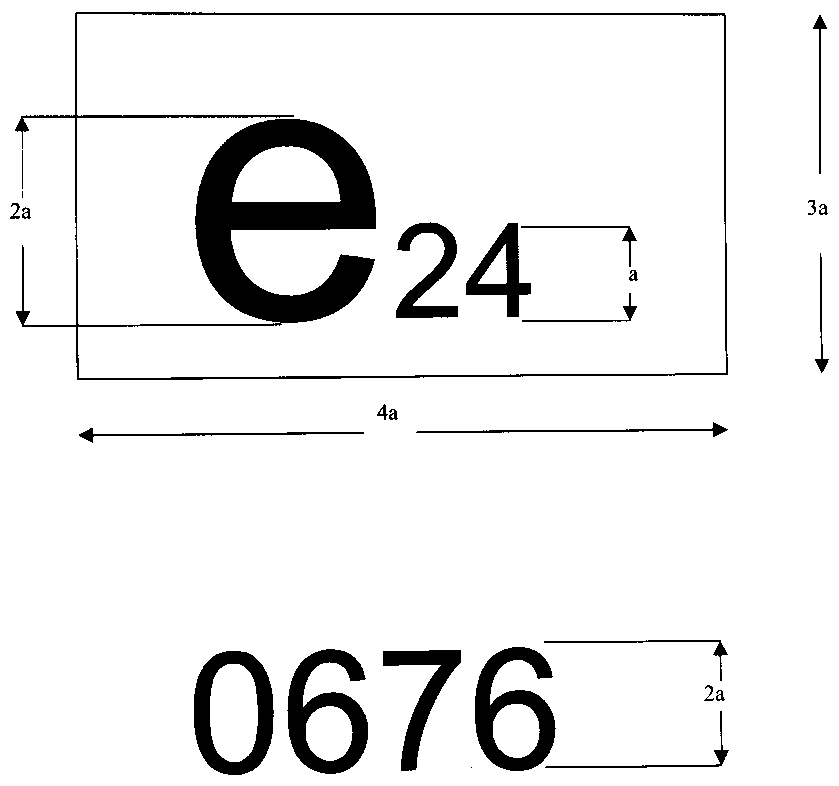
Пояснение: это одобрение типа компонента или отдельного технического элемента было выдано Ирландией (е24) под номер 0676.
ПОЛОЖЕНИЯ ОТНОСИТЕЛЬНО ПРОВЕРКИ СООТВЕТСТВИЯ ПРОДУКЦИИ
1. В целях проверки соответствия производимых транспортных средств, систем, отдельных технических элементов и компонентов типу, который был одобрен, применяются следующие положения.
1.1.1. обеспечить необходимые процедуры эффективного контроля качества продукции;
1.1.2. иметь необходимый доступ к контролирующему оборудованию для проверки соответствия каждого типа транспортного средства или каждого типа системы, отдельного технического элемента или компонента типу, который был одобрен;
1.1.3. обеспечить фиксацию результатов испытаний и хранение приложенных документов в течение 12 месяцев после прекращения производства;
1.1.4. анализировать результаты каждого вида испытаний в целях контроля и получения достоверных характеристик продукции, учитывая при этом отклонения, допустимые при промышленном производстве;
1.1.5. принимать меры для обеспечения проведения испытаний, предусмотренных соответствующей специальной Директивой, для каждого типа продукта;
1.1.6. принимать меры для обеспечения отбора новых образцов и проведения нового испытания в случае, если есть свидетельства того, что отобранные образцы не соответствуют типу проводимого испытания. Следует принять все необходимые меры для восстановления соответствия указанной продукции.
1.2. Компетентные органы, выдавшие сертификат одобрения типа, могут в любое время проверить методы, используемые для проверки соответствия каждой единицы продукции.
1.2.1. Во время каждой проверки результаты испытаний и производственная документация должны быть предоставлены инспектору.
1.2.2. Инспектор может случайным образом отобрать образцы для проведения испытания в лаборатории производителя. Минимальное количество образцов может определяться согласно результатам проверок, проведенных самим производителем.
1.2.3. В случае если качество окажется неудовлетворительным или если считается нужным проверить обоснованность результатов испытаний, проведенных в соответствии с пунктом 1.2.2, инспектор должен отобрать образцы, которые будут отправлены в техническую службу, которая проводила испытания для одобрения типа.
1.2.4. Компетентные органы могут провести все испытания, предусмотренные специальной Директивой(ами), применяемой(ыми) к соответствующему(им) продукту(ам).
1.2.5. Компетентные органы обязаны разрешать проведение одной проверки в год. Если возникнет необходимость в другом количестве проверок, это будет указано в каждой из специальных Директив. Если проверка дала отрицательные результаты, уполномоченный орган должен убедиться, что были приняты все необходимые меры для скорейшего восстановления соответствия продукции.
(Статья 5 (1), первый подпараграф)
(Этот лист должен быть заполнен компетентным органом и приложен к сертификату одобрения типа транспортного средства)
В каждом отдельном случае должно быть понятно, к какой вариации или версии относится представленная информация.
Для каждой отдельной версии может быть приведено не более одного результата.
Номер основной Директивы и последней изменяющей ее Директивы, применимой к процедуре одобрения. В случае Директивы с двумя или более стадиями имплементации, указать также стадию имплементации.
| Вариация/версия | ... | ... | ... |
|---|---|---|---|
| При движении дБ(A) | ... | ... | ... |
| При стационарной работе dB(A) | ... | ... | ... |
| при (\text{мин}^{- 1}) | ... | ... | ... |
Номер основной Директивы и последней изменяющей ее Директивы, применимой к процедуре одобрения. В случае Директивы с двумя или более стадиями имплементации, указать также стадию имплементации.
| Вариация/версия | ... | ... | ... |
|---|
| CO (г/км) | ... | ... | ... |
|---|---|---|---|
| HC (г/км) <*> | ... | ... | ... |
| NO_{x} (г/км) <**> | ... | ... | ... |
| HC + NO_{x} (г/км) <***> | ... | ... | ... |
<*> Только для мотоциклов, моторных трициклов и квадроциклов в соответствии с их определением в параграфе 3 «b» статьи 1.
<**> Только для мотоциклов, моторных трициклов и квадроциклов в соответствии с их определением в параграфе 3 «b» статьи 1.
<***> Только для мопедов и легких квадроциклов в соответствии с их определением в параграфе 3 «a» статьи 1.
| CO (г/мин) <1> | ... | ... | ... |
|---|---|---|---|
| HC (г/мин) <2> | ... | ... | ... |
| CO (% от объема) на нормальных холостых оборотах <3> | ... | ... | ... |
| Указать скорость холостого хода <4>, <5> | ... | ... | ... |
| CO (% от объема) на высоких холостых оборотах <6> | ... | ... | ... |
| Указать скорость холостого хода <7>, <8> | ... | ... | ... |
| Температура масла двигателя <9>, <10> | ... | ... | ... |
<1> Только для мопедов и легких квадроциклов в соответствии с их определением в параграфе 3 «a» статьи 1.
<2> Только для мопедов и легких квадроциклов в соответствии с их определением в параграфе 3 «a» статьи 1.
<3> Только для мотоциклов, моторных трициклов и квадроциклов в соответствии с их определением в параграфе 3 «b» статьи 1.
<4> Только для мотоциклов, моторных трициклов и квадроциклов в соответствии с их определением в параграфе 3 «b» статьи 1.
<5> Указать погрешность измерения.
<6> Только для мотоциклов, моторных трициклов и квадроциклов в соответствии с их определением в параграфе 3 «b» статьи 1.
<7> Только для мотоциклов, моторных трициклов и квадроциклов в соответствии с их определением в параграфе 3 «b» статьи 1.
<8> Указать погрешность измерения.
<9> Только для мотоциклов, моторных трициклов и квадроциклов в соответствии с их определением в параграфе 3 «b» статьи 1.
| Вариация/версия | ... | ... | ... |
|---|---|---|---|
| Скорректированное значение коэффициента поглощения (\text{м}^{- 1}) | ... | ... | ... |
ТРАНСПОРТНЫЕ СРЕДСТВА, СНЯТЫЕ С СЕРИЙНОГО ПРОИЗВОДСТВА
Максимальное количество транспортных средств, введенных в эксплуатацию в каждом государстве-члене ЕС в соответствии с процедурой, установленной в статье 16 (2), должно быть ограничено одним из следующих способов по выбору государства-члена ЕС:
a) максимальное количество транспортных средств одного или более типов не может превышать 10% транспортных средств всех соответствующих типов, введенных в эксплуатацию в государстве-члене ЕС в течение предыдущего года. Если 10% составит менее 100 транспортных средств, государство-член ЕС может позволить введение в эксплуатацию не более 100 транспортных средств; либо
b) количество транспортных средств любого типа ограничивается числом, на которое были выданы действительные сертификаты соответствия в день производства или позже, которые оставались действительными в течение минимум трех месяцев с даты их выдачи, но со временем потеряли силу в результате введения в действие специальной директивы.
На сертификате соответствия транспортного средства, которое вводится в эксплуатацию в соответствии с этой процедурой, делается специальная отметка.
КОРРЕЛЯЦИОННАЯ ТАБЛИЦА, ПРЕДУСМОТРЕННАЯ СТАТЬЕЙ 19
| Директива 92/61/ЕЭС | Настоящая Директива |
|---|---|
| Глава I | Глава I |
| Статья 1 | Статья 1 |
| Статья 2 | Статья 2 |
| Глава II | Глава II |
| Статья 3 | Статья 3 |
| Статья 4 | Статья 4 |
| Статья 5 | Статья 5 |
| Статья 6 | Статья 6 |
| Статья 7 | Статья 7 |
| Статья 8 | Статья 8 |
| Статья 9 (1) | Статья 9 (1) |
| Статья 9 (2) | Статья 9 (2) |
| Статья 9 (3) | Статья 9 (3) |
| - | Статья 9 (4) |
| Статья 9 (4) | Статья 9 (5) |
| Статья 10 | Статья 10 |
| Статья 11 | Статья 11 |
| Статья 12 | Статья 12 |
| Статья 13 | Статья 13 |
| Статья 14 | Статья 14 |
| Глава III | Глава III |
| Статья 15 | Статья 15 |
| - | Статья 16 |
| Глава IV | Глава IV |
| Статья 16 | Статья 17 |
| Статья 17 | - |
| - | Статья 18 |
| - | Статья 19 |
| Глава V | Глава V |
| Статья 18 | Статья 20 |
| - | Статья 21 |
| - | Статья 22 |
| - | Статья 23 |
| Статья 19 | Статья 24 |
| Приложение I | Приложение I |
| Приложение II | Приложение II |
| Приложение III | Приложение III |
| Приложение IV | Приложение IV |
| Приложение V | Приложение V |
| Приложение VI | Приложение VI |
| - | Приложение VII |
| - | Приложение VIII |
| - | Приложение IX |
Directive No. 2002/24/EC OF THE EUROPEAN PARLIAMENT AND OF THE COUNCIL RELATING TO THE TYPE-APPROVAL OF TWO OR THREE-WHEEL MOTOR VEHICLES AND REPEALING COUNCIL DIRECTIVE 92/61/EEC
(Amended by: Commission Directive No 2003/77/EC
of 11 August 2003, Commission Directive No 2005/30/EC
of 22 April 2005, Council Directive No 2006/96/EC
of 20 November 2006, Regulation (EC) No 1137/2008
of the European Parliament and of the Council
of 22 October 2008, Act concerning the conditions
of accession of the Czech Republic, the Republic
of Estonia, the Republic of Cyprus, the Republic of Latvia,
the Republic of Lithuania, the Republic of Hungary,
the Republic of Malta, the Republic of Poland, the Republic
of Slovenia and the Slovak Republic and the adjustments
to the Treaties on which the European Union is founded)
(Corrected by: Corrigendum, OJ L 49, 22.2.2003,
p. 23 (2002/24/EC))
The European Parliament and the Council of the European Union,
Having regard to the Treaty establishing the European Community, and in particular Article 95 thereof,
Having regard to the proposal from the Commission <*>,
<*> OJ C 307E, 26.10.1999, p. 1.
Having regard to the opinion of the Economic and Social Committee <*>,
<*> OJ C 368, 20.12.1999, p. 1.
Acting in accordance with the procedure laid down in Article 251 of the Treaty <*>,
<*> Opinion of the European Parliament of 27 October 1999 (OJ C 154, 5.6.2000, p. 50), Council Common Position of 29 October 2001 (not yet published in the Official Journal) and Decision of the European Parliament of 5 February 2002 (not yet published in the Official Journal).
- Council Directive 92/61/EEC of 30 June 1992 relating to the type-approval of two or three-wheel motor vehicles <*>, laid down the procedure for Community type-approval of two or three-wheel motor vehicles, of components and of separate technical units produced in conformity with the technical requirements set out in separate directives.
<*> OJ L 225, 10.8.1992, p. 72. Directive as last amended by Directive 2000/7/EC of the European Parliament and of the Council (OJ L 106, 3.5.2000, p. 1).
-
All the separate directives, provided for in the exhaustive list of systems, components and separate technical units to be regulated at Community level, have been adopted.
-
The commencement of the application of Directive 97/24/EC of the European Parliament and of the Council of 17 June 1997 on certain components and characteristics of two or three-wheel motor vehicles <*> allows the type-approval procedure to be applied in full.
<*> OJ L 226, 18.8.1997, p. 1.
- It is clearly necessary, in order that the type-approval system may work properly, to clarify certain administrative instructions and to supplement the norms contained in the annexes to Directive 92/61/EEC. With this in view, it is necessary to introduce harmonised norms concerning, in particular, the numbering of type-approval certificates as well as exemptions for end-of-series vehicles and for vehicles, components and separate technical units incorporating technologies which are not yet covered by Community arrangements, in the manner of the analogous norms of Council Directive 70/156/EEC of 6 February 1970 on the approximation of the laws of the Member States relating to the type-approval of motor vehicles and their trailers <*>.
<*> OJ L 42, 23.2.1970, p. 1. Directive as last amended by European Parliament and Council Directive 2000/40/EC (OJ L 203, 10.8.2000, p. 9).
-
Account being taken of currently established technologies, examination of the components and characteristics of the said vehicles has resulted in the retention only of those set out in Annex I to this Directive since all others are inappropriate for regulatory purposes. However, in view of progress and developments in technology, it will be appropriate to examine any further components and characteristics, in particular those relating to secondary safety, to be added to those already listed in the said Annex I.
-
The Community approval procedure is intended to enable each Member State to confirm that each type of vehicle has undergone the checks provided for in the separate directives and has been issued with a type-approval certificate. It is also intended to enable manufacturers to prepare a certificate of conformity for all vehicles conforming to the type that has been approved. When a vehicle is accompanied by this certificate it may be placed on the market, sold and registered for use throughout the Community.
-
Since the objectives of improving the functioning of the system of Community vehicle approval according to type cannot be sufficiently achieved by the Member States individually and can therefore, given the scale and the impact of the measures proposed, be better achieved at Community level, the Community may adopt measures in accordance with the principle of subsidiarity as set out in Article 5 of the Treaty. In accordance with the principle of proportionality as set out in that Article, this Directive does not go beyond what is necessary in order to achieve those objectives.
-
The measures necessary for the implementation of this Directive should be adopted in accordance with Council Decision 1999/468/EC of 28 June 1999 laying down the procedures for the exercise of implementing powers conferred on the Commission <*>.
<*> OJ L 184, 17.7.1999, p. 23.
- For reasons of clarity it is advisable to repeal Council Directive 92/61/EEC and replace it by this Directive,
1. This Directive applies to all two or three-wheel motor vehicles, whether twin-wheeled or otherwise, intended to travel on the road, and to the components or separate technical units of such vehicles.
This Directive does not apply to the following vehicles:
(a) vehicles with a maximum design speed not exceeding 6 km/h;
(b) vehicles intended for pedestrian control;
(c) vehicles intended for use by the physically handicapped;
(d) vehicles intended for use in competition, on roads or in off-road conditions;
(e) vehicles already in use before the application date of Directive 92/61/EEC;
(f) tractors and machines, used for agricultural or similar purposes;
(g) vehicles designed primarily for off-road leisure use having wheels arranged symmetrically with one wheel at the front of the vehicle and two at the rear;
(h) cycles with pedal assistance which are equipped with an auxiliary electric motor having a maximum continuous rated power of 0,25 kW, of which the output is progressively reduced and finally cut off as the vehicle reaches a speed of 25 km/h, or sooner, if the cyclist stops pedalling,
nor to the components or technical units thereof unless they are intended to be fitted to vehicles covered by this Directive.
It does not apply to the approval of single vehicles except that Member States granting such approvals shall accept any type-approval of components and separate technical units granted under this Directive instead of under the relevant national requirements.
2. The vehicles referred to in paragraph 1 shall be subdivided into:
(a) mopeds, i.e. two-wheel vehicles (category L1e) or three-wheel vehicles (category L2e) with a maximum design speed of not more than 45 km/h and characterised by:
(i) in the case of the two-wheel type, an engine whose:
- cylinder capacity does not exceed 50 cm^{3} in the case of the internal combustion type, or
- maximum continuous rated power is no more than 4 kW in the case of an electric motor;
(ii) in the case of the three-wheel type, an engine whose:
- cylinder capacity does not exceed 50 cm^{3} if of the spark (positive) ignition type, or
- maximum net power output does not exceed 4 kW in the case of other internal combustion engines, or
- maximum continuous rated power does not exceed 4 kW in the case of an electric motor;
(b) motorcycles, i.e. two-wheel vehicles without a sidecar (category L3e) or with a sidecar (category L4e), fitted with an engine having a cylinder capacity of more than 50 cm^{3} if of the internal combustion type and/or having a maximum design speed of more than 45 km/h;
(c) motor tricycles, i.e. vehicles with three symmetrically arranged wheels (category L5e) fitted with an engine having a cylinder capacity of more than 50 cm^{3} if of the internal combustion type and/or a maximum design speed of more than 45 km/h.
3. This Directive shall also apply to quadricycles, i.e. motor vehicles with four wheels having the following characteristics:
(a) light quadricycles whose unladen mass is not more than 350 kg (category L6e), not including the mass of the batteries in case of electric vehicles, whose maximum design speed is not more than 45 km/h, and
(i) whose engine cylinder capacity does not exceed 50 cm^{3} for spark (positive) ignition engines, or
(ii) whose maximum net power output does not exceed 4 kW in the case of other internal combustion engines, or
(iii) whose maximum continuous rated power does not exceed 4 kW in the case of an electric motor.
These vehicles shall fulfil the technical requirements applicable to three-wheel mopeds of category L2e unless specified differently in any of the separate directives;
(b) quadricycles, other than those referred to in (a), whose unladen mass is not more than 400 kg (category L7e) (550 kg for vehicles intended for carrying goods), not including the mass of batteries in the case of electric vehicles, and whose maximum net engine power does not exceed 15 kW. These vehicles shall be considered to be motor tricycles and shall fulfil the technical requirements applicable to motor tricycles of category L5e unless specified differently in any of the separate Directives.
For the purposes of this Directive:
1. «type of vehicle» means either a vehicle or a group of vehicles (variants) which:
(a) belong to a single category (two-wheel moped L1e, three-wheel moped L2e, etc., as defined in Article 1);
(b) are constructed by the same manufacturer;
(c) have the same chassis, frame, sub-frame, floor pan or structure to which major components are attached;
(d) have a power unit with the same principle of operation (internal combustion, electric, hybrid, etc.);
(e) have the same type designation given by the manufacturer.
A type of vehicle may include variants and versions;
2. «variant» means either a vehicle or a group of vehicles (versions) being of the same type where:
(a) they have the same shape of the bodywork (basic characteristics);
(b) within the group of vehicles (versions) the difference in the mass in running order between the lowest value and the highest value does not exceed 20% of the lowest value;
(c) within the group of vehicles (versions) the difference in the maximum permissible mass between the lowest value and the highest value does not exceed 20% of the lowest value;
(d) they have the same operating cycle (two or four stroke, spark ignition or compression ignition);
(e) within the group of vehicles (versions) the difference in the cylinder capacity of the power unit (in the case of an internal combustion unit) between the lowest value and the highest value does not exceed 30% of the lowest value;
(f) have the same number and arrangement of cylinders;
(g) within the group of vehicles (versions) the difference in the power output of the power unit between the lowest value and the highest value does not exceed 30% of the lowest value;
(h) have the same operating mode (of electric motors);
(i) have the same type of gearbox (manual, automatic, etc.).
3. «version» means a vehicle of the same typeand variant but which may incorporate any of the equipment, components or systems listed in the information document in Annex II provided that there is only:
(i) the mass in running order;
(ii) the maximum permissible mass;
(iii) the power output of the power unit;
(iv) the cylinder capacity of the power unit; and
(b) one set of test results quoted in accordance with Annex VII.
4. «system» means any vehicle system such as brakes, emission control equipment, etc. which is subject to the requirements laid down in any of the separate directives;
5. «separate technical unit» means a device, such as a replacement exhaust system silencer, subject to the requirements of a separate directive, intended to be part of a vehicle, which may be type-approved separately but only in relation to one or more specified types of vehicles, where the separate directive makes express provision for so doing;
6. «component» means a device, such as a lamp, subject to the requirements of a separate directive, intended to be part of a vehicle, which may be type-approved independently of a vehicle, where the separate directive makes express provision for so doing;
7. «type-approval» means the procedure whereby a Member State certifies that a type of vehicle, system, separate technical unit or component satisfies the technical requirements set out in this Directive or the separate directives and the checks on the correctness of the manufacturer's data, as provided for in the exhaustive list set out in Annex I;
8. «twinned wheels» means two wheels mounted on the same axle, the distance between the centres of their areas of contact with the ground being less than 460 mm. Twinned wheels shall be considered as one wheel;
9. «twin-propulsion vehicles» means vehicles with two different systems of propulsion, for example an electric system and a thermic system;
10. «manufacturer» means the person or body responsible to the approval authority for all aspects of the type-approval process and for ensuring conformity of production. It is not essential that the person or body is directly involved in all stages of the construction of the vehicle, component or separate technical unit covered by the approval process;
11. «technical service» means the organisation or body that has been appointed as a testing laboratory to carry out tests or inspections on behalf of the approval authority of a Member State. This function may also be carried out by the approval authority itself.
Applications for type-approval shall be submitted by the manufacturer to the approval authority of a Member State. They shall be accompanied by an information document, a model of which, for vehicle type-approval purposes, is set out in Annex II and, for type-approval purposes of systems, separate technical units or components, is contained in an annex or appendix to the relevant system, separate technical unit or component directive, and also by the other documents referred to in the information document. Applications for a given type of vehicle, system, separate technical unit or component may be submitted to one Member State only.
1. Each Member State shall grant type-approval to all types of vehicle, systems, separate technical units or components if these meet the following conditions:
(a) the type of vehicle meets the technical requirements of the separate directives and is as described by the manufacturer in accordance with the data provided for in the exhaustive list set out in Annex I;
(b) the system, separate technical unit or component meets the technical requirements of the relevant separate directive and is as described by the manufacturer in accordance with the data provided for in the exhaustive list set out in Annex I.
2. Before conducting type-approval, the competent authorities in the Member State which carry out these operations shall take all necessary steps to ensure, if necessary in cooperation with the competent authorities in the Member State where manufacturing takes place or the product is brought into the Community, that there is compliance with the provisions of Annex VI in order that the new vehicles, systems, separate technical units or components manufactured, placed on the market, offered for sale or put into service, conform to the approved type.
3. The competent authorities referred to in paragraph 2 shall ensure, if necessary in cooperation with the competent authorities in the Member State where manufacturing takes place or the product is brought into the Community, that the provisions of Annex VI continue to be observed.
4. Where an application for type-approval for a type of vehicle is accompanied by one or more type-approval certificates of a system, separate technical or component unit issued by one or more Member States, the Member State conducting type-approval for a type of vehicle shall be obliged to accept them and shall not perform, in respect of the systems, separate technical units and/or components which have been type-approved, the checks required by paragraph 1(b).
5. Each Member State shall be responsible for the type-approval of a system, separate technical unit or component that it grants. The competent authorities in the Member State which grant type-approval for a type of vehicle shall check conformity of production, where necessary in cooperation with those competent authorities in the other Member States which have issued type-approval certificates for systems, separate technical unit or components.
6. However, if a Member State finds that a vehicle, system, separate technical unit or component which complies with the provisions of paragraph 1 is nevertheless a serious risk to road safety, it may refuse to grant the type-approval. It shall forthwith inform the other Member States and the Commission thereof, stating the reasons on which its decision is based.
1. The competent authority in a Member State shall complete the type-approval form contained in Annex III for all types of vehicles in respect of which it conducts type-approval, and in addition shall enter the test results under the relevant headings on the form attached to the vehicle approval form, the model for which is given in Annex VII.
2. The competent authority in a Member State shall complete the type-approval form contained in an annex or an appendix to each relevant separate Directive, for each type of system, separate technical unit or component in respect of which it conducts type-approval.
3. Type-approval certificates of a system, separate technical unit or component shall be numbered in accordance with the method described in Annex V, Part A.
1. The competent authority in each Member State shall forward to those of the other Member States, within one month, a copy of the type-approval certificate, together with the annexes for each type of vehicle that they type-approve or refuse to type-approve.
2. The competent authority in each Member State shall send monthly to the competent authorities of the other Member States, a list of the type-approvals of a system, separate technical unit or component, which it has granted or refused to grant during that month.
In addition, at the request of a competent authority of another Member State, it shall send forthwith a copy of the type-approval certificate together with the annexes for each type of system, separate technical unit or component.
1. A certificate of conformity, a model of which is shown in Annex IV-A, shall be completed by the manufacturer for each vehicle produced in conformity with the type that has been approved. Such a certificate shall accompany each vehicle. However, Member States may request, after giving at least three months' notice to the Commission and other Member States, for reasons of vehicle taxation or in order to draw up the vehicle registration document, that the certificate of conformity shall contain details other than those mentioned in Annex IV-A, provided that those details are explicitly included in the information document.
The certificate of conformity shall be made in such a way as to prevent any forgery. For this purpose, the printing shall be made on paper protected either by coloured graphics or watermarked with the vehicle manufacturer's identification mark.
2. A certificate of conformity, a model of which is shown in Annex IV-B, shall be completed by the manufacturer for each non-original separate technical unit or component manufactured in conformity with the approved type. That certificate is not required for original separate technical units or components.
3. Where the separate technical unit or component to be type-approved performs its function or displays a specific characteristic only in conjunction with other components of the vehicle and for this reason compliance with one or more requirements can be verified only when that separate technical unit or component to be approved functions in conjunction with other vehicle components whether real or simulated, the scope of the type-approval of that separate technical unit or component must be restricted accordingly. The type-approval certificate for a separate technical unit or component shall then set out any restrictions on use and any instructions for fitting it. Compliance with these restrictions and requirements shall be verified when the vehicle is type-approved.
4. Without prejudice to paragraph 2, the holder of a type-approval for a separate technical unit or component that has been granted under Article 4 shall be obliged to affix to each such separate technical unit or component manufactured in conformity with the approved type, his factory or trade mark, a statement of the type and, if the separate directive so requires, the type-approval mark referred to in Article 8. In this latter case, he is not required to complete the certificate provided for in paragraph 2.
5. Any holder of a type-approval certificate for a separate technical unit or component which, under paragraph 3, contains restrictions on use, must supply detailed information on those restrictions and must give fitting instructions, where appropriate, with each separate technical unit or component manufactured.
6. Any holder of a type-approval certificate for a separate technical unit of non-original equipment, issued in connection with one or more types of vehicle, must with each such unit supply detailed information allowing those vehicles to be identified.
1. Any vehicle produced in conformity with the type which has been type-approved shall bear a type-approval mark composed in accordance with Section 1, Section 3 and Section 4 of the type-approval number, set out in Annex V, Part A.
2. Any separate technical unit and any component produced in conformity with the type having been type-approved shall include, if the relevant separate directive so provides, a type-approval mark which meets the requirements set out in Annex V, Part B. The type-approval number listed in Annex V, Part B, paragraph 1.2 shall be composed in accordance with Section 4 of the type-approval number set out in Annex V, Part A.
The information contained in the type-approval mark may be supplemented by further information enabling certain characteristics which are specific to the separate technical unit or component at issue to be identified. That further information shall, where appropriate, be specified in the separate directives on those separate technical units or components.
1. The manufacturer shall be responsible for the manufacture of each vehicle or the production of each system, separate technical unit or component in compliance with the approved type. The final cessation of production or any changes to the information contained in the information document must be notified by the type-approval holder to the competent authorities in the Member State which issued that type-approval.
2. If the competent authorities of the Member State referred to in paragraph 1 consider that a change of this type does not involve any change to the existing type-approval certificate, or the drawing up of a new type-approval certificate, they shall inform the manufacturer accordingly.
3. If the competent authorities in the Member State referred to in paragraph 1 confirm that a change in the information set out in the information document justifies new checks or new tests, they shall inform the manufacturer accordingly and shall perform those tests. Should the checks or tests involve amendments to the existing type-approval certificate or the drawing up of a new certificate, the authorities shall inform the competent authorities of the other Member States in accordance with Article 6.
4. Where the particulars appearing in the information document for vehicle approval have changed, the manufacturer shall issue revised pages to the approval authority showing clearly the nature of the change and the date of re-issue. Only where the changes made to the information document necessitate the amendment of one or more of the entries given in the certificate of conformity in Annex IV (except items 19.1 and 45 to 51 inclusive), shall the reference number on the information document be changed.
5. Where a type-approval certificate ceases to have effect as a result of final cessation of production of the type of vehicle which has been approved or of the system or of the separate technical unit or component which has been type-approved, the competent authorities in the Member State which have carried out that type-approval shall inform the competent authorities in the other Member States within one month.
1. If the Member State which has conducted type-approval finds that vehicles, systems, separate technical units or components do not conform to the approved type, it shall take the necessary measures to ensure that the production of any item that has been type-approved is again in conformity. The competent authorities in that Member State shall inform the authorities in the other Member States of the measures taken which may, where necessary, extend to the withdrawal of type-approval.
2. If a Member State finds that vehicles, systems, separate technical units or components do not conform to the approved type, it may request the Member State which has conducted the type-approval to verify the irregularities found. Any Member State which has conducted type-approval shall conduct the necessary check within six months following the date of receipt of that request. Should a failure to conform be established, the competent authorities in the Member State which has conducted type-approval shall take the measures set out in paragraph 1.
3. The competent authorities in the Member States shall inform each other, within one month, of the withdrawal of any type-approval granted and of the reasons for such measure.
4. If the Member State which has granted type-approval disputes the failure to conform notified to it, the Member States involved shall endeavour to resolve the matter. The Commission shall be kept informed and, where necessary, shall hold appropriate consultations in order to reach a settlement.
Acting by a qualified majority on a proposal from the Commission, the Council may acknowledge equivalence between the conditions or provisions for type-approval of vehicles, systems, separate technical units and components established by this Directive together with the separate directives, and the procedures established by international regulations or regulations of third countries in the framework of multilateral agreements or bilateral agreements between the Community and third countries.
If a Member State finds that vehicles, systems, separate technical units or components constitute a road safety hazard, even though they are of an approved type, it may, for a maximum period of six months, prohibit on its territory the sale, entry into service or use thereof. It shall forthwith inform the other Member States and the Commission, giving reasons for its decision.
Any decision concerning the refusal or withdrawal of type-approval, a ban on the sale or use of a vehicle, separate technical unit or component taken in pursuance of the provisions adopted in implementation of this Directive shall state in detail the reasons on which it is based. It shall be notified to the party concerned, who shall, at the same time, be informed of the remedies available under the laws in force in the Member States and of the time limits allowed for the exercise of such remedies.
1. Member States shall notify the Commission and the other Member States of the names and addresses of:
(a) the type-approval authorities and, if applicable, the disciplines for which the authorities are responsible;
(b) the technical services which they have approved, specifying for which test procedures each of these services has been approved. The notified services must satisfy the harmonised standards on the operation of testing laboratories (EN 45001) subject to the following provisos:
(i) a manufacturer may not be approved as a technical service except where the separate Directive makes express provisions for doing so;
(ii) for the purpose of this Directive it is not considered exceptional for a technical service to use equipment from an outside source, subject to the agreement of the approval authority.
2. A notified service shall be presumed to satisfy the harmonised standard but, where appropriate, the Commission may ask Member States to provide supporting evidence.
Third country services may not be notified as approved technical services other than in the framework of bilateral agreements or multilateral agreements between the Community and third countries.
1. Member States shall not prohibit the placing on the market, sale, entry into service or use of new vehicles complying with this Directive. Only vehicles complying with this Directive may be presented for initial registration.
2. Member States shall not prohibit the placing on the market, sale or use of new separate technical units or new components complying with this Directive. Only separate technical units and components complying with this Directive may be placed on the market and sold for the first time for use in the Member States.
3. By way of derogation from paragraphs 1 and 2:
(a) Member States may exempt vehicles, systems, separate technical units and components intended:
(i) either for production in small series of up to a maximum of 200 units a year per type of vehicle, per system, per component or per separate technical unit;
(ii) or for the armed forces, law enforcement agencies, civil defence services, fire brigades or public-works bodies,
from compliance with any of the requirements of the separate directives.
The other Member States shall be informed of these exemptions within one month of their being granted. Within three months these Member States shall decide whether they accept the type-approval for vehicles to be registered within their territory. The certificate of such type-approval may not bear the heading «EC type-approval certificate»;
(b) type-approval certificates issued at national level before 17 June 1999 shall remain valid within the Member States issuing them for a period of four years from the date on which national laws are required to comply with the relevant directives.
The same period is also extended to types of vehicles, systems, components or technical entities conforming to national requirements of Member States applying other legislative systems than those for type-approval in force before the implementation of the relevant directives.
Vehicles covered by the latter exemption may be placed on the market, sold and entered into service during this period with no time limit on their use.
The placing on the market, sale and use of systems, separate technical units and components for these vehicles shall carry no time limit.
4. This Directive shall not affect the right of the Member States to lay down — in accordance with the Treaty — the requirements which they consider necessary to ensure the protection of users during the use of the vehicles in question, provided that this does not entail modification to the vehicles.
1. By way of derogation from Article 15(1) and (2), and within the limits set out in Annex VIII, Member States may, for a limited period, register and permit the sale or entry into service of new vehicles conforming to a type of vehicle whose type-approval is no longer valid. This option shall be limited to a period of 12 months as from the date on which the type-approval lost its validity.
The first subparagraph shall apply only to vehicles which were in the territory of the Community and were accompanied by a valid certificate of conformity which had been issued when the type-approval of the vehicle in question was still valid, but which had not been registered or put into service before the said type-approval lost its validity.
2. Before paragraph 1 may be applied to one or more types of a given category, the manufacturer shall submit a request to the competent authority of each Member State concerned by the entry into service of such types of vehicle. The request shall specify the technical and/or economic reasons justifying it.
Within three months such Member States shall decide whether, and for how many units, they will accept the vehicle type concerned for registration in their territory. Each Member State concerned by the entry into service of such types of vehicle shall be responsible for ensuring that the manufacturer complies with the provisions of Annex VIII. Member States shall send the Commission every year a list of exemptions granted.
3. As regards vehicles, components or separate technical units incorporating technologies or concepts which cannot, due to their specific nature, comply with one or more of the requirements of one or more of the separate Directives, point (c) of Article 8(2) of Directive 70/156/EEC shall apply.
The Commission may adapt to technical progress the Annexes to this Directive or the provisions of the separate directives referred to in Annex I to this Directive. Those measures, designed to amend non-essential elements of this Directive or of the separate directives, shall be adopted in accordance with the regulatory procedure with scrutiny referred to in Article 18(2).
1. The Commission shall be assisted by the Committee for Adaptation to Technical Progress, set up by Article 13 of Directive 70/156/EEC (hereinafter referred to as «the Committee»).
2. Where reference is made to this paragraph, Articles 5a(1) to (4) and Article 7 of Decision 1999/468/EC shall apply, having regard to the provisions of Article 8 thereof.
Council Directive 92/61/EEC shall be repealed with effect from 9 November 2003. References made to Directive 92/61/EEC shall be construed as references to this Directive and read according to the table of correspondance in Annex IX.
1. Member States shall bring into force before 9 May 2003 the laws, regulations and administrative provisions necessary to comply with this Directive. They shall forthwith inform the Commission thereof.
When Member States adopt these measures, they shall contain a reference to this Directive or be accompanied by such reference on the occasion of their official publication. Methods of making such reference shall be laid down by Member States.
2. Member States shall apply the provisions referred to in paragraph 1, first subparagraph, as from 9 November 2003. However, at the request of the manufacturer the previous model of the certificate of conformity may still be used for 12 months thereafter.
3. From 9 May 2003 Member States shall not prohibit the first entry into service of vehicles complying with this Directive.
4. Member States shall communicate to the Commission the texts of the main provisions of national law which they adopt in the field covered by this Directive.
This Directive shall not invalidate any approvals granted before 9 November 2003, nor prevent extension of such approvals under the terms of the Directive under which they were originally granted. However, as from 9 November 2004 certificates of conformity issued by the manufacturer shall comply with the model specified in Annex IV.
Pending the harmonisation of registration and taxation systems in the Member States in relation to vehicles covered by this Directive, Member States may use national code systems in order to facilitate registration and taxation in their territory. Member States may also request that the certificate of conformity be supplemented by the national code number.
This Directive shall enter into force on the day of its publication in the Official Journal of the European Communities.
This Directive is addressed to the Member States.
LIST OF REQUIREMENTS FOR THE PURPOSE OF VEHICLE TYPE-APPROVAL
The vehicle components and characteristics on the exhaustive list below are followed by «CONF» if their conformity with the manufacturer's data has to be checked or by «SD» if their conformity with requirements laid down in Community legislation has to be checked.
(As appropriate, taking account of the scope and latest amendment to each of the separate Directives listed below)
<*> In the case of twin-propulsion vehicles, if the two systems of propulsion are such that the vehicle falls within the definition either of a moped or of a motorcycle, motor tricycle or quadricycle, the latter definitions shall apply to it.
<**> Electrically-propelled vehicles are not subject to the requirements relating to this heading. This does not apply to twin-propulsion vehicles in which one of the systems of propulsion is electric and the other thermic.
The separate Directives will lay down specific requirements for low-performance mopeds, i.e. mopeds with pedals, with an auxiliary engine of power not exceeding 1 kW and a maximum design speed not exceeding 25 km/h. These specific characteristics will apply in particular to the components and characteristics covered by heading Nos 18, 19, 29, 32, 33, 34, 41, 43 and 46 of this Annex.
All information documents in this Directive and in separate Directives must consist only of extracts from and adhere to the numbering system of this total list.
The following information on the vehicle to be type-approved and the systems, separate technical units or components to be type-approved must be supplied in triplicate and be accompanied by a list of contents. All drawings must be sufficiently detailed and presented on an appropriate scale on A4 format or be folded to that dimension. Photographs too must be sufficiently detailed. Where functions are controlled by microprocessors appropriate information concerning performance should be provided. The information document must have a reference number supplied by the applicant.
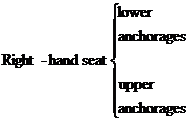

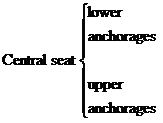

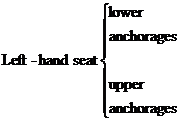

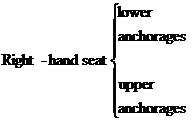

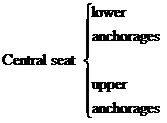

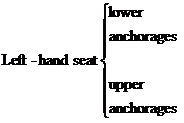

<*> Delete where inappropriate.
a Where a device has been component type-approved, the description may be replaced by a reference to that component type-approval. Likewise, no description is needed where a component's structure is clear from the diagrams or drawings attached to the certificate. State the numbers of the corresponding Annexes for each heading where photographs and drawings must be attached.
b Where used, means of identification may appear only on vehicles, separate technical units or components falling within the scope of the separate directive governing components type-approval.
Where the method of type identification includes characters which do not relate to the description of the types of vehicle/separate technical unit/component referred to in this information document, those characters are replaced in the documentation, by the sign «?» (example: ABC??123??).
c Classification in accordance with the following categories as referred to in Article 1:
- two-wheel moped (L1e),
- three-wheel moped (L2e),
- motor-cycle (L3e),
- motor-cycle with sidecar (L4e),
- motor tricycle (L5e),
- light quadricycles (L6e),
- quadricycles other than light quadricycles as referred to in Article 1, paragraph 3(b) (L7e).
d 1. Unladen mass: mass of vehicle ready for normal use and equipped as follows:
- additional equipment required solely for the normal use under consideration,
- complete electrical equipment, including the lighting and light-signalling devices supplied by the manufacturer,
- instruments and devices required by the laws under which the unladen mass of the vehicle has been measured,
- the appropriate amounts of liquids in order to ensure the proper operation of all parts of the vehicle.
NB: the fuel and the fuel/oil mixture are not included in the measurement, but components such as the battery acid, the hydraulic fluid, the coolant and the engine oil must be included.
2. Mass in running order: unladen mass to which the mass of the following components is added:
- fuel: tank filled to at least 90% of the capacity stated by the manufacturer,
- additional equipment normally supplied by the manufacturer in addition to that needed for normal operation (tool kit, luggage carrier, windscreen, protective equipment, etc.).
NB: in the case of a vehicle operating with a fuel/oil mixture:
a when the fuel and oil are pre-mixed the word «fuel» must be interpreted as meaning a pre-mixture of fuel and oil of this type;
b when the fuel and oil are put in separately the word «fuel» must be interpreted as meaning only the petrol. In this case, the oil is already included in the measurement of the unladen mass.
3. Technically permissible maximum mass: mass calculated by the manufacturer for specific operating conditions, taking account of factors such as the strength of the materials, loading capacity of the tyres, etc.
4. Maximum payload declared by the manufacturer: load obtained by subtracting the mass defined in Section 2, with rider, from the mass defined in Section 3.
5. The mass of the rider is taken to be a round figure of 75 kg.
e Where unconventional engines and systems are fitted, information equivalent to that referred under this heading must be supplied by their manufacturer.
f This figure should be to the nearest tenth of a millimetre.
(h) The information requested should be supplied for a possible variant.
A tolerance of 5% is permitted provided that the limit values pursuant to Article 1(3) are not exceeded.
- has specific coordinates in relation to the structure of the vehicle,
- corresponds to the theoretical position of the point of rotation of the trunk/thighs (H point) for the lowest normal driving or use position and the rearmost position stated by the manufacturer of the vehicle for each of the seats provided,
- may be taken as a reference by the competent authorities, where they so wish, for each of the seats other than the front seats where the «H point» cannot be determined by means of the «tridimensional reference system» or the procedures for determination of the «H point».
SEPARATE DIRECTIVE APPROVAL NUMBERS
The following information shall be supplied on the vehicle to be type approved with regard to existing system, separate technical unit or component approvals <*>:
<*> Information is not required in respect of systems, separate technical units or components which are to be included in the examination or testing for the granting of whole vehicle type approval.
<**> Examples are given in Annex V.
Note: The heading numbers are aligned with Annex I (list of requirements).
(Maximum format: A4 (210 x 297 mm))
| Stamp of Administration |
|---|
The undersigned hereby certifies the accuracy of the manufacturer's description in the attached information document of the vehicle type described above, for which one or several representative samples, selected by the competent approval authorities, has (have) been submitted as prototype(s) of the vehicle type and that the attached test results are applicable to the vehicle type.
The vehicle type meets/does not meet <*> the technical requirements of all relevant separate Directives (as last amended) listed in the table of Annex I to Directive 2002/24/EC.
The approval is granted/refused/withdrawn <*>.
<*> Delete where not applicable.
<**> According to the classification introduced in Article 1.
| ........................ | ........................................ | ............................... |
|---|---|---|
| (Place) | (Signature) | (Date) |
Name(s) and specimen(s) of the signature of the persons authorised to sign the certificates of conformity and a statement of their position in the company.
A model certificate of conformity.
Side 1
The vehicle can be permanently registered without requiring any further approvals, for driving on the right/left <3> and for using metric/imperial <3> units for the speedometer.
| ................................ | .................... |
|---|---|
| (Place) | (Date) |
| ................................. | ...................... |
| (Signature) | (Position) |
Side 2
<1> Indicate also the numerical or combined number/letter identification code. This code shall contain not more than 25 or 35 positions for a variant or version respectively.
<2> Classification in accordance with categories in Annex II footnote c.
<3> Delete where not applicable.
<4> Indicate the location by following codes:
x: horizontal distance (in mm) from the frontmost axle (preceded by «-» if in front of the front axle)
y: horizontal distance (in mm) from the longitudinal centre line of the vehicle
z: distance (in mm) from the ground
(r/o): parts need to be removed or opened to access to the marking. Example for a VIN plate fitted on the right side of a motorcycle headpipe, 500 mm behind the front axle, 30 mm from the centre-line and 1 100 mm high:
Example for a VIN plate fitted to a quadricycle, on the right side of the vehicle, 100 mm in front of the front axle, 950 mm from the longitudinal centre line of the vehicle and 700 mm high, under the bonnet:
<5> Indicate the arrangement of the cylinders by following codes:
<6> Indicate fuel type by the following codes:
<9> Indicate the configuration by following codes:
Example for a vehicle with 2 left side doors and 1 right door:
<10> Indicate the position by the following codes:
Example for a vehicle with a first row with 2 front seating positions, 1 right, 1 left and a second row with 3 rear seating positions, 1 right, 1 centre, 1 left:
r_{1} : 1R, 1L r_{2} : 1R, 1C, 1L
<11> Number of the base Directive and latest amending Directive applicable to the approval. In the case of a Directive with two or more implementation stages, indicate also the implementation stage.
1. The type-approval number shall consist of:
- four sections for vehicle type-approvals and
- five sections for system, component, and separate technical unit approvals, as detailed below. In all cases, the sections shall be separated by the <*> character.
Section 1: the lower case letter «e» followed by the distinguishing code (number) of the Member State issuing the type-approval:
Section 2: the number of the base Directive.
Section 3: the number of the latest amending Directive applicable to the type-approval.
In the case of vehicle type-approvals, this means the latest Directive amending an Article (or Articles) of this Directive.
In the case of system, component and separate technical unit type-approvals, this means the latest separate Directive containing the actual provisions with which the system, component or technical unit conforms.
However, if a base directive has not been amended, its number is retaken in Section 3.
Should a Directive contain different implementation dates referring to different technical standards, an alphabetical character shall be added to specify to which standard the approval was granted.
Where system, component or separate technical unit type-approvals are possible according to chapters or sections of the same separate directive, the number of the separate directive shall be followed by the number of the Chapter 1 <>, Annex <> and Appendix <> in order to indicate the subject of the type-approval. In all cases, these numbers shall be separated by the «/» character.
<***>: In Arabic characters and capital letters, where applicable.
Section 4: a four-digit sequential number (with leading zeros as applicable) to denote the base type-approval number. The sequence shall start from 0001 for each base Directive.
Section 5: a two-digit sequential number (with leading zeros if applicable) to denote the extension. The sequence shall start from 00 for each base type-approval number.
2. In the case of EC type-approval for a whole vehicle, Section 2 shall be omitted.
3. On the vehicle's statutory plate only, Section 5 shall be omitted.
4. Example of the second type-approval granted by the Netherlands according to Directive 97/24/EC, Chapter 5, Annex II:
5. Example of the third type-approval (extension 1) granted by Italy according to Directive 95/1/EC, Annex I:
6. Example of the ninth type-approval (extension 4) granted by the United Kingdom according to Directive 93/29/EEC as amended by Directive 2000/74/EC:
7. Example of the fourth vehicle type-approval (extension 2) granted by Germany according to Directive 92/61/EEC:
8. Example of the vehicle type-approval number stamped on the vehicle's statutory plate:
1. The type-approval mark of a component or separate technical unit consists of:
1.1. a rectangle surrounding a lower case letter «e», followed by the distinguishing number of the Member State which has issued type-approval, i.e.:
- 1 for Germany;
- 2 for France;
- 3 for Italy;
- 4 for the Netherlands;
- 5 for Sweden;
- 6 for Belgium;
- 7 for Hungary;
- 8 for the Czech Republic;
- 9 for Spain;
- 11 for the United Kingdom;
- 12 for Austria;
- 13 for Luxembourg;
- 17 for Finland;
- 18 for Denmark;
- 19 for Romania;
- 20 for Poland;
- 21 for Portugal;
- 23 for Greece;
- 24 for Ireland;
- 26 for Slovenia;
- 27 for Slovakia;
- 29 for Estonia;
- 32 for Latvia;
- 34 for Bulgaria;
- 36 for Lithuania;
- 49 for Cyprus;
- 50 for Malta.
1.2. The four-digit number from Section 4 of the type-approval number, as given on the type-approval form completed for the separate technical unit or component concerned. The number is entered below and close to the rectangle referred to in 1.1. The figures making up the number are entered on the same side of the letter «e» and face the same direction. In order to avoid any confusion with other symbols, Roman numerals must not be used in the type-approval number.
2. The type-approval mark is affixed to the separate technical unit or component in such a way as to be indelible and clearly legible, even when the separate technical unit or component is fitted to the vehicle.
3. An example of a type-approval mark is contained in the Appendix to this Annex.
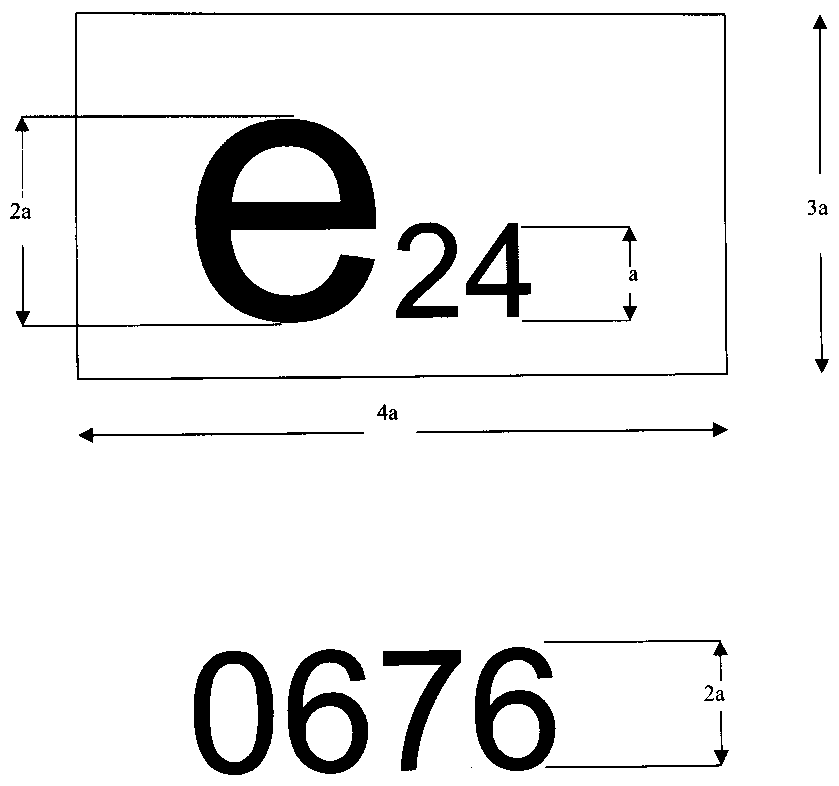
Legend: the above type-approval of a component or a separate technical unit was issued by Ireland (e24) under number 0676.
PROVISIONS RELATING TO CHECKING THE CONFORMITY OF PRODUCTION
1. In order to check that vehicles, systems, separate technical units and components are produced in such a way as to conform to the type which has been type-approved, the following provisions apply.
1.1.1. ensure that there are procedures for the effective monitoring of product quality;
1.1.2. have access to the monitoring equipment necessary for checking the conformity of each type of vehicle or each type of system, separate technical unit or component which has been type-approved;
1.1.3. ensure that the data concerning test results are recorded and the attached documents are kept for a period of 12 months after the cessation of production;
1.1.4. analyse the results of each type of test in order to monitor and ensure the consistency of the characteristics of the product, with due regard for the variations permissible within industrial manufacture;
1.1.5. take steps to ensure that the tests prescribed in the relevant separate Directive are performed for each type of product;
1.1.6. take steps to ensure that any taking of samples or test-pieces which give evidence of non-conformity for the type of test under consideration is followed by a fresh taking of samples and a new test. All necessary measures must be taken to re-establish the conformity of the corresponding production.
1.2. The competent authorities, which have issued the type-approval certificate, may check at any time the methods used for checking conformity in each production unit.
1.2.1. At the time of each inspection the test and production records must be conveyed to the inspector.
1.2.2. The inspector may select at random samples to be tested in the manufacturer's laboratory. The minimum number of samples may be determined in accordance with the results of the manufacturer's own checks.
1.2.3. Where the quality level appears unsatisfactory or where it seems necessary to check the validity of tests performed in accordance with 1.2.2, the inspector must take samples which will be sent to the technical body which has performed the tests for type-approval.
1.2.4. The competent authorities may perform all the tests prescribed in the separate Directive(s) applying to the product(s) concerned.
1.2.5. The competent authorities must authorise one inspection per year. If a different number of inspections is necessary, it will be specified in each of the separate Directives. If negative results are noted during an inspection, the competent authority must ensure that all necessary measures are taken to re-establish conformity of production as soon as possible.
(Article 5(1), first subparagraph)
(This sheet must be completed by the approval authority
and be attached to the vehicle type approval certificate)
In each case, the information must make clear to which variant and version it is applicable.
One version may not have more than one result.
1. Results of the sound level tests
Number of the base Directive and latest amending Directive applicable to the approval. In the case of a Directive with two or more implementation stages, indicate also the implementation stage:
| Variant/version | ... | ... | ... |
|---|---|---|---|
| Moving dB(A) | ... | ... | ... |
| Stationary dB(A) | ... | ... | ... |
| at (min^{- 1}) | ... | ... | ... |
2. Results of the exhaust emission tests
Number of the base Directive and latest amending Directive applicable to the approval. In the case of a Directive with two or more implementation stages, indicate also the implementation stage:
| Variant/version | ... | ... | ... |
|---|
| CO (g/km) | ... | ... | ... |
|---|---|---|---|
| HC (g/km) <1> | ... | ... | ... |
| NO_{x} (g/km) <1> | ... | ... | ... |
| HC + NO_{x} (g/km) <2> | ... | ... | ... |
3. Compression ignition engine
| Variant/version | ... | ... | ... |
|---|---|---|---|
| Corrected value of absorption coefficient (m^{- 1}) | ... | ... | ... |
<1> Only for motorcycles and motor tricycles and for quadricycles as defined in Article 1, paragraph 3(b).
<2> Only for mopeds and for light quadricycles as defined in Article 1, paragraph 3(a).
<3> Mention the measurement tolerance.
<4> Applicable for four-stroke engines only.
The maximum number of vehicles put into service in each Member State under the procedure laid down in Article 16 (2) shall be restricted in one of the following ways to be chosen by the Member State:
(a) the maximum number of vehicles of one or more types may not exceed 10% of the vehicles of all types concerned put into service in that Member State during the previous year. Should 10% be less than 100 vehicles, then the Member State may allow the putting into service of a maximum of 100 vehicles; or
(b) the number of vehicles of any one type shall be restricted to those for which a valid certificate of conformity was issued on or after the date of manufacture and which remained valid for at least three months after its date of issue but subsequently lost its validity because of coming into force of a separate directive.
A special entry shall be made on the certificate of conformity of the vehicles put into service under this procedure.
CORRELATION TABLE PROVIDED FOR IN ARTICLE 19
Переход между статьями: Ctrl + ← / →