---
title: "\"Таможенная конвенция о международной перевозке грузов с применением книжки МДП (Конвенция МДП/TIR Convention) (включая пояснительные записки и комментарии)\" [рус., англ.]"
status: действует
canonical: "https://bukva.ai/docs/tamozhennaya-konventsiya-o-mezhdunarodnoy-2"
---
## "Таможенная конвенция о международной перевозке грузов с применением книжки МДП (Конвенция МДП/TIR Convention) (включая пояснительные записки и комментарии)" [рус., англ.]
(Вместе с "Моделью книжки МДП", <Правилами, касающимися технических условий, применимых к дорожным транспортным средствам, осуществляющим перевозки грузов под таможенными печатями и пломбами>, <Процедурой допущения средств, отвечающих техническим требованиям>, "Образцом свидетельства...", "Табличкой TIR", "Пояснительными записками", "Приложением, касающимся допущения контейнеров", "Составом, функциями и правилами процедуры Административного комитета и Исполнительного совета...", "Доступом...", "Информацией...")
(Заключена в г. Женеве 14.11.1975)
(с изм. и доп. по состоянию на 10.10.2013)
> [!IMPORTANT]
> По вопросу, касающемуся применения данного документа, см. Приказ ГТК РФ от 18.05.1994 N 206.
> Документ вступил в силу для СССР 8 декабря 1982 года (согласно информации на сайте МИД России http://www.mid.ru по состоянию на 11.10.2016)
> Документ [вступил](https://bukva.ai/docs/status-tamozhennoy-konventsii-o-mezhdunarodnoy#p100004) в силу 20 марта 1978 года.
> Документ вступил в силу в соответствии с [пунктом 1 статьи 53](https://bukva.ai/docs/tamozhennaya-konventsiya-o-mezhdunarodnoy-2/statya-53#p100549).
> В информационный банк включен данный документ с изменениями и дополнениями от [01.10.2009](https://bukva.ai/docs/tamozhennaya-konventsiya-o-mezhdunarodnoy-2/statya-1).
**ТАМОЖЕННАЯ КОНВЕНЦИЯ**
**О МЕЖДУНАРОДНОЙ ПЕРЕВОЗКЕ ГРУЗОВ С ПРИМЕНЕНИЕМ КНИЖКИ МДП**
**(КОНВЕНЦИЯ МДП, 1975 Г.)**
(включая пояснительные записки и комментарии)
(Женева, 14 ноября 1975 года)
(по состоянию на 10 октября 2013 г.)
Договаривающиеся стороны,
желая содействовать упрощению международных перевозок грузов дорожными транспортными средствами,
считая, что улучшение условий перевозок является одним из существенных факторов развития сотрудничества между ними,
высказываясь в пользу упрощения и гармонизации административных, в частности, пограничных формальностей в области международных перевозок,
согласились о нижеследующем:
## Статья 1. Глава I. ОБЩИЕ ПОЛОЖЕНИЯ. a) Определения
### Статья 1. Глава I. ОБЩИЕ ПОЛОЖЕНИЯ. a) Определения
При применении настоящей Конвенции:
a) термин "перевозка МДП" означает перевозку груза от таможни места отправления до таможни места назначения с соблюдением процедуры, так называемой процедуры МДП, установленной в настоящей Конвенции;
(ECE/TRANS/17/Amend.21, вступила в силу 12 мая 2002 г.)
b) термин "операция МДП" означает часть перевозки МДП, производимую в данной Договаривающейся стороне от таможни места отправления или въезда (промежуточной таможни) до таможни места назначения или выезда (промежуточной таможни);
(ECE/TRANS/17/Amend.21, вступила в силу 12 мая 2002 г.)
Пояснительная записка к статье 1 b)
0.1 b) В [статье 1 b)](https://bukva.ai/docs/tamozhennaya-konventsiya-o-mezhdunarodnoy-2/statya-1#p100015) подразумевается, что в тех случаях, когда несколько таможен места отправления или места назначения находятся в одной или нескольких странах, в одной и той же Договаривающейся стороне может осуществляться более одной операции МДП. При этих обстоятельствах национальная часть перевозки МДП, осуществляемая между двумя последовательно расположенными таможнями, независимо от того, являются ли они таможнями места отправления, места назначения или промежуточными таможнями, может рассматриваться в качестве операции МДП.
(ECE/TRANS/17/Amend.25, вступила в силу 1 октября 2005 г.)
c) термин "начало операции МДП" означает, что дорожное транспортное средство, состав транспортных средств или контейнер были предъявлены в таможне места отправления или въезда (промежуточной таможне) в целях их контроля вместе с грузом и относящейся к ним книжкой МДП и что книжка МДП была принята этой таможней для оформления;
(ECE/TRANS/17/Amend.21, вступила в силу 12 мая 2002 г.)
d) термин "прекращение операции МДП" означает, что дорожное транспортное средство, состав транспортных средств или контейнер были предъявлены в таможне места назначения или выезда (промежуточной таможне) в целях их контроля вместе с грузом и относящейся к ним книжкой МДП;
(ECE/TRANS/17/Amend.21, вступила в силу 12 мая 2002 г.)
e) термин "завершение операции МДП" означает признание таможенными органами факта надлежащего прекращения операции МДП в данной Договаривающейся стороне. Это устанавливается таможенными органами на основе сопоставления данных или информации, которыми располагает таможня места назначения или выезда (промежуточная таможня), с данными или информацией, которыми располагает таможня места отправления или въезда (промежуточная таможня);
(ECE/TRANS/17/Amend.21, вступила в силу 12 мая 2002 г.)
f) термин "ввозные или вывозные пошлины и сборы" означает таможенные пошлины и все другие пошлины, налоги, сборы и прочие суммы, взимаемые при ввозе или вывозе или в связи с ввозом или вывозом грузов, но исключая суммы и сборы, ограниченные по величине до приблизительной стоимости оказанных услуг;
Пояснительная записка к статье 1 f)
0.1 f) В выражении "исключая суммы и сборы" в [подпункте f) статьи 1](https://bukva.ai/docs/tamozhennaya-konventsiya-o-mezhdunarodnoy-2/statya-1#p100026) имеются в виду все суммы, иные чем ввозные или вывозные пошлины и сборы, взимаемые Договаривающимися сторонами при ввозе или вывозе или в связи с ввозом или вывозом грузов. Эти суммы не должны превышать приблизительной стоимости оказанных услуг и не должны представлять собой косвенный способ защиты национальных изделий или налог на экспортные или импортные товары в финансовых целях. Такие суммы и сборы включают, в частности, платежи, связанные с:
- свидетельствами о происхождении груза, если они требуются для транзитной перевозки;
- анализами, выполненными таможенными лабораториями в целях контроля;
- таможенными досмотрами и другими операциями по таможенной очистке, выполняемыми в нерабочие часы или за пределами официальной территории таможни;
- осмотрами, связанными с санитарным, ветеринарным или фитопатологическим контролем.
(ECE/TRANS/17/Amend.21, вступила в силу 12 мая 2002 г.)
g) термин "дорожное транспортное средство" означает не только механическое дорожное транспортное средство, но также и любой прицеп или полуприцеп, предназначенный для его буксировки таким транспортным средством;
h) термин "состав транспортных средств" означает сцепленные транспортные средства, которые участвуют в дорожном движении как одно целое;
j) термин "контейнер" означает транспортное оборудование (клетка, съемная цистерна или другое подобное приспособление):
i) представляющее собой полностью или частично закрытую емкость, предназначенную для помещения в нее грузов;
ii) имеющее постоянный характер и в силу этого достаточно прочное, чтобы служить для многократного использования;
iii) специально сконструированное для облегчения перевозки грузов одним или несколькими видами транспорта без промежуточной перегрузки грузов;
iv) сконструированное таким образом, чтобы была облегчена его перегрузка, в частности с одного вида транспорта на другой;
v) сконструированное таким образом, чтобы его можно было легко загружать и разгружать;
vi) имеющее внутренний объем не менее одного кубического метра.
"Съемные кузова" рассматриваются как контейнеры;
Пояснительная записка к [статье 1 j)](https://bukva.ai/docs/tamozhennaya-konventsiya-o-mezhdunarodnoy-2/statya-1#p100036)
0.1 j) "Съемным кузовом" считается грузовое отделение, не имеющее средств передвижения и, в частности, предназначенное для перевозки на дорожном транспортном средстве, шасси которого вместе с основанием кузова специально приспособлены для этой цели. Этот термин включает также съемные кузова, которые представляют собой грузовые отделения, специально предназначенные для комбинированных автомобильно-железнодорожных перевозок.
(ECE/TRANS/17/Amend.21, вступила в силу 12 мая 2002 г.)
Пояснительная записка к статье 1 j) i)
0.1 j) i) Термин "частично закрытый" применительно к оборудованию, упомянутому в [подпункте 1 j) i) статьи 1](https://bukva.ai/docs/tamozhennaya-konventsiya-o-mezhdunarodnoy-2/statya-1#p100037), относится к оборудованию, состоящему обычно из пола и верхней конструкции, образующей погрузочное пространство, эквивалентное погрузочному пространству закрытого контейнера. Верхняя конструкция обычно состоит из металлических элементов, образующих каркас контейнера. Контейнеры такого типа могут включать также одну или несколько боковых или торцовых стенок. В некоторых случаях имеется только крыша, прикрепленная к полу стойками. Этот тип контейнера используется, в частности, для перевозки громоздких грузов (например, легковых автомобилей).
(ECE/TRANS/17/Amend.21, вступила в силу 12 мая 2002 г.)
k) термин "таможня места отправления" означает любую таможню Договаривающейся стороны, где для всего груза или его части начинается перевозка МДП;
(ECE/TRANS/17/Amend.21, вступила в силу 12 мая 2002 г.)
l) термин "таможня места назначения" означает любую таможню Договаривающейся стороны, где для всего груза или его части заканчивается перевозка МДП;
(ECE/TRANS/17/Amend.21, вступила в силу 12 мая 2002 г.)
m) термин "промежуточная таможня" означает любую таможню Договаривающейся стороны, через которую дорожное транспортное средство, состав транспортных средств или контейнер въезжает в Договаривающуюся сторону или выезжает из нее в процессе перевозки МДП;
(ECE/TRANS/17/Amend.21, вступила в силу 12 мая 2002 г.)
n) термин "лицо" означает как физическое, так и юридическое лицо;
o) термин "держатель" книжки МДП означает лицо, которому согласно соответствующим положениям Конвенции была выдана книжка МДП и от имени которого в таможне места отправления была подана таможенная декларация в виде книжки МДП с намерением поместить груз под процедуру МДП. Он несет ответственность за предъявление дорожного транспортного средства, состава транспортных средств или контейнера вместе с грузом и относящейся к ним книжкой МДП в таможне места отправления, промежуточной таможне и в таможне места назначения и за надлежащее соблюдение других соответствующих положений Конвенции;
(ECE/TRANS/17/Amend.21, вступила в силу 12 мая 2002 г.)
p) термин "тяжеловесные или громоздкие грузы" означает любой тяжелый или громоздкий предмет, который из-за своего веса, размеров или характера обычно не перевозится в закрытом дорожном транспортном средстве или в закрытом контейнере;
q) термин "гарантийное объединение" означает объединение, получившее разрешение таможенных органов Договаривающейся стороны в качестве гаранта для лиц, использующих процедуру МДП.
(ECE/TRANS/17/Amend.30, вступила в силу 13 сентября 2012 г.)
r) термин "международная организация" означает организацию, которую Административный комитет уполномочил взять на себя ответственность за эффективную организацию и функционорование международной системы гарантий.
(ECE/TRANS/17/Amend.30, вступила в силу 13 сентября 2012 г.)
## Статья 2. b) Область применения
### Статья 2. b) Область применения
Настоящая Конвенция касается перевозки грузов, осуществляемой без их промежуточной перегрузки, в дорожных транспортных средствах, составах транспортных средств или контейнерах, с пересечением одной или нескольких границ от таможни места отправления одной из Договаривающихся сторон до таможни места назначения другой Договаривающейся стороны или той же самой Договаривающейся стороны при условии, что определенная часть перевозки МДП между ее началом и концом производится автомобильным транспортом.
(ECE/TRANS/17/Amend.21, вступила в силу 12 мая 2002 г.)
Пояснительные записки к статье 2
0.2-1 В [статье 2](https://bukva.ai/docs/tamozhennaya-konventsiya-o-mezhdunarodnoy-2/statya-2#p100062) предусматривается, что перевозка с применением книжки МДП может начинаться и заканчиваться на территории одной и той же страны при условии, что часть маршрута проходит по территории другой страны. В таком случае ничто не препятствует таможенным органам страны отправления требовать предъявления, кроме книжки МДП, национального документа, обеспечивающего свободный вывоз груза. Однако рекомендуется, чтобы таможенные органы не настаивали на предъявлении такого документа и соглашались на замену его соответствующей отметкой в книжке МДП.
0.2-2. Положениями настоящей [статьи](https://bukva.ai/docs/tamozhennaya-konventsiya-o-mezhdunarodnoy-2/statya-2#p100062) допускается перевозка груза с применением книжки МДП, когда только часть такой перевозки производится автомобильным транспортом. В этих положениях не оговаривается, какая часть перевозки должна производиться автомобильным транспортом; достаточно, чтобы это имело место на каком-либо участке между началом и концом перевозки МДП. Однако, несмотря на первоначальное намерение грузоотправителя, может случиться так, что из-за непредвиденных причин, обусловленных либо коммерческими соображениями, либо дорожно-транспортными обстоятельствами, никакая часть перевозки не может быть выполнена автомобильным транспортом. В таких исключительных случаях Договаривающиеся стороны тем не менее должны принимать книжку МДП, и ответственность гарантийных объединений остается в силе.
(ECE/TRANS/17/Amend.21, вступила в силу 12 мая 2002 г.)
Использование книжек МДП
В некоторых случаях книжки МДП использовались для перевозок внутри государства (например, из внутренней таможни до пограничной таможни, без представления книжки таможне следующего государства) только для того, чтобы получить таможенные пломбы и печати и использовать их в обманных целях.
МСАТ предпринимает все возможное, чтобы своевременно информировать национальные таможенные органы о таких случаях.
(TRANS/GE.30/AC.2/12, пункт 34; TRANS/GE.30/35, пункты 64 и 65)
Использование процедуры МДП в случае, когда часть перевозки не производится автомобильным транспортом
Согласно [статье 2](https://bukva.ai/docs/tamozhennaya-konventsiya-o-mezhdunarodnoy-2/statya-2#p100062) Конвенции, если определенная часть перевозки МДП между ее началом и концом производится автомобильным транспортом, могут использоваться другие виды транспорта (железнодорожный, речной и т.д.). На участке перевозки, осуществляемом другим видом транспорта, держатель книжки МДП может либо:
- просить таможенные органы приостановить перевозку МДП в соответствии с положениями [пункта 2 статьи 26](https://bukva.ai/docs/tamozhennaya-konventsiya-o-mezhdunarodnoy-2/statya-26#p100371) Конвенции. Для возобновления приостановленной перевозки МДП таможенное оформление и таможенный контроль должны быть обеспечены в конце участка, осуществляемого другим видом транспорта. Если перевозка по всему маршруту в стране отправления не производится автомобильным транспортом, то в таможне места отправления можно начать операцию МДП и незамедлительно удостоверить ее прекращение посредством одновременного отделения [отрывных листков N 1](https://bukva.ai/docs/tamozhennaya-konventsiya-o-mezhdunarodnoy-2/statya-64#p100720) и [N 2](https://bukva.ai/docs/tamozhennaya-konventsiya-o-mezhdunarodnoy-2/statya-64#p100722) книжки МДП. В этих условиях на оставшейся части пути в пределах данной страны гарантия МДП не действует. Однако перевозка МДП может быть легко возобновлена в другой Договаривающейся стороне в таможне, расположенной в конце участка перевозки, осуществляемого другим видом транспорта, в соответствии с положениями [статьи 26](https://bukva.ai/docs/tamozhennaya-konventsiya-o-mezhdunarodnoy-2/statya-26#p100368) Конвенции; либо
- использовать процедуру МДП. Однако в этом случае держателю книжки МДП следует учитывать, что операция МДП в данной стране может применяться только тогда, когда национальные таможенные органы в состоянии обеспечить надлежащее оформление книжки МДП в следующих пунктах (в зависимости от обстоятельств): промежуточной таможне въезда, промежуточной таможне выезда и таможне места назначения.
## Статья 3. (TRANS/WP.30/AC.2/67, пункт 64 и приложение)
### Статья 3. (TRANS/WP.30/AC.2/67, пункт 64 и приложение)
Положения настоящей Конвенции применяются при условии, что:
a) перевозки производятся
i) в дорожных транспортных средствах, составах транспортных средств или контейнерах, предварительно допущенных к перевозке с соблюдением условий, указанных в [главе III a)](https://bukva.ai/docs/tamozhennaya-konventsiya-o-mezhdunarodnoy-2/statya-12#p100224), или
ii) в других дорожных транспортных средствах, других составах транспортных средств или других контейнерах при соблюдении условий, указанных в [главе III c)](https://bukva.ai/docs/tamozhennaya-konventsiya-o-mezhdunarodnoy-2/statya-29#p100419), или
iii) в дорожных транспортных средствах либо транспортных средствах специального назначения, таких, как автобусы, краны, уборочные машины, бетоноукладчики и т.д., которые экспортируются и, таким образом, сами считаются грузами, следующими своим ходом из таможни места отправления в таможню места назначения с соблюдением условий, указанных в [главе III c)](https://bukva.ai/docs/tamozhennaya-konventsiya-o-mezhdunarodnoy-2/statya-29#p100419). В том случае, если такие транспортные средства перевозят другие грузы, применяются соответственно условия, изложенные в [подпункте i)](https://bukva.ai/docs/tamozhennaya-konventsiya-o-mezhdunarodnoy-2/statya-3#p100082) или [ii)](https://bukva.ai/docs/tamozhennaya-konventsiya-o-mezhdunarodnoy-2/statya-3#p100083) выше;
Пояснительная записка к статье 3 a)
0.3 a) iii) Положения [статьи 3 a) iii)](https://bukva.ai/docs/tamozhennaya-konventsiya-o-mezhdunarodnoy-2/statya-3#p100084) не охватывают легковые автомобили (код ГС 8703), следующие своим ходом. Однако транспортировка легковых автомобилей с применением процедуры МДП разрешается, если они перевозятся в других транспортных средствах, упомянутых в [подпунктах a) i)](https://bukva.ai/docs/tamozhennaya-konventsiya-o-mezhdunarodnoy-2/statya-3#p100082) и [a) ii) статьи 3](https://bukva.ai/docs/tamozhennaya-konventsiya-o-mezhdunarodnoy-2/statya-3#p100083).
(ECE/TRANS/17/Amend.28bis, вступила в силу 1 октября 2009 года).
b) перевозки гарантируются объединениями, признанными согласно положениям [статьи 6](https://bukva.ai/docs/tamozhennaya-konventsiya-o-mezhdunarodnoy-2/statya-6#p100117), и должны производиться с применением книжки МДП, соответствующей [образцу](https://bukva.ai/docs/tamozhennaya-konventsiya-o-mezhdunarodnoy-2/statya-64#p100689), приведенному в приложении 1 к настоящей Конвенции.
(ECE/TRANS/17/Amend.22, вступила в силу 12 мая 2002 г.)
Дорожные транспортные средства, рассматриваемые в качестве тяжеловесных или громоздких грузов
Если в дорожных транспортных средствах или транспортных средствах специального назначения, которые сами считаются тяжеловесными или громоздкими грузами, перевозятся другие тяжеловесные или громоздкие грузы и, следовательно, как транспортное средство, так и грузы одновременно отвечают условиям, указанным в [главе III c)](https://bukva.ai/docs/tamozhennaya-konventsiya-o-mezhdunarodnoy-2/statya-29#p100419) Конвенции, то требуется только одна книжка МДП, на обложке и на всех отрывных листках которой сделана надпись, предусмотренная в [статье 32](https://bukva.ai/docs/tamozhennaya-konventsiya-o-mezhdunarodnoy-2/statya-32#p100439) Конвенции. Если на таких транспортных средствах перевозятся обычные грузы в грузовом отделении или в контейнерах, то транспортное средство или контейнеры должны быть предварительно допущены с соблюдением условий, указанных в [главе III a)](https://bukva.ai/docs/tamozhennaya-konventsiya-o-mezhdunarodnoy-2/statya-12#p100224), и грузовое отделение или контейнеры должны быть опечатаны и опломбированы.
Положения [подпункта iii) пункта a) статьи 3](https://bukva.ai/docs/tamozhennaya-konventsiya-o-mezhdunarodnoy-2/statya-3#p100084) Конвенции применяются в случае, когда дорожные транспортные средства или транспортные средства специального назначения вывозятся из страны, где расположена таможня места отправления, и ввозятся в страну, где расположена таможня места назначения. При этом положения [статьи 15](https://bukva.ai/docs/tamozhennaya-konventsiya-o-mezhdunarodnoy-2/statya-15#p100241) Конвенции, касающиеся временного ввоза дорожного транспортного средства, не применимы. Поэтому таможенные документы на временный ввоз таких транспортных средств не требуются.
(TRANS/WP.30/AC.2/65, пункты 39 и 40 и приложение 2; TRANS/WP.30/AC.2/59, пункты 61 и 62 и приложение 6; TRANS/WP.30/200, пункт 72)
Процедура МДП и почтовые отправления
В соответствии с [главой 2](https://bukva.ai/docs/mezhdunarodnaya-konventsiya-ob-uproschenii-i-2/statya-20#p101536) специального приложения J к Международной конвенции об упрощении и согласовании таможенных процедур (пересмотренной Киотской конвенции) таможенные формальности не применяются к транзитным почтовым отправлениям. Поэтому процедура МДП не применяется к почтовым отправлениям, под которыми понимаются письма и бандероли согласно определениям в действующих актах Всемирного почтового союза, когда они перевозятся почтовыми службами или для почтовых служб.
(TIRExB/REP/2007/34, пункт 17; ECE/TRANS/WP.30/AC.2/95, пункт 28; ECE/TRANS/WP.30/AC.2/95/Corr.2)
## Статья 4. c) Основные положения
### Статья 4. c) Основные положения
Грузы, перевозимые с соблюдением процедуры МДП, освобождаются от уплаты или депозита ввозных или вывозных пошлин и сборов в промежуточных таможнях.
См. комментарии к пояснительной записке 0.8.3 "[Пошлины и налоги](https://bukva.ai/docs/tamozhennaya-konventsiya-o-mezhdunarodnoy-2/statya-8#p100168), в отношении которых существует риск неуплаты" и к статье 23 ["Сопровождение транспортных средств"](https://bukva.ai/docs/tamozhennaya-konventsiya-o-mezhdunarodnoy-2/statya-23#p100356).
Освобождение от уплаты или дополнительного обеспечения пошлин и сборов
Основным принципом режима таможенного транзита является освобождение транзитных грузов от уплаты ввозных или вывозных пошлин и сборов при условии предоставления любого необходимого обеспечения. Поскольку грузы, перевозимые по процедуре МДП, в любой момент времени покрыты гарантией, указанной в [пункте b) статьи 3](https://bukva.ai/docs/tamozhennaya-konventsiya-o-mezhdunarodnoy-2/statya-3#p100088), в течение перевозки МДП не требуется ни уплаты ввозных или вывозных пошлин и сборов, ни обеспечения их в какой-либо иной форме в любой из Договаривающихся сторон, вовлеченных в перевозку МДП.
## Статья 5. (ECE/TRANS/WP.30/240, пункт 28; ECE/TRANS/WP.30/AC.2/97, пункт 28)
### Статья 5. (ECE/TRANS/WP.30/240, пункт 28; ECE/TRANS/WP.30/AC.2/97, пункт 28)
1. Грузы, перевозимые с соблюдением процедуры МДП в запломбированных дорожных транспортных средствах, запломбированных составах транспортных средств или запломбированных контейнерах, как правило, освобождаются от таможенного досмотра в промежуточных таможнях.
2. Однако с целью предупреждения злоупотреблений таможенные органы могут в исключительных случаях и, в частности, при наличии подозрения в нарушениях производить в этих таможнях досмотр грузов.
Пояснительная записка к статье 5
0.5 Эта [статья](https://bukva.ai/docs/tamozhennaya-konventsiya-o-mezhdunarodnoy-2/statya-5#p100106) не исключает права производить выборочные проверки груза, однако в ней подчеркивается, что количество таких проверок должно быть очень ограниченным. Следует иметь в виду, что международная система перевозки грузов с использованием книжки МДП предоставляет дополнительные гарантии по отношению к национальным процедурам; с одной стороны, данные в книжке МДП, касающиеся груза, должны соответствовать данным, внесенным в таможенные документы, составляемые в стране отправления; с другой стороны, контроль, осуществляемый в месте отправления и заверяемый таможней места отправления, является дополнительной гарантией для стран транзита и назначения (см. также [пояснительные записки к статье 19](https://bukva.ai/docs/tamozhennaya-konventsiya-o-mezhdunarodnoy-2/statya-19#p100306)).
Комментарий к пункту 2 статьи 5
Досмотр в промежуточных таможнях или выборочные проверки по просьбе перевозчиков
К исключительным случаям, упомянутым в [пункте 2 статьи 5](https://bukva.ai/docs/tamozhennaya-konventsiya-o-mezhdunarodnoy-2/statya-5#p100108), относятся случаи, когда таможенные органы осуществляют досмотр либо в промежуточных таможнях, либо в пути следования по конкретной просьбе перевозчиков, у которых имеются подозрения, что в процессе перевозки МДП имело место какое-либо нарушение. В такой ситуации таможенные органы не должны отказывать в проведении досмотра, кроме случаев, когда они считают эту просьбу необоснованной.
В случаях, когда таможенные органы проводят досмотр по просьбе перевозчика, последний несет связанные с этим расходы согласно положениям [пункта 1 статьи 46](https://bukva.ai/docs/tamozhennaya-konventsiya-o-mezhdunarodnoy-2/statya-46#p100512) и [комментария](https://bukva.ai/docs/tamozhennaya-konventsiya-o-mezhdunarodnoy-2/statya-46#p100514) к нему наряду со всеми другими расходами, которые могут возникнуть в результате проведения досмотра.
(TRANS/WP.30/196, пункты 66 и 67 и приложение 3; TRANS/WP.30/AC.2/63, пункт 63 и приложение 3)
## Статья 6. Глава II. ВЫДАЧА КНИЖЕК МДП. ОТВЕТСТВЕННОСТЬ ГАРАНТИЙНЫХ ОБЪЕДИНЕНИЙ
### Статья 6. Глава II. ВЫДАЧА КНИЖЕК МДП. **ОТВЕТСТВЕННОСТЬ ГАРАНТИЙНЫХ ОБЪЕДИНЕНИЙ**
1. Каждая Договаривающаяся сторона может разрешать объединениям выдавать книжки МДП непосредственно или через посредство объединений, являющихся их корреспондентами, и выступать гарантами при соблюдении минимальных условий и требований, изложенных в приложении 9, [часть I](https://bukva.ai/docs/tamozhennaya-konventsiya-o-mezhdunarodnoy-2/statya-13-2#p101639). Это разрешение изымается, если минимальные условия и требования, содержащиеся в приложении 9, [часть I](https://bukva.ai/docs/tamozhennaya-konventsiya-o-mezhdunarodnoy-2/statya-13-2#p101639), больше не соблюдаются.
(ECE/TRANS/17/Amend.19, вступила в силу 17 февраля 1999 г.)
2. Объединение может быть признано в данной стране только при условии, что предоставленная им гарантия покрывает также ответственность, принятую им на себя в этой стране в связи с операциями, производимыми с применением книжек МДП, выданных иностранными объединениями, входящими в международную организацию, в состав которой входит и данное объединение.
Пояснительная записка к пункту 2 статьи 6
0.6.2 Согласно положениям этого [пункта](https://bukva.ai/docs/tamozhennaya-konventsiya-o-mezhdunarodnoy-2/statya-6#p100120) таможенные органы страны могут признавать несколько объединений, причем каждое из них несет ответственность, связанную с оформлением книжек, выданных им самим или объединениями, корреспондентом которых оно является.
2-бис. Административный комитет уполномочивает международную организацию отвечать за эффективную организацию и функционирование международной системы гарантий. Такое разрешение предоставляется в том счучае, если данная организация соблюдает условия и требования, изложенные в [части III](https://bukva.ai/docs/tamozhennaya-konventsiya-o-mezhdunarodnoy-2/statya-13-2#p103571) приложения 9. Административный комитет может изымать это разрешение, если эти условия и требования больше не соблюдаются.
(ECE/TRANS/17/Amend.21, вступила в силу 12 мая 2002 г.;
ЕСЕ/TRANS/17/Amend.31, вступила в силу 10 октября 2013 г.)
Пояснительные записки к пункту 2-бис статьи 6
0.6.2-бис-1 Взаимоотношения международной организации и входящих в нее объединений определяются в письменных соглашениях о функционировании международной системы гарантий.
(ECE/TRANS/17/Amend.21, вступила в силу 12 мая 2002 г.)
0.6.2-бис-2 Разрешение, предоставляемое в соответствии со [статьей 6.2-бис](https://bukva.ai/docs/tamozhennaya-konventsiya-o-mezhdunarodnoy-2/statya-6#p100123), отражается в письменном соглашении между ЕЭК ООН и международной организацией. В этом соглашении предусматривается, что международная организация соблюдает соответствующие положения Конвенции, уважает компетенцию Договаривающихся сторон Конвенции и выполняет решения Административного комитета и просьбы Исполнительного совета МДП. Посредством подписания соглашения международная организация подтверждает, что она признает ответственность, возлагаемую на основании выданного разрешения. Соглашение также применяется в отношении ответственности международной организации, упомянутой в [статье 10 b)](https://bukva.ai/docs/tamozhennaya-konventsiya-o-mezhdunarodnoy-2/statya-10-2#p101591) приложения 8, в том случае, если централизованное печатание и распространение книжек МДП осуществляются вышеупомянутой международной организацией. Соглашение утверждается Административным комитетом.
(ECE/TRANS/17/Amend.27, вступила в силу 12 августа 2006 г.)
3. Объединение выдает книжки МДП только тем лицам, которым не было отказано в доступе к процедуре МДП компетентными органами Договаривающихся сторон, в которых данное лицо имеет постоянное местопребывание или учреждено.
(ECE/TRANS/17/Amend.19, вступила в силу 17 февраля 1999 г.)
4. Разрешение на доступ к процедуре МДП предоставляется только тем лицам, которые удовлетворяют минимальным условиям и требованиям, изложенным в [части II](https://bukva.ai/docs/tamozhennaya-konventsiya-o-mezhdunarodnoy-2/statya-13-2#p101674) приложения 9 к настоящей Конвенции. Без ущерба для [статьи 38](https://bukva.ai/docs/tamozhennaya-konventsiya-o-mezhdunarodnoy-2/statya-38#p100456) это разрешение изымается, если соблюдение этих критериев больше не обеспечивается.
(ECE/TRANS/17/Amend.19, вступила в силу 17 февраля 1999 г.)
5. Разрешение на доступ к процедуре МДП предоставляется в соответствии с процедурой, изложенной в [части II](https://bukva.ai/docs/tamozhennaya-konventsiya-o-mezhdunarodnoy-2/statya-13-2#p101674) приложения 9 к настоящей Конвенции.
## Статья 7. (ECE/TRANS/17/Amend.19, вступила в силу 17 февраля 1999 г.)
### Статья 7. (ECE/TRANS/17/Amend.19, вступила в силу 17 февраля 1999 г.)
Бланки книжек МДП, направляемые гарантийным объединениям иностранными гарантийными объединениями, являющимися их корреспондентами, или международными организациями, освобождаются от уплаты ввозных и вывозных пошлин и сборов и не подвергаются при ввозе и вывозе каким бы то ни было запрещениям или ограничениям.
## Статья 8
### Статья 8
1. Гарантийное объединение берет на себя обязательство уплачивать - вплоть до максимальной гарантированной суммы - ввозные и вывозные пошлины и сборы, а также любые проценты за просрочку, которые могут причитаться в соответствии с таможенным законодательством Договаривающейся стороны, в которой установлено нарушение, обусловливающее претензию к гарантийному объединению, в связи с операцией МДП. Гарантийное объединение обязуется выплачивать упомянутые выше суммы в порядке солидарной ответственности совместно с лицами, с которых причитаются эти суммы.
(ECE/TRANS/17/Amend.30, вступила в силу 13 сентября 2012 г.)
Комментарии к пункту 1 статьи 8
Административные штрафы
Обязательства гарантийных объединений, о которых идет речь в [статье 8, пункт 1](https://bukva.ai/docs/tamozhennaya-konventsiya-o-mezhdunarodnoy-2/statya-8#p100139), не включают в себя административные штрафы или другие штрафные санкции, предусматривающие уплату определенных сумм.
(TRANS/WP.30/137, пункты 68 - 70; TRANS/WP.30/AC.2/29, приложение 3)
Взимание дополнительных сумм
[Статья 8, пункты 1](https://bukva.ai/docs/tamozhennaya-konventsiya-o-mezhdunarodnoy-2/statya-8#p100139) и [2](https://bukva.ai/docs/tamozhennaya-konventsiya-o-mezhdunarodnoy-2/statya-8#p100147), устанавливает, что таможенные органы при необходимости могут взимать дополнительные суммы, например, компенсацию за причиненный ущерб или другие штрафы, с держателей книжек.
(TRANS/WP.30/135, пункты 52 - 55; TRANS/WP.30/137, пункт 69)
2. В тех случаях, когда законами и правилами той или иной Договаривающейся стороны не предусматривается уплата ввозных или вывозных пошлин и сборов, как предусмотрено выше в [пункте 1](https://bukva.ai/docs/tamozhennaya-konventsiya-o-mezhdunarodnoy-2/statya-8#p100139), гарантийное объединение обязуется на подобных же условиях уплатить сумму, равную сумме ввозных или вывозных пошлин и сборов и любых процентов за просрочку.
Пояснительная записка к пункту 2 статьи 8
0.8.2 Положения данного [пункта](https://bukva.ai/docs/tamozhennaya-konventsiya-o-mezhdunarodnoy-2/statya-8#p100147) применяются тогда, когда законы или правила той или иной Договаривающейся стороны предусматривают в случае нарушений, указанных в [пункте 1 статьи 8](https://bukva.ai/docs/tamozhennaya-konventsiya-o-mezhdunarodnoy-2/statya-8#p100139), вместо уплаты ввозных или вывозных пошлин и сборов административные санкции или другие меры финансового плана. Тем не менее подлежащая уплате сумма не должна превышать сумму ввозных или вывозных пошлин и сборов, подлежащую уплате при импорте или экспорте грузов, согласно соответствующим таможенным правилам, плюс любой процент за просрочку.
(ECE/TRANS/17/Amend.8, вступила в силу 1 августа 1987 г.)
3. Каждая Договаривающаяся сторона должна устанавливать максимальный размер сумм, уплаты которых по одной книжке МДП можно требовать от гарантийного объединения на основе положений вышеприведенных [пунктов 1](https://bukva.ai/docs/tamozhennaya-konventsiya-o-mezhdunarodnoy-2/statya-8#p100139) и [2](https://bukva.ai/docs/tamozhennaya-konventsiya-o-mezhdunarodnoy-2/statya-8#p100147).
Пояснительная записка к пункту 3 статьи 8
0.8.3 Договаривающимся сторонам рекомендуется ограничивать максимальную сумму, которая может быть истребована от гарантийного объединения, величиной, равной 50 000 долл. США на одну книжку МДП. В случае перевозки спиртных напитков и табачных изделий, которые перечислены ниже, и количество которых превышает предельные нормы, указанные ниже, таможенным органам рекомендуется повышать максимальную сумму, которая может быть истребована от гарантийных объединений, до величины, равной 200 000 долл. США:
1) Неденатурированный этиловый спирт, содержащий по объему не менее 80% чистого спирта (код СС: 22.07.10).
2) Неденатурированный этиловый спирт, содержащий по объему менее 80% чистого спирта; спирты, ликеры и другие спиртные напитки; соединения на спиртовой основе, используемые для изготовления напитков (код СС: 22.08).
3) Сигары, манильские сигары и сигары типа "сигарильо", содержащие табак (код СС: 24.02.10).
4) Сигареты, содержащие табак (код СС: 24.02.20).
5) Курительный табак, содержащий заменители табака в любой пропорции или не содержащий их (код СС: 24.03.10).
Максимальную сумму, которая может быть истребована от гарантийных объединений, рекомендуется ограничивать суммой, равной 50 000 долл. США, если количество вышеупомянутых категорий табачных изделий и спиртных напитков не превышает нижеследующей нормы:
1) 300 литров
2) 500 литров
3) 40 000 штук
4) 70 000 штук
5) 100 килограммов.
Точные количества (литры, штуки, килограммы) вышеупомянутых категорий табачных изделий и алкогольных напитков должны указываться в грузовом манифесте книжки МДП.
(ECE/TRANS/17/Amend.17, вступила в силу 1 октября 1994 г.;
ECE/TRANS/17/Amend.18, вступила в силу 1 августа 1995 г.;
ECE/TRANS/17/Amend.30, вступила в силу 13 сентября 2012 г.)
Комментарий к пояснительной записке 0.8.3
Пошлины и налоги, в отношении которых существует риск неуплаты
В соответствии со [статьей 4](https://bukva.ai/docs/tamozhennaya-konventsiya-o-mezhdunarodnoy-2/statya-4#p100099) Конвенции, при перемещении грузов с использованием процедуры МДП не требуется уплата или помещение на депозит ввозных, вывозных пошлин и налогов даже в том случае, если такие пошлины и налоги превышают сумму 50 000 долл. США при перевозке грузов с использованием обычной книжки МДП и 200 000 долл. США при перевозке грузов с использованием книжки "Табачные изделия/Алкогольные напитки" или иную сумму, установленную таможенными органами.
(TRANS/GE.30/59, пункты 34 и 35; TRANS/WP.30/137, пункты 75 - 76; TRANS/WP.30/159, пункт 25; ECE/TRANS/WP.30/AC.2/2010/3/Rev.1, приложение 2; ECE/TRANS/WP.30/AC.2/105, пункт 31)
4. Гарантийное объединение становится ответственным по отношению к компетентным органам страны, в которой расположена таможня места отправления, с момента принятия книжки МДП данной таможней для оформления. В следующих странах, по территории которых продолжается перевозка грузов с соблюдением процедуры МДП, эта ответственность начинается с момента ввоза грузов или, если перевозка МДП приостанавливается в соответствии с положениями [пунктов 1](https://bukva.ai/docs/tamozhennaya-konventsiya-o-mezhdunarodnoy-2/statya-26#p100369) и [2 статьи 26](https://bukva.ai/docs/tamozhennaya-konventsiya-o-mezhdunarodnoy-2/statya-26#p100371), с момента принятия книжки МДП для оформления таможней, в которой перевозка МДП возобновляется.
(ECE/TRANS/17/Amend.21, вступила в силу 12 мая 2002 г.)
5. Гарантийное объединение несет ответственность не только за грузы, перечисленные в книжке МДП, но также за любые грузы, которые, не будучи перечисленными в этой книжке, находятся в запломбированной части дорожного транспортного средства или в запломбированном контейнере. Объединение не несет ответственность ни за какие иные грузы.
Пояснительная записка к [пункту 5 статьи 8](https://bukva.ai/docs/tamozhennaya-konventsiya-o-mezhdunarodnoy-2/statya-8#p100173)
0.8.5 Если гарантийному объединению предъявляется требование об уплате по грузам, которые не были перечислены в книжке МДП, то соответствующий административный орган должен указать на те факты, на основании которых он заключил, что эти грузы находились в опломбированном отделении автотранспортного средства или в опломбированном контейнере.
(ECE/TRANS/17/Amend.6, вступила в силу 1 августа 1985 г.,
ECE/TRANS/17/Amend.30, вступила в силу 13 сентября 2012 г.)
6. В целях определения сумм пошлин и сборов, упомянутых в [пунктах 1](https://bukva.ai/docs/tamozhennaya-konventsiya-o-mezhdunarodnoy-2/statya-8#p100139) и [2](https://bukva.ai/docs/tamozhennaya-konventsiya-o-mezhdunarodnoy-2/statya-8#p100147) настоящей статьи, данные, касающиеся грузов, вписанные в книжку МДП, будут признаваться действительными, поскольку не будет доказано противное.
Пояснительная записка к [пункту 6 статьи 8](https://bukva.ai/docs/tamozhennaya-konventsiya-o-mezhdunarodnoy-2/statya-8#p100177)
0.8.6 1. При отсутствии в книжке МДП достаточно точных данных о грузе, позволяющих установить размер пошлин и сборов, заинтересованные стороны могут представить доказательства, по которым можно было бы судить о подлинном характере этого груза.
2. Если никаких доказательств не представлено, пошлины и сборы будут взиматься не по единообразным ставкам, безотносительно к характеру груза, а по наиболее высокой ставке, предусмотренной за ввоз или вывоз категории грузов, заявленных в книжке МДП.
7. Исключен.
(ECE/TRANS/17/Amend.30, вступила в силу 13 сентября 2012 г.)
Пояснительная записка к [пункту 7 статьи 8](https://bukva.ai/docs/tamozhennaya-konventsiya-o-mezhdunarodnoy-2/statya-8#p100181)
##### 0.8.7 Исключена.
## Статья 9. (ECE/TRANS/17/Amend.30, вступила в силу 13 сентября 2012 г.)
### Статья 9. (ECE/TRANS/17/Amend.30, вступила в силу 13 сентября 2012 г.)
1. Гарантийное объединение устанавливает срок действия книжки МДП, указывая дату его окончания, после которой книжка МДП не может быть представлена в таможню места отправления для таможенного оформления.
2. Если книжка МДП была принята для оформления таможней места отправления в последний день срока ее действия или до этой даты, как это предусмотрено в [пункте 1](https://bukva.ai/docs/tamozhennaya-konventsiya-o-mezhdunarodnoy-2/statya-9#p100186) настоящей статьи, книжка действительна до завершения операции МДП в таможне места назначения.
## Статья 10
### Статья 10
1. Завершение операции МДП должно производиться без задержек.
(ECE/TRANS/17/Amend.21, вступила в силу 12 мая 2002 г.)
2. Если таможенные органы той или иной Договаривающейся стороны завершили операцию МДП, они не могут больше требовать от гарантийного объединения уплаты сумм, указанных в [пунктах 1](https://bukva.ai/docs/tamozhennaya-konventsiya-o-mezhdunarodnoy-2/statya-8#p100139) и [2 статьи 8](https://bukva.ai/docs/tamozhennaya-konventsiya-o-mezhdunarodnoy-2/statya-8#p100147), за исключением случая, когда свидетельство о прекращении операции МДП было получено противозаконным или обманным образом либо прекращения операции МДП не было.
(ECE/TRANS/17/Amend.30, вступила в силу 13 сентября 2012 г.)
Пояснительная записка к [статье 10](https://bukva.ai/docs/tamozhennaya-konventsiya-o-mezhdunarodnoy-2/statya-10#p100188)
0.10-1 Считается, что свидетельство о прекращении операции МДП получено противозаконным или обманным образом, если при операции МДП использовались грузовые отделения и контейнеры, подвергшиеся злоумышленным изменениям, или если были обнаружены такие нарушения, как использование фальшивых или неточных документов, подмена грузов, подделка таможенных пломб и т.д., или в том случае, когда свидетельство было получено другим незаконным путем.
(ECE/TRANS/17/Amend.30, вступила в силу 13 сентября 2012 г.)
0.10-2 Фраза "либо прекращения операции МДП не было" охватывает те случаи, когда свидетельство о прекращении было сфальсифицировано.
## Статья 11. (ECE/TRANS/17/Amend.30, вступила в силу 13 сентября 2012 г.)
### Статья 11. (ECE/TRANS/17/Amend.30, вступила в силу 13 сентября 2012 г.)
1. В случае незавершения операции МДП компетентные органы:
a) уведомляют держателя книжки МДП по его адресу, указанному в книжке МДП, о незавершении;
b) уведомляют гарантийное объединение о незавершении. Компетентные органы уведомляют гарантийное объединение в течение максимум одного года с даты принятия книжки МДП для оформления этими органами или двух лет, если свидетельство о прекращении операции МДП было сфальсифицировано либо получено противозаконным или обманным образом.
(ECE/TRANS/17/Amend.30, вступила в силу 13 сентября 2012 г.)
Пояснительная записка к [пункту 1 статьи 11](https://bukva.ai/docs/tamozhennaya-konventsiya-o-mezhdunarodnoy-2/statya-11#p100197)
0.11-1 Способ уведомления в письменном виде определяется на основании национального законодательства.
(ECE/TRANS/17/Amend.30, вступила в силу 13 сентября 2012 г.)
Комментарии к пункту 1 статьи 11
Уплата пошлин и налогов
Исключен.
(ECE/TRANS/WP.30/AC.2/105, пункт 31)
Срок для уведомления
Установлено, что началом отсчета срока, установленного для уведомления гарантийного объединения о том, что операция МДП не завершена, считается дата получения письменного уведомления гарантийным объединением, а не дата его отправки таможенными органами. Подтверждение того, что уведомление было действительно отправлено и получено, входит в обязанности таможенных органов (один из способов подтверждения - регистрация корреспонденции). Если срок для уведомления истек, то национальное гарантийное объединение больше не несет ответственности за грузы.
(TRANS/GE.30/AC.2/12, пункт 28; TRANS/GE.30/35, пункты 47 и 48; TRANS/GE.30/GRCC/11, пункты 14 и 15)
Уведомление гарантийного объединения (гарантийных объединений)
Таможенные органы должны незамедлительно уведомлять свое соответствующее национальное гарантийное объединение (свои соответствующие национальные гарантийные объединения) о случаях, указанных в [пункте 1 статьи 11](https://bukva.ai/docs/tamozhennaya-konventsiya-o-mezhdunarodnoy-2/statya-11#p100197), т.е. о случаях, когда операция МДП не завершена.
(TRANS/WP.30/192, пункт 26; TRANS/WP.30/AC.2/59, пункт 46 и приложение 5)
Уведомление держателя книжки МДП
Требование в отношении уведомления держателя книжки МДП, указанное в пояснительных записках [0.11-1](https://bukva.ai/docs/tamozhennaya-konventsiya-o-mezhdunarodnoy-2/statya-11#p100200) и [0.11-2](https://bukva.ai/docs/tamozhennaya-konventsiya-o-mezhdunarodnoy-2/statya-11#p100218), может быть выполнено путем направления заказного письма.
(TRANS/WP.30/192, пункт 26; TRANS/WP.30/AC.2/59, пункт 46 и приложение 5)
2. Когда наступает срок платежа сумм, упомянутых в [пунктах 1](https://bukva.ai/docs/tamozhennaya-konventsiya-o-mezhdunarodnoy-2/statya-8#p100139) и [2 статьи 8](https://bukva.ai/docs/tamozhennaya-konventsiya-o-mezhdunarodnoy-2/statya-8#p100147), компетентные органы должны, по мере возможности, требовать уплаты этих сумм у лица или лиц, с которого/которых причитаются эти суммы, прежде чем предъявить требование к гарантийному объединению.
(ECE/TRANS/17/Amend.30, вступила в силу 13 сентября 2012 г.)
Пояснительная записка к [пункту 2 статьи 11](https://bukva.ai/docs/tamozhennaya-konventsiya-o-mezhdunarodnoy-2/statya-11#p100215)
0.11-2 Меры, принимаемые компетентными органами для истребования уплаты соответствующих сумм у лица или лиц, с которого (которых) причитаются эти суммы, должны включать, по крайней мере, направление требования об уплате держателю книжки МДП по его адресу, указанному в книжке МДП, или лицу (лицам), с которого (которых) причитаются эти суммы, если последнее(ие) не являе(ю)тся держателем книжки МДП, в соответствии с национальным законодательством. Требование об уплате к держателю книжки МДП может сочетаться с уведомлением, упомянутым в [пункте 1 а](https://bukva.ai/docs/tamozhennaya-konventsiya-o-mezhdunarodnoy-2/statya-11#p103526)) настоящей статьи.
(ECE/TRANS/17/Amend.30, вступила в силу 13 сентября 2012 г.)
3. Требование об уплате сумм, указанных в [пунктах 1](https://bukva.ai/docs/tamozhennaya-konventsiya-o-mezhdunarodnoy-2/statya-8#p100139) и [2 статьи 8](https://bukva.ai/docs/tamozhennaya-konventsiya-o-mezhdunarodnoy-2/statya-8#p100147), предъявляется гарантийному объединению не ранее, чем через три месяца с даты уведомления этого объединения о незавершении операции МДП или о том, что свидетельство о прекращении операции МДП сфальсифицировано либо получено противозаконным или обманным образом, но не позднее чем через два года после этой даты. Однако в случае операций МДП, ставших в течение указанного выше двухлетнего срока предметом административного или судебного разбирательства в связи с обязательством об уплате лица (лиц), упомянутого (упомянутых) в [пункте 2](https://bukva.ai/docs/tamozhennaya-konventsiya-o-mezhdunarodnoy-2/statya-11#p100215) настоящей статьи, любое требование об уплате препровождается в течение одного года со дня вступления в силу решения компетентных органов или судов.
(ECE/TRANS/17/Amend.30, вступила в силу 13 сентября 2012 г.)
Пояснительная записка к [пункту 3 статьи 11](https://bukva.ai/docs/tamozhennaya-konventsiya-o-mezhdunarodnoy-2/statya-11#p100220)
0.11-3-1 При решении вопроса о пропуске груза или транспортного средства компетентным органам рекомендуется не руководствоваться тем, что гарантийное объединение несет ответственность за уплату причитающихся с держателя книжки МДП пошлин, сборов и процентов за просрочку, если их законодательство предусматривает другие средства обеспечения защиты интересов, за которые они несут ответственность.
(ECE/TRANS/17/Amend.30, вступила в силу 13 сентября 2012 г.)
0.11-3-2 Компетентные органы могут проинформировать гарантийное объединение о возбуждении административного или судебного разбирательства в связи с обязательством об уплате. В любом случае компетентные органы информируют гарантийное объединение о таких разбирательствах, которые могут завершиться по истечении двухлетнего срока, до истечения этого предельного срока.
(ECE/TRANS/17/Amend.30, вступила в силу 13 сентября 2012 г.)
Комментарий к [пункту 3 статьи 11](https://bukva.ai/docs/tamozhennaya-konventsiya-o-mezhdunarodnoy-2/statya-11#p100220)
Требование об уплате пошлин и сборов
Требование об уплате должно сопровождаться копиями соответствующих документов. В том случае, если были допущены нарушения в отношении части груза, компетентным органам следует соответствующим образом пропорционально скорректировать требование об уплате причитающихся сборов и пошлин, упомянутых в [пунктах 1](https://bukva.ai/docs/tamozhennaya-konventsiya-o-mezhdunarodnoy-2/statya-8#p100139) и [2 статьи 8](https://bukva.ai/docs/tamozhennaya-konventsiya-o-mezhdunarodnoy-2/statya-8#p100147). Без ущерба для любых национальных предписаний, касающихся права обжалования, в том случае, если гарантийное объединение получает альтернативное доказательство прекращения операции МДП, данному объединению следует предъявить это доказательство компетентным органам, которые уведомили о незавершении операции МДП
(ECE/TRANS/WP.30/AC.2/2010/3/Rev.1, приложение 2)
4. Гарантийное объединение выплачивает истребуемые суммы в трехмесячный срок с даты предъявления ему требования об уплате.
(ECE/TRANS/17/Amend.30, вступила в силу 13 сентября 2012 г.)
Пояснительная записка к [пункту 4 статьи 11](https://bukva.ai/docs/tamozhennaya-konventsiya-o-mezhdunarodnoy-2/statya-11#p103536)
0.11-4 Если в соответствии с процедурой, предусмотренной в настоящей статье, гарантийному объединению предлагается уплатить суммы, упомянутые в [пунктах 1](https://bukva.ai/docs/tamozhennaya-konventsiya-o-mezhdunarodnoy-2/statya-8#p100139) и [2 статьи 8](https://bukva.ai/docs/tamozhennaya-konventsiya-o-mezhdunarodnoy-2/statya-8#p100147), и если оно не делает этого в предписанный Конвенцией трехмесячный срок, то компетентные органы могут потребовать уплаты упомянутых сумм на основании национальных предписаний, поскольку в таком случае речь идет о невыполнении договора о предоставлении гарантий, заключенного гарантийным объединением в силу национального законодательства. Предельный срок применяется также в том случае, когда гарантийное объединение - при получении такого требования - консультируется с международной организацией, упомянутой в [пункте 2 статьи 6](https://bukva.ai/docs/tamozhennaya-konventsiya-o-mezhdunarodnoy-2/statya-6#p100120), по вопросу о ее позиции в отношении данного требования.
(ECE/TRANS/17/Amend.30, вступила в силу 13 сентября 2012 г.)
5. Уплаченные суммы возвращаются гарантийному объединению в течение двух лет, следующих за датой предъявления ему требования об уплате, если к удовлетворению компетентных органов было установлено, что в отношении данной перевозки МДП не произошло никаких нарушений. Предельный двухлетний срок может быть продлен в соответствии с национальным законодательством.
(ECE/TRANS/17/Amend.30, вступила в силу 13 сентября 2012 г.)
## Статья 12. Глава III. ПЕРЕВОЗКА ГРУЗОВ С ПРИМЕНЕНИЕМ КНИЖКИ МДП. a) Допущение транспортных средств и контейнеров
### Статья 12. Глава III. ПЕРЕВОЗКА ГРУЗОВ С ПРИМЕНЕНИЕМ КНИЖКИ МДП. a) Допущение транспортных средств и контейнеров
Для того, чтобы подпадать под действие положений [разделов a)](https://bukva.ai/docs/tamozhennaya-konventsiya-o-mezhdunarodnoy-2/statya-12#p100224) и [b)](https://bukva.ai/docs/tamozhennaya-konventsiya-o-mezhdunarodnoy-2/statya-15#p100240) настоящей главы, каждое дорожное транспортное средство должно отвечать в отношении своей конструкции и своего оборудования условиям, приведенным в [приложении 2](https://bukva.ai/docs/tamozhennaya-konventsiya-o-mezhdunarodnoy-2/statya-64#p100772) к настоящей Конвенции, и должно быть допущено к перевозке в соответствии с процедурой, предусмотренной в [приложении 3](https://bukva.ai/docs/tamozhennaya-konventsiya-o-mezhdunarodnoy-2/statya-4-2#p101129) к настоящей Конвенции. Свидетельство о допущении должно соответствовать [образцу](https://bukva.ai/docs/tamozhennaya-konventsiya-o-mezhdunarodnoy-2/statya-4-2#p101206), приведенному в приложении 4.
Свидетельство о допущении
В соответствии с [образцом](https://bukva.ai/docs/tamozhennaya-konventsiya-o-mezhdunarodnoy-2/statya-4-2#p101206), приведенным в приложении 4, свидетельство о допущении должно иметь формат A3, сложенный вдвое.
(TRANS/GE.30/10, пункт 33; TRANS/WP.30/157, пункты 27 - 30; TRANS/WP.30/AC.2/35, приложение 6)
Наличие свидетельства о допущении и таблички о допущении
Свидетельство о допущении, предусмотренное в приложении 4 к Конвенции, необходимо иметь на транспортном средстве только для грузового отделения автотранспортного средства, описание которого приводится в [статье 1](https://bukva.ai/docs/tamozhennaya-konventsiya-o-mezhdunarodnoy-2/statya-1-2#p100773) приложения 2 к Конвенции. В случае перевозки съемного кузова, описание которого содержится в [приложении 6](https://bukva.ai/docs/tamozhennaya-konventsiya-o-mezhdunarodnoy-2/statya-4-2#p101251), пояснительная записка [0.1 j)](https://bukva.ai/docs/tamozhennaya-konventsiya-o-mezhdunarodnoy-2/statya-1#p100045), или контейнера на допущенном съемном кузове или допущенном контейнере должна быть прикреплена табличка о допущении, предусмотренная в [части II](https://bukva.ai/docs/tamozhennaya-konventsiya-o-mezhdunarodnoy-2/statya-5-2#p101443) приложения 7 к Конвенции.
## Статья 13. (TRANS/WP.30/168, пункт 38; TRANS/WP.30/AC.2/39, пункт 17)
### Статья 13. (TRANS/WP.30/168, пункт 38; TRANS/WP.30/AC.2/39, пункт 17)
1. Для того, чтобы подпадать под действие положений [разделов a)](https://bukva.ai/docs/tamozhennaya-konventsiya-o-mezhdunarodnoy-2/statya-12#p100224) и [b)](https://bukva.ai/docs/tamozhennaya-konventsiya-o-mezhdunarodnoy-2/statya-15#p100240) настоящей главы, контейнеры должны быть сконструированы в соответствии с условиями, определенными в [части I](https://bukva.ai/docs/tamozhennaya-konventsiya-o-mezhdunarodnoy-2/statya-4-2#p101283) приложения 7, и должны быть допущены к перевозке в соответствии с процедурой, установленной в [части II](https://bukva.ai/docs/tamozhennaya-konventsiya-o-mezhdunarodnoy-2/statya-5-2#p101443) этого же приложения.
2. Контейнеры, допущенные к перевозке грузов под таможенными печатями и пломбами в соответствии с Таможенной [конвенцией](https://bukva.ai/docs/tamozhennaya-konventsiya-kasayuschayasya-2/statya-1), касающейся контейнеров, 1956 г., вытекающими из нее соглашениями, заключенными под эгидой Организации Объединенных Наций, Таможенной [конвенцией](https://bukva.ai/docs/tamozhennaya-konventsiya-kasayuschayasya/statya-1), касающейся контейнеров, 1972 г., или любыми международными актами, которые могут заменить или изменить эту последнюю [Конвенцию](https://bukva.ai/docs/tamozhennaya-konventsiya-kasayuschayasya/statya-1), рассматриваются как соответствующие положениям вышеприведенного [пункта 1](https://bukva.ai/docs/tamozhennaya-konventsiya-o-mezhdunarodnoy-2/statya-13#p100235) и должны приниматься к перевозке с соблюдением процедуры МДП без нового допущения.
## Статья 14
### Статья 14
1. Каждая Договаривающаяся сторона оставляет за собой право не признавать действительность допущения дорожных транспортных средств или контейнеров, которые не отвечают условиям, изложенным выше в [статьях 12](https://bukva.ai/docs/tamozhennaya-konventsiya-o-mezhdunarodnoy-2/statya-12#p100225) и [13](https://bukva.ai/docs/tamozhennaya-konventsiya-o-mezhdunarodnoy-2/statya-13#p100234). Тем не менее Договаривающимся сторонам не следует задерживать транспортные средства или контейнеры, когда обнаруженные неисправности незначительны и не создают возможности для контрабанды.
2. Перед новым использованием для перевозки грузов под таможенными пломбами и печатями любое дорожное транспортное средство или контейнер, не удовлетворяющие более условиям, которые послужили основанием для их допущения, должны быть либо приведены в первоначальное состояние, либо быть вновь подвергнуты процедуре допущения.
## Статья 15. b) Процедура перевозки с применением книжки МДП
### Статья 15. b) Процедура перевозки с применением книжки МДП
1. При временном ввозе дорожного транспортного средства, состава транспортных средств или контейнера, используемого для перевозки грузов с соблюдением процедуры МДП, не требуется специального таможенного документа. Для дорожного транспортного средства, состава транспортных средств или контейнера никаких гарантий не требуется.
2. Положения [пункта 1](https://bukva.ai/docs/tamozhennaya-konventsiya-o-mezhdunarodnoy-2/statya-15#p100242) настоящей статьи не препятствуют Договаривающейся стороне требовать выполнения в таможне назначения формальностей, предусматриваемых ее национальными предписаниями, для обеспечения того, чтобы после окончания операции МДП дорожное транспортное средство, состав транспортных средств или контейнер были вывезены.
Пояснительная записка к статье 15
0.15 Отсутствие требования о представлении таможенных документов на временный ввоз может вызвать некоторые трудности в связи с нерегистрируемыми в некоторых странах транспортными средствами, такими как прицепы и полуприцепы. В этом случае положения [статьи 15](https://bukva.ai/docs/tamozhennaya-konventsiya-o-mezhdunarodnoy-2/statya-15#p100241) могут соблюдаться при условии предоставления таможенным органам соответствующих гарантий путем указания сведений об этих транспортных средствах (марки и номера) на [отрывных листках 1](https://bukva.ai/docs/tamozhennaya-konventsiya-o-mezhdunarodnoy-2/statya-64#p100720) и [2](https://bukva.ai/docs/tamozhennaya-konventsiya-o-mezhdunarodnoy-2/statya-64#p100722) книжки МДП, используемых заинтересованной страной, и на соответствующих корешках.
Таможенные документы
Так как на транспортные средства не требуется ни гарантий, ни документов, для контроля используются отрывные листы, которые остаются в обеих пограничных таможнях государства транзита. Если транспортное средство подверглось разрушению, то применяются положения [статьи 41](https://bukva.ai/docs/tamozhennaya-konventsiya-o-mezhdunarodnoy-2/statya-41#p100483) Конвенции. Если же транспортное средство просто исчезло, то в соответствии с национальным законодательством взыскивается компенсация с перевозчика, адрес которого указан в книжке МДП.
(TRANS/GE.30/10, пункты 26 и 27)
Таможенные процедуры
Нормативные акты ЕЭС 4151/88 от 21 ноября 1988 г. (O.J. L 367, 31.12.1988, стр. 1) о порядке проведения таможенных процедур в отношении грузов, ввозимых на территорию Сообщества и нормативные акты EEC 1855/89 от 14 июля 1989 года (O.J. L 186, 30.06.1989, стр. 8) о временном ввозе автотранспортных средств не затрагивают таможенные процедуры, предусмотренные Конвенцией МДП, 1975 г., и не противоречат [статье 15](https://bukva.ai/docs/tamozhennaya-konventsiya-o-mezhdunarodnoy-2/statya-15#p100241) Конвенции МДП, 1975 г.
(TRANS/WP.30/131, пункты 37 и 38)
Таможенное оформление тягачей, осуществляющих перевозки МДП
Для недопущения отдельного оформления для временного ввоза тягача, зарегистрированного за границей, держателю книжки МДП следует указывать регистрационные номера тягача на обложке и отрывных листках книжки МДП. Без ущерба для применения других положений Конвенции МДП в тех случаях, когда тягач в процессе перевозки МДП заменяется, держателю следует вносить надлежащие исправления в книжку МДП и в установленные предельные сроки согласно процедурам, определенным на основании национальных правил, добиваться одобрения этих исправлений со стороны таможенных органов. Замененный тягач, на котором более не осуществляются перевозки МДП, следует оформлять в соответствии с действующим национальным законодательством.
## Статья 16. (ECE/TRANS/WP.30/AC.2/2007/6, пункт 12; ECE/TRANS/WP.30/AC.2/91, пункт 25)
### Статья 16. (ECE/TRANS/WP.30/AC.2/2007/6, пункт 12; ECE/TRANS/WP.30/AC.2/91, пункт 25)
Когда перевозка МДП производится дорожным транспортным средством или составом транспортных средств, на них должны быть прикреплены прямоугольные таблички с надписью "TIR", отвечающие требованиям, приведенным в [приложении 5](https://bukva.ai/docs/tamozhennaya-konventsiya-o-mezhdunarodnoy-2/statya-4-2#p101240) к настоящей Конвенции; одна табличка помещается спереди, а другая такая же табличка сзади дорожного транспортного средства или состава транспортных средств. Эти таблички должны быть помещены таким образом, чтобы они были хорошо видны. Они должны быть съемными либо установлены и сконструированы таким образом, чтобы их можно было перевернуть, накрыть, сложить или иным образом показать, что данная перевозка не имеет отношения к процедуре МДП.
(ECE/TRANS/17/Amend.16, вступила в силу 24 июня 1994 г.;
ECE/TRANS/17/Amend.21, вступила в силу 12 мая 2002 г.)
Технические характеристики табличек TIR
Таблички TIR должны иметь твердую основу и изготавливаться в соответствии с требованиями [статьи 16](https://bukva.ai/docs/tamozhennaya-konventsiya-o-mezhdunarodnoy-2/statya-16#p100256) и [приложения 5](https://bukva.ai/docs/tamozhennaya-konventsiya-o-mezhdunarodnoy-2/statya-4-2#p101240) к настоящей Конвенции. Не допускается использование самоклеящихся табличек TIR.
## Статья 17. (TRANS/WP.30/157, пункт 61)
### Статья 17. (TRANS/WP.30/157, пункт 61)
1. На каждое дорожное транспортное средство или контейнер составляется одна книжка МДП. Однако единая книжка МДП может составляться на состав транспортных средств или на несколько контейнеров, погруженных на одно дорожное транспортное средство или на состав транспортных средств. В этом случае в грузовом манифесте книжки МДП должно указываться отдельно содержимое каждого транспортного средства, составляющего часть состава транспортных средств, или каждого контейнера.
(ECE/TRANS/17/Amend.21, вступила в силу 12 мая 2002 г.)
Пояснительная записка к [пункту 1 статьи 17](https://bukva.ai/docs/tamozhennaya-konventsiya-o-mezhdunarodnoy-2/statya-17#p100264)
0.17-1 Положение о том, что в грузовом манифесте книжки МДП указывается отдельно содержимое каждого транспортного средства в составе транспортных средств или каждого контейнера, предназначено только для упрощения таможенной проверки содержимого отдельного транспортного средства или отдельного контейнера. Поэтому это положение не должно толковаться настолько строго, чтобы нарушением Конвенции считалось любое расхождение между тем, что фактически содержится в транспортном средстве или контейнере, и тем, что должно содержаться в транспортном средстве или контейнере согласно грузовому манифесту.
Если перевозчик может доказать компетентным органам, что несмотря на такое расхождение, совокупность грузов, указанных в грузовом манифесте, соответствует совокупности грузов, находящихся на борту состава транспортных средств или содержащихся во всех контейнерах, на которые выдана книжка МДП, то этот случай, в принципе, не следует считать нарушением таможенных предписаний.
2. Книжка МДП действительна для выполнения только одной перевозки. Она должна содержать по меньшей мере такое число отрывных листков, какое необходимо для осуществления данной перевозки МДП.
(ECE/TRANS/17/Amend.21, вступила в силу 12 мая 2002 г.)
Пояснительная записка к [пункту 2 статьи 17](https://bukva.ai/docs/tamozhennaya-konventsiya-o-mezhdunarodnoy-2/statya-17#p100269)
0.17-2 В случае перевозки предметов домашней обстановки может применяться процедура, предусмотренная в пункте 10 c) Правил пользования книжкой МДП, причем перечень предметов следует ограничивать в разумных пределах.
Комментарии к [статье 17](https://bukva.ai/docs/tamozhennaya-konventsiya-o-mezhdunarodnoy-2/statya-17#p100263)
Выдача книжек МДП на автопоезда и составы тягачей с полуприцепами
Решение о необходимом количестве книжек МДП, выдаваемых на перевозку грузов составом транспортных средств или в нескольких контейнерах, погруженных на одно транспортное средство или состав транспортных средств, определенных в [статье 1 g)](https://bukva.ai/docs/tamozhennaya-konventsiya-o-mezhdunarodnoy-2/statya-1#p100034) и [h)](https://bukva.ai/docs/tamozhennaya-konventsiya-o-mezhdunarodnoy-2/statya-1#p100035), принимается таможней отправления. Решение таможни отправления в соответствии со [статьей 4](https://bukva.ai/docs/tamozhennaya-konventsiya-o-mezhdunarodnoy-2/statya-4#p100099) Конвенции признается остальными таможнями государств, на территории которых осуществляется операция МДП, следовательно, такие таможни не могут требовать предъявления дополнительных книжек МДП.
(TRANS/WP.30/157, пункт 26)
Выдача книжек МДП для перевозки смешанных грузов, состоящих из обычных грузов и тяжеловесных или громоздких грузов
При принятии решения о количестве книжек МДП, требующихся для перевозки смешанных грузов, состоящих из обычных грузов и тяжеловесных или громоздких грузов, таможня места отправления учитывает особые положения [статьи 32](https://bukva.ai/docs/tamozhennaya-konventsiya-o-mezhdunarodnoy-2/statya-32#p100439), в соответствии с которыми для транспортировки тяжеловесных или громоздких грузов на обложке и на всех отрывных листках книжки МДП должна быть сделана надпись "тяжеловесные или громоздкие грузы". Поскольку эта надпись не относится к обычным грузам, перевозимым под таможенными печатями и пломбами, для перевозки обычных грузов требуется (требуются) отдельная книжка МДП (или отдельные книжки МДП).
(TRANS/WP.30/AC.2/71, приложение 3; TRANS/WP.30/206, пункт 57)
Одновременное использование нескольких книжек МДП
Если таможня места отправления приняла к оформлению несколько книжек МДП для одной перевозки МДП, то данная таможня должна указать все номера этих книжек МДП в [графе](https://bukva.ai/docs/tamozhennaya-konventsiya-o-mezhdunarodnoy-2/statya-64#p100720) "Для официального использования" на всех отрывных листках каждой принятой к оформлению книжки МДП.
## Статья 18. (TRANS/WP.30/AC.2/71, приложение 3; TRANS/WP.30/208, пункт 52)
### Статья 18. (TRANS/WP.30/AC.2/71, приложение 3; TRANS/WP.30/208, пункт 52)
Перевозка МДП может производиться через несколько таможен места отправления и места назначения, однако общее число таможен места отправления и места назначения не должно превышать четырех. Книжка МДП может быть предъявлена таможням места назначения только в том случае, если отметку о ее принятии сделали все таможни места отправления.
(ECE/TRANS/17/Amend.10, вступила в силу 23 мая 1989 г.;
ECE/TRANS/17/Amend.21, вступила в силу 12 мая 2002 г.)
Пояснительные записки к [статье 18](https://bukva.ai/docs/tamozhennaya-konventsiya-o-mezhdunarodnoy-2/statya-18#p100283)
0.18-1 В целях обеспечения надлежащего функционирования системы МДП необходимо, чтобы таможенные органы не удовлетворяли просьбы о том, чтобы при перевозке, продолжающейся на территории соседней страны, которая также является Договаривающейся стороной настоящей Конвенции, таможня при выезде указывалась в качестве таможни места назначения, за исключением тех случаев, когда эта просьба оправдана особыми обстоятельствами.
0.18-2 1. Грузы должны быть погружены таким образом, чтобы партия грузов, предназначенная для выгрузки в первом пункте, могла быть выгружена из транспортного средства или контейнера без необходимости выгрузки другой или других партий грузов, подлежащих выгрузке в других пунктах.
2. При перевозке с разгрузкой в нескольких таможнях необходимо после каждой частичной разгрузки делать об этом отметку в [рубрике 12](https://bukva.ai/docs/tamozhennaya-konventsiya-o-mezhdunarodnoy-2/statya-64#p100720) всех остающихся манифестов книжки МДП, а также делать на всех остающихся отрывных листках и на соответствующих корешках отметку о том, что были наложены новые печати и пломбы.
Несколько таможен места отправления и/или места назначения
Перевозка МДП может производиться через несколько таможен места отправления и/или места назначения в одной или нескольких странах при том условии, что общее число таможен места отправления и места назначения не должно превышать четырех. В соответствии с правилом 6 Правил пользования книжкой МДП (приложение 1 к Конвенции, образец книжки МДП: [вариант 1](https://bukva.ai/docs/tamozhennaya-konventsiya-o-mezhdunarodnoy-2/statya-64#p100727) и [вариант 2, страница 3 обложки](https://bukva.ai/docs/tamozhennaya-konventsiya-o-mezhdunarodnoy-2/statya-64#p100769)) для каждой дополнительной таможни места отправления или места назначения требуются два дополнительных листка. В случае наличия нескольких таможен места отправления/назначения листки книжки МДП должны заполняться таким образом, чтобы грузы, погруженные/разгруженные впоследствии на различных таможнях, дополнительно вносились в грузовой манифест/вычеркивались из грузового манифеста ([графы 9](https://bukva.ai/docs/tamozhennaya-konventsiya-o-mezhdunarodnoy-2/statya-64#p100720), [10](https://bukva.ai/docs/tamozhennaya-konventsiya-o-mezhdunarodnoy-2/statya-64#p100720) и [11](https://bukva.ai/docs/tamozhennaya-konventsiya-o-mezhdunarodnoy-2/statya-64#p100720)) и чтобы таможни места отправления/назначения вносили в [графу 16](https://bukva.ai/docs/tamozhennaya-konventsiya-o-mezhdunarodnoy-2/statya-64#p100720) отметки о подтверждении грузов, погруженных/разгруженных впоследствии.
(TRANS/GE.30/55, пункт 22; TRANS/WP.30/141, пункты 39 - 41; TRANS/WP.30/AC.2/31, приложение 3; TRANS/WP.30/192, пункт 26; TRANS/WP.30/AC.2/59, пункт 46 и приложение 5)
Возможности увеличения общего числа пунктов погрузки и разгрузки до более четырех в исключительных случаях
В соответствии со [статьей 18](https://bukva.ai/docs/tamozhennaya-konventsiya-o-mezhdunarodnoy-2/statya-18#p100283) и пунктом 5 Правил пользования книжкой МДП (приложение 1) в ходе одной перевозки МДП число пунктов погрузки и разгрузки не должно превышать четырех. Для увеличения общего числа пунктов погрузки и разгрузки в ходе одной транспортной операции дорожное транспортное средство или состав транспортных средств могут производить несколько перевозок МДП последовательно или одновременно, причем каждую с применением отдельной книжки МДП. С этой целью могут применяться следующие варианты:
i) Последовательное использование двух книжек МДП для одной транспортной операции в соответствии с [комментарием к статье 28](https://bukva.ai/docs/tamozhennaya-konventsiya-o-mezhdunarodnoy-2/statya-28#p100394) "Использование двух книжек МДП для одной перевозки МДП". Первая книжка МДП может включать до четырех таможен места отправления и места назначения. После ее завершения и прекращения в четвертой таможне может быть открыта и использована для оставшейся части транспортной операции новая книжка МДП. Для отражения этого факта в обеих книжках МДП производится надлежащая запись. Таким образом, последняя таможня места назначения, охватываемая первой книжкой МДП, становится таможней места отправления для второй книжки МДП, которая может включать до трех таможен места назначения. В первой книжке МДП все грузы, направляющиеся в таможни места назначения, предусмотренные во второй книжке МДП, следует указывать как предназначенные для последней таможни места назначения. Такая процедура может охватывать до семи таможен места отправления и места назначения. Для выполнения условий, изложенных в [статье 2](https://bukva.ai/docs/tamozhennaya-konventsiya-o-mezhdunarodnoy-2/statya-2#p100062) Конвенции, крайне важно, чтобы обе перевозки МДП осуществлялись с пересечением по крайней мере одной границы. Поскольку две книжки МДП используются последовательно, в каждый конкретный момент действует только одна гарантия МДП;
ii) Одновременное использование нескольких дорожных транспортных средств (например, состава транспортных средств) или нескольких контейнеров. В соответствии с [пунктом 1 статьи 17](https://bukva.ai/docs/tamozhennaya-konventsiya-o-mezhdunarodnoy-2/statya-17#p100264) Конвенции МДП на каждое дорожное транспортное средство или контейнер может выдаваться отдельная книжка МДП. Каждая книжка МДП может охватывать до четырех пунктов погрузки и разгрузки. В таможне (таможнях) места отправления следует указывать все номера этих книжек МДП в [графе](https://bukva.ai/docs/tamozhennaya-konventsiya-o-mezhdunarodnoy-2/statya-64#p100720) "Для официального использования" на всех отрывных листках каждой принятой к оформлению книжки МДП.
Независимо от использования того или иного альтернативного варианта, партии грузов, предназначенные для выгрузки в разных пунктах разгрузки, следует отделять друг от друга, как это предусмотрено в [пункте 1 пояснительной записки 0.18-2](https://bukva.ai/docs/tamozhennaya-konventsiya-o-mezhdunarodnoy-2/statya-18#p100288).
(TRANS/WP.30/208, пункт 28 и приложение; TRANS/WP.30/AC.2/71, пункт 71 и приложение 3)
Комментарий к пояснительной записке 0.18-2
Разгрузка товаров
Термин "разгрузка", упомянутый, в частности, в пояснительной записке [0.18-2](https://bukva.ai/docs/tamozhennaya-konventsiya-o-mezhdunarodnoy-2/statya-18#p100288), не обязательно подразумевает физическое изъятие грузов из транспортного средства или контейнера, например, в случаях, когда транспортная операция продолжается после окончания перевозки МДП. Однако, если перевозка МДП заканчивается для части грузов и продолжается для оставшихся, то первая часть грузов должна быть физически изъята из опломбированного грузового отделения или контейнера либо, в случае перевозки тяжеловесных или громоздких грузов, отделена от остальных грузов, для которых перевозка МДП продолжается.
## Статья 19. (TRANS/WP.30/AC.2/59, пункт 46 и приложение 5; TRANS/WP.30/192, пункт 26)
### Статья 19. (TRANS/WP.30/AC.2/59, пункт 46 и приложение 5; TRANS/WP.30/192, пункт 26)
Грузы и дорожное транспортное средство, состав транспортных средств или контейнер должны предъявляться в таможне места отправления вместе с книжкой МДП. Таможенные органы страны отправления должны принимать необходимые меры для того, чтобы удостовериться в точности грузового манифеста и для наложения таможенных печатей и пломб или для контроля таможенных печатей и пломб, наложенных под ответственность упомянутых таможенных органов должным образом уполномоченными лицами.
Пояснительная записка к [статье 19](https://bukva.ai/docs/tamozhennaya-konventsiya-o-mezhdunarodnoy-2/statya-19#p100304)
0.19 Обязанность таможни места отправления удостовериться в точности грузового манифеста предполагает необходимость проверки по крайней мере соответствия сведений в грузовом манифесте сведениями, содержащимися в экспортных документах и транспортных или иных торговых документах, относящихся к данному грузу; таможня места отправления может также в случае необходимости провести досмотр груза. Таможня места отправления должна также до наложения печатей и пломб проверить состояние дорожного транспортного средства или контейнера, а в отношении крытых брезентом транспортных средств или контейнеров, проверить состояние брезента и его креплений, так как сведения об этом не включены в свидетельство о допущении.
(ECE/TRANS/17/Amend.21, вступила в силу 12 мая 2002 г.)
Комментарии к [статье 19](https://bukva.ai/docs/tamozhennaya-konventsiya-o-mezhdunarodnoy-2/statya-19#p100304)
Проведение контроля в таможне отправления
Для нормального функционирования системы МДП очень важно, чтобы таможенное оформление грузов в таможне отправления было произведено с выполнением всех необходимых таможенных формальностей. В частности, необходимо воспрепятствовать:
- недостоверному декларированию грузов для их подмены в ходе транспортной операции (т.е. грузятся сигареты, а декларируются обои, в ходе транспортной операции сигареты выгружаются, а загружаются обои); и
- перевозке грузов, не внесенных в манифест книжки МДП (сигареты, алкоголь, наркотики, оружие).
(TRANS/GE.30/AC.2/12, пункт 31; TRANS/GE.30/GRCC/11, пункты 19 - 21)
Фальсификация оформления книжки МДП в таможне отправления
Во избежание строгого контроля в таможне места отправления нарушители могут попытаться сфальсифицировать оформление подлинной книжки МДП в таможне места отправления посредством использования поддельных таможенных печатей и пломб. Такие противозаконные действия весьма опасны, так как, согласно положениям Конвенции МДП, таможенные органы стран транзита и стран назначения обычно полагаются на проверки, проводящиеся в таможне места отправления. Поэтому таможня (таможни) выезда, находящаяся (находящиеся) в стране (странах) отправления, играет (играют) решающую роль в разоблачении такой мошеннической деятельности и должна (должны) проверять подлинность таможенных пломб и печатей, по возможности, проверять соответствие сведений в грузовом манифесте книжки МДП сведениям, содержащимся в других сопровождающих документах (например, грузовой экспортной декларации, накладной КДПГ и т.д.), которые обычно проверяются в таможнях места отправления в соответствии с Пояснительной запиской [0.19](https://bukva.ai/docs/tamozhennaya-konventsiya-o-mezhdunarodnoy-2/statya-19#p100307). При необходимости упомянутой (упомянутым) таможне (таможням) выезда следует осуществлять все другие таможенные процедуры, требующиеся в связи с операцией МДП в стране (странах) отправления.
(TIRExB/REP/2003/18, пункт 29; TRANS/WP.30/AC.2/75, пункт 61 и приложение 3 и TRANS/WP.30/AC.2/75/Corr.3)
Технические характеристики таможенных печатей и пломб
В Конвенции МДП не рассматривается вопрос о стандартах и требованиях для таможенных печатей и пломб. В ней только оговаривается, что, как правило, Договаривающиеся стороны должны признавать таможенные печати и пломбы, наложенные в других Договаривающихся сторонах. Таким образом, вопрос о технических характеристиках таможенных печатей и пломб оставлен на усмотрение национальных таможенных органов. Для обеспечения эффективности таможенного пломбирования желательно, чтобы таможенные администрации использовали печати и пломбы, соответствующие последним международным требованиям в этой области. В данном контексте внимание таможенных органов обращается на минимальные требования, изложенные в [главе 1](https://bukva.ai/docs/mezhdunarodnaya-konventsiya-ob-uproschenii-i-2/statya-20#p100849) специального приложения E к Международной конвенции об упрощении и гармонизации таможенных процедур (пересмотренной Киотской конвенции). Кроме того, можно упомянуть директивы к [главе 6](https://bukva.ai/docs/mezhdunarodnaya-konventsiya-ob-uproschenii-i-2/statya-20#p100414) общего приложения к указанной Конвенции, которые были разработаны под эгидой Всемирной таможенной организации (ВТО).
## Статья 20. (TRANS/WP.30/216, пункт 67 и приложение 2 и TRANS/WP.30/216/Corr.1; TRANS/WP.30/AC.2/77, пункт 54 и приложение 3)
### Статья 20. (TRANS/WP.30/216, пункт 67 и приложение 2 и TRANS/WP.30/216/Corr.1; TRANS/WP.30/AC.2/77, пункт 54 и приложение 3)
Таможенные органы могут установить для перевозок, производимых по территории их страны, определенный срок перевозки и требовать, чтобы дорожное транспортное средство, состав транспортных средств или контейнер следовали по предписанному маршруту.
Пояснительная записка к [статье 20](https://bukva.ai/docs/tamozhennaya-konventsiya-o-mezhdunarodnoy-2/statya-20#p100321)
0.20 В частности, таможенные органы должны также учитывать при установлении сроков перевозки грузов по их территории особые предписания, относящиеся к перевозчикам, и особенно предписания, касающиеся рабочих часов и обязательных периодов отдыха водителей дорожных транспортных средств. Рекомендуется, чтобы таможенные органы использовали свое право устанавливать маршрут только в тех случаях, когда они считают это совершенно необходимым.
Штрафные санкции
В случае нарушения ограничений, вытекающих из [статей 20](https://bukva.ai/docs/tamozhennaya-konventsiya-o-mezhdunarodnoy-2/statya-20#p100321) и [39](https://bukva.ai/docs/tamozhennaya-konventsiya-o-mezhdunarodnoy-2/statya-39#p100473), уплату штрафных санкций в связи с такими нарушениями следует требовать от владельца книжки МДП или от лица, виновного в таких нарушениях, а не от гарантийного объединения.
## Статья 21. (TRANS/GE.30/AC.2/14, пункт 29; TRANS/GE.30/39, пункт 30)
### Статья 21. (TRANS/GE.30/AC.2/14, пункт 29; TRANS/GE.30/39, пункт 30)
В каждой промежуточной таможне и в таможнях места назначения дорожное транспортное средство, состав транспортных средств или контейнер предъявляются для контроля таможенным органам с содержащимся в них грузом и с относящейся к перевозимому грузу книжкой МДП.
Пояснительные записки к статье 21
0.21-1 Положения настоящей [статьи](https://bukva.ai/docs/tamozhennaya-konventsiya-o-mezhdunarodnoy-2/statya-21#p100329) ни в коей мере не ограничивают право таможенных органов производить проверку и досмотр любых частей транспортного средства, помимо опечатанного грузового отделения.
0.21-2 Таможня места въезда в страну может направить перевозчика обратно в таможню места выезда из соседней страны, если ею будет установлено, что книжка МДП в стране выезда не оформлена или оформлена неправильно. В этом случае таможня места въезда в страну вносит в книжку МДП отметку, предназначенную для соответствующей таможни места выезда.
0.21-3 Если при контроле таможенные органы берут образцы грузов, то они должны сделать в грузовом манифесте книжки МДП соответствующую отметку, содержащую все необходимые данные об изъятых грузах.
Комментарий к [статье 21](https://bukva.ai/docs/tamozhennaya-konventsiya-o-mezhdunarodnoy-2/statya-21#p100329)
Прекращение операции МДП в таможне выезда (промежуточной таможне) и в таможне места назначения
Прекращение операции МДП в промежуточной таможне
Дорожное транспортное средство, состав транспортных средств или контейнер были предъявлены в таможне выезда (промежуточной таможне) в целях их контроля вместе с грузом и относящейся к ним книжкой МДП.
Частичное прекращение операции МДП
Дорожное транспортное средство, состав транспортных средств или контейнер были предъявлены в таможне места назначения в целях их контроля вместе с грузом и относящейся к ним книжкой МДП, после чего последовала частичная разгрузка.
Окончательное прекращение операции МДП
Дорожное транспортное средство, состав транспортных средств или контейнер были предъявлены в последней таможне места назначения в целях их контроля вместе с грузом или, в случае предшествующего(их) частичного(ых) прекращения(й) операции МДП, с оставшейся частью груза и с относящейся к ним книжкой МДП.
## Статья 22. (TRANS/WP.30/192, пункт 26; TRANS/WP.30/AC.2/59, пункт 46 и приложение 5)
### Статья 22. (TRANS/WP.30/192, пункт 26; TRANS/WP.30/AC.2/59, пункт 46 и приложение 5)
1. За исключением случаев досмотра грузов, производимого таможенными органами в соответствии с положением, содержащимся в [пункте 2 статьи 5](https://bukva.ai/docs/tamozhennaya-konventsiya-o-mezhdunarodnoy-2/statya-5#p100108), сотрудники промежуточных таможен каждой из Договаривающихся сторон признают, как правило, печати и пломбы, наложенные таможенными органами других Договаривающихся сторон, при условии, что они не повреждены. Однако эти сотрудники могут, если это обусловлено необходимостью контроля, накладывать дополнительно свои собственные печати и пломбы.
2. Признанные Договаривающимися сторонами таможенные печати и пломбы пользуются на их территории защитой тех же самых правовых норм, что и национальные таможенные печати и пломбы.
Комментарий к [статье 22](https://bukva.ai/docs/tamozhennaya-konventsiya-o-mezhdunarodnoy-2/statya-22#p100344)
Технические характеристики таможенных печатей и пломб
В Конвенции МДП не рассматривается вопрос о стандартах и требованиях для таможенных печатей и пломб. В ней только оговаривается, что, как правило, Договаривающиеся стороны должны признавать таможенные печати и пломбы, наложенные в других Договаривающихся сторонах. Таким образом, вопрос о технических характеристиках таможенных печатей и пломб оставлен на усмотрение национальных таможенных органов. Для обеспечения эффективности таможенного пломбирования желательно, чтобы таможенные администрации использовали печати и пломбы, соответствующие последним международным требованиям в этой области. В данном контексте внимание таможенных органов обращается на минимальные требования, изложенные в [главе 1](https://bukva.ai/docs/mezhdunarodnaya-konventsiya-ob-uproschenii-i-2/statya-20#p100849) специального приложения E к Международной конвенции об упрощении и гармонизации таможенных процедур (пересмотренной Киотской конвенции). Кроме того, можно упомянуть директивы к [главе 6](https://bukva.ai/docs/mezhdunarodnaya-konventsiya-ob-uproschenii-i-2/statya-20#p100414) общего приложения к указанной Конвенции, которые были разработаны под эгидой Всемирной таможенной организации (ВТО).
## Статья 23. (TRANS/WP.30/216, пункт 67 и приложение 2 и TRANS/WP.30/216/Corr.1; TRANS/WP.30/AC.2/77, пункт 54 и приложение 3)
### Статья 23. (TRANS/WP.30/216, пункт 67 и приложение 2 и TRANS/WP.30/216/Corr.1; TRANS/WP.30/AC.2/77, пункт 54 и приложение 3)
Таможенные органы могут только в исключительных случаях:
- требовать, чтобы при проезде по территории их страны дорожные транспортные средства, составы транспортных средств или контейнеры сопровождались за счет перевозчиков;
- производить в пути проверку и досмотр груза дорожных транспортных средств, составов транспортных средств или контейнеров.
Сопровождение транспортных средств
[Статья 23](https://bukva.ai/docs/tamozhennaya-konventsiya-o-mezhdunarodnoy-2/statya-23#p100351) подразумевает, что сопровождение может предписываться только в исключительных обстоятельствах, когда соблюдение таможенного законодательства не может быть обеспечено другими способами. Решение в отношении сопровождения следует принимать на основе анализа рисков. В частности, таможенным органам следует проанализировать риск того, что транспортный оператор не представит дорожное транспортное средство (дорожные транспортные средства) вместе с грузом в таможне места назначения или выезда (промежуточной таможне) и что товары могут быть незаконно выпущены в свободное обращение. При этом таможенным органам рекомендуется оценивать, среди прочего, следующие факторы (в произвольном порядке):
- информацию о нарушениях таможенного законодательства, совершенных держателем книжки МДП, а также о предыдущих отзывах его разрешений или исключениях из процедуры МДП;
- информацию о репутации транспортного оператора;
- сумму ввозных или вывозных пошлин и сборов, в отношении которых существует риск неуплаты;
- происхождение грузов и их маршрут.
В случае сопровождения, и в частности, если перевозчику не предоставляется никакого другого письменного доказательства, таможенным органам рекомендуется, по просьбе перевозчика, вписывать в [графу 5](https://bukva.ai/docs/tamozhennaya-konventsiya-o-mezhdunarodnoy-2/statya-64#p100720) "Разное" на корешке N 1 книжки МДП слово "Сопровождение" с последующим кратким указанием причин, послуживших основанием для требования такого сопровождения.
Согласно пояснительной записке [0.1 f)](https://bukva.ai/docs/tamozhennaya-konventsiya-o-mezhdunarodnoy-2/statya-1#p100028), сборы за сопровождение не должны превышать приблизительной стоимости оказанных услуг и не должны представлять собой косвенный способ защиты национальных изделий или налог на экспортные или импортные товары в финансовых целях.
## Статья 24. (ECE/TRANS/WP.30/240, пункт 26; ECE/TRANS/WP.30/AC.2/97, пункт 27)
### Статья 24. (ECE/TRANS/WP.30/240, пункт 26; ECE/TRANS/WP.30/AC.2/97, пункт 27)
Если таможенные органы производят в пути или в промежуточной таможне досмотр груза в дорожном транспортном средстве, составе транспортных средств или контейнере, они должны сделать отметку о наложенных новых печатях и пломбах и о характере выполненного контроля на отрывных листках книжки МДП, использованных в их стране, на соответствующих корешках, а также на остающихся отрывных листках книжки МДП.
## Статья 25
### Статья 25
Если таможенные печати и пломбы повреждены в пути в условиях иных, чем те, которые предусмотрены в [статьях 24](https://bukva.ai/docs/tamozhennaya-konventsiya-o-mezhdunarodnoy-2/statya-24#p100364) и [35](https://bukva.ai/docs/tamozhennaya-konventsiya-o-mezhdunarodnoy-2/statya-35#p100449), или если груз погиб или был поврежден, но не были повреждены пломбы или печати, надлежит придерживаться порядка, установленного в [приложении 1](https://bukva.ai/docs/tamozhennaya-konventsiya-o-mezhdunarodnoy-2/statya-64#p100621) к настоящей Конвенции в отношении использования книжки МДП, без ущерба для возможности применения положений национального законодательства, и, кроме того, должен быть заполнен [протокол](https://bukva.ai/docs/tamozhennaya-konventsiya-o-mezhdunarodnoy-2/statya-64#p100724), содержащийся в книжке МДП.
## Статья 26
### Статья 26
1. Когда часть перевозки с применением книжки МДП производится по территории государства, не являющегося Договаривающейся стороной настоящей Конвенции, то перевозка МДП приостанавливается на этой части пути. В этом случае таможенные органы Договаривающейся стороны, по чьей территории продолжается затем перевозка, принимают книжку МДП для возобновления перевозки МДП при условии, что таможенные пломбы и печати и/или опознавательные знаки не повреждены. В тех случаях, когда таможенные печати и пломбы повреждены, таможенные органы могут принять книжку МДП для возобновления перевозки МДП с соблюдением положений [статьи 25](https://bukva.ai/docs/tamozhennaya-konventsiya-o-mezhdunarodnoy-2/statya-25#p100366).
(ECE/TRANS/17/Amend.21, вступила в силу 12 мая 2002 г.;
ECE/TRANS/17/Amend.24, вступила в силу 19 сентября 2002 г.)
2. То же положение применяется в отношении той части маршрута, на которой книжка МДП не используется держателем книжки на территории Договаривающейся стороны в связи с существованием более простых таможенных транзитных процедур или когда применение таможенного транзитного режима не является необходимым.
3. В этих случаях таможни, в которых перевозка МДП была прервана или возобновлена, будут рассматриваться как промежуточные таможни, соответственно при въезде или при выезде из страны.
(ECE/TRANS/17/Amend.21, вступила в силу 12 мая 2002 г.)
Приостановление перевозки МДП в Договаривающейся стороне, где не существует уполномоченных гарантийных объединений
[Статья 26](https://bukva.ai/docs/tamozhennaya-konventsiya-o-mezhdunarodnoy-2/statya-26#p100368) применяется также к Договаривающимся сторонам, где не существует уполномоченных гарантийных объединений и где, следовательно, положения Конвенции не применимы в соответствии с [пунктом b) статьи 3](https://bukva.ai/docs/tamozhennaya-konventsiya-o-mezhdunarodnoy-2/statya-3#p100088). Перечень таких Договаривающихся сторон составляется Административным комитетом МДП и Исполнительным советом МДП (ИСМДП) на основе документации, сдаваемой Договаривающимися сторонами на хранение в ИСМДП согласно положениям [части I](https://bukva.ai/docs/tamozhennaya-konventsiya-o-mezhdunarodnoy-2/statya-13-2#p101639) приложения 9 к Конвенции.
(TRANS/WP.30/AC.2/63, пункты 59 и 60 и приложение 3)
Использование процедуры МДП в случае, когда часть перевозки не производится автомобильным транспортом
Согласно [статье 2](https://bukva.ai/docs/tamozhennaya-konventsiya-o-mezhdunarodnoy-2/statya-2#p100062) Конвенции, если определенная часть перевозки МДП между ее началом и концом производится автомобильным транспортом, могут использоваться другие виды транспорта (железнодорожный, речной и т.д.). На участке перевозки, осуществляемом другим видом транспорта, держатель книжки МДП может либо:
- просить таможенные органы приостановить перевозку МДП в соответствии с положениями [пункта 2 статьи 26](https://bukva.ai/docs/tamozhennaya-konventsiya-o-mezhdunarodnoy-2/statya-26#p100371) Конвенции. Для возобновления приостановленной перевозки МДП таможенное оформление и таможенный контроль должны быть обеспечены в конце участка, осуществляемого другим видом транспорта. Если перевозка по всему маршруту в стране отправления не производится автомобильным транспортом, то в таможне места отправления можно начать операцию МДП и незамедлительно удостоверить ее прекращение посредством одновременного отделения [отрывных листков N 1](https://bukva.ai/docs/tamozhennaya-konventsiya-o-mezhdunarodnoy-2/statya-64#p100720) и [N 2](https://bukva.ai/docs/tamozhennaya-konventsiya-o-mezhdunarodnoy-2/statya-64#p100764) книжки МДП. В этих условиях на оставшейся части пути в пределах данной страны гарантия МДП не действует. Однако перевозка МДП может быть легко возобновлена в другой Договаривающейся стороне в таможне, расположенной в конце участка перевозки, осуществляемого другим видом транспорта, в соответствии с положениями [статьи 26](https://bukva.ai/docs/tamozhennaya-konventsiya-o-mezhdunarodnoy-2/statya-26#p100368) Конвенции; либо
- использовать процедуру МДП. Однако в этом случае держателю книжки МДП следует учитывать, что операция МДП в данной стране может применяться только тогда, когда национальные таможенные органы в состоянии обеспечить надлежащее оформление книжки МДП в следующих пунктах (в зависимости от обстоятельств): промежуточной таможне въезда, промежуточной таможне выезда и таможне места назначения.
## Статья 27. (TRANS/WP.30/AC.2/67, пункт 64 и приложение 4)
### Статья 27. (TRANS/WP.30/AC.2/67, пункт 64 и приложение 4)
При условии соблюдения положений настоящей Конвенции и, в частности ее [статьи 18](https://bukva.ai/docs/tamozhennaya-konventsiya-o-mezhdunarodnoy-2/statya-18#p100283), первоначально указанная таможня места назначения может быть заменена другой таможней места назначения.
## Статья 28
### Статья 28
1. Прекращение операции МДП незамедлительно удостоверяется таможенными органами. Прекращение операции МДП может быть удостоверено без оговорки или с оговоркой; если прекращение операции удостоверено с оговоркой, то это должно быть обусловлено фактами, связанными с самой операцией МДП. Эти факты должны быть четко указаны в книжке МДП.
(ECE/TRANS/17/Amend.21, вступила в силу 12 мая 2002 г.)
2. В тех случаях, когда груз переводится в условия другой таможенной процедуры или другой системы таможенного контроля, все нарушения, которые могут быть совершены в рамках этой другой таможенной процедуры или системы таможенного контроля, не должны приписываться держателю книжки МДП как таковому, либо любому другому лицу, действующему от его имени.
(ECE/TRANS/17/Amend.21, вступила в силу 12 мая 2002 г.)
Пояснительная записка к [статье 28](https://bukva.ai/docs/tamozhennaya-konventsiya-o-mezhdunarodnoy-2/statya-28#p100386)
0.28-1 Использование книжки МДП должно быть ограничено функцией, для которой она предназначена, то есть транзитной перевозкой. Книжка МДП не должна, например, использоваться для хранения грузов под таможенным контролем в месте назначения.
(ECE/TRANS/17/Amend.21, вступила в силу 12 мая 2002 г.;
ECE/TRANS/17/Amend.30, вступила в силу 13 сентября 2012 г.)
0.28-2 Настоящая статья предусматривает, что операция МДП прекращается, если груз переводится в условия другой таможенной процедуры или другой системы таможенного контроля. Такой перевод включает таможенную очистку для свободного обращения (полностью или условно), вывоз через границу в третью страну (экспорт) или в свободную зону либо хранение груза в месте, утвержденном таможенными органами, в ожидании декларирования для другой таможенной процедуры.
(ECE/TRANS/17/Amend.30, вступила в силу 13 сентября 2012 г.)
Возврат книжки МДП держателю или любому другому лицу, действующему от его имени
Необходимо подчеркнуть, что немедленный возврат книжки МДП держателю или любому другому лицу, действующему от его имени, независимо от того, удостоверено ли прекращение операции МДП с оговоркой или без таковой, - прямая обязанность таможни места назначения. Своевременный возврат использованных книжек МДП позволяет объединению, выдающему книжку МДП, и международной организации, указанной в [статье 6](https://bukva.ai/docs/tamozhennaya-konventsiya-o-mezhdunarodnoy-2/statya-6#p100117), не только осуществлять должный контроль, но и выдавать держателю новые книжки МДП, поскольку число книжек, находящихся в обращении (у держателя), может быть ограничено.
(TRANS/GE.30/AC.2/12, пункт 33; TRANS/GE.30/GRCC/11, пункты 24 и 25; TRANS/WP.30/192, пункт 26; TRANS/WP.30/AC.2/59, пункт 46 и приложение 5)
Использование двух книжек МДП для одной перевозки МДП
Если число отрывных листков в книжке МДП недостаточно для осуществления всей перевозки МДП, то в таких случаях первая часть перевозки МДП должна быть закончена в соответствии с положениями [статей 27](https://bukva.ai/docs/tamozhennaya-konventsiya-o-mezhdunarodnoy-2/statya-27#p100384) и [28](https://bukva.ai/docs/tamozhennaya-konventsiya-o-mezhdunarodnoy-2/statya-28#p100386) Конвенции, а на оставшемся участке перевозки МДП используется новая книжка, которая должна быть принята к оформлению той же таможней, которая удостоверила прекращение предыдущей операции МДП. Для отражения этого факта в обеих книжках МДП следует сделать надлежащую запись.
(TRANS/WP.30/AC.2/23, пункт 21; TRANS/WP.30/192, пункт 26; TRANS/WP.30/AC.2/59, пункт 46 и приложение 5)
Процедуры, применяющиеся после прекращения операции МДП
Исключен.
(ECE/TRANS/WP.30/AC.2/105, пункт 31)
Прекращение операции МДП
1. В случае удостоверения прекращения операции МДП без оговорки таможенные органы, если они заявляют, что свидетельство о прекращении было получено незаконным или обманным образом, должны в своем уведомлении о незавершении операции МДП и/или требовании о производстве необходимых выплат указать причины, по которым они заявляют, что это прекращение операции МДП было произведено незаконным или обманным образом.
2. Таможенным органам не следует удостоверять прекращение операций МДП с систематическими необоснованными оговорками без указания их причин с единственной целью уклониться от выполнения требований [пункта 1 статьи 10](https://bukva.ai/docs/tamozhennaya-konventsiya-o-mezhdunarodnoy-2/statya-10#p100189) и [пункта 1 статьи 11](https://bukva.ai/docs/tamozhennaya-konventsiya-o-mezhdunarodnoy-2/statya-11#p100197).
(TRANS/GE.30/GRCC/11, пункт 12; TRANS/GE.30/AC.2/12, пункт 25; TRANS/WP.30/192, пункт 26; TRANS/WP.30/AC.2/59, пункт 46 и приложение 5)
Отметка о сделанных оговорках
Таможенным органам следует весьма четко излагать любую оговорку относительно прекращения операции МДП и указывать на наличие этой оговорки посредством заполнения [графы 27](https://bukva.ai/docs/tamozhennaya-konventsiya-o-mezhdunarodnoy-2/statya-64#p100722) на отрывном листке N 2 и проставления буквы "R" в [рубрике 5](https://bukva.ai/docs/tamozhennaya-konventsiya-o-mezhdunarodnoy-2/statya-64#p100722) на корешке N 2 книжки МДП, а также путем заполнения в соответствующих случаях [Протокола](https://bukva.ai/docs/tamozhennaya-konventsiya-o-mezhdunarodnoy-2/statya-64#p100724) книжки МДП.
(TRANS/GE.30/8, пункт 12; TRANS/WP.30/192, пункт 26;
TRANS/WP.30/AC.2/59, пункт 46 и приложение 5)
Другие формы доказательства прекращения операции МДП
В целях получения альтернативного доказательства надлежащего прекращения операции МДП таможенным органам рекомендуется использовать в порядке исключения, например, следующую информацию, если она была предоставлена к их удовлетворению:
- любое официальное свидетельство или подтверждение прекращения операции МДП, следующей за рассматриваемой, оформленное другой Договаривающейся стороной, в которой данная перевозка МДП продолжается, либо подтверждение перевода соответствующего груза в условия другой таможенной процедуры или другой системы таможенного контроля, например, его очистки для свободного обращения;
- [корешки N 1](https://bukva.ai/docs/tamozhennaya-konventsiya-o-mezhdunarodnoy-2/statya-64#p100720) или [N 2](https://bukva.ai/docs/tamozhennaya-konventsiya-o-mezhdunarodnoy-2/statya-64#p100722) в книжке МДП с должным образом проставленными на них печатями таможенных органов такой Договаривающейся стороны или их копию, предоставляемую международной организацией, указанной в [статье 6](https://bukva.ai/docs/tamozhennaya-konventsiya-o-mezhdunarodnoy-2/statya-6#p100117) Конвенции, которая должна подтвердить, что эта копия снята с оригинала.
(TRANS/WP.30/159, пункт 38; TRANS/WP.30/192, пункт 26;
TRANS/WP.30/AC.2/59, пункт 46 и приложение 5)
Усовершенствованные процедуры использования книжек МДП перевозчиками
В некоторых Договаривающихся сторонах перевозчик не может обращаться непосредственно к компетентным сотрудникам таможенных органов в таможне места назначения до тех пор, пока грузополучатель или его агенты не выполнят необходимые таможенные формальности по очистке грузов для свободного обращения либо в соответствии с любой другой таможенной процедурой по окончании транзитной операции МДП. Для того чтобы дать возможность транспортному оператору или его водителю убедиться в том, что прекращение процедуры МДП удостоверено компетентными сотрудниками таможенных органов надлежащим образом, перевозчику или его водителю разрешается, по их усмотрению, оставить у себя книжку МДП и предоставить грузополучателю или его агентам только копию [отрывного листка N 1/N 2](https://bukva.ai/docs/tamozhennaya-konventsiya-o-mezhdunarodnoy-2/statya-64#p100720) желтого цвета (не для таможенного использования) книжки МДП вместе со всеми другими требуемыми документами. После очистки груза для свободного обращения или в соответствии с любой другой таможенной процедурой перевозчик или его водитель должен лично обратиться к компетентным сотрудникам таможенных органов для оформления книжки МДП.
(TRANS/WP.30/188, пункт 54; TRANS/WP.30/AC.2/59, пункты 61 и 62 и приложение 6)
## Статья 29. c) Положения, касающиеся перевозки тяжеловесных или громоздких грузов
### Статья 29. c) Положения, касающиеся перевозки тяжеловесных или громоздких грузов
1. Положения настоящего раздела применяются только к перевозке тяжеловесных или громоздких грузов, определение которых дано в [пункте p) статьи 1](https://bukva.ai/docs/tamozhennaya-konventsiya-o-mezhdunarodnoy-2/statya-1#p100059) настоящей Конвенции.
(ECE/TRANS/17/Amend.21, вступила в силу 12 мая 2002 г.)
2. Если применяются положения настоящего раздела, перевозка тяжеловесных или громоздких грузов может по решению таможенных органов места отправления осуществляться с помощью неопечатанных транспортных средств или контейнеров.
3. Положения настоящего раздела применяются только в том случае, когда, по мнению таможенных органов места отправления, тяжеловесные или громоздкие грузы, а также любые перевозимые одновременно принадлежности к ним можно легко опознать благодаря их описанию, или снабдить их таможенными печатями и пломбами и/или опознавательными знаками таким образом, чтобы предотвратить любую подмену или изъятие упомянутых грузов без оставления видимых следов.
Пояснительная записка к статье 29
0.29 Для дорожных транспортных средств или контейнеров, перевозящих тяжеловесные или громоздкие грузы, свидетельство о допущении не требуется. Тем не менее, таможня места отправления обязана проверять, выполнены ли прочие условия, предусмотренные в этой [статье](https://bukva.ai/docs/tamozhennaya-konventsiya-o-mezhdunarodnoy-2/statya-29#p100420) для данного типа перевозок. Таможни других Договаривающихся сторон должны признавать решение, принятое таможней места отправления, за исключением тех случаев, когда, по их мнению, это решение явно противоречит положениям [статьи 29](https://bukva.ai/docs/tamozhennaya-konventsiya-o-mezhdunarodnoy-2/statya-29#p100420).
Дорожные транспортные средства, рассматриваемые в качестве тяжеловесных или громоздких грузов
Если в дорожных транспортных средствах или транспортных средствах специального назначения, которые сами считаются тяжеловесными или громоздкими грузами, перевозятся другие тяжеловесные или громоздкие грузы и, следовательно, как транспортное средство, так и грузы одновременно отвечают условиям, указанным в [главе III c)](https://bukva.ai/docs/tamozhennaya-konventsiya-o-mezhdunarodnoy-2/statya-29#p100419) Конвенции, то требуется только одна книжка МДП, на обложке и на всех отрывных листках которой сделана надпись, предусмотренная в [статье 32](https://bukva.ai/docs/tamozhennaya-konventsiya-o-mezhdunarodnoy-2/statya-32#p100439) Конвенции. Если на таких транспортных средствах перевозятся обычные грузы в грузовом отделении или в контейнерах, то транспортное средство или контейнеры должны быть предварительно допущены с соблюдением условий, указанных в [главе III a)](https://bukva.ai/docs/tamozhennaya-konventsiya-o-mezhdunarodnoy-2/statya-12#p100224), и грузовое отделение или контейнеры должны быть опечатаны и опломбированы.
Положения [подпункта iii) пункта a) статьи 3](https://bukva.ai/docs/tamozhennaya-konventsiya-o-mezhdunarodnoy-2/statya-3#p100084) Конвенции применяются в случае, когда дорожные транспортные средства или транспортные средства специального назначения вывозятся из страны, где расположена таможня места отправления, и ввозятся в страну, где расположена таможня места назначения. При этом положения [статьи 15](https://bukva.ai/docs/tamozhennaya-konventsiya-o-mezhdunarodnoy-2/statya-15#p100241) Конвенции, касающиеся временного ввоза дорожного транспортного средства, не применимы. Поэтому таможенные документы на временный ввоз таких транспортных средств не требуются.
(TRANS/WP.30/AC.2/59, пункты 61 и 62 и приложение 6; TRANS/WP.30/AC.2/65, пункты 39 и 40 и приложение 2; TRANS/WP.30/200, пункт 72)
Транспортировка живого скота
Для транспортировки живого скота применяются положения [статьи 29](https://bukva.ai/docs/tamozhennaya-konventsiya-o-mezhdunarodnoy-2/statya-29#p100420), касающиеся перевозки тяжеловесных или громоздких грузов.
## Статья 30. (TRANS/GE.30/AC.2/21, пункт 30)
### Статья 30. (TRANS/GE.30/AC.2/21, пункт 30)
Все положения настоящей Конвенции, за исключением тех, отступления от которых предусмотрены особыми положениями настоящего раздела, распространяются на перевозку тяжеловесных или громоздких грузов с соблюдением процедуры МДП.
## Статья 31
### Статья 31
Ответственность гарантийного объединения распространяется не только на грузы, перечисленные в книжке МДП, но также и на грузы, которые, хотя и не перечислены в этой книжке, находятся на платформе или между перечисленными в книжке МДП грузами.
## Статья 32
### Статья 32
На обложке и на всех отрывных листках книжки МДП должна быть сделана жирным шрифтом надпись "Тяжеловесные или громоздкие грузы" на английском или французском языке.
Выдача книжек МДП для перевозки смешанных грузов, состоящих из обычных грузов и тяжеловесных или громоздких грузов
При принятии решения о количестве книжек МДП, требующихся для перевозки смешанных грузов, состоящих из обычных грузов и тяжеловесных или громоздких грузов, таможня места отправления учитывает особые положения [статьи 32](https://bukva.ai/docs/tamozhennaya-konventsiya-o-mezhdunarodnoy-2/statya-32#p100439), в соответствии с которыми для транспортировки тяжеловесных или громоздких грузов на обложке и на всех отрывных листках книжки МДП должна быть сделана надпись "тяжеловесные или громоздкие грузы". Поскольку эта надпись не относится к обычным грузам, перевозимым под таможенными печатями и пломбами, для перевозки обычных грузов требуется (требуются) отдельная книжка МДП (или отдельные книжки МДП).
## Статья 33. (TRANS/WP.30/AC.2/71, приложение 3; TRANS/WP.30/206, пункт 57)
### Статья 33. (TRANS/WP.30/AC.2/71, приложение 3; TRANS/WP.30/206, пункт 57)
Таможенные органы места отправления могут требовать, чтобы упаковочные листы, фотографии, чертежи и т.д., которые считаются необходимыми для опознания перевозимых грузов, были приложены к книжке МДП. В таком случае они заверяют эти документы; один экземпляр указанных документов прикрепляется к внутренней стороне обложки книжки МДП, и во всех манифестах книжки делается отметка о наличии этих документов.
## Статья 34
### Статья 34
Таможенные органы промежуточных таможен каждой Договаривающейся стороны признают таможенные печати и пломбы и/или опознавательные знаки, наложенные компетентными органами других Договаривающихся сторон. Они могут, однако, добавить другие печати и пломбы и/или опознавательные знаки; в этом случае они делают отметки о наложенных новых печатях и пломбах и/или опознавательных знаках на отрывных листках книжки МДП, использованных в их стране, на соответствующих корешках, а также на остающихся отрывных листках книжки МДП.
## Статья 35
### Статья 35
Если в пути или в промежуточной таможне проводящие досмотр грузов сотрудники вынуждены снять печати и пломбы и/или опознавательные знаки, они делают отметки о наложенных новых печатях и пломбах и/или опознавательных знаках на отрывных листках книжки МДП, использованных в их стране, на соответствующих корешках, а также на остающихся отрывных листках книжки МДП.
## Статья 36. Глава IV. НАРУШЕНИЕ ПОЛОЖЕНИЙ КОНВЕНЦИИ
### Статья 36. Глава IV. НАРУШЕНИЕ ПОЛОЖЕНИЙ КОНВЕНЦИИ
Всякое нарушение положений настоящей Конвенции повлечет применение к виновному в стране, в которой нарушение было совершено, предусмотренных законодательством этой страны санкций.
## Статья 37
### Статья 37
В тех случаях, когда невозможно установить, на какой территории произошло нарушение, считается, что оно произошло на территории Договаривающейся стороны, где оно было обнаружено.
## Статья 38
### Статья 38
1. Каждая Договаривающаяся сторона имеет право временно или окончательно лишать права пользования постановлениями настоящей Конвенции всякое лицо, виновное в серьезном нарушении таможенных законов или правил, применяемых при международной перевозке грузов.
Пояснительная записка к [пункту 1 статьи 38](https://bukva.ai/docs/tamozhennaya-konventsiya-o-mezhdunarodnoy-2/statya-38#p100457)
##### 0.38.1 Исключена.
(ECE/TRANS/17/Amend.23, вступила в силу 7 ноября 2003 г.)
2. О таком лишении права в течение одной недели сообщается компетентным органам Договаривающейся стороны, на территории которой данное лицо учреждено или имеет постоянное местопребывание, объединению(ям) в стране или на таможенной территории, где было совершено нарушение, и Исполнительному совету МДП.
(ECE/TRANS/17/Amend.19, вступила в силу 17 февраля 1999 г.)
Пояснительная записка к [пункту 2 статьи 38](https://bukva.ai/docs/tamozhennaya-konventsiya-o-mezhdunarodnoy-2/statya-38#p100461)
##### 0.38.2 Исключена.
(ECE/TRANS/17/Amend.19, вступила в силу 17 февраля 1999 г.)
Комментарии к [статье 38](https://bukva.ai/docs/tamozhennaya-konventsiya-o-mezhdunarodnoy-2/statya-38#p100456)
Сотрудничество между компетентными органами
В отношении допуска лица к использованию книжек МДП в соответствии с [частью II](https://bukva.ai/docs/tamozhennaya-konventsiya-o-mezhdunarodnoy-2/statya-13-2#p101674) приложения 9 к Конвенции компетентные органы Договаривающейся стороны, где данное лицо имеет постоянное местопребывание или учреждено, должны учитывать любую информацию, переданную другой Договаривающейся стороной в соответствии с [пунктом 2 статьи 38](https://bukva.ai/docs/tamozhennaya-konventsiya-o-mezhdunarodnoy-2/statya-38#p100461) относительно серьезных или неоднократных нарушений таможенного законодательства, совершенных этим лицом. Таким образом, для обеспечения эффективного рассмотрения дела Договаривающейся стороной, где данное лицо имеет постоянное местопребывание или учреждено, в таком уведомлении должно содержаться как можно больше подробных сведений.
(TRANS/WP.30/196, пункт 76; TRANS/WP.30/200, пункт 68; TRANS/WP.30/AC.2/67, пункт 63 и приложение 3)
Исключение национального перевозчика из режима МДП
Для исключения из режима МДП национального перевозчика, виновного в серьезном нарушении таможенных правил, совершенном на территории страны, где он имеет постоянное местопребывание или учрежден, таможенным органам рекомендуется использовать также положения [пункта 4 статьи 6](https://bukva.ai/docs/tamozhennaya-konventsiya-o-mezhdunarodnoy-2/statya-6#p100132) и [пункта 1 d) части II](https://bukva.ai/docs/tamozhennaya-konventsiya-o-mezhdunarodnoy-2/statya-13-2#p101681) приложения 9, а не только положения [пункта 1 статьи 38](https://bukva.ai/docs/tamozhennaya-konventsiya-o-mezhdunarodnoy-2/statya-38#p100457).
## Статья 39. (TRANS/WP.30/196, пункт 77; TRANS/WP.30/200, пункт 68; TRANS/WP.30/AC.2/67, пункт 63 и приложение 3)
### Статья 39. (TRANS/WP.30/196, пункт 77; TRANS/WP.30/200, пункт 68; TRANS/WP.30/AC.2/67, пункт 63 и приложение 3)
В тех случаях, когда операции МДП признаны в иных отношениях правильно выполненными:
1. Договаривающиеся стороны не обращают внимания на незначительные расхождения, касающиеся соблюдения предписанных сроков или маршрутов.
2. Точно так же расхождения между сведениями, приведенными в грузовом манифесте книжки МДП, и содержимым дорожного транспортного средства, состава транспортных средств или контейнера не рассматриваются как нарушения настоящей Конвенции держателем книжки МДП, если приведено удовлетворяющее компетентные органы доказательство того, что эти расхождения не являются результатом ошибок, допущенных преднамеренно или по небрежности при погрузке или отправке груза или при составлении упомянутого манифеста.
(ECE/TRANS/17/Amend.21, вступила в силу 12 мая 2002 г.)
Пояснительная записка к [статье 39](https://bukva.ai/docs/tamozhennaya-konventsiya-o-mezhdunarodnoy-2/statya-39#p100473)
0.39 Под выражением "ошибки, допущенные по небрежности" следует понимать действия, которые не совершены преднамеренно и с полным знанием обстоятельств, а обусловлены непринятием необходимых разумных мер для обеспечения точности сведений в каждом конкретном случае.
## Статья 40
### Статья 40
Таможенные органы страны отправления и страны назначения не считают держателя книжки МДП ответственным за расхождения, которые могут быть установлены в этих странах, если эти расхождения относятся соответственно к таможенным режимам, которые применялись до или после перевозки МДП и к которым держатель указанной книжки не имел никакого отношения.
## Статья 41. (ECE/TRANS/17/Amend.21, вступила в силу 12 мая 2002 г.)
### Статья 41. (ECE/TRANS/17/Amend.21, вступила в силу 12 мая 2002 г.)
Если таможенные органы признают достаточными доказательства того, что груз, указанный в манифесте книжки МДП, погиб или безвозвратно потерян в результате дорожно-транспортного происшествия или при обстоятельствах, вызванных непреодолимой силой, или что недостача является результатом причин, свойственных грузу, то они освобождают от уплаты обычно причитающихся пошлин и сборов.
## Статья 42
### Статья 42
По получении запроса Договаривающейся стороны с изложением соответствующих причин, компетентные органы Договаривающихся сторон, имеющих отношение к данной перевозке МДП, предоставляют ей все имеющиеся в их распоряжении сведения, необходимые для применения положений вышеприведенных [статей 39](https://bukva.ai/docs/tamozhennaya-konventsiya-o-mezhdunarodnoy-2/statya-39#p100473), [40](https://bukva.ai/docs/tamozhennaya-konventsiya-o-mezhdunarodnoy-2/statya-40#p100480) и [41](https://bukva.ai/docs/tamozhennaya-konventsiya-o-mezhdunarodnoy-2/statya-41#p100483).
(ECE/TRANS/17/Amend.21, вступила в силу 12 мая 2002 г.)
Сотрудничество между таможенными органами
Часто при незавершении операции МДП таможенным органам бывает очень трудно определить суммы вывозных или ввозных пошлин, подлежащие уплате, потому что описание грузов в книжке МДП очень неточное, а стоимость не установлена. В таких случаях обычно запрашивают дополнительные сведения о грузах в таможне отправления. Необходимо тесное сотрудничество, т.к. только строгое соблюдение положений [статей 42](https://bukva.ai/docs/tamozhennaya-konventsiya-o-mezhdunarodnoy-2/statya-42#p100485) и [50](https://bukva.ai/docs/tamozhennaya-konventsiya-o-mezhdunarodnoy-2/statya-50#p100533) Конвенции может обеспечить эффективную работу транзитной системы МДП.
(TRANS/WP.30/131, пункты 39 и 40)
## Статья 42-бис
### Статья 42-бис
Компетентные органы в тесном сотрудничестве с объединениями принимают все необходимые меры для обеспечения надлежащего использования книжек МДП. С этой целью они могут принимать соответствующие меры контроля на национальном и международном уровнях. Национальные меры контроля, принимаемые в этом контексте компетентными органами, незамедлительно доводятся до сведения Исполнительного совета МДП, который проверяет их соответствие положениям Конвенции. Международные меры контроля принимаются Административным комитетом.
(ECE/TRANS/17/Amend.19, вступила в силу 17 февраля 1999 г.)
## Статья 42-тер
### Статья 42-тер
Компетентные органы Договаривающихся сторон в соответствующем порядке предоставляют уполномоченным объединениям информацию, которая им может потребоваться для выполнения обязательства, взятого на себя в соответствии со [пунктом 3 iii) части I](https://bukva.ai/docs/tamozhennaya-konventsiya-o-mezhdunarodnoy-2/statya-13-2#p101656) приложения 9.
В [приложении 10](https://bukva.ai/docs/tamozhennaya-konventsiya-o-mezhdunarodnoy-2/statya-13-2#p101727) указывается информация, подлежащая предоставлению в определенных случаях.
(ECE/TRANS/17/Amend.27, вступила в силу 12 августа 2006 г.)
## Статья 43. Глава V. ПОЯСНИТЕЛЬНЫЕ ЗАПИСКИ
### Статья 43. Глава V. ПОЯСНИТЕЛЬНЫЕ ЗАПИСКИ
В пояснительных записках, приведенных в [приложениях 6](https://bukva.ai/docs/tamozhennaya-konventsiya-o-mezhdunarodnoy-2/statya-4-2#p101251) и [7 (часть III)](https://bukva.ai/docs/tamozhennaya-konventsiya-o-mezhdunarodnoy-2/statya-5-2#p101538), дается толкование некоторых положений настоящей Конвенции и [приложений](https://bukva.ai/docs/tamozhennaya-konventsiya-o-mezhdunarodnoy-2/statya-64#p100621) к ней. В них описаны также некоторые виды рекомендуемой практики.
## Статья 44. Глава VI. РАЗНЫЕ ПОЛОЖЕНИЯ
### Статья 44. Глава VI. РАЗНЫЕ ПОЛОЖЕНИЯ
Каждая Договаривающаяся сторона предоставляет заинтересованным гарантийным объединениям льготы в отношении:
a) перевода валюты, необходимой для уплаты сумм, взимаемых компетентными органами Договаривающихся сторон в силу положений [статьи 8](https://bukva.ai/docs/tamozhennaya-konventsiya-o-mezhdunarodnoy-2/statya-8#p100138) настоящей Конвенции, и
b) перевода валюты, необходимой для оплаты бланков книжки МДП, посылаемых гарантийным объединениям иностранными объединениями, являющимися их корреспондентами, или международными организациями.
## Статья 45
### Статья 45
Каждая Договаривающаяся сторона публикует список таможен места отправления, промежуточных таможен и таможен места назначения, которые она предназначает для производства операций МДП. Договаривающиеся стороны стран, территории которых соприкасаются, будут консультироваться для определения с обоюдного согласия соответствующих пограничных таможен и часов их работы.
Пояснительная записка к [статье 45](https://bukva.ai/docs/tamozhennaya-konventsiya-o-mezhdunarodnoy-2/statya-45#p100507)
0.45 Договаривающимся сторонам рекомендуется открывать возможно большее число таможен, - как внутренних, так и пограничных, - для осуществления операций МДП.
## Статья 46
### Статья 46
1. Выполнение сотрудниками таможен формальностей, упомянутых в настоящей Конвенции, не дает права требовать оплаты сборов, за исключением тех случаев, когда эти формальности производятся не в дни и часы и не в местах, обычно предусматриваемых для их производства.
2. Договаривающиеся стороны будут предпринимать все зависящие от них меры для облегчения таможенных операций, связанных со скоропортящимися грузами.
Комментарий к [статье 46](https://bukva.ai/docs/tamozhennaya-konventsiya-o-mezhdunarodnoy-2/statya-46#p100511)
Сборы за проведение таможенного досмотра по просьбе перевозчика
Перевозчик несет любые расходы, связанные с действиями таможенных органов по его просьбе, как указано в [комментарии к статье 5](https://bukva.ai/docs/tamozhennaya-konventsiya-o-mezhdunarodnoy-2/statya-5#p100111) Конвенции МДП.
## Статья 47. (TRANS/WP.30/196, пункты 66 и 67 и приложение 3; TRANS/WP.30/AC.2/63, пункт 63 и приложение 3)
### Статья 47. (TRANS/WP.30/196, пункты 66 и 67 и приложение 3; TRANS/WP.30/AC.2/63, пункт 63 и приложение 3)
1. Положения настоящей Конвенции не служат препятствием ни для применения ограничений и контроля, вытекающих из национальных правил и основанных на соображениях общественной нравственности, общественной безопасности, здравоохранения или гигиены, либо на соображениях ветеринарного или фитопатологического порядка, ни для взимания причитающихся на основании этих правил сборов.
2. Положения настоящей Конвенции не препятствуют применению иных национальных или международных положений, регламентирующих перевозки.
Облегчение процедур торговли и таможенный контроль
Конвенция МДП является Таможенной конвенцией, направленной на обеспечение функционирования таможенного транзитного режима. Цель [статьи 47](https://bukva.ai/docs/tamozhennaya-konventsiya-o-mezhdunarodnoy-2/statya-47#p100518) состоит в том, чтобы предусмотреть применение дополнительных ограничений и контроля на основе национальных правил, не являющихся таможенными предписаниями. Поэтому ее не следует использовать для обоснования дополнительных таможенных требований.
В случае применения [пункта 1 статьи 47](https://bukva.ai/docs/tamozhennaya-konventsiya-o-mezhdunarodnoy-2/statya-47#p100519) такие ограничения и контроль обычно приводят к задержкам и увеличению расходов для транспортных предприятий. С учетом этого такие ограничения и контроль должны сводиться к минимуму и ограничиваться теми случаями, когда они обоснованы обстоятельствами или реальными рисками.
(TRANS/WP.30/204, пункт 58; TRANS/WP.30/AC.2/69, приложение 3)
Сопроводительная документация
Соответствующие грузы должны всегда сопровождаться документацией, требующейся на основании международных конвенций (таких, как [Конвенция](https://bukva.ai/docs/konventsiya-o-mezhdunarodnoy-torgovle-vidami) 1973 года о международной торговле видами дикой фауны и флоры, находящимися под угрозой исчезновения). В таких случаях таможенный контроль может облегчаться ссылкой на эту документацию в книжке МДП.
## Статья 48. (TRANS/WP.30/216, пункт 72 и приложение 2; TRANS/WP.30/AC.2/77, пункт 54 и приложение 3)
### Статья 48. (TRANS/WP.30/216, пункт 72 и приложение 2; TRANS/WP.30/AC.2/77, пункт 54 и приложение 3)
Ни одно из постановлений настоящей Конвенции не исключает права Договаривающихся сторон, образующих таможенный или экономический союз, применять особые правила в отношении перевозок, местом отправления или назначения которых являются их территории, или осуществляемые транзитом через их территории, при условии, что такие правила не ограничивают льгот, предусматриваемых настоящей Конвенцией.
## Статья 49
### Статья 49
Положения настоящей Конвенции не препятствуют применению больших льгот, которые Договаривающиеся стороны предоставляют или пожелают предоставить либо на основании односторонних положений, либо в соответствии с двусторонними или многосторонними соглашениями, при условии, что такие льготы не препятствуют применению положений настоящей Конвенции, и в частности, проведению операций МДП.
## Статья 50
### Статья 50
Договаривающиеся стороны обмениваются при наличии соответствующей просьбы информацией, необходимой для применения положений настоящей Конвенции, в частности сведениями, касающимися допущения дорожных транспортных средств или контейнеров, а также технических характеристик их конструкций.
## Статья 51
### Статья 51
[Приложения](https://bukva.ai/docs/tamozhennaya-konventsiya-o-mezhdunarodnoy-2/statya-64#p100621) к настоящей Конвенции являются неотъемлемой частью Конвенции.
## Статья 52. Глава VII. ЗАКЛЮЧИТЕЛЬНЫЕ ПОЛОЖЕНИЯ
### Статья 52. Глава VII. ЗАКЛЮЧИТЕЛЬНЫЕ ПОЛОЖЕНИЯ
Подписание, ратификация, принятие,
утверждение и присоединение
1. Все государства-члены Организации Объединенных Наций, либо члены любого специализированного учреждения или Международного агентства по атомной энергии, либо участники [Статута](https://bukva.ai/docs/statut-mezhdunarodnogo-suda/statya-1) Международного Суда, а также любое другое государство, приглашенное Генеральной Ассамблеей Организации Объединенных Наций, могут стать Договаривающимися сторонами настоящей Конвенции:
a) путем ее подписания без оговорки о ратификации, принятии или утверждении;
b) путем сдачи на хранение документа о ратификации, принятии или утверждении после ее подписания с оговоркой о ратификации, принятии или утверждении;
c) путем сдачи на хранение документа о присоединении.
2. Настоящая Конвенция открыта для подписания государствами, упомянутыми в [пункте 1](https://bukva.ai/docs/tamozhennaya-konventsiya-o-mezhdunarodnoy-2/statya-52#p100540) настоящей статьи, в отделении Организации Объединенных Наций в Женеве с 1 января 1976 года до 31 декабря 1976 года включительно. После этой даты она будет открыта для присоединения к ней.
3. Таможенные или экономические союзы могут также, в соответствии с положениями [пунктов 1](https://bukva.ai/docs/tamozhennaya-konventsiya-o-mezhdunarodnoy-2/statya-52#p100540) и [2](https://bukva.ai/docs/tamozhennaya-konventsiya-o-mezhdunarodnoy-2/statya-52#p100544) настоящей статьи, стать Договаривающимися сторонами настоящей Конвенции одновременно со всеми их государствами-членами или в любое время после того, как все их государства-члены станут Договаривающимися сторонами настоящей Конвенции. Однако эти союзы не имеют права голоса.
4. Документы о ратификации, принятии, утверждении или присоединении сдаются на хранение Генеральному секретарю Организации Объединенных Наций.
## Статья 53
### Статья 53
Вступление в силу
1. Настоящая Конвенция вступает в силу по истечении шести месяцев с того дня, когда пять из числа государств, упомянутых в [пункте 1 статьи 52](https://bukva.ai/docs/tamozhennaya-konventsiya-o-mezhdunarodnoy-2/statya-52#p100540), подпишут ее без оговорки о ратификации, принятии или утверждении или сдадут на хранение свои документы о ратификации, принятии, утверждении или присоединении.
2. После того, как пять государств, упомянутые в [пункте 1 статьи 52](https://bukva.ai/docs/tamozhennaya-konventsiya-o-mezhdunarodnoy-2/statya-52#p100540), подпишут ее без оговорки о ратификации, принятии или утверждении или сдадут на хранение свои документы о ратификации, принятии, утверждении или присоединении, настоящая Конвенция вступает в силу для всех последующих Договаривающихся сторон по истечении шести месяцев со дня сдачи ими на хранение своих документов о ратификации, принятии, утверждении или присоединении.
3. Любой документ о ратификации, принятии, утверждении или присоединении, сданный на хранение после вступления в силу поправки к настоящей Конвенции, считается относящимся к измененному тексту настоящей Конвенции.
4. Любой такой документ, сданный на хранение после принятия поправки, но до вступления ее в силу, считается относящимся к измененному тексту настоящей Конвенции со дня вступления в силу этой поправки.
## Статья 54
### Статья 54
Денонсация
1. Каждая из Договаривающихся сторон может денонсировать настоящую Конвенцию посредством нотификации, адресованной Генеральному секретарю Организации Объединенных Наций.
2. Денонсация вступает в силу по истечении пятнадцати месяцев со дня получения Генеральным секретарем такой нотификации.
3. Действительность книжек МДП, принятых для оформления таможней страны отправления до срока вступления в силу денонсации, не затрагивается этой денонсацией, и гарантия гарантийных объединений остается в силе в соответствии с условиями настоящей Конвенции.
## Статья 55
### Статья 55
Прекращение действия
Если после вступления в силу настоящей Конвенции число государств, являющихся Договаривающимися сторонами, составит менее пяти в течение какого-либо периода последовательных двенадцати месяцев, настоящая Конвенция теряет силу по истечении указанного выше периода в двенадцать месяцев.
## Статья 56
### Статья 56
Прекращение действия Конвенции МДП 1959 года
1. С момента вступления настоящей Конвенции в силу ею отменяется и заменяется в отношениях между Договаривающимися сторонами настоящей Конвенции Конвенция МДП 1959 года.
2. Свидетельства о допущении, выданные в отношении дорожных транспортных средств и контейнеров в соответствии с условиями Конвенции МДП 1959 года, принимаются Договаривающимися сторонами настоящей Конвенции на протяжении срока их действия или любого продления его для перевозки грузов под таможенными печатями и пломбами при условии, что такие транспортные средства и контейнеры по-прежнему отвечают требованиям, в соответствии с которыми они были первоначально допущены к перевозкам.
## Статья 57
### Статья 57
Урегулирование споров
1. Любой спор между двумя или более Договаривающимися сторонами в отношении толкования или применения положений настоящей Конвенции должен быть по возможности разрешен путем переговоров между спорящими сторонами или другими средствами урегулирования.
2. Любой спор между двумя или более Договаривающимися сторонами в отношении толкования или применения настоящей Конвенции, который не может быть разрешен способами, предусмотренными в [пункте 1](https://bukva.ai/docs/tamozhennaya-konventsiya-o-mezhdunarodnoy-2/statya-57#p100567) настоящей статьи, передается по просьбе одной из них арбитражному суду, составленному следующим образом: каждый участник спора назначает арбитра, и эти арбитры назначают другого арбитра, который становится председателем. Если по истечении трех месяцев со дня получения просьбы один из участников не назначил арбитра или арбитры не могли избрать председателя, любая из сторон может обратиться к Генеральному секретарю Организации Объединенных Наций с просьбой назначить арбитра или председателя арбитражного суда.
3. Решение арбитражного суда, назначенного в соответствии с положениями [пункта 2](https://bukva.ai/docs/tamozhennaya-konventsiya-o-mezhdunarodnoy-2/statya-57#p100568), имеет обязательную силу для спорящих сторон.
4. Арбитражный суд устанавливает свои правила процедуры.
5. Решения арбитражного суда принимаются большинством голосов.
6. Любые разногласия, которые могут возникнуть между спорящими сторонами в отношении толкования и выполнения арбитражного решения, могут быть переданы любой из сторон на рассмотрение арбитражного суда, который вынес это решение.
## Статья 58
### Статья 58
Оговорки
1. Каждое государство может в момент подписания или ратификации настоящей Конвенции или присоединения к ней заявить, что оно не считает себя связанным [пунктами 2](https://bukva.ai/docs/tamozhennaya-konventsiya-o-mezhdunarodnoy-2/statya-57#p100568) - [6 статьи 57](https://bukva.ai/docs/tamozhennaya-konventsiya-o-mezhdunarodnoy-2/statya-57#p100572) настоящей Конвенции. Другие Договаривающиеся стороны не будут связаны этими [пунктами](https://bukva.ai/docs/tamozhennaya-konventsiya-o-mezhdunarodnoy-2/statya-57#p100568) в отношении Договаривающейся стороны, сделавшей такую оговорку.
2. Каждая Договаривающаяся сторона, сделавшая оговорку в соответствии с [пунктом 1](https://bukva.ai/docs/tamozhennaya-konventsiya-o-mezhdunarodnoy-2/statya-58#p100575) настоящей статьи, может в любое время взять эту оговорку обратно путем нотификации, адресованной Генеральному секретарю Организации Объединенных Наций.
3. За исключением оговорок, предусмотренных в [пункте 1](https://bukva.ai/docs/tamozhennaya-konventsiya-o-mezhdunarodnoy-2/statya-58#p100575) настоящей статьи, никакие другие оговорки к настоящей Конвенции не допускаются.
## Статья 58-бис
### Статья 58-бис
Административный комитет
Настоящим учреждается Административный комитет, в состав которого входят все Договаривающиеся стороны. Его состав, функции и правила процедуры изложены в [приложении 8](https://bukva.ai/docs/tamozhennaya-konventsiya-o-mezhdunarodnoy-2/statya-5-2#p101548).
(ECE/TRANS/17/Amend.19, вступила в силу 17 февраля 1999 г.)
## Статья 58-тер
### Статья 58-тер
Исполнительный совет МДП
Административный комитет учреждает Исполнительный совет МДП в качестве вспомогательного органа, который от его имени будет выполнять задачи, возложенные на него Конвенцией и Комитетом. Его состав, функции и правила процедуры изложены в [приложении 8](https://bukva.ai/docs/tamozhennaya-konventsiya-o-mezhdunarodnoy-2/statya-5-2#p101548).
## Статья 59. (ECE/TRANS/17/Amend.19, вступила в силу 17 февраля 1999 г.)
### Статья 59. (ECE/TRANS/17/Amend.19, вступила в силу 17 февраля 1999 г.)
Процедура внесения поправок в настоящую Конвенцию
1. Поправки к настоящей Конвенции, в том числе в [приложения](https://bukva.ai/docs/tamozhennaya-konventsiya-o-mezhdunarodnoy-2/statya-64#p100621) к ней, могут вноситься по предложению любой Договаривающейся стороны в соответствии с процедурой, установленной в настоящей статье.
2. Любая предложенная поправка к настоящей Конвенции рассматривается Административным комитетом, состоящим из всех Договаривающихся сторон, в соответствии с правилами процедуры, изложенными в [приложении 8](https://bukva.ai/docs/tamozhennaya-konventsiya-o-mezhdunarodnoy-2/statya-5-2#p101548). Любая такая поправка, рассмотренная или разработанная на сессии Административного комитета и одобренная Комитетом большинством в две трети присутствующих и голосующих, направляется Генеральным секретарем Организации Объединенных Наций Договаривающимся сторонам для принятия.
(ECE/TRANS/17/Amend.19, вступила в силу 17 февраля 1999 г.)
3. За исключением случаев, предусмотренных в [статье 60](https://bukva.ai/docs/tamozhennaya-konventsiya-o-mezhdunarodnoy-2/statya-60#p100593), любая поправка, разосланная в соответствии с предыдущим [пунктом](https://bukva.ai/docs/tamozhennaya-konventsiya-o-mezhdunarodnoy-2/statya-59#p100589), вступает в силу для всех Договаривающихся сторон через три месяца по истечении двенадцатимесячного периода после даты сообщения о предлагаемой поправке, если в течение этого срока Генеральный секретарь Организации Объединенных Наций не получил от какого-либо государства, являющегося Договаривающейся стороной, никаких возражений против предложенной поправки.
4. В случае возражения против предложенной поправки, представленного в соответствии с положениями [пункта 3](https://bukva.ai/docs/tamozhennaya-konventsiya-o-mezhdunarodnoy-2/statya-59#p100591) настоящей статьи, поправка считается не принятой и в связи с ней не принимается никаких мер.
## Статья 60
### Статья 60
Особая процедура внесения поправок
в приложения 1, 2, 3, 4, 5, 6, 7, 8, 9 и 10
1. Любая предложенная поправка к [приложениям 1](https://bukva.ai/docs/tamozhennaya-konventsiya-o-mezhdunarodnoy-2/statya-64#p100621), [2](https://bukva.ai/docs/tamozhennaya-konventsiya-o-mezhdunarodnoy-2/statya-64#p100772), [3](https://bukva.ai/docs/tamozhennaya-konventsiya-o-mezhdunarodnoy-2/statya-4-2#p101129), [4](https://bukva.ai/docs/tamozhennaya-konventsiya-o-mezhdunarodnoy-2/statya-4-2#p101189), [5](https://bukva.ai/docs/tamozhennaya-konventsiya-o-mezhdunarodnoy-2/statya-4-2#p101240), [6](https://bukva.ai/docs/tamozhennaya-konventsiya-o-mezhdunarodnoy-2/statya-4-2#p101251), [7](https://bukva.ai/docs/tamozhennaya-konventsiya-o-mezhdunarodnoy-2/statya-4-2#p101282), [8](https://bukva.ai/docs/tamozhennaya-konventsiya-o-mezhdunarodnoy-2/statya-5-2#p101548), [9](https://bukva.ai/docs/tamozhennaya-konventsiya-o-mezhdunarodnoy-2/statya-13-2#p101638) и [10](https://bukva.ai/docs/tamozhennaya-konventsiya-o-mezhdunarodnoy-2/statya-13-2#p101727), рассмотренная в соответствии с [пунктами 1](https://bukva.ai/docs/tamozhennaya-konventsiya-o-mezhdunarodnoy-2/statya-59#p100588) и [2 статьи 59](https://bukva.ai/docs/tamozhennaya-konventsiya-o-mezhdunarodnoy-2/statya-59#p100589), вступает в силу в срок, установленный Административным комитетом во время ее принятия, если до более раннего срока, установленного Административным комитетом в то же самое время, одна пятая или пять государств, являющихся Договаривающимися сторонами, причем во внимание принимается меньшая из этих двух цифр, не уведомляют Генерального секретаря Организации Объединенных Наций о том, что они возражают против поправки. Определение Административным комитетом сроков, упоминаемых в настоящем пункте, осуществляется большинством в две трети присутствующих и голосующих.
(ECE/TRANS/17/Amend.19, вступила в силу 17 февраля 1999 г.; ECE/TRANS/17/Amend.27, вступила в силу 12 августа 2006 г.)
2. При вступлении в силу любая поправка, принятая в соответствии с процедурой, изложенной выше в [пункте 1](https://bukva.ai/docs/tamozhennaya-konventsiya-o-mezhdunarodnoy-2/statya-60#p100595), заменяет для всех Договаривающихся сторон любое предыдущее положение, к которому относится эта поправка.
## Статья 61
### Статья 61
Предложения, сообщения и возражения
Генеральный секретарь Организации Объединенных Наций информирует все Договаривающиеся стороны и все государства, упоминаемые в [пункте 1 статьи 52](https://bukva.ai/docs/tamozhennaya-konventsiya-o-mezhdunarodnoy-2/statya-52#p100540) настоящей Конвенции, обо всех предложениях, сообщениях или возражениях, сделанных в соответствии с вышеприведенными [статьями 59](https://bukva.ai/docs/tamozhennaya-konventsiya-o-mezhdunarodnoy-2/statya-59#p100586) и [60](https://bukva.ai/docs/tamozhennaya-konventsiya-o-mezhdunarodnoy-2/statya-60#p100593), и о сроке вступления в силу каждой поправки.
## Статья 62
### Статья 62
Конференция по пересмотру
1. Любое государство, являющееся Договаривающейся стороной, может путем уведомления Генерального секретаря Организации Объединенных Наций просить созвать конференцию с целью пересмотра настоящей Конвенции.
2. Конференция по пересмотру, на которую приглашаются все Договаривающиеся стороны и все государства, упоминаемые в [пункте 1 статьи 52](https://bukva.ai/docs/tamozhennaya-konventsiya-o-mezhdunarodnoy-2/statya-52#p100540), созывается Генеральным секретарем Организации Объединенных Наций, если в течение шести месяцев после даты уведомления Генеральным секретарем по крайней мере четверть государств, являющихся Договаривающимися сторонами, информируют его о своем согласии с этой просьбой.
3. Конференция по пересмотру, на которую приглашаются все Договаривающиеся стороны и все государства, упоминаемые в [пункте 1 статьи 52](https://bukva.ai/docs/tamozhennaya-konventsiya-o-mezhdunarodnoy-2/statya-52#p100540), созывается также Генеральным секретарем Организации Объединенных Наций по получении такой просьбы от Административного комитета. Административный комитет принимает решение о том, следует ли обратиться с такой просьбой, большинством присутствующих и голосующих в Комитете.
4. Если в соответствии с [пунктами 1](https://bukva.ai/docs/tamozhennaya-konventsiya-o-mezhdunarodnoy-2/statya-62#p100603) или [3](https://bukva.ai/docs/tamozhennaya-konventsiya-o-mezhdunarodnoy-2/statya-62#p100605) настоящей статьи созывается конференция, Генеральный секретарь Организации Объединенных Наций уведомляет об этом все Договаривающиеся стороны и обращается к ним с просьбой представить ему в трехмесячный срок предложения, рассмотрение которых на Конференции представляется им желательным. По меньшей мере за три месяца до открытия конференции Генеральный секретарь сообщает всем Договаривающимся сторонам предварительную повестку дня Конференции, а также текст этих предложений.
## Статья 63
### Статья 63
Уведомления
Помимо уведомлений и сообщений, предусмотренных в [статьях 61](https://bukva.ai/docs/tamozhennaya-konventsiya-o-mezhdunarodnoy-2/statya-61#p100598) и [62](https://bukva.ai/docs/tamozhennaya-konventsiya-o-mezhdunarodnoy-2/statya-62#p100601), Генеральный секретарь Организации Объединенных Наций уведомляет все государства, указанные в [статье 52](https://bukva.ai/docs/tamozhennaya-konventsiya-o-mezhdunarodnoy-2/statya-52#p100538):
a) о подписании, ратификации, принятии, утверждении и присоединении в соответствии со [статьей 52](https://bukva.ai/docs/tamozhennaya-konventsiya-o-mezhdunarodnoy-2/statya-52#p100538);
b) о датах вступления в силу настоящей Конвенции в соответствии со [статьей 53](https://bukva.ai/docs/tamozhennaya-konventsiya-o-mezhdunarodnoy-2/statya-53#p100547);
c) о денонсациях в соответствии со [статьей 54](https://bukva.ai/docs/tamozhennaya-konventsiya-o-mezhdunarodnoy-2/statya-54#p100553);
d) о прекращении действия настоящей Конвенции в соответствии со [статьей 55](https://bukva.ai/docs/tamozhennaya-konventsiya-o-mezhdunarodnoy-2/statya-55#p100558);
e) об оговорках, сделанных в соответствии со [статьей 58](https://bukva.ai/docs/tamozhennaya-konventsiya-o-mezhdunarodnoy-2/statya-58#p100573).
## Статья 64
### Статья 64
Аутентичный текст
После 31 декабря 1976 года подлинник текста настоящей Конвенции сдается на хранение Генеральному секретарю Организации Объединенных Наций, который препровождает надлежащим образом заверенные копии каждой из Договаривающихся сторон и каждому из государств, указанных в [пункте 1 статьи 52](https://bukva.ai/docs/tamozhennaya-konventsiya-o-mezhdunarodnoy-2/statya-52#p100540), не являющихся Договаривающимися сторонами.
В удостоверение чего нижеподписавшиеся, надлежащим образом на то уполномоченные, подписали настоящую Конвенцию.
Совершено в Женеве четырнадцатого ноября тысяча девятьсот семьдесят пятого года в одном экземпляре на [английской](https://bukva.ai/docs/tamozhennaya-konventsiya-o-mezhdunarodnoy-2/statya-13-2#p101769), русском и французском языках, причем все три текста являются равно аутентичными.
МОДЕЛЬ КНИЖКИ МДП [<*>](https://bukva.ai/docs/tamozhennaya-konventsiya-o-mezhdunarodnoy-2/statya-64#p100623)
---
<*> Название "книжка МДП" соответствует названию "карнет TIR".
1. Книжка МДП печатается на французском языке, за исключением лицевой стороны обложки, рубрики которой печатаются также и на английском языке; "Правила пользования книжкой МДП" воспроизводятся на английском языке на [странице 3](https://bukva.ai/docs/tamozhennaya-konventsiya-o-mezhdunarodnoy-2/statya-64#p100727) этой обложки. [Протокол](https://bukva.ai/docs/tamozhennaya-konventsiya-o-mezhdunarodnoy-2/statya-64#p100724) может также печататься на обратной стороне помимо французского на любом другом языке, который может оказаться необходимым.
(ECE/TRANS/17/Amend.18, вступила в силу 1 августа 1995 г.)
2. Книжки, используемые для операций МДП в рамках региональной системы гарантий, могут печататься на любом другом языке Организации Объединенных Наций, за исключением [первой страницы](https://bukva.ai/docs/tamozhennaya-konventsiya-o-mezhdunarodnoy-2/statya-64#p100690) обложки, рубрики которой печатаются также на английском или французском языках. "Правила пользования книжкой МДП" печатаются на второй странице обложки на любом официальном языке Организации Объединенных Наций, а на [третьей странице](https://bukva.ai/docs/tamozhennaya-konventsiya-o-mezhdunarodnoy-2/statya-64#p100727) обложки - также на английском или французском языках.
3. Для перевозок алкогольных напитков и табачных изделий, в отношении которых с гарантийного объединения может быть истребована более высокая гарантия в соответствии с пояснительной запиской [0.8.3](https://bukva.ai/docs/tamozhennaya-konventsiya-o-mezhdunarodnoy-2/statya-8#p100153) приложения 6, таможенные органы должны требовать предъявления книжек МДП, на обложке и на всех отрывных листах которых проставлена четкая надпись "ТАБАЧНЫЕ ИЗДЕЛИЯ/АЛКОГОЛЬНЫЕ НАПИТКИ". Кроме того, в этих книжках должна содержаться подробная информация, по крайней мере на английском и французском языках, о категориях табачных изделий и алкогольных напитков, на которые распространяется гарантия, указанная на отдельном листе, вставленном в книжку после страницы 2 обложки книжки.
(ECE/TRANS/17/Amend.17, вступила в силу 1 октября 1994 г.)
Пояснительная записка к модели книжки МДП
1.10. c) Правила пользования книжкой МДП
Использование погрузочных листов, приложенных к грузовому манифесту
Правило 10 c) Правил пользования книжкой МДП допускает использование погрузочных листов в качестве приложения к книжке МДП даже в том случае, когда в манифесте имеется достаточно места для записи всех перевозимых грузов. Однако это допустимо лишь в том случае, если в погрузочных листах в удобочитаемой и различимой форме приведены все сведения, требуемые грузовым манифестом, и соблюдаются все другие положения правила 10 c).
(ECE/TRANS/17/Amend.2, вступила в силу 1 октября 1980 г.)
Комментарии к образцу книжки МДП
Способы приложения дополнительных документов
Если в соответствии с правилами 10 c) или 11 Правил пользования книжкой МДП, необходимо приложить дополнительные документы, то такие документы должны прикрепляться к обложке или непосредственно к отрывным листкам книжки МДП с помощью степлера или других приспособлений таким образом, чтобы отсоединение документов оставило следы на книжке МДП.
(TRANS/WP.30/139, пункт 43; TRANS/WP.30/AC.2/29, приложение 3; TRANS/WP.30/AC.2/59, пункт 46 и приложение 5)
Описание грузов в грузовом манифесте ([графы 9](https://bukva.ai/docs/tamozhennaya-konventsiya-o-mezhdunarodnoy-2/statya-64#p100720) - [11](https://bukva.ai/docs/tamozhennaya-konventsiya-o-mezhdunarodnoy-2/statya-64#p100720) отрывных листков)
Таможенные органы и держатели книжек МДП обязаны строго соблюдать Правила пользования книжкой МДП. В случае необходимости дополнительные документы, содержащие описание грузов, прилагаются к книжке МДП, и в [графу 8](https://bukva.ai/docs/tamozhennaya-konventsiya-o-mezhdunarodnoy-2/statya-64#p100720) отрывного листа вносится соответствующая отметка. Коммерческое описание грузов должно содержать необходимый минимум сведений, исключающих возможность подмены грузов, перевозимых с использованием книжки МДП.
(TRANS/GE.30/45, пункты 12 - 15; TRANS/WP.30/AC.2/59, пункт 46 и приложение 5)
Декларирование стоимости грузов
Тот факт, что стоимость грузов не заявлена, не может служить основанием для задержания грузов таможенными органами.
(TRANS/GE.30/17, пункт 44)
Прекращение операции МДП
Для удостоверения прекращения операции МДП в [графах 24](https://bukva.ai/docs/tamozhennaya-konventsiya-o-mezhdunarodnoy-2/statya-64#p100722) - [28](https://bukva.ai/docs/tamozhennaya-konventsiya-o-mezhdunarodnoy-2/statya-64#p100722) отрывного листка N 2 в дополнение к требуемым записям необходимо и достаточно проставить только один таможенный штамп и только одну подпись должностного лица таможенных органов. Никакие другие органы, кроме таможенных, не имеют права проставлять штампы и подписи на отрывных листках, корешках и на первой странице обложки. Заполнение компетентными органами [корешка](https://bukva.ai/docs/tamozhennaya-konventsiya-o-mezhdunarodnoy-2/statya-64#p100722) отрывного листка N 2, включая одну таможенную печать, дату и подпись должностного лица таможенных органов, является для держателя книжки МДП и гарантийного объединения указанием на удостоверение факта прекращения операции МДП с оговоркой или без таковой.
(TRANS/WP.30/192, пункт 26; TRANS/WP.30/AC.2/59, пункт 46 и приложение 5)
Таможенные штампы на корешке
Иногда должностные лица таможенных органов государств транзита не проставляют штампы на корешках книжки МДП, как это требуют положения Конвенции. Подобные случаи, хотя и крайне нежелательные, не ставят под угрозу действительность перевозки МДП, если книжка МДП принимается к оформлению следующей таможней въезда (промежуточной таможней).
(TRANS/WP.30/135, пункт 57; TRANS/WP.30/192, пункт 26; TRANS/WP.30/AC.2/59, пункт 46 и приложение 5)
Таможенные штампы в желтом неотрывном листке
Таможенные органы некоторых государств требуют заполнения [желтого](https://bukva.ai/docs/tamozhennaya-konventsiya-o-mezhdunarodnoy-2/statya-64#p100724) неотрывного листка, который включается в книжку МДП исключительно для облегчения заполнения книжки в государстве отправления и не предназначен для использования таможенными органами. Рекомендуется зачеркивать графы 13 - 15, 17, 23 и 28 неотрывного листка, а также графу 6 корешка, чтобы четко указать, что заполнять эти графы в [желтом](https://bukva.ai/docs/tamozhennaya-konventsiya-o-mezhdunarodnoy-2/statya-64#p100724) листе не требуется.
(TRANS/WP.30/139, пункты 48 и 49)
Воспроизведение правил пользования книжкой МДП на различных языках
Рекомендуется также на обратной стороне грузового манифеста (не для таможенных целей), содержащегося в книжке МДП, воспроизводить Правила пользования книжкой МДП на любом языке, который может способствовать правильному заполнению и использованию книжки МДП.
(TRANS/WP.30/159, пункт 45)
Другие формы доказательства прекращения операции МДП
В целях получения альтернативного доказательства надлежащего прекращения операции МДП таможенным органам рекомендуется использовать в порядке исключения, например, следующую информацию, если она была предоставлена к их удовлетворению:
- любое официальное свидетельство или подтверждение прекращения операции МДП, следующей за рассматриваемой, оформленное другой Договаривающейся стороной, в которой данная перевозка МДП продолжается, либо подтверждение перевода соответствующего груза в условия другой таможенной процедуры или другой системы таможенного контроля, например, его очистки для свободного обращения;
- [корешки N 1](https://bukva.ai/docs/tamozhennaya-konventsiya-o-mezhdunarodnoy-2/statya-64#p100720) или [N 2](https://bukva.ai/docs/tamozhennaya-konventsiya-o-mezhdunarodnoy-2/statya-64#p100722) в книжке МДП с должным образом проставленными на них печатями таможенных органов такой Договаривающейся стороны или их копию, предоставляемую международной организацией, указанной в [статье 6](https://bukva.ai/docs/tamozhennaya-konventsiya-o-mezhdunarodnoy-2/statya-6#p100117) Конвенции, которая должна подтвердить, что эта копия снята с оригинала.
(TRANS/WP.30/159, пункт 38; TRANS/WP.30/192, пункт 26; TRANS/WP.30/AC.2/59, пункт 46 и приложение 5 и Corr.3)
Отметка о сделанных оговорках
Таможенным органам следует весьма четко излагать любую оговорку относительно прекращения операции МДП и указывать на наличие этой оговорки посредством заполнения [графы 27](https://bukva.ai/docs/tamozhennaya-konventsiya-o-mezhdunarodnoy-2/statya-64#p100722) на отрывном листке N 2 и проставления буквы "R" в [рубрике 5](https://bukva.ai/docs/tamozhennaya-konventsiya-o-mezhdunarodnoy-2/statya-64#p100722) на корешке N 2 книжки МДП, а также путем заполнения в соответствующих случаях [протокола](https://bukva.ai/docs/tamozhennaya-konventsiya-o-mezhdunarodnoy-2/statya-64#p100724) книжки МДП.
(TRANS/GE.30/8, пункт 12; TRANS/WP.30/192, пункт 26; TRANS/WP.30/AC.2/59, пункт 46 и приложение 5)
Образец книжки МДП и бланки книжек МДП, изготовляемые и распространяемые на практике
В целях затруднения подделки бланков книжек МДП и упрощения их распространения и регистрации указанные бланки, изготовляемые и распространяемые на практике, могут содержать дополнительные детали и знаки, не отраженные в приведенном в приложении 1 [образце](https://bukva.ai/docs/tamozhennaya-konventsiya-o-mezhdunarodnoy-2/statya-64#p100689) книжки МДП, такие как идентификационный номер и номер листка, штриховые коды и прочие специальные защитные знаки. Указанные дополнительные детали и знаки одобряются Административным комитетом МДП.
(TRANS/WP.30/192, пункт 26; TRANS/WP.30/AC.2/59, пункт 46 и приложение 5)
Заполнение книжки МДП
Пункт 10 b) Правил пользования книжкой МДП не запрещает заполнение книжки МДП от руки или с помощью любых других средств при условии, что содержащиеся на всех листах сведения удобочитаемы.
(TRANS/WP.30/200, пункт 77)
Заполнение [графы 26](https://bukva.ai/docs/tamozhennaya-konventsiya-o-mezhdunarodnoy-2/statya-64#p100722) отрывного листка N 2 и [пункта 3](https://bukva.ai/docs/tamozhennaya-konventsiya-o-mezhdunarodnoy-2/statya-64#p100722) на корешке N 2 книжки МДП
Рекомендуется, чтобы после разгрузки вышеупомянутые графы заполнялись только в таможнях места назначения, а не в (промежуточных) таможнях выезда.
(TRANS/WP.30/AC.2/69, пункт 61 и приложение 4; TRANS/WP.30/AC.2/2003/9, пункт 11)
Использование дополнительных листов в случае нескольких таможен места отправления или места назначения
В соответствии с пунктом 6 Правил пользования книжкой МДП для каждой дополнительной таможни места отправления или места назначения требуются два дополнительных листа. Согласно пояснительной записке [0.1 b)](https://bukva.ai/docs/tamozhennaya-konventsiya-o-mezhdunarodnoy-2/statya-1#p100018), каждая национальная часть перевозки МДП, осуществляемая между двумя последовательно расположенными таможнями, независимо от их статуса, может рассматриваться в качестве операции МДП. Для обеспечения непрерывного таможенного контроля рекомендуется использовать один набор [отрывных листков N 1/N 2](https://bukva.ai/docs/tamozhennaya-konventsiya-o-mezhdunarodnoy-2/statya-64#p100720) и применять отдельную процедуру завершения для каждой операции МДП. Если имеется несколько таможен места отправления, то в последующей таможне (последующих таможнях) места отправления не только начинается новая операция МДП, но и удостоверяется прекращение предыдущей операции МДП посредством заполнения соответствующего [отрывного листка N 2](https://bukva.ai/docs/tamozhennaya-konventsiya-o-mezhdunarodnoy-2/statya-64#p100722) и [корешка N 2](https://bukva.ai/docs/tamozhennaya-konventsiya-o-mezhdunarodnoy-2/statya-64#p100722) книжки МДП. Таким образом, последующая таможня (последующие таможни) места отправления также играет (играют) роль таможни места назначения или выезда (промежуточной таможни) в отношении грузов, погруженных на предыдущих таможнях места отправления. Это также касается mutatis mutandis того случая, когда имеется несколько таможен места назначения. Предыдущая таможня (предыдущие таможни) места назначения не только удостоверяет (удостоверяют) прекращение предыдущей операции МДП, но и начинает (начинают) новую операцию МДП посредством заполнения соответствующего [отрывного листка N 1](https://bukva.ai/docs/tamozhennaya-konventsiya-o-mezhdunarodnoy-2/statya-64#p100720) и [корешка N 1](https://bukva.ai/docs/tamozhennaya-konventsiya-o-mezhdunarodnoy-2/statya-64#p100762) книжки МДП. Таким образом, предыдущая таможня (предыдущие таможни) места назначения также играет (играют) роль таможни места отправления или въезда (промежуточной таможни) в отношении грузов, направляемых в последующую таможню (последующие таможни) места назначения.
(TRANS/WP.30/AC.2/2003/13, пункт 25 и приложение; TRANS/WP.30/AC.2/71, пункт 68 и приложение 2)
Использование книжки МДП в случае отказа во ввозе на территорию какой-либо Договаривающейся стороны грузов, перевозимых в соответствии с процедурой МДП
Если при исключительных обстоятельствах компетентные органы принимают решение об отказе в разрешении на ввоз на территорию их страны грузов, перевозимых в соответствии с процедурой МДП, то таможенным органам настоятельно рекомендуется четко указывать в графе "Для официального использования" на всех оставшихся отрывных листках N 1/2 точную причину, обусловливающую принятие такого решения, включая четкую ссылку на положение (положения) внутреннего или международного законодательства, на котором (которых) было основано это решение. Кроме того, таможенным органам надлежит сделать в графе 5 соответствующих корешков N 1 и 2 следующую запись: "Во ввозе отказано".
(ECE/TRANS/WP.30/AC.2/2011/4 и ECE/TRANS/WP.30/AC.2/105, пункт 35)
Список ссылок для [варианта 1](https://bukva.ai/docs/tamozhennaya-konventsiya-o-mezhdunarodnoy-2/statya-64#p100689) модели книжки МДП
ECE/TRANS/17/Amend.26, вступила в силу 1 апреля 2006 г.
ECE/TRANS/17/Amend.21, вступила в силу 12 мая 2002 г.
ECE/TRANS/17/Amend.10, вступила в силу 23 мая 1989 г.
ECE/TRANS/17/Amend.8, вступила в силу 1 августа 1987 г.
ECE/TRANS/17/Amend.7 и Corr.1, вступила в силу 1 августа 1986 г.
ECE/TRANS/17/Amend.2, вступила в силу 1 октября 1980 г.
Список ссылок для [варианта 2](https://bukva.ai/docs/tamozhennaya-konventsiya-o-mezhdunarodnoy-2/statya-64#p100729) модели книжки МДП
ECE/TRANS/17/Amend.26, вступила в силу 1 апреля 2006 г.
ECE/TRANS/17/Amend.21, вступила в силу 12 мая 2002 г.
ECE/TRANS/17/Amend.17, вступила в силу 1 октября 1994 г.
Образец книжки МДП: ВАРИАНТ 1
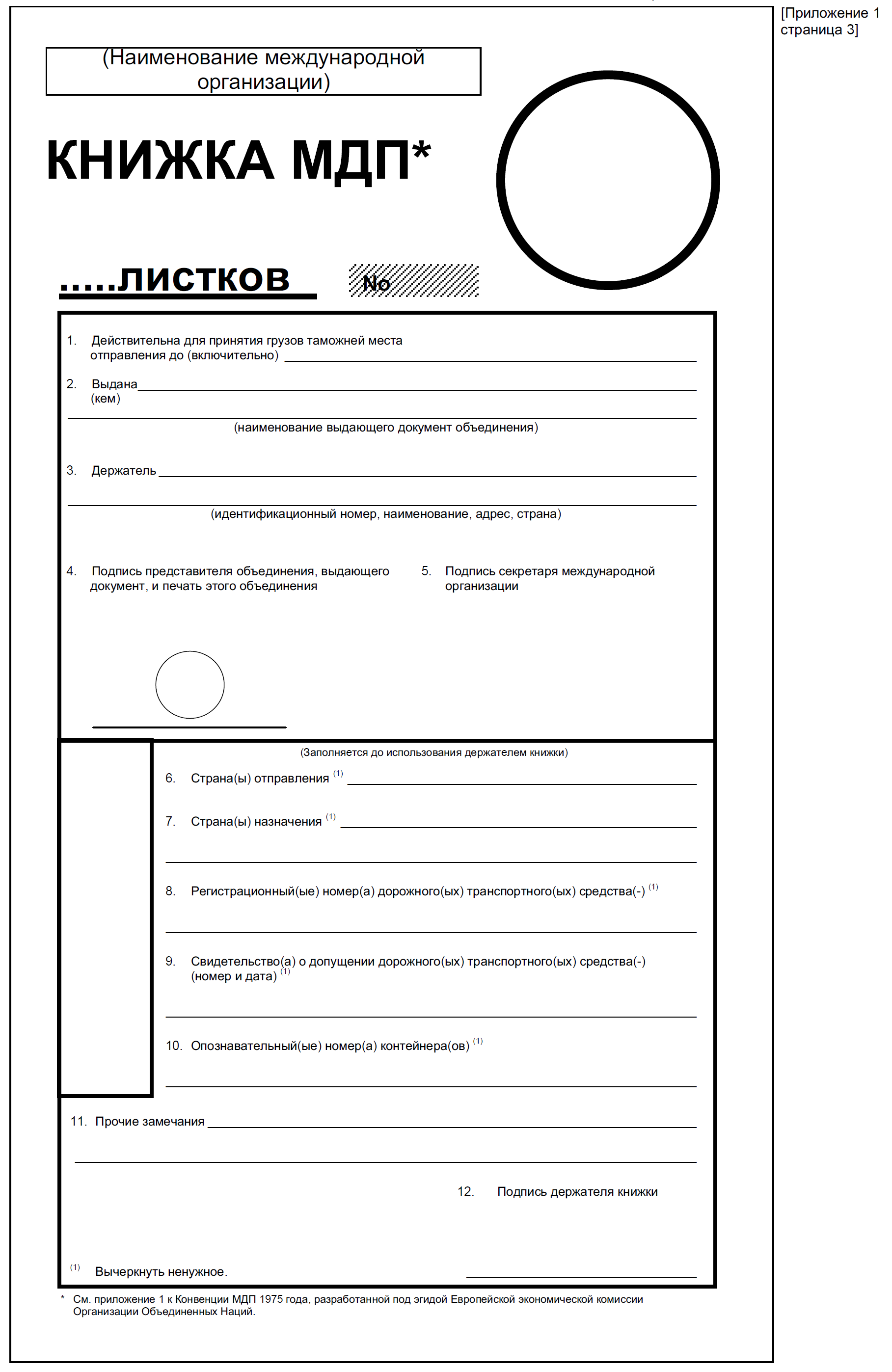
Образец книжки МДП: ВАРИАНТ 1
Страница 2 обложки
```text
┌──────────────────────────────────────────────────────────────────┐
│ ПРАВИЛА ПОЛЬЗОВАНИЯ КНИЖКОЙ МДП │[приложение 1
│ │страница 4]
│ A. Общие положения │
│ │
│1. Выдача: Книжка МДП выдается в стране отправления или в той│
│стране, где держатель находится или имеет постоянное│
│местопребывание. │
│2. Язык: Книжка МДП печатается на французском языке, за│
│исключением лицевой стороны обложки, рубрики которой печатаются│
│также на английском языке. "Правила пользования книжкой МДП"│
│воспроизводятся на английском языке на странице 3 этой обложки.│
│Кроме того, могут быть добавлены дополнительные страницы с│
│переводом печатного текста на другие языки. │
│Книжки, используемые для перевозок МДП в пределах региональной│
│системы гарантий, могут быть отпечатаны на любом официальном языке│
│Организации Объединенных Наций, за исключением стр. 1 обложки, на│
│которой рубрики печатаются на английском или французском языках.│
│"Правила пользования книжкой МДП" печатаются на второй странице│
│обложки на официальном языке Организации Объединенных Наций, а│
│также на английском или французском языках на третьей странице│
│обложки. │
│3. Срок действия: Книжка МДП действительна до завершения перевозки│
│МДП в таможне места назначения, если она оформлена в таможне места│
│отправления в срок, установленный выдающим документ объединением│
│(рубрика 1 лицевой стороны обложки). │
│4. Число книжек: Для состава транспортных средств (сцепленные│
│транспортные средства) или для нескольких контейнеров, погруженных│
│либо на одно транспортное средство, либо на состав транспортных│
│средств, может выдаваться одна книжка МДП (см. также ниже пункт 10│
│d)). │
│5. Число таможен места отправления и места назначения: Маршруты│
│перевозок с применением книжки МДП могут проходить через несколько│
│таможен места отправления и назначения; однако общее число таможен│
│места отправления и назначения не должно превышать четырех. Книжка│
│МДП может быть предъявлена таможням места назначения только в том│
│случае, если отметку о ее принятии сделали все таможни места│
│отправления (см. также правило 10 e) ниже). │
│6. Число листов: Если маршрут перевозки проходит только через одну│
│таможню места отправления и одну таможню места назначения, то в│
│книжке МДП должно быть, по меньшей мере, 2 листа для страны│
│отправления, 2 листа для страны назначения и 2 листа для каждой│
│другой страны, по территории которой производится перевозка. Для│
│каждой дополнительной таможни места отправления (или места│
│назначения) требуется 2 дополнительных листа. │
│7. Представление в таможнях: Книжка МДП должна представляться│
│вместе с дорожным транспортным средством, составом транспортных│
│средств или контейнером(ами) в каждой таможне места отправления, в│
│каждой промежуточной таможне и в каждой таможне места назначения.│
│В последней таможне места отправления должностное лицо таможни│
│ставит подпись и штемпель с датой под грузовым манифестом на всех│
│отрывных листках, которые будут использованы на остальной части│
│маршрута (рубрика 17). │
│ │
│ B. Способ заполнения книжки МДП │
│ │
│8. Подчистки, помарки: В книжке МДП не должно быть ни подчисток,│
│ни помарок. Все исправления должны быть произведены путем│
│вычеркивания ошибочных указаний и добавления, в случае│
│необходимости, надлежащих указаний. Всякое изменение должно быть│
│подтверждено сделавшим его лицом и удостоверено таможенными│
│органами. │
│9. Сведения, касающиеся регистрации: Если положениями│
│национального законодательства не предусматривается регистрация│
│прицепов и полуприцепов, то вместо регистрационного номера│
│следует указать опознавательный или заводской номер. │
│10. Манифест: │
│a) Манифест заполняется на языке страны отправления, если только│
│таможенные органы не разрешают использование другого языка.│
│Таможенные органы других стран, по территории которых│
│осуществляется перевозка, сохраняют за собой право требовать│
│перевода манифеста на язык их страны. Во избежание задержек,│
│которые могут быть вызваны этим требованием, перевозчикам│
│рекомендуется иметь в своем распоряжении надлежащие переводы. │
│b) Указания, занесенные в манифест, должны быть отпечатаны на│
│машинке или гектографированы так, чтобы они были удобочитаемы на│
│всех листах. Листы, заполненные неразборчиво, не принимаются│
│таможенными органами. │
│c) К отрывным листкам могут прилагаться дополнительные листки того│
│же образца, что и манифест, или коммерческие документы с указанием│
│всех сведений, которые приводятся в манифесте. В этом случае во│
│все отрывные листки надлежит внести следующие сведения: i) число│
│дополнительных листов (рубрика 8); ii) число и тип грузовых мест│
│или предметов, а также общий вес брутто грузов, перечисленных в│
│этих дополнительных листах (рубрики 9 - 11). │
│d) Если книжка МДП выдана на состав транспортных средств или на│
│несколько контейнеров, в манифесте следует указать отдельно│
│содержимое каждого транспортного средства или каждого контейнера.│
│Этому указанию должен предшествовать регистрационный номер│
│транспортного средства или опознавательный номер контейнера│
│(рубрика 9 манифеста). │
│e) Если маршрут перевозки проходит через несколько таможен│
│отправления или назначения, то записи, касающиеся принятых для│
│оформления грузов или грузов, предназначенных для каждой таможни,│
│также должны быть внесены в манифест отдельно друг от друга. │
│11. Упаковочные листы, фотографии, схемы и т.д.: Если для│
│опознавания тяжеловесных или громоздких грузов таможенные органы│
│требуют, чтобы подобные документы были приложены к книжке МДП,│
│последние должны быть заверены таможенными органами и прикреплены│
│к странице 2 обложки книжки. Кроме того, на всех отрывных листках│
│в рубрике 8 следует перечислить эти документы. │
│12. Подпись: На всех отрывных листках (рубрики 14 и 15) должны│
│быть проставлены дата и подпись держателя книжки МДП или его│
│представителя. │
│ │
│ C. Дорожно-транспортные происшествия │
│ │
│13. Если в пути таможенные пломбы и печати были случайно│
│повреждены или груз погиб или поврежден, перевозчик должен│
│немедленно обратиться к таможенным органам, если таковые находятся│
│поблизости, или, в противном случае, к другим компетентным органам│
│страны, в которой он находится. Последние в возможно короткий срок│
│составляют протокол, приведенный в книжке МДП. │
│14. Если в результате дорожно-транспортного происшествия│
│необходимо перегрузить груз на другое транспортное средство или в│
│другой контейнер, то такая перегрузка может быть произведена лишь│
│в присутствии представителя одного из органов, указанных выше в│
│пункте 13. Данный орган составляет протокол. Если в книжке МДП не│
│упомянуты "тяжеловесные или громоздкие грузы", то транспортное│
│средство и контейнер(ы), на которое(ый) грузы были перегружены,│
│должно (должен) быть допущено (допущен) к перевозке грузов под│
│таможенными печатями и пломбами. Кроме того, должны быть наложены│
│таможенные печати и пломбы, которые должны быть описаны в│
│протоколе. Однако при отсутствии допущенного к перевозке│
│транспортного средства или контейнера грузы могут быть перегружены│
│на недопущенное(ый) транспортное средство или контейнер, если│
│оно/он является достаточно надежным. В этом последнем случае│
│таможенные органы расположенных далее по маршруту стран решат,│
│могут ли также и они допустить дальнейшую перевозку грузов в этом│
│транспортном средстве или контейнере с применением книжки МДП. │
│15. В случае непосредственно угрожающей опасности, требующей│
│немедленной выгрузки всего груза или его части, перевозчик может│
│по собственному усмотрению принять необходимые меры, не испрашивая│
│и не ожидая вмешательства органов, упомянутых выше в пункте 13. В│
│таком случае он должен привести доказательства того, что он│
│вынужден был действовать так в интересах сохранения транспортного│
│средства или контейнера или груза, и, немедленно по принятии│
│срочных мер предупредительного характера, уведомить один из│
│органов, упомянутых выше в пункте 13, для установления фактов,│
│проверки груза, наложения пломб на транспортное средство или│
│контейнер и составления Протокола. │
│16. Протокол должен оставаться в книжке МДП до прибытия груза в│
│таможню места назначения. │
│17. Объединениям рекомендуется предоставлять перевозчикам, помимо│
│образца, включенного в саму книжку МДП, несколько бланков│
│протокола, составленных на языке(ах) стран, через которые проходит│
│маршрут перевозки. │
└──────────────────────────────────────────────────────────────────┘
```
Образец книжки МДП: ВАРИАНТ 1
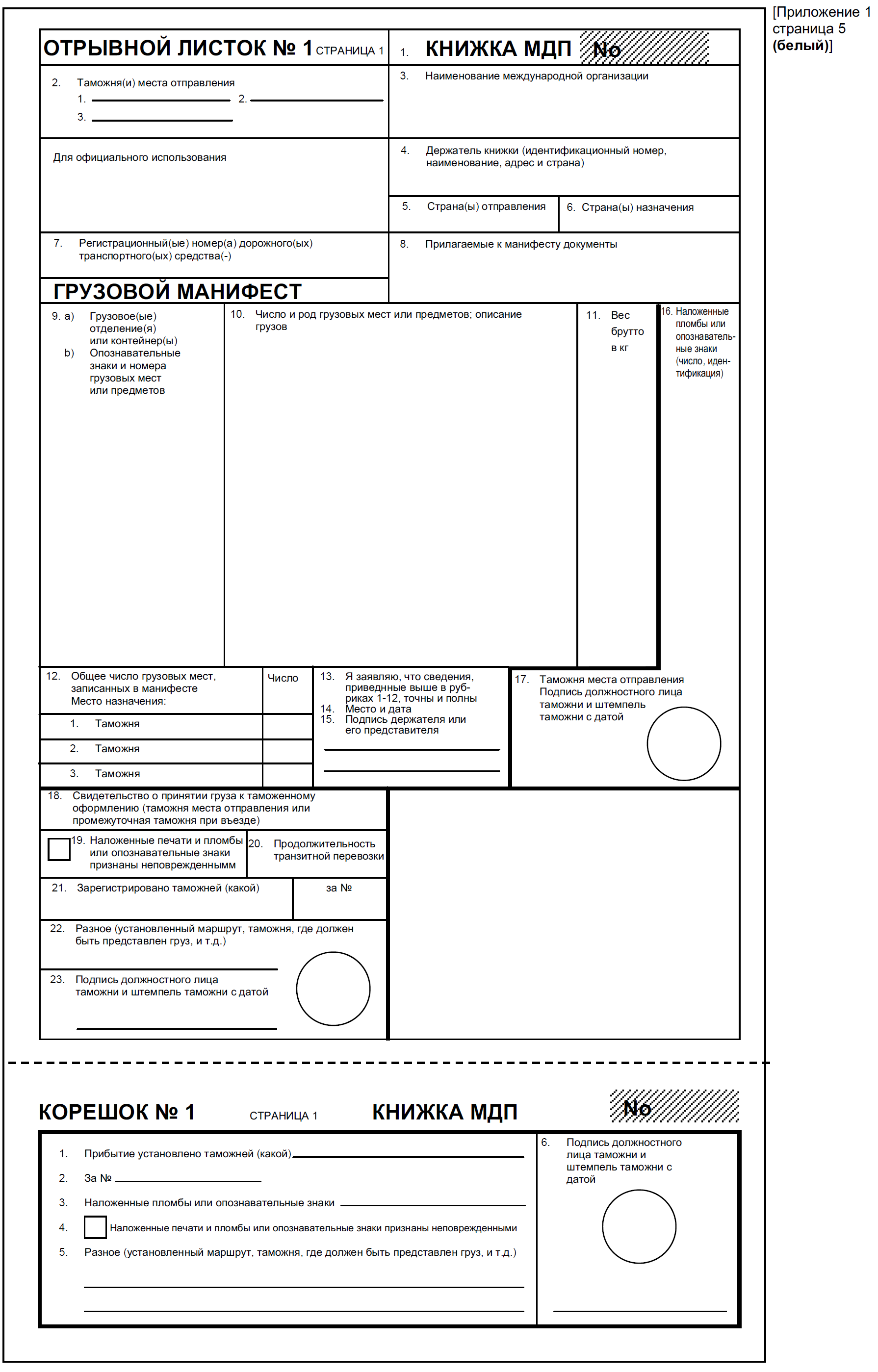
Образец книжки МДП: ВАРИАНТ 1
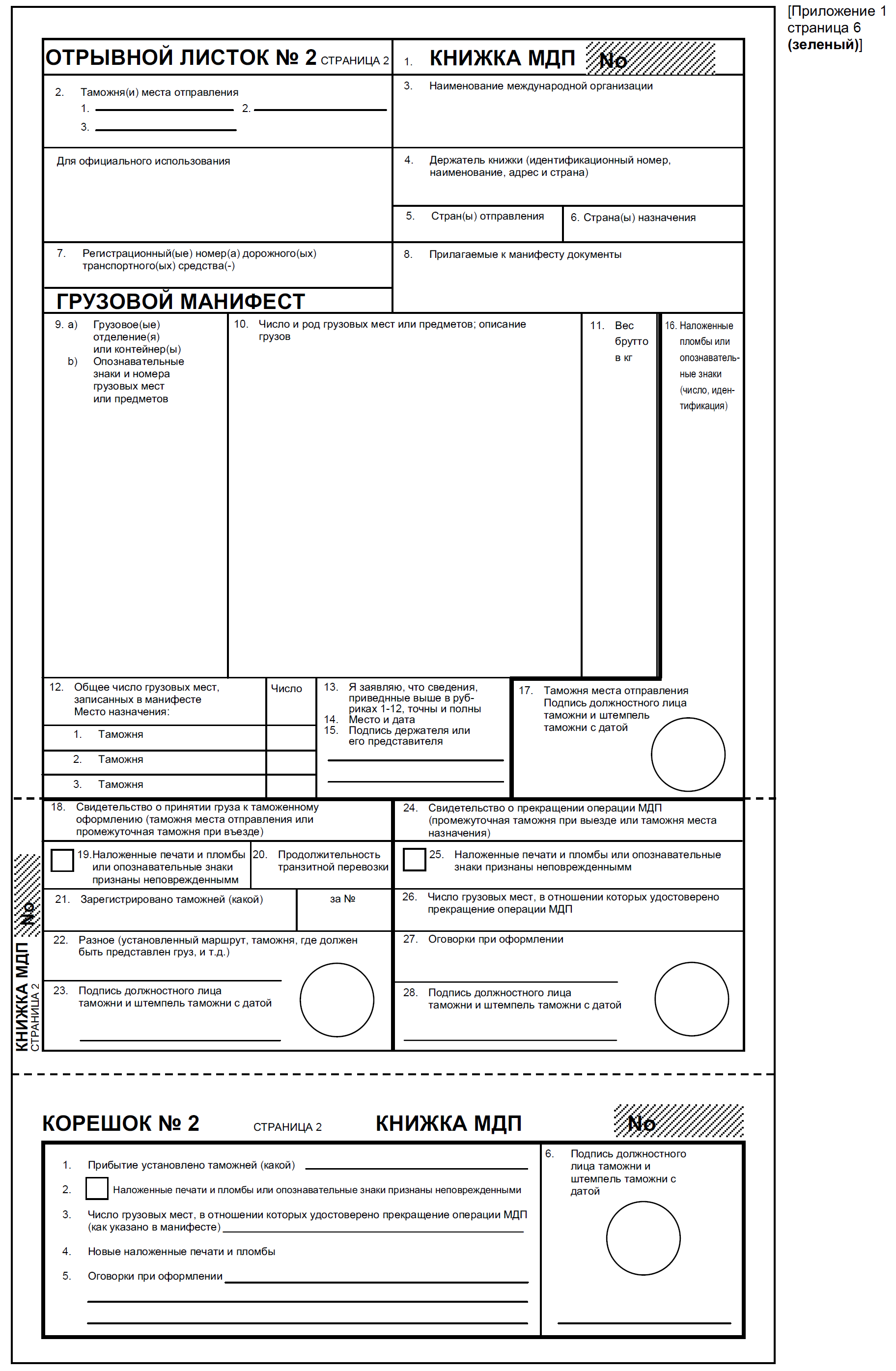
Образец книжки МДП: ВАРИАНТ 1
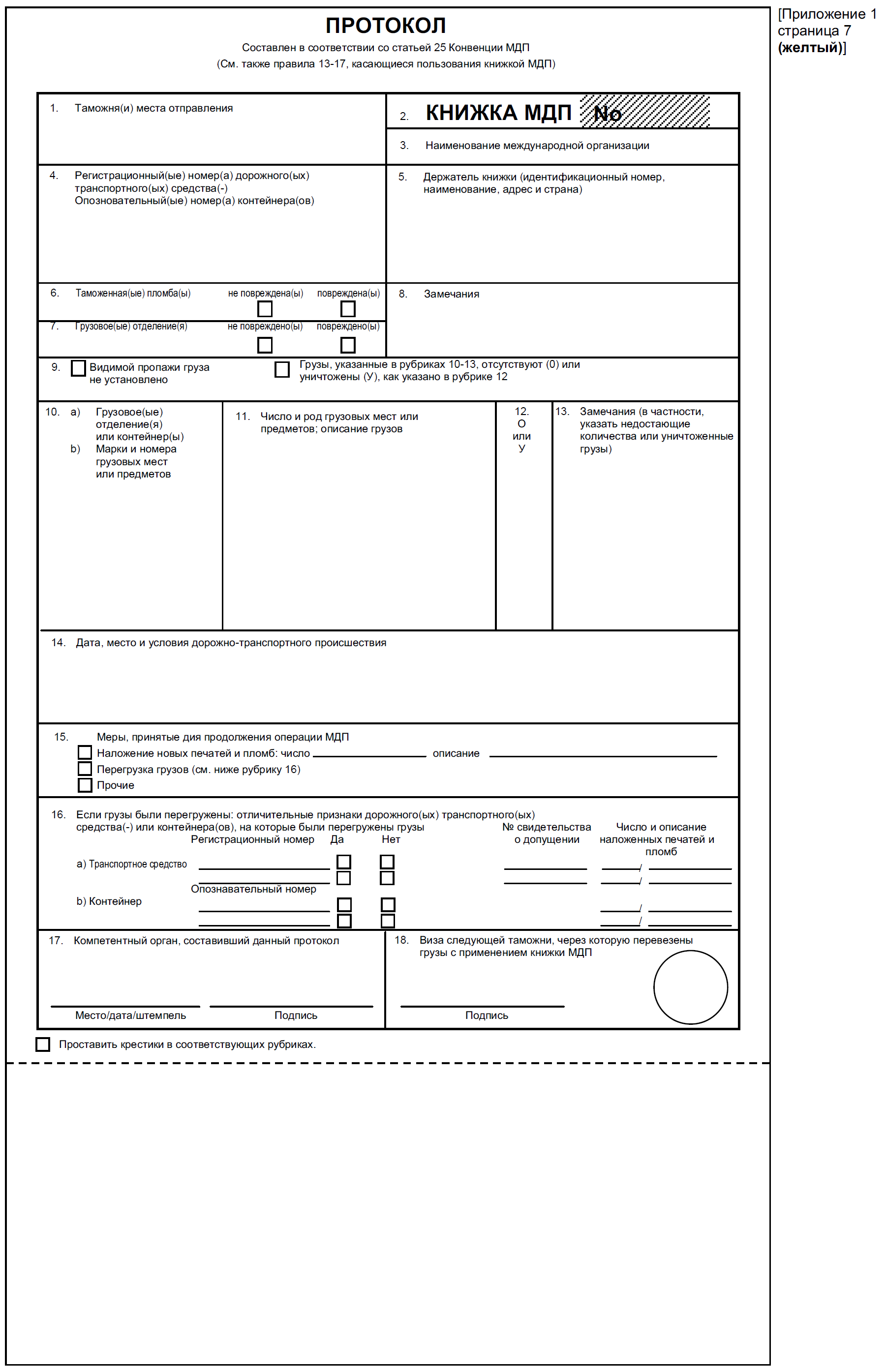
Образец книжки МДП: ВАРИАНТ 1
Страница 3 обложки
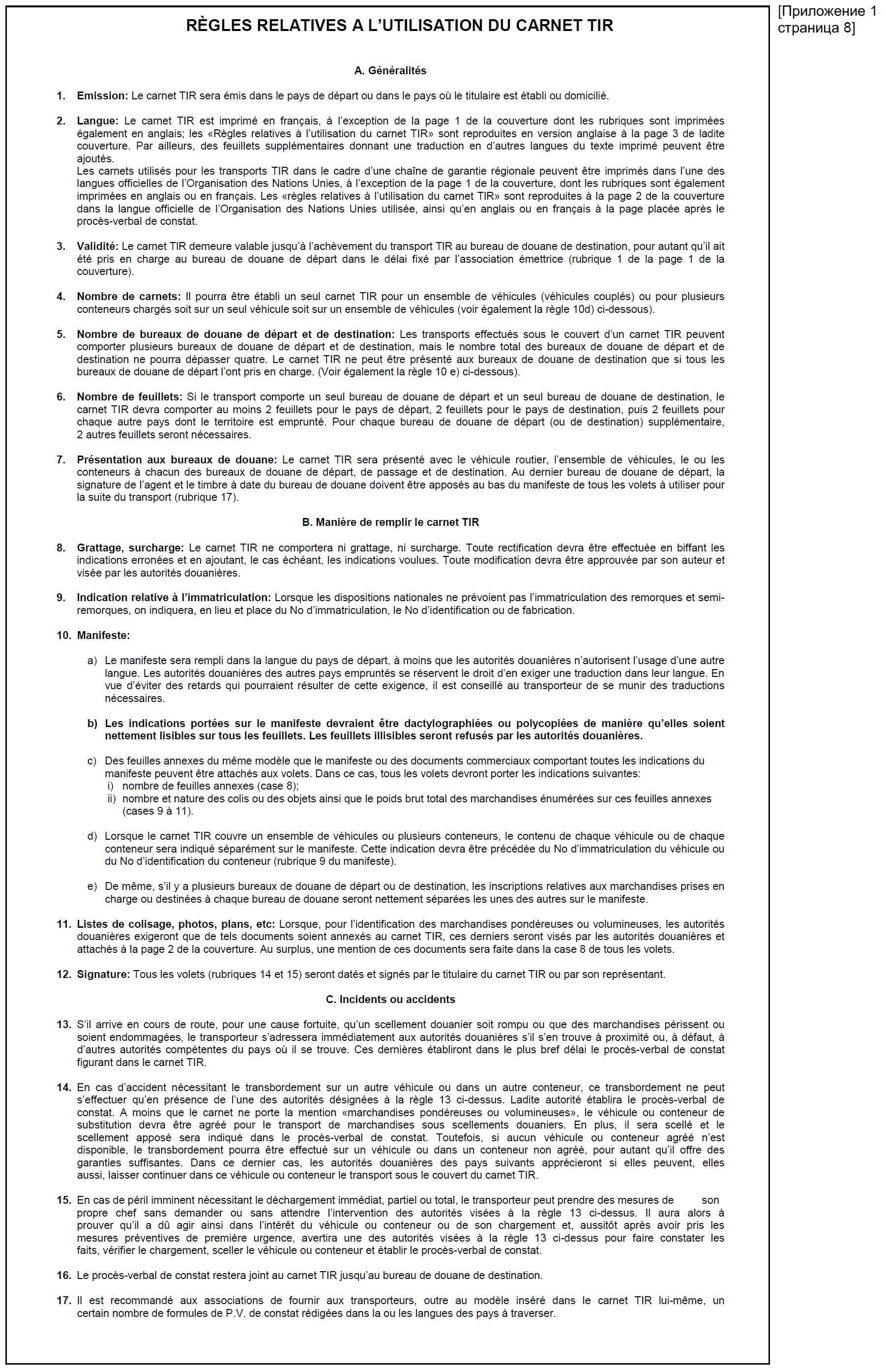
Образец книжки МДП: ВАРИАНТ 2
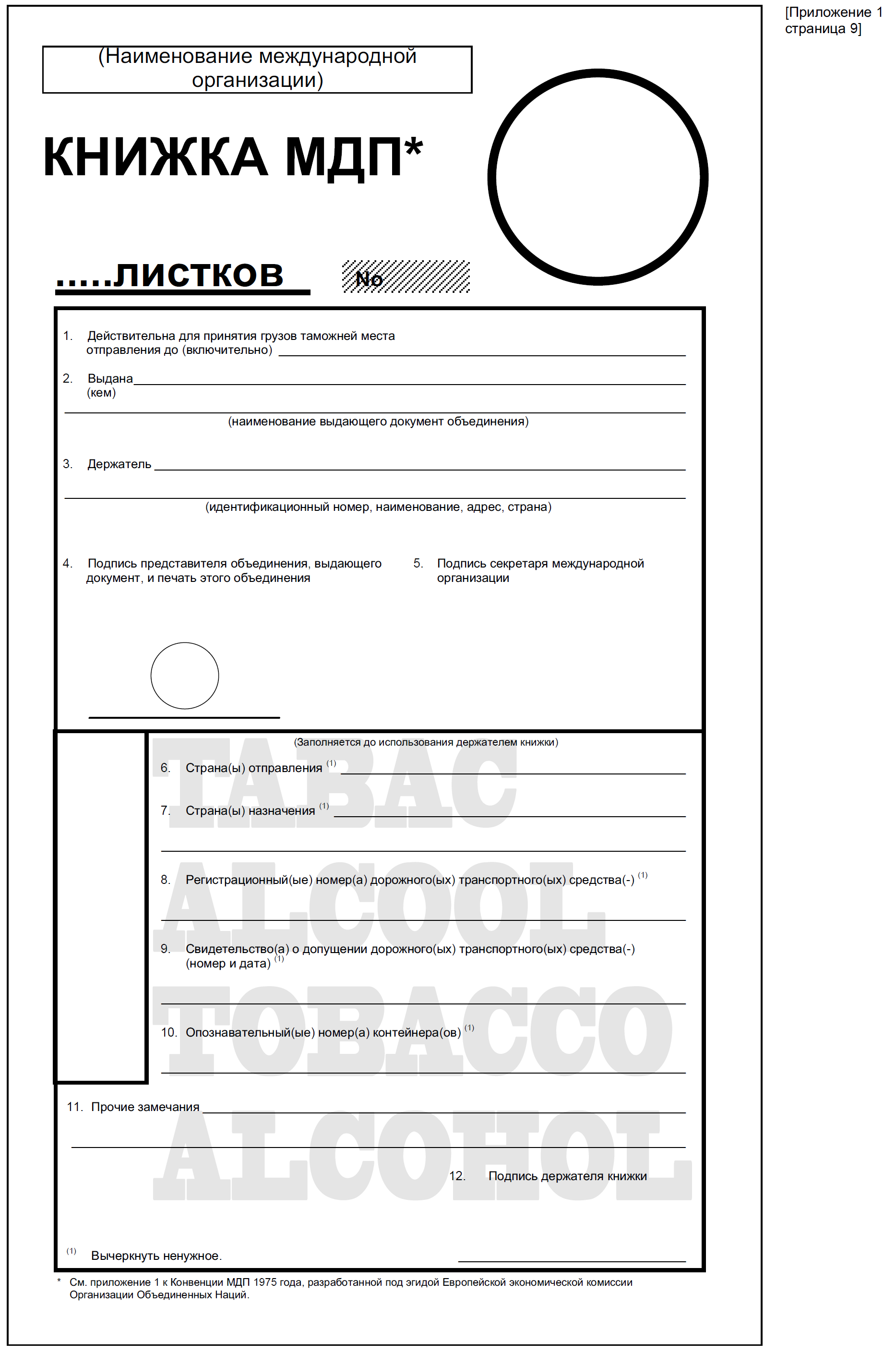
Образец книжки МДП: ВАРИАНТ 2
Страница 2 обложки
```text
┌──────────────────────────────────────────────────────────────────┐
│ ПРАВИЛА ПОЛЬЗОВАНИЯ КНИЖКОЙ МДП │[приложение 1
│ │страница 10]
│ A. Общие положения │
│ │
│1. Выдача: Книжка МДП выдается в стране отправления или в той│
│стране, где держатель находится или имеет постоянное│
│местопребывание. │
│2. Язык: Книжка МДП печатается на французском языке, за│
│исключением лицевой стороны обложки, рубрики которой печатаются│
│также на английском языке. "Правила пользования книжкой МДП"│
│воспроизводятся на английском языке на странице 2 этой обложки.│
│Кроме того, могут быть добавлены дополнительные страницы с│
│переводом печатного текста на другие языки. │
│Книжки, используемые для операций МДП в пределах региональной│
│системы гарантий, могут быть отпечатаны на любом официальном языке│
│Организации Объединенных Наций, за исключением стр. 1 обложки, на│
│которой рубрики печатаются на английском или французском языках.│
│"Правила пользования МДП" печатаются на второй странице обложки│
│на официальном языке Организации Объединенных Наций, а также на│
│английском или французском языках на третьей странице обложки.│
│3. Срок действия: Книжка МДП действительна до завершения операции│
│МДП в таможне места назначения, если она оформлена в таможне места│
│отправления в срок, установленный выдающим документ объединением│
│(рубрика 1 лицевой стороны обложки). │
│4. Число книжек: Для состава транспортных средств (сцепленные│
│транспортные средства) или для нескольких контейнеров, погруженных│
│либо на одно транспортное средство, либо на состав транспортных│
│средств, выдается одна книжка МДП (см. также ниже пункт 10 d)). │
│5. Число таможен места отправления и места назначения: Маршруты│
│перевозок с применением книжки МДП могут проходить через несколько│
│таможен места отправления и назначения; однако общее число таможен│
│места отправления и назначения не должно превышать четырех. Книжка│
│МДП может быть предъявлена таможням места назначения только в том│
│случае, если отметку о ее принятии сделали все таможни места│
│отправления (см. также правило 10 e) ниже). │
│6. Число листов: Если маршрут перевозок проходит только через одну│
│таможню места отправления и одну таможню места назначения, то в│
│книжке МДП должно быть по меньшей мере 2 листа для страны│
│отправления, 2 листа для страны назначения и 2 листа для каждой│
│другой страны, по территории которой производится перевозка. Для│
│каждой дополнительной таможни места отправления (или назначения)│
│требуются 2 дополнительных листа. │
│7. Представление в таможнях: Книжка МДП должна представляться│
│вместе с дорожным транспортным средством, составом транспортных│
│средств или контейнером(ами) в каждой таможне места отправления, в│
│каждой промежуточной таможне и в каждой таможне места назначения.│
│В последней таможне места отправления должностное лицо таможни│
│ставит подпись и штемпель с датой под грузовым манифестом на всех│
│отрывных листках, которые будут использованы на остальной части│
│маршрута (рубрика 17). │
│ │
│ B. Способ заполнения книжки МДП │
│ │
│8. Подчистки, помарки: В книжке МДП не должно быть ни подчисток,│
│ни помарок. Все исправления должны быть произведены путем│
│вычеркивания ошибочных указаний и добавления, в случае│
│необходимости, надлежащих указаний. Всякое изменение должно быть│
│подтверждено сделавшим его лицом и удостоверено таможенными│
│органами. │
│9. Сведения, касающиеся регистрации: Если положениями│
│национального законодательства не предусматривается регистрация│
│прицепов и полуприцепов, то вместо регистрационного номера│
│следует указать опознавательный или заводской номер. │
│10. Манифест: │
│a) Манифест заполняется на языке страны отправления, если только│
│таможенные органы не разрешают использование другого языка.│
│Таможенные органы других стран, по территории которых│
│осуществляется перевозка, сохраняют за собой право требовать│
│перевода манифеста на язык их страны. Во избежание задержек,│
│которые могут быть вызваны этим требованием, перевозчикам│
│рекомендуется иметь в своем распоряжении надлежащие переводы. │
│b) Указания, занесенные в манифест, должны быть отпечатаны на│
│машинке или гектографированы так, чтобы они были удобочитаемы на│
│всех листах. Листы, заполненные неразборчиво, не принимаются│
│таможенными органами. │
│c) К отрывным листкам могут прилагаться дополнительные листки того│
│же образца, что и манифест, или коммерческие документы с указанием│
│всех сведений, которые приводятся в манифесте. В этом случае во│
│все отрывные листки надлежит внести следующие сведения: i) число│
│дополнительных листов (рубрика 10); ii) число и тип грузовых мест│
│или предметов, а также общий вес брутто грузов, перечисленных в│
│этих дополнительных листах (рубрики 9 - 11). │
│d) Если книжка МДП выдана на состав транспортных средств или на│
│несколько контейнеров, в манифесте следует указать отдельно│
│содержимое каждого транспортного средства или каждого контейнера.│
│Этому указанию должен предшествовать регистрационный номер│
│транспортного средства или опознавательный номер контейнера│
│(рубрика 9 манифеста). │
│e) Если маршрут перевозки проходит через несколько таможен│
│отправления или назначения, то записи, касающиеся принятых для│
│отправленных грузов или грузов, предназначенных для каждой│
│таможни, также должны быть внесены в манифест отдельно друг от│
│друга. │
│11. Упаковочные листы, фотографии, схемы и т.д.: Если для│
│опознавания тяжеловесных или громоздких грузов таможенные органы│
│требуют, чтобы подобные документы были приложены к книжке МДП,│
│последние должны быть заверены таможенными органами и прикреплены│
│к странице 2 обложки книжки. Кроме того, на всех отрывных листках│
│в рубрике 8 следует перечислить эти документы. │
│12. Подпись: На всех отрывных листках (рубрики 14 и 15) должны│
│быть проставлены дата и подпись держателя книжки МДП или его│
│представителя. │
│ │
│ C. Дорожно-транспортные происшествия │
│ │
│13. Если в пути таможенные пломбы и печати были случайно│
│повреждены или груз погиб или поврежден, перевозчик должен│
│немедленно обратиться к таможенным органам, если таковые находятся│
│поблизости, или, в противном случае, к другим компетентным органам│
│страны, в которой он находится. Последние в возможно короткий срок│
│составляют протокол, приведенный в книжке МДП. │
│14. Если в результате дорожно-транспортного происшествия│
│необходимо перегрузить груз на другое транспортное средство или в│
│другой контейнер, то такая перегрузка может быть произведена лишь│
│в присутствии представителя одного из органов, указанных выше в│
│пункте 13. Данный орган составляет протокол. Если в книжке МДП не│
│упомянуты "тяжеловесные или громоздкие грузы", то транспортное│
│средство и контейнер(ы), на которое(ый) грузы были перегружены,│
│должно (должен) быть допущено (допущен) к перевозке грузов под│
│таможенными печатями и пломбами. Однако при отсутствии допущенного│
│к перевозке транспортного средства или контейнера грузы могут быть│
│перегружены на недопущенное(ый) транспортное средство или│
│контейнер, если оно/он является достаточно надежным. В этом│
│последнем случае таможенные органы расположенных далее по маршруту│
│стран решат, могут ли также и они допустить дальнейшую перевозку│
│грузов в этом транспортном средстве или контейнере с применением│
│книжки МДП. │
│15. В случае непосредственно угрожающей опасности, требующей│
│немедленной выгрузки всего груза или его части, перевозчик может│
│по собственному усмотрению принять необходимые меры, не испрашивая│
│и не ожидая вмешательства органов, упомянутых выше в пункте 13. В│
│таком случае он должен привести доказательства того, что он│
│вынужден был действовать так в интересах сохранения транспортного│
│средства или контейнера или груза, и, немедленно по принятии│
│срочных мер предупредительного характера, уведомить один из│
│органов, упомянутых выше в пункте 13, для установления фактов,│
│проверки груза, наложения пломб на транспортное средство или│
│контейнер и составления протокола. │
│16. Протокол должен оставаться в книжке МДП до прибытия груза в│
│таможню места назначения. │
│17. Объединениям рекомендуется предоставлять перевозчикам, помимо│
│образца, включенного в саму книжку МДП, несколько бланков│
│протокола, составленных на языке(ах) стран, через которые проходит│
│маршрут перевозки. │
└──────────────────────────────────────────────────────────────────┘
```
Образец книжки МДП: ВАРИАНТ 2
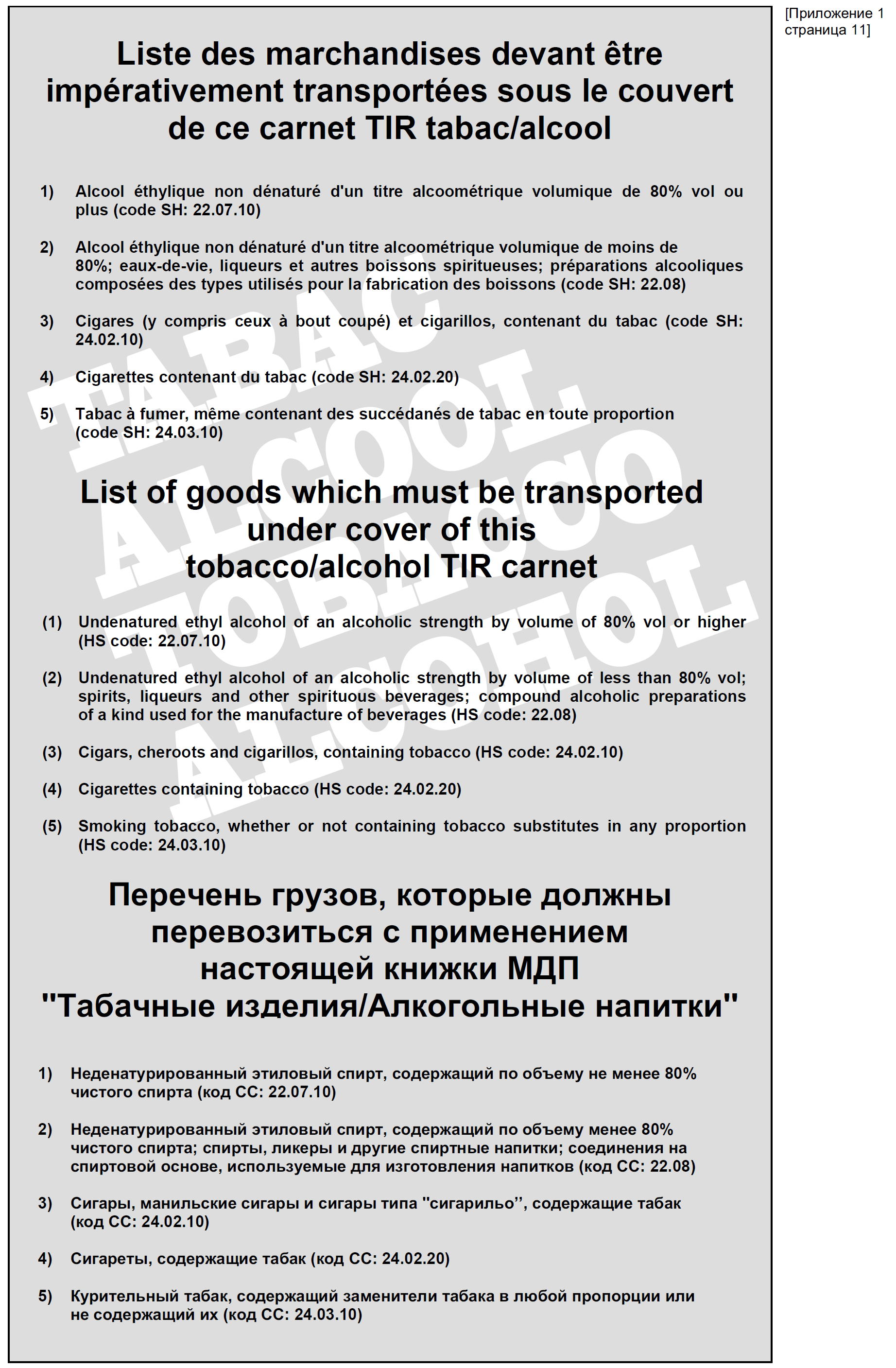
Образец книжки МДП: ВАРИАНТ 2
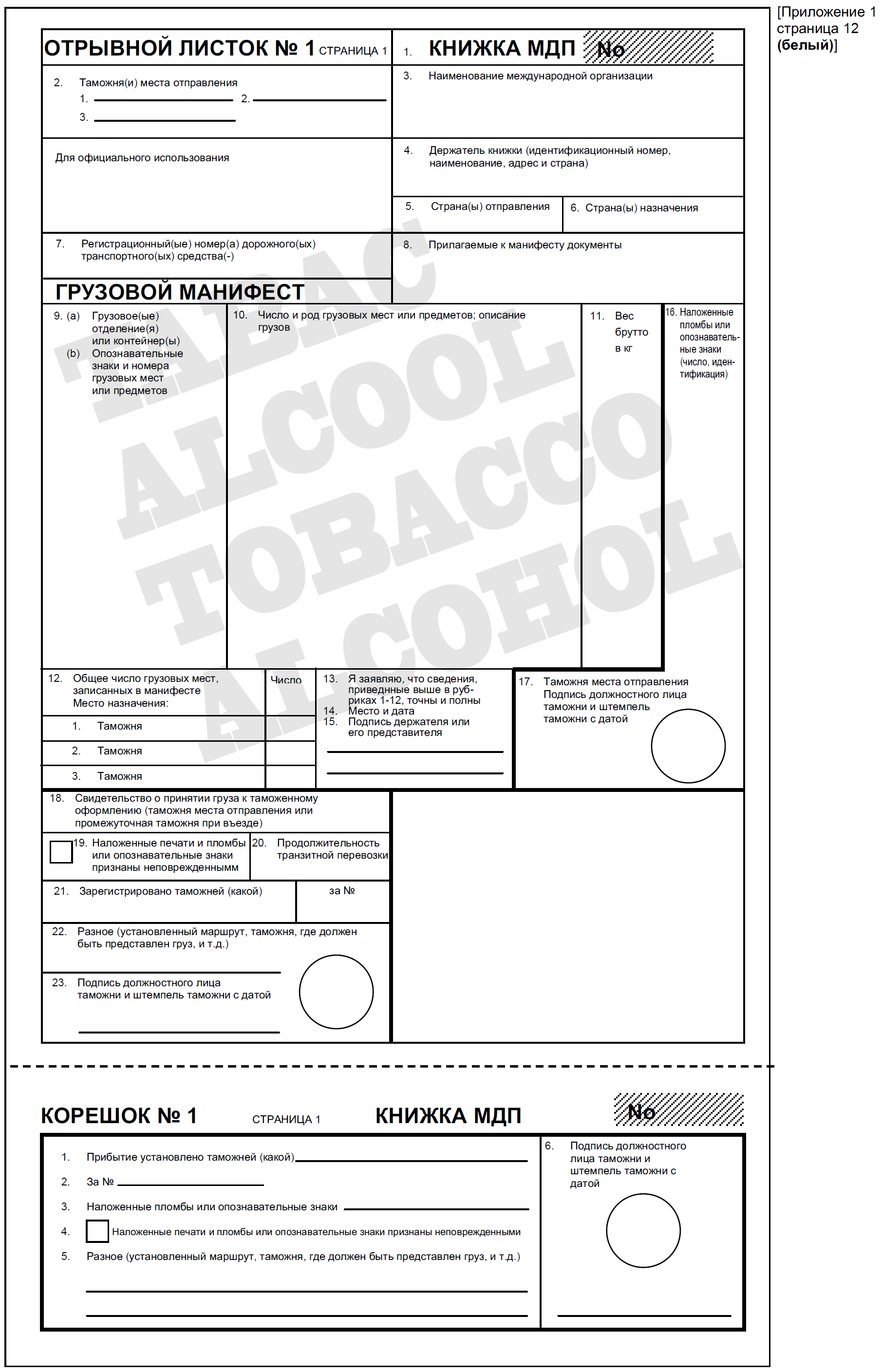
Образец книжки МДП: ВАРИАНТ 2
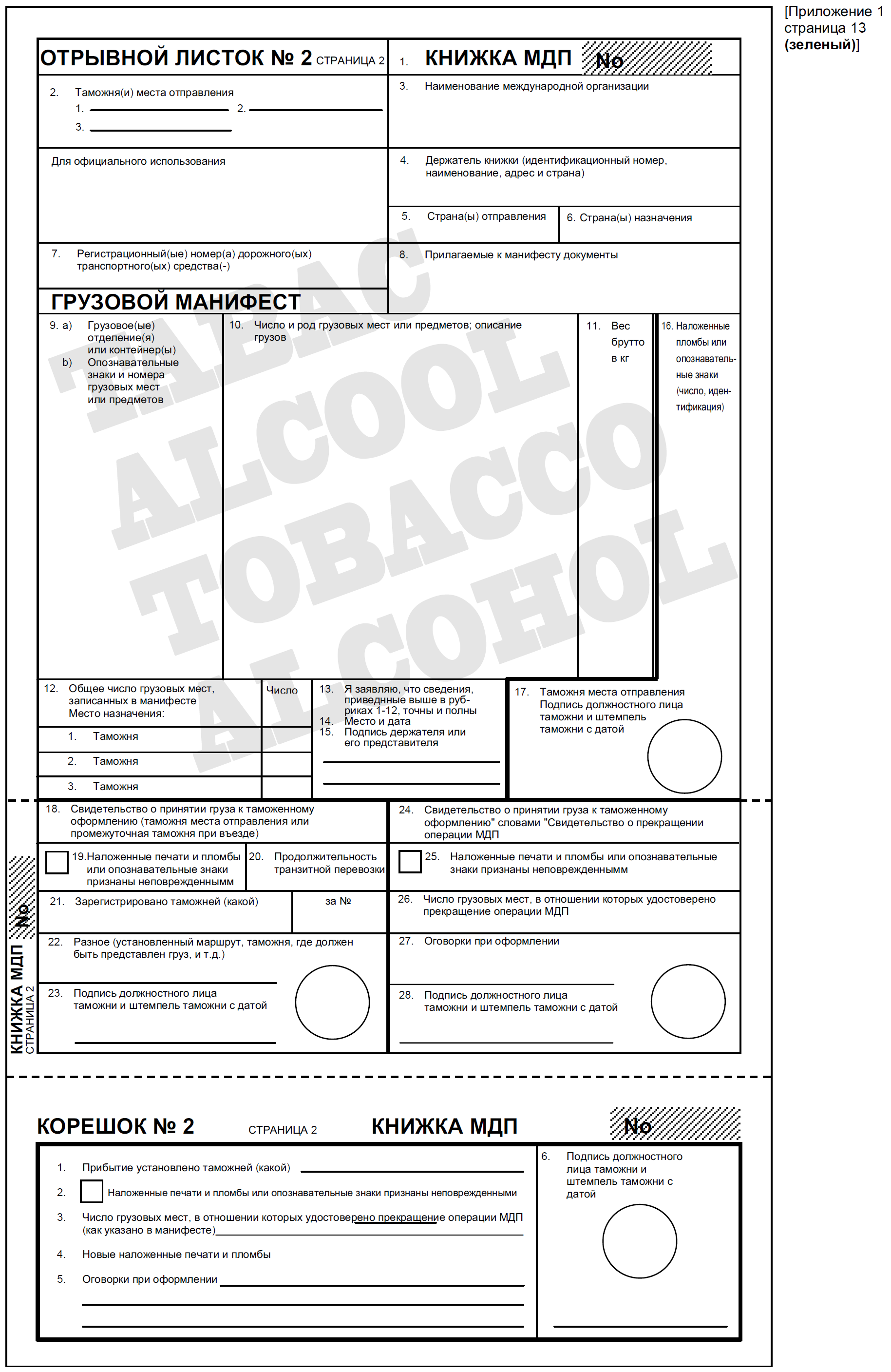
Образец книжки МДП: ВАРИАНТ 2
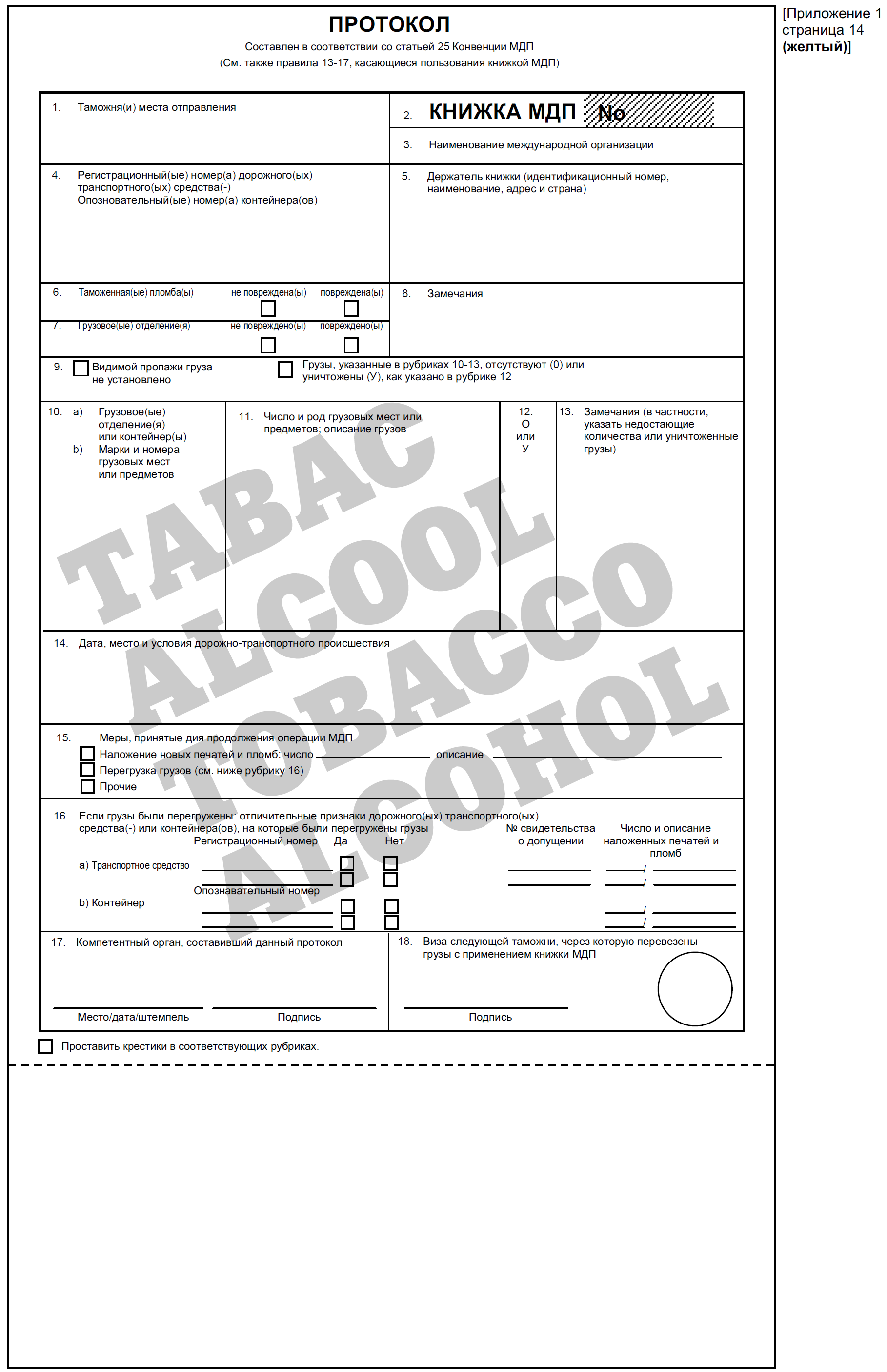
Образец книжки МДП: ВАРИАНТ 2
Страница 3 обложки
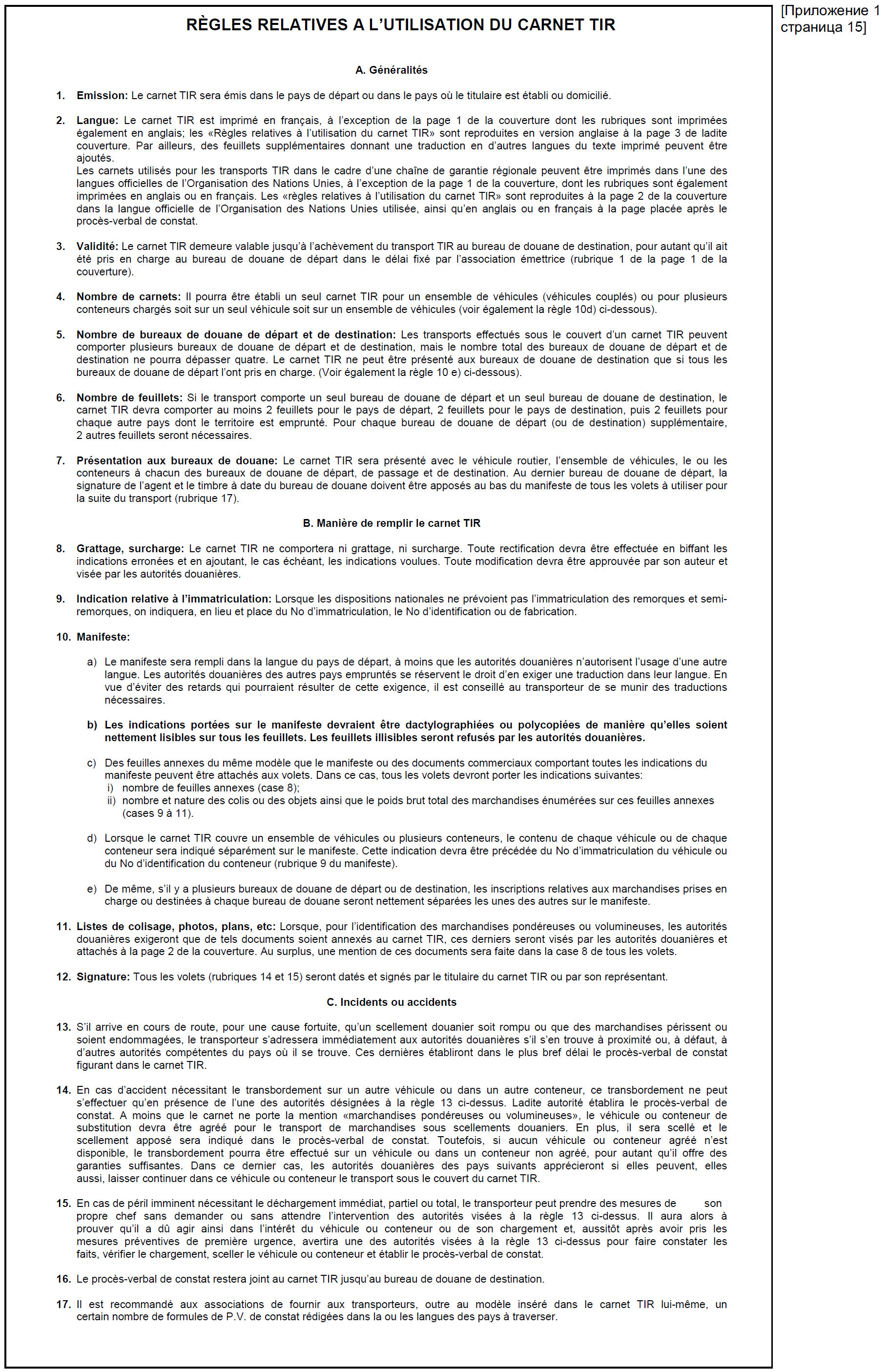
**ПРАВИЛА,**
**КАСАЮЩИЕСЯ ТЕХНИЧЕСКИХ УСЛОВИЙ, ПРИМЕНИМЫХ К ДОРОЖНЫМ**
**ТРАНСПОРТНЫМ СРЕДСТВАМ, ОСУЩЕСТВЛЯЮЩИМ МЕЖДУНАРОДНЫЕ**
## Статья 1. ПЕРЕВОЗКИ ГРУЗОВ ПОД ТАМОЖЕННЫМИ ПЕЧАТЯМИ И ПЛОМБАМИ
### Статья 1. **ПЕРЕВОЗКИ ГРУЗОВ ПОД ТАМОЖЕННЫМИ ПЕЧАТЯМИ И ПЛОМБАМИ**
Основные принципы
К международной перевозке грузов под таможенными печатями и пломбами могут допускаться только транспортные средства, грузовые отделения которых сконструированы и оборудованы таким образом:
a) чтобы грузы не могли извлекаться из опечатанной части транспортного средства или загружаться туда без оставления видимых следов взлома или повреждения таможенных печатей и пломб;
b) чтобы таможенные печати и пломбы могли налагаться простым и надежным способом;
c) чтобы в них не было никаких потайных мест для сокрытия грузов;
d) чтобы все места, в которые могут помещаться грузы, были легко доступны для таможенного досмотра.
Комментарии к [статье 1](https://bukva.ai/docs/tamozhennaya-konventsiya-o-mezhdunarodnoy-2/statya-1-2#p100773)
Цилиндрические баки транспортных средств
Дополнительные топливные баки не могут рассматриваться в качестве грузовых отделений, если они используются для заправки топливом. Добавочные емкости, используемые для перевозки иных грузов, также не могут рассматриваться в качестве грузовых отделений в связи с техническими трудностями, возникающими при их допущении и установлении, являются ли такие емкости топливными баками или нет.
(TRANS/GE.30/39, пункты 51 - 54)
Знаки на грузовых отделениях
Надписи, трафареты, полосы из светоотражающего материала и другие аналогичные им знаки, которые не могут быть сняты со стенок или брезента грузовых отделений, допустимы, если они не закрывают структуру стенки или брезента, которая должна оставаться ясно различимой. Использование наклеек и других аналогичных им знаков, которые могут скрывать отверстия в грузовом отделении, не допускается.
## Статья 2. (TRANS/WP.30/151, пункт 39; TRANS/GE.30/57, пункт 45)
### Статья 2. (TRANS/WP.30/151, пункт 39; TRANS/GE.30/57, пункт 45)
Конструкция грузовых отделений
1. Для удовлетворения требованиям [статьи 1](https://bukva.ai/docs/tamozhennaya-konventsiya-o-mezhdunarodnoy-2/statya-1-2#p100773) настоящих Правил:
a) составные элементы грузового отделения (стенки, пол, двери, крыша, стойки, рамы, поперечные элементы и т.д.) должны соединяться либо с помощью приспособлений, которые не могут быть сняты снаружи и вновь поставлены на место без оставления видимых следов, либо с помощью методов, обеспечивающих такую конструкцию, которая не может быть изменена без оставления видимых следов. Когда стенки, пол, двери и крыша изготовлены из различных элементов, они должны отвечать тем же требованиям и быть достаточно прочными;
Пояснительная записка к [пункту 1 a) статьи 2](https://bukva.ai/docs/tamozhennaya-konventsiya-o-mezhdunarodnoy-2/statya-2-2#p100790)
2.2.1. a) Сборка составных элементов
a) В случае применения крепежных деталей (заклепок, шурупов, болтов, гаек и т.д.) достаточное число таких деталей должно вставляться с наружной стороны, проходить через скрепляемые элементы, выступать внутри и там жестко закрепляться (например, при помощи заклепок, сварки, втулок, болтов, приклепывания или приварки гаек). Однако, обычные заклепки (т.е. заклепки, постановка которых осуществляется с обеих сторон собираемого узла) могут вставляться также с внутренней стороны.
Независимо от вышесказанного пол грузового отделения может прикрепляться с помощью самонарезающих шурупов или самосверлящих заклепок, ставящихся с помощью заряда взрывчатого вещества, или шпилек, вставляемых с помощью сжатого воздуха, устанавливаемых изнутри и проходящих вертикально через пол и нижние металлические поперечины, при условии (за исключением случаев самонарезающих шурупов), что некоторые их концы будут заподлицо с наружной поверхностью поперечин или будут приварены к ней.
(ECE/TRANS/17/Amend.3, вступила в силу 1 октября 1981 г.)
b) Компетентный орган определяет, какие крепежные детали и в каком количестве должны соответствовать требованиям [пункта a)](https://bukva.ai/docs/tamozhennaya-konventsiya-o-mezhdunarodnoy-2/statya-2-2#p100793) настоящей записки; при этом он должен удостовериться в том, что составные элементы собраны таким образом, что их нельзя снять и вновь поставить на место без оставления видимых следов. Выбор и размещение других крепежных деталей не подлежат никаким ограничениям.
c) Применение крепежных деталей, которые могут быть удалены или заменены с одной стороны без оставления видимых следов, т.е. деталей, постановка которых производится только с одной стороны собираемого узла, не допускается по условиям [пункта a)](https://bukva.ai/docs/tamozhennaya-konventsiya-o-mezhdunarodnoy-2/statya-2-2#p100793) настоящей записки. Примером таких деталей являются распорные заклепки, глухие заклепки и т.д.
d) Вышеописанные методы сборки распространяются на специальные транспортные средства, например, на изотермические транспортные средства, рефрижераторные транспортные средства и автоцистерны, в той мере, в какой они не противоречат техническим требованиям, которым должны удовлетворять такие транспортные средства в соответствии со своим назначением. В тех случаях, когда по техническим причинам невозможно скреплять составные элементы методами, описанными в [пункте a)](https://bukva.ai/docs/tamozhennaya-konventsiya-o-mezhdunarodnoy-2/statya-2-2#p100793) настоящей записки, составные элементы могут соединяться при помощи деталей, описанных в [пункте c)](https://bukva.ai/docs/tamozhennaya-konventsiya-o-mezhdunarodnoy-2/statya-2-2#p100797) настоящей записки, при условии, что к крепежным деталям, используемым с внутренней стороны стенки, не будет доступа с наружной стороны.
Комментарии к пояснительной записке 2.2.1 a)
1. Крепежное приспособление
Изображенное ниже крепежное приспособление отвечает положениям [пункта 1 a) статьи 2](https://bukva.ai/docs/tamozhennaya-konventsiya-o-mezhdunarodnoy-2/statya-2-2#p100790) приложения 2 при условии, что достаточное число таких приспособлений вставлено с внешней стороны и надежно закреплено с внутренней стороны в соответствии с положениями пояснительной записки [2.2.1 a)](https://bukva.ai/docs/tamozhennaya-konventsiya-o-mezhdunarodnoy-2/statya-2-2#p100792) приложения 6.
(TRANS/WP.30/123, пункты 34 - 36; TRANS/WP.30/127, пункт 45; TRANS/WP.30/AC.2/23, приложение 3)
Последовательность установки
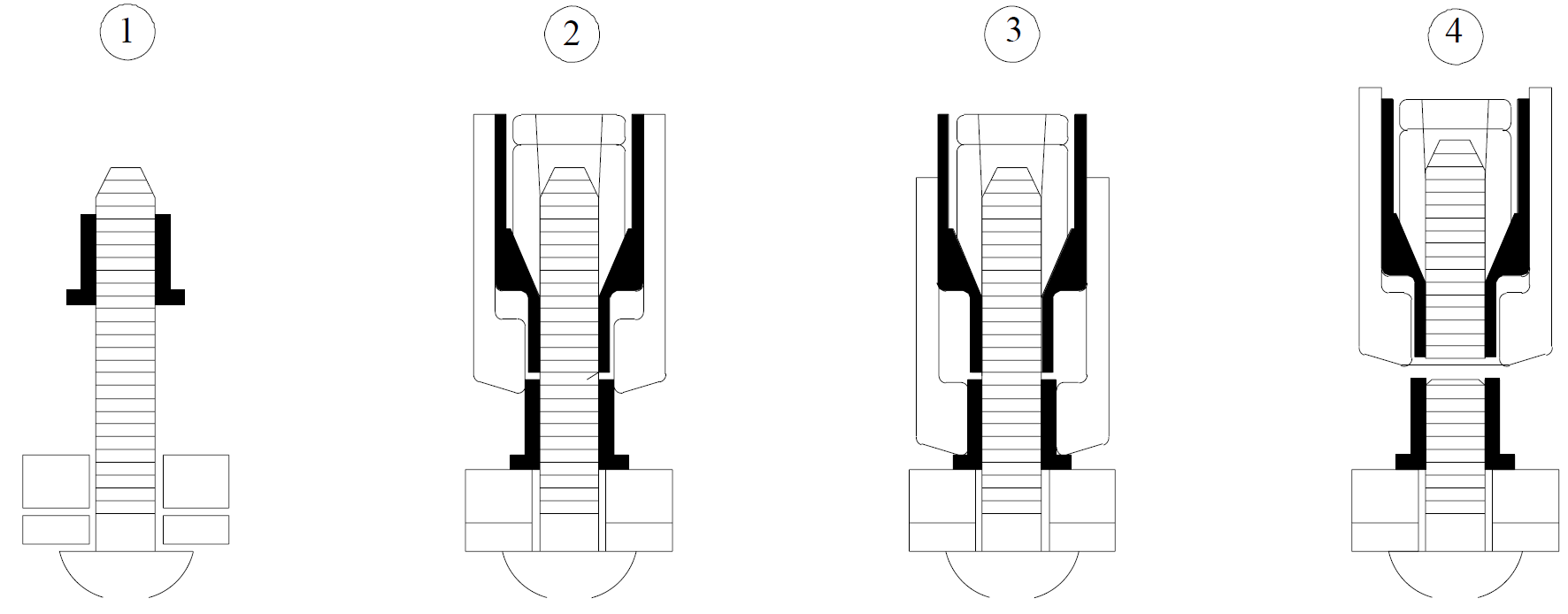
Болт вставляется в Затем на болт Под воздействием По мере
отверстие. С надевается дальнейшего нарастания
обратной стороны наконечник. усилия втулка усилия стержень
на него надевается Наконечник с запрессовывается болта ломается,
втулка. установочным в запорные отделяя
инструментом тянут канавки. запрессованную
болт и сжимают втулку от
листы. наконечника.
2. Крепежное приспособление
Крепежное приспособление, примеры которого приведены ниже, соответствует положениям пояснительной записки [2.2.1 a)](https://bukva.ai/docs/tamozhennaya-konventsiya-o-mezhdunarodnoy-2/statya-2-2#p100792) приложения 6. С учетом присущих ему технических характеристик, таких, например, как плоская головка большого диаметра, подголовник с накаткой или квадратный подголовник на внутренней стороне головки и запорный болт с накидной гайкой (с пластиковым захватом), это приспособление может жестко крепиться изнутри грузовых отделений без какой-либо сварки, клепки и т.д. Хотя сборка этого крепежного приспособления требует приложения усилия с обеих сторон составных элементов, подлежащих сборке, это приспособление может быть демонтировано только со стороны накидной гайки, т.е изнутри грузового отделения. Это приспособление с квадратным подголовником обычно применяется для крепления петель к грузовым отделениям.
(TRANS/WP.30/135, пункты 43 и 44; TRANS/WP.30/137, пункты 59 - 61; TRANS/WP.30/AC.2/27, приложение 3)
*Пример* крепежного приспособления
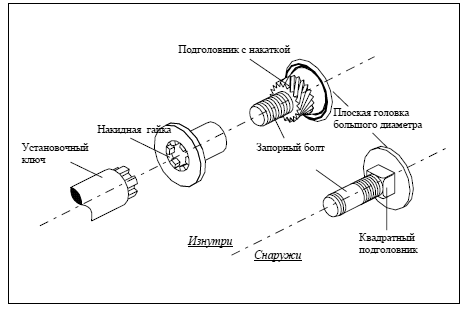
Пневматически устанавливаемые шпильки для крепления полов грузового отделения
В одной из конструкций используются шпильки с геликоидальной резьбой, в значительной степени аналогичной резьбе самонарезающих шурупов, которые повышают прочность соединения, когда пол относительно тонок. При таком методе в процессе установки шпильки происходит сплавка хромцинкового покрытия шпильки с материалом поперечины пола, в результате чего достигается достаточная прочность соединения между ними.
(TRANS/GE.30/33, пункт 125; TRANS/GE.30/GRCC/10, пункты 52 - 54)
Самосверлящие и самонарезающие шурупы
Самонарезающий, самосверлящий шуруп, изображенный на рис. 1, не рассматривается в качестве самонарезающего шурупа по смыслу пояснительной записки [2.2.1 a) a)](https://bukva.ai/docs/tamozhennaya-konventsiya-o-mezhdunarodnoy-2/statya-2-2#p100793) приложения 6 к Конвенции. В соответствии с положениями пояснительных записок [2.2.1 a) a)](https://bukva.ai/docs/tamozhennaya-konventsiya-o-mezhdunarodnoy-2/statya-2-2#p100793) и [b)](https://bukva.ai/docs/tamozhennaya-konventsiya-o-mezhdunarodnoy-2/statya-2-2#p100796) приложения 6 такие самонарезающие, самосверлящие шурупы должны привариваться к нижней части металлических поперечен. В противном случае выступающая часть некоторых из этих шурупов может загибаться под углом не менее 45 градусов, как показано на рис. 2. Однако в случае использования вместе с конструкцией пола, образцы которой показаны на рис. 3 и 4, приваривание или загибание шурупов считается необязательным.
(TRANS/WP.30/135, пункты 48 - 51; TRANS/WP.30/AC.2/27, приложение 3)
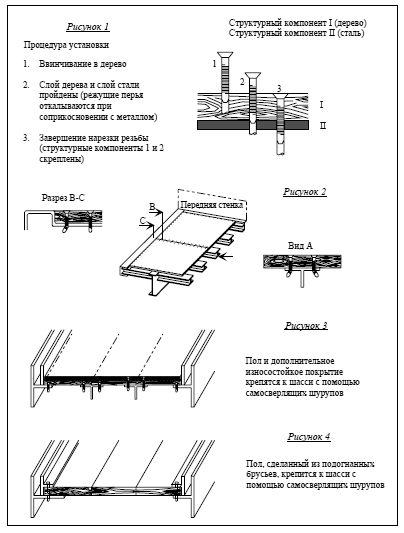
Надежность глухих заклепок
В целом, в соответствии с положениями настоящей Конвенции использование глухих заклепок запрещено ([приложение 6](https://bukva.ai/docs/tamozhennaya-konventsiya-o-mezhdunarodnoy-2/statya-4-2#p101251), пояснительные записки [2.2.1 a) c)](https://bukva.ai/docs/tamozhennaya-konventsiya-o-mezhdunarodnoy-2/statya-2-2#p100797)). С другой стороны, глухие заклепки в принципе могут быть использованы при условии, что составные элементы соединяются достаточным числом крепежных приспособлений, отвечающих требованиям [приложения 6](https://bukva.ai/docs/tamozhennaya-konventsiya-o-mezhdunarodnoy-2/statya-4-2#p101251), пояснительные записки [2.2.1 a) a)](https://bukva.ai/docs/tamozhennaya-konventsiya-o-mezhdunarodnoy-2/statya-2-2#p100793).
(TRANS/WP.30/137, пункты 54 - 58; TRANS/WP.30/AC.2/29, приложение 3)
b) двери и прочие системы закрывания (включая запорные краны, крышки лазов, фланцы и т.д.) должны иметь приспособление, на которое могли бы быть наложены таможенные печати и пломбы. Это приспособление должно быть таким, чтобы его нельзя было снять снаружи и вновь поставить на место без оставления видимых следов и чтобы двери и запирающие устройства не могли открываться без нарушения таможенных печатей и пломб. Последние должны быть соответствующим образом защищены. Разрешается делать открывающиеся крыши;
Пояснительная записка к [пункту 1 b) статьи 2](https://bukva.ai/docs/tamozhennaya-konventsiya-o-mezhdunarodnoy-2/statya-2-2#p100821)
2.2.1 b) Двери и прочие системы закрывания
a) Приспособление, на котором могут быть поставлены таможенные печати и пломбы, должно:
i) прикрепляться при помощи сварки или по крайней мере двух крепежных деталей, удовлетворяющих требованиям [пункта a) пояснительной записки 2.2.1 a)](https://bukva.ai/docs/tamozhennaya-konventsiya-o-mezhdunarodnoy-2/statya-2-2#p100793); или
ii) иметь такую конструкцию, чтобы после закрытия и опечатания грузового отделения нельзя было снять это приспособление без оставления видимых следов.
Оно должно также:
iii) иметь отверстия диаметром не менее 11 мм или прорези длиной не менее 11 мм при ширине 3 мм; и
iv) обеспечивать равную степень безопасности, независимо от используемого типа печатей или пломб.
b) Петли, навески, шарниры и другие детали для навешивания дверей и т.п. должны прикрепляться в соответствии с требованиями [подпунктов i)](https://bukva.ai/docs/tamozhennaya-konventsiya-o-mezhdunarodnoy-2/statya-2-2#p100825) и [ii) пункта a)](https://bukva.ai/docs/tamozhennaya-konventsiya-o-mezhdunarodnoy-2/statya-2-2#p100826) настоящей записки. Кроме того, различные составные части таких устройств (например, петли, шкворни или шарниры), если они необходимы для обеспечения гарантии таможенной безопасности грузового отделения, крепятся таким образом, чтобы при закрытом и опечатанном грузовом отделении их нельзя было снять или разобрать без оставления видимых следов; (см. [рис. 1a](https://bukva.ai/docs/tamozhennaya-konventsiya-o-mezhdunarodnoy-2/statya-4-2#p101263), приложение 6).
Однако в тех случаях, когда к такому устройству нет доступа с наружной стороны, достаточно обеспечить невозможность отсоединения закрытой и опечатанной двери от петли или подобного устройства без оставления видимых следов. В том случае, если дверь или система закрывания имеет более двух петель, только две ближайшие к оконечностям двери петли должны крепиться в соответствии с требованиями вышеприведенных [подпунктов i)](https://bukva.ai/docs/tamozhennaya-konventsiya-o-mezhdunarodnoy-2/statya-2-2#p100825) и [ii) пункта a)](https://bukva.ai/docs/tamozhennaya-konventsiya-o-mezhdunarodnoy-2/statya-2-2#p100826).
(ECE/TRANS/17/Amend.8, вступила в силу 1 августа 1987 г.)
Комментарии к пояснительной записке [2.2.1 b) b)](https://bukva.ai/docs/tamozhennaya-konventsiya-o-mezhdunarodnoy-2/statya-2-2#p100830)
Дверь или система закрывания дверей, имеющая более двух петель
В том случае, если дверь или система закрывания дверей имеет более двух петель, то компетентные органы могут требовать закрепления дополнительных петель в целях соблюдения требований [статьи 1](https://bukva.ai/docs/tamozhennaya-konventsiya-o-mezhdunarodnoy-2/statya-1-2#p100773) приложения 2 к Конвенции.
(TRANS/WP.30/AC.2/35, приложение 6; TRANS/WP.30/155, пункт 45)
Двустворчатые торцевые петли
Изображенное ниже устройство отвечает требованиям [пункта b)](https://bukva.ai/docs/tamozhennaya-konventsiya-o-mezhdunarodnoy-2/statya-2-2#p100830) и [подпункта a) ii) пояснительной записки 2.2.1 b)](https://bukva.ai/docs/tamozhennaya-konventsiya-o-mezhdunarodnoy-2/statya-2-2#p100826) [приложения 6](https://bukva.ai/docs/tamozhennaya-konventsiya-o-mezhdunarodnoy-2/statya-4-2#p101251).
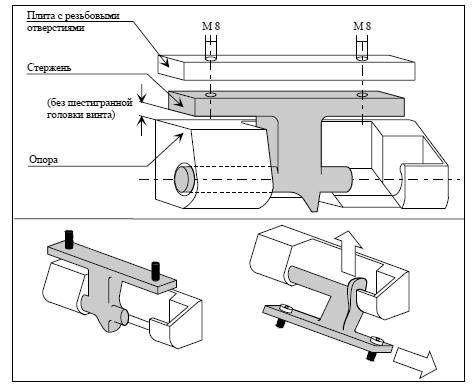
Описание
Стержень и опора изображенного устройства имеют особую форму, что не позволяет снять эти детали при закрытой петле. Более того, в данной конструкции должен использоваться болт с шестигранной головкой, проходящий под стержнем. Пространство между головкой болта и опорой, когда петля закрыта, должно быть достаточно малым, чтобы предотвратить возможность вывинчивания болта без оставления видимых следов. В данном случае болты можно не приваривать.
(TRANS/WP.30/123, пункты 46 и 47 и приложение 2; TRANS/WP.30/AC.2/23, приложение 3)
c) В порядке исключения, если транспортные средства имеют изотермические грузовые отделения, приспособление для установки таможенных печатей и пломб, петли и другие детали, снятие которых дало бы доступ внутрь грузового отделения или в другие места, пригодные для сокрытия грузов, могут крепиться к дверям таких грузовых отделений с помощью следующих систем:
i) ввертных болтов или шурупов, которые вставляются снаружи, но которые в других отношениях не удовлетворяют требованиям [подпункта a)](https://bukva.ai/docs/tamozhennaya-konventsiya-o-mezhdunarodnoy-2/statya-2-2#p100793) приведенной выше пояснительной записки 2.2.1 a) при условии, что:
стержни ввертных болтов или ввертных шурупов крепятся к листу с резьбовыми отверстиями или подобному приспособлению, расположенному внутри наружной панели или наружных панелей двери, и
головки соответствующего количества ввертных болтов или ввертных шурупов привариваются к устройству для наложения таможенных пломб, к петлям и т.д. таким образом, что они полностью деформируются, и
ввертные болты или шурупы невозможно удалить без оставления видимых следов (см. [рис. 1](https://bukva.ai/docs/tamozhennaya-konventsiya-o-mezhdunarodnoy-2/statya-4-2#p101260) приложения 6);
ii) крепежного приспособления, которое вставляется с внутренней стороны двери изотермической конструкции при условии, что:
крепежный болт и крепежная гайка приспособления соединены при помощи пневматических или гидравлических инструментов и крепятся с обратной стороны пластины или подобного приспособления, установленного между наружным слоем конструкции двери и изоляцией; и
не имеется доступа к головке крепежного болта изнутри грузового отделения; и достаточное количество крепежных гаек и крепежных болтов соединено при помощи сварки, и приспособления невозможно удалить без оставления видимых следов (см. [рис. 5](https://bukva.ai/docs/tamozhennaya-konventsiya-o-mezhdunarodnoy-2/statya-4-2#p101280) приложения 6).
(ECE/TRANS/17/Amend.13, вступила в силу 1 августа 1991 г.)
Подразумевается, что термин "изотермическое грузовое отделение" включает как рефрижераторные, так и теплоизолированные грузовые отделения.
Комментарий к пояснительной записке 2.2.1 b) c) ii)
Этот [параграф](https://bukva.ai/docs/tamozhennaya-konventsiya-o-mezhdunarodnoy-2/statya-2-2#p100848) будет истолковываться более точно, если в тексте после слов "соединены при помощи пневматических или гидравлических инструментов" слова "и крепится" заменить словами ", которые закрепляют головку болта".
(TRANS/WP.30/AC.2/29, пункт 25)
d) Транспортные средства с большим числом таких закрывающих устройств, как клапаны, стопорные краны, крышки люков, фланцы и т.п., должны иметь такую конструкцию, чтобы число таможенных печатей и пломб могло быть по возможности ограничено. С этой целью соседние закрывающие устройства должны быть связаны при помощи общего приспособления, требующего постановки только одной таможенной печати или пломбы, или должны быть снабжены крышкой, отвечающей тем же требованиям.
e) Транспортные средства с открывающейся крышей должны быть сконструированы таким образом, чтобы можно было опечатывать их при помощи минимального числа таможенных печатей и пломб.
f) В случаях, когда для обеспечения таможенной безопасности требуется наложение более одной таможенной пломбы, количество таких пломб должно быть указано в графе 5 свидетельства о допущении транспортного средства ([приложение 4](https://bukva.ai/docs/tamozhennaya-konventsiya-o-mezhdunarodnoy-2/statya-4-2#p101189) к Конвенции МДП 1975 года). К свидетельству о допущении должны прилагаться рисунок или фотографии дорожного транспортного средства с точной схемой расположения таможенных пломб.
(ECE/TRANS/17/Amend.23, вступила в силу 7 ноября 2003 г.)
Комментарий к пояснительной записке 2.2.1 b) f)
Период осуществления для включения в свидетельство о допущении информации о количестве и месте проставления печатей и пломб в тех случаях, когда требуется более одной таможенной пломбы
Положения пояснительной записки [2.2.1 b) f)](https://bukva.ai/docs/tamozhennaya-konventsiya-o-mezhdunarodnoy-2/statya-2-2#p100859), вступающие в силу 7 августа 2003 года, применяются в отношении дорожных транспортных средств, подлежащих при необходимости допущению впервые либо в связи с проводящимся один раз в два года осмотром и обновлением допущения после вступления в силу пояснительной записки [2.2.1 b) f)](https://bukva.ai/docs/tamozhennaya-konventsiya-o-mezhdunarodnoy-2/statya-2-2#p100859). Следовательно, начиная с 7 августа 2005 года на всех дорожных транспортных средствах, на которых для обеспечения таможенной безопасности требуется наложение более одной таможенной пломбы, должно иметься свидетельство о допущении, соответствующее пояснительной записке [2.2.1 b) f)](https://bukva.ai/docs/tamozhennaya-konventsiya-o-mezhdunarodnoy-2/statya-2-2#p100859).
(TRANS/WP.30/206, пункт 62 и приложение 2; TRANS/WP.30/AC.2/69, пункт 59 и приложение 2; TRANS/WP.30/AC.2/69/Corr.1)
Комментарий к [подпункту 1 b) статьи 2](https://bukva.ai/docs/tamozhennaya-konventsiya-o-mezhdunarodnoy-2/statya-2-2#p100821)
Безопасность дверей
В случае, если двери транспортных средств или контейнеров не изотермические, но имеют внутреннюю обшивку, детали, обеспечивающие крепление петель и устройства для наложения таможенных пломб, должны проходить через всю толщину дверей (включая обшивку) и видимым образом крепиться изнутри.
(TRANS/GE.30/14, пункт 101)
Количество таможенных пломб
Исключен
(TRANS/WP.30/AC.2/69, приложение 2)
Образцы устройств для наложения таможенных пломб
Чтобы обеспечить таможенную безопасность контейнеров и грузовых отделений транспортных средств, устройства для наложения таможенных пломб должны удовлетворять требованиям [приложения 6](https://bukva.ai/docs/tamozhennaya-konventsiya-o-mezhdunarodnoy-2/statya-4-2#p101251), пояснительные записки [2.2.1 b), пункт a)](https://bukva.ai/docs/tamozhennaya-konventsiya-o-mezhdunarodnoy-2/statya-2-2#p100824) (см. [рис. 1](https://bukva.ai/docs/tamozhennaya-konventsiya-o-mezhdunarodnoy-2/statya-2-2#p100881) - [4](https://bukva.ai/docs/tamozhennaya-konventsiya-o-mezhdunarodnoy-2/statya-2-2#p100893)). Кроме того, при наложении таможенных пломб необходимо соблюдать следующие требования:
крепежная веревка должна быть не длиннее, чем необходимо и натянута как можно сильнее;
крепежная веревка должна проходить через кольца МДП;
таможенные пломбы накладываются как можно плотнее;
безопасность других частей запорной системы (ручки запорных механизмов, устройство для установки кулачка, гнездо входа запирающего штыря) обеспечивается способами, описанными в [приложении 6](https://bukva.ai/docs/tamozhennaya-konventsiya-o-mezhdunarodnoy-2/statya-4-2#p101251), пояснительные записки [2.2.1 a), пункт a)](https://bukva.ai/docs/tamozhennaya-konventsiya-o-mezhdunarodnoy-2/statya-2-2#p100793) (см. [рис. 1](https://bukva.ai/docs/tamozhennaya-konventsiya-o-mezhdunarodnoy-2/statya-2-2#p100881) - [4](https://bukva.ai/docs/tamozhennaya-konventsiya-o-mezhdunarodnoy-2/statya-2-2#p100893)).
Необходимо помнить, что надежность таможенных пломб может быть серьезно ослаблена, если запирающие штыри, петли или устройства для установки кулачка изношены или повреждены. Указанные недостатки необходимо выявлять.
(TRANS/WP.30/145, пункт 17; TRANS/WP.30/AC.2/31, приложение 3)
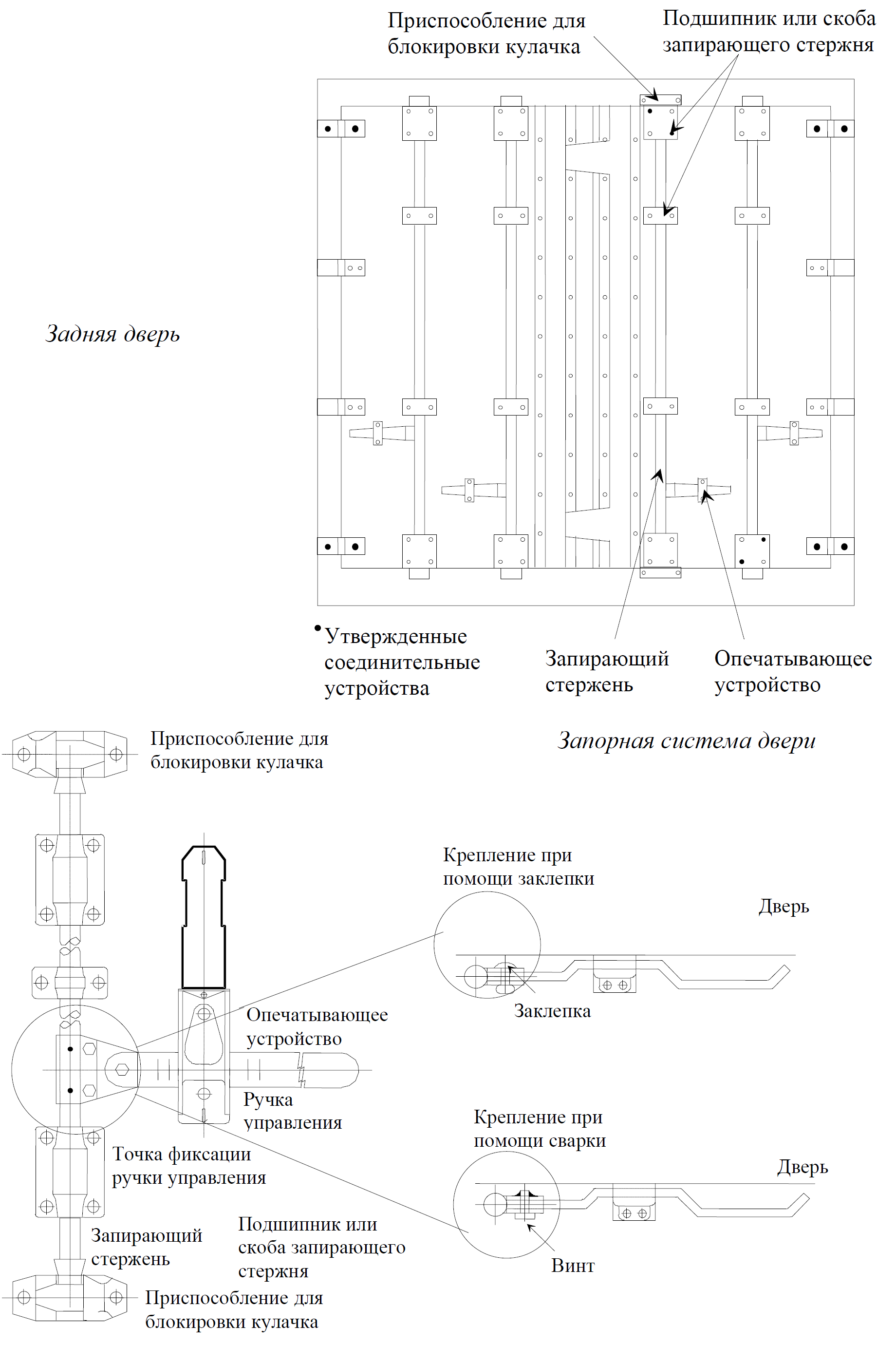
Рисунок 1. Пример надежной таможенной системы
для запирания задней двери грузовых отделений и контейнеров
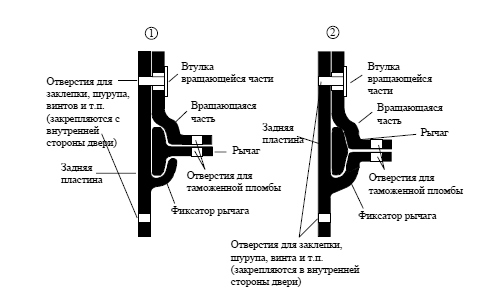
В частности, опечатывающее устройство N 1 поддается несанкционированному вскрытию в случае невыполнения вышеупомянутых требований. В этой связи предпочтительно использовать устройства, изображенные ниже, поскольку они обеспечивают лучшую защиту от несанкционированного вскрытия до наложения таможенной печати.
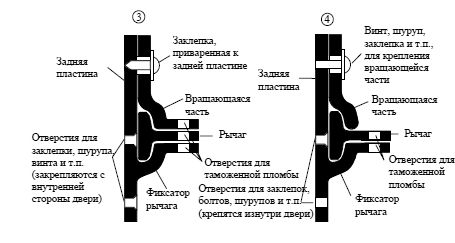
Рисунок 2. Примеры таможенных опечатывающих устройств
Таможенные опечатывающие устройства N 3 и 4 могут также использоваться для опечатывания дверей холодильных и изотермических контейнеров и грузовых отделений. В этом случае опечатывающие устройства должны прикрепляться при помощи как минимум двух стопорных винтов или шурупов, вворачиваемых в металлическую пластину с внутренней резьбой, расположенную за внешним слоем дверного покрытия. В таких случаях головки стопорных винтов или стопорных шурупов должны быть заварены до полной деформации (см. [рис. 1](https://bukva.ai/docs/tamozhennaya-konventsiya-o-mezhdunarodnoy-2/statya-4-2#p101260) приложения 6).
{TRANS/GE.30/6, пункт 35}
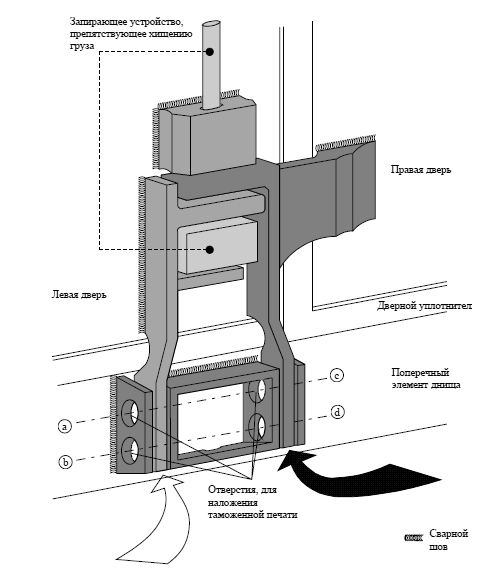
Данное таможенное опечатывающее устройство предпочтительнее применять на металлических контейнерах. При этом необходимо следить за тем, чтобы место, в котором должна быть размещена пломба, нельзя было перепутать. Здесь могут использоваться различные типы пломб. В случае использования проволочных пломб в виде "восьмерки" проволоку рекомендуется пропускать через все четыре отверстия (a, b, c или d). В случае использования жестких пломб эти пломбы следует пропускать через отверстие c или d.
Рисунок 3. Пример таможенного опечатывающего устройства
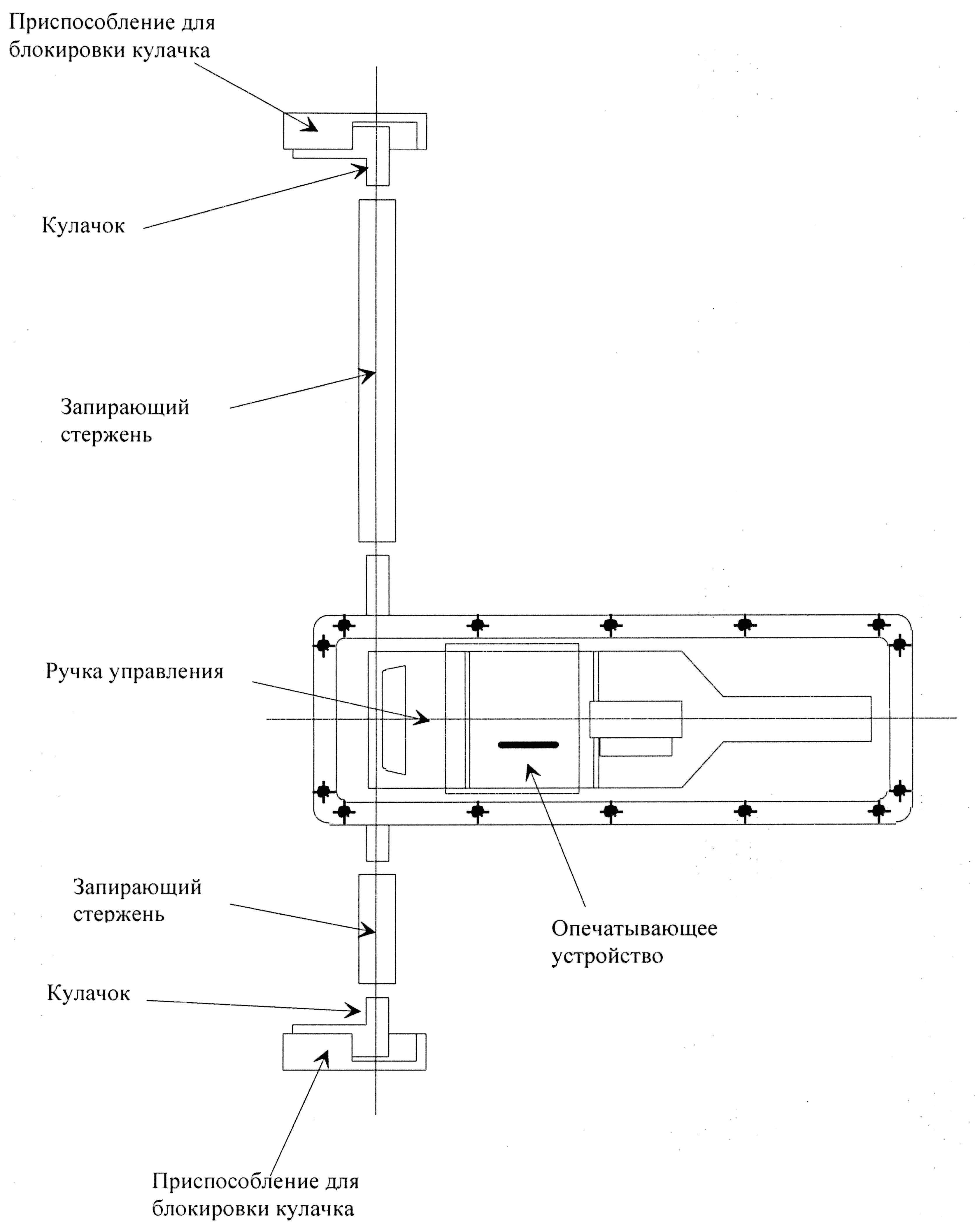
Данный вид таможенного опечатывающего устройства используется для наложения пломб на двери изотермических контейнеров и грузовых отделений. На устройствах разной конструкции точка наложения пломб может меняться в зависимости от того, как расположено отверстие для наложения пломб - горизонтально или вертикально. С таможенной точки зрения устройство с вертикальным отверстием обеспечивает большую надежность, тогда как при использовании устройства с горизонтальным отверстием для обеспечения надежности с таможенной точки зрения требуется плотное пломбирование.
Рисунок 4. Пример таможенного опечатывающего устройства
c) вентиляционные и дренажные отверстия должны быть снабжены устройством, препятствующим доступу внутрь грузового отделения. Это устройство должно быть такой конструкции, чтобы его нельзя было снять снаружи и поставить на место без оставления видимых следов.
Пояснительная записка к [пункту 1 (c) статьи 2](https://bukva.ai/docs/tamozhennaya-konventsiya-o-mezhdunarodnoy-2/statya-2-2#p100894)
2.2.1 c)-1 Вентиляционные отверстия
a) Максимальный их размер в принципе не должен превышать 400 мм.
b) Отверстия, дающие непосредственный доступ к грузовому отделению, должны быть заслонены:
i) проволочной сеткой или перфорированным металлическим экраном (с максимальным размером отверстий в обоих случаях 3 мм) и защищены сварной металлической решеткой (с максимальным размером отверстий 10 мм); или
ii) одним перфорированным металлическим экраном достаточной прочности (с максимальным размером отверстий 3 мм и толщиной не менее 1 мм).
(ECE/TRANS/17/Amend.12, вступила в силу 1 августа 1990 г.)
Комментарий к пояснительной записке [2.2.1 (c)-1](https://bukva.ai/docs/tamozhennaya-konventsiya-o-mezhdunarodnoy-2/statya-2-2#p100896)
Вентиляционные отверстия в изотермических грузовых отделениях
Образец экрана, устанавливаемого между внутренней и внешней поверхностями изотермических грузовых отделений.
(TRANS/WP.30/127, пункт 43; TRANS/WP.30/AC.2/25, приложение 3)
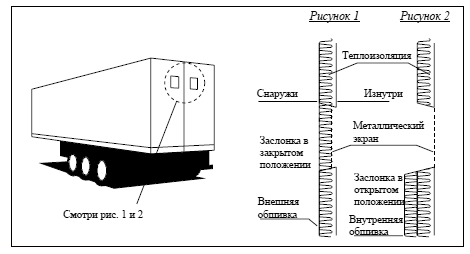
(c) Отверстия, не дающие прямого доступа к грузовому отделению (например, благодаря наличию системы колен или дефлекторов), должны оборудоваться устройствами, о которых говорится в [подпункте b)](https://bukva.ai/docs/tamozhennaya-konventsiya-o-mezhdunarodnoy-2/statya-2-2#p100898), но в которых допускаются размеры отверстий до 10 мм (для проволочной сетки или металлического экрана) и 20 мм (для металлической решетки).
(ECE/TRANS/17/Amend.12, вступила в силу 1 августа 1990 г.)
d) В тех случаях, когда отверстия устраиваются в брезенте, в принципе должно предусматриваться наличие устройств, упомянутых в [пункте b)](https://bukva.ai/docs/tamozhennaya-konventsiya-o-mezhdunarodnoy-2/statya-2-2#p100898) настоящей записки. Однако допускается постановка закрывающих устройств в виде перфорированного металлического экрана, помещаемого снаружи, и проволочной или иной сетки, помещаемой с внутренней стороны.
e) Могут допускаться идентичные неметаллические приспособления при условии, что соблюдаются размеры отверстий и что используемый материал достаточно прочен для того, чтобы нельзя было без видимого повреждения значительно увеличить эти отверстия. Кроме того, вентиляционное приспособление должно быть сконструировано таким образом, чтобы его нельзя было заменить, работая только с одной стороны брезента.
f) Вентиляционное отверстие может быть оснащено защитным приспособлением. Это приспособление должно крепиться к брезенту таким образом, чтобы не затруднять осмотра вентиляционных отверстий сотрудниками таможенной службы. Место крепления защитного приспособления к брезенту должно находиться на расстоянии не менее 5 см от экрана вентиляционного отверстия.
(ECE/TRANS/17/Amend.5, вступила в силу 1 августа 1984 г.)
Комментарии к пояснительной записке [2.2.1 (c)-1](https://bukva.ai/docs/tamozhennaya-konventsiya-o-mezhdunarodnoy-2/statya-2-2#p100896)
Образец защитного устройства
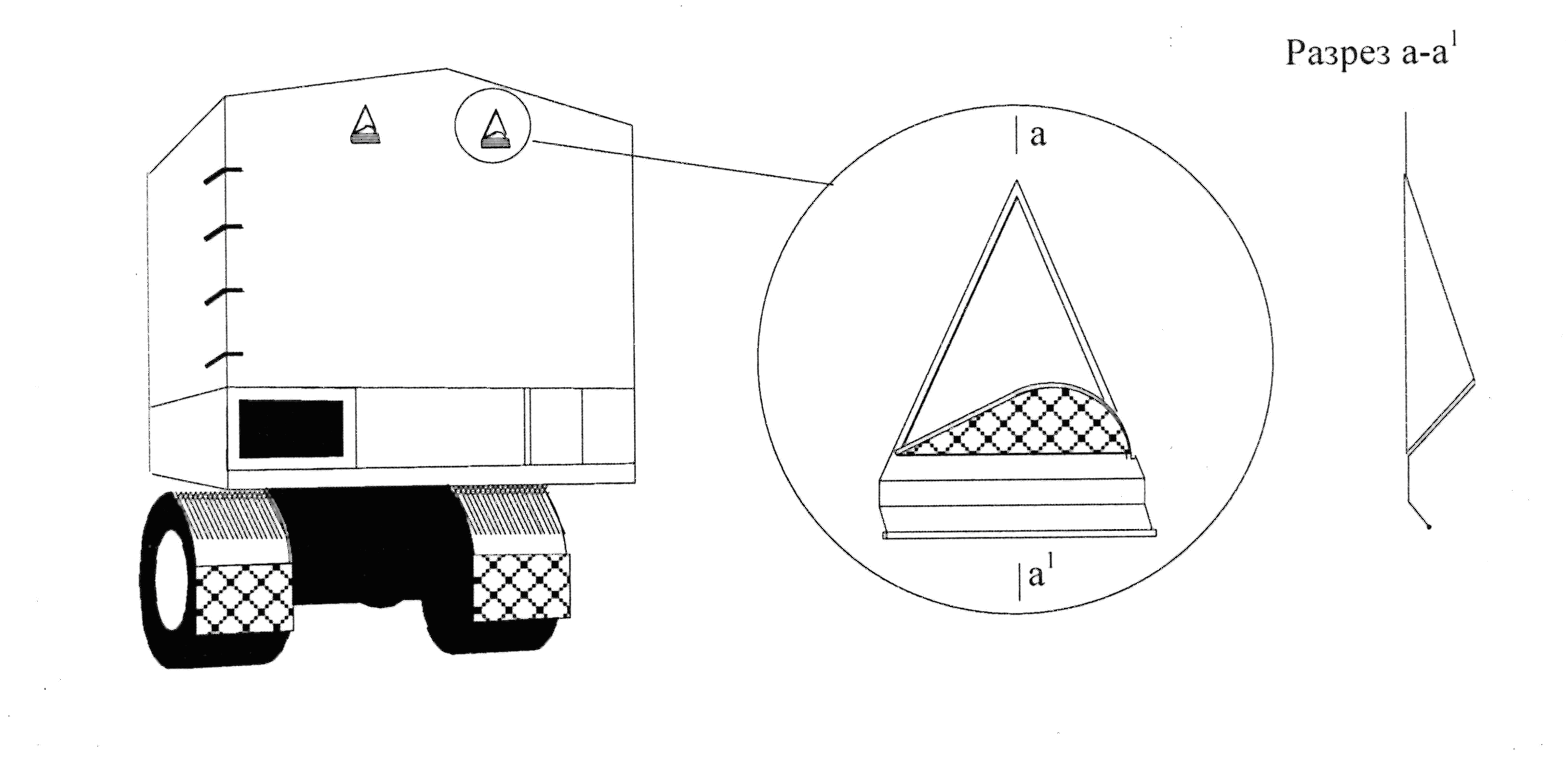
Вентиляционные отверстия в грузовых отделениях
Хотя размер вентиляционных отверстий в принципе не должен превышать 400 мм, таможенный орган, при предъявлении ему транспортного средства с вентиляционными отверстиями размером более 400 мм, может допустить такое транспортное средство к перевозке при условии соблюдения всех остальных требований.
(TRANS/GE.30/14, пункт 102; TRANS/WP.30/143, пункты 36 и 37; TRANS/WP.30/AC.2/31, приложение 3)
Пояснительная записка к [пункту 1 (c) статьи 2](https://bukva.ai/docs/tamozhennaya-konventsiya-o-mezhdunarodnoy-2/statya-2-2#p100894)
2.2.1 (c)-2 Дренажные отверстия
a) Максимальный их размер в принципе не должен превышать 35 мм;
b) Отверстия, дающие непосредственный доступ к грузовому отделению, должны оборудоваться устройствами, предписанными в [подпункте b) пояснительной записки 2.2.1 (c)-1](https://bukva.ai/docs/tamozhennaya-konventsiya-o-mezhdunarodnoy-2/statya-2-2#p100898) для вентиляционных отверстий;
c) В тех случаях, когда дренажные отверстия не дают прямого доступа к грузовому отделению, указанные в [подпункте b)](https://bukva.ai/docs/tamozhennaya-konventsiya-o-mezhdunarodnoy-2/statya-2-2#p100922) настоящей записки устройства не требуются при условии, что отверстия оборудованы надежной системой дефлекторов, легко доступной с внутренней стороны грузового отделения.
2. Несмотря на положения [подпункта c) статьи 1](https://bukva.ai/docs/tamozhennaya-konventsiya-o-mezhdunarodnoy-2/statya-1-2#p100778) настоящих Правил, разрешается наличие составных элементов грузового отделения, которые по практическим соображениям должны включать полые пространства (например, между составными частями двойной стенки). Для того, чтобы эти пространства нельзя было использовать в целях сокрытия грузов:
i) необходимо в тех случаях, когда внутренняя обшивка покрывает грузовое отделение на всю его высоту от пола до потолка, или в тех случаях, когда пространство между обшивкой и внешней стенкой полностью закрыто, обеспечить, чтобы внутренняя обшивка крепилась таким образом, чтобы ее нельзя было снимать и возвращать на место без оставления видимых следов; и
ii) необходимо в тех случаях, когда обшивка не покрывает грузовое отделение на всю его высоту и когда пространство между обшивкой и внешней стенкой закрыто не полностью, и во всех других случаях, когда в конструкции грузового отделения имеются полые пространства, обеспечить, чтобы количество указанных пространств было ограничено до минимума и чтобы эти пространства были легко доступны для таможенного контроля.
Комментарий к [пункту 2 статьи 2](https://bukva.ai/docs/tamozhennaya-konventsiya-o-mezhdunarodnoy-2/statya-2-2#p100924)
Устранение полых структурных компонентов
Количество полых структурных компонентов грузовых отделений, таких как полые балки, в конструкции новых грузовых отделений должно быть ограничено до минимума, и они должны быть постепенно устранены путем использования, по возможности, балок открытого профиля. Если по конструктивным причинам в грузовых отделениях есть полые структурные компоненты, то допускается использование отверстий, предназначенных для облегчения осмотра таможенными органами таких полых компонентов. Отметка о наличии таких смотровых отверстий указывается в пункте 12 свидетельства о допущении автотранспортных средств (приложение 4 к Конвенции).
(TRANS/WP.30/135, пункты 63 - 65; TRANS/WP.30/137, пункты 65 - 67; TRANS/WP.30/AC.2/27, приложение 3; TRANS/WP.30/151, пункты 33 - 36)
3. Устройство окон допускается при условии, что они сделаны из достаточно прочных материалов и не могут сниматься снаружи и вновь устанавливаться без оставления видимых следов. Установка стекол тем не менее может допускаться, однако, если вместо безопасного стекла используется другое стекло, окна оборудуются прочно закрепленной металлической решеткой, которую нельзя снять снаружи; размер ячеек в решетке не должен превышать 10 мм.
(ECE/TRANS/17/Amend.7, вступила в силу 1 августа 1986 г.)
Пояснительная записка к [пункту 3 статьи 2](https://bukva.ai/docs/tamozhennaya-konventsiya-o-mezhdunarodnoy-2/statya-2-2#p100931)
##### 2.2.3 Безопасное стекло
Стекло считается безопасным, если отсутствует опасность его разрушения в результате действия любого фактора, обычно имеющего место в нормальных условиях эксплуатации транспортного средства. На такое стекло должна быть нанесена маркировка, указывающая, что данное стекло является безопасным.
(ECE/TRANS/17/Amend.7, вступила в силу 1 августа 1986 г.)
4. Отверстия, сделанные в полу в технических целях, таких как смазка, обслуживание, наполнение песочницы, допускаются только при условии, что они оборудуются крышкой, которая должна устанавливаться таким образом, чтобы доступ в грузовое отделение снаружи был невозможен.
Комментарий к [пункту 4 статьи 2](https://bukva.ai/docs/tamozhennaya-konventsiya-o-mezhdunarodnoy-2/statya-2-2#p100937)
Защита отверстий, предназначенных для технических целей
Крышки отверстий в полу грузовых отделений автотранспортных средств считаются достаточно защищенными, если защитные устройства, препятствующие доступу в грузовое отделение снаружи, находятся внутри грузового отделения.
## Статья 3. (TRANS/GE.30/AC.2/14, пункты 35 - 39)
### Статья 3. (TRANS/GE.30/AC.2/14, пункты 35 - 39)
Крытые брезентом транспортные средства
1. Положения [статей 1](https://bukva.ai/docs/tamozhennaya-konventsiya-o-mezhdunarodnoy-2/statya-1-2#p100773) и [2](https://bukva.ai/docs/tamozhennaya-konventsiya-o-mezhdunarodnoy-2/statya-2-2#p100787) настоящих Правил распространяются на крытые брезентом транспортные средства в той мере, в которой они могут к ним применяться. Кроме того, эти транспортные средства должны отвечать положениям настоящей статьи.
2. Брезент должен быть изготовлен либо из прочного холста, либо из нерастяжимой, достаточно прочной, покрытой пластмассой или прорезиненной ткани. Брезент должен быть в исправном состоянии и изготовлен таким образом, чтобы по закреплении приспособления для закрывания, доступ к грузовому отделению был невозможен без оставления видимых следов.
3. Если брезент составлен из нескольких кусков, края этих кусков должны быть загнуты один в другой и прострочены двумя швами, отстоящими друг от друга по крайней мере на 15 мм. Эти швы должны быть выполнены так, как показано на [рис. 1](https://bukva.ai/docs/tamozhennaya-konventsiya-o-mezhdunarodnoy-2/statya-4-2#p101094), приложенном к настоящим Правилам; однако если на некоторых частях брезента (например, на откидных полах и усиленных углах) невозможно соединить полосы указанным способом, достаточно загнуть край верхней части брезента и прошить полосы так, как показано на [рис. 2](https://bukva.ai/docs/tamozhennaya-konventsiya-o-mezhdunarodnoy-2/statya-4-2#p101098) или [2a)](https://bukva.ai/docs/tamozhennaya-konventsiya-o-mezhdunarodnoy-2/statya-4-2#p101102), приложенным к настоящим Правилам. Один из швов должен быть виден лишь изнутри, и цвет нитки, используемой для этого шва, должен определенно отличаться от цвета самого брезента, а также от цвета нитки, используемой для другого шва. Все швы должны быть прострочены на машине.
Пояснительная записка к [пункту 3 статьи 3](https://bukva.ai/docs/tamozhennaya-konventsiya-o-mezhdunarodnoy-2/statya-3-2#p100946)
##### 2.3.3 Брезент, составленный из нескольких кусков
a) Отдельные куски, составляющие один брезент, могут быть выполнены из различных материалов, удовлетворяющих положениям [пункта 2 статьи 3](https://bukva.ai/docs/tamozhennaya-konventsiya-o-mezhdunarodnoy-2/statya-3-2#p100945) приложения 2.
b) При изготовлении брезента допускается любое расположение кусков, в достаточной степени обеспечивающее безопасность, при условии, что куски соединяются в соответствии с требованиями [статьи 3](https://bukva.ai/docs/tamozhennaya-konventsiya-o-mezhdunarodnoy-2/statya-3-2#p100942) приложения 2.
4. Если брезент составлен из нескольких кусков ткани, покрытой пластмассой, эти куски могут быть также соединены посредством спайки соответственно [рис. 3](https://bukva.ai/docs/tamozhennaya-konventsiya-o-mezhdunarodnoy-2/statya-4-2#p101104), приложенному к настоящим Правилам. Край каждого куска должен перекрывать край другого куска по крайней мере на 15 мм. Соединение кусков должно быть обеспечено по всей ширине. Наружный край соединения должен быть покрыт полосой из пластмассы шириной по крайней мере в 7 мм, накладываемой тем же способом спайки. На этой полосе, а также с каждой ее стороны, по крайней мере по 3 мм в ширину, должен быть проштампован единообразный четкий рельеф. Спайка производится таким образом, чтобы куски не могли быть разъединены и снова соединены без оставления видимых следов.
Комментарии к [пункту 4 статьи 3](https://bukva.ai/docs/tamozhennaya-konventsiya-o-mezhdunarodnoy-2/statya-3-2#p100951)
Полоса из пластмассы
Требование об обязательном наличии полосы из пластмассы весьма существенно, следовательно, им нельзя пренебрегать.
(TRANS/GE.30/17, пункт 99)
Соединение краев брезента внахлестку
Несмотря на то, что для целей таможенной безопасности ширина соединения краев брезента внахлестку не менее 15 мм является достаточной, допускается ширина нахлеста 20 мм и более, необходимость которой может обусловливаться техническими причинами в зависимости от того, из какого материала изготовлен брезент, и метода его спайки.
(TRANS/WP.30/162, пункты 64 и 65, TRANS/WP.30/AC.2/37, приложение 6)
Методы спайки кусков брезента
К методам спайки кусков брезента, которые признаются в качестве безопасных с таможенной точки зрения, если они применяются в соответствии с положениями [приложения 2](https://bukva.ai/docs/tamozhennaya-konventsiya-o-mezhdunarodnoy-2/statya-64#p100772) к Конвенции, относятся "тепловой метод спайки", когда спайка брезента производится с помощью высоких температур, и "метод высокочастотной спайки", когда спайка брезента производится с помощью высокой частоты и давления.
(TRANS/WP.30/162, пункты 64 и 65, TRANS/WP.30/AC.2/37, приложение 6)
5. Починка производится способом, показанным на [рис. 4](https://bukva.ai/docs/tamozhennaya-konventsiya-o-mezhdunarodnoy-2/statya-4-2#p101108), приложенным к настоящим Правилам; сшиваемые края должны быть загнуты один в другой и соединены двумя ясно видимыми швами, отстоящими друг от друга по крайней мере на 15 мм; цвет нитки, видимой изнутри, должен отличаться от цвета нитки, видимой снаружи, и от цвета самого брезента; все швы должны быть прострочены на машине. В тех случаях, когда брезент, поврежденный у краев, ремонтируется путем замены поврежденной части заплатой, шов может также прострачиваться в соответствии с положениями [пункта 3](https://bukva.ai/docs/tamozhennaya-konventsiya-o-mezhdunarodnoy-2/statya-3-2#p100946) настоящей статьи и [рис. 1](https://bukva.ai/docs/tamozhennaya-konventsiya-o-mezhdunarodnoy-2/statya-4-2#p101094), приложенного к настоящим Правилам. Починка брезента из ткани, покрытой пластмассой, может также производиться в соответствии с методом, описанным в [пункте 4](https://bukva.ai/docs/tamozhennaya-konventsiya-o-mezhdunarodnoy-2/statya-3-2#p100951) настоящей статьи, но в этом случае полоса должна накладываться с обеих сторон брезента, а заплата накладывается изнутри.
Комментарии к [пункту 5 статьи 3](https://bukva.ai/docs/tamozhennaya-konventsiya-o-mezhdunarodnoy-2/statya-3-2#p100962)
Полосы из светоотражающего материала
Полосы из светоотражающего материала, которые могут быть сняты и которые закрывают структуру брезента, допустимы, если они полностью припаяны к брезенту, составленному из ткани, покрытой пластмассой, и прикреплены в соответствии с требованиями [пункта 5 статьи 3](https://bukva.ai/docs/tamozhennaya-konventsiya-o-mezhdunarodnoy-2/statya-3-2#p100962) приложения 2 к Конвенции (см. рис. ниже).
(TRANS/WP.30/151, пункт 40)
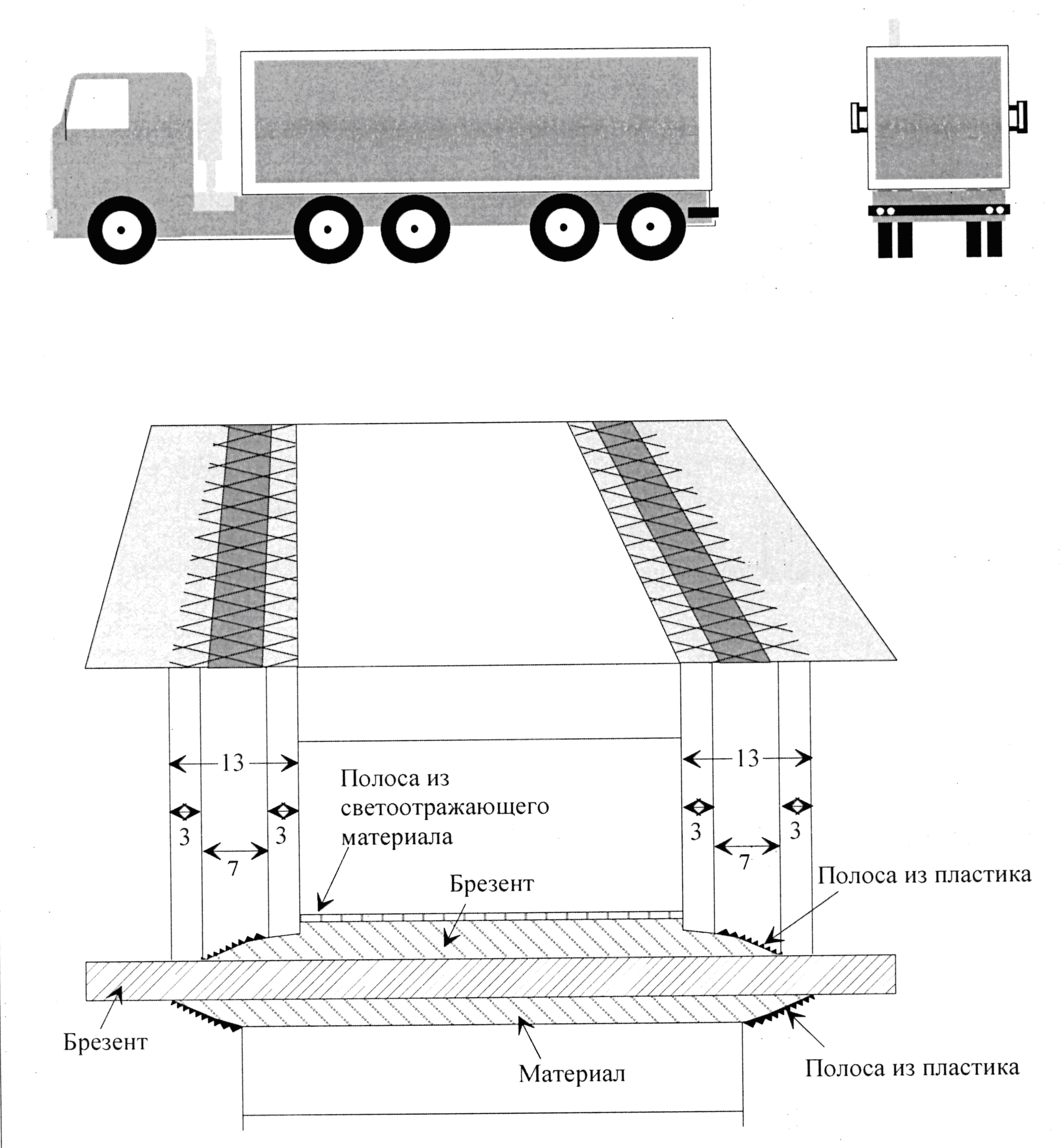
Ремонт брезента из ткани, покрытой пластмассой
Для ремонта такого брезента разрешается использовать следующий способ. Для приваривания заплаты используется винил, расплавленный под воздействием температуры и давления. Полоса из пластического тисненого материала накладывается на края заплаты с обеих сторон брезента.
(TRANS/GE.30/6, пункт 40; TRANS/GE.30/GRCC/4, пункт 33)
6. Брезент должен прикрепляться к транспортному средству в точном соответствии с условиями, изложенными в [статье 1 a)](https://bukva.ai/docs/tamozhennaya-konventsiya-o-mezhdunarodnoy-2/statya-1-2#p100776) и [b)](https://bukva.ai/docs/tamozhennaya-konventsiya-o-mezhdunarodnoy-2/statya-1-2#p100777) настоящих Правил. Предусматривается применение следующих видов креплений:
a) Брезент может крепиться с помощью:
i) металлических колец, прикрепляемых к транспортному средству,
ii) проушин по краям брезента,
iii) веревки или троса, проходящих через кольца над брезентом и видимых с внешней стороны по всей длине.
Брезент должен находить на жесткую часть транспортного средства по крайней мере на ширину 250 мм, измеренную от центра крепежных колец, за исключением тех случаев, когда система конструкции транспортного средства сама по себе препятствует доступу к грузовому отделению.
Пояснительные записки к [пункту 6 a) статьи 3](https://bukva.ai/docs/tamozhennaya-konventsiya-o-mezhdunarodnoy-2/statya-3-2#p100972)
2.3.6 a)-1 Транспортные средства, оборудованные скользящими кольцами
Металлические кольца для крепления брезента, скользящие по металлическим штангам, укрепленным на транспортных средствах, допустимы в целях настоящего [пункта](https://bukva.ai/docs/tamozhennaya-konventsiya-o-mezhdunarodnoy-2/statya-3-2#p100973) (см. [рис. 2](https://bukva.ai/docs/tamozhennaya-konventsiya-o-mezhdunarodnoy-2/statya-4-2#p101265) приложения 6) при условии, если:
a) штанги крепятся к транспортному средству через промежутки максимум 60 мм и таким образом, чтобы их нельзя было снять и вновь поставить на место без оставления видимых следов;
b) кольца будут двойными или будут иметь центральный стержень и изготовлены цельными без применения сварки;
c) брезент крепится к транспортному средству в строгом соответствии с требованием, приведенным в [подпункте a) статьи 1](https://bukva.ai/docs/tamozhennaya-konventsiya-o-mezhdunarodnoy-2/statya-1-2#p100776) приложения 2 к настоящей Конвенции.
2.3.6 a)-2 Транспортные средства, оборудованные поворотными кольцами
Металлические поворотные кольца, каждое из которых вращается в металлической крепежной скобе, прикрепленной к транспортному средству, допустимы в целях настоящего [пункта](https://bukva.ai/docs/tamozhennaya-konventsiya-o-mezhdunarodnoy-2/statya-3-2#p100974) (см. [рис. 2a](https://bukva.ai/docs/tamozhennaya-konventsiya-o-mezhdunarodnoy-2/statya-4-2#p101267) в приложении 6) при условии, что:
a) каждая скоба крепится к транспортному средству таким образом, что ее нельзя снять и вновь поставить на место не оставляя очевидных следов; и
b) пружина, находящаяся под каждой скобой, полностью закрыта металлическим кожухом в форме колокола.
(ECE/TRANS/17/Amend.4, вступила в силу 1 октября 1982 г.)
Комментарии к пункту 6 a) статьи 3
*Пример* конструкции запирающего стержня
Изображенное ниже устройство отвечает требованиям [пункта a) статьи 1](https://bukva.ai/docs/tamozhennaya-konventsiya-o-mezhdunarodnoy-2/statya-1-2#p100776) приложения 2 и [пунктов 6 a)](https://bukva.ai/docs/tamozhennaya-konventsiya-o-mezhdunarodnoy-2/statya-3-2#p100972) и [8 статьи 3](https://bukva.ai/docs/tamozhennaya-konventsiya-o-mezhdunarodnoy-2/statya-3-2#p101021) приложения 2.
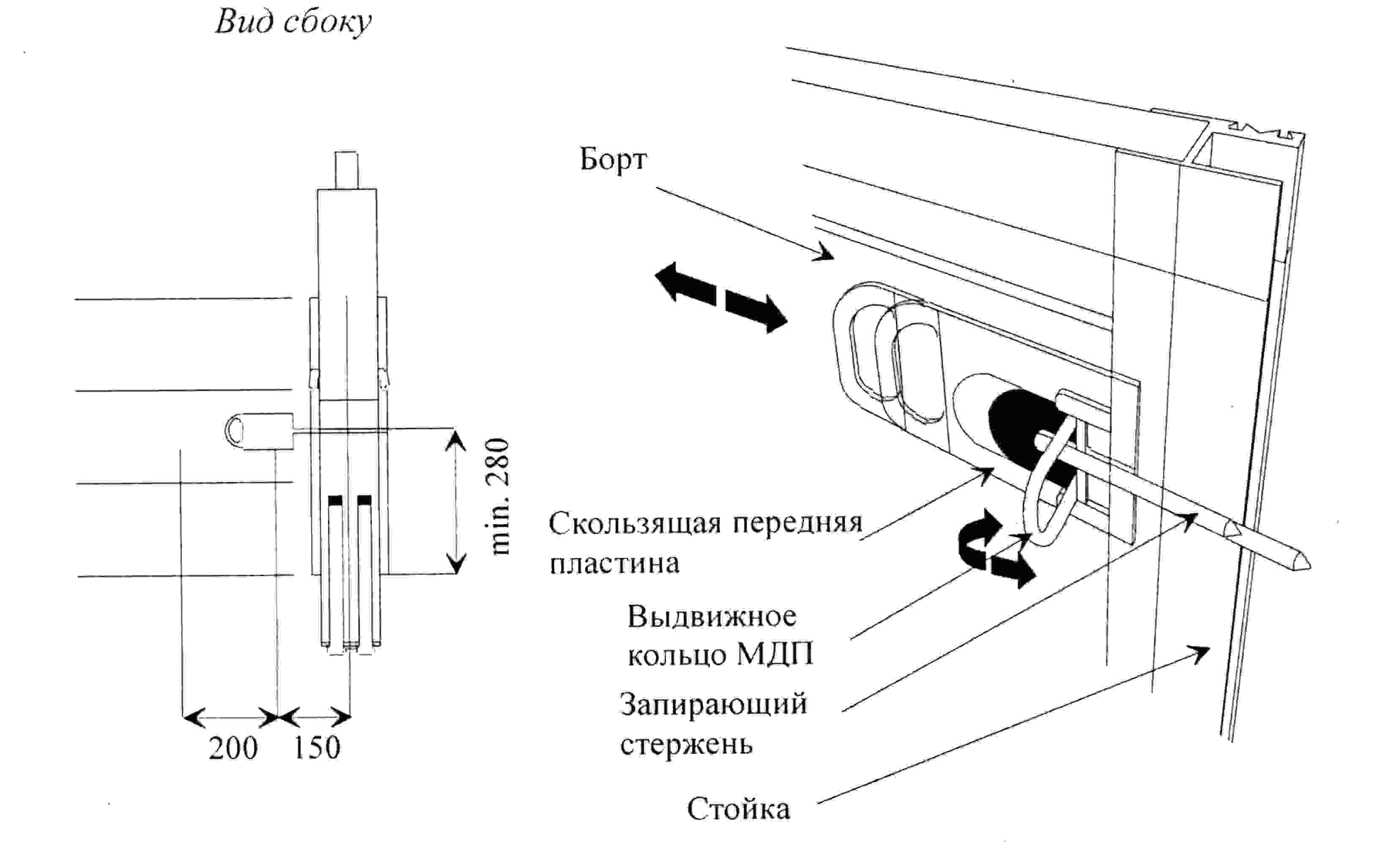
Описание вышеприведенного рисунка
Устройство должно устанавливаться на борту в том же положении, что и кольцо МДП обычного типа; при этом кольцо МДП устройства будет находиться на расстоянии не более 150 мм от средней линии стойки. Устройство будет крепиться к борту при помощи двух заклепок, как и обычные кольца МДП. Оно состоит из трех составных металлических частей: пластины-основания, выдвижного кольца МДП и скользящей передней пластины, включая запирающий стержень. Когда передняя пластина находится в закрытом положении, запирающий стержень проходит через отверстие в стойке и прижимает к ней борт кузова. Однако запирающий стержень должен входить в стойку не менее чем на 20 мм. В то же время кольцо МДП автоматически выдвигается. В выдвинутом положении, когда крепежный трос проходит через кольцо над брезентом, скользящая передняя пластина запирается и крепится таким образом, что ее невозможно выдвинуть обратно в открытое положение.
(TRANS/WP.30/125, пункт 40; TRANS/WP.30/127, пункты 46 и 47; TRANS/WP.30/AC.2/23, приложение 3)
Форма проушин
Проушины в брезенте могут быть овальной или круглой формы, а кольца должны выступать из соответствующих частей транспортного средства не более, чем это необходимо. Чтобы убедиться в том, что брезент закреплен надлежащим образом, должностное лицо таможенного органа прежде, чем наложить печати и пломбы на транспортное средство, должно проверить крепление соединительной веревки.
(TRANS/GE.30/57, пункт 35)
Образец металлического кольца для крепления брезента к транспортному средству
В приваренных металлических стойках, поддерживающих и содержащих механизмы запирания бортов, вмонтировано по одному металлическому складному кольцу МДП. Кольцо МДП может быть выдвинуто вручную через небольшое отверстие на внешней стороне стойки. Кольцо МДП находится в задвинутом или выдвинутом положении под действием пружины. Действует оно следующим образом.
К каждому стержню, предназначенному для запирания борта, приварен металлический ограничитель, который ограничивает вертикальное перемещение запирающих стержней и не позволяет раскрыться бортам, когда кольцо МДП находится в выдвинутой позиции. В то же время конфигурация и расположение этих металлических ограничителей не позволяют открыться кольцу МДП при открытых бортовых замках.
Это означает, что в выдвинутом положении с пропущенной через него соединительной веревкой, кольцо обеспечивает крепление борта к стойкам, а также крепление стоек к полу грузового отделения.
Кроме того, запирающий стержень верхней стойки, приваренный к одному из запирающих стержней бортов, одновременно с креплением бортов обеспечивает крепление крыши.
Пока кольцо МДП находится в выдвинутом положении, для того, чтобы открыть борт или крышу, необходимо полностью уничтожить стойку.
(TRANS/GE.30/AC.2/12, пункт 15; TRANS/GE.30/35, пункт 109 и приложение 2; TRANS/GE.30/GRCC/11, пункты 27 - 29; см. [рис](https://bukva.ai/docs/tamozhennaya-konventsiya-o-mezhdunarodnoy-2/statya-3-2#p101005). ниже)
Образец крепления металлических колец к покрытию
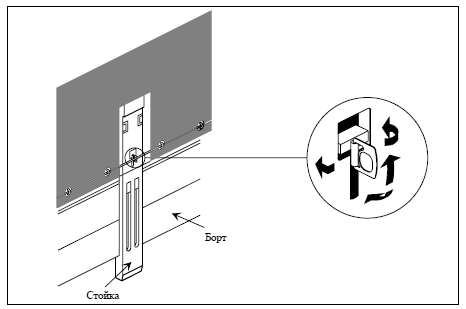
b) Если необходимо обеспечить глухое крепление краев брезента к транспортному средству, соединение должно быть непрерывным и осуществляться при помощи прочных деталей.
Пояснительная записка к [пункту 6 b) статьи 3](https://bukva.ai/docs/tamozhennaya-konventsiya-o-mezhdunarodnoy-2/statya-3-2#p101007)
2.3.6 b) Глухое крепление брезента
В тех случаях, когда один или несколько краев брезента наглухо крепятся к кузову транспортного средства, брезент должен удерживаться с помощью ленты из металла или другого подходящего материала, прикрепляемой к кузову транспортного средства крепежными деталями, удовлетворяющими требованиям [подпункта a) записки 2.2.1 a)](https://bukva.ai/docs/tamozhennaya-konventsiya-o-mezhdunarodnoy-2/statya-2-2#p100793) настоящего приложения.
Комментарий к [пункту 6 b) статьи 3](https://bukva.ai/docs/tamozhennaya-konventsiya-o-mezhdunarodnoy-2/statya-3-2#p101007)
Крепежная деталь, изображенная на [рис. 4](https://bukva.ai/docs/tamozhennaya-konventsiya-o-mezhdunarodnoy-2/statya-4-2#p101278) приложения 6, отвечает требованиям приложения 2, [статьи 3, подпунктов 6 a)](https://bukva.ai/docs/tamozhennaya-konventsiya-o-mezhdunarodnoy-2/statya-3-2#p100972) и [6 b)](https://bukva.ai/docs/tamozhennaya-konventsiya-o-mezhdunarodnoy-2/statya-3-2#p101007).
(TRANS/GE.30/55, пункт 41)
c) При использовании системы крепления брезента она должна в закрытом положении плотно прижимать брезент к наружной части грузового отделения (в качестве образца см. [рис. 6](https://bukva.ai/docs/tamozhennaya-konventsiya-o-mezhdunarodnoy-2/statya-4-2#p101114)).
(ECE/TRANS/17/Amend.7, вступила в силу 1 августа 1986 г.)
7. Брезент должен опираться на соответствующую конструкцию (стойки, боковины, арки, поперечины и т.д.).
Комментарий к [пункту 7 статьи 3](https://bukva.ai/docs/tamozhennaya-konventsiya-o-mezhdunarodnoy-2/statya-3-2#p101016)
Стойки, поддерживающие брезент
Дуги, поддерживающие брезент, иногда являются полыми и могут использоваться для сокрытия груза. Однако, как и в случае со многими другими частями транспортного средства, их можно всегда проверить. В этих условиях использование полых дуг допускается.
(TRANS/GE.30/14, пункт 90; TRANS/GE.30/12, пункты 100 и 101; TRANS/GE.30/6, пункт 41)
8. Расстояния между кольцами и расстояния между проушинами не должны превышать 200 мм. Однако эти расстояния между кольцами и проушинами могут быть большими, но не превышать 300 мм с любой стороны стойки, если конструкция транспортного средства и брезента такова, что полностью исключает доступ в грузовое отделение. Проушины должны быть жесткими.
(ECE/TRANS/17/Amend.1, вступила в силу 1 августа 1979 г.)
Пояснительная записка к [пункту 8 статьи 3](https://bukva.ai/docs/tamozhennaya-konventsiya-o-mezhdunarodnoy-2/statya-3-2#p101021)
##### 2.3.8 Расстояния между кольцами и проушинами
Над стойками допускается расстояние более 200 мм, но не более 300 мм, если кольца "утоплены" в бортах и проушины имеют овальную форму и настолько малы, что могут надеваться на кольца без зазора.
(ECE/TRANS/17/Amend.1, вступила в силу 1 августа 1979 года)
9. Должны применяться следующие виды крепления:
a) стальной трос диаметром не менее 3 мм; или
b) веревка из пеньки или сизаля диаметром не менее 8 мм, заключенная в прозрачную нерастягивающуюся пластмассовую оболочку; или
c) трос, состоящий из пучков волоконно-оптических нитей внутри скрученного спиралью стального кожуха, заключенного в прозрачную нерастягивающуюся пластмассовую оболочку; или
d) трос, имеющий текстильный корд, обвитый по крайней мере четырьмя стренгами из стальной проволоки, полностью покрывающими сердечник, при условии, что диаметр троса (без учета прозрачной оболочки, если таковая имеется) будет не менее 3 мм.
Тросы, соответствующие [пункту 9 a)](https://bukva.ai/docs/tamozhennaya-konventsiya-o-mezhdunarodnoy-2/statya-3-2#p101028) или [d)](https://bukva.ai/docs/tamozhennaya-konventsiya-o-mezhdunarodnoy-2/statya-3-2#p101031) настоящей статьи, могут заключаться в прозрачную нерастягивающуюся оболочку из пластмассы.
В случаях, когда брезент должен крепиться к раме в какой-либо конструкции, которая отвечает требованиям [пункта 6 a)](https://bukva.ai/docs/tamozhennaya-konventsiya-o-mezhdunarodnoy-2/statya-3-2#p100972) настоящей статьи, в качестве крепления может использоваться ремень (пример такой конструкции приведен на [рис. 7](https://bukva.ai/docs/tamozhennaya-konventsiya-o-mezhdunarodnoy-2/statya-4-2#p101118) к настоящему приложению). Сам ремень должен отвечать предписаниям [пункта 11 a) iii)](https://bukva.ai/docs/tamozhennaya-konventsiya-o-mezhdunarodnoy-2/statya-3-2#p101051) в отношении материала, размеров и формы.
(ECE/TRANS/17/Amend.11, вступила в силу 1 августа 1989 г.; ECE/TRANS/17/Amend.17, вступила в силу 1 октября 1994 г.; ECE/TRANS/17/Amend.25, вступила в силу 1 октября 2005 г.)
Пояснительная записка к [пункту 9 статьи 3](https://bukva.ai/docs/tamozhennaya-konventsiya-o-mezhdunarodnoy-2/statya-3-2#p101027)
##### 2.3.9 Исключена
(ECE/TRANS/17/Amend.25, вступила в силу 1 октября 2005 г.)
Комментарии к пояснительной записке 2.3.9
Нейлоновые тросы
Использование нейлоновых тросов в пластиковой оболочке запрещено, поскольку они не отвечают требованиям приложения 2 [статьи 3, пункта 9](https://bukva.ai/docs/tamozhennaya-konventsiya-o-mezhdunarodnoy-2/statya-3-2#p101027).
(TRANS/GE.30/AC.2/12, пункт 16; TRANS/GE.30/GRCC/11, пункты 30 - 33; ECE/TRANS/WP.30/232, пункт 34 и приложение; ECE/TRANS/WP.30/AC.2/91, пункт 24)
Крепежная веревка
В случае, когда необходимо закрепить брезент на раме транспортного средства, вместо ремней может быть использована веревка, которая может состоять из двух кусков.
(TRANS/WP.30/125, пункт 33)
10. Каждый трос или веревка должны состоять из одного куска и иметь металлические наконечники на обоих концах. Должна быть обеспечена возможность продергивания через каждый металлический наконечник бечевки или ленты для таможенных печатей и пломб. Приспособление для прикрепления каждого наконечника тросов, согласно положениям [пункта 9 a)](https://bukva.ai/docs/tamozhennaya-konventsiya-o-mezhdunarodnoy-2/statya-3-2#p101028), [b)](https://bukva.ai/docs/tamozhennaya-konventsiya-o-mezhdunarodnoy-2/statya-3-2#p101029) и [d)](https://bukva.ai/docs/tamozhennaya-konventsiya-o-mezhdunarodnoy-2/statya-3-2#p101031) настоящей статьи, должно включать полую заклепку, которая проходит через трос или веревку и через которую может быть продернута бечевка или лента для таможенных печатей и пломб. Трос или веревка должны оставаться видимыми с обеих сторон полой заклепки, чтобы можно было удостовериться в том, что они действительно состоят из одного куска (см. [рис. 5](https://bukva.ai/docs/tamozhennaya-konventsiya-o-mezhdunarodnoy-2/statya-4-2#p101110), приложенный к настоящим Правилам).
(ECE/TRANS/17/Amend.25, вступила в силу 1 октября 2005 г.)
11. В местах, где в брезенте имеются окна, используемые для загрузки и разгрузки грузов, обе полы брезента соединяются вместе. Для этого может использоваться следующая система:
a) оба края брезента должны соответствующим образом перекрываться. Они должны также закрепляться с помощью:
i) откидной полы, пришитой или приваренной в соответствии с [пунктами 3](https://bukva.ai/docs/tamozhennaya-konventsiya-o-mezhdunarodnoy-2/statya-3-2#p100946) и [4](https://bukva.ai/docs/tamozhennaya-konventsiya-o-mezhdunarodnoy-2/statya-3-2#p100951) настоящей статьи;
ii) колец и проушин, отвечающих условиям [пункта 8](https://bukva.ai/docs/tamozhennaya-konventsiya-o-mezhdunarodnoy-2/statya-3-2#p101021) настоящей статьи; кольца должны быть изготовлены из металла; и
iii) ремня, изготовленного из цельного куска соответствующего нерастягивающегося материала, шириной не менее 20 мм и толщиной не менее 3 мм, проходящего через кольца и соединяющего оба края брезента и откидную полу; ремень прикрепляется с внутренней стороны брезента и должен иметь либо:
проушину для пропускания троса или веревки, упомянутых в [пункте 9](https://bukva.ai/docs/tamozhennaya-konventsiya-o-mezhdunarodnoy-2/statya-3-2#p101027) настоящей статьи, либо
проушину, которая может прикрепляться к металлическому кольцу, упомянутому в [пункте 6](https://bukva.ai/docs/tamozhennaya-konventsiya-o-mezhdunarodnoy-2/statya-3-2#p100971) настоящей статьи, и закрепляться с помощью троса или веревки, упомянутых в [пункте 9](https://bukva.ai/docs/tamozhennaya-konventsiya-o-mezhdunarodnoy-2/statya-3-2#p101027) настоящей статьи.
Откидная пола не требуется, если имеется специальное устройство, например, защитная перегородка, которая препятствует доступу к грузовому отделению без оставления видимых следов. Откидная пола не требуется также для транспортных средств со скользящими полами.
(ECE/TRANS/17/Amend.14, вступила в силу 1 августа 1992 г.; ECE/TRANS/17/Amend.20 и Add.1, вступила в силу 12 июня 2001 г.)
Пояснительные записки к [пункту 11 a) статьи 3](https://bukva.ai/docs/tamozhennaya-konventsiya-o-mezhdunarodnoy-2/statya-3-2#p101048)
2.3.11 a)-1 Откидные натяжные полы брезента
На многих транспортных средствах брезент снабжен снаружи горизонтальной откидной полой с проушинами, проходящей вдоль боковой стороны транспортного средства. Такие откидные полы, так называемые натяжные полы, используются для натяжения брезента с помощью тросов или подобных устройств. Эти полы использовались для прикрытия устраиваемых в брезенте горизонтальных разрезов, позволявших недозволенный доступ к грузам, перевозимым в транспортном средстве. Поэтому рекомендуется не допускать использование откидных пол этого типа. Вместо них могут использоваться, в частности, следующие устройства:
a) натяжные откидные полы аналогичной конструкции, прикрепляемые с внутренней стороны покрытия; или
b) небольшие отдельные откидные полы, каждая с одной проушиной, прикрепляемые снаружи брезента и расположенные на таком расстоянии друг от друга, при котором обеспечивается соответствующее натяжение брезента.
В качестве альтернативы в некоторых случаях можно отказаться от использования на брезенте натяжных пол.
2.3.11 a)-2 Ремни
Для изготовления ремней могут применяться следующие материалы:
a) кожа;
b) нерастяжимые текстильные материалы, включая покрытые пластиком или прорезиненные ткани, при условии, что такие материалы после повреждения нельзя сварить или восстановить без оставления видимых следов. Кроме того, пластмасса, используемая для покрытия ремней, должна быть прозрачной и иметь гладкую поверхность.
Комментарии к пояснительной записке [2.3.11 a)-2](https://bukva.ai/docs/tamozhennaya-konventsiya-o-mezhdunarodnoy-2/statya-3-2#p101062)
Образец ремней для крепления покрытия
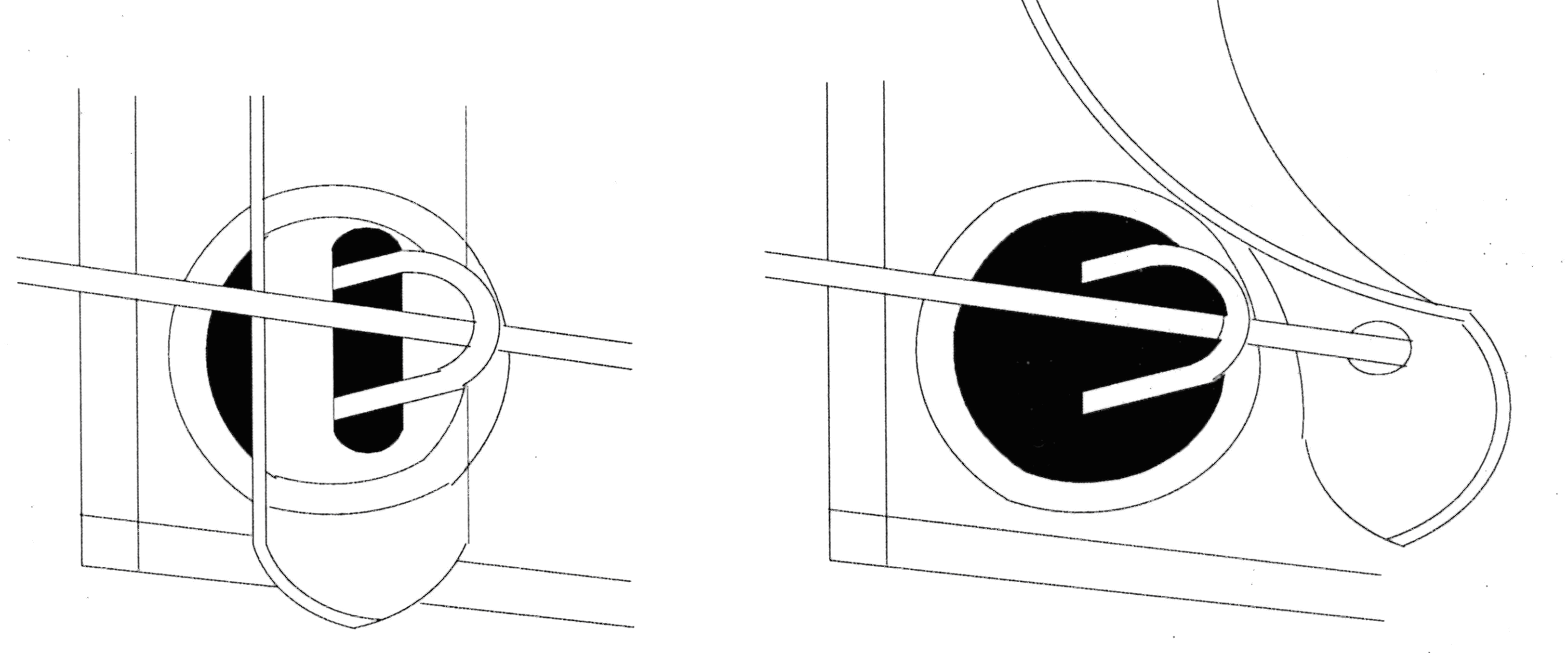
Административный комитет считает, что проушины в ремнях должны быть укреплены.
(TRANS/GE.30/AC.2/21, пункт 16)
Крепление ремней
Устройство, изображенное ниже, отвечает требованиям приложения 2, [статьи 3, пункта 11 a) iii)](https://bukva.ai/docs/tamozhennaya-konventsiya-o-mezhdunarodnoy-2/statya-3-2#p101051)
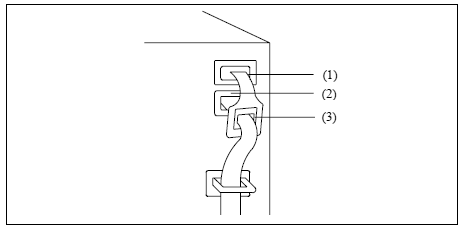
Описание
Ремень должен проходить через верхнюю проушину (1), в месте, где в брезенте имеется окно, используемое для загрузки и разгрузки, выходить из грузового отделения через нижнюю проушину (2) и затем пропускаться через проушину повышенной прочности (3) на конце ремня.
(TRANS/WP.30/123, пункты 45 - 47 и приложение 3; TRANS/WP.30/AC.2/23, приложение 3)
2.3.11 a)-3 Устройство, показанное на [рис. 3](https://bukva.ai/docs/tamozhennaya-konventsiya-o-mezhdunarodnoy-2/statya-4-2#p101104) настоящего приложения, отвечает требованиям [последнего абзаца пункта 11 a) статьи 3](https://bukva.ai/docs/tamozhennaya-konventsiya-o-mezhdunarodnoy-2/statya-3-2#p101048) приложения 2. Оно отвечает также требованиям [пунктов 6 a)](https://bukva.ai/docs/tamozhennaya-konventsiya-o-mezhdunarodnoy-2/statya-3-2#p100972) и [6 b) статьи 3](https://bukva.ai/docs/tamozhennaya-konventsiya-o-mezhdunarodnoy-2/statya-3-2#p101007) приложения 2.
(ECE/TRANS/17/Amend.15, вступила в силу 1 августа 1993 г.; ECE/TRANS/17/Amend.17, вступила в силу 1 октября 1994 г.)
b) Специальная система закрывающих окон в брезенте обеспечивает плотное закрытие краев брезента после закрытия и опечатывания грузового отделения. В системе имеется отверстие, через которое может проходить металлическое кольцо, упомянутое в [пункте 6](https://bukva.ai/docs/tamozhennaya-konventsiya-o-mezhdunarodnoy-2/statya-3-2#p100971) настоящей статьи, и закрепляться с помощью троса или веревки, упомянутых в [пункте 9](https://bukva.ai/docs/tamozhennaya-konventsiya-o-mezhdunarodnoy-2/statya-3-2#p101027) настоящей статьи. Такая система приводится на [рис. 8](https://bukva.ai/docs/tamozhennaya-konventsiya-o-mezhdunarodnoy-2/statya-4-2#p101125), содержащемся в настоящем приложении.
## Статья 4. (ECE/TRANS/17/Amend.14, вступила в силу 1 августа 1992 г.)
### Статья 4. (ECE/TRANS/17/Amend.14, вступила в силу 1 августа 1992 г.)
Транспортные средства со скользящими полами
1. Положения [статей 1](https://bukva.ai/docs/tamozhennaya-konventsiya-o-mezhdunarodnoy-2/statya-1-2#p100773), [2](https://bukva.ai/docs/tamozhennaya-konventsiya-o-mezhdunarodnoy-2/statya-2-2#p100787) и [3](https://bukva.ai/docs/tamozhennaya-konventsiya-o-mezhdunarodnoy-2/statya-3-2#p100942) настоящих Правил распространяются на транспортные средства со скользящими полами в той мере, в которой они могут к ним применяться. Кроме того, эти транспортные средства должны соответствовать положениям настоящей статьи.
2. Скользящие полы, пол, двери и все другие составные части грузового отделения должны отвечать либо требованиям, содержащимся в [пунктах 6](https://bukva.ai/docs/tamozhennaya-konventsiya-o-mezhdunarodnoy-2/statya-3-2#p100971), [8](https://bukva.ai/docs/tamozhennaya-konventsiya-o-mezhdunarodnoy-2/statya-3-2#p101021), [9](https://bukva.ai/docs/tamozhennaya-konventsiya-o-mezhdunarodnoy-2/statya-3-2#p101027) и [11 статьи 3](https://bukva.ai/docs/tamozhennaya-konventsiya-o-mezhdunarodnoy-2/statya-3-2#p101047) настоящих Правил, либо требованиям, изложенным в [подпунктах i)](https://bukva.ai/docs/tamozhennaya-konventsiya-o-mezhdunarodnoy-2/statya-4-2#p101085) - [vi)](https://bukva.ai/docs/tamozhennaya-konventsiya-o-mezhdunarodnoy-2/statya-4-2#p101090) ниже.
i) Скользящие полы, пол, двери и все другие составные части грузового отделения должны соединяться таким образом, чтобы их нельзя было открыть или закрыть без оставления видимых следов.
ii) Пола должна перекрывать сверху жесткие части транспортного средства по крайней мере на 1/4 фактического расстояния между натяжными ремнями. Пола должна перекрывать снизу жесткие части транспортного средства по крайней мере на 50 мм. Когда грузовое отделение закрыто и опечатано для таможенных целей, горизонтальный зазор между полой и жесткими частями грузового отделения в любом месте не должен превышать 10 мм по перпендикуляру к продольной оси транспортного средства.
iii) Направляющий элемент скользящей полы и другие подвижные части должны соединяться таким образом, чтобы закрытые и опечатанные таможенными пломбами двери и другие подвижные части нельзя было открыть или закрыть снаружи без оставления видимых следов. Направляющий элемент скользящей полы и другие подвижные части должны соединяться таким образом, чтобы исключалась возможность доступа в грузовое отделение без оставления видимых следов. Данная система изображена на [рисунке 9](https://bukva.ai/docs/tamozhennaya-konventsiya-o-mezhdunarodnoy-2/statya-4-2#p101127), прилагаемом к настоящим Правилам.
iv) Расстояние по горизонтали между кольцами, которые используются для таможенных целей, на жестких частях транспортного средства не должно превышать 200 мм. Вместе с тем это расстояние может быть большим, но не должно превышать 300 мм между кольцами с любой стороны стойки, если конструкция транспортного средства и пол таковы, что полностью исключается доступ в грузовое отделение. В любом случае должны соблюдаться условия, изложенные в [подпункте ii)](https://bukva.ai/docs/tamozhennaya-konventsiya-o-mezhdunarodnoy-2/statya-4-2#p101086) выше.
v) Расстояние между натяжными ремнями не должно превышать 600 мм.
vi) Виды креплений, используемых для крепления пол к жестким частям транспортного средства, должны отвечать требованиям, предусмотренным в [пункте 9 статьи 3](https://bukva.ai/docs/tamozhennaya-konventsiya-o-mezhdunarodnoy-2/statya-3-2#p101027) настоящих Правил.
(ECE/TRANS/17/Amend.20, вступила в силу 12 июня 2001 г.)
Рисунки к приложению 2
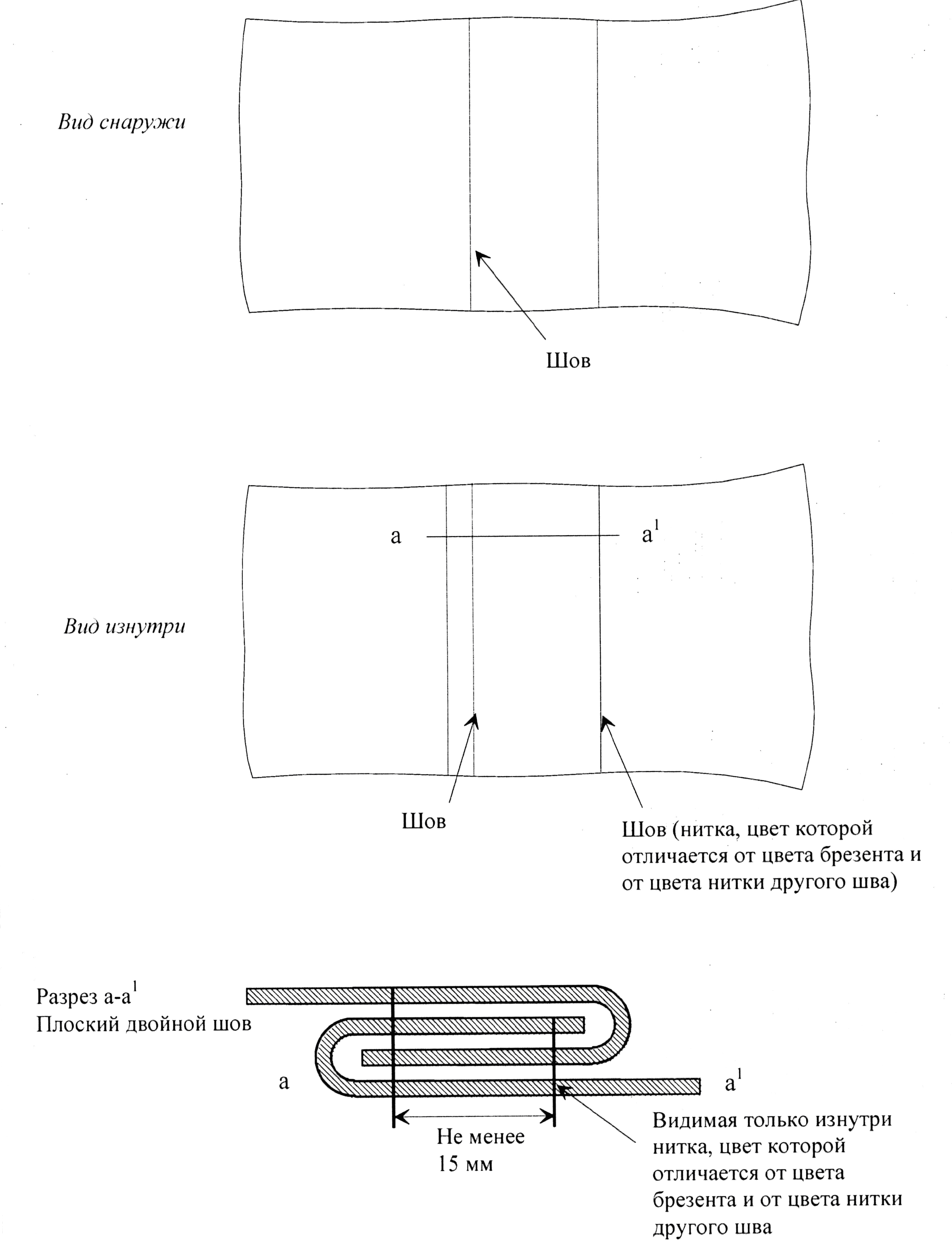
Рисунок 1. Брезент, изготовленный из нескольких
кусков ткани, соединенных при помощи швов
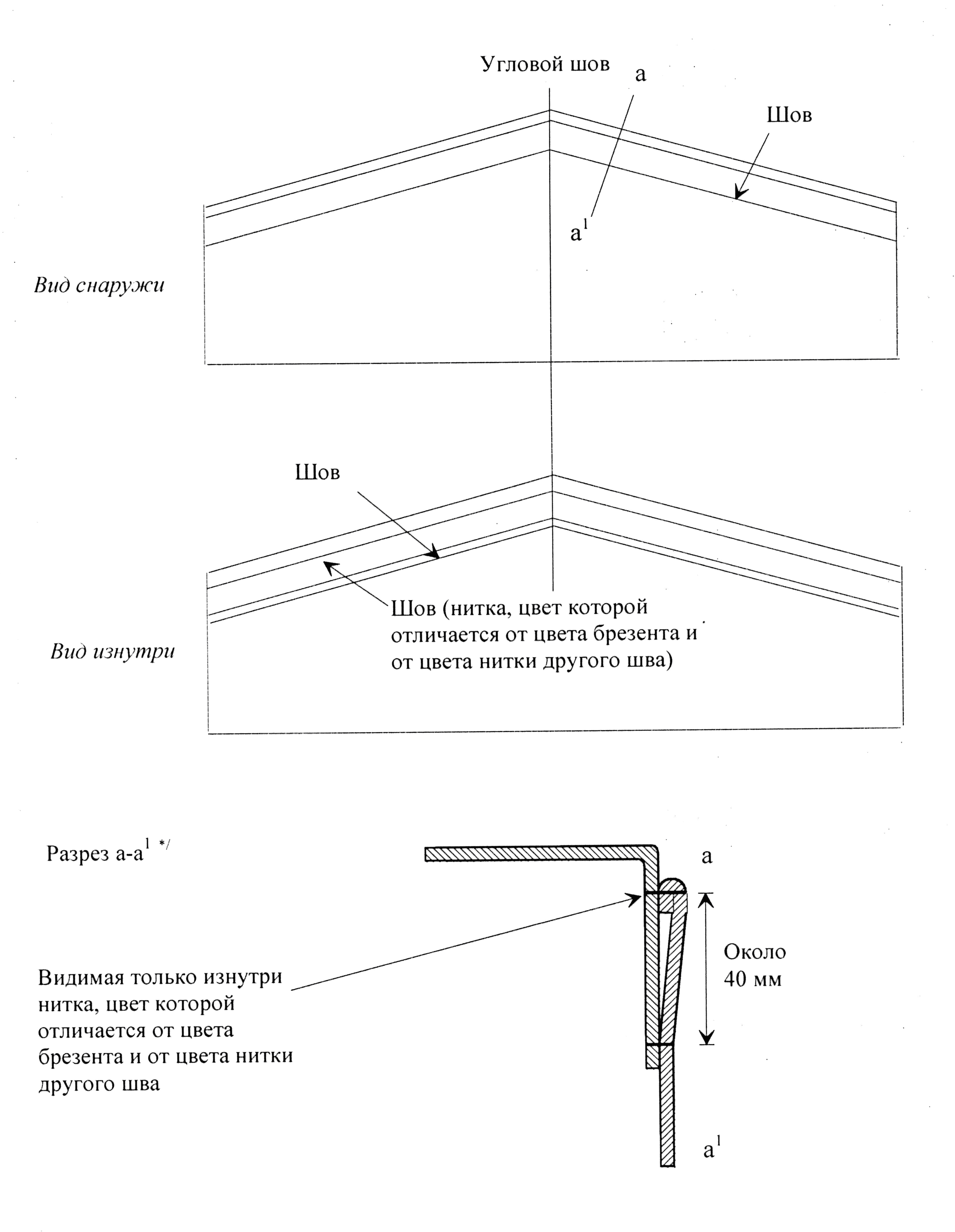
---
<*> Этот рисунок показывает верхнюю часть брезента, загнутую в соответствии с [пунктом 3 статьи 3](https://bukva.ai/docs/tamozhennaya-konventsiya-o-mezhdunarodnoy-2/statya-3-2#p100946) приложения 2.
Рисунок 2. Брезент, изготовленный из нескольких
кусков ткани, соединенных при помощи швов
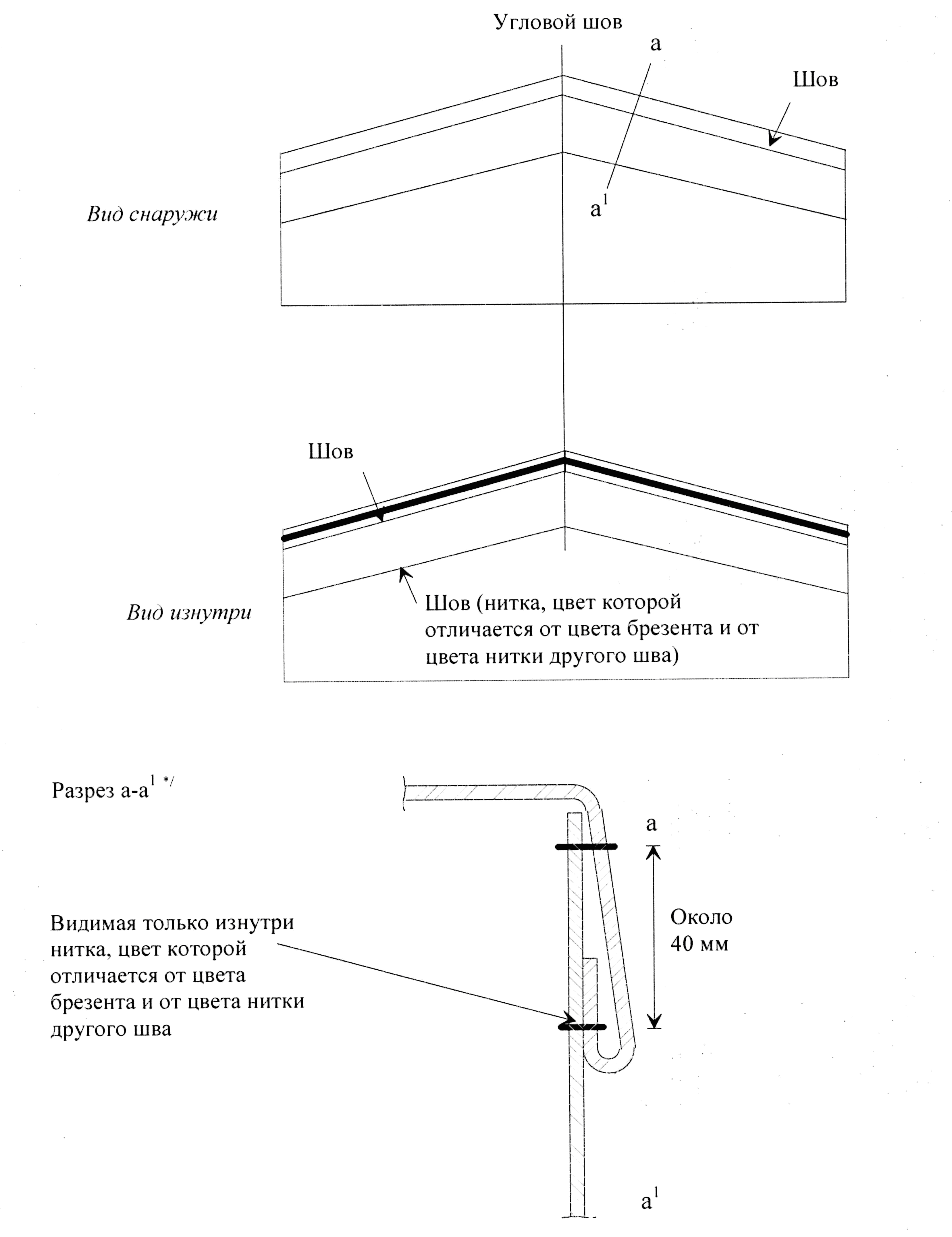
---
<*> Этот рисунок показывает верхнюю часть брезента, загнутую в соответствии с [пунктом 3 статьи 3](https://bukva.ai/docs/tamozhennaya-konventsiya-o-mezhdunarodnoy-2/statya-3-2#p100946) приложения 2.
Рисунок 2a. Брезент, изготовленный из нескольких
кусков ткани, соединенных при помощи швов
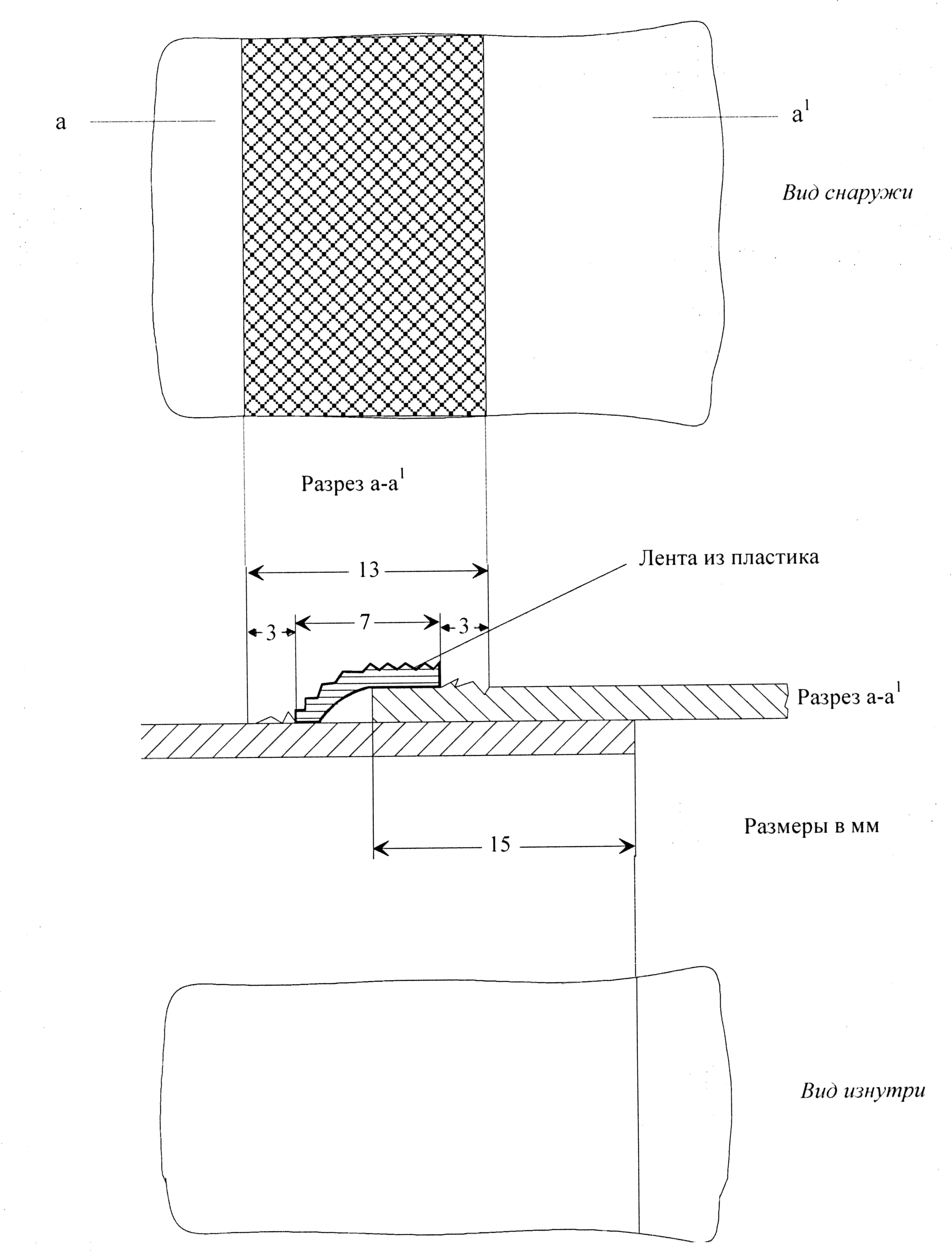
Рисунок 3. Брезент, изготовленный из нескольких
кусков ткани, соединенных посредством спайки
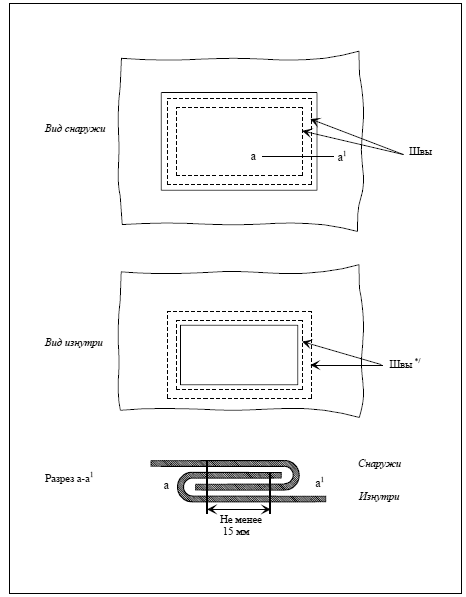
---
<*> Нитки, видимые изнутри, отличаются по цвету от ниток, видимых снаружи, и от цвета брезента.
Рисунок 4. Починка брезента
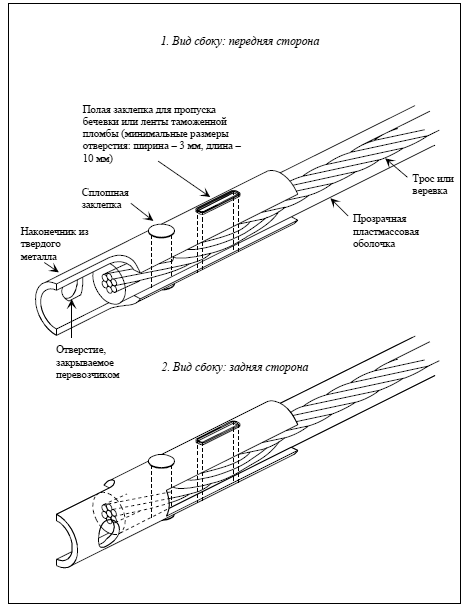
Рисунок 5. Образец наконечника
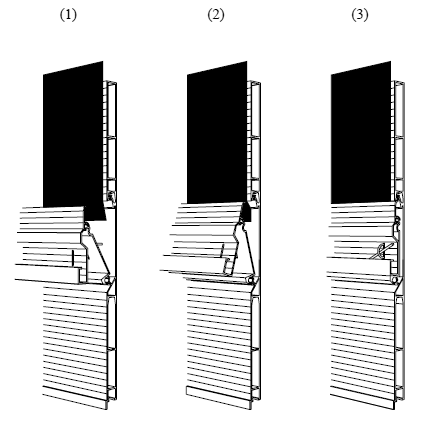
Описание
Настоящая система крепления брезента является приемлемой, если она оборудована, по крайней мере, одним металлическим кольцом на концах каждого борта. Отверстия, через которые проходит кольцо, имеют овальную форму и точно соответствуют размеру проходящего через них кольца. Видимая часть металлического кольца при закрытой системе выступает на расстояние, которое не должно превышать более чем в два раза максимальную толщину троса.
Рисунок 6. Образец системы крепления брезента
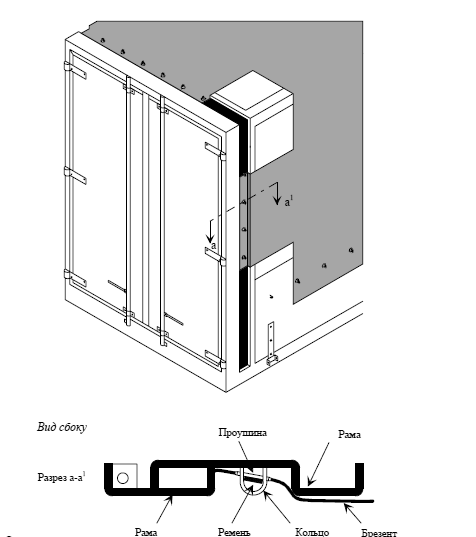
Описание
Такое крепление брезента к транспортному средству допускается, если кольца утоплены на глубину профиля рамы и не выступают за максимальную его глубину. Ширина профиля рамы должна быть по возможности минимальной.
Рисунок 7. Пример крепления брезента к рамам особой формы
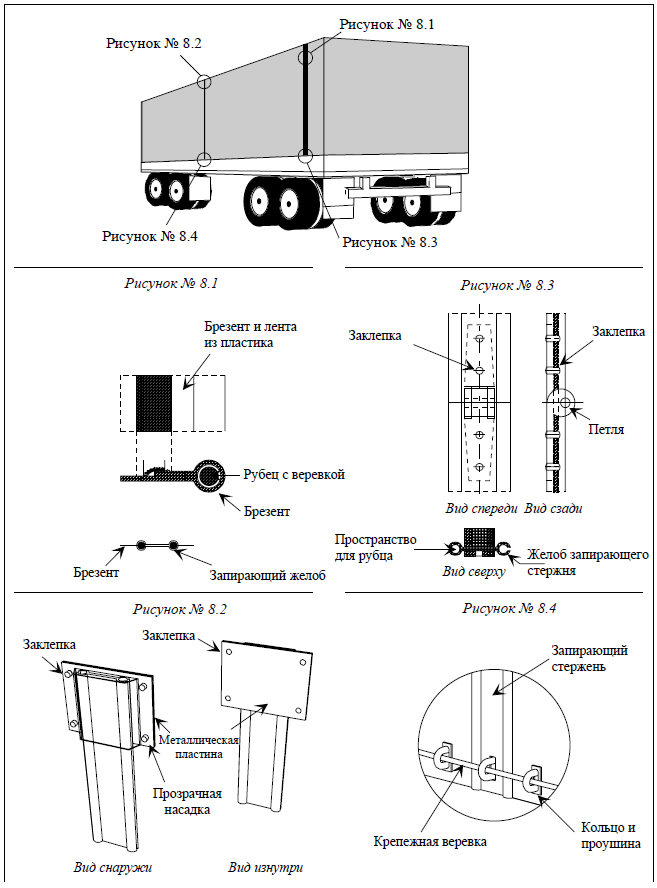
Описание
В данной системе закрывающихся окон в брезенте оба края окон в брезенте, используемых для загрузки и разгрузки, соединяются посредством алюминиевого запирающего стержня. Окна в брезенте имеют рубец, в который по всей его длине вшита веревка (см. рис. N 8.1). Это не позволяет вытащить брезент из желоба запирающего стержня. Рубец должен находиться на внешней стороне и быть соединен посредством спайки в соответствии с положениями [пункта 4 статьи 3](https://bukva.ai/docs/tamozhennaya-konventsiya-o-mezhdunarodnoy-2/statya-3-2#p100951) приложения 2 к Конвенции.
Края брезента должны быть пропущены через открытые желоба на алюминиевом запирающем стержне и проходить по двум параллельным продольным каналам, закрытым в их нижней части. Когда запирающий стержень находится в своем верхнем положении, края брезента соединены.
В верхнем конце окна запирающий стержень фиксируется при помощи заклепок к брезенту (см. рис. N 8.2). Запирающий стержень состоит из двух частей, соединенных при помощи петли на заклепках, которая позволяет сгибать его в целях облегчения установки и снятия. Эта петля должна быть устроена таким образом, чтобы после запирания системы нельзя было вынуть поворотный шкворень (см. рис. N 8.3).
В нижней части запирающего стержня имеется отверстие, через которое проходит кольцо. Это отверстие имеет овальную форму и размер, достаточный для того, чтобы в него проходило кольцо (см. рис. N 8.4). Для закрепления запирающего стержня через это кольцо пропускается крепежная веревка, соответствующая требованиям МДП.
Рисунок 8. Система закрывания отверстий, предназначенных
для погрузочно-разгрузочных работ
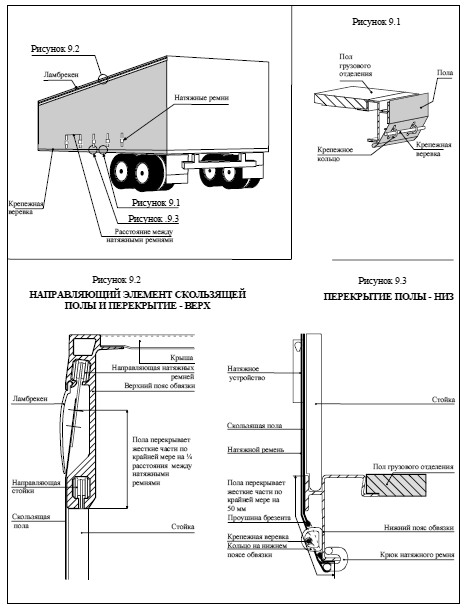
Рисунок 9. Образец конструкции транспортного средства
со скользящими полами
**ПРОЦЕДУРА**
**ДОПУЩЕНИЯ ДОРОЖНЫХ ТРАНСПОРТНЫХ СРЕДСТВ, ОТВЕЧАЮЩИХ**
**ТЕХНИЧЕСКИМ ТРЕБОВАНИЯМ, ПРЕДУСМОТРЕННЫХ ПРАВИЛАМИ,**
**ПРИВЕДЕННЫМИ В ПРИЛОЖЕНИИ 2**
1. Дорожные транспортные средства могут быть допущены к перевозке в соответствии с одной из следующих процедур:
a) либо в индивидуальном порядке,
b) либо по типу конструкции (серия дорожных транспортных средств).
2. На каждое допущенное к перевозке транспортное средство выдается свидетельство о допущении, соответствующее [образцу](https://bukva.ai/docs/tamozhennaya-konventsiya-o-mezhdunarodnoy-2/statya-4-2#p101206), приведенному в приложении 4. Это свидетельство должно быть напечатано на языке страны выдачи и на французском или английском языке. Когда компетентный орган, который выдал свидетельство, считает это необходимым, к свидетельству прилагаются фотографии или рисунки, заверенные этим органом. В таком случае количество этих документов указывается этим органом в рубрике 6 свидетельства.
Комментарии к [пункту 2](https://bukva.ai/docs/tamozhennaya-konventsiya-o-mezhdunarodnoy-2/statya-4-2#p101134)
Наименование владельца свидетельства
В случае смены владельца может оказаться, что наименование, указанное в рубрике 8 "Владелец", будет отличаться от наименования нового владельца. Это не должно вызывать каких-либо споров.
(TRANS/GE.30/12, пункт 37)
Наименование транспортного средства
Фотографии транспортного средства, прилагаемые к свидетельству, могут не совсем точно воспроизводить предъявляемое транспортное средство. В этом случае не следует запрещать въезд транспортного средства на территорию государства, поскольку единственное назначение фотографий состоит в том, чтобы показать внешний вид транспортного средства.
(TRANS/GE.30/12, пункты 38 и 39)
Недостаток места в рубрике 5 свидетельства
В случае, если в графе 5 "Прочие данные" не хватает места, информация может указываться в сноске на оборотной стороне свидетельства.
(TRANS/GE.30/12, пункты 40 и 41)
3. Свидетельство должно сопровождать дорожное транспортное средство.
Комментарий к [пункту 3](https://bukva.ai/docs/tamozhennaya-konventsiya-o-mezhdunarodnoy-2/statya-4-2#p101145)
Это должен быть подлинник свидетельства, а не его фотокопия.
(TRANS/GE.30/33, пункт 52)
4. Дорожные транспортные средства представляются каждые два года для проверки и, в случае необходимости, для возобновления свидетельства, компетентным органам страны их регистрации или, если речь идет о незарегистрированном транспортном средстве, - компетентным органам страны, в которой проживает его владелец или пользователь.
5. Если дорожное транспортное средство не отвечает больше техническим требованиям, предписанным процедурой допущения, то, прежде чем его можно будет использовать для перевозки грузов с применением книжки МДП, оно должно быть приведено в состояние, послужившее основанием для его допущения, таким образом, чтобы вновь отвечать этим техническим требованиям.
6. Если основные характеристики дорожного транспортного средства изменены, допущение этого транспортного средства теряет силу, и оно подлежит процедуре нового допущения компетентным органом, прежде чем его можно будет использовать для перевозки грузов с применением книжки МДП.
7. Компетентные органы страны регистрации транспортного средства или, если речь идет о транспортных средствах, для которых регистрация не требуется, компетентные органы страны, где проживает владелец или пользователь транспортного средства, могут в соответствующем случае изъять или возобновить свидетельство о допущении или выдать новое свидетельство о допущении при обстоятельствах, изложенных в [статье 14](https://bukva.ai/docs/tamozhennaya-konventsiya-o-mezhdunarodnoy-2/statya-14#p100237) настоящей Конвенции и в [пунктах 4](https://bukva.ai/docs/tamozhennaya-konventsiya-o-mezhdunarodnoy-2/statya-4-2#p101149), [5](https://bukva.ai/docs/tamozhennaya-konventsiya-o-mezhdunarodnoy-2/statya-4-2#p101150) и [6](https://bukva.ai/docs/tamozhennaya-konventsiya-o-mezhdunarodnoy-2/statya-4-2#p101151) настоящего приложения.
Процедура индивидуального допущения
8. Заявка на индивидуальное допущение транспортного средства представляется компетентному органу владельцем, лицом, эксплуатирующим транспортное средство или представителем того или другого. Компетентный орган осуществляет контроль представленного дорожного транспортного средства в соответствии с общими правилами, предусмотренными выше в [пунктах 1](https://bukva.ai/docs/tamozhennaya-konventsiya-o-mezhdunarodnoy-2/statya-4-2#p101131) - [7](https://bukva.ai/docs/tamozhennaya-konventsiya-o-mezhdunarodnoy-2/statya-4-2#p101152), удостоверяется в том, что оно удовлетворяет техническим условиям, предписанным в [приложении 2](https://bukva.ai/docs/tamozhennaya-konventsiya-o-mezhdunarodnoy-2/statya-64#p100772), и выдает после допущения свидетельство, соответствующее [образцу](https://bukva.ai/docs/tamozhennaya-konventsiya-o-mezhdunarodnoy-2/statya-4-2#p101206), приведенному в приложении 4.
Процедура допущения по типу конструкции
(серии дорожных транспортных средств)
9. Когда дорожные транспортные средства одного и того же типа конструкции изготовляются серийно, завод-изготовитель может обратиться к компетентному органу страны, в которой они производятся, с просьбой об их допущении по типу конструкции.
10. Завод-изготовитель должен указать в своей заявке опознавательные цифры или буквы, которые он присваивает типу дорожного средства, являющемуся предметом его заявки.
11. К такой заявке должны прилагаться чертежи и подробное описание типа конструкции дорожного транспортного средства, подлежащего допущению.
12. Завод-изготовитель должен письменно обязаться:
a) представить компетентному органу те из транспортных средств данного типа, которые этот орган пожелает осмотреть;
b) разрешить компетентному органу осматривать другие экземпляры в любой момент в ходе серийного производства данного типа;
c) информировать компетентный орган о любых даже мелких изменениях в чертежах или описаниях конструкции до того, как эти изменения будут произведены;
d) на видном месте наносить на дорожные транспортные средства опознавательные цифры или буквы типа конструкции, а также порядковый номер каждого серийного выпускаемого транспортного средства данного типа (заводской номер);
e) вести учет транспортных средств, изготовленных в соответствии с допущенным типом.
13. Компетентный орган указывает в случае необходимости изменения, которые следует внести в предусмотренный тип конструкции для допущения к перевозке.
14. Ни одно транспортное средство не может быть допущено согласно процедуре допущения по типу конструкции, если компетентный орган не пришел к заключению на основании осмотра одного или нескольких изготовленных по этому типу транспортных средств, что транспортные средства этого типа отвечают техническим условиям, предусмотренным в [приложении 2](https://bukva.ai/docs/tamozhennaya-konventsiya-o-mezhdunarodnoy-2/statya-64#p100772).
15. Компетентный орган уведомляет в письменной форме завод-изготовитель о своем решении о допущении по типу конструкции. Это решение должно иметь дату, номер и содержать точное наименование органа, который его принял.
16. Компетентный орган принимает необходимые меры для выдачи должным образом заверенного им свидетельства о допущении каждого транспортного средства, изготовленного в соответствии с допущенным типом конструкции.
17. Прежде чем использовать транспортное средство для перевозки грузов с применением книжки МДП, держатель свидетельства о допущении вписывает, если это требуется, в свидетельство о допущении:
- регистрационный номер, присвоенный транспортному средству (рубрика 1), или
- когда речь идет о транспортном средстве, не подлежащем регистрации, свою фамилию и служебный адрес (рубрика 8).
Пояснительная записка к [пункту 17](https://bukva.ai/docs/tamozhennaya-konventsiya-o-mezhdunarodnoy-2/statya-4-2#p101169)
##### 3.0.17 Процедура допущения
1. Приложение 3 предусматривает, что компетентные органы Договаривающейся стороны могут выдавать свидетельство о допущении транспортного средства, изготовленного на ее территории, и что не требуется никакой дополнительной процедуры допущения в отношении такого транспортного средства в стране, в которой оно зарегистрировано или, в соответствующем случае, в которой его владелец имеет свое постоянное местожительство.
2. Эти положения не направлены на то, чтобы ограничить право компетентных органов Договаривающейся стороны, на территории которой зарегистрировано транспортное средство или на территории которой его владелец имеет свое постоянное местожительство, требовать предъявление свидетельства о допущении либо при ввозе, либо впоследствии в целях, связанных с регистрацией или проверкой транспортного средства или другими аналогичными формальностями.
18. Когда транспортное средство, допущенное к перевозке по типу конструкции, экспортируется в другую страну, которая является Договаривающейся стороной настоящей Конвенции, то в этой стране не требуется никакой дополнительной процедуры допущения в связи с ввозом.
Процедура внесения отметок в свидетельство о допущении
19. Если в допущенном транспортном средстве, перевозящем грузы с применением книжки МДП, обнаружены серьезные неисправности, компетентные органы Договаривающихся сторон могут либо запретить дальнейшее следование транспортного средства с применением книжки МДП, либо разрешить дальнейшее следование транспортного средства с применением книжки МДП по своей территории, приняв необходимые меры по контролю. Допущенное транспортное средство должно быть приведено в удовлетворительное состояние в возможно более короткий срок, и во всяком случае до его нового использования для перевозки грузов с применением книжки МДП.
20. В каждом из этих случаев таможенные органы делают соответствующую отметку в рубрике 10 свидетельства о допущении транспортного средства. После приведения транспортного средства в результате ремонта в состояние, удовлетворяющее условиям допущения, оно должно быть представлено компетентным органам Договаривающейся стороны, которые возобновляют действительность свидетельства путем внесения в рубрику 11 отметки, аннулирующей предыдущие отметки. Никакое транспортное средство, в рубрику 10 свидетельства которого внесена отметка в соответствии с упомянутыми положениями, не может вновь использоваться для перевозки грузов с применением книжки МДП до тех пор, пока не будет произведен соответствующий ремонт и пока отметки в рубрике 10 не будут аннулированы как указано выше.
Пояснительная записка к [пункту 20](https://bukva.ai/docs/tamozhennaya-konventsiya-o-mezhdunarodnoy-2/statya-4-2#p101179)
##### 3.0.20 Процедура внесения отметок в свидетельство о допущении
Когда отметка о неисправностях должна быть аннулирована после приведения транспортного средства в удовлетворительное состояние, достаточно проставить в предусмотренной для этой цели рубрике 11 "Устраненные неисправности" название соответствующего компетентного органа, его подпись и штамп.
Комментарий к [пункту 20](https://bukva.ai/docs/tamozhennaya-konventsiya-o-mezhdunarodnoy-2/statya-4-2#p101179)
Любые дефекты, обнаруженные в покрытии или деталях транспортного средства, обеспечивающих безопасность перевозки, могут указываться в рубрике 10 свидетельства о допущении.
(TRANS/GE.30/33, пункты 46 - 49)
21. Каждая внесенная в свидетельство отметка должна быть заверена таможенными органами, и должна быть проставлена дата ее внесения.
22. Если транспортное средство имеет такие неисправности, которые, по мнению таможенных органов, не имеют серьезного характера и не создают возможности контрабанды, то может разрешаться дальнейшее использование этого транспортного средства для перевозки грузов с применением книжки МДП. Владелец свидетельства о допущении ставится в известность об этих неисправностях и должен соответствующим образом отремонтировать свое транспортное средство в разумные сроки.
**ОБРАЗЕЦ СВИДЕТЕЛЬСТВА О ДОПУЩЕНИИ**
**ДОРОЖНОГО ТРАНСПОРТНОГО СРЕДСТВА**
Свидетельство о допущении
Свидетельство о допущении должно иметь формат A3, сложенный вдвое. См. [образец](https://bukva.ai/docs/tamozhennaya-konventsiya-o-mezhdunarodnoy-2/statya-4-2#p101206) ниже.
(TRANS/GE.30/10, пункт 33; TRANS/WP.30/157, пункты 27 - 29; TRANS/WP.30/AC.2/35, приложение 6)
Фотографии или чертежи
В случае, если в соответствии с приложением 4 к настоящей Конвенции к свидетельству о допущении прилагаются фотографии или чертежи, они должны точно соответствовать состоянию транспортного средства на момент выдачи свидетельства.
(TRANS/WP.30/157, пункт 31)
Допущение съемных кузовов
В соответствии со [статьей 1 j)](https://bukva.ai/docs/tamozhennaya-konventsiya-o-mezhdunarodnoy-2/statya-1#p100036) Конвенции съемные кузова рассматриваются как контейнеры. В связи с этим для съемных кузовов, определение которых приводится в [приложении 6](https://bukva.ai/docs/tamozhennaya-konventsiya-o-mezhdunarodnoy-2/statya-4-2#p101251), пояснительная записка [0.1 j)](https://bukva.ai/docs/tamozhennaya-konventsiya-o-mezhdunarodnoy-2/statya-1#p100045), не требуется получение свидетельства о допущении, предусмотренного в приложении 4. Тем не менее в соответствии с положениями приложения 7, [часть II](https://bukva.ai/docs/tamozhennaya-konventsiya-o-mezhdunarodnoy-2/statya-5-2#p101443) съемные кузова должны иметь таблички о допущении.
(TRANS/WP.30/157, пункт 59)
Место проставления и количество таможенных пломб
В случаях, когда для обеспечения таможенной безопасности требуется наложение более одной таможенной пломбы, количество таких пломб должно быть указано в графе 5 свидетельства о допущении транспортного средства (приложение 4 к Конвенции МДП 1975 года). К свидетельству о допущении должны прилагаться рисунок или фотографии дорожного транспортного средства с точной схемой расположения таможенных пломб. Данное положение, вступающее в силу 7 августа 2003 года, должно применяться в отношении дорожных транспортных средств, подлежащих при необходимости допущению впервые либо в связи с проводящимся один раз в два года осмотром и обновлением допущения после вступления в силу пояснительной записки [2.2.1 b) f)](https://bukva.ai/docs/tamozhennaya-konventsiya-o-mezhdunarodnoy-2/statya-2-2#p100859). Следовательно, начиная с 7 августа 2005 года на всех дорожных транспортных средствах, на которых для обеспечения таможенной безопасности требуется наложение более одной таможенной пломбы, должно иметься свидетельство о допущении, соответствующее пояснительной записке [2.2.1 b) f)](https://bukva.ai/docs/tamozhennaya-konventsiya-o-mezhdunarodnoy-2/statya-2-2#p100859).
(TRANS/WP.30/206, пункт 62; TRANS/WP.30/AC.2/69, приложение 2; TRANS/WP.30/AC.2/69/Corr.1)
Переходный период для введения свидетельств нового образца
Для дорожных транспортных средств, подлежащих допущению впервые, или, соответственно, при проводящейся раз в два года проверке других транспортных средств и возобновления их свидетельства требуется свидетельство о допущении дорожного транспортного средства нового образца, вступившее в силу 1 августа 1995 года, (TRANS/WP.30/AC.2/35, приложение 4). Следовательно, с 1 августа 1997 г. на борту всех дорожных транспортных средств должно находиться свидетельство нового образца.
(TRANS/WP.30/164, пункты 46 - 48; TRANS/WP.30/R.158; TRANS/WP.30/AC.2/37, пункт 42 и приложение 6)
Образец свидетельства о допущении дорожного
транспортного средства [<*>](https://bukva.ai/docs/tamozhennaya-konventsiya-o-mezhdunarodnoy-2/statya-4-2#p101211)
```text
┌─────────────────────────────────────────────────────────────────────────┐
│ │
│ СВИДЕТЕЛЬСТВО О ДОПУЩЕНИИ │
│ │
│ дорожного транспортного средства к перевозке грузов │
│ под таможенными печатями и пломбами │
│ │
│ │
│ Свидетельств No ..................................................... │
│ │
│ Конвенция МДП от 14 ноября 1975 года │
│ │
│ │
│ Кем выдано: ......................................................... │
│ (название компетентного органа) │
│ │
│ │
│ [стр. 1] │
└─────────────────────────────────────────────────────────────────────────┘
--------------------------------
<*> (ECE/TRANS/17/Amend.18, вступила в силу 1 августа 1995 г.)
Образец свидетельства о допущении дорожного
транспортного средства
(продолжение)
┌─────────────────────────────────────────────────────────────────────────┐
│┌─────────────────────────────────────────────────┬─────────────────────┐│
││ │Свидетельство No ││
││ └─────────────────────┤│
││ ИДЕНТИФИКАЦИЯ ││
││ 1. Регистрационный номер ............................................ ││
││ 2. Тип транспортного средства ....................................... ││
││ 3. Номер шасси ..................................................... ││
││ 4. Торговый знак (или наименование завода-изготовителя) ............. ││
││ 5. Прочие данные .................................................... ││
││ 6. Количество приложений ............................................ ││
│├─────────────────────────────────────────────────┬─────────────────────┤│
││ 7. ДОПУЩЕНИЕ │Действительно до ││
││ ┌─┐ └─────────────────────┤│
││ │ │ индивидуальное допущение <*> ┌──────────────┤│
││ └─┘ │Печать ││
││ ┌─┐ │ ││
││ │ │ допущение по типу конструкции <*> │ ││
││ └─┘ │ ││
││ Разрешение N (в соответствующих случаях) ............ │ ││
││ Место ............................................... │ ││
││ Дата ................................................ │ ││
││ Подпись ............................................. │ ││
│├────────────────────────────────────────────────────────┴──────────────┤│
││ 8. Владелец, (завод-изготовитель, собственник или оператор) (только ││
││ для незарегистрированных транспортных средств) ││
││ Наименование и адрес ................................................ ││
││ ..................................................................... ││
│├───────────────────────────────────────────────────────────────────────┤│
││ 9. ПРОДЛЕНИЕ ││
│├───────────────────┬──────────────┬────────────────────────────────────┤│
││ Действительно до │ │ ││
│├───────────────────┼──────────────┼────────────────────────────────────┤│
││ Место │ │ ││
│├───────────────────┼──────────────┼────────────────────────────────────┤│
││ Дата │ │ ││
│├───────────────────┼──────────────┼────────────────────────────────────┤│
││ Подпись │ │ ││
│├───────────────────┼──────────────┼────────────────────────────────────┤│
││ Печать │ │ ││
│└───────────────────┴──────────────┴────────────────────────────────────┘│
│ -------------------------------- │
│ <*> В соответствующей клетке поставить знак "x". │
│ │
│ См. "Указание" на стр. 4. │
│ [стр. 2] │
└─────────────────────────────────────────────────────────────────────────┘
```
Образец свидетельства о допущении дорожного
транспортного средства
(продолжение)
| ПРИМЕЧАНИЯ (заполняется компетентными органами) | Свидетельство No |
| 10. Замеченные неисправности | 11. Устранение неисправностей |
| Компетентный орган | Печать | Компетентный орган | Печать |
| Подпись | Подпись |
| 10. Замеченные неисправности | 11. Устранение неисправностей |
| Компетентный орган | Печать | Компетентный орган | Печать |
| Подпись | Подпись |
| 10. Замеченные неисправности | 11. Устранение неисправностей |
| Компетентный орган | Печать | Компетентный орган | Печать |
| Подпись | Подпись |
| 12. Прочие замечания |
| См. "Указание" на стр. 4. [стр. 3] |
Образец свидетельства о допущении дорожного
транспортного средства
(продолжение)
```text
┌─────────────────────────────────────────────────────────────────────────┐
│ УКАЗАНИЕ │
│ │
│ 1. Если компетентный орган, который выдал свидетельство о допущении, │
│считает это необходимым, к свидетельству прилагаются фотографии или │
│рисунки, заверенные этим органом. В таком случае количество этих │
│документов указывается этим органом в позиции N 6 свидетельства. │
│ 2. Свидетельство должно находиться на борту транспортного средства. │
│Оно должно представлять собой оригинал, а не фотокопию. │
│ 3. Дорожные транспортные средства представляются каждые два года для │
│проверки и, в случае необходимости, для продления срока действия │
│свидетельства компетентным органам страны, в которой данное транспортное │
│средство зарегистрировано, или, в случае незарегистрированных │
│транспортных средств, - компетентным органам страны, в которой проживает │
│владелец или пользователь. │
│ 4. Если дорожное транспортное средство не отвечает больше техническим│
│требованиям, предписанным процедурой допущения, то, прежде чем его можно │
│будет использовать для перевозки грузов с применением книжки МДП, оно │
│должно быть приведено в состояние, послужившее основанием для его │
│допущения, с тем чтобы оно вновь отвечало этим техническим требованиям. │
│ 5. Если основные характеристики дорожного транспортного средства │
│изменены, то допущение этого транспортного средства теряет силу, и оно │
│должно пройти процедуру нового допущения компетентным органом, прежде чем│
│его можно будет использовать для перевозки грузов с применением книжки │
│МДП. │
│ │
│ [стр. 4] │
└─────────────────────────────────────────────────────────────────────────┘
```
ТАБЛИЧКА TIR [<*>](https://bukva.ai/docs/tamozhennaya-konventsiya-o-mezhdunarodnoy-2/statya-4-2#p101242)
---
<*> Сокращение "TIR" соответствует русскому "МДП".
1. Размер табличек должен быть: 250 мм на 400 мм.
2. Литеры TIR заглавными латинскими буквами должны быть высотой 200 мм и шириной линии не менее 20 мм. Литеры должны быть белого цвета на синем фоне.
Образец таблички МДП, соответствующий приложению 5, приведен ниже. Белые заглавные буквы на синем фоне (RAL 5017) (буквы: высота - 200 мм; толщина штриха буквы - не менее 20 мм).
Электронный файл (в формате "инкапсулированный постскрипт" (EPS)), содержащий табличку МДП, соответствующую приложению 5, как показано выше, имеется на вебсайте МДП (http://tir.unece.org) или может быть получен у Секретаря МДП.

(TRANS/WP.30/204, пункт 62; TRANS/WP.30/AC.2/69, приложение 3)
**ПОЯСНИТЕЛЬНЫЕ ЗАПИСКИ**
Введение к пояснительным запискам
i) В соответствии с положениями [статьи 43](https://bukva.ai/docs/tamozhennaya-konventsiya-o-mezhdunarodnoy-2/statya-43#p100500) настоящей Конвенции пояснительные записки содержат толкование некоторых положений настоящей Конвенции и [приложений](https://bukva.ai/docs/tamozhennaya-konventsiya-o-mezhdunarodnoy-2/statya-64#p100621) к ней. Они также описывают некоторые виды рекомендуемой практики.
ii) Пояснительные записки не изменяют положений настоящей Конвенции или [приложений](https://bukva.ai/docs/tamozhennaya-konventsiya-o-mezhdunarodnoy-2/statya-64#p100621) к ней, а только уточняют их содержание, смысл и область применения.
iii) В частности, в связи с положениями [статьи 12](https://bukva.ai/docs/tamozhennaya-konventsiya-o-mezhdunarodnoy-2/statya-12#p100225) настоящей Конвенции и [приложения 2](https://bukva.ai/docs/tamozhennaya-konventsiya-o-mezhdunarodnoy-2/statya-64#p100772) к ней в отношении технических условий допущения дорожных транспортных средств к перевозкам под таможенными печатями и пломбами, в пояснительных записках содержатся в соответствующих случаях указания о конструктивных особенностях, которые должны рассматриваться Договаривающимися сторонами как отвечающие этим положениям. В пояснительных записках может также указываться в соответствующих случаях, какие конструктивные особенности не отвечают этим положениям.
iv) Пояснительные записки обеспечивают возможность применения положений настоящей Конвенции и [приложений](https://bukva.ai/docs/tamozhennaya-konventsiya-o-mezhdunarodnoy-2/statya-64#p100621) к ней с учетом технического прогресса и требований экономического порядка.
Примечание:
(Пояснительные записки, содержащиеся в приложении 6, помещены вместе с положениями Конвенции, к которым они относятся. [Рисунки](https://bukva.ai/docs/tamozhennaya-konventsiya-o-mezhdunarodnoy-2/statya-4-2#p101260), относящиеся к пояснительным запискам, включены в настоящее приложение).
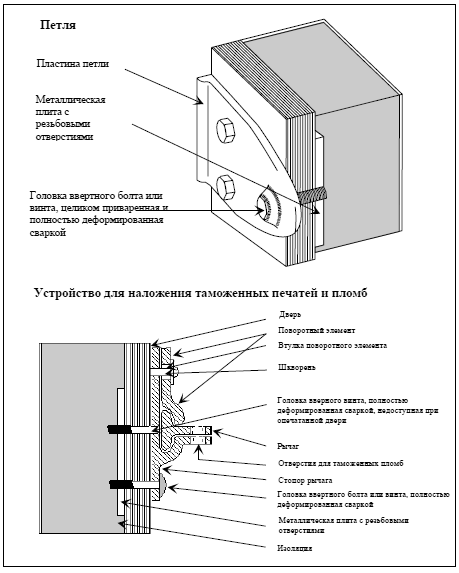
Рисунок 1. Пример петли и устройства для наложения
таможенных печатей и пломб на дверях транспортных средств,
имеющих изотермические грузовые отделения
Показанная ниже петля отвечает положениям [второго предложения подпункта b)](https://bukva.ai/docs/tamozhennaya-konventsiya-o-mezhdunarodnoy-2/statya-2-2#p100830) пояснительной записки 2.2.1 b). Конструкция пластины и скобы исключает необходимость в специальном креплении шкворня, поскольку пятки пластины заходят за края скобы. Таким образом, пятки препятствуют открытию опечатанной таможней двери в месте ее навешивания после извлечения незакрепленного шкворня без оставления видимых следов.
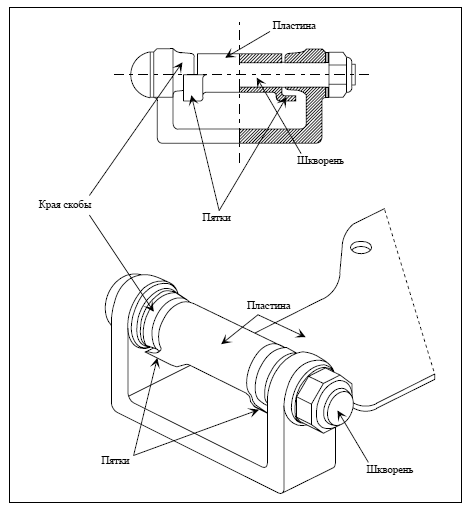
Рисунок 1a. Пример петли, шкворень которой не требует
специального крепления
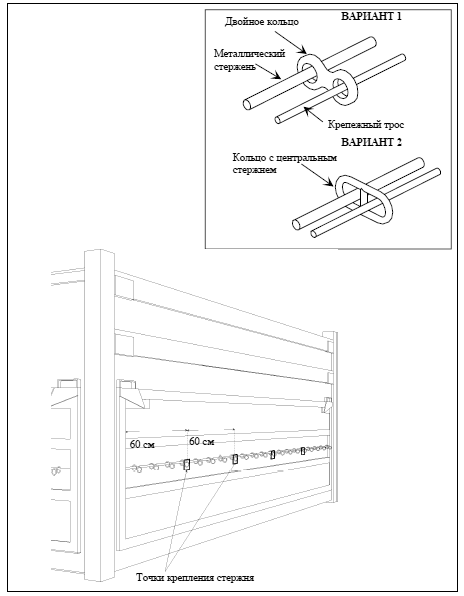
Рисунок 2. Крытые брезентом транспортные средства
со скользящими кольцами
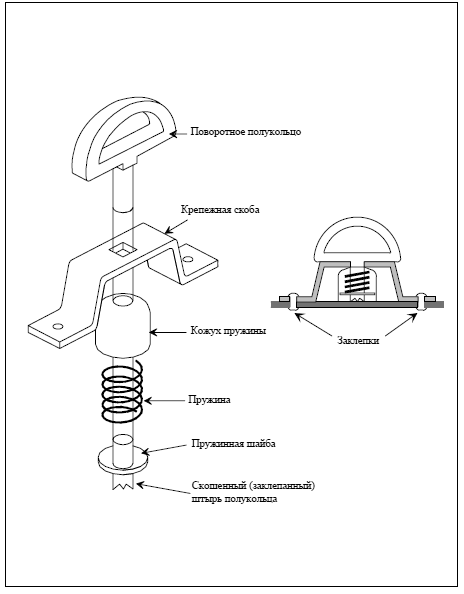
Рисунок N 2a. Пример поворотного кольца (полукольца)
Изображенное ниже устройство отвечает положениям [последнего абзаца пункта 11 a) статьи 3](https://bukva.ai/docs/tamozhennaya-konventsiya-o-mezhdunarodnoy-2/statya-3-2#p101048) приложения 2. Оно также отвечает положениям [подпунктов a)](https://bukva.ai/docs/tamozhennaya-konventsiya-o-mezhdunarodnoy-2/statya-3-2#p100972) и [b) пункта 6 статьи 3](https://bukva.ai/docs/tamozhennaya-konventsiya-o-mezhdunarodnoy-2/statya-3-2#p101007) приложения 2.
(ECE/TRANS/17/Amend.17; вступило в силу 1 октября 1994 г.)
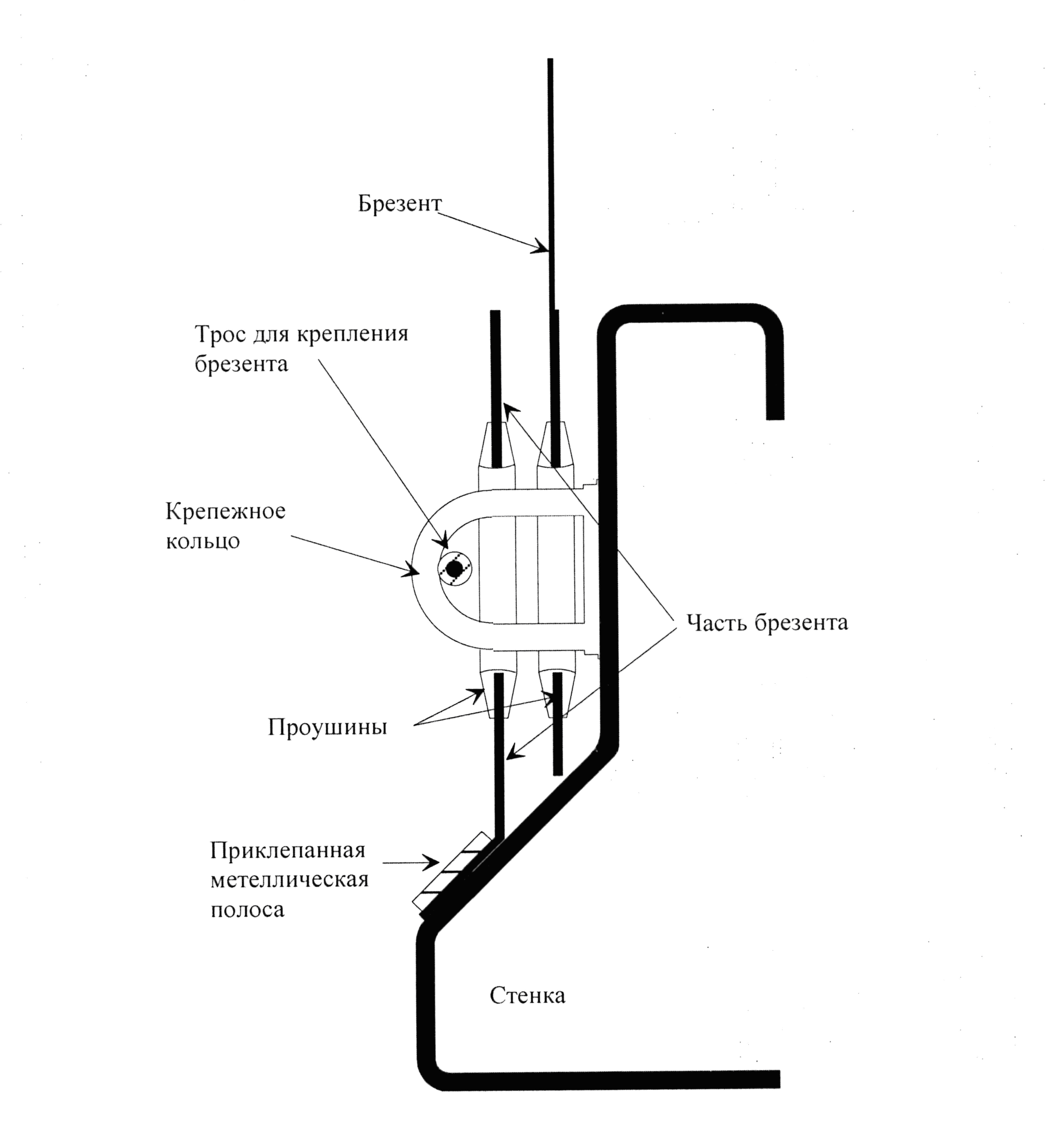
Рисунок 3. Образец устройства для крепления брезента
к транспортному средству
Устройство, изображенное ниже, отвечает положениям [подпунктов a)](https://bukva.ai/docs/tamozhennaya-konventsiya-o-mezhdunarodnoy-2/statya-3-2#p100972) и [b) пункта 6 статьи 3](https://bukva.ai/docs/tamozhennaya-konventsiya-o-mezhdunarodnoy-2/statya-3-2#p101007) приложения 2.
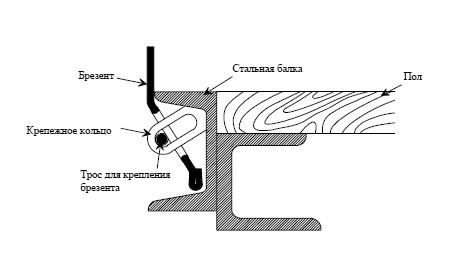
Комментарий
На рисунке ниже изображено устройство для крепления покрытия в соответствии с [подпунктами a)](https://bukva.ai/docs/tamozhennaya-konventsiya-o-mezhdunarodnoy-2/statya-3-2#p100972) и [b) пункта 6 статьи 3](https://bukva.ai/docs/tamozhennaya-konventsiya-o-mezhdunarodnoy-2/statya-3-2#p101007) приложения 2.
(TRANS/WP.30/147, пункт 32)
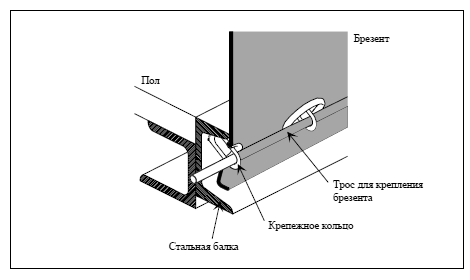
Рисунок 4. Устройство для крепления покрытия
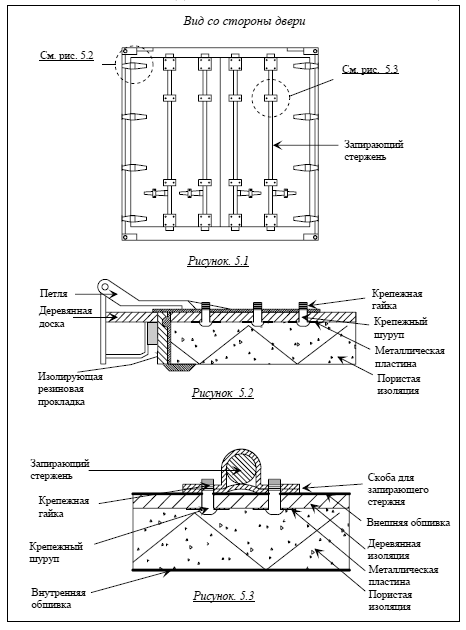
Рисунок 5. Пример крепежного приспособления,
вставляемого с внутренней стороны двери
изотермической конструкции
**ПРИЛОЖЕНИЕ, КАСАЮЩЕЕСЯ ДОПУЩЕНИЯ КОНТЕЙНЕРОВ**
Часть I
**ПРАВИЛА, КАСАЮЩИЕСЯ ТЕХНИЧЕСКИХ УСЛОВИЙ,**
**ПРИМЕНИМЫХ К КОНТЕЙНЕРАМ, КОТОРЫЕ МОГУТ ДОПУСКАТЬСЯ**
**К МЕЖДУНАРОДНЫМ ПЕРЕВОЗКАМ ПОД ТАМОЖЕННЫМИ**
**ПЕЧАТЯМИ И ПЛОМБАМИ**
Пояснительные записки
Пояснительные записки к [приложению 2](https://bukva.ai/docs/tamozhennaya-konventsiya-o-mezhdunarodnoy-2/statya-64#p100772), приведенные в [приложении 6](https://bukva.ai/docs/tamozhennaya-konventsiya-o-mezhdunarodnoy-2/statya-4-2#p101251) к настоящей Конвенции, применяются с соответствующими изменениями к контейнерам, допущенным к перевозке под таможенными печатями и пломбами во исполнение положений настоящей Конвенции.
## Статья 1
### Статья 1
Основные принципы
К международной перевозке грузов под таможенными печатями и пломбами могут допускаться лишь контейнеры, сконструированные и оборудованные таким образом:
a) чтобы грузы не могли извлекаться из опечатанной части контейнера или загружаться туда без оставления видимых следов взлома или повреждения таможенных печатей и пломб;
b) чтобы таможенные печати и пломбы могли налагаться простым и надежным способом;
c) чтобы в них не было никаких потайных мест для сокрытия грузов;
d) чтобы все места, в которые могут помещаться грузы, были легко доступны для таможенного досмотра.
Комментарий к [статье 1](https://bukva.ai/docs/tamozhennaya-konventsiya-o-mezhdunarodnoy-2/statya-1-3#p101287)
Маркировка на контейнерах
Надписи, трафареты, полосы из светоотражающего материала и другие аналогичные им знаки, которые не могут быть сняты со стенок или брезента контейнеров, допустимы, если они не закрывают структуру стенки или брезента, которая должна оставаться ясно различимой. Использование наклеек и других аналогичных им знаков, которые могут скрывать отверстия в контейнере, не допускается.
## Статья 2. (TRANS/GE.30/57, пункт 45; TRANS/WP.30/141, пункт 35; TRANS/WP.30/AC.2/31, приложение 3)
### Статья 2. (TRANS/GE.30/57, пункт 45; TRANS/WP.30/141, пункт 35; TRANS/WP.30/AC.2/31, приложение 3)
Конструкция контейнеров
1. Для удовлетворения требованиям [статьи 1](https://bukva.ai/docs/tamozhennaya-konventsiya-o-mezhdunarodnoy-2/statya-1-3#p101287) настоящих Правил:
a) составные элементы контейнера (стенки, пол, двери, крыша, стойки, рамы, поперечные элементы и т.д.) должны соединяться либо с помощью приспособлений, которые не могут быть сняты снаружи и вновь поставлены на место без оставления видимых следов, либо с помощью методов, обеспечивающих такую конструкцию, которая не может быть изменена без оставления видимых следов. Когда стенки, пол, двери и крыша изготовлены из различных материалов, они должны отвечать тем же требованиям и быть достаточно прочными.
b) двери и прочие системы закрывания (включая запорные краны, крыши лазов, фланцы и т.п.) должны иметь приспособление, на которое могли бы быть наложены таможенные печати и пломбы. Это приспособление должно быть таким, чтобы его нельзя было снять снаружи и вновь поставить на место без оставления видимых следов, и чтобы двери и запирающие устройства не могли открываться без нарушения таможенных печатей и пломб. Последние должны быть соответствующим образом защищены. Разрешается делать открывающиеся крыши.
Комментарий к [пункту 1 b) статьи 2](https://bukva.ai/docs/tamozhennaya-konventsiya-o-mezhdunarodnoy-2/statya-2-3#p101302)
Защита таможенных печатей и пломб на контейнерах
Ввиду того, что настоящая Конвенция не предусматривает каких-либо специальных требований для защиты таможенных печатей и пломб, можно либо защитить такие пломбы специальным защитным устройством, либо конструкция двери сама по себе должна исключать возможность случайного повреждения таможенных печатей и пломб при перевозке грузов.
(TRANS/GE.30/17, пункт 93)
c) вентиляционные и дренажные отверстия должны быть снабжены устройством, препятствующим доступу внутрь контейнера. Это устройство должно быть такой конструкции, чтобы его нельзя было снять снаружи и поставить на место без оставления видимых следов.
Комментарий к [пункту 1 c) статьи 2](https://bukva.ai/docs/tamozhennaya-konventsiya-o-mezhdunarodnoy-2/statya-2-3#p101307)
Вентиляционные отверстия в контейнерах
Хотя размер вентиляционных отверстий в принципе не должен превышать 400 мм, таможенный орган, при предъявлении ему контейнера с вентиляционными отверстиями более 400 мм, может допустить такой контейнер к перевозке при условии соблюдения всех остальных требований.
(TRANS/GE.30/14, пункт 102; TRANS/WP.30/143, пункты 36 и 37)
2. Несмотря на положения [подпункта c) статьи 1](https://bukva.ai/docs/tamozhennaya-konventsiya-o-mezhdunarodnoy-2/statya-1-3#p101292) настоящих Правил, разрешается наличие составных элементов контейнера, которые по практическим соображениям должны включать полые пространства (например, между составными частями двойной стенки). Для того, чтобы эти пространства нельзя было использовать в целях сокрытия грузов:
i) необходимо - в тех случаях, когда внутренняя обшивка покрывает контейнер на всю его высоту от пола до потолка, или в тех случаях, когда пространство между обшивкой и внешней стенкой полностью закрыто, - обеспечить, чтобы внутренняя обшивка крепилась таким образом, чтобы ее нельзя было снять и поставить на место без оставления видимых следов; и
ii) необходимо - в тех случаях, когда обшивка не покрывает контейнер на всю его высоту и когда пространство между обшивкой и внешней стенкой закрыто не полностью, и во всех других случаях, когда в конструкции контейнера имеются полые пространства, - обеспечить, чтобы количество указанных пространств было ограничено до минимума и чтобы эти пространства были легко доступны для таможенного контроля.
(ECE/TRANS/17/Amend.8, вступила в силу 1 августа 1987 г.)
Комментарий к [пункту 2 статьи 2](https://bukva.ai/docs/tamozhennaya-konventsiya-o-mezhdunarodnoy-2/statya-2-3#p101312)
Устранение полых структурных компонентов
Количество полых структурных компонентов контейнеров, таких как полые балки, в конструкции новых контейнеров должно быть ограничено до минимума, и они должны быть постепенно устранены путем использования, по возможности, балок открытого профиля. Если по конструктивным причинам в контейнерах есть полые структурные компоненты, то допускается использование отверстий, предназначенных для облегчения осмотра таможенными органами таких полых компонентов. Отметка о наличии таких смотровых отверстий делается в пункте 9 образца II или в пункте 7 образца III в свидетельстве о допущении контейнеров (часть II приложения 7 к Конвенции).
(TRANS/WP.30/151, пункты 33 - 37; TRANS/WP.30/AC.2/33, приложение 7)
3. Наличие окон допускается в съемных кузовах, как это определено в пояснительной записке [0.1 j)](https://bukva.ai/docs/tamozhennaya-konventsiya-o-mezhdunarodnoy-2/statya-1#p100045) [приложения 6](https://bukva.ai/docs/tamozhennaya-konventsiya-o-mezhdunarodnoy-2/statya-4-2#p101251) к Конвенции, при условии их изготовления из достаточно прочных материалов и невозможности вынуть или заменить их снаружи, не отставив видимых следов. Тем не менее может допускаться использование стекла, однако в случае использования не безосколочного, а иного стекла окна должны быть оборудованы прочно закрепленной металлической решеткой, которую невозможно демонтировать снаружи; размер ячеек в решетке не должен превышать 10 мм. Наличие окон не допускается в контейнерах, определенных в [статье 1 j)](https://bukva.ai/docs/tamozhennaya-konventsiya-o-mezhdunarodnoy-2/statya-1#p100036) Конвенции, не относящихся к съемным кузовам, как это определено в пояснительной записке [0.1 j)](https://bukva.ai/docs/tamozhennaya-konventsiya-o-mezhdunarodnoy-2/statya-1#p100045) [приложения 6](https://bukva.ai/docs/tamozhennaya-konventsiya-o-mezhdunarodnoy-2/statya-4-2#p101251) к Конвенции.
## Статья 3. (ECE/TRANS/17/Amend.17, вступила в силу 1 октября 1994 г.)
### Статья 3. (ECE/TRANS/17/Amend.17, вступила в силу 1 октября 1994 г.)
Складные и разборные контейнеры
Складные или разборные контейнеры должны отвечать положениям [статей 1](https://bukva.ai/docs/tamozhennaya-konventsiya-o-mezhdunarodnoy-2/statya-1-3#p101287) и [2](https://bukva.ai/docs/tamozhennaya-konventsiya-o-mezhdunarodnoy-2/statya-2-3#p101298) настоящих Правил; кроме того, они должны иметь приспособления, фиксирующие различные части после сборки контейнера. Эти фиксирующие приспособления, если они расположены с наружной стороны собранного контейнера, должны быть такой конструкции, чтобы на них можно было накладывать таможенные печати и пломбы.
## Статья 4
### Статья 4
Крытые брезентом контейнеры
1. Положения [статей 1](https://bukva.ai/docs/tamozhennaya-konventsiya-o-mezhdunarodnoy-2/statya-1-3#p101287), [2](https://bukva.ai/docs/tamozhennaya-konventsiya-o-mezhdunarodnoy-2/statya-2-3#p101298) и [3](https://bukva.ai/docs/tamozhennaya-konventsiya-o-mezhdunarodnoy-2/statya-3-3#p101322) настоящих Правил распространяются на крытые брезентом контейнеры в той мере, в какой они могут к ним применяться. Кроме того, эти контейнеры должны отвечать положениям настоящей статьи.
2. Брезент должен быть изготовлен либо из прочного холста, либо из нерастяжимой, достаточно прочной, покрытой пластмассой или прорезиненной ткани. Брезент должен быть в исправном состоянии и изготовлен таким образом, чтобы по закреплении приспособления для закрывания доступ к грузу был невозможен без оставления видимых следов.
3. Если брезент составлен из нескольких кусков, края этих кусков должны быть загнуты один в другой и прострочены двумя швами, отстоящими друг от друга по крайней мере на 15 мм. Эти швы должны быть сделаны так, как показано на [рис. 1](https://bukva.ai/docs/tamozhennaya-konventsiya-o-mezhdunarodnoy-2/statya-5-2#p101407), приложенном к настоящим Правилам; однако, если на некоторых частях брезента (например, на откидных полах и усиленных углах) невозможно соединить полосы указанным способом, достаточно загнуть край верхней части брезента и прошить полосы так, как показано на [рис. 2](https://bukva.ai/docs/tamozhennaya-konventsiya-o-mezhdunarodnoy-2/statya-5-2#p101417), приложенном к настоящим Правилам. Один из швов должен быть виден лишь изнутри, и цвет нитки, используемой для этого шва, должен определенно отличаться от цвета самого брезента, а также от цвета нитки, используемой для другого шва. Все швы должны быть прострочены на машине.
4. Если брезент составлен из нескольких кусков ткани, покрытой пластмассой, эти куски могут быть также соединены посредством спайки соответственно [рис. 3](https://bukva.ai/docs/tamozhennaya-konventsiya-o-mezhdunarodnoy-2/statya-5-2#p101419), приложенному к настоящим Правилам. Край каждого куска должен перекрывать край другого куска по крайней мере на 15 мм. Соединение кусков должно быть обеспечено по всей этой ширине. Наружный край соединения должен быть покрыт полосой из пластмассы шириной по крайней мере 7 мм, накладываемой тем же способом спайки. На этой полосе, а также с каждой ее стороны, по крайней мере по 3 мм в ширину, должен быть проштампован единообразный четкий рельеф. Спайка производится таким образом, чтобы куски не могли быть разъединены и снова соединены без оставления видимых следов.
Комментарии к [пункту 4 статьи 4](https://bukva.ai/docs/tamozhennaya-konventsiya-o-mezhdunarodnoy-2/statya-4-3#p101330)
Полоса из пластмассы
Требование об обязательном наличии полосы из пластмассы весьма существенно, следовательно, им нельзя пренебрегать.
(TRANS/GE.30/17, пункт 99; TRANS/WP.30/141, пункт 35; TRANS/WP.30/AC.2/31, приложение 3)
Соединение краев брезента внахлестку
Несмотря на то, что для целей таможенной безопасности ширина соединения краев брезента внахлестку не менее 15 мм является достаточной, допускается ширина нахлеста 20 мм и более, необходимость которой может обусловливаться техническими причинами в зависимости от того, из какого материала изготовлен брезент, и метода его спайки.
(TRANS/WP.30/162, пункты 64 и 65; TRANS/WP.30/AC.2/37, приложение 6)
Методы спайки кусков брезента
К методам спайки кусков брезента, которые признаются в качестве безопасных с таможенной точки зрения, если они применяются в соответствии с положениями [приложения 2](https://bukva.ai/docs/tamozhennaya-konventsiya-o-mezhdunarodnoy-2/statya-64#p100772) к Конвенции, относятся "тепловой метод спайки", когда спайка брезента производится с помощью высоких температур, и "метод высокочастотной спайки", когда спайка брезента производится с помощью высокой частоты и давления.
(TRANS/WP.30/162, пункты 64 и 65; TRANS/WP.30/AC.2/37, приложение 6)
5. Починка производится способом, показанным на [рис. 4](https://bukva.ai/docs/tamozhennaya-konventsiya-o-mezhdunarodnoy-2/statya-5-2#p101423), приложенном к настоящим Правилам; сшиваемые края должны быть загнуты один в другой и соединены двумя ясно видимыми швами, отстоящими друг от друга по крайней мере на 15 мм; цвет нитки, видимой изнутри, должен отличаться от цвета нитки, видимой снаружи и от цвета самого брезента; все швы должны быть прострочены на машине. В тех случаях, когда брезент, поврежденный у краев, ремонтируется путем замены поврежденной части заплатой, шов может также прострачиваться в соответствии с положениями [пункта 3](https://bukva.ai/docs/tamozhennaya-konventsiya-o-mezhdunarodnoy-2/statya-4-3#p101329) настоящей статьи и [рис. 1](https://bukva.ai/docs/tamozhennaya-konventsiya-o-mezhdunarodnoy-2/statya-5-2#p101407), приложенным к настоящим Правилам. Починка брезента из ткани, покрытой пластмассой, может также производиться в соответствии с методом, описанным в [пункте 4](https://bukva.ai/docs/tamozhennaya-konventsiya-o-mezhdunarodnoy-2/statya-4-3#p101330) настоящей статьи, но в этом случае пластмассовая лента должна накладываться с обеих сторон брезента, а заплата накладывается на внутреннюю сторону брезента.
(ECE/TRANS/17/Amend.8, вступила в силу 1 августа 1987 г.)
Комментарии к [пункту 5 статьи 4](https://bukva.ai/docs/tamozhennaya-konventsiya-o-mezhdunarodnoy-2/statya-4-3#p101341)
Ремонт брезента из ткани, покрытой пластмассой
Для ремонта такого брезента разрешается использовать следующий способ. Для приваривания заплаты используется винил, расплавленный под воздействием температуры и давления. Полоса из пластического тисненого материала накладывается на края заплаты с обеих сторон брезента.
(TRANS/GE.30/6, пункт 40; TRANS/GE.30/GRCC/4, пункт 33; TRANS/WP.30/141, пункт 35; TRANS/WP.30/AC.2/31, приложение 3)
Полосы из светоотражающего материала
Полосы из светоотражающего материала, которые могут быть сняты и которые закрывают структуру брезента, допустимы, если они полностью припаяны к брезенту, составленному из ткани, покрытой пластмассой, и прикреплены в соответствии с требованиями [пункта 5 статьи 3](https://bukva.ai/docs/tamozhennaya-konventsiya-o-mezhdunarodnoy-2/statya-3-2#p100962) приложения 2 к Конвенции (см. рис. ниже).
(TRANS/WP.30/151, пункт 40)
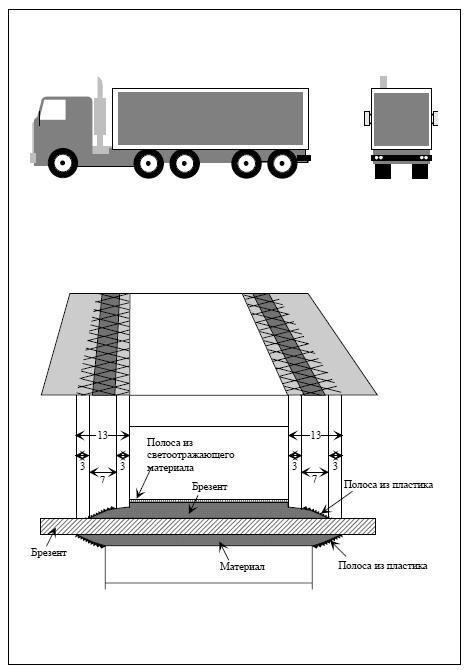
6. Брезент должен прикрепляться к контейнеру в точном соответствии с условиями, изложенными в [статье 1 a)](https://bukva.ai/docs/tamozhennaya-konventsiya-o-mezhdunarodnoy-2/statya-1-3#p101290) и [b)](https://bukva.ai/docs/tamozhennaya-konventsiya-o-mezhdunarodnoy-2/statya-1-3#p101291) настоящих Правил. Для этого могут использоваться следующие системы:
a) брезент может крепиться при помощи:
i) металлических колец, прикрепляемых к контейнеру,
ii) проушин по краям брезента и,
iii) веревки или троса, проходящих через кольца над покрытием невидимых с внешней стороны по всей длине.
Брезент должен перекрывать жесткую часть контейнера по крайней мере на ширину 250 мм, измеренную от центра крепежных колец, если только система конструкции контейнера сама по себе не препятствует доступу к грузам.
Пояснительная записка к [пункту 6 a) статьи 4](https://bukva.ai/docs/tamozhennaya-konventsiya-o-mezhdunarodnoy-2/statya-4-3#p101352)
Пример приемлемой с таможенной точки зрения системы крепления брезента к угловым фитингам контейнера изображен на [рисунке](https://bukva.ai/docs/tamozhennaya-konventsiya-o-mezhdunarodnoy-2/statya-5-2#p101544), приложенном к части III приложения 7.
b) Если необходимо обеспечить глухое крепление одного из краев брезента к контейнеру, то обе поверхности должны быть соединены без просветов и удерживаться при помощи прочных деталей.
c) Если используется система крепления брезента, то в закрытом состоянии она должна обеспечивать глухое прилегание брезента к внешней поверхности контейнера (в качестве примера см. [рис. 6](https://bukva.ai/docs/tamozhennaya-konventsiya-o-mezhdunarodnoy-2/statya-5-2#p101429)).
(ECE/TRANS/17/Amend.8, вступила в силу 1 августа 1987 г.)
7. Брезент должен поддерживаться соответствующей конструкцией (стойками, боковинами, арками, поперечинами и т.д.).
(ECE/TRANS/17/Amend.8, вступила в силу 1 августа 1987 г.)
Комментарий к [пункту 7 статьи 4](https://bukva.ai/docs/tamozhennaya-konventsiya-o-mezhdunarodnoy-2/statya-4-3#p101362)
Стойки, поддерживающие брезент
Дуги, поддерживающие брезент, иногда являются полыми и могут использоваться для сокрытия груза. Однако, как и в случае со многими другими частями контейнера, их можно всегда проверить. В этих условиях использование полых дуг допускается.
(TRANS/GE.30/14, пункт 90; TRANS/GE.30/12, пункты 100 и 101; TRANS/GE.30/6, пункт 41; TRANS/WP.30/141, пункт 35; TRANS/WP.30/AC.2/31, приложение 3)
8. Расстояния между кольцами и расстояния между проушинами не должны превышать 200 мм. Однако эти расстояния между кольцами и проушинами могут быть большими, но не превышать 300 мм с любой стороны стойки, если конструкция контейнера и брезента такова, что полностью исключают доступ в контейнер. Проушины должны быть жесткими.
(ECE/TRANS/17/Amend.8, вступила в силу 1 августа 1987 г.)
9. Должны применяться следующие виды крепления:
a) стальной трос диаметром не менее 3 мм; или,
b) веревка из пеньки или сизаля диаметром не менее 8 мм, заключенная в прозрачную нерастягивающуюся пластмассовую оболочку; или
c) трос, состоящий из пучков волоконно-оптических нитей внутри скрученного спиралью стального кожуха, заключенного в прозрачную нерастягивающуюся пластмассовую оболочку; или
d) трос, имеющий текстильный корд, обвитый по крайней мере четырьмя стренгами из стальной проволоки, полностью покрывающими сердечник, при условии, что диаметр троса (без учета прозрачной оболочки, если таковая имеется) будет не менее 3 мм.
Тросы, соответствующие [пункту 9 a)](https://bukva.ai/docs/tamozhennaya-konventsiya-o-mezhdunarodnoy-2/statya-4-3#p101371) или [d)](https://bukva.ai/docs/tamozhennaya-konventsiya-o-mezhdunarodnoy-2/statya-4-3#p101374) настоящей статьи, могут заключаться в прозрачную нерастягивающуюся оболочку из пластмассы.
В случаях, когда брезент должен крепиться к раме в какой-либо конструкции, которая отвечает требованиям [пункта 6 a)](https://bukva.ai/docs/tamozhennaya-konventsiya-o-mezhdunarodnoy-2/statya-4-3#p101352) настоящей статьи, в качестве крепления может использоваться ремень (пример такой конструкции приведен на [рис. 7](https://bukva.ai/docs/tamozhennaya-konventsiya-o-mezhdunarodnoy-2/statya-5-2#p101433) к настоящему приложению). Сам ремень должен отвечать предписаниям [пункта 11 a) iii)](https://bukva.ai/docs/tamozhennaya-konventsiya-o-mezhdunarodnoy-2/statya-4-3#p101387) в отношении материала, размеров и формы.
(ECE/TRANS/17/Amend.11, вступила в силу 1 августа 1989 г.; ECE/TRANS/17/Amend.17, вступила в силу 1 октября 1994 г.; ECE/TRANS/17/Amend.25, вступила в силу 1 октября 2005 г.)
Комментарий к [пункту 9 статьи 4](https://bukva.ai/docs/tamozhennaya-konventsiya-o-mezhdunarodnoy-2/statya-4-3#p101370)
Крепежная веревка
В случае, когда необходимо закрепить брезент на раме контейнера, вместо ремней может быть использована веревка, которая может состоять из двух кусков.
(TRANS/WP.30/125, пункт 33; ECE/TRANS/WP.30/232, пункт 34 и приложение; ECE/TRANS/WP.30/AC.2/91, пункт 24)
10. Каждый трос или веревка должны состоять из одного куска и иметь металлические наконечники на обоих концах. Должна быть обеспечена возможность продергивания через каждый металлический наконечник бечевки или ленты для таможенных печатей и пломб. Приспособление для прикрепления каждого наконечника тросов, согласно положениям [пункта 9 a)](https://bukva.ai/docs/tamozhennaya-konventsiya-o-mezhdunarodnoy-2/statya-4-3#p101371), [b)](https://bukva.ai/docs/tamozhennaya-konventsiya-o-mezhdunarodnoy-2/statya-4-3#p101372) и [d)](https://bukva.ai/docs/tamozhennaya-konventsiya-o-mezhdunarodnoy-2/statya-4-3#p101374) настоящей статьи, должно включать полую заклепку, которая проходит через трос или веревку и через которую может быть продернута бечевка или лента для таможенных печатей и пломб. Трос или веревка должны оставаться видимыми с обеих сторон полой заклепки, чтобы можно было удостовериться в том, что они действительно состоят из одного куска (см. [рис. 5](https://bukva.ai/docs/tamozhennaya-konventsiya-o-mezhdunarodnoy-2/statya-5-2#p101425), приложенный к настоящим Правилам).
(ECE/TRANS/17/Amend.25, вступила в силу 1 октября 2005 г.)
11. В местах, где в брезенте имеются окна, используемые для загрузки и разгрузки, обе полы брезента соединяются вместе. Для этого может использоваться следующая система:
a) оба края брезента должны соответствующим образом перекрываться. Они также должны закрепляться с помощью:
i) откидной полы, пришитой или приваренной в соответствии с положениями [пунктов 3](https://bukva.ai/docs/tamozhennaya-konventsiya-o-mezhdunarodnoy-2/statya-4-3#p101329) и [4](https://bukva.ai/docs/tamozhennaya-konventsiya-o-mezhdunarodnoy-2/statya-4-3#p101330) настоящей статьи;
ii) колец и проушин, отвечающих условиям [пункта 8](https://bukva.ai/docs/tamozhennaya-konventsiya-o-mezhdunarodnoy-2/statya-4-3#p101368) настоящей статьи; кольца должны быть изготовлены из металла; и
iii) ремня, изготовленного из цельного куска соответствующего нерастягивающегося материала, шириной не менее 20 мм и толщиной не менее 3 мм, проходящего через кольца и соединяющего оба края брезента и откидную полу; ремень прикрепляется с внутренней стороны брезента и должен иметь либо:
проушину для пропускания троса или веревки, упомянутых в [пункте 9](https://bukva.ai/docs/tamozhennaya-konventsiya-o-mezhdunarodnoy-2/statya-4-3#p101370) настоящей статьи, либо
проушину, которая может прикрепляться к металлическому кольцу, упомянутому в [пункте 6](https://bukva.ai/docs/tamozhennaya-konventsiya-o-mezhdunarodnoy-2/statya-4-3#p101351) настоящей статьи и закрепляться с помощью троса или веревки, упомянутых в [пункте 9](https://bukva.ai/docs/tamozhennaya-konventsiya-o-mezhdunarodnoy-2/statya-4-3#p101370) настоящей статьи.
Откидная пола не требуется, если имеется специальное устройство, например, защитная перегородка, которое препятствует доступу к контейнеру без оставления видимых следов. Откидная пола не требуется также для контейнеров со скользящими полами.
(ECE/TRANS/17/Amend.14, вступила в силу 1 августа 1992 г.; ECE/TRANS/17/Amend.20, вступила в силу 12 июня 2001 г.)
b) Специальная система закрывающихся окон в брезенте обеспечивает плотное закрытие краев брезента после закрытия и опечатывания контейнера. В системе имеется отверстие, через которое может проходить металлическое кольцо, упомянутое в [пункте 6](https://bukva.ai/docs/tamozhennaya-konventsiya-o-mezhdunarodnoy-2/statya-4-3#p101351) настоящей статьи, и закрепляться с помощью троса или веревки, упомянутых в [пункте 9](https://bukva.ai/docs/tamozhennaya-konventsiya-o-mezhdunarodnoy-2/statya-4-3#p101370) настоящей статьи. Такая система приводится на [рис. 8](https://bukva.ai/docs/tamozhennaya-konventsiya-o-mezhdunarodnoy-2/statya-5-2#p101440), содержащемся в настоящем приложении.
(ECE/TRANS/17/Amend.14, вступила в силу 1 августа 1992 г.)
12. Опознавательные знаки, которые должны проставляться на контейнере, и табличка о допущении, предусмотренная во [второй части](https://bukva.ai/docs/tamozhennaya-konventsiya-o-mezhdunarodnoy-2/statya-5-2#p101443) настоящего приложения, ни в коем случае не должны закрываться брезентом.
## Статья 5
### Статья 5
Контейнеры со скользящими полами
1. Положения [статей 1](https://bukva.ai/docs/tamozhennaya-konventsiya-o-mezhdunarodnoy-2/statya-1-3#p101287), [2](https://bukva.ai/docs/tamozhennaya-konventsiya-o-mezhdunarodnoy-2/statya-2-3#p101298), [3](https://bukva.ai/docs/tamozhennaya-konventsiya-o-mezhdunarodnoy-2/statya-3-3#p101322) и [4](https://bukva.ai/docs/tamozhennaya-konventsiya-o-mezhdunarodnoy-2/statya-4-3#p101325) настоящих Правил распространяются на контейнеры со скользящими полами в той мере, в которой они могут к ним применяться. Кроме того, эти контейнеры должны соответствовать положениям настоящей статьи.
2. Скользящие полы, пол, двери и все другие составные части контейнера должны отвечать либо требованиям, содержащимся в [пунктах 6](https://bukva.ai/docs/tamozhennaya-konventsiya-o-mezhdunarodnoy-2/statya-4-3#p101351), [8](https://bukva.ai/docs/tamozhennaya-konventsiya-o-mezhdunarodnoy-2/statya-4-3#p101368), [9](https://bukva.ai/docs/tamozhennaya-konventsiya-o-mezhdunarodnoy-2/statya-4-3#p101370) и [11 статьи 4](https://bukva.ai/docs/tamozhennaya-konventsiya-o-mezhdunarodnoy-2/statya-4-3#p101383) настоящих Правил, либо требованиям, изложенным в [подпунктах i)](https://bukva.ai/docs/tamozhennaya-konventsiya-o-mezhdunarodnoy-2/statya-5-2#p101399) - [vi)](https://bukva.ai/docs/tamozhennaya-konventsiya-o-mezhdunarodnoy-2/statya-5-2#p101404) ниже.
i) Скользящие полы, пол, двери и все другие составные части контейнера должны соединяться таким образом, чтобы их нельзя было открыть или закрыть без оставления видимых следов.
ii) Пола должна перекрывать сверху жесткие части контейнера по крайней мере на 1/4 фактического расстояния между натяжными ремнями. Пола должна перекрывать снизу жесткие части контейнера по крайней мере на 50 мм. Когда контейнер закрыт и опечатан для таможенных целей, горизонтальный зазор между полой и жесткими частями контейнера в любом месте не должен превышать 10 мм по перпендикуляру к продольной оси контейнера.
iii) Направляющий элемент скользящей полы и другие подвижные части должны соединяться таким образом, чтобы закрытые и опечатанные таможенными пломбами двери и другие подвижные части нельзя было открыть или закрыть снаружи без оставления видимых следов. Направляющий элемент скользящей полы и другие подвижные части должны соединяться таким образом, чтобы исключалась возможность доступа в контейнер без оставления видимых следов. Данная система изображена на [рисунке 9](https://bukva.ai/docs/tamozhennaya-konventsiya-o-mezhdunarodnoy-2/statya-5-2#p101442), прилагаемом к настоящим Правилам.
iv) Расстояние по горизонтали между кольцами, которые используются для таможенных целей, на жестких частях транспортного средства не должно превышать 200 мм. Вместе с тем это расстояние может быть большим, но не должно превышать 300 мм между кольцами с любой стороны стойки, если конструкция транспортного средства и пол такова, что полностью исключается доступ в грузовое отделение. В любом случае должны соблюдаться условия, изложенные в [подпункте ii)](https://bukva.ai/docs/tamozhennaya-konventsiya-o-mezhdunarodnoy-2/statya-5-2#p101400) выше.
v) Расстояние между натяжными ремнями не должно превышать 600 мм.
vi) Виды креплений, используемых для крепления пол к жестким частям транспортного средства, должны отвечать требованиям, предусмотренным в [пункте 9 статьи 3](https://bukva.ai/docs/tamozhennaya-konventsiya-o-mezhdunarodnoy-2/statya-4-3#p101370) настоящих Правил.
(ECE/TRANS/17/Amend.20, вступила в силу 12 июня 2001 г.)
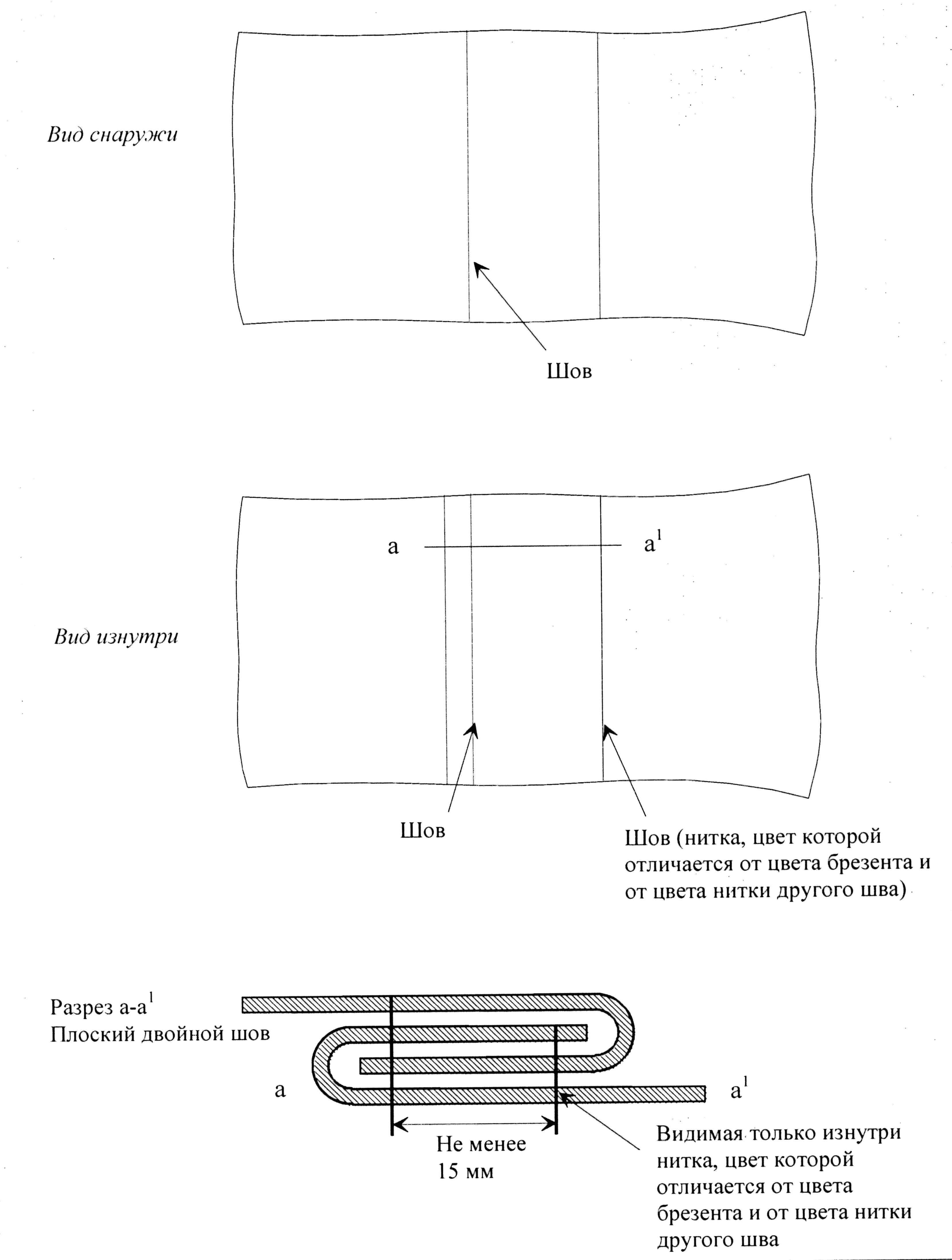
Рисунок 1. Брезент, изготовленный из нескольких
кусков ткани, простроченных с помощью швов
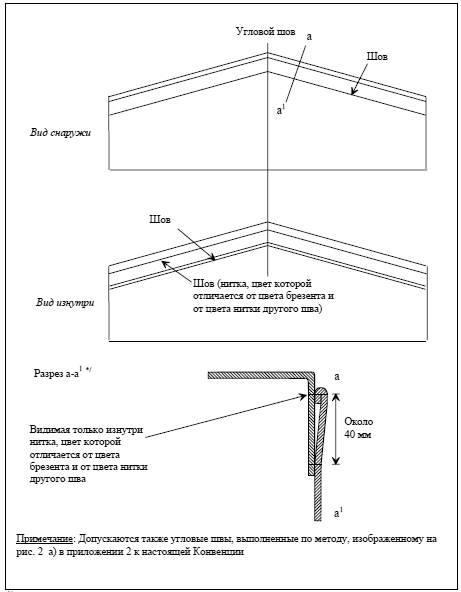
---
<*> Этот рисунок показывает верхнюю часть брезента, загнутую в соответствии с [пунктом 3 статьи 3](https://bukva.ai/docs/tamozhennaya-konventsiya-o-mezhdunarodnoy-2/statya-3-2#p100946) приложения 2.
[Рис. 2a](https://bukva.ai/docs/tamozhennaya-konventsiya-o-mezhdunarodnoy-2/statya-4-2#p101102) в приложении 2 "Покрытие, составленное из нескольких частей, сшитых вместе", воспроизводится в приложении 7 в качестве образца сшивания угловых швов, в соответствии с приведенным выше примечанием.
(TRANS/WP.30/147, пункт 32)
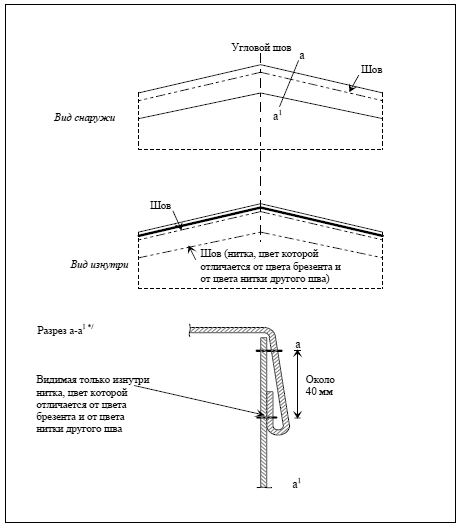
---
<*> Этот рисунок показывает верхнюю часть брезента, загнутую в соответствии с [пунктом 3 статьи 3](https://bukva.ai/docs/tamozhennaya-konventsiya-o-mezhdunarodnoy-2/statya-3-2#p100946) приложения 2.
Рисунок 2. Брезент, изготовленный из нескольких кусков ткани
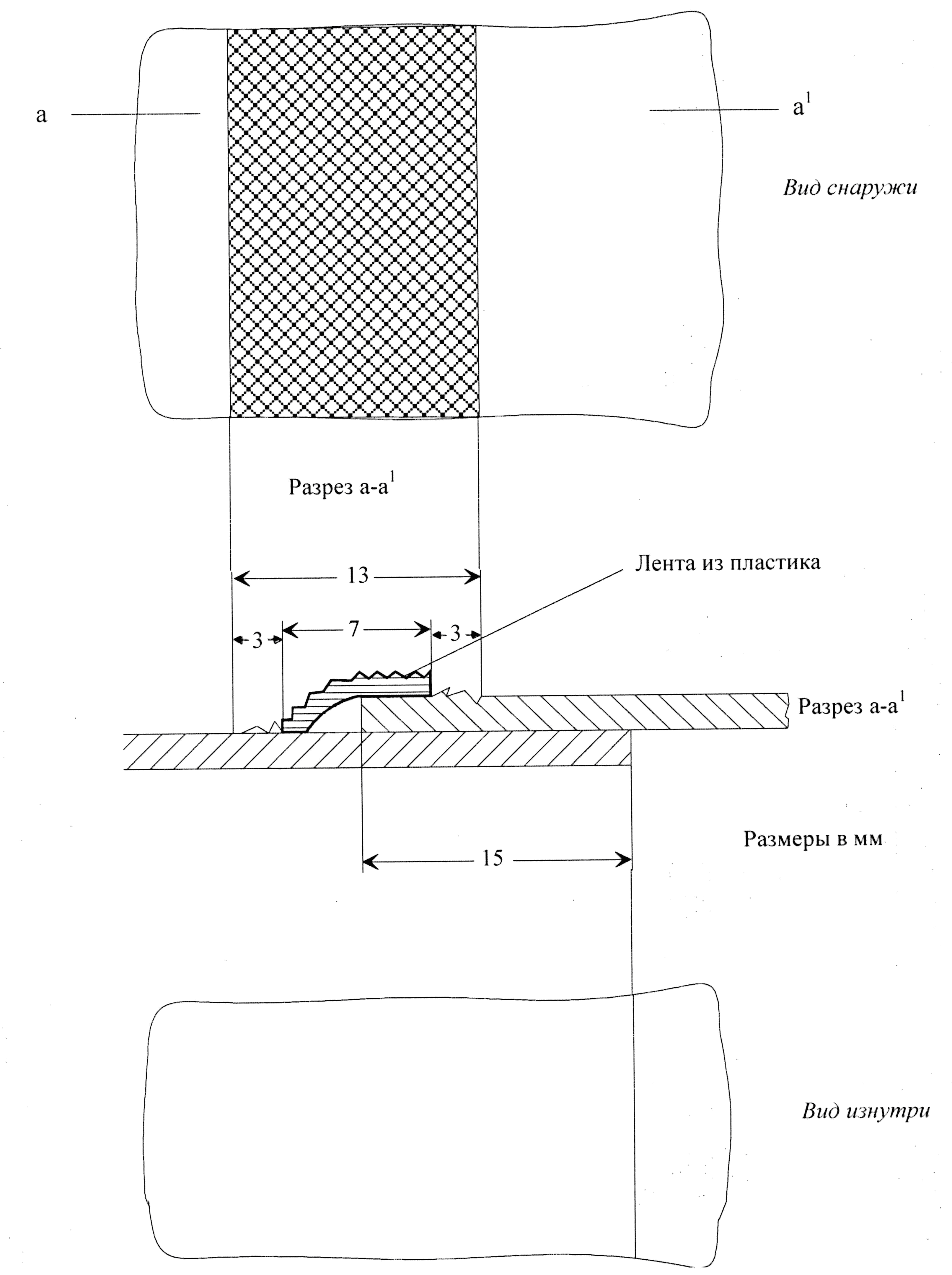
Рисунок 3. Брезент, изготовленный из нескольких кусков
ткани, соединенных посредством спайки
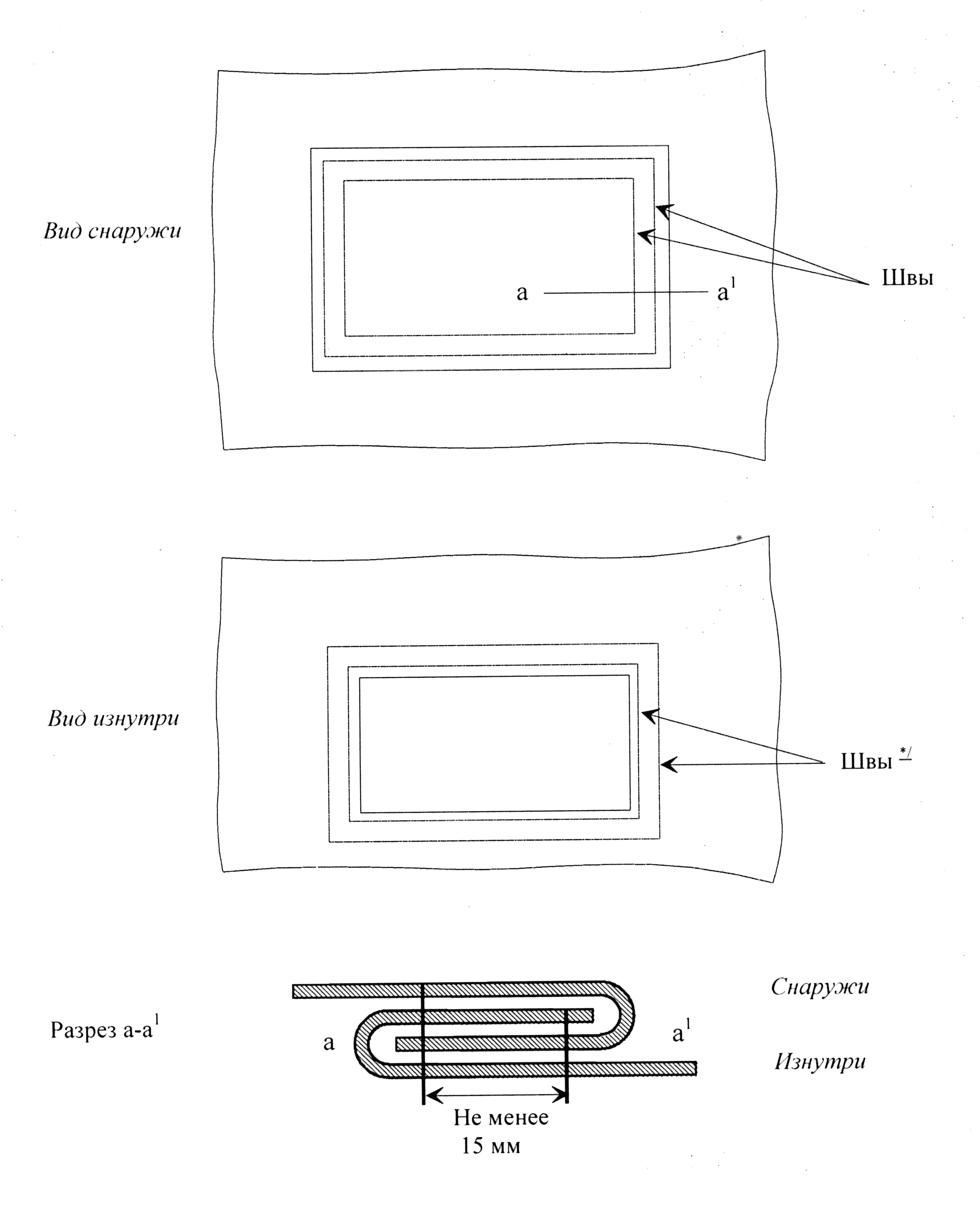
---
<*> Нитки, видимые изнутри, отличаются по цвету от ниток, видимых снаружи, и от цвета брезента.
Рисунок 4. Починка брезента
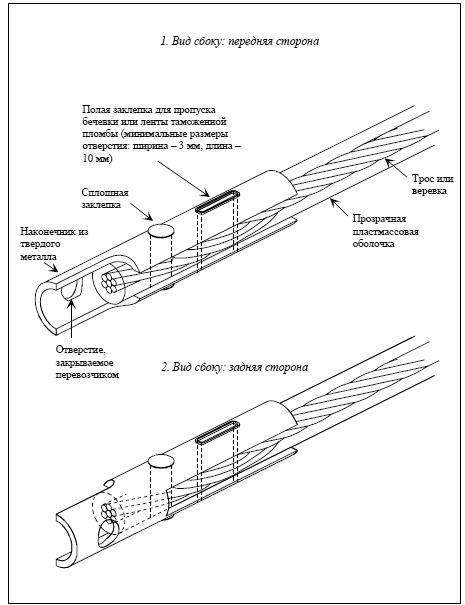
Рисунок 5. Образец наконечника
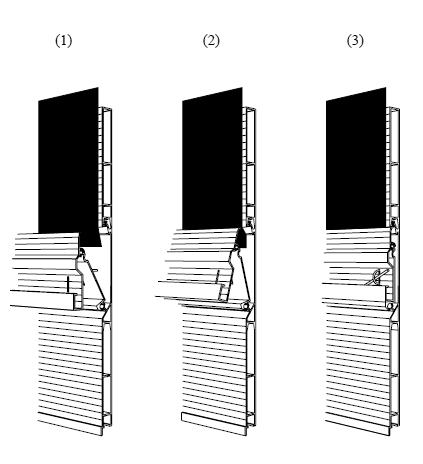
Настоящая система крепления брезента является приемлемой, если она оборудована, по крайней мере, одним металлическим кольцом на концах каждого борта. Отверстия, через которые проходит кольцо, имеют овальную форму и точно соответствуют размеру проходящего через них кольца. Видимая часть металлического кольца при закрытой системе выступает на расстояние, которое не должно превышать более чем в два раза максимальную толщину троса.
Рисунок 6. Образец системы крепления брезента
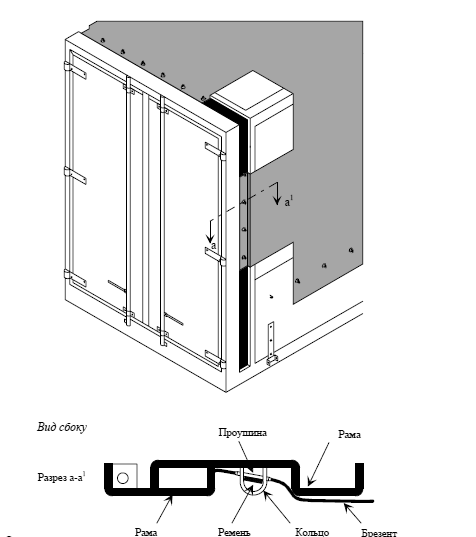
Такое крепление брезента к транспортному средству допускается, если кольца утоплены на глубину профиля рамы и не выступают за максимальную его глубину. Ширина профиля рамы должна быть по возможности минимальной.
Рисунок 7. Пример крепления брезента к рамам особой формы
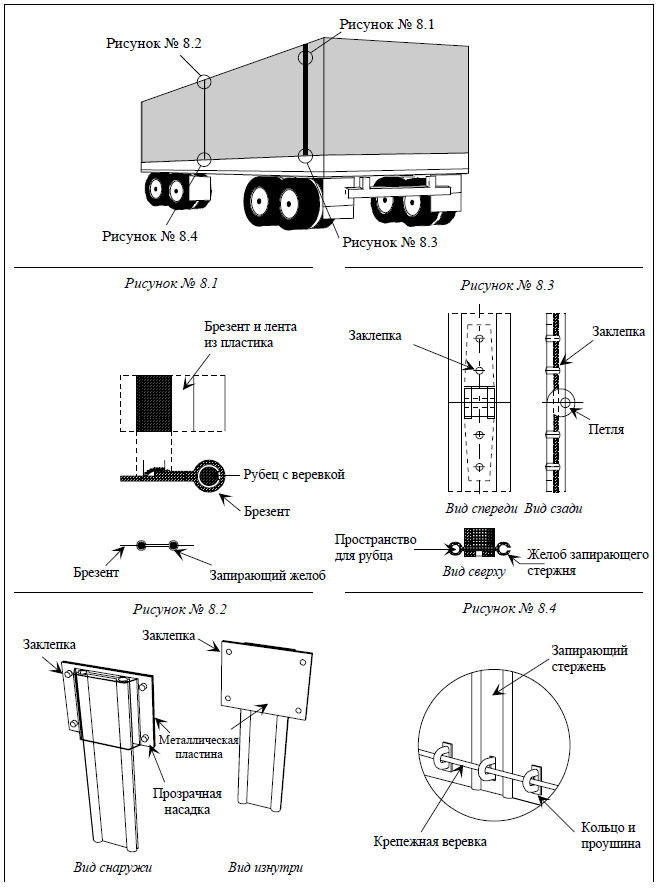
Описание
В данной системе закрывающихся окон в брезенте оба края окон в брезенте, используемых для загрузки и разгрузки, соединяются посредством алюминиевого запирающего стержня. Окна в брезенте имеют рубец, в который по всей его длине вшита веревка (см. рис. N 8.1). Это не позволяет вытащить брезент из желоба запирающего стержня. Рубец должен находиться на внешней стороне и быть соединен посредством спайки в соответствии с положениями [пункта 4 статьи 3](https://bukva.ai/docs/tamozhennaya-konventsiya-o-mezhdunarodnoy-2/statya-3-2#p100951) приложения 2 к Конвенции.
Края брезента должны быть пропущены через открытые желоба на алюминиевом запирающем стержне и проходить по двум параллельным продольным каналам, закрытым в их нижней части. Когда запирающий стержень находится в своем верхнем положении, края брезента соединены.
В верхнем конце окна запирающий стержень фиксируется при помощи заклепок к брезенту (см. рис. N 8.2). Запирающий стержень состоит из двух частей, соединенных при помощи петли на заклепках, которая позволяет сгибать его в целях облегчения установки и снятия. Эта петля должна быть устроена таким образом, чтобы после запирания системы нельзя было вынуть поворотный шкворень (см. рис. N 8.3).
В нижней части запирающего стержня имеется отверстие, через которое проходит кольцо. Это отверстие имеет овальную форму и размер, достаточный для того, чтобы в него проходило кольцо (см. рис. N 8.4). Для закрепления запирающего стержня через это кольцо пропускается крепежная веревка, соответствующая требованиям МДП.
Рисунок 8. Система закрывания отверстий, предназначенных
для разгрузочно-погрузочных работ
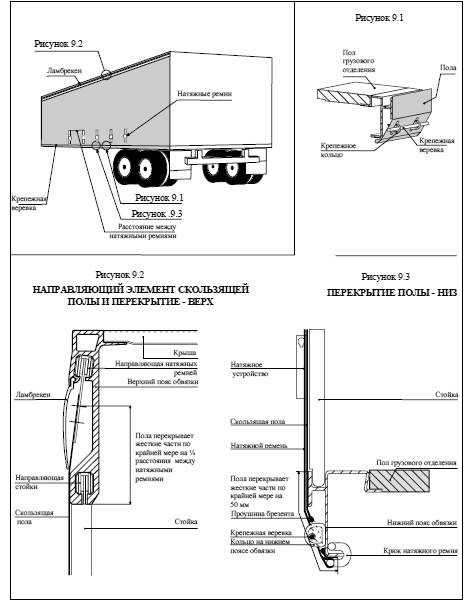
Рисунок 9. Образец конструкции контейнера
со скользящими полами
Часть II
**ПРОЦЕДУРА ДОПУЩЕНИЯ КОНТЕЙНЕРОВ, ОТВЕЧАЮЩИХ**
**ТЕХНИЧЕСКИМ ТРЕБОВАНИЯМ, ПРЕДУСМОТРЕННЫМ**
**ПРАВИЛАМИ, ПРИВЕДЕННЫМИ В ЧАСТИ I**
Общие положения
1. Контейнеры могут быть допущены для перевозки грузов под таможенными печатями и пломбами:
a) либо на стадии производства - по типу конструкции (процедура допущения на стадии производства);
b) либо на каком-либо последующем этапе - в индивидуальном порядке или определенными партиями контейнеров одного и того же типа (процедура допущения на каком-либо этапе после изготовления).
Общие положения для обеих процедур допущения
2. Компетентный орган, который осуществляет процедуру допущения выдает после допущения предприятию, сделавшему заявку, свидетельство о допущении, действительное, в зависимости от обстоятельств, либо для неограниченного числа контейнеров допущенного типа, либо для определенного числа контейнеров.
3. Прежде чем приступить к перевозке грузов под таможенными печатями и пломбами, владелец свидетельства о допущении должен прикрепить табличку о допущении на допущенный контейнер (допущенные контейнеры).
4. Табличка о допущении должна прочно крепиться на хорошо видном месте рядом с любой другой табличкой, выдаваемой с официальными целями.
Комментарии к [пункту 4](https://bukva.ai/docs/tamozhennaya-konventsiya-o-mezhdunarodnoy-2/statya-5-2#p101452)
Прикрепление табличек о допущении
Допускается использование сильного клея для крепления табличек на пластмассовые контейнеры при условии, что таблички о допущении крепятся таким образом, чтобы исключить легкое удаление, и соблюдены требования [части II](https://bukva.ai/docs/tamozhennaya-konventsiya-o-mezhdunarodnoy-2/statya-5-2#p101443) приложения 7 Конвенции.
(TRANS/GE.30/10, пункты 35 - 36)
Группирование табличек о допущении
При условии соблюдения требований [части II](https://bukva.ai/docs/tamozhennaya-konventsiya-o-mezhdunarodnoy-2/statya-5-2#p101443) приложения 7 Конвенции допускается использование несущей пластины, на которой размещаются все требуемые таблички о допущении. Таблички крепятся таким образом, чтобы исключить возможность легкого удаления.
Для облегчения идентификации табличек о допущении перевозчиками допускается использование наклеек рядом с табличками на контейнерах и в дополнение к ним. Однако наклейки ни при каких обстоятельствах не могут заменять таблички о допущении, предусмотренные [частью II](https://bukva.ai/docs/tamozhennaya-konventsiya-o-mezhdunarodnoy-2/statya-5-2#p101443) приложения 7 к Конвенции.
(TRANS/WP.30/133, пункты 18 - 24; TRANS/WP.30/135, пункты 15 - 19; TRANS/WP.30/AC.2/27, приложение 3)
5. Табличка о допущении, соответствующая [образцу I](https://bukva.ai/docs/tamozhennaya-konventsiya-o-mezhdunarodnoy-2/statya-5-2#p101492), который приводится в добавлении 1 к настоящей части, представляет собой металлическую пластину размером не менее 20 см x 10 см. На ее поверхности должны быть выгравированы резцом, выдавлены рельефом или четко и прочно нанесены любым другим способом, по крайней мере на французском или английском языке, приводимые ниже надписи:
a) надпись "Допущен для перевозки под таможенными печатями и пломбами";
b) название страны, где контейнер был допущен, либо полностью, либо в виде отличительного знака, используемого для указания страны регистрации автотранспортных средств в международном автомобильном движении, и номер свидетельства о допущении (цифры, буквы и т.д.), а также год допущения (например, "NL/26/73" означает: "Нидерланды, свидетельство о допущении N 26, выданное в 1973 году");
c) порядковый номер контейнера, присвоенный ему заводом-изготовителем (заводской номер);
d) если контейнер допущен по типу конструкции, на табличке должны быть нанесены также опознавательные цифры или буквы данного типа контейнера.
Пояснительная записка к [пункту 5 d)](https://bukva.ai/docs/tamozhennaya-konventsiya-o-mezhdunarodnoy-2/statya-5-2#p101465)
Если два крытых брезентом контейнера, допущенных к перевозке под таможенными печатями и пломбами, соединены попарно таким образом, что они образуют один контейнер, покрытый одним брезентом и удовлетворяющий требованиям, предъявляемым при перевозке под таможенными печатями и пломбами, то для такой комбинации контейнеров не требуется отдельного свидетельства о допущении или отдельной таблички о допущении.
6. Если контейнер не отвечает больше техническим требованиям, предписанным процедурой допущения, то, прежде чем использоваться для перевозок под таможенными печатями и пломбами, он должен быть приведен в состояние, послужившее основанием для его допущения, таким образом, чтобы вновь отвечать этим техническим требованиям.
7. Если основные характеристики контейнера изменены, допущение этого контейнера теряет силу, и он должен стать предметом нового допущения компетентным органом, прежде чем использоваться для перевозки грузов под таможенными печатями и пломбами.
Особые положения, касающиеся допущения по типу конструкции
на стадии производства
8. Когда контейнеры одного и того же типа конструкции строятся серийно, завод-изготовитель может обратиться к компетентному органу страны, в котором они производятся, с просьбой об их допущении по типу конструкции.
Допущение в государстве, отличном от государства производства
Так как приложение 7, [часть II, пункт 8](https://bukva.ai/docs/tamozhennaya-konventsiya-o-mezhdunarodnoy-2/statya-5-2#p101471) не допускает какого-либо иного толкования, вопросы относящиеся к процедуре допущения контейнеров в государстве, отличном от государства производства, должны решаться путем применения на практике положений приложения 7, [части II, пунктов 15](https://bukva.ai/docs/tamozhennaya-konventsiya-o-mezhdunarodnoy-2/statya-5-2#p101488) - [17](https://bukva.ai/docs/tamozhennaya-konventsiya-o-mezhdunarodnoy-2/statya-5-2#p101490), которыми разрешено допущение контейнеров на этапе после их изготовления.
(TRANS/GE.30/43, пункт 27)
9. Завод-изготовитель должен указать в своей заявке опознавательные цифры и буквы, которые он присваивает типу контейнеров, являющемуся предметом его заявки.
10. К этой заявке должны прилагаться чертежи и подробное описание типа конструкции контейнера, подлежащего допущению.
11. Завод-изготовитель должен письменно обязаться:
a) представить компетентному органу те из контейнеров данного типа, которые этот орган пожелает осмотреть;
b) разрешить компетентному органу осматривать другие экземпляры в любой момент в ходе серийного производства данного типа;
c) информировать компетентный орган о любых изменениях в чертежах и описаниях конструкции, какой бы важности они ни были, до того как эти изменения будут произведены;
d) на видном месте наносить на контейнеры, кроме знаков, предусмотренных для табличек о допущении, опознавательные цифры и буквы типа конструкции, а также порядковый номер каждого серийно выпускаемого контейнера данного типа (заводской номер);
e) вести учет контейнеров, построенных в соответствии с допущенным типом.
12. Компетентный орган указывает в случае необходимости изменения, которые следует внести в предусмотренный тип конструкции для допущения к перевозке.
13. Ни один контейнер не может быть допущен согласно процедуре допущения по типу конструкции, если компетентный орган не пришел к заключению на основании осмотра одного или нескольких построенных по этому типу контейнеров, что контейнеры этого типа отвечают техническим условиям, предусмотренным в [части I](https://bukva.ai/docs/tamozhennaya-konventsiya-o-mezhdunarodnoy-2/statya-4-2#p101283).
14. После допущения какого-либо типа контейнера предприятию, сделавшему заявку, выдается в единственном экземпляре свидетельство о допущении, соответствующее [образцу II](https://bukva.ai/docs/tamozhennaya-konventsiya-o-mezhdunarodnoy-2/statya-5-2#p101500), приведенному в добавлении 2 к настоящей части, и действительное для всех контейнеров, которые будут строиться в соответствии со спецификациями допущенного типа. Это свидетельство дает право заводу-изготовителю крепить к каждому серийному контейнеру данного типа табличку о допущении, предусмотренную в [пункте 5](https://bukva.ai/docs/tamozhennaya-konventsiya-o-mezhdunarodnoy-2/statya-5-2#p101461) настоящей части.
Особые положения, касающиеся допущения на этапе
после изготовления
15. Если не было сделано заявки о допущении контейнеров на стадии производства, владелец, предприятие по эксплуатации контейнеров или представитель того или другого могут обратиться с просьбой к компетентному органу, которому они могут представить контейнер или контейнеры, допущение которых испрашивается.
16. Любая заявка о допущении в случае, предусмотренном в [пункте 15](https://bukva.ai/docs/tamozhennaya-konventsiya-o-mezhdunarodnoy-2/statya-5-2#p101488) настоящей части, должна содержать порядковый номер (заводской номер), наносимый заводом-изготовителем на каждый контейнер.
17. Когда компетентный орган путем осмотра такого числа контейнеров, которое он считает необходимым, удостоверится в том, что этот контейнер или эти контейнеры отвечают техническим условиям, предусмотренным в [части I](https://bukva.ai/docs/tamozhennaya-konventsiya-o-mezhdunarodnoy-2/statya-4-2#p101283), он выдает свидетельство о допущении, соответствующее [образцу III](https://bukva.ai/docs/tamozhennaya-konventsiya-o-mezhdunarodnoy-2/statya-5-2#p101521), приведенному в добавлении 3 к настоящей части, и действительное лишь для того числа контейнеров, которые были допущены. Это свидетельство, в котором указаны порядковый номер или порядковые номера, присвоенные заводом-изготовителем контейнеру или контейнерам, к которым оно относится, дает право предприятию, сделавшему заявку, прикреплять на каждый допущенный контейнер табличку о допущении, предусмотренную в [пункте 5](https://bukva.ai/docs/tamozhennaya-konventsiya-o-mezhdunarodnoy-2/statya-5-2#p101461) настоящей части.
Образец I
Табличка о допущении
(английский вариант)
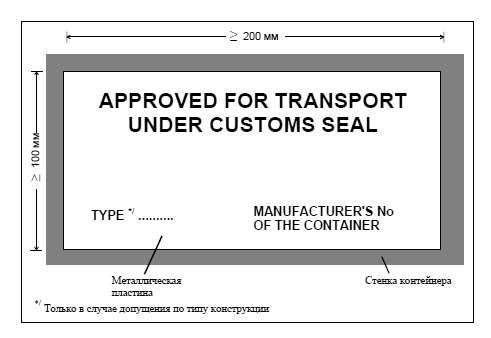
Образец I
Табличка о допущении
(французский вариант)
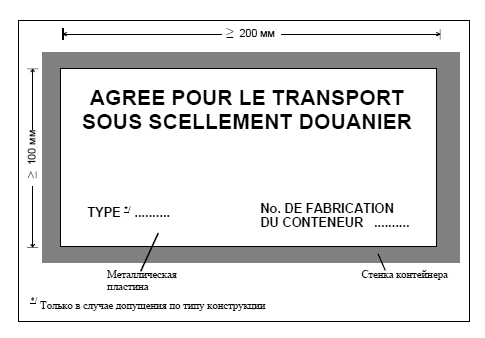
```text
┌─────────────────────────────────────────────────────────────────────────┐
│ Таможенная конвенция о международной перевозке грузов с применением │
│ книжки МДП, 1975 г. │
│ │
│ Свидетельство о допущении по типу конструкции │
│ │
│ 1. Номер свидетельства <*> .......................................... │
│ 2. Удостоверяется, что описанный ниже тип контейнера допущен к │
│ перевозке и что контейнеры, изготовленные согласно этому типу, │
│ могут быть допущены к перевозке грузов под таможенными печатями │
│ и пломбами. │
│ 3. Род контейнера ................................................... │
│ 4. Опознавательные цифры или буквы типа конструкции ................. │
│ 5. Опознавательный номер чертежей ................................... │
│ 6. Опознавательный номер описаний конструкции ....................... │
│ 7. Вес тары ......................................................... │
│ 8. Наружные размеры в см ............................................ │
│ 9. Основные характеристики конструкции (вид материалов, тип │
│ конструкции и т.д.) .............................................. │
│ .................................................................. │
│ 10. Настоящее свидетельство действительно для всех контейнеров, │
│ изготовленных в соответствии с указанными выше чертежами и │
│ описаниями конструкции. │
│ 11. Выдано ...........................................................,│
│ (название и адрес завода-изготовителя) │
│ которому разрешено прикреплять табличку о допущении на каждом │
│ изготовленном им контейнере допущенного типа │
│ │
│ ............................. ............................ │
│ (место) (дата) │
│ │
│ ................................................................... │
│ (подпись и печать учреждения или организации, выдающего(ей) │
│ свидетельство) │
│ │
│ -------------------------------- │
│ <*> Указать буквы и цифры, которые будут проставляться на табличке │
│о допущении (см. подпункт 5 b) части II приложения 7 к Таможенной │
│конвенции о международной перевозке грузов с применением книжки МДП, │
│1975 г.). │
└─────────────────────────────────────────────────────────────────────────┘
```
*см.* предупреждение на обороте
**ВНИМАНИЕ!**
([Пункты 6](https://bukva.ai/docs/tamozhennaya-konventsiya-o-mezhdunarodnoy-2/statya-5-2#p101468) и [7 части II](https://bukva.ai/docs/tamozhennaya-konventsiya-o-mezhdunarodnoy-2/statya-5-2#p101469) приложения 7 к Таможенной конвенции
о международной перевозке грузов с применением
книжки МДП, 1975 г.)
```text
┌─────────────────────────────────────────────────────────────────────────┐
│6. Если контейнер не отвечает больше техническим требованиям,│
│предписанным процедурой допущения, то, прежде чем использоваться для│
│перевозок под таможенными печатями и пломбами, он должен быть приведен в│
│состояние, послужившее основанием для его допущения, таким образом, чтобы│
│вновь отвечать этим техническим требованиям. │
│7. Если основные характеристики контейнера изменены, допущение этого│
│контейнера теряет силу, и он должен стать предметом нового допущения│
│компетентным органом, прежде чем использоваться для перевозки грузов под│
│таможенными печатями и пломбами. │
└─────────────────────────────────────────────────────────────────────────┘
Добавление 3
Образец III
┌─────────────────────────────────────────────────────────────────────────┐
│ Таможенная конвенция о международной перевозке грузов с применением │
│ книжки МДП, 1975 г. │
│ │
│ Свидетельство о допущении, │
│ выданное на каком-либо этапе после изготовления │
│ │
│ 1. Номер свидетельства <*> .......................................... │
│ 2. Удостоверяется, что указанный(ые) ниже контейнер(ы) допущен(ы) │
│ к перевозке грузов под таможенными печатями и пломбами. │
│ 3. Род контейнера(ов) ............................................... │
│ 4. Порядковый(ые) номер(а), присвоенный(ые) контейнеру заводом - │
│ изготовителем .................................................... │
│ 5. Вес тары ......................................................... │
│ 6. Наружные размеры в см ............................................ │
│ 7. Основные характеристики конструкции (вид материалов, тип │
│ конструкции и т.д.) .............................................. │
│ .................................................................. │
│ 8. Выдано ...........................................................,│
│ (название и адрес завода-изготовителя) │
│ которому разрешено прикреплять табличку о допущении на указанном(ых)│
│ выше контейнере(ах). │
│ │
│ ............................. ............................ │
│ (место) (дата) │
│ │
│ ................................................................... │
│ (подпись и печать учреждения или организации, выдающего(ей) │
│ свидетельство) │
│ │
│ -------------------------------- │
│ <*> Указать буквы и цифры, которые будут проставляться на табличке │
│о допущении (см. подпункт 5 b) части II приложения 7 к Таможенной │
│конвенции о международной перевозке грузов с применением книжки МДП, │
│1975 г.). │
└─────────────────────────────────────────────────────────────────────────┘
```
*см.* предупреждение на обороте
**ВНИМАНИЕ!**
([Пункты 6](https://bukva.ai/docs/tamozhennaya-konventsiya-o-mezhdunarodnoy-2/statya-5-2#p101468) и [7 части II](https://bukva.ai/docs/tamozhennaya-konventsiya-o-mezhdunarodnoy-2/statya-5-2#p101469) приложения 7 к Таможенной конвенции
о международной перевозке грузов с применением
книжки МДП, 1975 г.)
```text
┌─────────────────────────────────────────────────────────────────────────┐
│6. Если контейнер не отвечает больше техническим требованиям,│
│предписанным процедурой допущения, то, прежде чем использоваться для│
│перевозок под таможенными печатями и пломбами, он должен быть приведен в│
│состояние, послужившее основанием для его допущения, таким образом, чтобы│
│вновь отвечать этим техническим требованиям. │
│7. Если основные характеристики контейнера изменены, допущение этого│
│контейнера теряет силу, и он должен стать предметом нового допущения│
│компетентным органом, прежде чем использоваться для перевозки грузов под│
│таможенными печатями и пломбами. │
└─────────────────────────────────────────────────────────────────────────┘
```
Часть III
**ПОЯСНИТЕЛЬНЫЕ ЗАПИСКИ**
Пояснительные записки
Пояснительные записки к [приложению 2](https://bukva.ai/docs/tamozhennaya-konventsiya-o-mezhdunarodnoy-2/statya-64#p100772), помещенные в [приложение 6](https://bukva.ai/docs/tamozhennaya-konventsiya-o-mezhdunarodnoy-2/statya-4-2#p101251) к настоящей Конвенции, применяются с соответствующими изменениями к контейнерам, допущенным к перевозке под таможенными пломбами во исполнение положений настоящей Конвенции.
Примечание:
(Пояснительные записки части III помещены вместе с положениями, к которым они относятся. Рисунки, относящиеся к пояснительным запискам, включены в часть III)
Устройство для крепления брезента
к угловым элементам контейнера
Устройство, изображенное ниже, отвечает положениям [подпункта a) пункта 6 статьи 4 части I](https://bukva.ai/docs/tamozhennaya-konventsiya-o-mezhdunarodnoy-2/statya-4-3#p101352)
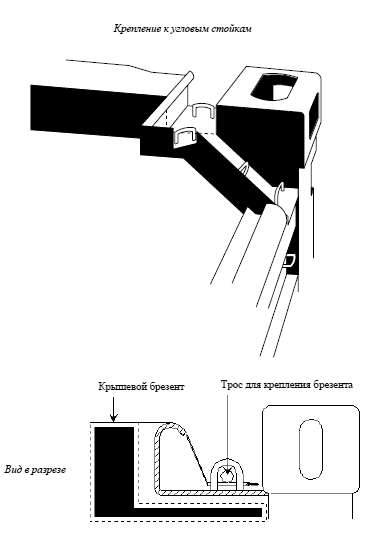
**СОСТАВ, ФУНКЦИИ И ПРАВИЛА**
**ПРОЦЕДУРЫ АДМИНИСТРАТИВНОГО КОМИТЕТА**
И ИСПОЛНИТЕЛЬНОГО СОВЕТА МДП [<*>](https://bukva.ai/docs/tamozhennaya-konventsiya-o-mezhdunarodnoy-2/statya-5-2#p101550)
---
<*> (ECE/TRANS/17/Amend.19, вступила в силу 17 февраля 1999 г.)
**СОСТАВ, ФУНКЦИИ И ПРАВИЛА ПРОЦЕДУРЫ**
АДМИНИСТРАТИВНОГО КОМИТЕТА [<*>](https://bukva.ai/docs/tamozhennaya-konventsiya-o-mezhdunarodnoy-2/statya-5-2#p101553)
---
<*> (ECE/TRANS/17/Amend.19, вступила в силу 17 февраля 1999 г.)
## Статья 1
### Статья 1
i) Договаривающиеся стороны являются членами Административного комитета.
ii) Комитет может разрешить компетентным администрациям государств, упоминаемых в [статье 52, пункте 1](https://bukva.ai/docs/tamozhennaya-konventsiya-o-mezhdunarodnoy-2/statya-52#p100540) настоящей Конвенции, не являющихся Договаривающими сторонами, или представителям международных организаций присутствовать на сессиях Комитета в качестве наблюдателей при обсуждении интересующих их вопросов.
## Статья 1-бис
### Статья 1-бис [](#p101559)
---
<*> (ECE/TRANS/17/Amend.19, вступила в силу 17 февраля 1999 г.)
1. Комитет рассматривает любую предложенную поправку к Конвенции в соответствии с [пунктами 1](https://bukva.ai/docs/tamozhennaya-konventsiya-o-mezhdunarodnoy-2/statya-59#p100588) и [2 статьи 59](https://bukva.ai/docs/tamozhennaya-konventsiya-o-mezhdunarodnoy-2/statya-59#p100589).
2. Комитет следит за применением Конвенции и изучает любые меры, принимаемые Договаривающимися сторонами, объединениями и международными организациями в рамках Конвенции, и проверяет их соответствие ее положениям.
3. Через посредство Исполнительного совета МДП Комитет наблюдает за применением Конвенции на национальном и международном уровнях и содействует ее осуществлению.
## Статья 2
### Статья 2
Генеральный секретарь Организации Объединенных Наций предоставляет Комитету услуги Секретариата.
## Статья 3
### Статья 3
Ежегодно на своей первой сессии Комитет избирает председателя и заместителя председателя.
## Статья 4
### Статья 4
Генеральный секретарь Организации Объединенных Наций созывает Комитет под эгидой Европейской экономической комиссии ежегодно, а также по просьбе компетентных администраций не менее пяти государств, являющихся Договаривающимися сторонами.
## Статья 5
### Статья 5
Предложения ставятся на голосование. Каждое государство, являющееся Договаривающейся стороной, представленное на сессии, имеет один голос. Предложения, не являющиеся предложениями о внесении поправок в настоящую Конвенцию, принимаются большинством голосов присутствующих и голосующих. Поправки к настоящей Конвенции и решения, упомянутые в [статьях 59](https://bukva.ai/docs/tamozhennaya-konventsiya-o-mezhdunarodnoy-2/statya-59#p100586) и [60](https://bukva.ai/docs/tamozhennaya-konventsiya-o-mezhdunarodnoy-2/statya-60#p100593) настоящей Конвенции, принимаются большинством в две трети присутствующих и голосующих.
## Статья 6
### Статья 6
Для принятия решения необходим кворум, составляющий не менее одной трети государств, являющихся Договаривающимися сторонами.
## Статья 7. (ECE/TRANS/17/Amend.16, вступила в силу 25 июня 1994 г.)
### Статья 7. (ECE/TRANS/17/Amend.16, вступила в силу 25 июня 1994 г.)
Перед закрытием сессии Комитет утверждает свой доклад.
## Статья 8
### Статья 8
При отсутствии в настоящем приложении надлежащих положений применяются правила процедуры Европейской экономической комиссии, если Комитет не решит иначе.
**СОСТАВ, ФУНКЦИИ И ПРАВИЛА ПРОЦЕДУРЫ**
ИСПОЛНИТЕЛЬНОГО СОВЕТА МДП [<*>](https://bukva.ai/docs/tamozhennaya-konventsiya-o-mezhdunarodnoy-2/statya-8-2#p101580)
---
<*> (ECE/TRANS/17/Amend.19, вступила в силу 17 февраля 1999 г.)
## Статья 9
### Статья 9 [](#p101583)
---
<*> (ECE/TRANS/17/Amend.19, вступила в силу 17 февраля 1999 г.)
1. Исполнительный совет МДП, учрежденный Административным комитетом в соответствии со [статьей 58-тер](https://bukva.ai/docs/tamozhennaya-konventsiya-o-mezhdunarodnoy-2/statya-58-3#p100582), состоит из девяти членов, представляющих разные Договаривающиеся стороны Конвенции. В работе сессий Совета участвует Секретарь МДП.
2. Члены Исполнительного совета МДП избираются Административным комитетом большинством голосов присутствующих и участвующих в голосовании членов. Срок полномочий каждого члена Исполнительного совета МДП составляет два года. Члены Исполнительного совета МДП могут быть переизбраны. Круг ведения Исполнительного совета МДП устанавливается Административным комитетом МДП.
## Статья 10
### Статья 10 [](#p101588)
---
<*> (ECE/TRANS/17/Amend.19, вступила в силу 17 февраля 1999 г.)
Исполнительный совет МДП:
a) наблюдает за применением Конвенции, включая функционирование системы гарантий, и выполняет функции, возложенные на него Конвенцией и Административным комитетом;
b) контролирует работу по печатанию и распространению в централизованном порядке книжек МДП среди объединений, которая может выполняться одной из уполномоченных международных организаций, упомянутых в [статье 6](https://bukva.ai/docs/tamozhennaya-konventsiya-o-mezhdunarodnoy-2/statya-6#p100117);
Пояснительная записка к пункту b) статьи 10
8.10 (b) Соглашение, упомянутое в [пояснительной записке к статье 6.2-бис](https://bukva.ai/docs/tamozhennaya-konventsiya-o-mezhdunarodnoy-2/statya-6#p100125), применяется также в отношении ответственности международной организации, упомянутой в [подпункте b) данной статьи](https://bukva.ai/docs/tamozhennaya-konventsiya-o-mezhdunarodnoy-2/statya-10-2#p101591), в том случае, если централизованное печатание и распространение книжек МДП осуществляются вышеупомянутой международной организацией.
(ECE/TRANS/17/Amend.27, вступила в силу 12 августа 2006 г.)
c) координирует обмен оперативной и другой информацией между компетентными органами Договаривающихся сторон и способствует его развитию;
d) координирует обмен информацией между компетентными органами Договаривающихся сторон, объединениями и международными организациями и содействует его развитию;
e) содействует урегулированию споров между Договаривающимися сторонами, объединениями, страховыми компаниями и международными организациями без ущерба для [статьи 57](https://bukva.ai/docs/tamozhennaya-konventsiya-o-mezhdunarodnoy-2/statya-57#p100565) об урегулировании споров;
f) оказывает поддержку в подготовке сотрудников таможенных органов и других заинтересованных сторон, имеющих отношение к процедуре МДП;
g) ведет в целях распространения среди Договаривающихся сторон централизованную регистрацию предоставляемой международными организациями, упомянутыми в [статье 6](https://bukva.ai/docs/tamozhennaya-konventsiya-o-mezhdunarodnoy-2/statya-6#p100117), информации о всех предписанных правилах и процедурах, регламентирующих выдачу книжек МДП объединениями, в той мере, в какой они относятся к минимальным условиям и требованиям, изложенным в [приложении 9](https://bukva.ai/docs/tamozhennaya-konventsiya-o-mezhdunarodnoy-2/statya-13-2#p101638);
h) осуществляет контроль за ценами на книжки МДП.
## Статья 11
### Статья 11 [](#p101603)
---
<*> (ECE/TRANS/17/Amend.19, вступила в силу 17 февраля 1999 г.)
1. Сессия Совета созывается Секретарем МДП по просьбе Административного комитета или по меньшей мере трех членов Совета.
2. Совет стремится к принятию решений на основе консенсуса. Если консенсуса достичь невозможно, они выносятся на голосование и принимаются большинством голосов присутствующих и участвующих в голосовании членов. Для целей принятия решений требуется кворум из пяти членов. Секретарь МДП права голоса не имеет.
3. Совет избирает Председателя и принимает собственные правила процедуры.
4. Совет отчитывается о своей деятельности, включая представление проверенных финансовых отчетов, перед Административным комитетом не реже одного раза в год или по просьбе Административного комитета. Совет будет представлен в Административном комитете своим Председателем.
5. Совет рассматривает любую информацию и запросы, направляемые ему Административным комитетом, Договаривающимися сторонами, Секретарем МДП, национальными объединениями и международными организациями, упомянутыми в [статье 6](https://bukva.ai/docs/tamozhennaya-konventsiya-o-mezhdunarodnoy-2/statya-6#p100117) Конвенции. Эти международные организации имеют право присутствовать на сессиях Исполнительного совета МДП в качестве наблюдателей, если его Председатель не примет иного решения. При необходимости, по приглашению Председателя на сессиях Совета может присутствовать на правах наблюдателя любая другая организация.
## Статья 12
### Статья 12 [](#p101611)
---
<*> (ECE/TRANS/17/Amend.19, вступила в силу 17 февраля 1999 г.)
Секретарем МДП является один из сотрудников секретариата Европейской экономической комиссии, который исполняет решения Исполнительного совета МДП в рамках круга ведения Совета. Секретарю МДП будет оказывать помощь секретариат МДП, численность которого определяется Административным комитетом МДП.
## Статья 13
### Статья 13 [](#p101615)
---
<*> (ECE/TRANS/17/Amend.19, вступила в силу 17 февраля 1999 г.)
1. Деятельность членов Исполнительного совета МДП и секретариата МДП финансируется до тех пор, пока не будут изысканы альтернативные источники финансирования, посредством суммы с каждой книжки МДП, выдаваемой международной организацией, упомянутой в [статье 6](https://bukva.ai/docs/tamozhennaya-konventsiya-o-mezhdunarodnoy-2/statya-6#p100117). Эта сумма утверждается Административным комитетом МДП.
(ECE/TRANS/17/Amend.28, вступила в силу 1 января 2009 г.)
Пояснительная записка к [пункту 1 статьи 13](https://bukva.ai/docs/tamozhennaya-konventsiya-o-mezhdunarodnoy-2/statya-13-2#p101616) [<*>](https://bukva.ai/docs/tamozhennaya-konventsiya-o-mezhdunarodnoy-2/statya-13-2#p101620)
---
<*> (ECE/TRANS/17/Amend.19, вступила в силу 17 февраля 1999 г.)
8.13.1-1 Условия финансирования
По истечении первоначального двухлетнего периода Договаривающиеся стороны Конвенции предусматривают, что деятельность Исполнительного совета МДП и секретариата МДП будет финансироваться по линии регулярного бюджета Организации Объединенных Наций. Это не исключает возможности продления применения первоначальных условий финансирования, если не будет обеспечено финансирование за счет Организации Объединенных Наций или из других источников.
8.13.1-2 Деятельность членов Исполнительного совета МДП
Деятельность членов Исполнительного совета МДП будет финансироваться правительствами их соответствующих стран.
8.13.1-3 Сумма
Сумма, упомянутая в [пункте 1](https://bukva.ai/docs/tamozhennaya-konventsiya-o-mezhdunarodnoy-2/statya-13-2#p101616), основывается на a) бюджете и смете расходов Исполнительного совета МДП и секретариата МДП, утверждаемых Административным комитетом МДП, и b) прогнозе международной организации о количестве книжек МДП, которые будут выданы.
(ECE/TRANS/17/Amend.28, вступила в силу 1 января 2009 г.)
2. Процедура осуществления финансирования деятельности Исполнительного совета МДП и секретариата МДП утверждается Административным комитетом МДП [<*>](https://bukva.ai/docs/tamozhennaya-konventsiya-o-mezhdunarodnoy-2/statya-13-2#p101630).
---
<*> Более подробно процедура изложена в документе ECE/TRANS/WP.30/AC.2/89, пункт 38 и приложение II.
(ECE/TRANS/17/Amend.28, вступила в силу 1 января 2009 г.)
Пояснительная записка к пункту 2 статьи 13
8.13.2 После консультаций с международной организацией, упомянутой в [статье 6](https://bukva.ai/docs/tamozhennaya-konventsiya-o-mezhdunarodnoy-2/statya-6#p100117), процедура, упомянутая в [пункте 2](https://bukva.ai/docs/tamozhennaya-konventsiya-o-mezhdunarodnoy-2/statya-13-2#p101628), должна быть отражена в Соглашении между ЕЭК ООН, уполномоченной Договаривающимися сторонами и действующей от их имени, и международной организацией, упомянутой в [статье 6](https://bukva.ai/docs/tamozhennaya-konventsiya-o-mezhdunarodnoy-2/statya-6#p100117). Соглашение утверждается Административным комитетом МДП.
(ECE/TRANS/17/Amend.28, вступила в силу 1 января 2009 г.)
Приложение 9 [<*>](https://bukva.ai/docs/tamozhennaya-konventsiya-o-mezhdunarodnoy-2/statya-13-2#p101637)
---
<*> (ECE/TRANS/17/Amend.19, вступила в силу 17 февраля 1999 г., ECE/TRANS/17/Amend.29, вступила в силу 1 января 2012 г.)
**ДОСТУП К ПРОЦЕДУРЕ МДП**
Часть I
**РАЗРЕШЕНИЕ ДЛЯ ОБЪЕДИНЕНИЙ ВЫДАВАТЬ КНИЖКИ МДП**
**И ДЕЙСТВОВАТЬ В КАЧЕСТВЕ ГАРАНТА**
Условия и требования
1. Условия и требования, которые должны соблюдаться объединениями для получения разрешения Договаривающихся сторон выдавать книжки МДП и выступать в качестве гаранта в соответствии со [статьей 6](https://bukva.ai/docs/tamozhennaya-konventsiya-o-mezhdunarodnoy-2/statya-6#p100117) Конвенции, включают:
a) Доказательства, подтверждающие факт существования в течение по крайней мере одного года в качестве объединения, зарегистрированного в той Договаривающей стороне, где выдано разрешение.
Пояснительная записка к пункту 1 a) [<*>](https://bukva.ai/docs/tamozhennaya-konventsiya-o-mezhdunarodnoy-2/statya-13-2#p101646)
---
<*> (ECE/TRANS/17/Amend.19, вступила в силу 17 февраля 1999 г., ECE/TRANS/17/Amend.29, вступила в силу 1 января 2012 г.)
9.I.1.a) Исключена
(ECE/TRANS/17/Amend.29, вступила в силу 1 января 2012 г.)
b) Доказательства, подтверждающие устойчивое финансовое положение и наличие организационных возможностей для выполнения обязательств объединения по Конвенции.
с) Отсутствие серьезных или неоднократных нарушений таможенных правил или налогового законодательства.
d) Заключение письменного соглашения или любого другого правового документа между объединением и компетентными органами Договаривающейся стороны, в которой оно учреждено, включая принятие объединением своих обязанностей, изложенных в [пункте 3](https://bukva.ai/docs/tamozhennaya-konventsiya-o-mezhdunarodnoy-2/statya-13-2#p101653).
2. Заверенная копия письменного соглашения или любого другого правового документа, упомянутого в [пункте 1 d](https://bukva.ai/docs/tamozhennaya-konventsiya-o-mezhdunarodnoy-2/statya-13-2#p101652)), включая, при необходимости, заверенный текст его перевода на английский, русский или французский языки, сдается на хранение в Исполнительный совет МДП. Любые изменения этого письменного соглашения или любого другого правового документа незамедлительно доводятся до сведения Исполнительного совета МДП.
3. Обязанности объединения:
i) соблюдение обязательств, предусмотренных [статьей 8](https://bukva.ai/docs/tamozhennaya-konventsiya-o-mezhdunarodnoy-2/statya-8#p100138) Конвенции;
ii) признание определяемого Договаривающимися сторонами максимального размера суммы, которая может быть истребована по одной книжке МДП от объединения в соответствии с [пунктом 3 статьи 8](https://bukva.ai/docs/tamozhennaya-konventsiya-o-mezhdunarodnoy-2/statya-8#p100151) Конвенции;
iii) постоянно, и в частности до запроса разрешения на доступ лиц к процедуре МДП, проверка соблюдения такими лицами минимальных условий и требований, изложенных в [части II](https://bukva.ai/docs/tamozhennaya-konventsiya-o-mezhdunarodnoy-2/statya-13-2#p101674) настоящего приложения;
iv) обеспечение свих гарантий в полном объеме ответственности, взятой им на себя в стране, в которой оно учреждено, в связи с операциями с применением книжек МДП, выданных им самим и зарубежными объединениями, входящими в ту же международную организацию, в состав которой входит оно само;
v) обеспечение покрытия своей ответственности к удовлетворению компетентных органов Договаривающейся стороны, в которой оно учреждено, в страховой компании, пуле страховщиков или финансовом учреждении. Договор(ы) страхования или финансовой гарантии полностью покрывает (покрывают) его ответственность в связи с операциями с применением книжек МДП, выданных им самим и зарубежными объединениями, входящими в ту же международную организацию, в состав которой входит оно само.
Срок уведомления о прекращении действия договора (договоров) страхования или финансовой гарантии должен быть не меньше срока уведомления о прекращении действия письменного соглашения или любого другого правового документа, упомянутого в [пункте 1 d)](https://bukva.ai/docs/tamozhennaya-konventsiya-o-mezhdunarodnoy-2/statya-13-2#p101652). Заверенная копия договора (договоров) страхования или финансовой гарантии, а также все последующие изменения к нему (ним) сдаются на хранение в Исполнительный совет МДП, включая, при необходимости, заверенный текст перевода на английский, русский или французский языки.
Комментарий к [пункту 1 f) v)](https://bukva.ai/docs/tamozhennaya-konventsiya-o-mezhdunarodnoy-2/statya-13-2#p101658)
Исключен
(ECE/TRANS/W.30/2010/3/Rev.1; ECE/TRANS/WP.30/AC.2/2010/4/Rev.1 и ECE/TRANS/WP.30/AC.2/105, пункт 32)
vi) ежегодно, по состоянию на 1 марта, информировать Исполнительный совет МДП о цене на каждый тип выдаваемых книжек МДП;
vii) предоставление компетентным органам возможности проверять всю отчетную документацию и счета, связанные с применением процедуры МДП;
viii) признание процедуры эффективного урегулирования споров, возникающих в случае использования книжек МДП противозаконным или обманным образом, по возможности без обращения в суды;
ix) строгое соблюдение постановлений компетентных органов Договаривающейся стороны, в которой оно учреждено, в отношении изъятия или отзыва разрешения в соответствии со [статьей 6](https://bukva.ai/docs/tamozhennaya-konventsiya-o-mezhdunarodnoy-2/statya-6#p100117) Конвенции и [частью II](https://bukva.ai/docs/tamozhennaya-konventsiya-o-mezhdunarodnoy-2/statya-13-2#p101674) настоящего приложения либо лишения права лиц в соответствии со [статьей 38](https://bukva.ai/docs/tamozhennaya-konventsiya-o-mezhdunarodnoy-2/statya-38#p100456) Конвенции;
x) выражение свое согласие на добросовестное осуществление всех постановлений, принимаемых Административным комитетом МДП и Исполнительным советом МДП, в той мере, в какой они признаются компетентными органами Договаривающейся стороны, в которой учреждено данное объединение.
4. Когда в соответствии с процедурой, предусмотренной в [статье 11](https://bukva.ai/docs/tamozhennaya-konventsiya-o-mezhdunarodnoy-2/statya-11#p100196), гарантийному объединению предлагается уплатить суммы, упомянутые в [пунктах 1](https://bukva.ai/docs/tamozhennaya-konventsiya-o-mezhdunarodnoy-2/statya-8#p100139) и [2 статьи 8](https://bukva.ai/docs/tamozhennaya-konventsiya-o-mezhdunarodnoy-2/statya-8#p100147), оно должно в соответствии с письменным соглашением, упомянутым в пояснительной записке [0.6.2-бис-1](https://bukva.ai/docs/tamozhennaya-konventsiya-o-mezhdunarodnoy-2/statya-6#p100126) к пункту 2-бис статьи 6, проинформировать международную организацию о получении требования.
5. Договаривающаяся сторона, в которой учреждено данное объединение, отзывает у него разрешение выдавать книжки МДП и действовать в качестве гаранта в случае несоблюдения этих условий и требований. Если Договаривающаяся сторона решает отозвать разрешение, то данное решение вступает в силу не ранее, чем по истечении трех (3) месяцев с даты отзыва.
6. Разрешение, выданное тому или иному объединению в соответствии с вышеизложенными условиями, не затрагивает ответственность и обязательства данного объединения на основании Конвенции.
7. Условия и требования, изложенные выше, не затрагивают дополнительные условия и требования, которые Договаривающиеся стороны, возможно, пожелают установить.
Часть II
**РАЗРЕШЕНИЕ ДЛЯ ФИЗИЧЕСКИХ И ЮРИДИЧЕСКИХ ЛИЦ ПОЛЬЗОВАТЬСЯ**
**КНИЖКАМИ МДП**
Минимальные условия и требования
1. Минимальные условия и требования, которые должны соблюдаться лицами, желающими получить доступ к процедуре МДП, включают:
a) Доказательства, подтверждающие наличие опыта или, по крайней мере, возможностей заниматься регулярными международными перевозками (владелец лицензии на осуществление международных перевозок и т.д.).
b) Устойчивое финансовое положение.
c) Доказательства, подтверждающие наличие знаний в области применения Конвенции МДП.
d) Отсутствие серьезных или неоднократных нарушений таможенных правил или налогового законодательства.
e) Положение в письменной декларации об обязательствах перед объединением предусматривающее, что данное лицо
i) будет соблюдать все таможенные формальности, требуемые в соответствии с Конвенцией, в таможнях места отправления, промежуточных таможнях и таможнях места назначения;
ii) будет уплачивать причитающиеся суммы, упомянутые в [пунктах 1](https://bukva.ai/docs/tamozhennaya-konventsiya-o-mezhdunarodnoy-2/statya-8#p100139) и [2 статьи 8](https://bukva.ai/docs/tamozhennaya-konventsiya-o-mezhdunarodnoy-2/statya-8#p100147) Конвенции, если этого потребуют компетентные органы в соответствии с [пунктом 2 статьи 11](https://bukva.ai/docs/tamozhennaya-konventsiya-o-mezhdunarodnoy-2/statya-11#p100215) Конвенции;
(ЕСЕ/TRANS/17/Amend.30, вступила в силу 13 сентября 2012 г.)
iii) будет разрешать объединениям - в пределах, допускаемых национальным законодательством, - проверять информацию о вышеупомянутых минимальных условиях и требованиях.
2. Дополнительные и более ограничительные условия и требования для доступа к процедуре МДП могут быть введены компетентными органами Договаривающихся сторон и самими объединениями, если только компетентные органы не примут иного решения.
3. Договаривающиеся стороны в соответствии с национальным законодательством определяют порядок, который должен соблюдаться для получения доступа к процедуре МДП на основе минимальных условий и требований, изложенных в [пунктах 1](https://bukva.ai/docs/tamozhennaya-konventsiya-o-mezhdunarodnoy-2/statya-13-2#p101677) и [2](https://bukva.ai/docs/tamozhennaya-konventsiya-o-mezhdunarodnoy-2/statya-13-2#p101686).
Пояснительная записка к [пункту 3](https://bukva.ai/docs/tamozhennaya-konventsiya-o-mezhdunarodnoy-2/statya-13-2#p101688)
9.II.3 Комитет по выдаче разрешений
Рекомендуется учреждать национальные комитеты по выдаче разрешений в составе представителей компетентных органов, национальных объединений и других заинтересованных организаций.
(ECE/TRANS/17/Amend.19, вступила в силу 17 февраля 1999 г.)
4. Компетентные органы в течение одной недели начиная с даты выдачи разрешения или отмены разрешения использовать книжки МДП направляют подробные сведения о каждом лице Исполнительному совету МДП в соответствии с [образцом](https://bukva.ai/docs/tamozhennaya-konventsiya-o-mezhdunarodnoy-2/statya-13-2#p101703) прилагаемого разрешения (ТБР).
5. Объединение ежегодно передает обновленный по состоянию на 31 декабря перечень всех лиц, которые получили разрешение, а также лиц, у которых разрешения были изъяты. Этот перечень передается компетентным органам в течение одной недели после 31 декабря. Компетентные органы направляют копию этого перечня Исполнительному совету МДП.
6. Разрешение на доступ к процедуре МДП само по себе не означает права на получение книжек МДП от объединений.
7. Разрешение для того или иного лица использовать книжки МДП в соответствии с изложенными выше минимальными условиями и требованиями не затрагивает ответственность и обязательства этого лица по Конвенции.
Комментарии к части II (Процедура)
Сотрудничество между компетентными органами
В отношении допуска лица к использованию книжек МДП в соответствии с [частью II](https://bukva.ai/docs/tamozhennaya-konventsiya-o-mezhdunarodnoy-2/statya-13-2#p101674) приложения 9 к Конвенции компетентные органы Договаривающейся стороны, где данное лицо имеет постоянное местопребывание или учреждено, должны учитывать любую информацию, переданную другой Договаривающейся стороной в соответствии с [пунктом 2 статьи 38](https://bukva.ai/docs/tamozhennaya-konventsiya-o-mezhdunarodnoy-2/statya-38#p100461) относительно серьезных или неоднократных нарушений таможенного законодательства, совершенных этим лицом. Таким образом, для обеспечения эффективного рассмотрения дела Договаривающейся стороной, где данное лицо имеет постоянное местопребывание или учреждено, в таком уведомлении должно содержаться как можно больше подробных сведений.
(TRANS/WP.30/196, пункт 76; TRANS/WP.30/200, пункт 68)
Исключение национального перевозчика из режима МДП
Для исключения из режима МДП национального перевозчика, виновного в серьезном нарушении таможенных правил, совершенном на территории страны, где он имеет постоянное местопребывание или учрежден, таможенным органам рекомендуется использовать также положения [пункта 4 статьи 6](https://bukva.ai/docs/tamozhennaya-konventsiya-o-mezhdunarodnoy-2/statya-6#p100132) и [пункта 1 d) части II](https://bukva.ai/docs/tamozhennaya-konventsiya-o-mezhdunarodnoy-2/statya-13-2#p101681) приложения 9, а не только положения [пункта 1 статьи 38](https://bukva.ai/docs/tamozhennaya-konventsiya-o-mezhdunarodnoy-2/statya-38#p100457).
(TRANS/WP.30/196, пункт 77; TRANS/WP.30/200, пункт 68)
**ТИПОВОЙ БЛАНК ВЫДАЧИ РАЗРЕШЕНИЯ (ТБР)**
Страна:....................
Название объединения: .........................
Компетентный орган: ...........................
| Заполняется национальными объединениями и/или компетентными органами |
| Идентификационный номер | Фамилия
лица/(лиц) наименование предприятия | Адрес
предприятия | Контактный пункт и номер для контакта (тел., факс и электронная почта) | Регистрационный номер предприятия или лицензии и т.д.
<*> | Прежний случаи изъятия разрешения
<**> | Дата выдачи разрешения
<**> | Дата изъятия разрешения
<**> | Печать / подпись |
| ... | | | | | | | | |
| ... | | | | | | | | |
| ... | | | | | | | | |
---
<*> Если имеется.
<**> В соответствующих случаях.
В отношении каждого лица, для которого уполномоченное объединение испрашивает разрешение, компетентным органам должна быть представлена, по крайней мере, следующая информация:
- индивидуальный идентификационный номер (ИН), присвоенный лицу гарантийным объединением (в сотрудничестве с международной организацией, в состав которой оно входит) в соответствии с согласованным форматом. Формат идентификационного номера определяется Административным комитетом;
(ECE/TRANS/17/Amend.26, вступила в силу 1 апреля 2006 г.)
- фамилия (фамилии) и адрес (адреса) лица (лиц) или наименование (наименования) и адрес (адреса) предприятия (в случае объединения предприятий - также фамилии и имена ответственных руководителей);
- контактный пункт (физическое лицо, уполномоченное предоставлять информацию об операции МДП таможенным органам и объединениям с указанием полных номеров телефона, факса и электронной почты);
-
коммерческий регистрационный номер или номер лицензии на международную перевозку или другая информация (если таковые имеются);
-
(в соответствующих случаях) прежний случай (случаи) изъятия разрешения с указанием дат, продолжительности и характера изъятия разрешения.
Комментарии к типовому бланку выдачи разрешения (ТБР)
Часть III
**ПРЕДОСТАВЛЕНИЕ МЕЖДУНАРОДНОЙ ОРГАНИЗАЦИИ, УПОМЯНУТОЙ**
**В СТАТЬЕ 6, РАЗРЕШЕНИЯ НА ТО, ЧТОБЫ ОТВЕЧАТЬ ЗА ЭФФЕКТИВНУЮ**
**ОРГАНИЗАЦИЮ И ФУНКЦИОНИРОВАНИЕ МЕЖДУНАРОДНОЙ СИСТЕМЫ**
**ГАРАНТИЙ, А ТАКЖЕ ПЕЧАТАТЬ И РАСПРОСТРАНЯТЬ КНИЖКИ МДП**
Условия и требования
1. Для получения от Административного комитета разрешения согласно [статье 6.2-бис](https://bukva.ai/docs/tamozhennaya-konventsiya-o-mezhdunarodnoy-2/statya-6#p100123) Конвенции на то, чтобы отвечать за эффективную организацию и функционирование международной системы гарантий, а также печатать и распространять книжки МДП, международная организация должна соответствовать следующим условиям и требованиям:
a) доказательство профессиональной компетентности и устойчивого финансового положения для эффективной организации и функционирования международной системы гарантий и организационных возможностей для выполнения своих обязательств по Конвенции посредством ежегодного представления консолидированных финансовых отчетов, должным образом проверенных международно признанными независимыми аудиторами;
b) отсутствие серьезных или неоднократных нарушений таможенных правил или налогового законодательства.
2. В соответствии с разрешением международная организация:
a) предоставляет Договаривающимся сторонам Конвенции МДП через входящие в состав международной организации национальные объединения заверенные копии всеобъемлющего договора страхования и доказательство страхового покрытия;
b) предоставляет компетентным органам Конвенции МДП информацию о предписанных правилах и процедурах выдачи книжек МДП национальными объединениями;
c) предоставляет компетентным органам Конвенции МДП на ежегодной основе данные о предъявленных, неурегулированных, оплаченных или урегулированных без уплаты претензиях;
d) предоставляет компетентным органам Конвенции МДП всю информацию в полном объеме о функционировании системы МДП, в частности и помимо прочего, своевременную и хорошо обоснованную информацию о тенденциях, касающихся числа непрекращенных операций МДП, предъявленных, неурегулированных, оплаченных или урегулированных без уплаты претензий, которые могут стать причиной возникновения проблем в отношении надлежащего функционирования системы МДП или которые могут привести к трудностям для непрерывного функционирования ее международной системы гарантий;
e) предоставляет компетентным органам Конвенции МДП статистические данные о количестве книжек МДП, выданных каждой Договаривающейся стороне, с разбивкой по типу;
f) предоставляет Исполнительному совету МДП подробную информацию о цене, взимаемой международной организацией за каждый тип выдаваемых ею книжек МДП;
g) принимает все возможные меры с целью уменьшения опасности подделки книжек МДП;
h) принимает надлежащие корректирующие меры в случае обнаружения нарушений или недостатков, связанных с книжкой МДП, и информирует об этом Исполнительный совет МДП;
j) в полной мере участвует в урегулировании споров в тех случаях, когда запрашивается содействие Исполнительного совета МДП;
k) обеспечивает, чтобы любая проблема, связанная с мошеннической деятельностью или другими трудностями в отношении применения Конвенции МДП, незамедлительно доводилась до сведения Исполнительного совета МДП;
l) управляет системой контроля за книжками МДП, предусмотренной в [приложении 10](https://bukva.ai/docs/tamozhennaya-konventsiya-o-mezhdunarodnoy-2/statya-13-2#p101727) к Конвенции, совместно с национальными гарантийными объединениями, входящими в состав международной организации, и таможенными администрациями и информирует Договаривающиеся стороны и компетентные органы Конвенции о проблемах, возникающих в рамках этой системы;
m) предоставляет компетентным органам Конвенции МДП статистическую информацию и данные о деятельности Договаривающихся сторон в связи с системой контроля, предусмотренной в [приложении 10](https://bukva.ai/docs/tamozhennaya-konventsiya-o-mezhdunarodnoy-2/statya-13-2#p101727);
n) заключает, не менее чем за два месяца до предварительной даты вступления в силу или продления разрешения, предоставленного в соответствии со [статьей 6.2-бис](https://bukva.ai/docs/tamozhennaya-konventsiya-o-mezhdunarodnoy-2/statya-6#p100123) Конвенции, письменное соглашение между организацией и секретариатом Европейской экономической комиссии Организации Объединенных Наций, уполномоченным Административным комитетом и действующим от его имени, включая признание международной организацией своих обязанностей, изложенных в данном пункте.
3. В том случае, когда международная организация информируется гарантийным объединением относительно требования об уплате соответствующих сумм, она должна в течение трехмесячного (3) периода проинформировать гарантийное объединение о своей позиции в отношении данного требования.
4. Любая информация, получаемая прямым или косвенным путем международной организацией в рамках Конвенции и которая по своему характеру является конфиденциальной либо предоставляется на конфиденциальной основе, подпадает под обязательство о неразглашении профессиональной тайны и не подлежит использованию или обработке в коммерческих или любых иных целях, за исключением той, для которой эта информация была предоставлена, либо разглашению любой третьей стороной без прямого на то разрешения лица или органа, предоставившего ее. Тем не менее такая информация может передаваться без разрешения компетентным органам Договаривающихся сторон настоящей Конвенции в тех случаях, когда соответствующие полномочия или обязательства установлены положениями национального или международного права, либо в связи с судопроизводством. Разглашение или передача информации производится в строгом соответствии с действующими положениями о защите информации.
5. Административный комитет имеет право отозвать разрешение, предоставленное в соответствии со [статьей 6.2-бис](https://bukva.ai/docs/tamozhennaya-konventsiya-o-mezhdunarodnoy-2/statya-6#p100123) Конвенции, в случае нарушения этих условий и требований. Если Административный комитет решает отозвать разрешение, то данное решение вступает в силу не ранее, чем по истечении шести (6) месяцев с даты отзыва.
6. Разрешение международной организации, предоставляемое в соответствии с изложенными выше условиями, выдается без ущерба для ответственности и обязанностей данной организации по Конвенции.
(ЕСЕ/TRANS/17/Amend.31, вступила в силу 10 октября 2013 г.)
Приложение 10 [<*>](https://bukva.ai/docs/tamozhennaya-konventsiya-o-mezhdunarodnoy-2/statya-13-2#p101726)
---
<*> (ECE/TRANS/17/Amend.27, вступила в силу 12 августа 2006 г.)
**ИНФОРМАЦИЯ,**
**ПОДЛЕЖАЩАЯ ПРЕДОСТАВЛЕНИЮ ДОГОВАРИВАЮЩИМИСЯ СТОРОНАМИ**
**УПОЛНОМОЧЕННЫМ ОБЪЕДИНЕНИЯМ (В СООТВЕТСТВИИ СО СТАТЬЕЙ**
[42-ТЕР](https://bukva.ai/docs/tamozhennaya-konventsiya-o-mezhdunarodnoy-2/statya-42-3#p100495)) И МЕЖДУНАРОДНОЙ ОРГАНИЗАЦИИ (В СООТВЕТСТВИИ
**СО СТАТЬЕЙ 6.2-БИС)**
В силу [пункта 1 статьи 6](https://bukva.ai/docs/tamozhennaya-konventsiya-o-mezhdunarodnoy-2/statya-6#p100118) и [пункта 1 f) iii) части I](https://bukva.ai/docs/tamozhennaya-konventsiya-o-mezhdunarodnoy-2/statya-13-2#p101656) приложения 9 к настоящей Конвенции уполномоченные объединения должны взять на себя обязательство постоянно проверять соблюдение лицами, получившими допуск к процедуре МДП, минимальных условий и требований, изложенных в [части II](https://bukva.ai/docs/tamozhennaya-konventsiya-o-mezhdunarodnoy-2/statya-13-2#p101674) приложения 9 к Конвенции.
От имени своих объединений-членов и в порядке соблюдения своих обязательств в качестве международной организации, уполномоченной на основании [пункта 2-бис статьи 6](https://bukva.ai/docs/tamozhennaya-konventsiya-o-mezhdunarodnoy-2/statya-6#p100123), международная организация создает систему контроля за использованием книжек МДП для хранения данных, передаваемых таможенными органами и доступных для объединений и таможенных администраций, о прекращении операций МДП в таможнях места назначения. Для того чтобы дать объединениям возможность эффективно выполнять свои обязательства, Договаривающиеся стороны передают информацию в систему контроля в соответствии со следующей процедурой:
1) таможенные органы передают международной организации или национальным гарантийным объединениям, по возможности через центральные или региональные отделы, при помощи самых быстрых из имеющихся в наличии средств связи (факса, электронной почты и т.п.) и, по возможности, на ежедневной основе по крайней мере следующую информацию по стандартной форме в отношении всех книжек МДП, предъявляемых в таможнях места назначения, определенных в [статье 1 (l)](https://bukva.ai/docs/tamozhennaya-konventsiya-o-mezhdunarodnoy-2/statya-1#p100052) Конвенции:
a) номер книжки МДП,
b) дату и номер записи в журнале регистрации таможни,
c) название или номер таможни места назначения,
d) дату и номер, указанные в свидетельстве о прекращении операции МДП ([графы 24](https://bukva.ai/docs/tamozhennaya-konventsiya-o-mezhdunarodnoy-2/statya-64#p100722) - [28](https://bukva.ai/docs/tamozhennaya-konventsiya-o-mezhdunarodnoy-2/statya-64#p100722) отрывного листка N 2) в таможне места назначения (если они отличаются от данных, приведенных в [пункте b)](https://bukva.ai/docs/tamozhennaya-konventsiya-o-mezhdunarodnoy-2/statya-13-2#p101732)),
e) частичное или окончательное прекращение операции МДП,
f) без ущерба для [статей 8](https://bukva.ai/docs/tamozhennaya-konventsiya-o-mezhdunarodnoy-2/statya-8#p100138) и [11](https://bukva.ai/docs/tamozhennaya-konventsiya-o-mezhdunarodnoy-2/statya-11#p100196) Конвенции - прекращение операции МДП в таможне места назначения удостоверено с оговоркой или без оговорки,
g) прочую информацию или документацию (необязательно),
h) номер страницы.
2) национальные объединения или международная организация могут направлять таможенным органам типовой бланк для сверки данных (ТБС), приведенный в добавлении:
a) в случае расхождений между переданными данными и данными, указанными на корешках в использованной книжке МДП, или
b) в том случае, если данные не были переданы, но использованная книжка МДП была возвращена национальному объединению.
Таможенные органы должны давать ответ на запросы по сверке данных посредством как можно более оперативного возвращения надлежащим образом заполненного ТБС;
3) таможенные органы и национальные гарантийные объединения в соответствии с национальным законодательством заключают соглашение, охватывающее вышеупомянутый обмен данными;
4) международная организация предоставляет таможенным органам доступ к базе данных по закрытым книжкам МДП и к базе данных по недействительным книжкам МДП.
```text
┌─────────────────────────────────────────────────────────────────────────────────────────────────────┐
│ Типовой бланк для сверки данных (ТБС) │
├─────────────────────────────────────────────────────────────────────────────────────────────────────┤
│ Заполняется инициатором запроса о сверке данных │
├─────────────────────────────────────────────────────────────────────────────────────────────────────┤
│Место назначения: │
├─────────────────────────────────────────────────────────────────────────────────────────────────────┤
│Региональная таможня (необязательно): Таможня места назначения: │
│ │
│Наименование: Наименование: │
├─────────────────────────────────────────────────────────────────────────────────────────────────────┤
│ Получено: Получено: │
├─────────────────────────────────────────────────────────────────────────────────────────────────────┤
│Дата: Дата: │
│ │
│Печать Печать │
├─────────────────────────────────────────────────────────────────────────────────────────────────────┤
│ Данные, подлежащие подтверждению │
│ ┌─┐ ┌─┐ │
│ Источник данных: │ │ Книжка МДП │ │ Данные системы │
│ └─┘ └─┘ │
├──────┬────────────┬──────────────┬─────────────┬─────────┬─────────────┬────────────┬───────────────┤
│Номер │Наименование│ Номер, │ Дата, │ Номер │ Частичное / │Прекращение │ Количество │
│книжки│ или код │ указанный в │ указанная в │страницы │окончательное│операции МДП│ грузовых мест │
│ МДП │ таможни │свидетельстве │свидетельстве│отрывного│ прекращение │ в таможне │(необязательно)│
│ │ места │о прекращении │о прекращении│ листка │операции МДП │ места │ │
│ │ назначения │ операции МДП │ операции │ │ │ назначения │ │
│ │ <*> │(графы 24 - 28│МДП в таможне│ │ │удостоверено│ │
│ │ │ отрывного │ места │ │ │с оговоркой │ │
│ │ │листка N 2) в │ назначения │ │ │ или без │ │
│ │ │таможне места │ <*> │ │ │ оговорки │ │
│ │ │ назначения │ │ │ │ │ │
│ │ │ <*> │ │ │ │ │ │
├──────┼────────────┼──────────────┼─────────────┼─────────┼─────────────┼────────────┼───────────────┤
├──────┴────────────┴──────────────┴─────────────┴─────────┴─────────────┴────────────┴───────────────┤
│ ┌─┐ │
│Приложения: │ │ Копия корешков книжки МДП Прочее: ______________│
│ └─┘ │
├─────────────────────────────────────────────────────────────────────────────────────────────────────┤
│ Ответ таможни места назначения │
├─────────────────────────────────────────────────────────────────────────────────────────────────────┤
│ │
│ ┌─┐ ┌─┐ ┌─┐ │
│ │ │ Подтверждение │ │ Исправления │ │ Не обнаружено данных │
│ └─┘ └─┘ └─┘ │
│ (просьба указать исправления ниже) о прекращении операции МДП │
├──────┬────────────┬──────────────┬─────────────┬─────────┬─────────────┬────────────┬───────────────┤
│Номер │Наименование│ Номер, │ Дата, │ Номер │ Частичное / │Прекращение │ Количество │
│книжки│ или код │ указанный в │ указанная в │страницы │окончательное│операции МДП│ грузовых мест │
│ МДП │ таможни │свидетельстве │свидетельстве│отрывного│ прекращение │ в таможне │(необязательно)│
│ │ места │о прекращении │о прекращении│ листка │операции МДП │ места │ │
│ │ назначения │ операции МДП │ операции │ │ │ назначения │ │
│ │ <*> │(графы 24 - 28│МДП в таможне│ │ │удостоверено│ │
│ │ │ отрывного │ места │ │ │с оговоркой │ │
│ │ │листка N 2) в │ назначения │ │ │ или без │ │
│ │ │таможне места │ <*> │ │ │ оговорки │ │
│ │ │ назначения │ │ │ │ │ │
│ │ │ <*> │ │ │ │ │ │
├──────┼────────────┼──────────────┼─────────────┼─────────┼─────────────┼────────────┼───────────────┤
├──────┴────────────┴──────────────┴─────────────┴─────────┴─────────────┴────────────┴───────────────┤
│Замечания: │
├─────────────────────────────────────────────────────────────────────────────────────────────────────┤
│Дата: Печать и подпись │
│ таможни места │
│ назначения: │
├─────────────────────────────────────────────────────────────────────────────────────────────────────┤
│ Центральный таможенный орган (необязательно) │
├─────────────────────────────────────────────────────────────────────────────────────────────────────┤
│Замечания: │
├─────────────────────────────────────────────────────────────────────────────────────────────────────┤
│Дата: Печать и/или подпись: │
└─────────────────────────────────────────────────────────────────────────────────────────────────────┘
```
---
<*> Просьба иметь в виду, что указанные данные относятся к таможне места назначения, где прекращается операция МДП.
ДОГОВАРИВАЮЩИЕСЯ СТОРОНЫ КОНВЕНЦИИ МДП, 1975 Г.
Договаривающиеся стороны Государства, на территории которых могут
осуществляться перевозки с применением
процедуры МДП (на 31 декабря 2013 г.) [<*>](https://bukva.ai/docs/tamozhennaya-konventsiya-o-mezhdunarodnoy-2/statya-13-2#p101768)
Афганистан Афганистан
Австрия Австрия
Азербайджан Азербайджан
Албания Албания
Алжир -
Армения Армения
Афганистан -
Беларусь Беларусь
Бельгия Бельгия
Болгария Болгария
Босния и Герцеговина Босния и Герцеговина
Бывшая югославская Республика Бывшая югославская Республика
Македония Македония
Венгрия Венгрия
Германия Германия
Греция Греция
Грузия Грузия
Дания Дания
Израиль Израиль
Индонезия -
Иордания Иордания
Иран (Исламская Республика) Иран (Исламская Республика)
Ирландия Ирландия
Испания Испания
Италия Италия
Казахстан Казахстан
Канада -
Кипр Кипр
Киргизстан Киргизстан
Кувейт Кувейт
Латвия Латвия
Ливан Ливан
Либерия -
Литва Литва
Люксембург Люксембург
Мальта Мальта
Марокко Марокко
Молдова Молдова
Монголия Монголия
Нидерланды Нидерланды
Норвегия Норвегия
Объединенные Арабские Эмираты -
Польша Польша
Португалия Португалия
Республика Корея -
Российская Федерация Российская Федерация
Румыния Румыния
Сербия Сербия
Сирийская Арабская Республика Сирийская Арабская Республика
Словакия Словакия
Словения Словения
Соединенное Королевство Соединенное Королевство
**США -**
Таджикистан Таджикистан
Тунис Тунис
Туркменистан Туркменистан
Турция Турция
Узбекистан Узбекистан
Украина Украина
Уругвай -
Финляндия Финляндия
Франция Франция
Хорватия Хорватия
Черногория Черногория
Чешская Республика Чешская Республика
Чили -
Швейцария Швейцария
Швеция Швеция
Эстония Эстония
Европейский союз
---
<*> По данным МСАТ.
**CUSTOMS CONVENTION**
**ON THE INTERNATIONAL TRANSPORT OF GOODS UNDER COVER**
**OF TIR CARNETS (TIR CONVENTION, 1975)**
(including explanatory notes and comments thereto)
(Geneva, 14.XI.1975)
The Contracting Parties,
Desiring to facilitate the international carriage of goods by road vehicle,
Considering that the improvement of the conditions of transport constitutes one of the factors essential to the development of co-operation among them,
Declaring themselves in favour of a simplification and a harmonization of administrative formalities in the field of international transport, in particular at frontiers,
Have agreed as follows:
Chapter I. GENERAL
(a) Definitions
Article 1
For the purposes of this Convention:
(a) The term "TIR transport" shall mean the transport of goods from a Customs office of departure to a Customs office of destination under the procedure, called the TIR procedure, laid down in this Convention;
{ECE/TRANS/17/Amend.21; entered into force on 12 May 2002}
(b) the term "TIR operation" shall mean the part of a TIR transport that is carried out in a Contracting Party from a Customs office of departure or entry (en route) to a Customs office of destination or exit (en route);
{ECE/TRANS/17/Amend.21; entered into force on 12 May 2002}
Explanatory Note to Article 1 (b)
0.1 (b) Article 1 (b) implies that, where several Customs offices of departure or destination are located in one or several countries, there may be more than one TIR operation in a Contracting Party. Under these circumstances the national leg of a TIR transport carried out between two successive Customs offices, regardless of whether they are offices of departure, destination or en route, can be considered as a TIR operation.
{ECE/TRANS/17/Amend.25; entered into force on 1 October 2005}
(c) the term "start of a TIR operation" shall mean that the road vehicle, the combination of vehicles or the container have been presented for purposes of control to the Customs office of departure or entry (en route) together with the load and the TIR Carnet relating thereto and that the TIR Carnet has been accepted by the Customs office;
{ECE/TRANS/17/Amend.21; entered into force on 12 May 2002}
(d) the term "termination of a TIR operation" shall mean that the road vehicle, the combination of vehicles or the container have been presented for purposes of control to the Customs office of destination or of exit (en route) together with the load and the TIR Carnet relating thereto;
{ECE/TRANS/17/Amend.21; entered into force on 12 May 2002}
(e) the term "discharge of a TIR operation" shall mean the recognition by Customs authorities that the TIR operation has been terminated correctly in a Contracting Party. This is established by the Customs authorities on the basis of a comparison of the data or information available at the Customs office of destination or exit (en route) and that available at the Customs office of departure or entry (en route);
{ECE/TRANS/17/Amend.21; entered into force on 12 May 2002}
(f) the term "import or export duties and taxes" shall mean Customs duties and all other duties, taxes, fees and other charges which are collected on, or in connection with, the import or export of goods, but not including fees and charges limited in amount to the approximate cost of services rendered;
Explanatory Note to Article 1 (f)
0.1 (f) The fees and charges excepted in Article 1, subparagraph (f) mean all sums, other than import or export duties and taxes, levied by Contracting Parties on or in connection with importation or exportation. These sums shall be limited in amount to the approximate cost of the services rendered and shall not represent an indirect protection to domestic products or a tax on imports or exports for fiscal purposes. Such fees and charges include inter alia payments relating to:
- certificates of origin if they are required for transit,
- analyses carried out by Customs laboratories for control purposes,
- Customs inspections and other clearance operations carried out outside normal working hours or away from Customs offices,
- inspections for sanitary, veterinary or phytopathological reasons.
{ECE/TRANS/17/Amend.21, entered into force on 12 May 2002}
(g) the term "road vehicle" shall mean not only any power-driven road vehicle but also any trailer or semi-trailer designed to be coupled thereto;
(h) the term "combination of vehicles" shall mean coupled vehicles which travel on the road as a unit;
(j) the term "container" shall mean an article of transport equipment (lift-van, movable tank or other similar structure):
(i) fully or partially enclosed to constitute a compartment intended for containing goods,
(ii) of a permanent character and accordingly strong enough to be suitable for repeated use,
(iii) specially designed to facilitate the transport of goods by one or more modes of transport without intermediate reloading,
(iv) designed for ready handling, particularly when being transferred from one mode of transport to another,
(v) designed to be easy to fill and to empty, and
(vi) having an internal volume of one cubic metre or more, "demountable bodies" are to be treated as containers;
Explanatory Note to Article 1 (j)
0.1 (j) The term "demountable body" means a load compartment which has no means of locomotion and which is designed in particular to be transported upon a road vehicle, the chassis of which, together with the under-framing of the body, is especially adapted for this purpose. It covers also a swap-body which is a load compartment designed especially for combined road and rail transport.
{ECE/TRANS/17/Amend.21; entered into force on 12 May 2002}
Explanatory Note to Article 1 (j) (i)
0.1 (j) (i) The term "partially enclosed", as applied to equipment in Article 1, subparagraph (j) (i), relates to equipment generally consisting of a floor and a superstructure marking off a loading space equivalent to that of a closed container. The superstructure is generally made up of metal members forming the frame of a container. Containers of this type may also comprise one or more lateral or frontal walls. In some cases there is only a roof attached to the floor by uprights. This type of container is used in particular for the transport of bulky goods (motor cars, for example).
{ECE/TRANS/17/Amend.21; entered into force on 12 May 2002}
(k) the term "Customs office of departure" shall mean any Customs office of a Contracting Party where the TIR transport of a load or part load of goods begins;
{ECE/TRANS/17/Amend.21; entered into force on 12 May 2002}
(l) the term "Customs office of destination" shall mean any Customs office of a Contracting Party where the TIR transport of a load or part load of goods ends;
{ECE/TRANS/17/Amend.21; entered into force on 12 May 2002}
(m) the term "Customs office en route" shall mean any Customs office of a Contracting Party through which a road vehicle, combination of vehicles or container enters or leaves this Contracting Party in the course of a TIR transport;
{ECE/TRANS/17/Amend.21; entered into force on 12 May 2002}
(n) the term "person" shall mean both natural and legal persons;
(o) the term "holder" of a TIR Carnet shall mean the person to whom a TIR Carnet has been issued in accordance with the relevant provisions of the Convention and on whose behalf a Customs declaration has been made in the form of a TIR Carnet indicating a wish to place goods under the TIR procedure at the Customs office of departure. He shall be responsible for presentation of the road vehicle, the combination of vehicles or the container together with the load and the TIR Carnet relating thereto at the Customs office of departure, the Customs office en route and the Customs office of destination and for due observance of the other relevant provisions of the Convention;
{ECE/TRANS/17/Amend.21; entered into force on 12 May 2002}
(p) the term "heavy or bulky goods" shall mean any heavy or bulky object which because of its weight, size or nature is not normally carried in a closed road vehicle or closed container;
(q) the term "guaranteeing association" shall mean an association authorized by the Customs authorities of a Contracting Party to act as guarantor for persons using the TIR procedure.
{ECE/TRANS/17/Amend.30; entered into force on 13 September 2012}
(r) the term "international organization" shall mean an organization authorized by the Administrative Committee to take on responsibility for the effective organization and functioning of an international guarantee system.
{ECE/TRANS/17/Amend.30; entered into force on 13 September 2012}
This Convention shall apply to the transport of goods without intermediate reloading, in road vehicles, combinations of vehicles or in containers, across one or more frontiers between a Customs office of departure of one Contracting Party and a Customs office of destination of another or of the same Contracting Party, provided that some portion of the journey between the beginning and the end of the TIR transport is made by road.
{ECE/TRANS/17/Amend.21; entered into force on 12 May 2002}
Explanatory Notes to Article 2
0.2-1 Article 2 provides that a transport operation under cover of a TIR Carnet may begin and end in the same country on condition that part of the journey is performed in foreign territory. In such cases there is nothing to prevent the Customs authorities of the country of departure from requiring, in addition to the TIR Carnet, a national document, intended to ensure duty-free reimportation of the goods. It is nevertheless recommended that Customs authorities should not insist on the use of such a document but accept instead an appropriate endorsement on the TIR Carnet.
0.2-2 The provisions of this Article allow goods to be carried under cover of a TIR Carnet when only part of the journey is made by road. They do not specify what part of the journey has to be made by road and it is sufficient that this should occur at some point between the beginning and the end of the TIR transport. However, it may happen that, for unforeseen reasons of a commercial or accidental nature, no part of the journey can be made by road, despite the intentions of the sender at the start of the journey. In these exceptional cases the Contracting Parties shall nevertheless accept the TIR Carnet and the liability of the guaranteeing associations shall remain in force.
{ECE/TRANS/17/Amend.21; entered into force on 12 May 2002}
Use of TIR Carnets
On some occasions TIR Carnets have been used for journeys entirely within a country (for instance from an office in the interior of the country to the frontier exit office, without presentation of the Carnet on entry to the following country) for the purpose of obtaining Customs seals for fraudulent purposes.
IRU undertakes to inform the national Customs authorities of such cases.
{TRANS/GE.30/AC.2/12, paragraph 34; TRANS/GE.30/35, paragraphs 64 and 65}
Use of the TIR procedure in case a part of the journey is not made by road
According to Article 2 of the Convention, as long as some portion of the journey between the beginning and the end of a TIR transport is made by road, other modes of transport (railways, inland waterways, etc.) can be used. During a non-road leg, the holder of a TIR Carnet may either:
- ask the Customs authorities to suspend the TIR transport in accordance with the provisions of Article 26, paragraph 2 of the Convention. In order to resume the suspended TIR transport, Customs treatment and Customs control should be available at the end of the non-road leg. If the whole part of the journey in the country of departure is not made by road, the TIR operation may start and be immediately certified as terminated at the Customs office of departure by tearing off both vouchers No. 1 and No. 2 of the TIR Carnet. Under these circumstances, no TIR guarantee is provided for the remainder of the journey inside this country. However, the TIR transport could be easily resumed at the Customs office situated at the end of the non-road leg in another Contracting Party in accordance with the provisions of Article 26 of the Convention; or
- use the TIR procedure. However, in this case the holder should take into account that a TIR operation in a given country may apply only in case the national Customs authorities are in a position to ensure the proper treatment of the TIR Carnet at the following points (as applicable): entry (en route), exit (en route) and destination.
{TRANS/WP.30/AC.2/67, paragraph 64 and Annex 4}
For the provisions of this Convention to become applicable:
(a) the transport operation must be performed
(i) by means of road vehicles, combinations of vehicles or containers previously approved under the conditions set forth in Chapter III (a), or
(ii) by means of other road vehicles, other combinations of vehicles or other containers under the conditions set forth in Chapter III (c), or
(iii) by road vehicles or special vehicles such as buses, cranes, sweepers, concrete-laying machines, etc. exported and therefore themselves considered as goods travelling by their own means from a Customs office of departure to a Customs office of destination under the conditions set forth in Chapter III (c). In case such vehicles are carrying other goods, the conditions as referred to under (i) or (ii) above shall apply accordingly;
Explanatory Note to Article 3 (a)
0.3 (a) (iii) The provisions of Article 3 (a) (iii) do not cover passenger cars (HS-code 8703) travelling by their own means. However, passenger cars may be carried under the TIR procedure if transported by means of other vehicles as referred to in subparagraphs (a) (i) and (a) (ii) of Article 3.
{ECE/TRANS/17/Amend.28bis; entered into force on 1 October 2009}
(b) the transport operations must be guaranteed by associations approved in accordance with the provisions of Article 6 and must be performed under cover of a TIR Carnet, which shall conform to the model reproduced in Annex 1 to this Convention.
{ECE/TRANS/17/Amend.22; entered into force on 12 May 2002}
Road vehicles considered as heavy or bulky goods
If road vehicles or special vehicles regarded themselves as heavy or bulky goods are carrying other heavy or bulky goods so that both vehicle and goods at the same time fulfil the conditions set forth in Chapter III (c) of the Convention, only one TIR Carnet is needed bearing at the cover and all vouchers of the TIR Carnet the endorsement set forth in Article 32 of the Convention. If such vehicles are carrying normal goods in the load compartment or in containers, the vehicle or the containers must be previously approved under the conditions set forth in Chapter III (a) and the load compartment or the containers have to be sealed.
The provisions of Article 3 (a) (iii) of the Convention apply in the case of road vehicles or special vehicles being exported from the country where the Customs office of departure is located and being imported into another country where the Customs office of destination is located. In this case, the provisions of Article 15 of the Convention referring to the temporary importation of a road vehicle are not applicable. Thus, the Customs documents in respect of temporary importation of such vehicles are not required.
{TRANS/WP.30/AC.2/65, paragraphs 39 and 40 and Annex 2; TRANS/WP.30/AC.2/59, paragraphs 61 and 62 and Annex 6; TRANS/WP.30/200, paragraph 72}
TIR Procedure and postal items
According to Chapter 2 of Specific Annex J to the International Convention on the Simplification and Harmonization of Customs procedures (Revised Kyoto Convention), postal items are not subject to Customs formalities whilst they are being conveyed in transit. Therefore, the TIR procedure should not apply to postal items which are defined as letter-post and parcels, as described in the Acts of the Universal Postal Union currently in force, when carried by or for postal services.
{ECE/TRANS/WP.30/AC.2/2008/3, paragraph 17; ECE/TRANS/WP.30/AC.2/95, paragraph 28; ECE/TRANS/WP.30/AC.2/95/Corr.2}
Goods carried under the TIR procedure shall not be subjected to the payment or deposit of import or export duties and taxes at Customs offices en route.
Please refer to the comments to Explanatory Note 0.8.3 (Duties and taxes at risk) and to Article 23 (Escort of road vehicles).
Relief from the payment or additional security of import or export duties and taxes
The basic principle of Customs transit is relief from the payment of import or export duties and taxes for goods in transit, provided that any security required has been furnished. As the goods carried under the TIR procedure are at any moment covered by the guarantee, as referred to in Article 3 (b), in the course of a TIR transport neither payment of import or export duties and taxes nor security in any other form shall be required in any Contracting Party involved in the TIR transport.
(ECE/TRANS/WP.30/240, paragraph 28; ECE/TRANS/WP.30/AC.2/97, paragraph 28)
1. Goods carried under the TIR procedure in sealed road vehicles, combinations of vehicles or containers shall not as a general rule be subjected to examination at Customs offices en route.
2. However, to prevent abuses, Customs authorities may in exceptional cases, and particularly when irregularity is suspected, carry out an examination of the goods at such offices.
Explanatory Note to Article 5
0.5 This Article does not exclude the right to carry out spot checks on the goods but stresses that these checks should be very limited in number. The international TIR Carnet procedure, in fact, provides protection greater than that given by national procedures. Firstly the particulars on the TIR Carnet relating to the goods must agree with the particulars given on the Customs documents which may be required in the country of departure. In addition the countries of transit and destination are given protection by the controls which are carried out at departure and which are certified by the Customs authorities at the office of departure (see Explanatory Note to Article 19).
Comment to Article 5, paragraph 2
Examinations at Customs offices en route or spot checks at the request of transport operators
The exceptional cases, mentioned in Article 5, paragraph 2 include those where Customs authorities carry out examinations either at Customs offices en route or in the course of the journey on particular request from transport operators, who have suspicion that any irregularity has occurred in the course of the TIR transport. In such a situation Customs authorities should not refuse to carry out the examination unless they deem the request not to be justified.
In cases where the Customs authorities carry out an examination on request by the transport operator, the charges involved will be borne by the latter, in accordance with the provisions of Article 46, paragraph 1 and its comment, together with all other costs that may arise as a consequence of the examination.
{TRANS/WP.30/196, paragraphs 66 and 67 and Annex 3; TRANS/WP.30/AC.2/63, paragraph 63 and Annex 3}
Chapter II. ISSUE OF TIR CARNETS
**LIABILITY OF GUARANTEEING ASSOCIATIONS**
Article 6
1. Each Contracting Party may authorize associations to issue TIR Carnets, either directly or through corresponding associations, and to act as guarantors, as long as the minimum conditions and requirements, as laid down in Annex 9, Part I, are complied with. The authorization shall be revoked if the minimum conditions and requirements contained in Annex 9, Part I are no longer fulfilled.
{ECE/TRANS/17/Amend.19; entered into force on 17 February 1999}
2. An association shall not be approved in any country unless its guarantee also covers the liabilities incurred in that country in connection with operations under cover of TIR Carnets issued by foreign associations affiliated to the same international organization as that to which it is itself affiliated.
Explanatory Note to Article 6, paragraph 2
0.6.2 Under the provisions of this paragraph, the Customs authorities of a country may approve more than one association, each of which may incur liability arising from the operations undertaken under cover of the Carnets issued by it or by its corresponding associations.
2 bis. An international organization shall be authorized by the Administrative Committee to take on responsibility for the effective organization and functioning of an international guarantee system. The authorization shall be granted as long as the organization fulfils the conditions and requirements laid down in Annex 9, Part III. The Administrative Committee may revoke the authorization if these conditions and requirements are no longer fulfilled.
{ECE/TRANS/17/Amend.21; entered into force on 12 May 2002;
ECE/TRANS/17/Amend.31; entered into force on 10 October 2013}
Explanatory Notes to Article 6, paragraph 2 bis
0.6.2 bis-1 The relationship between an international organization and its member associations shall be defined in written agreements on the functioning of the international guarantee system.
{ECE/TRANS/17/Amend.21; entered into force on 12 May 2002}
0.6.2 bis-2 The authorization granted in accordance with Article 6.2 bis shall be reflected in a written agreement between the UNECE and the international organization. The agreement shall stipulate that the international organization shall fulfil the relevant provisions of the Convention, shall respect the competences of the Contracting Parties to the Convention and shall comply with the decisions of the Administrative Committee and the requests of the TIR Executive Board. By signing the agreement, the international organization confirms that it accepts the responsibilities imposed by the authorization. The agreement shall also apply to the responsibilities of the international organization set out in Annex 8, Article 10 (b), in case the centralized printing and distribution of TIR Carnets is performed by the above-mentioned international organization. The agreement shall be adopted by the Administrative Committee.
{ECE/TRANS/17/Amend.27; entered into force on 12 August 2006}
3. An association shall issue TIR Carnets only to persons, whose access to the TIR procedure has not been refused by the competent authorities of Contracting Parties in which the person is resident or established.
{ECE/TRANS/17/Amend.19; entered into force on 17 February 1999}
4. Authorization for access to the TIR procedure shall be granted only to persons who fulfil the minimum conditions and requirements laid down in Annex 9, Part II to this Convention. Without prejudice to Article 38, the authorization shall be revoked if the fulfilment of these criteria is no longer ensured.
{ECE/TRANS/17/Amend.19; entered into force on 17 February 1999}
5. Authorization for access to the TIR procedure shall be granted according to the procedure laid down in Annex 9, Part II to this Convention.
{ECE/TRANS/17/Amend.19; entered into force on 17 February 1999}
TIR Carnet forms sent to the guaranteeing associations by the corresponding foreign associations or by international organizations shall not be liable to import and export duties and taxes and shall be free of import and export prohibitions and restrictions.
1. The guaranteeing association shall undertake to pay up to the maximum of the guaranteed amount of the import and export duties and taxes together with any default interest due under the Customs laws and regulations of the Contracting Party in which an irregularity leading up to a claim against the guaranteeing association has been established in connection with a TIR operation. It shall be liable, jointly and severally with the persons from whom the sums mentioned above are due, for payment of such sums.
{ECE/TRANS/17/Amend.30; entered into force on 13 September 2012}
Comments to Article 8, paragraph 1
Administrative fines
The liability of the guaranteeing associations as provided for in Article 8, paragraph 1 does not include administrative fines or other pecuniary sanctions.
{TRANS/WP.30/137, paragraphs 68 - 70; TRANS/WP.30/AC.2/29, Annex 3}
Collection of additional sums
Article 8, paragraphs 1 and 2 allow Customs authorities to collect additional sums such as liquidated damages or other penalties from the holder of the Carnet should they deem that to be necessary.
{TRANS/WP.30/135, paragraphs 52 - 55; TRANS/WP.30/137, paragraph 69}
2. In cases where the laws and regulations of a Contracting Party do not provide for payment of import or export duties and taxes as provided for in paragraph 1 above, the guaranteeing association shall undertake to pay, under the same conditions, a sum equal to the amount of the import or export duties and taxes and any default interest.
Explanatory Note to Article 8, paragraph 2
0.8.2 The provisions of this paragraph shall be applicable where, in case of irregularities of the type covered in Article 8, paragraph 1, the laws and regulations of a Contracting Party provide for the payment of sums other than import or export duties and taxes, such as administrative fines or other pecuniary sanctions. However, the sum to be paid shall not exceed the amount of import or export duties and taxes which would have been due if the goods had been imported or exported in accordance with the relevant Customs provisions, this amount being increased by any default interests.
{ECE/TRANS/17/Amend.8; entered into force on 1 August 1987}
3. Each Contracting Party shall determine the maximum sum per TIR Carnet, which may be claimed from the guaranteeing association on the basis of the provisions of paragraphs 1 and 2 above.
Explanatory Note to Article 8, paragraph 3
0.8.3 Contracting Parties are recommended to limit to a sum equal to $US 50,000 per TIR Carnet the maximum amount which may be claimed from the guaranteeing association. In the case of transport of alcohol and tobacco, details of which are given below, and which exceed the threshold levels provided further below, Customs authorities are recommended to increase the maximum amount which may be claimed from the guaranteeing associations to a sum equal to $US 200,000:
(1) Undenatured ethyl alcohol of an alcoholic strength by volume of 80% vol or higher (HS code: 22.07.10)
(2) Undenatured ethyl alcohol of an alcoholic strength by volume of less than 80% vol; spirits, liqueurs and other spirituous beverages; compound alcoholic preparations of a kind used for the manufacture of beverages (HS code 22.08)
(3) Cigars, cheroots and cigarillos, containing tobacco (HS code 24.02.10)
(4) Cigarettes containing tobacco (HS code: 24.02.20)
(5) Smoking tobacco, whether or not containing tobacco substitutes in any proportion (HS code: 24.03.10).
The maximum amount which may be claimed from guaranteeing associations is recommended to be limited to a sum equal to $US 50,000, if the following quantities are not exceeded for the above tobacco and alcohol categories:
(1) 300 litres
(2) 500 litres
(3) 40,000 pieces
(4) 70,000 pieces
(5) 100 kilograms.
The exact quantities (litres, pieces, kilograms) of the above categories of tobacco and alcohol must be inscribed into the goods manifest of the TIR Carnet.
{ECE/TRANS/17/Amend.17; entered into force on 1 October 1994; ECE/TRANS/17/Amend.18; entered into force on 1 August 1995; ECE/TRANS/17/Amend.30; entered into force on 13 September 2012}
Comment to Explanatory Note 0.8.3
Duties and taxes at risk
In accordance with Article 4 of the Convention, goods carried under the TIR procedure shall not be subjected to the payment or deposit of any import or export duties and taxes whatsoever, even if the duties and taxes at risk exceed the amount of $US 50,000 for consignments transported under the normal TIR Carnet and $US 200,000 for consignments transported under the "Tobacco/Alcohol" TIR Carnet or a similar sum fixed by the national Customs authorities.
{TRANS/GE.30/59, paragraphs 34 and 35; TRANS/WP.30/137, paragraphs 75 and 76; TRANS/WP.30/159, paragraph 25; ECE/TRANS/WP.30/AC.2/2010/3/Rev.1, Annex 2; ECE/TRANS/WP.30/AC.2/105, paragraph 31}
4. The liability of the guaranteeing association to the authorities of the country where the Customs office of departure is situated shall commence at the time when the TIR Carnet is accepted by the Customs office. In the succeeding countries through which goods are transported under the TIR procedure, this liability shall commence at the time when the goods enter these countries or, where the TIR transport has been suspended under Article 26, paragraphs 1 and 2, at the time when the TIR Carnet is accepted by the Customs office where the TIR transport is resumed.
{ECE/TRANS/17/Amend.21; entered into force on 12 May 2002}
5. The liability of the guaranteeing association shall cover not only the goods which are enumerated in the TIR Carnet but also any goods which, though not enumerated therein, may be contained in the sealed section of the road vehicle or in the sealed container. It shall not extend to any other goods.
Explanatory Note to Article 8, paragraph 5
0.8.5 If a payment request is made against the guaranteeing association for goods not listed in the TIR Carnet, the administration concerned should indicate the facts on which it based its opinion that the goods were contained in the sealed section of the road vehicle or the sealed container.
{ECE/TRANS/17/Amend.6; entered into force on 1 August 1985, ECE/TRANS/17/Amend.30; entered into force on 13 September 2012}
6. For the purpose of determining the duties and taxes mentioned in paragraphs 1 and 2 of this Article, the particulars of the goods as entered in the TIR Carnet shall, in the absence of evidence to the contrary, be assumed to be correct.
Explanatory Note to Article 8, paragraph 6
0.8.6 1. In the absence in the TIR Carnet of particulars detailed enough to enable charges on the goods to be determined, the parties concerned may produce evidence of their precise nature.
2. If no evidence is furnished, duties and taxes will be charged, not at a flat rate unrelated to the nature of the goods, but at the highest rate applicable to the kind of goods covered by the particulars in the TIR Carnet.
Article 8, paragraph 7 has been deleted.
{ECE/TRANS/17/Amend.30; entered into force on 13 September 2012}
Explanatory note to Article 8, paragraph 7
##### 0.8.7 Explanatory note has been deleted.
{ECE/TRANS/17/Amend.30; entered into force on 13 September 2012}
1. The guaranteeing association shall fix the period of validity of the TIR Carnet by specifying a final date of validity after which the Carnet may not be presented for acceptance at the Customs office of departure.
2. Provided that it has been accepted by the Customs office of departure on or before the final date of validity, as provided for in paragraph 1 of this Article, the Carnet shall remain valid until the termination of the TIR operation at the Customs office of destination.
1. Discharge of a TIR operation has to take place without delay.
{ECE/TRANS/17/Amend.21; entered into force on 12 May 2002}
2. When the Customs authorities of a Contracting Party have discharged a TIR operation they can no longer claim from the guaranteeing association payment of the sums mentioned in Article 8, paragraphs 1 and 2, unless the certificate of termination of the TIR operation was obtained in an improper or fraudulent manner or no termination has taken place.
{ECE/TRANS/17/Amend.30; entered into force on 13 September 2012}
Explanatory Note to Article 10
0.10-1 The certificate of termination of the TIR operation shall be regarded as having been obtained in an improper or fraudulent manner when the TIR operation has been carried out by means of load compartments or containers adapted for fraudulent purposes, or when such malpractice as the use of false or inaccurate documents, the substitution of goods, tampering with Customs seals, etc., have been discovered, or when the certificate has been obtained by other illicit means.
{ECE/TRANS/17/Amend.30; entered into force on 13 September 2012}
0.10-2 The phrase "or no termination has taken place" includes those situations where the certificate of termination has been falsified.
{ECE/TRANS/17/Amend.30; entered into force on 13 September 2012}
1. Where a TIR operation has not been discharged, the competent authorities shall:
(a) notify the TIR Carnet holder at his address indicated in the TIR Carnet of the non-discharge;
(b) notify the guaranteeing association of the non-discharge.
The competent authorities shall notify the guaranteeing association with a maximum period of one year from the date of acceptance of the TIR Carnet by those authorities or two years when the certificate of termination of the TIR operation was falsified or obtained in an improper or fraudulent manner.
{ECE/TRANS/17/Amend.30; entered into force on 13 September 2012}
Explanatory Note to Article 11, paragraph 1
0.11-1 The method of notification in writing is left to national legislation.
{ECE/TRANS/17/Amend.30; entered into force on 13 September 2012}
Comments to Article 11, paragraph 1
Comment to Article 11, paragraph 1 "Payment of duties and taxes" has been deleted.
{ECE/TRANS/WP.30/AC.2/2010/3/Rev.1, Annex 2;
ECE/TRANS/WP.30/AC.2/105, para. 31}
Time limit for notifications
As regards the time limit for the notification to the national guaranteeing association of the non-discharge of TIR Carnets the date of receipt but not the date of dispatch is the decisive one. However, the method of proof of notification is left to the Customs administration concerned (registered mail, for example being one example of proof of reception). If the time limit is exceeded the national guaranteeing association is not liable any more.
{TRANS/GE.30/AC.2/12, paragraph 28; TRANS/GE.30/35, paragraphs 47 and 48; TRANS/GE.30/GRCC/11, paragraphs 14 and 15}
Notification to (a) guaranteeing association(s)
Customs authorities should notify their respective national guaranteeing association(s) as soon as possible of cases covered by Article 11, paragraph 1, that is when a TIR operation has not been discharged.
{TRANS/WP.30/192, paragraph 26; TRANS/WP.30/AC.2/59, paragraph 46 and Annex 5}
Notification to the TIR Carnet holder
The requirement of notification to the TIR Carnet holder referred to in Explanatory Notes 0.11-1 and 0.11-2 could be fulfilled by transmission of a registered letter.
{TRANS/WP.30/192, paragraph 26; TRANS/WP.30/AC.2/59, paragraph 46 and Annex 5}
2. Where the payment of the sums mentioned in Article 8, paragraphs 1 and 2 becomes due, the competent authorities shall, so far as possible, require payment from the person or persons directly liable for such payment before making a claim against the guaranteeing association.
{ECE/TRANS/17/Amend.30; entered into force on 13 September 2012}
Explanatory Note to Article 11, paragraph 2
0.11-2 The efforts to be made by the competent authorities to require payment from the person or persons liable shall include, at least, the sending of the claim for payment to the TIR Carnet holder, at his address indicated in the TIR Carnet, or the person of persons liable, if different, established in accordance with national legislation. The claim for payment to the TIR Carnet holder may be combined with the notification referred to in paragraph 1 (a) of this Article.
{ECE/TRANS/17/Amend.30; entered into force on 13 September 2012}
3. The claim for payment of the sums referred to in Article 8, paragraphs 1 and 2 shall be made against the guaranteeing association at the earliest three months after the date on which the association was notified that the operation had not been discharged or that the certificate of termination of the TIR operation had been falsified or obtained in an improper or fraudulent manner and not more than two years after that date. However, in cases of TIR operations which, during the above-mentioned period of two years, become the subject of administrative or legal proceedings concerning the payment obligation of the person or persons referred to in paragraph 2 of this Article, any claim for payment shall be made within one year of the date on which the decision of the court becomes enforceable.
{ECE/TRANS/17/Amend.30; entered into force on 13 September 2012)
Explanatory Notes to Article 11, paragraph 3
0.11-3-1 In deciding whether or not to release the goods or vehicle, competent authorities should not, when they have other means in law of protecting the interests for which they are responsible, be influenced by the fact that the guaranteeing association is liable for the payment of duties, taxes and default interest payable by the holder of the Carnet.
{ECE/TRANS/17/Amend.30; entered into force on 13 September 2012}
0.11-3-2 The competent authorities may inform the guaranteeing association that administrative or legal proceedings concerning the payment obligation were initiated. In any event, the competent authorities shall inform the guaranteeing association of such proceedings that may be terminated after the two year time limit before that time limit has expired.
{ECE/TRANS/17/Amend.30; entered into force on 13 September 2012}
Comment to Article 11, paragraph 3
Claim of payment of duties and taxes
The claim for payment should be supported by copies of the relevant documentation. In cases where part of the goods has been subject to an irregularity, the competent authorities should apportion the claim for payment of the evaded duties and taxes referred to in Article 8, paragraphs 1 and 2 accordingly. Without prejudice to any national provisions concerning the right of appeal, should the guaranteeing association obtain alternative proof of the termination of the TIR operation, it should submit the proof to the competent authorities who notified the non-discharge of the TIR operation.
{ECE/TRANS/WP.30/AC.2/2010/3/Rev.1, Annex 2}
4. The guaranteeing association shall pay the amounts claimed within a period of three months from the date when a claim for payment is made against it.
{ECE/TRANS/17/Amend.30; entered into force on 13 September 2012}
Explanatory Note to Article 11, paragraph 4
0.11.4 If a guaranteeing association is asked, in accordance with the procedure set out in this article, to pay the sums referred to in Article 8, paragraphs 1 and 2, and fails to do so within the time-limit of three months prescribed by the Convention, the competent authorities may rely on national regulations in requiring payment of the sums in question because what is involved in such cases is a failure to carry out a contract of guarantee entered into by the guaranteeing association under national law. The time limit also applies in the event that the guaranteeing association, on receipt of the claim, consults the international organization referred to in Article 6, paragraph 2 over its position concerning the claim.
{ECE/TRANS/17/Amend.30; entered into force on 13 September 2012}
5. The sums paid shall be reimbursed to the guaranteeing association if, within a two year period following the date on which the claim for payment was made against it, it has been established to the satisfaction of the competent authorities that no irregularity was committed in connection with the TIR operation in question. The two year time limit may be extended in accordance with national legislation.
{ECE/TRANS/17/Amend.30; entered into force on 13 September 2012}
Chapter III. TRANSPORT OF GOODS UNDER TIR CARNET
(a) Approval of vehicles and containers
Article 12
In order to fall within the provisions of sections (a) and (b) of this Chapter, every road vehicle must as regards its construction and equipment fulfil the conditions set out in Annex 2 to this Convention and must have been approved according to the procedure laid down in Annex 3 to this Convention. The Certificate of Approval shall conform to the specimen reproduced in Annex 4.
Approval Certificate
To conform to the model in Annex 4, the Approval Certificate should be of format A3, folded in two.
{TRANS/GE.30/10, paragraph 33; TRANS/WP.30/157, paragraphs 27 - 30; TRANS/WP.30/AC.2/35, Annex 6}
Provision of Approval Certificate and Approval Plate
A certificate of approval, as provided for in Annex 4 of the Convention, is required to be kept on the vehicle only for the load compartment of a road vehicle as described in Annex 2, Article 1 of the Convention. In case of transport of a demountable body, as defined in Annex 6, Explanatory note 0.1(j), or a container, an approval plate, as provided for in Annex 7, Part II of the Convention, is required to be affixed to the approved demountable body or the approved container.
{TRANS/WP.30/168, paragraph 38; TRANS/WP.30/AC.2/39, paragraph 17}
1. To fall within the provisions of sections (a) and (b) of this Chapter, containers must be constructed in conformity with the conditions laid down in Part I of Annex 7 and must have been approved according to the procedure laid down in Part II of that Annex.
2. Containers approved for the transport of goods under Customs seal in accordance with the Customs Convention on Containers, 1956, the agreements arising there from concluded under the auspices of the United Nations, the Customs Convention on Containers, 1972 or any international instruments that may supersede or modify the latter Convention, shall be considered as complying with the provisions of paragraph 1 above and must be accepted for transport under the TIR procedure without further approval.
1. Each Contracting Party reserves the right to refuse to recognize the validity of the approval of road vehicles or containers which do not meet the conditions set forth in Articles 12 and 13 above. Nevertheless, Contracting Parties shall avoid delaying traffic when the defects found are of minor importance and do not involve any risk of smuggling.
2. Before it is used again for the transport of goods under Customs seal, any road vehicle or container which no longer meets the conditions which justified its approval, shall be either restored to its original state, or presented for re-approval.
(b) Procedure for transport under cover of a TIR Carnet
Article 15
1. No special Customs documents shall be required in respect of the temporary importation of a road vehicle, combination of vehicles or container carrying goods under cover of the TIR procedure. No guarantee shall be required for the road vehicle or combination of vehicles or container.
2. The provisions of paragraph 1 of this Article shall not prevent a Contracting Party from requiring the fulfilment at the Customs office of destination of the formalities laid down by its national regulations to ensure that, once the TIR operation has been completed, the road vehicle, the combination of vehicles or the container will be re-exported.
Explanatory Note to Article 15
0.15 Certain difficulties may arise in the case of vehicles not subject to registration, such as in some countries trailers or semi-trailers, when Customs documents are not required for temporary admission. In that case, the provisions of Article 15 may be observed, while assuring adequate protection for the Customs authorities, by recording particulars of these vehicles (make and numbers) on vouchers No. 1 and No. 2 of the TIR Carnet used by the countries concerned and on the corresponding counterfoils.
Customs documents
Since no document or guarantee is required for the vehicle, the vouchers detached at the point of entry and point of departure are used for checking. Should destruction of the vehicle occur, it raises no problem, in the light of Article 41 of the Convention. If the vehicle should simply disappear, proceedings should be taken under the national law to claim compensation from the carrier whose address is given on the TIR Carnet.
{TRANS/GE.30/10, paragraphs 26 and 27}
Customs procedures
European Economic Community (EEC) Regulation 4151/88 of 21 November 1988 (O.J. L 367, 31.12.1988, page 1) on the conduct of Customs procedures for goods imported in the territory of the Community and EEC Regulation 1855/89 of 14 June 1989 (O.J. L 186, 30.06.1989, page 8) on the temporary importation of means of transport, do not alter Customs procedures as stipulated under the TIR Convention, 1975 and do not conflict with Article 15 of the TIR Convention, 1975.
{TRANS/WP.30/131, paragraphs 37 and 38}
Customs treatment of tractor units carrying out TIR transports
With a view to avoiding separate treatment for temporary admission of a foreign registered tractor unit, the holder of a TIR Carnet should indicate the tractor unit registration numbers on the cover page and vouchers of the TIR Carnet. Without prejudice to the application of other provisions of the TIR Convention, when the tractor unit is replaced in the course of a TIR transport, the holder should make the proper corrections in the TIR Carnet and, within the deadlines and according to the procedures established by national regulations, have them endorsed by Customs authorities. The replaced tractor unit which no longer carries out a TIR transport should be treated according to national legislation.
{ECE/TRANS/WP.30/AC.2/2007/6, paragraph 12; ECE/TRANS/WP.30/AC.2/91, paragraph 25}
When a road vehicle or combination of vehicles is carrying out a TIR transport, one rectangular plate bearing the inscription "TIR" and conforming to the specifications given in Annex 5 to this Convention, shall be affixed to the front and another to the rear of the road vehicle or combination of vehicles. These plates shall be so placed as to be clearly visible. They shall be removable or be fitted or designed in such a way that these plates can be reversed, covered, folded or indicate in any other manner that a TIR transport is not carried out.
{ECE/TRANS/17/Amend.16; entered into force on 24 June 1994; ECE/TRANS/17/Amend.21; entered into force on 12 May 2002}
Technical characteristics of TIR plates
TIR plates must be solid plates conforming to the technical requirements of Article 16 and Annex 5 to the Convention. Self-adhesive stickers are not acceptable for use as TIR plates.
{TRANS/WP.30/157, paragraph 61}
1. A single TIR Carnet shall be made out in respect of each road vehicle or container. However, a single TIR Carnet may be made out in respect of a combination of vehicles or for several containers loaded on to a single road vehicle or on to a combination of vehicles. In that case the TIR manifest of the goods covered by the TIR Carnet shall list separately the contents of each vehicle in the combination of vehicles or of each container.
Explanatory Note to Article 17, paragraph 1
0.17-1 The provision that the manifest of the goods covered by the TIR Carnet shall show separately the contents of each vehicle or a combination of vehicles, or of each container, is only intended to simplify Customs inspection of the contents of each vehicle or container. This provision shall not therefore be interpreted so rigidly that each variation between the actual contents of a vehicle or container and the contents of that vehicle or container as shown on the manifest is considered a breach of the provisions of the Convention.
If the carrier can satisfy the relevant authorities that, notwithstanding such a variation, all the goods shown on the manifest agree with the total of goods loaded in the combination of vehicles or in all the containers covered by the TIR Carnet, this shall not normally be considered a breach of Customs requirements.
2. The TIR Carnet shall be valid for one journey only. It shall contain at least the number of detachable vouchers which are necessary for the TIR transport in question.
{ECE/TRANS/17/Amend.21; entered into force on 12 May 2002}
Explanatory Note to Article 17, paragraph 2
0.17-2 In the case of household removals, the procedure laid down in paragraph 10 (c) of the Rules for the use of the TIR Carnet can be applied, the list of articles concerned being reasonably condensed.
Issuance of TIR Carnets for road trains and tractor semi-trailer combinations
At the Customs office of departure it is left to the discretion of the Customs authorities whether a single or several TIR Carnets would need to be made out for a combination of vehicles or for several containers loaded onto a single road vehicle or onto a combination of vehicles as defined in Article 1 (g) and (h) of the Convention. Once the TIR Carnet(s) has (have) been made out, it is not allowed, however, in line with Article 4 of the Convention, to require additional TIR Carnets at Customs offices en route.
{TRANS/WP.30/157, paragraph 26}
Issuance of TIR Carnets for mixed cargo consisting of normal goods and heavy or bulky goods
When taking a decision on the number of TIR Carnets required for the transport of a mixed cargo consisting of both normal goods and heavy or bulky goods, the Customs office of departure shall take into account the specific provisions of Article 32 according to which for the transport of heavy or bulky goods the cover and all vouchers of the TIR Carnet shall bear the endorsement "heavy or bulky goods". Since this endorsement does not apply to normal goods transported under Customs seal, a separate TIR Carnet (or TIR Carnets) shall be required to cover the transport of normal goods.
{TRANS/WP.30/AC.2/71, Annex 3; TRANS/WP.30/206, paragraph 57}
Simultaneous use of several TIR Carnets
Where the Customs office of departure has accepted several TIR Carnets for one TIR transport, this office shall indicate all reference numbers of these TIR Carnets in box "For official use" on all vouchers of each TIR Carnet accepted.
{TRANS/WP.30/AC.2/71, Annex 3; TRANS/WP.30/208, paragraph 52}
A TIR transport may involve several Customs offices of departure and destination, but the total number of Customs offices of departure and destination shall not exceed four. The TIR Carnet may only be presented to Customs offices of destination if all Customs offices of departure have accepted the TIR Carnet.
{ECE/TRANS/17/Amend.10; entered into force on 23 May 1989; ECE/TRANS/17/Amend.21; entered into force on 12 May 2002}
Explanatory Notes to Article 18
0.18-1 It is essential for the smooth operation of the TIR procedure that the Customs authorities of one country should refuse to designate a Customs office of exit as a Customs office of destination for a transport operation which is going on to a neighbouring country when that country is also a Contracting Party to this Convention, unless there are some special circumstances to justify the request.
0.18-2 1. Goods should be so loaded that the consignment to be unloaded at the first unloading point can be taken out of the vehicle or the container without it being necessary to unload the other consignment or consignments of goods due to be unloaded at the other unloading points.
2. Where a transport operation involves unloading at more than one office it is necessary that, after a partial unloading, a record of it should be made in box 12 on all the remaining manifests of the TIR Carnet, and at the same time another record should be made on the remaining vouchers and the corresponding counterfoils to the effect that new seals have been affixed.
Several Customs offices of departure and/or destination
A TIR transport may involve more than one Customs office of departure and/or destination in one or in several countries, provided the total number of Customs offices of departure and destination does not exceed four. In accordance with No. 6 of the Rules regarding the use of the TIR Carnet (Annex 1 to the Convention, Model of the TIR Carnet: Version 1 and Version 2, page 3 of the cover), for each additional Customs office of departure or destination two extra vouchers are required. The filling in of the vouchers of the TIR Carnet whenever several Customs offices of departure/destination are involved should be done in such a way that goods loaded/unloaded subsequently at different offices should be added in/crossed out from the goods manifest (boxes 9, 10 and 11) and the offices of departure/destination should endorse the goods loaded/unloaded subsequently under item 16.
{TRANS/GE.30/55, paragraph 22; TRANS/WP.30/141, paragraphs 39 - 41; TRANS/WP.30/AC.2/31, Annex 3; TRANS/WP.30/192, paragraph 26; TRANS/WP.30/AC.2/59, paragraph 46 and Annex 5}
Possibilities of increasing the total number of loading and unloading points to more than four in exceptional cases
According to Article 18 and No. 5 of the Rules regarding the use of the TIR Carnet (Annex 1), one TIR transport may not involve more than four points of loading and unloading. In order to increase the total number of loading and unloading points in the course of one transport operation, a road vehicle or a combination of vehicles or containers may perform several TIR transports consecutively or at a time, each under cover of a separate TIR Carnet. To this end, the following options may be used:
(i) Consecutive use of two TIR Carnets for one transport operation in accordance with the comment to Article 28 "Possibility of using two TIR Carnets for a single TIR transport". The first TIR Carnet may include up to 4 Customs offices of departure and destination. After its completion and termination at the fourth Customs office, a new TIR Carnet may be opened and used for the remainder of the transport operation. A proper inscription shall be made in both TIR Carnets to reflect this fact. Thus, the last Customs office of destination covered by the first TIR Carnet becomes the office of departure for the second TIR Carnet which may include up to three Customs offices of destination. In the first TIR Carnet, all goods bound for Customs offices of destination of the second TIR Carnet should be indicated as intended for the last Customs office of destination. Such a procedure may cover up to seven Customs offices of departure and destination. To fulfil the conditions laid down in Article 2 of the Convention, it is essential that both TIR transports be carried out across at least one border. Since two TIR Carnets are used one after another, only one TIR guarantee exists at a time;
(ii) Simultaneous use of several road vehicles (e.g., a combination of vehicles) or several containers. In line with Article 17, paragraph 1 of the TIR Convention, for each road vehicle or container a separate TIR Carnet may be issued. Each TIR Carnet may cover up to four points of loading and unloading. The Customs office(s) of departure should indicate all reference numbers of these TIR Carnets in box "For official use" on all vouchers of each TIR Carnet accepted.
Whatever alternative is used, consignments to be unloaded at different unloading points should be separated from each other, as stipulated in Explanatory Note 0.18-2, paragraph 1.
{TRANS/WP.30/208, paragraph 28 and Annex; TRANS/WP.30/AC.2/71, paragraph 71 and Annex 3}
Comment to Explanatory Note 0.18-2
Unloading of the goods
The term "unloading" referred to, in particular, in Explanatory Note 0.18-2 does not necessarily imply physical removal of the goods from the vehicle or container, for example, in cases where a transport operation continues with the same vehicle or container after a TIR transport has ended. However, if a TIR transport has ended for a part-load of the goods and continues for the rest of the load, the former shall be physically removed from the sealed load compartment or container or, in case of heavy or bulky goods, shall be separated from the remaining heavy or bulky goods for which the TIR transport continues.
{TRANS/WP.30/AC.2/59, paragraph 46 and Annex 5; TRANS/WP.30/192, paragraph 26}
The goods and the road vehicle, the combination of vehicles or the container shall be produced with the TIR Carnet at the Customs office of departure. The Customs authorities of the country of departure shall take such measures as are necessary for satisfying themselves as to the accuracy of the goods manifest and either for affixing the Customs seals or for checking Customs seals affixed under the responsibility of the said Customs authorities by duly authorized persons.
Explanatory Note to Article 19
0.19 The requirement that the Customs office of departure should check the accuracy of the goods manifest implies the need to verify at least that the particulars in the goods manifest tally with those in the export documents and in the transport or other commercial documents relating to the goods; the Customs office of departure may also have to examine the goods. The Customs office of departure must also, before affixing seals, check the condition of the road vehicle or container and, in the case of sheeted vehicles or containers, the condition of the sheets and sheet fastenings, as this equipment is not included in the Certificate of Approval.
Inspection at the office of departure
For the TIR system to operate smoothly it is essential that the Customs inspection at the office of departure should be stringent and complete, since the functioning of the TIR procedure depends upon it. The following in particular should be prevented:
- False declaration of goods allowing for other goods to be substituted during the journey (e.g. cigarettes loaded but wallpaper declared, the cigarettes subsequently being unloaded and the wallpaper loaded); and
- Carriage of goods not entered in the TIR Carnet manifest (e.g. cigarettes, alcohol, drugs, weapons).
{TRANS/GE.30/AC.2/12, paragraph 31; TRANS/GE.30/GRCC/11, paragraphs 19 - 21}
Falsification of the office of departure's acceptance of a TIR Carnet
With a view to avoiding strict controls at the Customs office of departure, fraudsters may attempt to falsify the Customs office of departure's acceptance of an otherwise genuine TIR Carnet by using false Customs stamps and seals. Such malpractices are very dangerous as, according to the provisions of the TIR Convention, the Customs authorities of countries in transit and of countries of destination normally rely on checks carried out at the Customs office of departure. Therefore, the Customs office(s) of exit, located in the country(ies) of departure, play(s) a crucial role in revealing such fraudulent activities and should check the authenticity of the seals affixed, the TIR Carnet and other accompanying documents (e.g., goods export declaration, CMR consignment note, etc.) which are usually verified by the Customs office of departure. If necessary, the said Customs office(s) of exit should carry out all other Customs procedures required in connection with a TIR operation in the country(ies) of departure.
{TRANS/WP.30/AC.2/2004/2, paragraph 29; TRANS/WP.30/AC.2/75, paragraph 61 and Annex 3 and TRANS/WP.30/AC.2/75/Corr.3}
Specifications for Customs seals
The TIR Convention does not address the issue of standards and requirements for Customs seals. It only stipulates that, as a general rule, Contracting Parties must accept Customs seals affixed by other Contracting Parties. Thus, the specification of Customs seals is left to the discretion of national Customs authorities. With a view to ensuring the effectiveness of Customs sealing, it is desirable that Customs administrations use seals which conform to the latest international requirements in this field. In this context, the attention of the Customs authorities is drawn to the minimum requirements laid down in Specific Annex E, Chapter 1 of the International Convention on the Simplification and Harmonisation of Customs procedures (revised Kyoto Convention). In addition, reference could be made to the guidelines to Chapter 6 of the General Annex to the said Convention, as elaborated under the auspices of the World Customs Organisation (WCO).
{TRANS/WP.30/216, paragraph 67 and Annex 2 and TRANS/WP.30/216/Corr.1; TRANS/WP.30/AC.2/77, paragraph 54 and Annex 3}
For journeys in the territory of their country, the Customs authorities may fix a time-limit and require the road vehicle, the combination of vehicles or the container to follow a prescribed route.
Explanatory Note to Article 20
0.20 When fixing time-limits for the transport of goods within their territory, Customs authorities must likewise take into account inter alia any special regulations to which carriers are subject, particularly regulations concerning working hours and mandatory rest periods for drivers of road vehicles. It is recommended that these authorities should exercise their right to prescribe a route only when they consider it essential.
Pecuniary penalties
When there is an infringement of the obligations deriving from Articles 20 and 39 and pecuniary penalties are required they may not be sought from the guaranteeing association but only from the TIR Carnet holder or the person responsible for the infringement.
{TRANS/GE.30/AC.2/14, paragraph 29; TRANS/GE.30/39, paragraph 30}
At each Customs office en route and at Customs offices of destination, the road vehicle, the combination of vehicles or the container shall be produced for purposes of control to the Customs authorities together with the load and the TIR Carnet relating thereto.
Explanatory Notes to Article 21
0.21-1 The provisions of this Article do not restrict the right of Customs authorities to examine all parts of a vehicle in addition to the sealed load compartment.
{ECE/TRANS/17/Amend.21; entered into force on 12 May 2002}
0.21-2 The Customs office of entry may turn back the carrier to the Customs office of exit of the adjacent country if it finds that no clearance has been given by that office or that clearance has not been given in due form. In such cases the Customs office of entry inserts a note in the TIR Carnet for the Customs office of exit concerned.
0.21-3 If in the course of an examination, Customs authorities draw samples of goods, a note recording full particulars of the goods taken must be made by those authorities on the goods manifest of the TIR Carnet.
Termination of a TIR operation at the Customs office of exit (en route) and at the Customs office of destination
Termination en route
The road vehicle, the combination of vehicles or the container have been presented for purposes of control to the Customs office of exit (en route) together with the load and the TIR Carnet relating thereto.
Partial termination
The road vehicle, the combination of vehicles or the container have been presented for purposes of control to the Customs office of destination together with the load and the TIR Carnet relating thereto followed by partial unloading.
Final termination
The road vehicle, the combination of vehicles or the container have been presented for purposes of control to the last Customs office of destination together with the load or the remaining load in case of previous partial termination(s) and the TIR Carnet relating thereto.
{TRANS/WP.30/192, paragraph 26; TRANS/WP.30/AC.2/59, paragraph 46 and Annex 5}
1. As a general rule and except when they examine the goods in accordance with Article 5, paragraph 2, the Customs authorities of the Customs offices en route of each of the Contracting Parties shall accept the Customs seals of other Contracting Parties, provided that they are intact. The said Customs authorities may, however, if control requirements make it necessary, add their own seals.
2. The Customs seals thus accepted by a Contracting Party shall have in the territory of that Contracting Party the benefit of the same legal protection as is accorded to the national seals.
Specifications of Customs seals
The TIR Convention does not address the issue of standards and requirements for Customs seals. It only stipulates that, as a general rule, Contracting Parties must accept Customs seals affixed by other Contracting Parties. Thus, specification of Customs seals is left at the discretion of national Customs authorities. However, with a view to ensuring high security of Customs sealing, it is essential that Customs administrations use seals which conform to up-to-date international standards and requirements in this field. In this context, the attention of Customs authorities is drawn to the guidelines to Chapter 6 of the General Annex to the International Convention on the Simplification and Harmonization of Customs Procedures (revised Kyoto Convention) as well as to minimum requirements for Customs seals laid down in Specific Annex E, Chapter 1 of the said Convention elaborated under the auspices of the World Customs Organization (WCO).
{TRANS/WP.30/216, paragraph 67 and Annex 2 and TRANS/WP.30/216/Corr.1; TRANS/WP.30/AC.2/77 paragraph 54 and Annex 3}
The Customs authorities shall not:
- require road vehicles, combinations of vehicles or containers to be escorted at the carriers' expense on the territory of their country,
- require examination en route of road vehicles, combinations of vehicles or containers and their loads
except in special cases.
Escort of road vehicles
Article 23 implies that escort may be prescribed under exceptional circumstances only when compliance with Customs law cannot be ensured by other means. A decision regarding escort should be based on risk analysis. In particular, Customs authorities should analyze the risk that the transport operator will not present the road vehicle(s) together with the goods to the Customs office of destination or exit (en route) and that the goods may illegally be put into free circulation. When doing so, Customs authorities are recommended to assess, among others, the following factors (in no particular order):
- information on Customs infringements committed by the TIR Carnet holder as well as on his previous withdrawals or exclusions from the TIR procedure;
- information on the reputation of the transport operator;
- the amount of import or export duties and taxes at risk;
- the origin of the goods and their itinerary.
In the case of escorts and in particular if no other written proof is provided to the carrier, Customs authorities are recommended, at the request of the carrier, to insert into the counterfoil No. 1 of the TIR Carnet under item 5 "Miscellaneous" the word "Escort", followed by a short indication of the reasons which have led to the requirement for the escort.
According to Explanatory Note 0.1 (f), escort fees should be limited in amount to the approximate cost of the services rendered and should not represent an indirect protection to domestic products or a tax on imports or exports for fiscal purposes.
(ECE/TRANS/WP.30/240, paragraph 26; ECE/TRANS/WP.30/AC.2/97, paragraph 27)
If the Customs authorities conduct an examination of the load of a road vehicle, combination of vehicles or the container in the course of the journey or at a Customs office en route, they shall record on the TIR Carnet vouchers used in their country, on the corresponding counterfoils, and on the vouchers remaining in the TIR Carnet, particulars of the new seals affixed and of the controls carried out.
If the Customs seals are broken en route otherwise than in the circumstances of Articles 24 and 35, or if any goods are destroyed or damaged without breaking of such seals, the procedure laid down in Annex I to this Convention for the use of the TIR Carnet shall, without prejudice to the possible application of the provisions of national law, be followed and the certified report in the TIR Carnet shall be completed.
1. When transport under cover of a TIR Carnet takes place in part in the territory of a State which is not a Contracting Party to this Convention, the TIR transport shall be suspended during that part of the journey. In that case, the Customs authorities of the Contracting Party on whose territory the journey continues shall accept the TIR Carnet for the resumption of the TIR transport, provided that the Customs seals and/or identifying marks have remained intact. Where the Customs seals have not remained intact, the Customs authorities may accept the TIR Carnet for resumption of the TIR transport under the provisions of Article 25.
{ECE/TRANS/17/Amend.21; entered into force on 12 May 2002; ECE/TRANS/17/Amend.24; entered into force on 19 September 2004}
2. The same shall apply where for a part of the journey the TIR Carnet is not used by the holder of the Carnet in the territory of a Contracting Party because of the existence of simpler Customs transit procedures or when the use of a Customs transit regime is not necessary.
3. In such cases the Customs offices where the TIR transport is suspended or resumed shall be deemed to be Customs offices of exit en route and Customs offices of entry en route respectively.
{ECE/TRANS/17/Amend.21; entered into force on 12 May 2002}
Suspension of a TIR transport in a Contracting Party where no approved guaranteeing association exists
Article 26 also applies to Contracting Parties where no approved guaranteeing associations exist and where, thus, the provisions of the Convention are not applicable, in accordance with Article 3, paragraph (b). A list of such Contracting Parties is established by the TIR Administrative Committee and TIR Executive Board (TIRExB) on the basis of documentation deposited with the TIRExB by Contracting Parties pursuant to the provisions of Annex 9, Part I to the Convention.
{TRANS/WP.30/AC.2/63, paragraphs 59 and 60 and Annex 3}
Use of the TIR procedure in case a part of the journey is not made by road
According to Article 2 of the Convention, as long as some portion of the journey between the beginning and the end of a TIR transport is made by road, other modes of transport (railways, inland waterways, etc.) can be used. During a non-road leg, the holder of a TIR Carnet may either:
- ask the Customs authorities to suspend the TIR transport in accordance with the provisions of Article 26, paragraph 2 of the Convention. In order to resume the suspended TIR transport, Customs treatment and Customs control should be available at the end of the non-road leg. If the whole part of the journey in the country of departure is not made by road, the TIR operation may start and be immediately certified as terminated at the Customs office of departure by tearing off both vouchers No. 1 and No. 2 of the TIR Carnet. Under these circumstances, no TIR guarantee is provided for the remainder of the journey inside this country. However, the TIR transport could be easily resumed at the Customs office situated at the end of the non-road leg in another Contracting Party in accordance with the provisions of Article 26 of the Convention; or
- use the TIR procedure. However, in this case the holder should take into account that a TIR operation in a given country may apply only in case the national Customs authorities are in a position to ensure the proper treatment of the TIR Carnet at the following points (as applicable): entry (en route), exit (en route) and destination.
{TRANS/WP.30.AC.2/67, paragraph 64 and Annex 4}
Subject to the provisions of this Convention and in particular of Article 18, another Customs office of destination may be substituted for a Customs office of destination originally indicated.
1. Termination of a TIR operation shall be certified by the Customs authorities without delay. Termination of a TIR operation may be certified without or with reservation: where termination is certified with reservation this shall be on account of facts connected with the TIR operation itself. These facts shall be clearly indicated in the TIR Carnet.
{ECE/TRANS/17/Amend.21; entered into force on 12 May 2002}
2. In cases where the goods are placed under another Customs procedure or another system of Customs control, all irregularities that may be committed under that other Customs procedure or system of Customs control shall not be attributed to the TIR Carnet holder as such or any person acting on his behalf.
{ECE/TRANS/17/Amend.21; entered into force on 12 May 2002}
Explanatory Notes to Article 28
0.28-1 The use of the TIR Carnet must be restricted to the function which it was intended to cover, namely the transit operation. The TIR Carnet must not, for example, be used to cover the storage of goods under Customs control at destination.
{ECE/TRANS/17/Amend.21; entered into force on 12 May 2002;
ECE/TRANS/17/Amend.30; entered into force on 13 September 2012}
0.28-2 This Article provides that the termination of a TIR operation shall be subjected to the goods being placed under another Customs procedure or another system of Customs control. This includes clearing the goods for home use (either full or conditionally), the transfer across the border to a third party (export), or to a free zone, or the storage of the goods in a place approved by the Customs authorities while awaiting the declaration for another procedure.
{ECE/TRANS/17/Amend.30; entered into force on 13 September 2012}
Return of TIR Carnets to the holder or any other person acting on his behalf
It must be stressed that the immediate return of the TIR Carnet to the holder or any other person acting on his behalf, whether certified as terminated with or without reservation, is an essential duty of the Customs office of destination. This not only facilitates checking by the issuing association and the international organization referred to in Article 6, but also enables these organizations, on return of the Carnet, to issue a new Carnet to the holder, since the number of Carnets in use (in the holder's possession) at any one time may be limited.
{TRANS/GE.30/AC.2/12, paragraph 33; TRANS/GE.30/GRCC/11, paragraphs 24 and 25; TRANS/WP.30/192, paragraph 26; TRANS/WP.30/AC.2/59, paragraph 46 and Annex 5}
Possibility of using two TIR Carnets for a single TIR transport
Occasionally, the number of vouchers in the TIR Carnet are not sufficient to carry out a total TIR transport. In these cases the first part of a TIR transport has to be ended in accordance with Articles 27 and 28 of the Convention and a new Carnet has to be accepted by the same Customs office having certified the termination of the previous TIR operation and used for the remainder of the TIR transport. Proper inscription shall be made in both TIR Carnets to reflect this fact.
{TRANS/WP.30/AC.2/23, paragraph 21; TRANS/WP.30/192, paragraph 26; TRANS/WP.30/AC.2/59, paragraph 46 and Annex 5}
Comment "Applicable procedures after termination of a TIR operation" has been deleted.{ECE/TRANS/WP.30/AC.2/105, paragraph 31}}
Termination of a TIR operation
1. In cases where a TIR operation has been certified as terminated without reservation, the Customs authorities which declare that the certificate of termination has been obtained in an improper or fraudulent manner should specify in its notification of non-discharge and/or request for payment its reasons for declaring this termination improper or fraudulent.
2. The Customs authorities should not certify the termination of TIR operations subject to systematic unspecified reservations, without giving reasons, solely for the purposes of avoiding the requirements of Article 10, paragraph 1 and Article 11, paragraph 1.
{TRANS/GE.30/GRCC/11, paragraph 12; TRANS/GE.30/AC.2/12, paragraph 25; TRANS/WP.30/192, paragraph 26; TRANS/WP.30/AC.2/59, paragraph 46 and Annex 5}
Indication of reservations
Customs authorities should make any reservation about the termination of a TIR operation very clear and should also indicate the existence of a reservation by filling-in box 27 on voucher No. 2 of the TIR Carnet and by placing an "R" under item No. 5 on counterfoil No. 2 of the Carnet as well as by completion of the Certified Report of the TIR Carnet, if appropriate.
{TRANS/GE.30/8, paragraph 12; TRANS/WP.30/192, paragraph 26; TRANS/WP.30/AC.2/59, paragraph 46 and Annex 5}
Alternative forms of evidence for the termination of a TIR operation
With a view to establishing alternative evidence for the proper termination of a TIR operation, Customs authorities are recommended to use exceptionally, for example, the following information provided it has been furnished to their satisfaction:
- any official certificate or confirmation of the termination of a TIR operation covered by the same TIR transport made out by another Contracting Party following the respective TIR operation or confirmation of the transfer of the goods in question to another Customs procedure or another system of Customs control, e.g. clearance for home use;
- the duly stamped corresponding counterfoils No. 1 or No. 2 in the TIR Carnet by such a Contracting Party or a copy thereof to be provided by the international organization referred to in Article 6 of the Convention which must confirm that it is a true copy of the original.
{TRANS/WP.30/159, paragraph 38; TRANS/WP.30/192, paragraph 26; TRANS/WP.30/AC.2/59, paragraph 46 and Annex 5}
Improved procedures in the use of TIR Carnets by transport operators
In some Contracting Parties the transport operator does not have direct contacts with the competent Customs officials at the Customs office of destination before the consignee or his agents undertake the necessary Customs formalities for clearance of goods for home use or by any other Customs procedure following the TIR transit operation. With a view to allowing the transport operator or his driver to verify that the TIR procedure is properly terminated by the competent Customs officials, the transport operator or his driver are allowed, if they so wish, to keep the TIR Carnet and to provide the consignee or his agents only with a copy of the yellow voucher No. 1/No. 2 (not for Customs use) in the TIR Carnet, together with any other required documentation. Following the clearance of goods for home use or by any other Customs procedure, the transport operator or his driver should then proceed in person to the competent Customs officials to have his TIR Carnet certified.
{TRANS/WP.30/188, paragraph 54; TRANS/WP.30/AC.2/59, paragraphs 61 and 62 and Annex 6}
(c) Provisions concerning transport of heavy or bulky goods
Article 29
1. The provisions of this section apply only to the transport of heavy or bulky goods as defined in Article 1, subparagraph (p), of this Convention.
{ECE/TRANS/17/Amend.21; entered into force on 12 May 2002}
2. Where the provisions of this section apply, heavy or bulky goods may, if the authorities at the Customs office of departure so decide, be carried by means of non-sealed vehicles or containers.
3. The provisions of this section shall apply only if, in the opinion of the authorities at the Customs office of departure, the heavy or bulky goods carried and any accessories carried with them can be easily identified by reference to the description given, or can be provided with Customs seals and/or identifying marks so as to prevent any substitution, or removal of the goods, without it being obvious.
Explanatory Note to Article 29
0.29 No certificate of approval is required for road vehicles or containers transporting heavy or bulky goods. It is, nevertheless, the responsibility of the Customs office of departure to make sure that the other conditions laid down in this Article for this type of transport operation are met. Customs offices of other Contracting Parties shall accept the decision of the Customs office of departure unless in their opinion it is clearly in conflict with the provisions of Article 29.
Road vehicles considered as heavy or bulky goods
If road vehicles or special vehicles regarded themselves as heavy or bulky goods are carrying other heavy or bulky goods so that both vehicle and goods at the same time fulfil the conditions set forth in Chapter III (c) of the Convention, only one TIR Carnet is needed bearing at the cover and all vouchers of the TIR Carnet the endorsement set forth in Article 32 of the Convention. If such vehicles are carrying normal goods in the load compartment or in containers, the vehicle or the containers must be previously approved under the conditions set forth in Chapter III (a) and the load compartment or the containers have to be sealed.
The provisons of Article 3 (a) (iii) of the Convention apply in the case of road vehicles or special vehicles being exported from the country where the Customs office of departure is located and being imported into another country where the Customs office of destination is located. In this case, the provisions of Article 15 of the Convention referring to the temporary importation of a road vehicle are not applicable. Thus, the Customs documents in respect of temporary importation of such vehicles are not required.
{TRANS/WP.30/AC.2/59, paragraphs 61 and 62 and Annex 6; TRANS/WP.30/AC.2/65, paragraphs 39 and 40 and Annex 2; TRANS/WP.30/200, paragraph 72}
Transport of livestock
For the transport of livestock the provisions under Article 29 of the Convention concerning the transport of heavy and bulky goods should be applicable.
{TRANS/GE.30/AC.2/21, paragraph 30}
All the provisions of this Convention, save those to which the special provisions of this section make an exception, shall apply to the transport of heavy or bulky goods under the TIR procedure.
The liability of the guaranteeing association shall cover not only the goods enumerated in the TIR Carnet, but also any goods which, though not enumerated in the Carnet, are on the load platform or among the goods enumerated in the TIR Carnet.
The cover and all vouchers of the TIR Carnet shall bear the endorsement "heavy or bulky goods" in bold letters in English or in French.
Issuance of TIR Carnets for a mixed cargo consisting of normal goods and heavy or bulky goods
When taking a decision on the number of TIR Carnets required for the transport of a mixed cargo consisting of both normal goods and heavy or bulky goods, the Customs office of departure shall take into account the specific provisions of Article 32 according to which for the transport of heavy or bulky goods the cover and all vouchers of the TIR Carnet shall bear the endorsement "heavy or bulky goods". Since this endorsement does not apply to normal goods transported under Customs seal, a separate TIR Carnet (or TIR Carnets) shall be required to cover the transport of normal goods.
{TRANS/WP.30/AC.2/71, Annex 3; TRANS/WP.30/206, paragraph 57}
The authorities at the Customs office of departure may require such packing lists, photographs, drawings, etc., as are necessary for the identification of the goods carried to be appended to the TIR Carnet. In this case they shall endorse these documents, one copy of the said documents shall be attached to the inside of the cover page of the TIR Carnet, and all the manifests of the TIR Carnet shall include a reference to such documents.
The authorities at the Customs offices en route of each of the Contracting Parties shall accept the Customs seals and/or identifying marks affixed by the competent authorities of other Contracting Parties. They may, however, affix additional seals and/or identifying marks; they shall record particulars of the new seals and/or identifying marks on the vouchers of the TIR Carnet used in their country, on the corresponding counterfoils and on the vouchers remaining in the TIR Carnet.
If Customs authorities conducting an examination of the load at a Customs office en route or in the course of the journey are obliged to break seals and/or remove identifying marks, they shall record the new seals and/or identifying marks on the vouchers of the TIR Carnet used in their country, on the corresponding counterfoils and on the vouchers remaining in the TIR Carnet.
Chapter IV. IRREGULARITIES
Article 36
Any breach of the provisions of this Convention shall render the offender liable, in the country where the offence was committed, to the penalties prescribed by the law of that country.
When it is not possible to establish in which territory an irregularity was committed, it shall be deemed to have been committed in the territory of the Contracting Party where it is detected.
1. Each of the Contracting Parties shall have the right to exclude temporarily or permanently from the operation of this Convention any person guilty of a serious offence against the Customs laws or regulations applicable to the international transport of goods.
Explanatory Note to Article 38, paragraph 1
##### 0.38.1 Explanatory Note has been deleted.
{ECE/TRANS/17/Amend.23; entered into force on 7 November 2003}
2. This exclusion shall be notified within one week to the competent authorities of the Contracting Party on whose territory the person concerned is established or resident, to the association(s) in the country or Customs territory where the offence has been committed and to the TIR Executive Board.
{ECE/TRANS/17/Amend.19; entered into force on 17 February 1999}
Explanatory Note to Article 38, paragraph 2
##### 0.38.2 Explanatory Note has been deleted.
{ECE/TRANS/17/Amend.19; entered into force on 17 February 1999}
Cooperation between competent authorities
With regard to the authorization of a person to utilize TIR Carnets in line with Annex 9, Part II of the Convention, the competent authorities of the Contracting Party where the person concerned is resident or established should take into due account any information notified by another Contracting Party in accordance with Article 38, paragraph 2 on serious or repeated offences against Customs legislation committed by that person. Thus, in order to allow for efficient consideration of the case by the Contracting Party where the person concerned is resident or established, such notification should contain as many details as possible.
{TRANS/WP.30/196, paragraph 76; TRANS/WP.30/200, paragraph 68; TRANS/WP.30/AC.2/67, paragraph 63 and Annex 3}
Exclusion of a domestic transport operator from the TIR procedure
In order to exclude from the TIR regime a national transport operator guilty of a serious offence against the Customs laws committed in the territory of the country where he is resident or established, the Customs authorities are recommended to use the provisions of Article 6, paragraph 4 and Annex 9, Part II, paragraph 1 (d) rather than the provisions of Article 38, paragraph 1.
{TRANS/WP.30/196, paragraph 77; TRANS/WP.30/200, paragraph 68; TRANS/WP.30/AC.2/67, paragraph 63 and Annex 3}
When TIR operations are accepted as being otherwise in order:
1. The Contracting Parties shall disregard minor discrepancies in the observance of time-limits or routes prescribed.
2. Likewise, discrepancies between the particulars on the goods manifest of the TIR Carnet and the actual contents of a road vehicle, combination of vehicles or container shall not be considered as infringements of the Convention by the holder of the TIR Carnet when evidence is produced to the satisfaction of the competent authorities that these discrepancies were not due to mistakes committed knowingly or through negligence at the time when the goods were loaded or dispatched or when the manifest was made out.
Explanatory Note to Article 39
0.39 The expression "mistakes committed through negligence" is to be taken to mean acts which, although not committed deliberately and in full knowledge of the facts, are due to a failure to take reasonable and necessary steps to ensure the accuracy of the facts in any particular case.
The Customs administrations of the countries of departure and of destination shall not consider the holder of the TIR Carnet responsible for the discrepancies which may be discovered in those countries, when the discrepancies in fact relate to the Customs procedures which preceded or followed a TIR transport and in which the holder was not involved.
{ECE/TRANS/17/Amend.21; entered into force on 12 May 2002}
When it is established to the satisfaction of the Customs authorities that goods specified on the manifest of a TIR Carnet have been destroyed or have been irrecoverably lost by accident or force majeure or that they are short by reason of their nature, payment of the duties and taxes normally due shall be waived.
On receipt from a Contracting Party for a request giving the relevant reasons, the competent authorities of the Contracting Parties concerned in a TIR transport shall furnish that Contracting Party with all the available information needed for implementation of the provisions of Articles 39, 40 and 41 above.
{ECE/TRANS/17/Amend.21; entered into force on 12 May 2002}
Co-operation between Customs authorities
It is often difficult for Customs authorities, in the case of non-discharge of TIR Carnets, to establish the import or export duties and taxes to be claimed, since the description of the goods in the Carnet is often very vague and its value not indicated. Therefore, the Customs office of departure often needs to be asked for additional information on the goods loaded. In such cases close co-operation and exchange of information between competent authorities of all Contracting Parties is of importance, as only strict compliance with the provisions of Articles 42 and 50 of the Convention can guarantee an effective functioning of the TIR transit regime.
{TRANS/WP.30/131, paragraphs 39 and 40}
The competent authorities, in close cooperation with the associations, shall take all necessary measures to ensure the proper use of TIR Carnets. To this effect they may take appropriate national and international control measures. National control measures taken in this context by the competent authorities shall be communicated immediately to the TIR Executive Board which will examine their conformity with the provisions of the Convention. International control measures shall be adopted by the Administrative Committee.
{ECE/TRANS/17/Amend.19; entered into force on 17 February 1999}
The competent authorities of the Contracting Parties shall, as appropriate, provide authorized associations with information that they require to fulfil the undertaking given in accordance with Annex 9, Part I, para. 3(iii).
Annex 10 sets out the information to be provided in particular cases.
{ECE/TRANS/17/Amend.27; entered into force on 12 August 2006}
Chapter V. EXPLANATORY NOTES
Article 43
The Explanatory Notes set out in Annex 6 and Annex 7, Part III, interpret certain provisions of this Convention and its Annexes. They also describe certain recommended practices.
Chapter VI. MISCELLANEOUS PROVISIONS
Article 44
Each Contracting Party shall provide the guaranteeing associations concerned with facilities for:
(a) the transfer of the currency necessary for the sums claimed by the authorities of Contracting Parties by virtue of the provisions of Article 8 of this Convention; and
(b) the transfer of currency for payment for TIR Carnet forms sent to the guaranteeing associations by the corresponding foreign associations or by the international organizations.
Each Contracting Party shall cause to be published the list of the Customs offices of departure, Customs offices en route and Customs offices of destination approved by it for accomplishing TIR operations. The Contracting Parties of adjacent territories shall consult each other to agree upon corresponding frontier offices and upon their opening hours.
Explanatory Note to Article 45
0.45 Contracting Parties are recommended to make the largest possible number of Customs offices, both inland and at the frontier, available for dealing with TIR operations.
1. No charge shall be made for Customs attendance in connection with the Customs operations mentioned in this Convention, save where it is provided on days or at times or places other than those normally appointed for such operations.
2. Contracting Parties shall arrange to the fullest extent possible for Customs operations concerning perishable goods at Customs offices to be facilitated.
Charges for Customs checks on request from the transport operator
Any charges related to Customs attendance on request from the transport operator, as laid down in the comment to Article 5 of the TIR Convention, shall be borne by him.
{TRANS/WP.30/196, paragraphs 66 and 67 and Annex 3; TRANS/WP.30/AC.2/63, paragraph 63 and Annex 3}
1. The provisions of this Convention shall preclude neither the application of restrictions and controls imposed under national regulations on grounds of public morality, public security, hygiene or public health, or for veterinary or phytopathological reasons, nor the levy of dues chargeable by virtue of such regulations.
2. The provisions of this Convention shall not preclude the application of other provisions either national or international governing transport.
Trade facilitation and Customs controls
The TIR Convention is a Customs Convention aimed at the Customs transit regime. The objective of Article 47 is to allow for the application of additional restrictions and controls based on national regulations other than Customs regulations. Therefore it should not be used to justify supplementary Customs requirements.
Where Article 47, paragraph 1 becomes applicable, such restrictions and controls will usually lead to delays and extra costs for transport businesses. In recognition of this, such restrictions and controls shall be kept to a minimum and be limited to the cases where the circumstances or the real risks justify them.
{TRANS/WP.30/204, paragraph 58; TRANS/WP.30/AC.2/69, Annex 3}
Accompanying documentation
Documentation required under international Conventions (such as the Convention on International Trade in Endangered Species of Wild Fauna and Flora, 1973) should always accompany the goods concerned. In such cases a reference to this documentation on the TIR Carnet could facilitate Customs controls.
{TRANS/WP.30/216, paragraph 72 and Annex 2; TRANS/WP.30/AC.2/77, paragraph 54 and Annex 3}
Nothing in this Convention shall prevent Contracting Parties which form a Customs or Economic Union from enacting special provisions in respect of transport operations commencing or terminating, or passing through, their territories, provided that such provisions do not attenuate the facilities provided for by this Convention.
This Convention shall not prevent the application of greater facilities which Contracting Parties grant or may wish to grant either by unilateral provisions or by virtue of bilateral or multilateral agreements provided that such facilities do not impede the application of the provisions of this Convention, and in particular, TIR operations.
The Contracting Parties shall communicate to one another, on request, information necessary for implementing the provisions of this Convention, and particularly information relating to the approval of road vehicles or containers and to the technical characteristics of their design.
The Annexes to this Convention form an integral part of the Convention.
Chapter VII. FINAL CLAUSES
Article 52
Signature, ratification, acceptance, approval and accession
1. All States Members of the United Nations or members of any of the specialized agencies or of the International Atomic Energy Agency or Parties to the Statute of the International Court of Justice, and any other State invited by the General Assembly of the United Nations, may become Contracting Parties to this Convention:
(a) by signing it without reservation of ratification, acceptance or approval;
(b) by depositing an instrument of ratification, acceptance or approval after signing it subject to ratification, acceptance or approval; or
(c) by depositing an instrument of accession.
2. This Convention shall be open from 1 January 1976 until 1 December 1976 inclusive for signature at the Office of the United Nations at Geneva by the States referred to in paragraph 1 of this Article. Thereafter it shall be open for their accession.
3. Customs or economic unions may, together with all their member States or at any time after all their member States have become Contracting Parties to this Convention, also become Contracting Parties to this Convention in accordance with the provisions of paragraphs 1 and 2 of this Article. However, these unions shall not have the right to vote.
4. The instruments of ratification, acceptance, approval or accession shall be deposited with the Secretary-General of the United Nations.
Article 53
Entry into force
1. This Convention shall enter into force six months after the date on which five States referred to in Article 52, paragraph 1, have signed it without reservation of ratification, acceptance or approval or have deposited their instruments of ratification, acceptance, approval or accession.
2. After five States referred to in Article 52, paragraph 1, have signed it without reservation of ratification, acceptance or approval, or have deposited their instruments of ratification, acceptance, approval or accession, this Convention shall enter into force for further Contracting Parties six months after the date of the deposit of their instruments of ratification, acceptance, approval or accession.
3. Any instrument of ratification, acceptance, approval or accession deposited after the entry into force of an amendment to this Convention shall be deemed to apply to this Convention as amended.
4. Any such instrument deposited after an amendment has been accepted but before it has entered into force shall be deemed to apply to this Convention as amended on the date when the amendment enters into force.
1. Any Contracting Party may denounce this Convention by so notifying the Secretary-General of the United Nations.
2. Denunciation shall take effect fifteen months after the date of receipt by the Secretary-General of the notification of denunciation.
3. The validity of TIR Carnets accepted by the Customs office of departure before the date when the denunciation takes effect shall not be affected thereby and the guarantee of the guaranteeing association shall hold good in accordance with the provisions of this Convention.
If, after the entry into force of this Convention, the number of States which are Contracting Parties is for any period of twelve consecutive months reduced to less than five, the Convention shall cease to have effect from the end of the twelve-month period.
Article 56
Termination of the operation of the TIR Convention, 1959
1. Upon its entry into force, this Convention shall terminate and replace, in relations between the Contracting Parties to this Convention, the TIR Convention, 1959.
2. Certificates of approval issued in respect of road vehicles and containers under the conditions of the TIR Convention, 1959, shall be accepted during the period of their validity or any extension thereof for the transport of goods under Customs seal by Contracting Parties to this Convention, provided that such vehicles and containers continue to fulfil the conditions under which they were originally approved.
Article 57
Settlement of disputes
1. Any dispute between two or more Contracting Parties concerning the interpretation or application of this Convention shall, so far as possible be settled by negotiation between them or other means of settlement.
2. Any dispute between two or more Contracting Parties concerning the interpretation or application of this Convention which cannot be settled by the means indicated in paragraph 1 of this Article shall, at the request of one of them, be referred to an arbitration tribunal composed as follows: each Party to the dispute shall appoint an arbitrator and these arbitrators shall appoint another arbitrator, who shall be chairman. If, three months after receipt of a request, one of the Parties has failed to appoint an arbitrator or if the arbitrators have failed to elect the chairman, any of the Parties may request the Secretary-General of the United Nations to appoint an arbitrator or the chairman of the arbitration tribunal.
3. The decision of the arbitration tribunal established under the provisions of paragraph 2 shall be binding on the Parties to the dispute.
4. The arbitration tribunal shall determine its own rules of procedure.
5. Decisions of the arbitration tribunal shall be taken by majority vote.
6. Any controversy which may arise between the Parties to the dispute as regards the interpretation and execution of the award may be submitted by any of the Parties for judgment to the arbitration tribunal which made the award.
1. Any State may, at the time of signing, ratifying or acceding to this Convention, declare that it does not consider itself bound by Article 57, paragraphs 2 to 6, of this Convention. Other Contracting Parties shall not be bound by these paragraphs in respect of any Contracting Party which has entered such a reservation.
2. Any Contracting Party having entered a reservation as provided for in paragraph 1 of this Article may at any time withdraw such reservation by notifying the Secretary-General of the United Nations.
3. Apart from the reservations provided for in paragraph 1 of this Article, no reservation to this Convention shall be permitted.
Article 58 bis
Administrative Committee
An Administrative Committee composed of all the Contracting Parties shall be established. Its composition, functions and rules of procedure are set out in Annex 8.
{ECE/TRANS/17/Amend.19; entered into force on 17 February 1999}
Article 58 ter
TIR Executive Board
The Administrative Committee shall establish a TIR Executive Board as a subsidiary body which will, on its behalf, fulfil the tasks entrusted to it by the Convention and by the Committee. Its composition, functions and rules of procedure are set out in Annex 8.
{ECE/TRANS/17/Amend.19; entered into force on 17 February 1999}
Article 59
Procedure for amending this Convention
1. This Convention, including its Annexes, may be amended upon the proposal of a Contracting Party by the procedure specified in this Article.
2. Any proposed amendment to this Convention shall be considered by the Administrative Committee composed of all the Contracting Parties in accordance with the rules of procedure set out in Annex 8. Any such amendment considered or prepared during the meeting of the Administrative Committee and adopted by it by a two-thirds majority of the members present and voting shall be communicated by the Secretary-General of the United Nations to the Contracting Parties for their acceptance.
{ECE/TRANS/17/Amend.19; entered into force on 17 February 1999}
3. Except as provided for under Article 60, any proposed amendment communicated in accordance with the preceding paragraph shall come into force with respect to all Contracting Parties three months after the expiry of a period of twelve months following the date of communication of the proposed amendment during which period no objection to the proposed amendment has been communicated to the Secretary-General of the United Nations by a State which is a Contracting Party.
4. If an objection to the proposed amendment has been communicated in accordance with paragraph 3 of this Article, the amendment shall be deemed not to have been accepted and shall have no effect whatsoever.
Article 60
Special procedure for amending
Annexes 1, 2, 3, 4, 5, 6, 7, 8, 9 and 10
1. Any proposed amendment to Annexes 1, 2, 3, 4, 5, 6, 7, 8, 9 and 10 considered in accordance with paragraphs 1 and 2 of Article 59 shall come into force on a date to be determined by the Administrative Committee at the time of its adoption, unless by a prior date determined by the Administrative Committee at the same time, one-fifth or five of the States which are Contracting Parties, whichever number is less, notify the Secretary-General of the United Nations of their objection to the amendment. Determination by the Administrative Committee of dates referred to in this paragraph shall be by a two-thirds majority of those present and voting.
{ECE/TRANS/17/Amend.19; entered into force on 17 February 1999; ECE/TRANS/17/Amend.27; entered into force on 12 August 2006}
2. On entry into force, any amendment adopted in accordance with the procedures set out in paragraph 1 above shall for all Contracting Parties replace and supersede any previous provisions to which the amendment refers.
Article 61
Requests, communications and objections
The Secretary-General of the United Nations shall inform all Contracting Parties and all States referred to in Article 52, paragraph 1, of this Convention of any request, communication or objection under Articles 59 and 60 above and of the date on which any amendment enters into force.
Article 62
Review Conference
1. Any State which is a Contracting Party may, by notification to the Secretary-General of the United Nations, request that a conference be convened for the purpose of reviewing this Convention.
2. A review conference to which all Contracting Parties and all States referred to in Article 52, paragraph 1, shall be invited, shall be convened by the Secretary-General of the United Nations if, within a period of six months following the date of notification by the Secretary-General, not less than one-fourth of the States which are Contracting Parties notify him of their concurrence with the request.
3. A review conference to which all Contracting Parties and all States referred to in Article 52, paragraph 1, shall be invited shall also be convened by the Secretary-General of the United Nations upon notification of a request by the Administrative Committee. The Administrative Committee shall make a request if agreed to by a majority of those present and voting in the Committee.
4. If a conference is convened in pursuance of paragraphs 1 or 3 of this Article, the Secretary-General of the United Nations shall so advise all the Contracting Parties and invite them to submit, within a period of three months, the proposals which they wish the conference to consider. The Secretary-General of the United Nations shall circulate to all Contracting Parties the provisional agenda for the conference, together with the texts of such proposals, at least three months before the date on which the conference is to meet.
In addition to the notifications and communications provided for in Articles 61 and 62, the Secretary-General of the United Nations shall notify all the States referred to in Article 52 of the following:
(a) signatures, ratifications, acceptances, approvals and accessions under Article 52;
(b) the dates of entry into force of this Convention in accordance with Article 53;
(c) denunciations under Article 54;
(d) the termination of this Convention under Article 55;
(e) reservations under Article 58.
Article 64
Authentic text
After 31 December 1976, the original of this Convention shall be deposited with the Secretary-General of the United Nations, who shall transmit certified true copies to each of the Contracting Parties and to the States referred to in Article 52, paragraph 1, which are not Contracting Parties.
In witness whereof, the undersigned, being duly authorized thereto, have signed this Convention.
Done at Geneva, this fourteenth day of November one thousand nine hundred and seventy-five, in a single copy in the English, French and Russian languages, the three texts being equally authentic.
**MODEL OF THE TIR CARNET**
1. The TIR Carnet is printed in French except for page 1 of the cover where the items are also printed in English. The "Rules regarding the Use of the TIR Carnet" given in French on page 2 of the cover are also printed in English on page 3 of the cover. The "Certified Report" may also appear, on its reverse side, in a language other than French, as may be appropriate.
{ECE/TRANS/17/Amend.18; entered into force on 1 August 1995}
2. Carnets used for TIR operations within a regional guarantee chain may be printed in any other official language of the United Nations except for page 1 of the cover where the items are also printed in English or French. The "Rules regarding the Use of the TIR Carnet" are printed on page 2 of the cover in the official language of the United Nations used and are also printed in English or French on page 3 of the cover.
3. For the transport of tobacco and alcohol for which an increased guarantee may be claimed from the guaranteeing association, in line with Annex 6, Explanatory Note 0.8.3, Customs authorities shall request TIR Carnets to be clearly marked "TOBACCO/ALCOHOL" and "TABAC/ALCOOL" on the cover and on all vouchers. In addition, these Carnets must provide details, at least in English and French, on the categories of tobacco and alcohol guaranteed, on a separate sheet inserted into the Carnet following page 2 of the cover of the Carnet.
{ECE/TRANS/17/Amend.17; entered into force on 1 October 1994}
Explanatory Note to the model of the TIR Carnet
1.10 (c) Rules regarding the Use of the TIR Carnet
Loading lists annexed to the goods manifest
No. 10 (c) of the Rules regarding the Use of the TIR Carnet permits the use of loading lists as Annex to the TIR Carnet even when there would otherwise be enough space in the manifest to enter all the goods carried. However, this is permissible only if the loading lists contain all the particulars required by the goods manifest in legible and recognizable form and all other provisions of Rule 10 (c) are complied with.
{ECE/TRANS/17/Amend.2; entered into force on 1 October 1980}
Comments to the model of the TIR Carnet
Method of affixing additional documents
If, in line with No. 10 (c) or No. 11 of the Rules regarding the Use of the TIR Carnet, additional documents need to be attached to the vouchers or the cover of the TIR Carnet, the Customs authorities should attach them to the TIR Carnet by means of staples or other devices and by stamping them in such a way that their removal would leave obvious traces on the Carnet.
{TRANS/WP.30/139, paragraph 43; TRANS/WP.30/AC.2/29, Annex 3; TRANS/WP.30/AC.2/59, paragraph 46 and Annex 5}
Goods description in the Goods Manifest (boxes 9 - 11 of the vouchers)
Customs administrations and TIR Carnet holders should strictly observe the Rules regarding the Use of the TIR Carnet. If necessary the goods should be described in attached documents which are to be stamped by Customs and reference to which is to be made in box 8 of the vouchers. At least the usual commercial description of goods is necessary allowing for their clear identification without ambiguity for Customs purposes.
{TRANS/GE.30/45, paragraphs 12 - 15; TRANS/WP.30/AC.2/59, paragraph 46 and Annex 5}
Declaration of the goods value
The fact that there is no declaration of the value of goods on the TIR Carnet gives no ground for detention of the goods by Customs administrations.
{TRANS/GE.30/17, paragraph 44}
Termination of a TIR operation
In boxes 24 to 28 of voucher No. 2, in addition to the required inscriptions, only one Customs stamp and one signature are necessary and sufficient to certify the termination of a TIR operation. Other authorities than Customs are not entitled to stamp and sign the vouchers, counterfoils and the front cover. The filling-in by the competent authorities of the counterfoil to voucher No. 2, including one Customs stamp, the date and the signature, indicates to the holder of a TIR Carnet and the guaranteeing association that the termination of the TIR operation has been certified, with or without reservation.
{TRANS/WP.30/192, paragraph 26; TRANS/WP.30/AC.2/59, paragraph 46 and Annex 5}
Customs stamps on the counterfoil
Sometimes, Customs authorities in transit countries do not stamp the counterfoils in TIR Carnets as stipulated in the Convention. Such occurrences, though not permissible, do not jeopardize the validity of the TIR transport operation as long as the TIR Carnet is accepted by the next Customs office of entry (en route).
{TRANS/WP.30/135, paragraph 57; TRANS/WP.30/192, paragraph 26; TRANS/WP.30/AC.2/59, paragraph 46 and Annex 5}
Customs stamps on the yellow sheet
In some countries Customs authorities have requested the provision of Customs stamps on the yellow sheet in the TIR Carnet which is not intended for Customs use, but has been included into the TIR Carnet to provide an example, in the language of the country of departure, for filling-in of vouchers. It is therefore recommended to insert crosses in the TIR Carnet in boxes 13 - 15, 17, 23 and 28 as well as in box 6 on the counterfoil of the yellow sheet so as to indicate clearly that Customs stamps and signatures are not necessary on this yellow sheet in the TIR Carnet.
{TRANS/WP.30/139, paragraphs 48 and 49}
Language versions of the Rules regarding the Use of the TIR Carnet
It is recommended that the "Rules regarding the Use of the TIR Carnet" should also appear on the reverse side of the goods manifest (not for Customs use) contained in the TIR Carnet, in any language which might be appropriate to facilitate the proper filling-in and use of the TIR Carnet.
{TRANS/WP.30/159, paragraph 45}
Alternative forms of evidence for the termination of a TIR operation
With a view to establishing alternative evidence for the proper termination of a TIR operation, Customs authorities are recommended to use exceptionally, for example, the following information provided it has been furnished to their satisfaction:
- any official certificate or confirmation of the termination of a TIR operation covered by the same TIR transport made out by another Contracting Party following the respective TIR operation or confirmation of the transfer of the goods in question to another Customs procedure or another system of Customs control, e.g. clearance for home use;
- the duly stamped corresponding counterfoils No. 1 or No. 2 in the TIR Carnet by such a Contracting Party or a copy thereof to be provided by the international organization referred to in Article 6 of the Convention which must confirm that it is a true copy of the original.
{TRANS/WP.30/159, paragraph 38; TRANS/WP.30/192, paragraph 26; TRANS/WP.30/AC.2/59, paragraph 46 and Annex 5}
Indication of reservations
Customs authorities should make any reservation about the termination of a TIR operation very clear and should also indicate the existence of a reservation by filling-in box 27 on voucher No. 2 of the TIR Carnet and by placing an "R" under item No. 5 on counterfoil No. 2 of the Carnet as well as by completion of the Certified Report of the TIR Carnet, if appropriate.
{TRANS/GE.30/8, paragraph 12; TRANS/WP.30/192, paragraph 26; TRANS/WP.30/AC.2/59, paragraph 46 and Annex 5}
Model of the TIR Carnet and TIR Carnet forms actually printed and distributed
In order to impede falsification of TIR Carnet forms and to facilitate their distribution and registration, TIR Carnet forms actually printed and distributed may contain additional details and features which do not appear in the model of the TIR Carnet reproduced in Annex 1, such as identification and page numbers, bar-coded as well as other special protective features. Such additional details and features shall be approved by the TIR Administrative Committee.
{TRANS/WP.30/192, paragraph 26; TRANS/WP.30/AC.2/59, paragraph 46 and Annex 5}
Filling-in of a TIR Carnet
No. 10 (b) of the Rules regarding the Use of the TIR Carnet does not forbid the filling-in by hand or by any other means, as long as the particulars on all sheets are clearly legible.
{TRANS/WP.30/200, paragraph 77; TRANS/WP.30/AC.2/67, paragraph 63 and Annex 3}
Filling-in of box 26 of voucher No. 2 and item 3 on the counterfoil No. 2 of the TIR Carnet
It is recommended that only Customs offices of destination and not Customs offices of exit (en route) fill-in the above mentioned boxes upon unloading.
{TRANS/WP.30/AC.2/69, paragraph 61 and Annex 4; TRANS/WP.30/AC.2/2003/9, paragraph 11}
Use of extra sheets in case of several Customs offices of departure or destination
According to No. 6 of the Rules regarding the Use of the TIR Carnet, two extra sheets are required for each additional Customs office of departure or destination. In line with Explanatory Note 0.1 (b), each national leg of a TIR transport carried out between two successive Customs offices, whatever their status, can be considered as a TIR operation. To ensure uninterrupted Customs control, it is recommended to use one set of vouchers No. 1/No. 2 and to apply a separate discharge procedure for each TIR operation. Where there are several Customs offices of departure, the succeeding Customs office(s) of departure not only start(s) a new TIR operation, but also certify(ies) the termination of the previous TIR operation by filling-in the respective voucher No. 2 and counterfoil No. 2 of the TIR Carnet. Thus, the succeeding Customs office(s) of departure also fulfil(s) the role of the Customs office of destination or exit (en route) for the goods loaded at the previous offices of departure. This also applies, mutatis mutandis, where there are several Customs offices of destination. The preceding office(s) of destination not only certify(ies) termination of the previous TIR operation, but also start(s) a new TIR operation by filling-in the respective voucher No. 1 and counterfoil No. 1 of the TIR Carnet. Thus, the preceding office(s) of destination also fulfil(s) the role of the Customs office of departure or entry (en route) for the goods bound for the subsequent office(s) of destination.
{TRANS/WP.30/AC.2/2003/13, paragraph 25 and Annex; TRANS/WP.30/AC.2/71, paragraph 68 and Annex 2}
Use of the TIR Carnet in case goods carried under the TIR procedure are refused to enter the territory of a Contracting Party
In case, in exceptional circumstances, competent authorities take the decision not to allow goods under the TIR procedure to enter the territory of their country, Customs authorities are strongly recommended to clearly indicate in Box "For official use" of all remaining Vouchers No. 1/2 the precise reason for this decision, including a clear reference to the provision(s) of national or international law on which this decision was based. In addition, Customs authorities should indicate in Box 5 of the concerned counterfoils No. 1 and 2: "Access refused".
{ECE/TRANS/WP.30/AC.2/2011/4 and ECE/TRANS/WP.30/AC.2/105 paragraph 35}
References for version 1 of the model of the TIR Carnet
ECE/TRANS/17/Amend.26; entered into force on 1 April 2006
ECE/TRANS/17/Amend.21; entered into force on 12 May 2002
ECE/TRANS/17/Amend.10; entered into force on 23 May 1989
ECE/TRANS/17/Amend.8; entered into force on 1 August 1987
ECE/TRANS/17/Amend.7 and Corr.1; entered into force on 1 August 1986
ECE/TRANS/17/Amend.2; entered into force on 1 October 1980
References for version 2 of the model of the TIR Carnet
ECE/TRANS/17/Amend.26; entered into force on 1 April 2006
ECE/TRANS/17/Amend.21; entered into force on 12 May 2002
ECE/TRANS/17/Amend.17; entered into force on 1 October 1994
Model of the TIR Carnet: VERSION 1
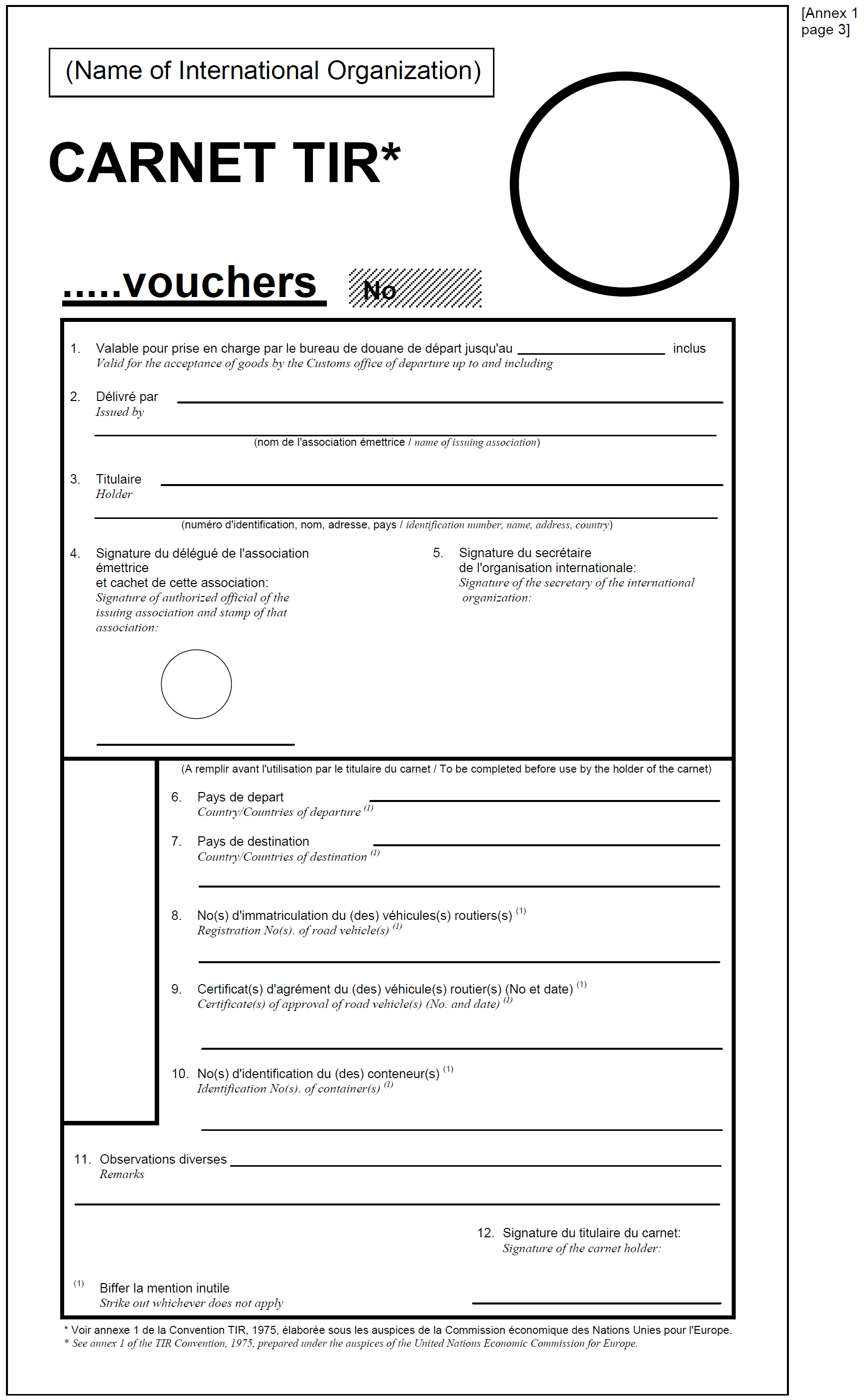
Model of the TIR Carnet: VERSION 1
Page 2 of cover
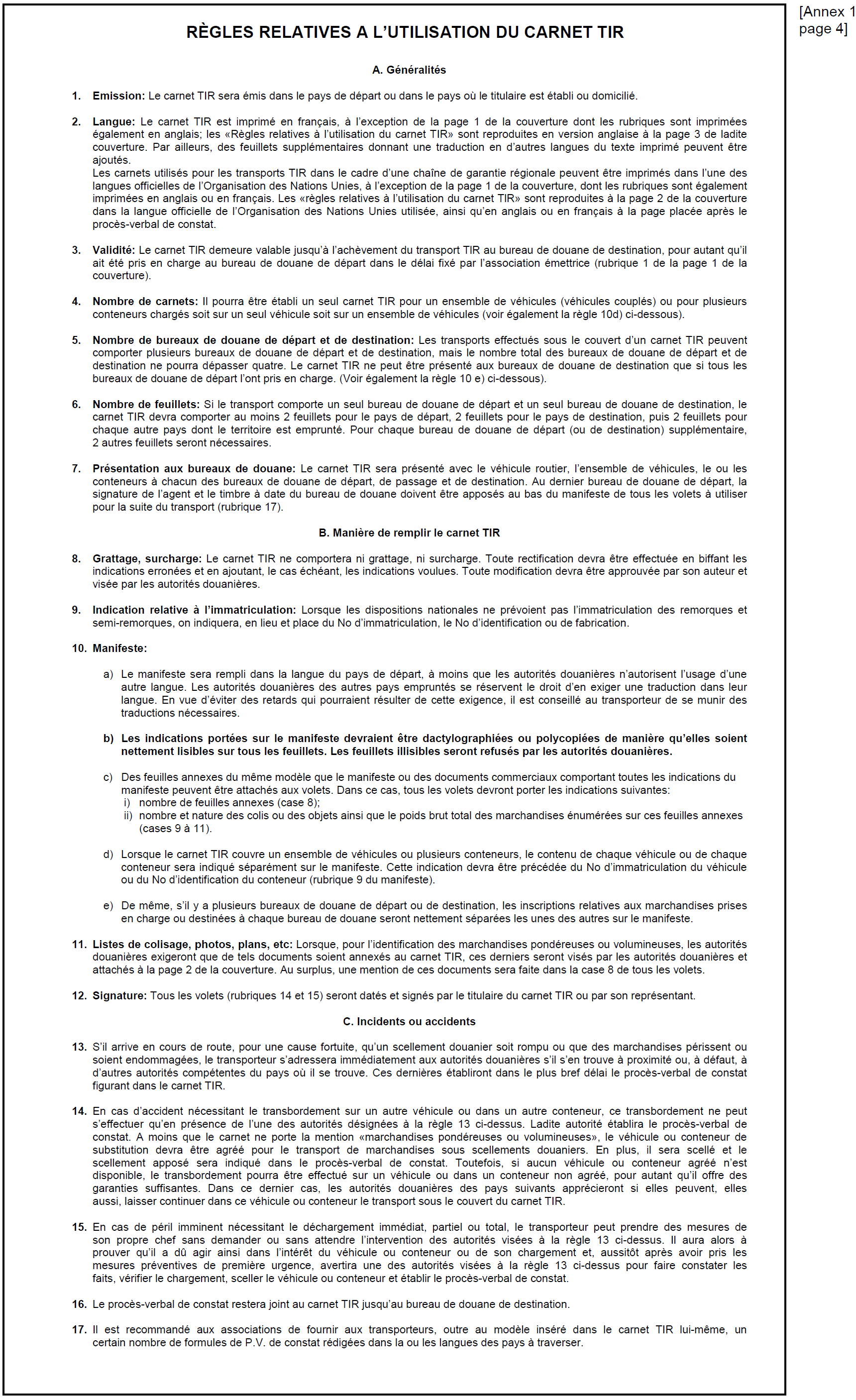
Model of the TIR Carnet: VERSION 1
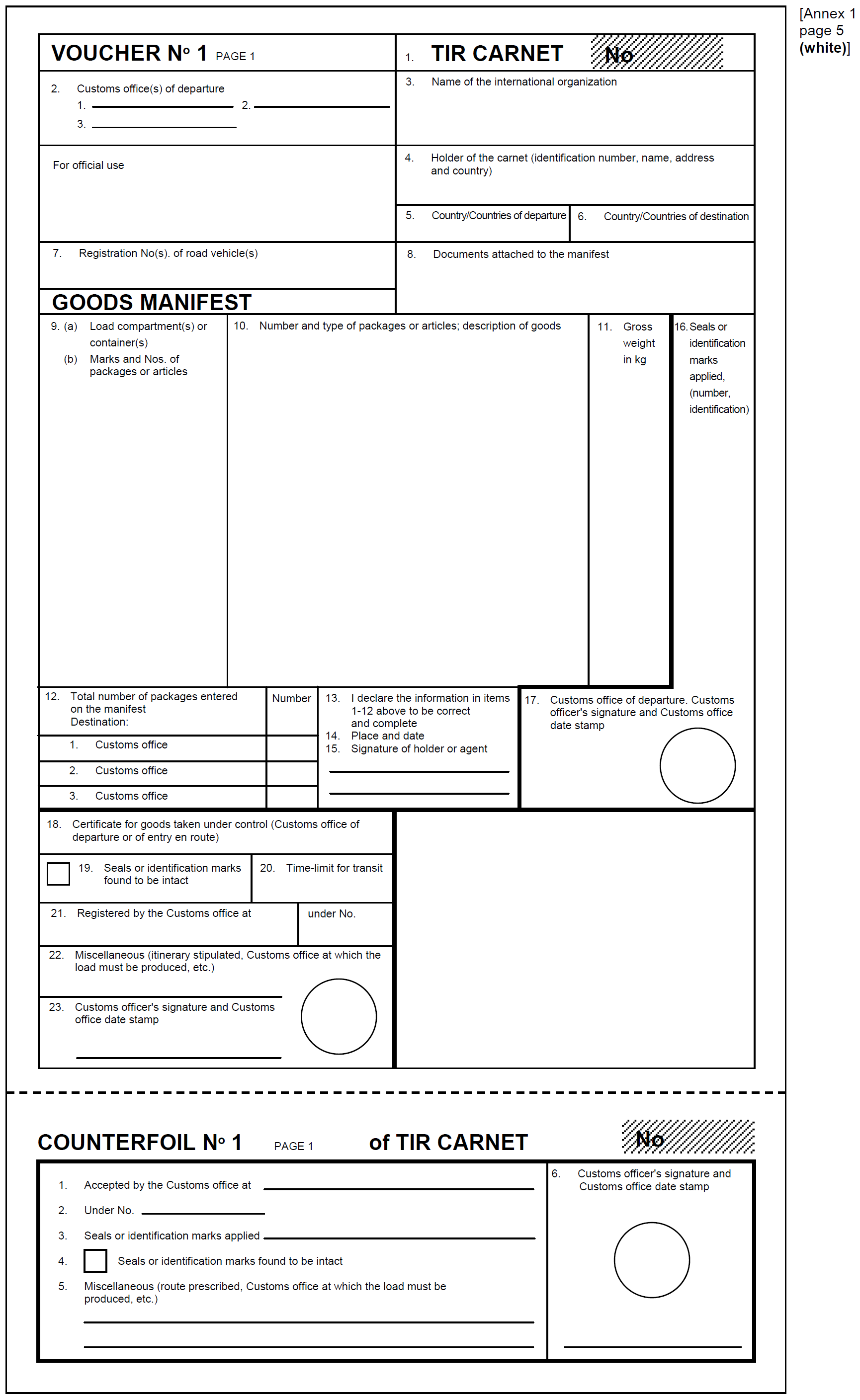
Model of the TIR Carnet: VERSION 1
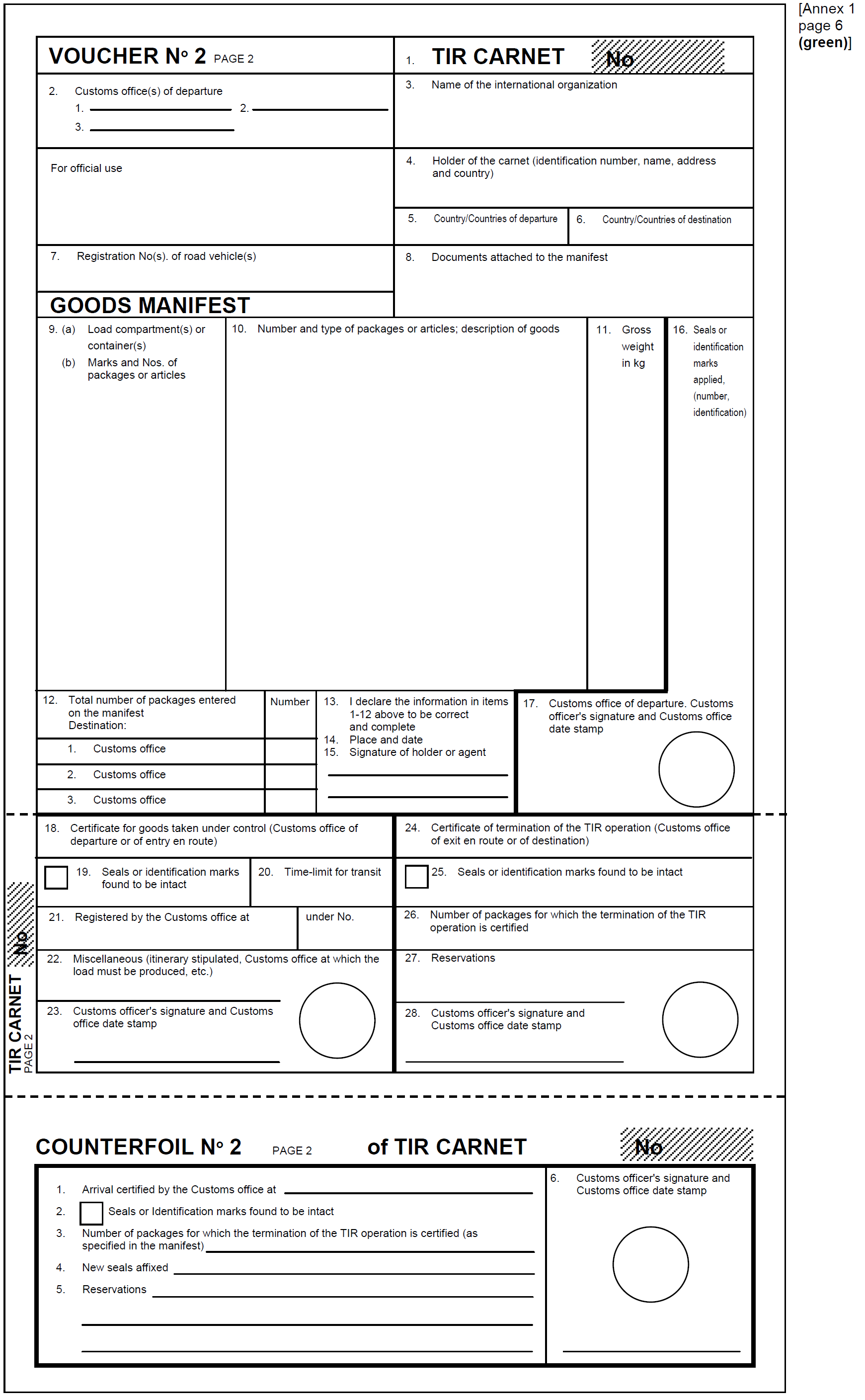
Model of the TIR Carnet: VERSION 1
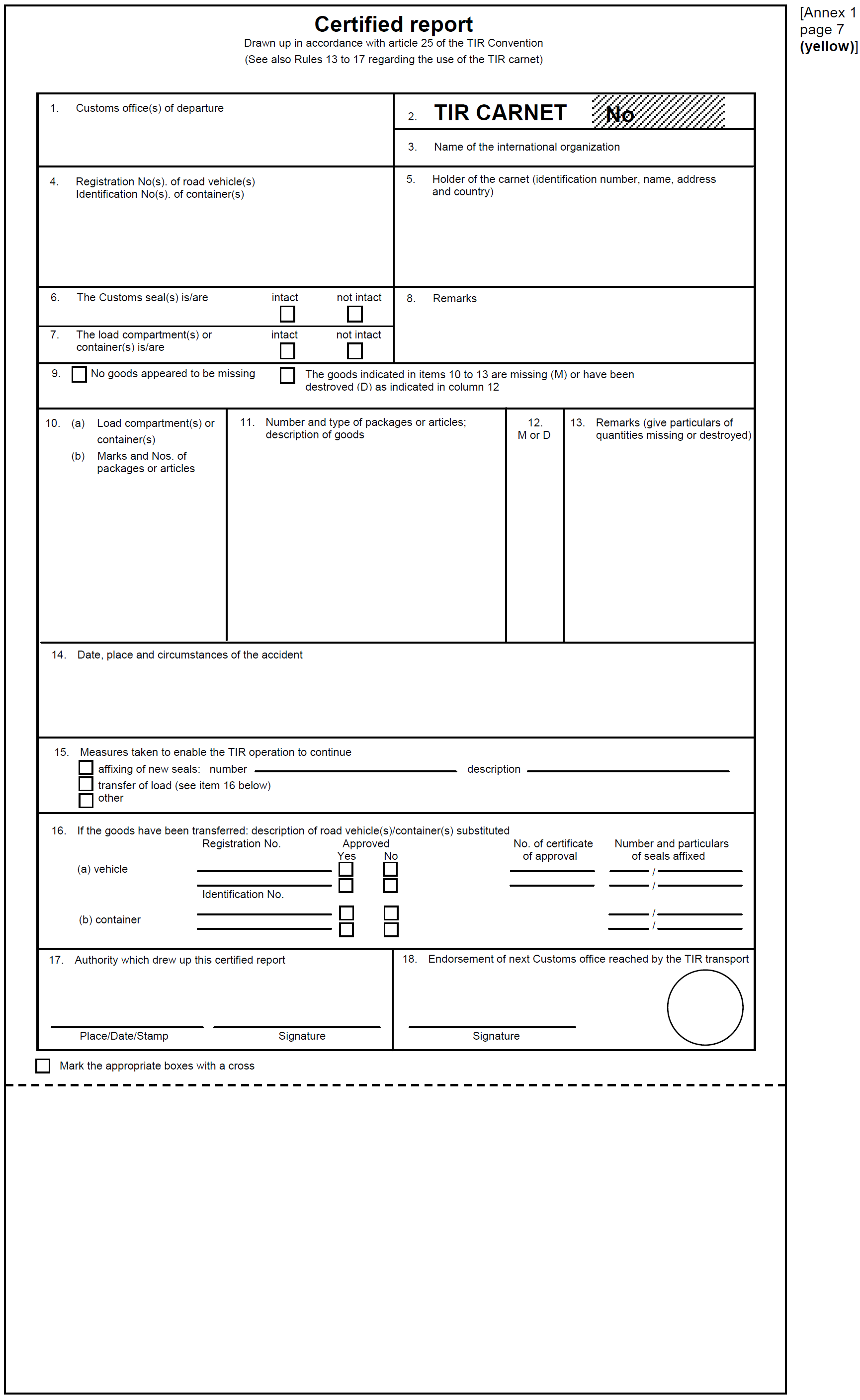
Model of the TIR Carnet: VERSION 1
Page 3 of cover
```text
┌─────────────────────────────────────────────────────────────────┐
│ RULES REGARDING THE USE OF THE TIR CARNET │[Annex 1
│ │ page 8]
│ A. General │
│ │
│1. Issue: The TIR carnet may be issued either in the country of│
│ departure or in the country in which the holder is established│
│ or resident. │
│2. Language: The TIR carnet is printed in French, except for page│
│ 1 of the cover where the items are also printed in English;│
│ this page is a translation of the "Rules regarding the use of│
│ the TIR carnet" given in French on page 2 of the cover.│
│ Additional sheets giving a translation of the printed text may│
│ also be inserted. │
│ Carnets used for TIR transports within a regional guarantee│
│ chain may be printed in any other official language of the│
│ United Nations except for page 1 of the cover where items are│
│ also printed in English or French. The "Rules regarding the│
│ use of the TIR Carnet" are printed on page 2 of the cover in│
│ the official language of the United Nations used and are also│
│ printed in English or French on page 3 of the cover. │
│3. Validity: The TIR carnet remains valid until the completion of│
│ the TIR transport at the Customs office of destination,│
│ provided that it has been taken under Customs control at the│
│ Customs office of departure within the time-limit set by the│
│ issuing association (item 1 of page 1 of the cover). │
│4. Number of carnets: Only one TIR carnet need be required for a│
│ combination of vehicles (coupled vehicles) or for several│
│ containers loaded either on a single vehicle or on a│
│ combination of vehicles (see also rule 10 d) below). │
│5. Number of Customs offices of departure and Customs offices of│
│ destination: Transport under cover of a TIR carnet may involve│
│ several Customs offices of departure and destination but the│
│ total number of Customs offices of departure and destination│
│ shall not exceed four. The TIR carnet may only be presented to│
│ Customs offices of destination if all Customs offices of│
│ departure have accepted the TIR carnet (see also rule 10 e)│
│ below). │
│6. Number of forms: Where there is only one Customs office of│
│ departure and one Customs office of destination, the TIR│
│ carnet must contain at least 2 sheets for the country of│
│ departure, 2 sheets for the country of destination and 2│
│ sheets for each country traversed. For each additional Customs│
│ office of departure (or destination) 2 extra sheets shall be│
│ required. │
│7. Presentation at Customs offices: The TIR carnet shall be│
│ presented with the road vehicle, combination of vehicles, or│
│ container(s) at each Customs office of departure, Customs│
│ office en route and Customs office of destination. At the last│
│ Customs office of departure, the Customs Officer shall sign│
│ and date stamp item 17 below the manifest on all vouchers to│
│ be used on the remainder of the journey. │
│ │
│ B. How to fill in the TIR carnet │
│ │
│8. Erasures, over-writing: No erasures or over-writing shall be│
│ made on the TIR carnet. Any correction shall be made by│
│ crossing out the incorrect particulars and adding, if│
│ necessary, the required particulars. Any change shall be│
│ initialled by the person making it and endorsed by the Customs│
│ authorities. │
│9. Information concerning registration: When national legislation│
│ does not provide for registration of trailers and│
│ semi-trailers, the identification or manufacturer's no. shall│
│ be shown instead of the registration no. │
│10. The manifest: │
│(a) The manifest shall be completed in the language of the│
│ country of departure, unless the Customs authorities allow│
│ another language to be used. The Customs authorities of the│
│ other countries traversed reserve the right to require its│
│ translation into their own language. In order to avoid delays│
│ which might ensue from this requirement, carriers are advised│
│ to supply the driver of the vehicle with the requisite│
│ translations. │
│(b) The information on the manifest should be typed or│
│ multicopied in such a way as to be clearly legible on all│
│ sheets. Illegible sheets will not be accepted by the Customs│
│ authorities. │
│(c) Separate sheets of the same model as the manifest or│
│ commercial documents providing all the information required by│
│ the manifest, may be attached to the vouchers. In such cases,│
│ all the vouchers must bear the following particulars: │
│(i) the number of sheets attached (box 8); │
│(ii) the number and type of the packages or articles and the│
│ total gross weight of the goods listed on the attached sheets│
│ (boxes 9 to 11). │
│(d) When the TIR carnet covers a combination of vehicles or│
│ several containers, the contents of each vehicle or each│
│ container shall be indicated separately on the manifest. This│
│ information shall be preceded by the registration no. of the│
│ vehicle or the identification no. of the container (item 9 of│
│ the manifest). │
│(e) Likewise, if there are several Customs offices of departure│
│ or of destination, the entries concerning the goods taken│
│ under Customs control at, or intended for, each Customs office│
│ shall be clearly separated from each other on the manifest. │
│11. Packing lists, photographs, plans, etc: When such documents│
│ are required by the Customs authorities for the identification│
│ of heavy or bulky goods, they shall be endorsed by the Customs│
│ authorities and attached to page 2 of the cover of the carnet.│
│ In addition, a reference shall be made to these documents in│
│ box 8 of all vouchers. │
│12. Signature: All vouchers (items 14 and 15) must be dated and│
│ signed by the holder of the carnet or his agent. │
│ │
│ C. Incidents or accidents │
│ │
│13. In the event of Customs seals being broken or goods being│
│ destroyed or damaged by accident en route the carrier shall│
│ immediately contact the Customs authorities, if there are any│
│ near at hand, or, if not, any other competent authorities of│
│ the country he is in. The authorities concerned shall draw up│
│ with the minimum delay the certified report which is contained│
│ in the TIR carnet. │
│14. In the event of an accident necessitating transfer of the│
│ load to another vehicle or another container, this transfer│
│ may be carried out only in the presence of one of the│
│ authorities mentioned in rule 13 above. The said authority│
│ shall draw up the certified report. Unless the carnet carries│
│ the words "Heavy or bulky goods", the vehicle or container│
│ substituted must be one approved for the transport of goods│
│ under Customs seals. Furthermore, it shall be sealed and│
│ details of the seal affixed shall be indicated in the│
│ certified report. However, if no approved vehicle or container│
│ is available, the goods may be transferred to an unapproved│
│ vehicle or container, provided it affords adequate safeguards.│
│ In the latter event, the Customs authorities of succeeding│
│ countries shall judge whether they, too, can allow the│
│ transport under cover of the TIR carnet to continue in that│
│ vehicle or container. │
│15. In the event of imminent danger necessitating immediate│
│ unloading of the whole or of part of the load, the carrier may│
│ take action on his own initiative, without requesting or│
│ waiting for action by the authorities mentioned in rule 13│
│ above. It shall then be for him to furnish proof that he was│
│ compelled to take such action in the interests of the vehicle│
│ or container or of the load and, as soon as he has taken such│
│ preventive measures as the emergency may require, he shall│
│ notify one of the authorities mentioned in rule 13 above in│
│ order that the facts may be verified, the load checked, the│
│ vehicle or container sealed and the certified report drawn up.│
│16. The certified report shall remain attached to the TIR carnet│
│ until the Customs office of destination is reached. │
│17. In addition to the model form inserted in the TIR carnet│
│ itself, associations are recommended to furnish carriers with│
│ a supply of certified report forms in the language or│
│ languages of the countries of transit. │
└─────────────────────────────────────────────────────────────────┘
```
Model of the TIR Carnet: VERSION 2
Page 1 of cover
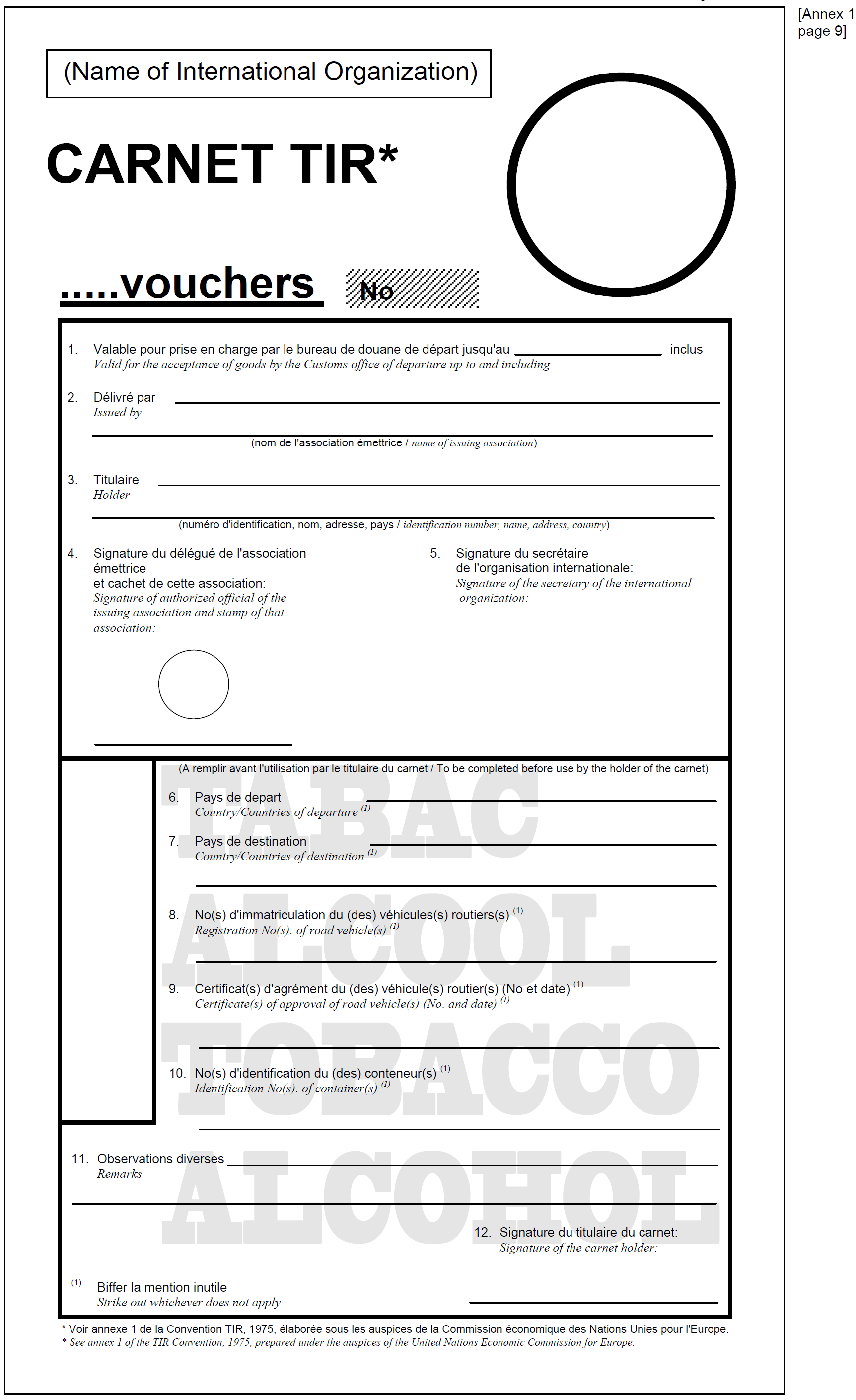
Model of the TIR Carnet: VERSION 2
Page 2 of cover
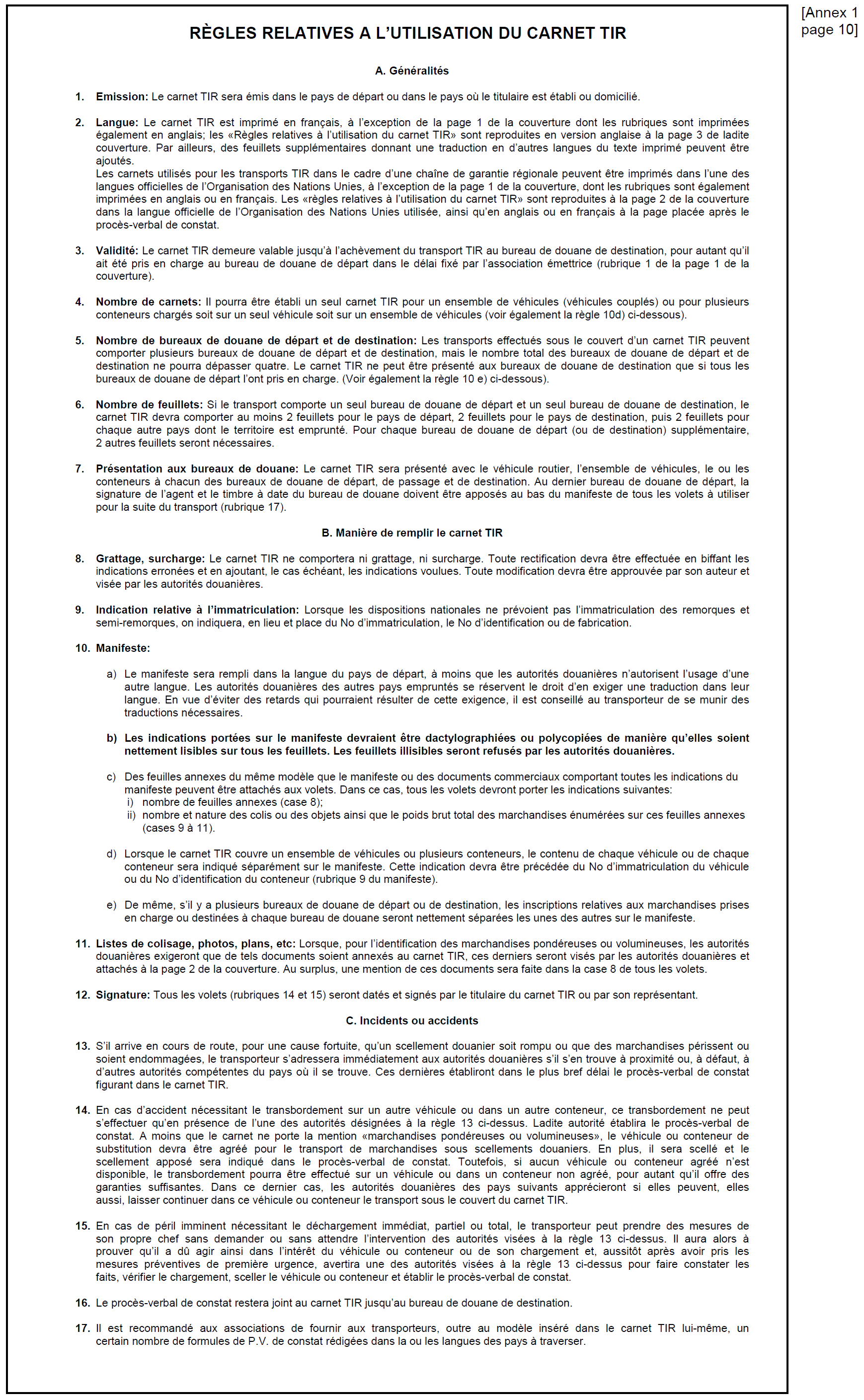
Model of the TIR Carnet: VERSION 2
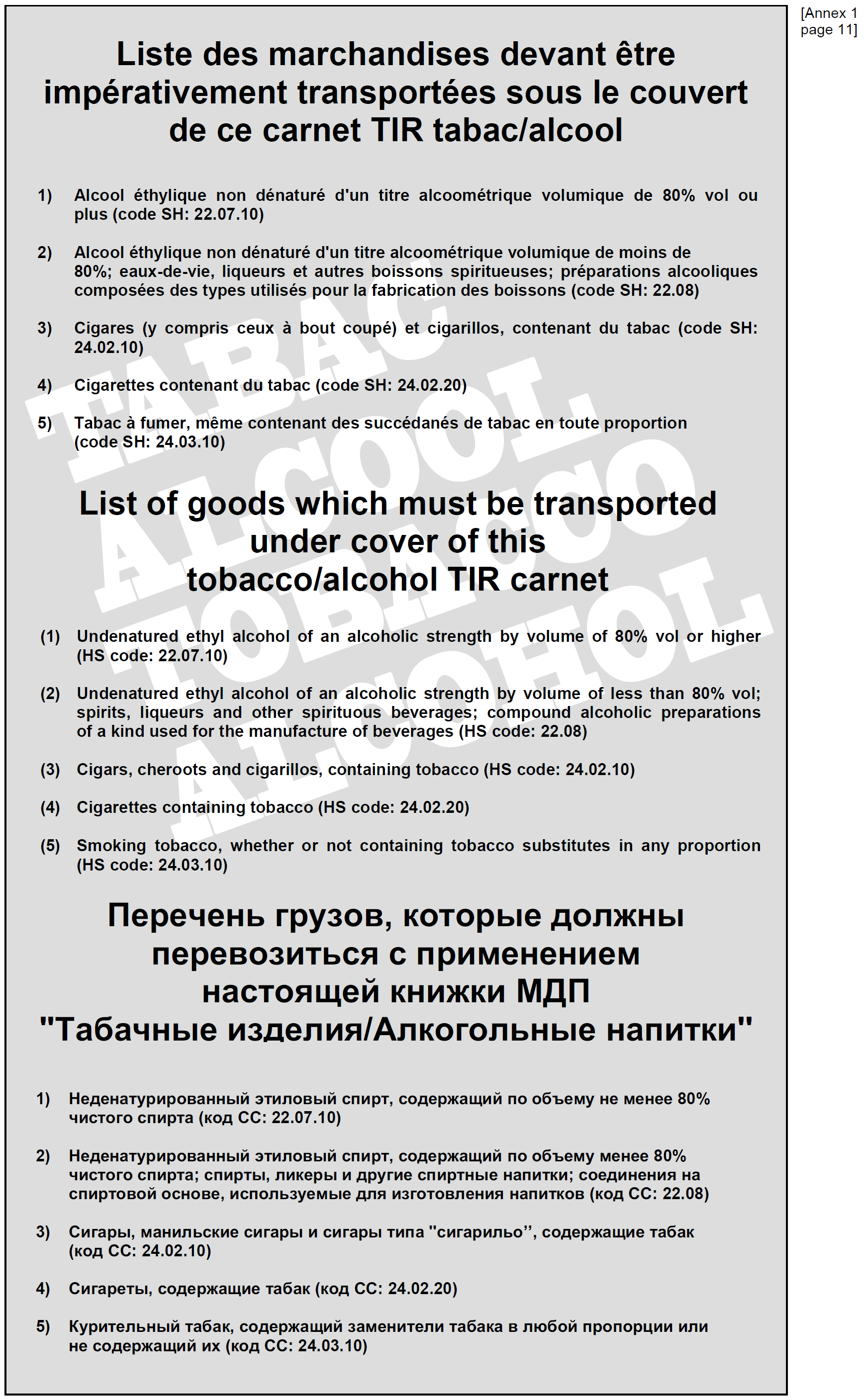
Model of the TIR Carnet: VERSION 2
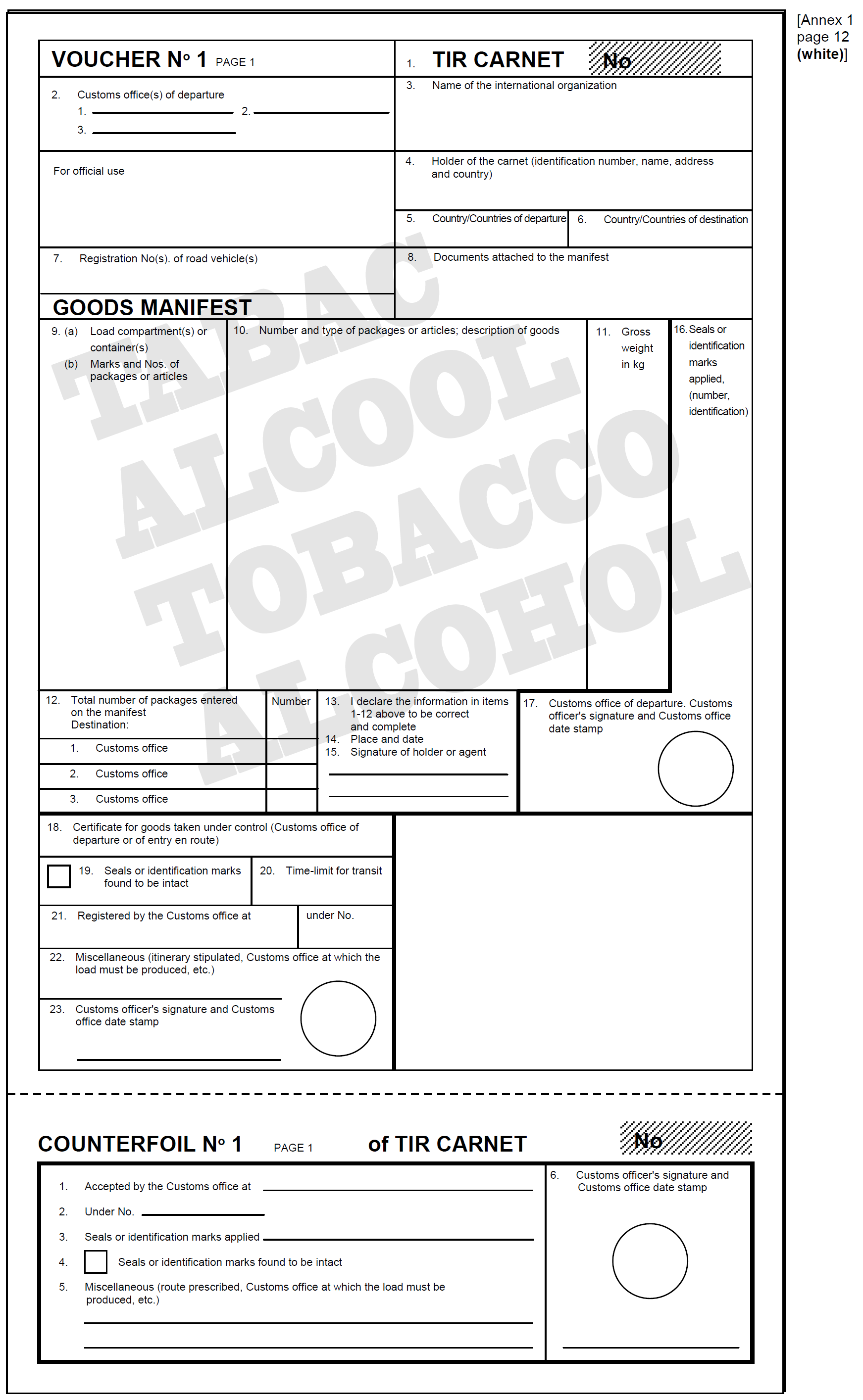
Model of the TIR Carnet: VERSION 2
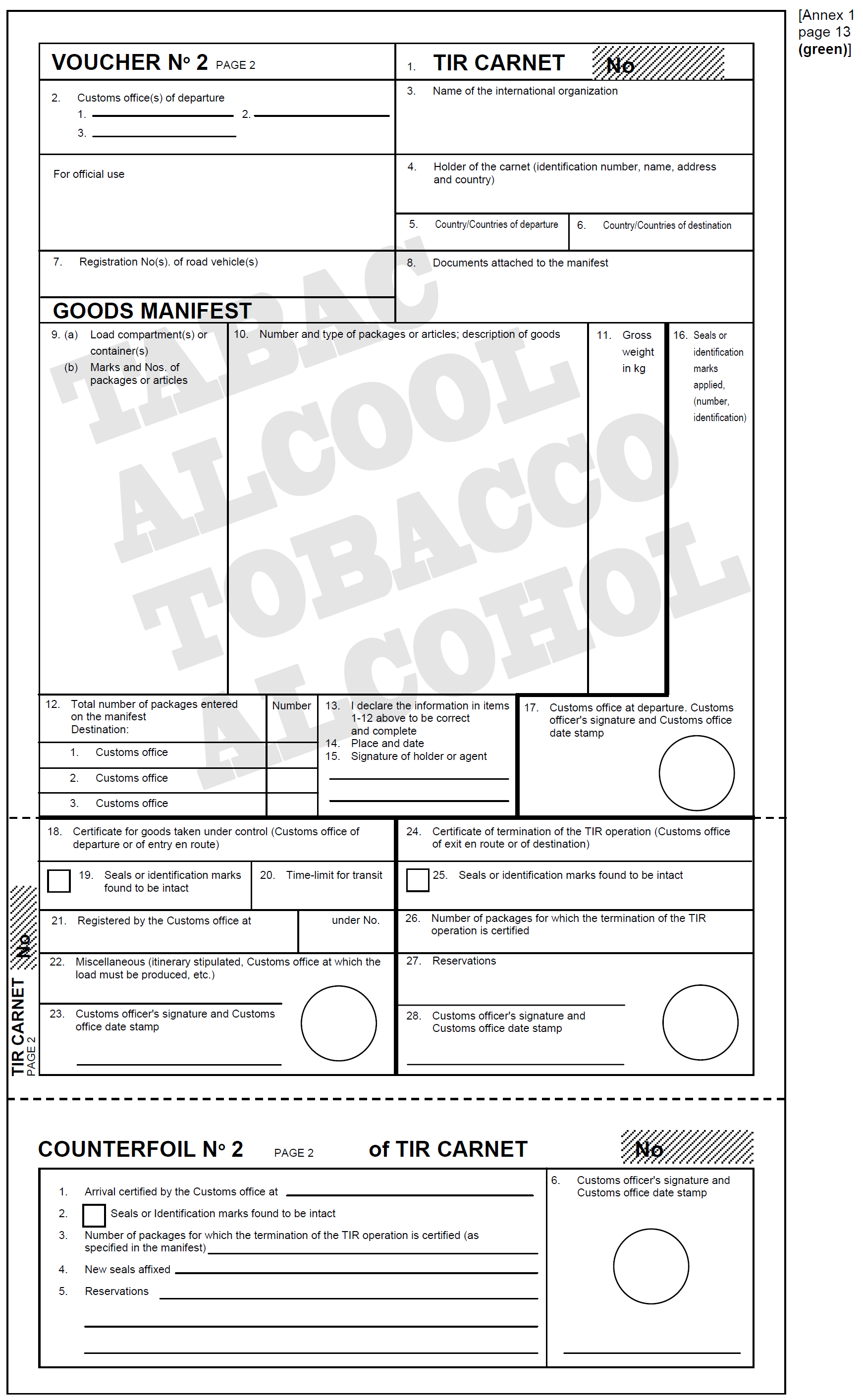
Model of the TIR Carnet: VERSION 2
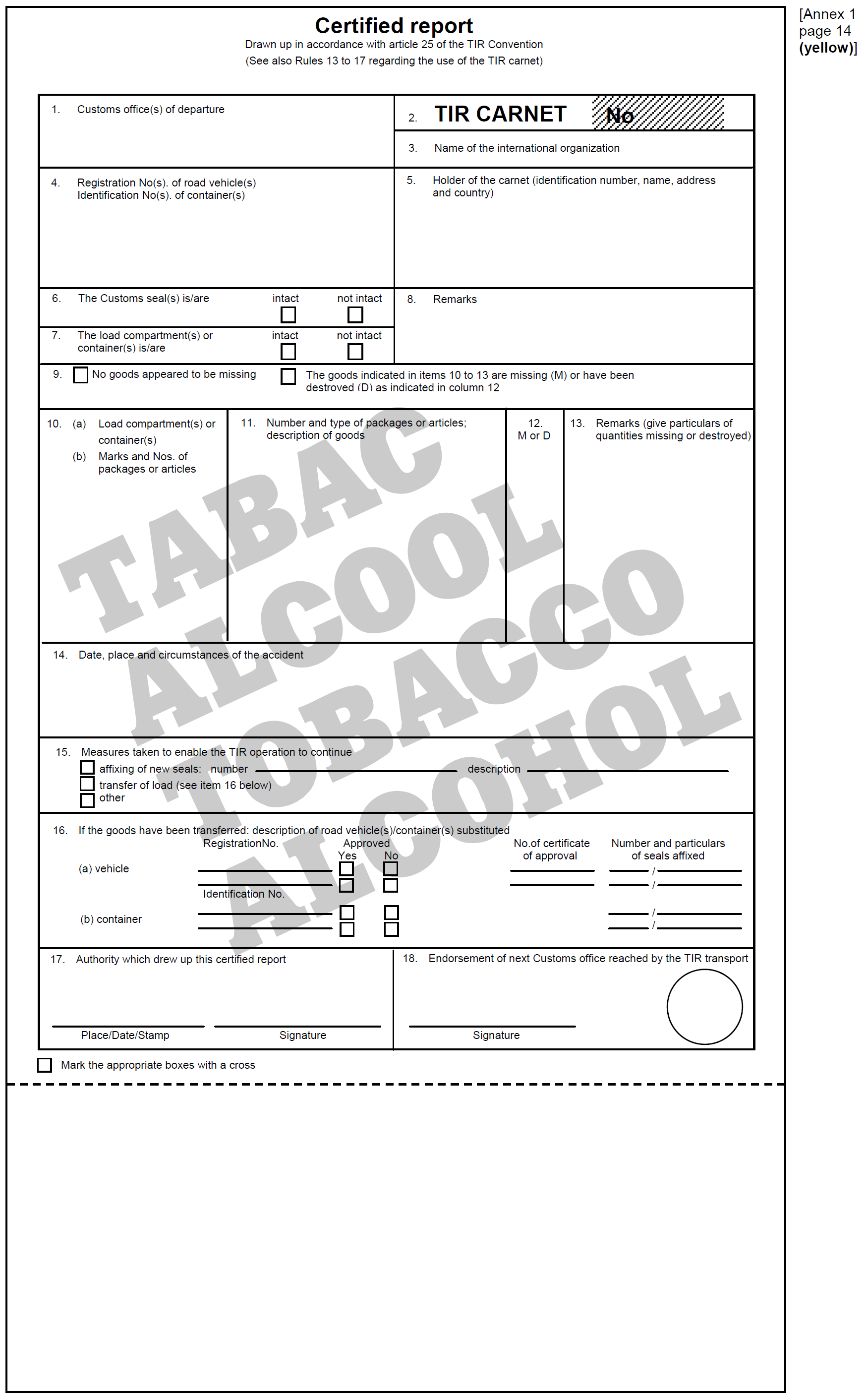
Model of the TIR Carnet: VERSION 2
```text
┌─────────────────────────────────────────────────────────────────┐
│ RULES REGARDING THE USE OF THE TIR CARNET │[Annex 1
│ │page 15]
│ A. General │
│ │
│1. Issue: The TIR carnet may be issued either in the country of│
│ departure or in the country in which the holder is established│
│ or resident. │
│2. Language: The TIR carnet is printed in French, except for page│
│ 1 of the cover where the items are also printed in English;│
│ this page is a translation of the "Rules regarding the use of│
│ the TIR carnet" given in French on page 2 of the cover.│
│ Additional sheets giving a translation of the printed text may│
│ also be inserted. │
│ Carnets used for TIR transports within a regional guarantee│
│ chain may be printed in any other official language of the│
│ United Nations except for page 1 of the cover where items are│
│ also printed in English or French. The "Rules regarding the│
│ use of the TIR Carnet" are printed on page 2 of the cover in│
│ the official language of the United Nations used and are also│
│ printed in English or French on page 3 of the cover. │
│3. Validity: The TIR carnet remains valid until the completion of│
│ the TIR transport at the Customs office of destination,│
│ provided that it has been taken under Customs control at the│
│ Customs office of departure within the time-limit set by the│
│ issuing association (item 1 of page 1 of the cover). │
│4. Number of carnets: Only one TIR carnet need be required for a│
│ combination of vehicles (coupled vehicles) or for several│
│ containers loaded either on a single vehicle or on a│
│ combination of vehicles (see also rule 10 d) below). │
│5. Number of Customs offices of departure and Customs offices of│
│ destination: Transport under cover of a TIR carnet may involve│
│ several Customs offices of departure and destination but the│
│ total number of Customs offices of departure and destination│
│ shall not exceed four. The TIR carnet may only be presented to│
│ Customs offices of destination if all Customs offices of│
│ departure have accepted the TIR carnet (see also rule 10 e)│
│ below). │
│6. Number of forms: Where there is only one Customs office of│
│ departure and one Customs office of destination, the TIR│
│ carnet must contain at least 2 sheets for the country of│
│ departure, 2 sheets for the country of destination and 2│
│ sheets for each country traversed. For each additional Customs│
│ office of departure (or destination) 2 extra sheets shall be│
│ required. │
│7. Presentation at Customs offices: The TIR carnet shall be│
│ presented with the road vehicle, combination of vehicles, or│
│ container(s) at each Customs office of departure, Customs│
│ office en route and Customs office of destination. At the last│
│ Customs office of departure, the Customs Officer shall sign│
│ and date stamp item 17 below the manifest on all vouchers to│
│ be used on the remainder of the journey. │
│ │
│ B. How to fill in the TIR carnet │
│ │
│8. Erasures, over-writing: No erasures or over-writing shall be│
│ made on the TIR carnet. Any correction shall be made by│
│ crossing out the incorrect particulars and adding, if│
│ necessary, the required particulars. Any change shall be│
│ initialled by the person making it and endorsed by the Customs│
│ authorities. │
│9. Information concerning registration: When national legislation│
│ does not provide for registration of trailers and│
│ semi-trailers, the identification or manufacturer's no. shall│
│ be shown instead of the registration no. │
│10. The manifest: │
│(a) The manifest shall be completed in the language of the│
│ country of departure, unless the Customs authorities allow│
│ another language to be used. The Customs authorities of the│
│ other countries traversed reserve the right to require its│
│ translation into their own language. In order to avoid delays│
│ which might ensue from this requirement, carriers are advised│
│ to supply the driver of the vehicle with the requisite│
│ translations. │
│(b) The information on the manifest should be typed or│
│ multicopied in such a way as to be clearly legible on all│
│ sheets. Illegible sheets will not be accepted by the Customs│
│ authorities. │
│(c) Separate sheets of the same model as the manifest or│
│ commercial documents providing all the information required by│
│ the manifest, may be attached to the vouchers. In such cases,│
│ all the vouchers must bear the following particulars: │
│(i) the number of sheets attached (box 8); │
│(ii) the number and type of the packages or articles and the│
│ total gross weight of the goods listed on the attached sheets│
│ (boxes 9 to 11). │
│(d) When the TIR carnet covers a combination of vehicles or│
│ several containers, the contents of each vehicle or each│
│ container shall be indicated separately on the manifest. This│
│ information shall be preceded by the registration no. of the│
│ vehicle or the identification no. of the container (item 9 of│
│ the manifest). │
│(e) Likewise, if there are several Customs offices of departure│
│ or of destination, the entries concerning the goods taken│
│ under Customs control at, or intended for, each Customs│
│ office shall be clearly separated from each other on the│
│ manifest. │
│11. Packing lists, photographs, plans, etc: When such documents│
│ are required by the Customs authorities for the identification│
│ of heavy or bulky goods, they shall be endorsed by the Customs│
│ authorities and attached to page 2 of the cover of the carnet.│
│ In addition, a reference shall be made to these documents in│
│ box 8 of all vouchers. │
│12. Signature: All vouchers (items 14 and 15) must be dated and│
│ signed by the holder of the carnet or his agent. │
│ │
│ C. Incidents or accidents │
│ │
│13. In the event of Customs seals being broken or goods being│
│ destroyed or damaged by accident en route the carrier shall│
│ immediately contact the Customs authorities, if there are any│
│ near at hand, or, if not, any other competent authorities of│
│ the country he is in. The authorities concerned shall draw up│
│ with the minimum delay the certified report which is contained│
│ in the TIR carnet. │
│14. In the event of an accident necessitating transfer of the│
│ load to another vehicle or another container, this transfer│
│ may be carried out only in the presence of one of the│
│ authorities mentioned in rule 13 above. The said authority│
│ shall draw up the certified report. Unless the carnet carries│
│ the words "Heavy or bulky goods", the vehicle or container│
│ substituted must be one approved for the transport of goods│
│ under Customs seals. Furthermore, it shall be sealed and│
│ details of the seal affixed shall be indicated in the│
│ certified report. However, if no approved vehicle or container│
│ is available, the goods may be transferred to an unapproved│
│ vehicle or container, provided it affords adequate safeguards.│
│ In the latter event, the Customs authorities of succeeding│
│ countries shall judge whether they, too, can allow the│
│ transport under cover of the TIR carnet to continue in that│
│ vehicle or container. │
│15. In the event of imminent danger necessitating immediate│
│ unloading of the whole or of part of the load, the carrier may│
│ take action on his own initiative, without requesting or│
│ waiting for action by the authorities mentioned in rule 13│
│ above. It shall then be for him to furnish proof that he was│
│ compelled to take such action in the interests of the vehicle│
│ or container or of the load and, as soon as he has taken such│
│ preventive measures as the emergency may require, he shall│
│ notify one of the authorities mentioned in rule 13 above in│
│ order that the facts may be verified, the load checked, the│
│ vehicle or container sealed and the certified report drawn up.│
│16. The certified report shall remain attached to the TIR carnet│
│ until the Customs office of destination is reached. │
│17. In addition to the model form inserted in the TIR carnet│
│ itself, associations are recommended to furnish carriers with│
│ a supply of certified report forms in the language or│
│ languages of the countries of transit. │
└─────────────────────────────────────────────────────────────────┘
```
**REGULATIONS**
**ON TECHNICAL CONDITIONS APPLICABLE TO ROAD**
**VEHICLES WHICH MAY BE ACCEPTED FOR INTERNATIONAL**
**TRANSPORT UNDER CUSTOMS SEAL**
Article 1
Basic principles
Approval for the international transport of goods under Customs seal may be granted only to vehicles, the load compartments of which are constructed and equipped in such a manner that:
(a) no goods can be removed from or introduced into, the sealed part of the vehicle without leaving obvious traces of tampering or without breaking the Customs seal;
(b) Customs seals can be simply and effectively affixed to them;
(c) they contain no concealed spaces where goods may be hidden;
(d) all spaces capable of holding goods are readily accessible for Customs inspection.
Cylindrical tanks of vehicles
Optional tanks should not be considered as load compartments as long as they serve for the vehicle's fuel supply. Additional tanks used for the transport of goods other than fuel should also not be considered as load compartments due to technical difficulties concerning their approval and distinction from normal fuel tanks.
{TRANS/GE.30/39, paragraphs 51 - 54}
Markings on load compartments
Paintings, transfers, bands of reflective material and other similar markings which cannot be torn off the walls or sheets of load compartments are permissible if they do not cover up the structure of the walls or sheets, which should still be clearly visible. Stickers and other similar markings which could hide openings in the load compartments should not, however, be allowed (see also comment to Annex 2, Article 3, paragraph 5).
{TRANS/WP.30/151, paragraph 39; TRANS/GE.30/57, paragraph 45}
Article 2
Structure of load compartments
1. To meet the requirements of Article 1 of these Regulations:
(a) the constituent parts of the load compartment (sides, floor, doors, roof, uprights, frames, cross-pieces, etc.) shall be assembled either by means of devices which cannot be removed and replaced from the outside without leaving obvious traces or by such methods as will produce a structure which cannot be modified without leaving obvious traces. When the sides, floor, doors and roof are made up of various components, these shall meet the same requirements and be of sufficient strength;
Explanatory Note to Article 2, paragraph 1 (a)
2.2.1 (a) Assembly of constituent parts
(a) Where joining devices (rivets, screws, bolts and nuts, etc.) are used, a sufficient number of such devices shall be inserted from outside, traverse the assembled constituent parts, protrude inside and there be firmly secured (e.g. riveted, welded, bushed or bolted and swaged or welded on the nut). However, conventional rivets (i.e. rivets whose placing requires handling from both sides of the assembly of constituent parts) may also be inserted from the inside;
Notwithstanding the above, load compartment floors may be secured by means of self-tapping screws, self-drilling rivets or rivets inserted by means of an explosive charge or pins inserted pneumatically, when placed from inside and passing at right-angles through the floor and the metallic cross-pieces underneath, on condition, except in the case of self-tapping screws, that some of their ends be flush with the level of the outside part of the cross-piece or be welded on to it.
{ECE/TRANS/17/Amend.3; entered into force on 1 October 1981}
(b) The competent authority shall determine what joining devices, and how many of them, must fulfil the requirements of subparagraph (a) of this note; they shall do so by making sure that the constituent parts so assembled cannot be displaced and replaced without leaving obvious traces. The choice and placing of other joining devices are not subject to any restriction;
(c) Joining devices which can be removed and replaced from one side without leaving obvious traces, i.e. without requiring handling from both sides of the constituent parts to be assembled, shall not be allowed under subparagraph (a) of this note. Examples of such devices are expansion rivets, blind rivets and the like;
(d) The assembly methods described above shall apply to special vehicles, for example to insulated vehicles, refrigerated vehicles and tank-vehicles in so far as they are not incompatible with the technical requirements which such vehicles must fulfil having regard to their use. Where, due to technical reasons, it is not practicable to secure parts in the manner described in subparagraph (a) of this note, the constituent parts may be joined by means of the devices mentioned in subparagraph (c) of this note provided that the devices used on the inner face of the wall are not accessible from the outside.
Comments to Explanatory Note 2.2.1 (a)
1. Joining device
The joining device illustrated below is in accordance with Annex 2, Article 2, paragraph 1(a) provided that a sufficient number of such devices are inserted from the outside and firmly secured from the inside as stipulated in Annex 6, Explanatory Note 2.2.1 (a).
{TRANS/WP.30/123, paragraphs 34 - 36; TRANS/WP.30/127, paragraph 45; TRANS/WP.30/AC.2/23, Annex 3}
Installation sequence
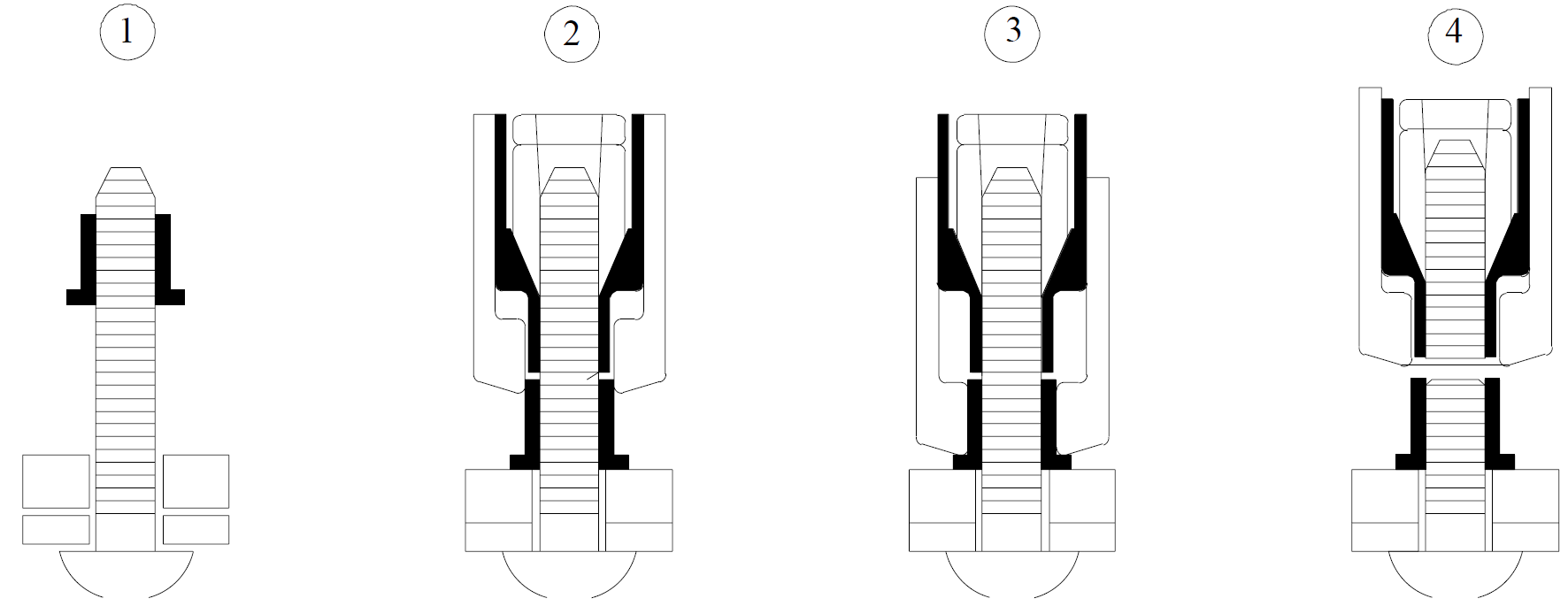
Pin is inserted Nose assembly is Continued pulling As pull increases,
through prepared placed over on pintail swages pintail breaks -
hole. Collar is pintail. Nose collar into anvil pushes off
placed over assembly / locking grooves. swaged collar.
pintail. installation tool
pulls on pin and
starts drawing
sheets together.
2. Joining device
The joining device, examples of which are given below, is in accordance with Annex 6, Explanatory Note 2.2.1 (a). In view of its inherent technical characteristics such as the large low profile head, the knurled or square shoulder on the underside of the large low profile head and the encapsulated (plastic grip) locking feature the device can be firmly secured on the inside of the load compartments without requiring welding, riveting, etc. While the assembly of the joining device requires handling from both sides of the constituent parts to be assembled, the device can only be opened on the drive nut side, e.g. on the inside of the load compartment. The device with the square shoulder is usually applied to fix hinges to load compartments.
{TRANS/WP.30/135, paragraphs 43 and 44; TRANS/WP.30/137, paragraphs 59 - 61; TRANS/WP.30/AC.2/27, Annex 3}
Examples of a joining device
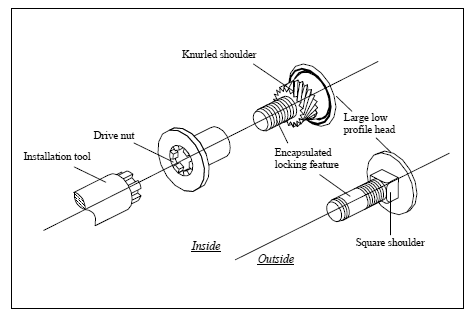
Pneumatically inserted pins for securing load compartment floors
In one system of construction, nails with spirally-threaded stems are used which in many respects resemble self-tapping screws, and give greater holding strength when the floor is relatively thin. In this method, the friction produced when the nail is driven in causes the zinc chromate coating of the stem and of the material of the floor cross-piece to melt, thus satisfactorily welding them together.
{TRANS/GE.30/33, paragraph 125; TRANS/GE.30/GRCC/10, paragraphs 52 - 54}
Self-tapping, self-drilling screws
The self-tapping, self-drilling screw shown in sketch 1 is not regarded as a self-tapping screw in the meaning of Annex 6, Explanatory Note 2.2.1 (a)(a) of the Convention. Such a self-tapping, self-drilling screw shall, in accordance with the provisions of Explanatory Notes 2.2.1 (a)(a) and (b) of Annex 6 be welded on to the metallic cross-pieces underneath. Alternatively, the protruding part of some of these screws could instead be bent to an angle of at least 45E as shown in sketch 2. If, however, used together with a floor construction, examples of which are provided for in sketches 3 and 4, welding or bending of the screws is not considered to be necessary.
{TRANS/WP.30/135, paragraphs 48 - 51; TRANS/WP.30/AC.2/27, Annex 3}
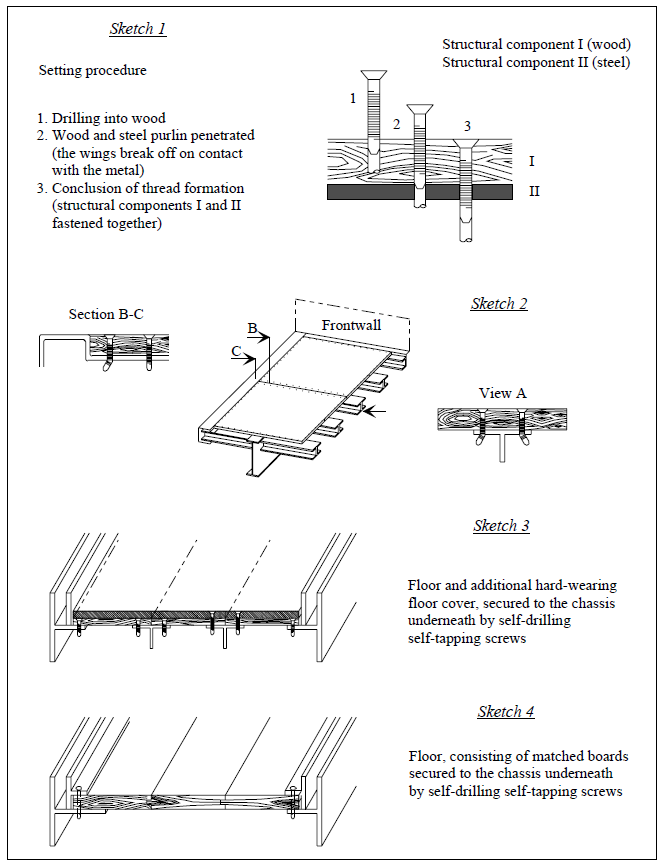
Validity of blind rivets
In general, the use of blind rivets for the assembly of constituent parts of load compartment is not allowed under the Convention as stipulated in Annex 6, Explanatory Note 2.2.1 (a)(c). However, blind rivets can be used on condition that a sufficient number of joining devices as described in Annex 6, Explanatory Note 2.2.1 (a)(a) of the Convention are used to assemble constituent parts.
{TRANS/WP.30/137, paragraphs 54 - 58; TRANS/WP.30/AC.2/29, Annex 3}
(b) doors and all other closing systems (including stopcocks, manhole-covers, flanges etc.) shall be fitted with a device on which Customs seals can be fixed. This device must be such that it cannot be removed and replaced from the outside without leaving obvious traces, or the door or fastening be opened without breaking the Customs seals. The latter shall be adequately protected. Opening roofs shall be permitted;
Explanatory Note to Article 2, paragraph 1 (b)
2.2.1 (b) Doors and other closing systems
(a) The device on which Customs seals can be fixed must:
(i) be secured by welding, or by not less than two joining devices conforming to subparagraph (a) of Explanatory Note 2.2.1 (a); or
(ii) be so designed that when the load compartment has been closed and sealed the device cannot be removed without leaving obvious traces.
It must also:
(iii) incorporate holes of not less than 11 mm in diameter or slots of at least 11 mm in length by 3 mm in width, and
(iv) afford equal security whatever type of seal is used.
(b) Butt hinges, strap hinges, hinge-pins and other devices for hanging doors and the like must be secured in conformity with the requirements of subparagraphs (a)(i) and (ii) of this note. Moreover, the various components of such devices (e.g. hinge-plates, pins or swivels), provided that they are necessary to guarantee Customs security of the load compartment, shall be so fitted that they cannot be removed or dismantled when the load compartment is closed and sealed without leaving obvious traces (see sketch No. 1a appended to Annex 6).
However, where such a device is not accessible from outside it will suffice if, when the door or the like has been closed and sealed, it cannot be detached from the hinge or similar device without leaving obvious traces. Where a door or closure-device has more than two hinges, only those two hinges nearest to the extremities of the door need to be fixed in conformity with the requirements of subparagraph (a)(i) and (ii) above.
{ECE/TRANS/17/Amend.8; entered into force on 1 August 1987}
Comments to Explanatory Note 2.2.1 (b)(b)
Door or closure-device having more than two hinges
In the case where a door or closure-device has more than two hinges, the competent authorities may require additional hinges to be secured, to fulfil the requirements of Annex 2, Article 1 of the Convention.
{TRANS/WP.30/AC.2/35, Annex 6; TRANS/WP.30/155, paragraph 45}
Butt-hinges
The device illustrated below meets the requirements of Annex 6, Explanatory Note 2.2.1 (b), subparagraph (b) in conjunction with subparagraph (a)(ii).
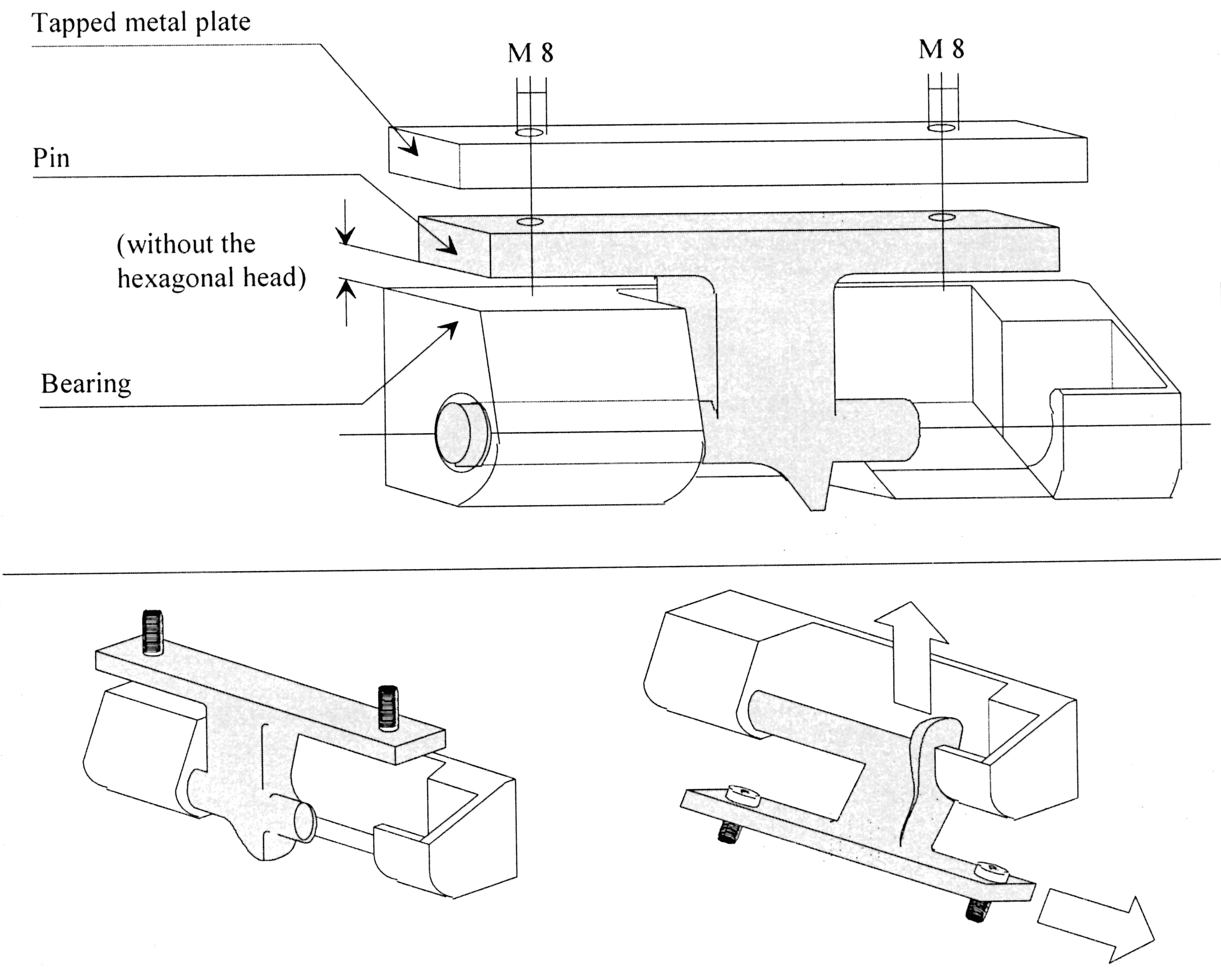
Description:
The pin and the bearing of this device have a special shape which makes it impossible to dismantle these items when the hinge is closed. A screw with a hexagonal head protruding beyond the pin should be used. The space between the screw head and the bearing, when the hinge is closed, should be so small as to prevent the removal of the screw without leaving obvious traces. In this case it would not be necessary to weld the screws.
{TRANS/WP.30/123, paragraphs 46 and 47 and Annex 2; TRANS/WP.30/AC.2/23, Annex 3}
(c) Exceptionally, in the case of vehicles having insulated load compartments, the Customs sealing device, the hinges and any fittings, the removal of which would give access to the interior of the load compartment or to spaces in which goods could be concealed, may be fixed to the doors of such load compartments by means of the following systems:
(i) Set bolts or set screws which are inserted from the outside but which do not otherwise meet the requirements of Explanatory Note 2.2.1 (a), subparagraph (a) above, on condition that:
- the tails of the set bolts or set screws are fixed into a tapping plate or similar device fitted behind the outer layer or layers of the door structure, and
- the heads of the appropriate number of set bolts or set screws are so welded to the Customs sealing device, hinges etc., that they are completely deformed and
- that the set bolts or set screws cannot be removed without leaving visible signs of tampering (see sketch No. 1 appended to Annex 6);
(ii) A fastening device which is inserted from the inside of the insulated door construction on condition that:
- the fastening pin and securing collar of the device are assembled by pneumatic or hydraulic tooling and fixed behind a plate or similar device fitted between the outer layer of the door structure and the insulation; and
- the head of the fastening pin is not accessible from the inside of the load compartment; and
- a sufficient number of securing collars and fastening pins are welded together and the devices cannot be removed without leaving visible signs of tampering (see sketch No. 5 appended to Annex 6).
{ECE/TRANS/17/Amend.13; entered into force on 1 August 1991}
The term "insulated load compartment" is to be taken to include refrigerated and isothermic load compartments.
Comment to Explanatory Note 2.2.1 (b)(c)(ii)
The text of the first indent could be better understood if after the wording: "assembled by pneumatic or hydraulic tooling" the words: "and fixed" are replaced by: "securing the head of the pin".
{TRANS/WP.30/AC.2/29, paragraph 25}
(d) Vehicles comprising a large number of such closures as valves, stopcocks, manhole covers, flanges and the like must be designed so as to keep the number of Customs seals to a minimum. To this end, neighbouring closures must be interconnected by a common device requiring only one Customs seal, or must be provided with a cover meeting the same purpose;
(e) Vehicles with opening roofs must be constructed in such a manner as to permit sealing with a minimum number of Customs seals.
(f) In cases where more than one Customs seal are required for Customs secure sealing, the number of such seals shall be indicated in the Certificate of Approval under point 5 (Annex 4 to the TIR Convention, 1975). A sketch or photographs of the road vehicle shall be attached to the Certificate of Approval showing the exact location of the Customs seals.
{ECE/TRANS/17/Amend.23; entered into force on 7 November 2003}
Comment to Explanatory Note 2.2.1 (b)(f)
Implementation period for the inclusion in the Certificate of Approval of the number and place of seals when more than one Customs seal is required
The provisions of Explanatory Note 2.2.1 (b)(f), which come into force on 7 August 2003 shall be applicable for road vehicles to be approved for the first time or on the occasion of the biennial inspection and renewal of the approval after entry into force of Explanatory Note 2.2.1 (b)(f) where appropriate. As a consequence, as of 7 August 2005, all road vehicles, requiring more than one seal for Customs secure sealing, shall need to be equipped with a Certificate of Approval in line with Explanatory Note 2.2.1 (b)(f).
{TRANS/WP.30/206, paragraph 62 and Annex 2;
TRANS/WP.30/AC.2/69, paragraph 59 and Annex 2;
TRANS/WP.30/AC.2/69/Corr.1}
Comments to Article 2, paragraph 1 (b)
Securing of doors
In the case of doors of vehicles or containers which are not refrigerated nor insulated but have an interior lining, the devices (bolts, rivets, etc.) securing the hinges and the Customs sealing device must pass through the whole thickness of the door (including the lining) and be visibly secured on the inside.
{TRANS/GE.30/14, paragraph 101}
Number of Customs seals
Comment has been deleted
{TRANS/WP.30/AC.2/69, Annex 2}
Examples of Customs sealing devices
In order to achieve Customs secure sealing of load compartments and containers, sealing devices have to fulfil the requirements of Annex 6, Explanatory Note 2.2.1 (b), subparagraph (a) (see Figures 1 - 4). Furthermore, Customs seals have to be affixed in accordance with the following requirements:
The fastening rope is not longer than necessary and is properly tightened;
The fastening rope is going through the TIR rings;
Customs seals are affixed as tight as possible;
The securing of other parts of the closing system, e.g. handles of locking mechanisms, cam engaging devices, locking rod saddles are secured as stipulated in Annex 6, Explanatory Note 2.2.1 (a), subparagraph (a) (see Figures 1 - 4).
It should be borne in mind that the effectiveness of any sealing device will be reduced if wear and tear exists in, for instance, locking rods, hinges or cam engaging devices. Appropriate measures should be taken to identify such instances.
{TRANS/WP.30/145, paragraph 17; TRANS/WP.30/AC.2/31, Annex 3}
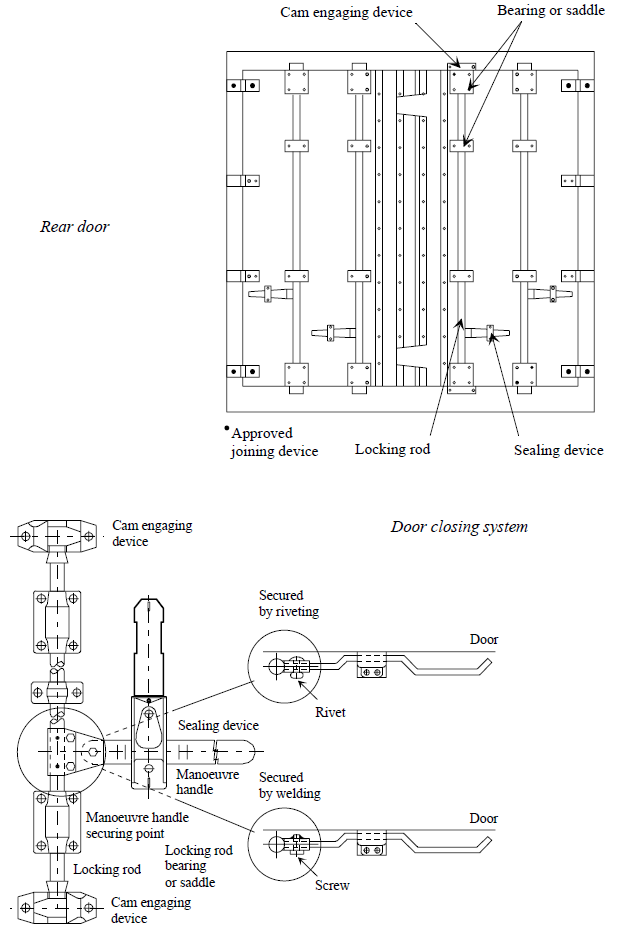
Figure 1. Example of a rear door load compartment
and container showing a Customs secure door closing system
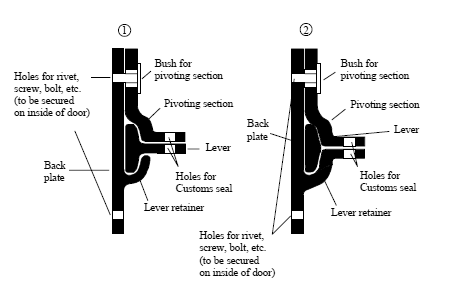
In particular sealing device No. 1 is prone to tampering if the above-mentioned requirements are not fulfilled. In view of their better protection against manipulation prior to affixing Customs seals, the devices given below should preferably be used.
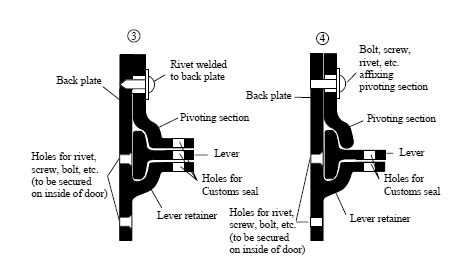
The Customs sealing devices Nos. 3 and 4 may also be used for securing the doors of refrigerated and insulated containers and load compartments. Where so used, the sealing devices may be affixed by means of at least two set bolts or set screws fixed into a metal tapping plate inserted behind the outer layer of the door. In such cases the heads of the set bolts or set screws must be so welded that they are completely deformed (see also sketch No. 1 in Annex 6).
{TRANS/GE.30/6, paragraph 35}
Figure 2. Example of a Customs sealing device
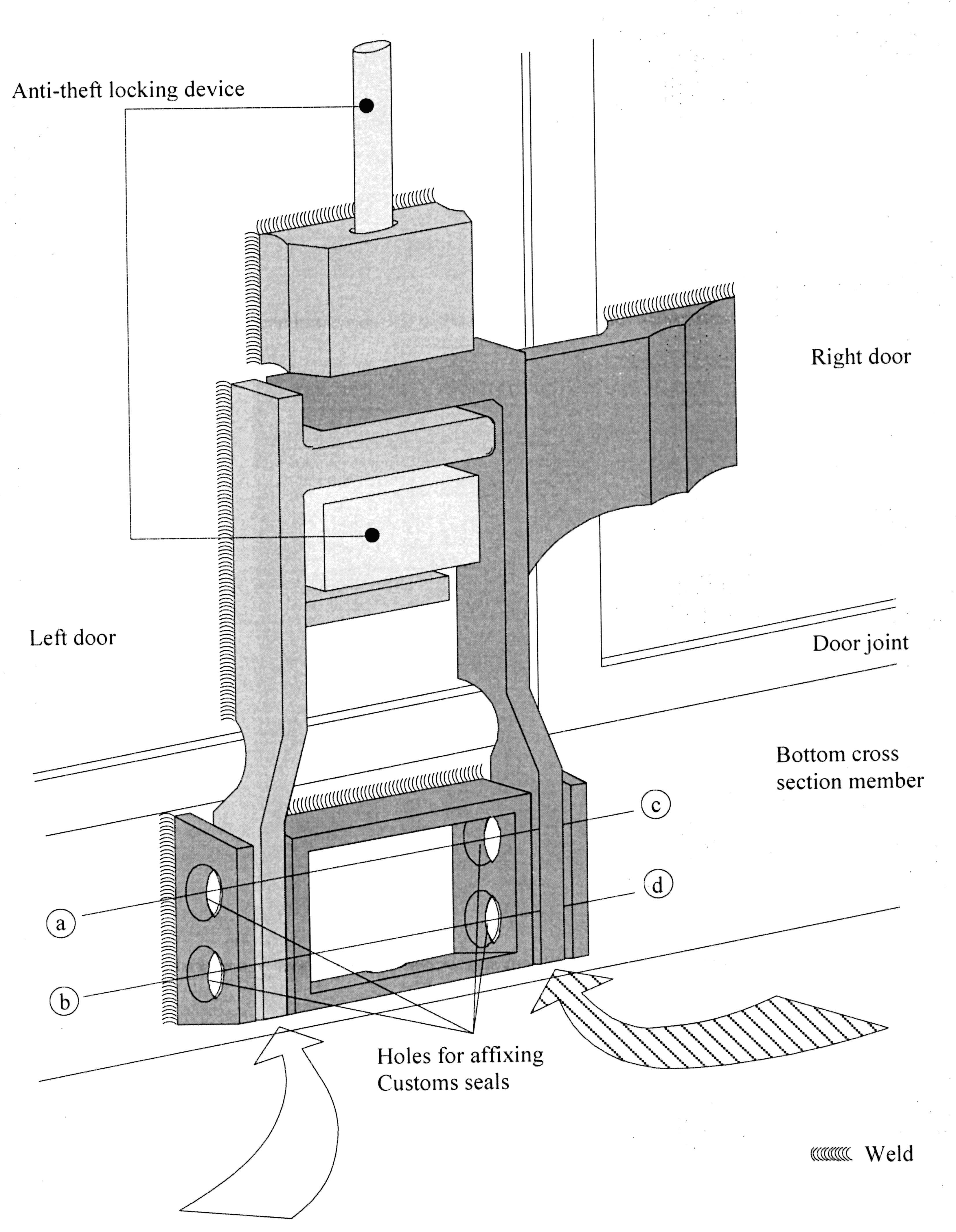
This Customs sealing device should preferably be used on metal containers and load compartments. Care needs to be taken to avoid confusion as to where exactly the seals need to be placed. Various types of seals may be used. If cable seals in the form of an "eight" are used it is recommended that the cable goes through all four holes (a, b, c, d). If rigid seals are used, the seals must pass through holes (c) or (d).
Figure 3. Example of a Customs sealing device
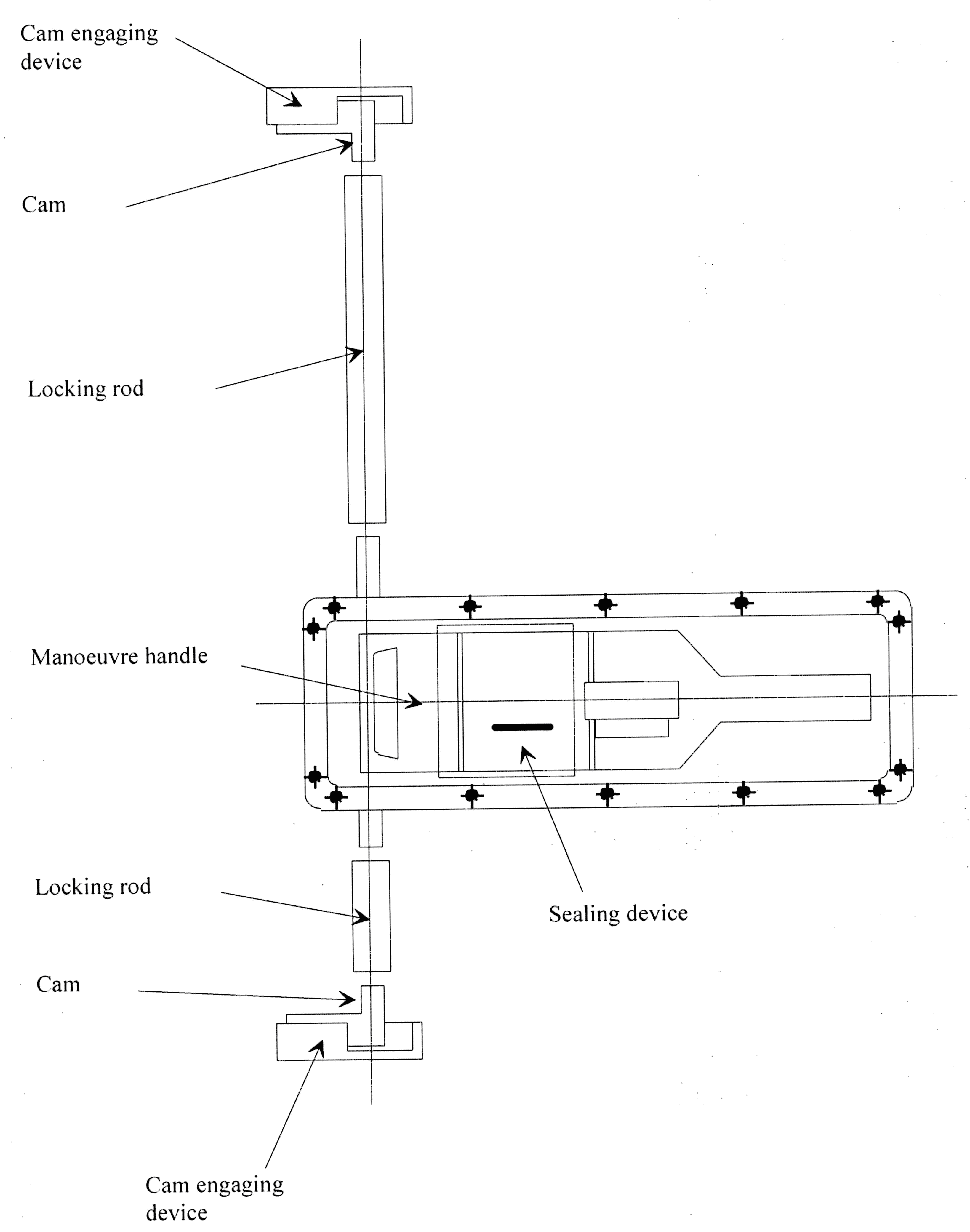
This type of Customs sealing device is used for securing the doors of insulated containers and load compartments. The sealing point of this device may differ from one construction to another depending on whether the hold for affixing seals goes horizontally or vertically. From a Customs point of view the device with the vertical hole provides better security whereas the device having a horizontal hold requires tight sealing in order to be Customs secure.
Figure 4. Example of a Customs sealing device
(c) apertures for ventilation and drainage shall be provided with a device preventing access to the interior of the load compartment. This device must be such that it cannot be removed and replaced from the outside without leaving obvious traces.
Explanatory Note to Article 2, paragraph 1 (c)
2.2.1 (c)-1 Ventilation apertures
(a) Their greatest dimension must, in principle, not exceed 400 mm.
(b) Apertures permitting direct access to the load compartment must be obstructed
(i) by means of wire gauze or perforated metal screens (maximum dimension of holes: 3 mm in both cases) and protected by welded metal lattice-work (maximum dimension of holes: 10 mm); or
(ii) by means of a single perforated metal screen of sufficient strength (maximum dimension of holes: 3 mm; thickness of the screen: at least 1 mm).
{ECE/TRANS/17/Amend.12; entered into force on 1 August 1990}
Comment to Explanatory Note 2.2.1 (c)-1
Ventilation apertures of insulated load compartments
Example of a screen fitted between the inner and outer surfaces of insulated load compartments.
{TRANS/WP.30/127, paragraph 43; TRANS/WP.30/AC.2/25, Annex 3}
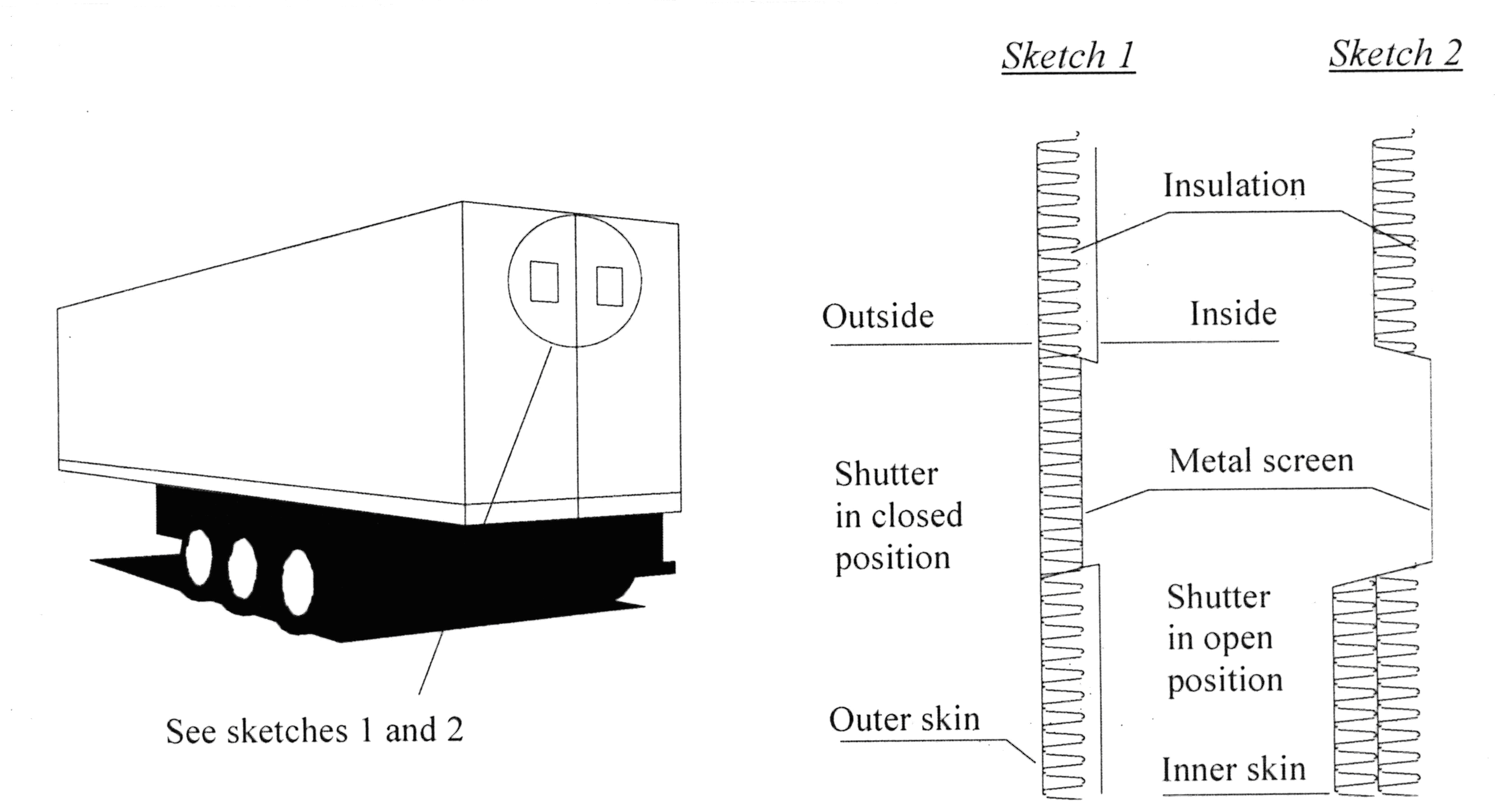
(c) Apertures not permitting direct access to the load compartment (e.g. because of elbow or baffle-plate systems) must be provided with devices referred to in subparagraph (b), in which, however, the dimensions of the holes may be as much as 10 mm (for the wire gauze or metal screen) and 20 mm (for the metal lattice work).
{ECE/TRANS/17/Amend.12; entered into force on 1 August 1990}
(d) Where openings are made in sheets, the devices referred to in subparagraph (b) of this note must in principle be prescribed. However, blocking devices in the form of a perforated metal screen fitted outside, and wire or other gauze fitted inside, will be allowed.
(e) Identical non-metal devices may be allowed provided that the holes are of the requisite dimensions and the material used is strong enough to prevent the holes from being substantially enlarged without visible damage. In addition, it must be impossible to replace the ventilation device by working from one side of the sheet only.
(f) The ventilation aperture may be provided with a protective device. This shall be secured to the sheet in such a way as to permit Customs inspection of the aperture. This protective device shall be secured to the sheet at a distance of not less than 5 cm from the screen of the ventilation aperture.
{ECE/TRANS/17/Amend.5; entered into force on 1 August 1984}
Comments to Explanatory Note 2.2.1 (c)-1
Example of a protective device
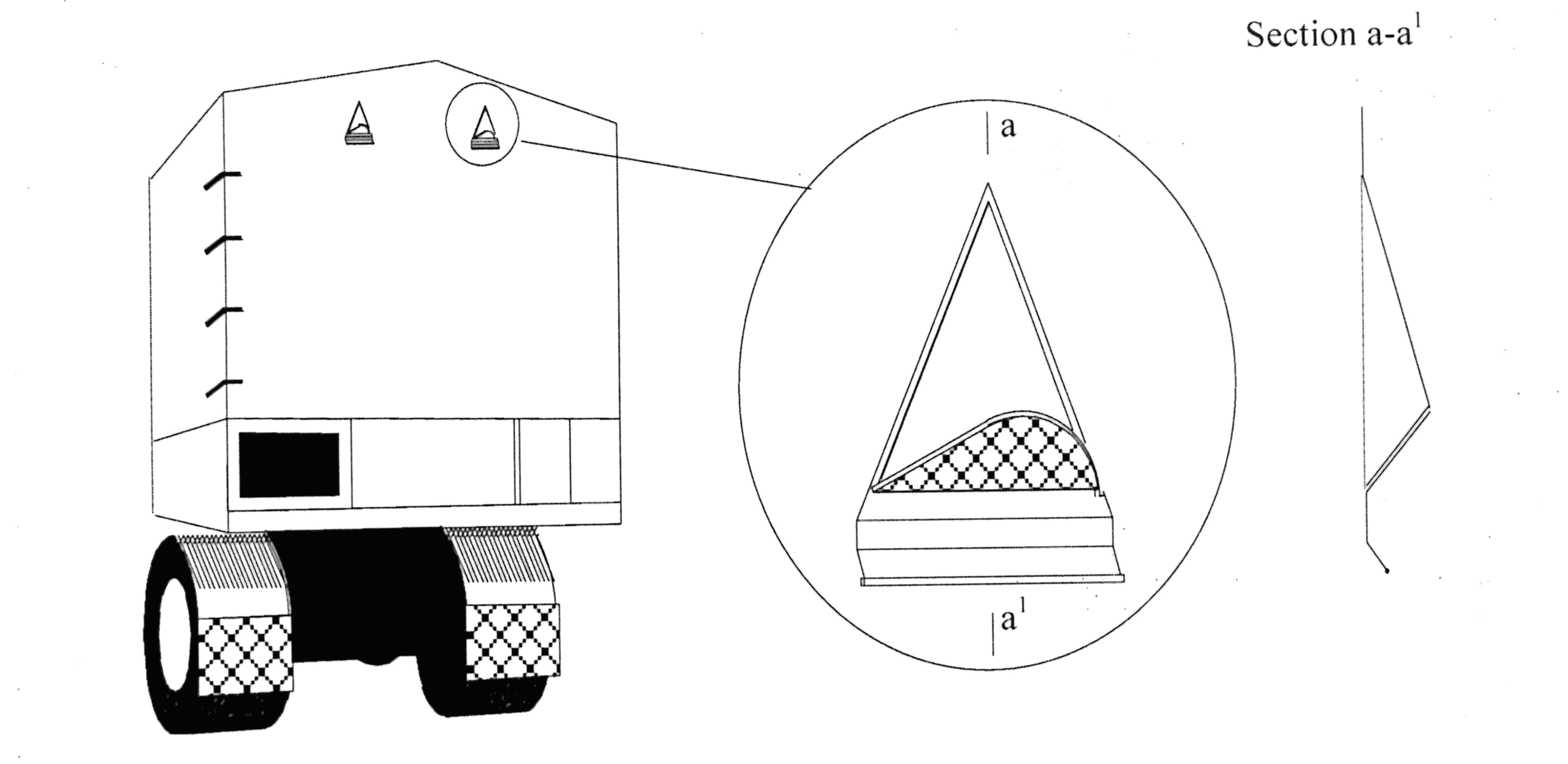
Ventilation apertures in load compartments
Although ventilation apertures should not in principle exceed 400 mm, any competent administration may, provided that all other requirements are complied with, give its approval to an opening greater than 400 mm if such an opening is presented to it.
{TRANS/GE.30/14, paragraph 102; TRANS/WP.30/143, paragraphs 36 and 37; TRANS/WP.30/AC.2/31, Annex 3}
Explanatory Note to Article 2, paragraph 1 (c)
2.2.1 (c)-2 Drainage apertures
(a) Their greatest dimension must, in principle not exceed 35 mm;
(b) Apertures permitting direct access to the load compartment must be provided with the devices described in subparagraph (b) of Explanatory Note 2.2.1 (c)-1 for ventilation apertures;
(c) When drainage apertures do not permit direct access to the load compartment, the devices referred to in subparagraph (b) of this note will not be prescribed, on condition that the apertures are provided with a reliable baffle system readily accessible from inside the load compartment.
2. Notwithstanding the provisions of Article 1 (c) of these Regulations, constituent parts of the load compartment which, for practical reasons, have to include empty spaces (for example, between the partitions of a double wall) shall be permitted. In order that the said spaces cannot be used to conceal goods:
(i) where it covers the full height from floor to roof, or, in other cases, where the space between it and the outer wall is completely enclosed, the lining inside the load compartment shall be so fitted that it cannot be removed and replaced without leaving obvious traces; and
(ii) where a lining is of less than full height and the spaces between the lining and the outer wall are not completely enclosed, and in all other cases where spaces occur in the construction of a load compartment, the number of such spaces shall be kept to a minimum and these spaces shall be readily accessible for Customs inspection.
Comment to Article 2, paragraph 2
Elimination of hollow beam structural members
Structural members of load compartments with enclosed spaces, such as hollow beams, shall be kept to a minimum and shall be eliminated gradually in the design of new load compartments utilizing open profile beams whenever possible. If, for constructional reasons, enclosed spaces in structural members of load compartments are used, the provision of holes intended to facilitate Customs inspection of hollow spaces are admissible. The presence of such inspection holes shall be noted under item 12 in the Certificate of Approval of road vehicles (Annex 4 to the Convention).
{TRANS/WP.30/135, paragraphs 63 - 65; TRANS/WP.30/137, paragraphs 65 - 67; TRANS/WP.30/AC.2/27, Annex 3; TRANS/WP.30/151, paragraphs 33 - 36}
3. Windows shall be allowed provided that they are made of materials of sufficient strength and that they cannot be removed and replaced from the outside without leaving obvious traces. Glass may nevertheless be permitted, but if glass other than safety glass is used, the windows shall be fitted with a fixed metal grille which cannot be removed from the outside; the mesh of the grille shall not exceed 10 mm.
{ECE/TRANS/17/Amend.7; entered into force on 1 August 1986}
Explanatory Note to Article 2, paragraph 3
##### 2.2.3 Safety glass
Glass shall be considered as safety glass if there is no risk of it being destroyed as a result of any factor ordinarily occurring in the normal conditions of use of a vehicle. The glass shall bear a mark which characterizes it as safety glass.
{ECE/TRANS/17/Amend.7; entered into force on 1 August 1986}
4. Openings made in the floor for technical purposes, such as lubrication, maintenance and filling of the sand-box, shall be allowed only on condition that they are fitted with a cover capable of being fixed in such a way as to render the load compartment inaccessible from the outside.
Comment to Article 2, paragraph 4
Securing of floor openings for technical purposes
Covers of floor openings for technical purposes in road vehicles are sufficiently protected if the arrangements to prevent access to the load compartment from the outside are themselves inside the load compartment.
{TRANS/GE.30/AC.2/14, paragraphs 35 - 39}
Article 3
Sheeted vehicles
1. Where applicable, the provisions of Articles 1 and 2 of these Regulations shall apply to sheeted vehicles. In addition, these vehicles shall conform to the provisions of this Article.
2. The sheet shall be either of strong canvas or of plastic-covered or rubberized cloth, which shall be of sufficient strength and unstretchable. It shall be in good condition and made up in such a way that once the closing device has been secured, it is impossible to gain access to the load compartment without leaving obvious traces.
3. If the sheet is made up of several pieces, their edges shall be folded into one another and sewn together with two seams at least 15 mm apart. These seams shall be made as shown in sketch No. 1 appended to these Regulations; however, where in the case of certain parts of the sheet (such as flaps and reinforced corners) it is not possible to assemble the pieces in that way, it shall be sufficient to fold the edge of the top section and make the seams as shown in sketches Nos. 2 or 2(a) appended to these Regulations. One of the seams shall be visible only from the inside and the colour of the thread used for that seam shall be clearly different from the colour of the sheet itself and from the colour of the thread used for the other seam. All seams shall be machine-sewn.
Explanatory Note to Article 3, paragraph 3
##### 2.3.3 Sheets made up of several pieces
(a) The several pieces constituting one sheet may be made of different materials conforming to the provisions of Annex 2, Article 3, paragraph 2;
(b) Any arrangement of the pieces which adequately guarantees security will be allowed in making up the sheet, on condition that the pieces are assembled in conformity with the requirements of Annex 2, Article 3.
4. If the sheet is of plastic-covered cloth, and is made up of several pieces, the pieces may alternatively be welded together in the manner shown in sketch No. 3 appended to these Regulations. The edges of the pieces shall overlap by at least 15 mm. The pieces shall be fused together over the whole width of the overlap. The edge of the outer sheet shall be covered with a band of plastic material at least 7 mm wide, affixed by the same welding process. The plastic band and the sheet on each side of it for a width of at least 3 mm shall have a clearly-defined uniform relief pattern stamped on them. The pieces shall be welded in such a way that they cannot be separated and rejoined without leaving obvious traces.
Comments to Article 3, paragraph 4
Band of plastic material
The requirement for the band of plastic material is essential for Customs security purposes. Consequently, it should not be permitted to dispense with it.
{TRANS/GE.30/17, paragraph 99}
Overlap of the edges of the pieces of the sheet
While for Customs security purposes, an overlap of the edges of the pieces of the sheet of at least 15 mm is sufficient, an overlap of 20 mm and more is admitted and may be necessary for technical reasons depending on the material of the sheet and its adhesion.
{TRANS/WP.30/162, paragraphs 64 and 65; TRANS/WP.30/AC.2/37, Annex 6}
Methods for welding pieces of the sheet
Methods for welding pieces of sheets which are recognized as Customs secure if applied in accordance with the provisions of Annex 2 of the Convention include the "fusing method", where pieces of sheets are fused using high temperatures and the "high frequency method", where pieces of sheets are welded using high frequency and pressure.
{TRANS/WP.30/162, paragraphs 64 and 65; TRANS/WP.30/AC.2/37, Annex 6}
5. Repairs shall be made in accordance with the method described in sketch No. 4 appended to these Regulations; the edges shall be folded into one another and sewn together with two visible seams at least 15 mm apart; the colour of the thread visible from the inside shall be different from that of the thread visible from the outside and from that of the sheet itself; all seams shall be machine-sewn. When a sheet which has been damaged near the edges is repaired by replacing the damaged part by a patch, the seam can also be made in accordance with the provisions of paragraph 3 of this Article and sketch No. 1 appended to these Regulations. Sheets of plastic-covered cloth may alternatively be repaired in accordance with the method described in paragraph 4 of this Article, but in that case the plastic band must be affixed to both sides of the sheet, the patch being fitted on the inside of the sheet.
Comments to Article 3, paragraph 5
Bands of reflective material
Bands of reflective material which can be torn off and which cover up the structure of the sheets of load compartments are permissible, if they are completely welded to the sheets of plastic-covered cloth and are secured in accordance with the requirements of Annex 2, Article 3, paragraph 5 of the Convention (see sketch below).
{TRANS/WP.30/151, paragraph 40}
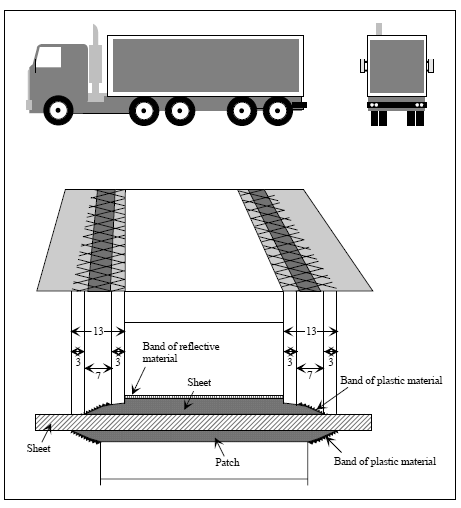
Repair of sheets made of plastic covered cloth
The following process is permitted for the repair of such sheets: Vinyl liquefied under pressure and heat is used to secure the piece on the sheet by melting. Obviously in such cases a band of plastic material stamped with a relief pattern will be affixed to the edge of the piece on both sides of the sheet.
{TRANS/GE.30/6, paragraph 40; TRANS/GE.30/GRCC/4, paragraph 33}
6. The sheet shall be fixed to the vehicle in strict compliance with the conditions set forth in Article 1(a) and (b) of these Regulations. The following systems can be used:
(a) The sheet can be secured by:
(i) metal rings fixed to the vehicles,
(ii) eyelets let into the edge of the sheet, and
(iii) a fastening passing through the rings above the sheet and visible from the outside for its entire length.
The sheet shall overlap solid parts of the vehicle by at least 250 mm, measured from the centre of the securing rings, unless the system of construction of the vehicle in itself prevents all access to the load compartment.
Explanatory Notes to Article 3, paragraph 6 (a)
2.3.6 (a)-1 Vehicle with sliding rings
Metal securing rings sliding on metal bars fixed to the vehicles are acceptable for the purpose of this paragraph (see sketch No. 2 appended to Annex 6) provided that:
(a) the bars are affixed to the vehicle at maximum spacings of 60 cm and in such a manner that they cannot be removed and replaced without leaving obvious traces;
(b) the rings are made with a double hoop or equipped with a central bar and made in one piece without the use of welding; and
(c) the sheet is fixed to the vehicle in strict compliance with the conditions set forth in Annex 2, Article 1(a) of this Convention.
2.3.6 (a)-2 Vehicles with swivel rings
Metal swivel rings, each of which rotates in a metal bracket fixed to the vehicle are acceptable for the purpose of this paragraph (see sketch No. 2a appended to Annex 6) provided that:
(a) each bracket is affixed to the vehicle in such a manner that it cannot be removed and replaced without leaving obvious traces; and
(b) the spring under each bracket is completely enclosed by a bell-shaped metal cover.
{ECE/TRANS/17/Amend.4; entered into force on 1 October 1982}
Comments to Article 3, paragraph 6 (a)
Example of a locking bar construction
The device illustrated below meets the requirements of Annex 2, Article 1, paragraph (a) and Annex 2, Article 3, paragraphs 6 (a) and 8.
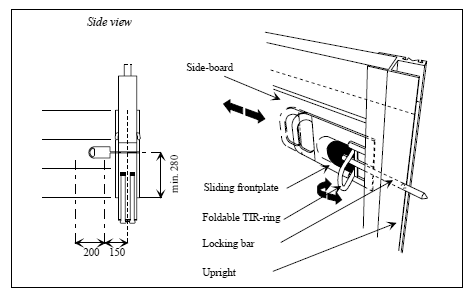
Description of above sketch
The device will be fitted on the side-board in the same position as a conventional type of TIR-ring and in such a way that the TIR-ring of the device will be located at a maximum distance of 150 mm from the centreline of the upright. The device will be fastened to the side-board with two rivets similar to the fastening of the usual TIR-rings. It consists of three integrated metal parts: base plate, foldable TIR-ring and a sliding front plate including locking bar. When the front plate is slid into locked position, the locking bar goes into a hole in the upright and locks the side-board to the upright. The locking bar shall, however, intrude into the upright by at least 20 mm. At the same time the TIR-ring is automatically folded out. In fold-out position, with the fastening rope passing through the ring above the sheet, the sliding front plate is locked and secured and cannot be slid back in open position.
{TRANS/WP.30/125, paragraph 40; TRANS/WP.30/127, paragraphs 46 and 47; TRANS/WP.30/AC.2/23, Annex 3}
Shape of eyelets
Eyelets in the sheets could be round or oval and the rings should not protrude more than necessary from the relevant parts of the vehicles. In order to ensure that the sheets are properly fixed, Customs authorities should make sure, when sealing the road vehicle, that the fastening rope is properly tightened.
{TRANS/GE.30/57, paragraph 35}
Example of metal rings for fastening vehicle sheets
In the welded metal pillars, which support and contain the locking mechanisms for the side-boards, a folding type of metal TIR-ring is integrated. The TIR-ring can be folded out by hand through a small opening in the outside plate of the pillar. By spring-load the TIR-ring is kept in either "in" or "out" position. The functioning of this special ring is integrated in the side-board locking mechanism as follows:
A piece of metal is welded on to each side-board locking pin so that when the TIR-ring is in folded-out position the vertical movement of the locking pins is restricted and side-boards cannot be released. At the same time, the shape and location of these metal pieces prevent the folding out of the TIR-rings with open side-board locks.
This means, that in folded-out position, when secured by the sheet and fastening rope passing through the ring, the TIR-ring will in the first place secure the side-boards to the pillar and in the second place secure the pillar to the floor of the load compartment (side-rave).
Furthermore, the upper pillar locking pin, which is welded on to one of the locking pins for the side-boards, will secure the top-roof construction at the same time as the side-boards are secured.
As long as the TIR-ring is folded out the pillar must be completely destroyed before the side-board or top-roof construction can be opened.
{TRANS/GE.30/AC.2/12, paragraph 15; TRANS/GE.30/35, paragraph 109 and Annex 2; TRANS/GE.30/GRCC/11, paragraphs 27 - 29; see sketch below}
Example of metal rings for fastening vehicle sheets
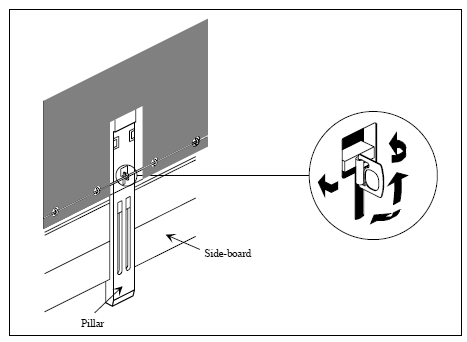
(b) When any edge of a sheet is to be permanently secured to a vehicle, the two surfaces shall be joined together without a break and shall be held in place by strong devices.
Explanatory Note to Article 3, paragraph 6 (b)
2.3.6 (b) Permanently-secured sheets
Where one or more edges of the sheet are permanently attached to the body of the vehicle, the sheet shall be held in place by one or more strips of metal or other suitable material secured to the body of the vehicle by joining devices meeting the requirements of subparagraph (a) of Explanatory Note 2.2.1(a) of Annex 6.
Comment to Article 3, paragraph 6 (b)
The device illustrated in sketch No. 4 appended to Annex 6 meets the requirements of Annex 2, Article 3, subparagraphs 6(a) and 6(b).
{TRANS/GE.30/55, paragraph 41}
(c) When a sheet locking system is used it shall in locked position join the sheet tightly to the outside of the load compartment (as an example see sketch No. 6).
{ECE/TRANS/17/Amend.7; entered into force on 1 August 1986}
7. The sheet shall be supported by an adequate superstructure (uprights, sides, arches, slats, etc.).
Comment to Article 3, paragraph 7
Supports for vehicle sheets
The hoops supporting the sheet are sometimes hollow and might be used as a hiding place. It is, however, always possible to inspect them, as is the case for many other vehicle parts. In these conditions, hollow hoops are permissible.
{TRANS/GE.30/14, paragraph 90; TRANS/GE.30/12, paragraphs 100 and 101; TRANS/GE.30/6, paragraph 41}
8. The spaces between the rings and the spaces between the eyelets shall not exceed 200 mm. The spaces may however be greater but shall not exceed 300 mm between rings and eyelets on either side of the upright if the construction of the vehicle and the sheet is such as to prevent all access to the load compartment. The eyelets shall be reinforced.
{ECE/TRANS/17/Amend.1; entered into force on 1 August 1979}
Explanatory Note to Article 3, paragraph 8
2.3.8 Spaces exceeding 200 mm but not exceeding 300 mm are acceptable over the uprights if the rings are recessed in the side-boards and the eyelets are oval and so small that they can just pass over the rings.
{ECE/TRANS/17/Amend.1; entered into force on 1 August 1979}
9. The following fastenings shall be used:
(a) steel wire ropes of at least 3 mm diameter; or
(b) ropes of hemp or sisal of at least 8 mm diameter encased in a transparent sheath of unstretchable plastic; or
(c) ropes consisting of batches of fibre-optic lines inside a spirally wound steel housing encased in a transparent sheath of unstretchable plastic; or
(d) ropes comprising a textile cord surrounded by at least four strands consisting solely of steel wire and completely covering the core, under the condition that the ropes (without taking into account the transparent sheath, if any) are not less than 3 mm in diameter.
Ropes in accordance with paragraph 9 (a) or (d) of this Article may have a transparent sheath of unstretchable plastic.
In cases where the sheet has to be fixed to the frame in a system of construction which otherwise complies with the provisions of paragraph 6 (a) of this Article, a thong can be used as fastening (an example of such a system of construction is given in sketch No. 7 appended to this Annex). The thong has to comply with the requirements stipulated in paragraph 11 (a)(iii) with regard to material, dimensions and shape.
{ECE/TRANS/17/Amend.11; entered into force on 1 August 1989; ECE/TRANS/17/Amend.17; entered into force on 1 October 1994; ECE/TRANS/17/Amend.25; entered into force on 1 October 2005}
Explanatory Note to Article 3, paragraph 9
##### 2.3.9 Explanatory Note has been deleted
{ECE/TRANS/17/Amend.25; entered into force on 1 October 2005}
Comments to Explanatory Note 2.3.9
Nylon ropes
Nylon ropes in plastics sheathing are not permitted, since they do not meet the requirements of Annex 2, Article 3, paragraph 9.
{TRANS/GE.30/AC.2/12, paragraph 16; TRANS/GE.30/GRCC/11, paragraphs 30 - 33; ECE/TRANS/WP.30/232, paragraph 34 and Annex; ECE/TRANS/WP.30/AC.2/91, paragraph 24}
Fastening rope
Where the sheet has to be fixed to the frame in a system of construction which otherwise complies with the provisions of Article 3, paragraph 6 (a), instead of a thong a rope could be used, which could consist of two pieces.
{TRANS/WP.30/125, paragraph 33}
10. Each type of rope shall be in one piece and shall have a hard metal end-piece at each end. Each metal end-piece shall allow the introduction of the thread or strap of the Customs seal. The fastener of each metal end-piece of ropes in accordance with the provisions of paragraph 9 (a), (b) and (d) of this Article shall include a hollow rivet passing through the rope so as to allow the introduction of the thread or strap of the Customs seal. The rope shall remain visible on either side of the hollow rivet so that it is possible to ensure that the rope is in one piece (see sketch No. 5 appended to these Regulations).
{ECE/TRANS/17/Amend.25; entered into force on 1 October 2005}
11. At the openings in the sheet, used for loading and unloading, the two surfaces shall be joined together. The following systems can be used:
(a) The two edges of the sheet shall have an adequate overlap. They shall also be fastened by:
(i) a flap sewn or welded in accordance with paragraphs 3 and 4 of this Article,
(ii) rings and eyelets meeting the conditions of paragraph 8 of this Article, the rings shall be manufactured of metal, and
(iii) a thong made of appropriate material, in one piece and unstretchable, at least 20 mm wide and 3 mm thick, passing through the rings and holding together the two edges of the sheet and the flap; the thong shall be secured inside the sheet and fitted either with:
an eyelet to take the rope mentioned in paragraph 9 of this Article, or
an eyelet which can be attached to a metal ring mentioned in paragraph 6 of this Article and be secured by the rope mentioned in paragraph 9 of this Article.
A flap shall not be required if a special device, such as a baffle plate, is fitted, which prevents access to the load compartment without leaving obvious traces. Neither shall a flap be required for vehicles with sliding sheets.
{ECE/TRANS/17/Amend.14; entered into force on 1 August 1992; ECE/TRANS/17/Amend.20 and Add.1; entered into force on 12 June 2001}
Explanatory Notes to Article 3, paragraph 11(a)
2.3.11 (a)-1 Sheet tension flaps
The sheets of many vehicles are provided on the outside with a horizontal flap pierced by eyelets running along the length of the side of the vehicle. Such flaps, known as tension flaps, are used to tauten the sheet by means of tension cords or similar devices. Such flaps have been used to conceal horizontal slits made in the sheets giving improper access to the goods carried in the vehicle. It is therefore recommended that the use of flaps of this type should not be allowed. The following devices may be used instead:
(a) tension flaps of similar design fixed on the inside of the sheet; or
(b) small individual flaps each pierced by one eyelet secured to the outside surface of the sheets and spaced at such distances as will permit an adequate tension of the sheet.
Alternatively, it may be possible in certain cases to avoid the use of tension flaps on sheets.
2.3.11 (a)-2 Sheet thongs
The following materials are regarded as suitable for making thongs:
(a) leather;
(b) non-tensile materials including plastic-covered or rubberized cloth, provided that such materials cannot after severance be welded or reconstituted without leaving obvious traces. Furthermore, the plastic material used to cover thongs shall be transparent and smooth-surfaced.
Comments to Explanatory Note 2.3.11 (a)-2
Example of thongs for fastening vehicle sheets
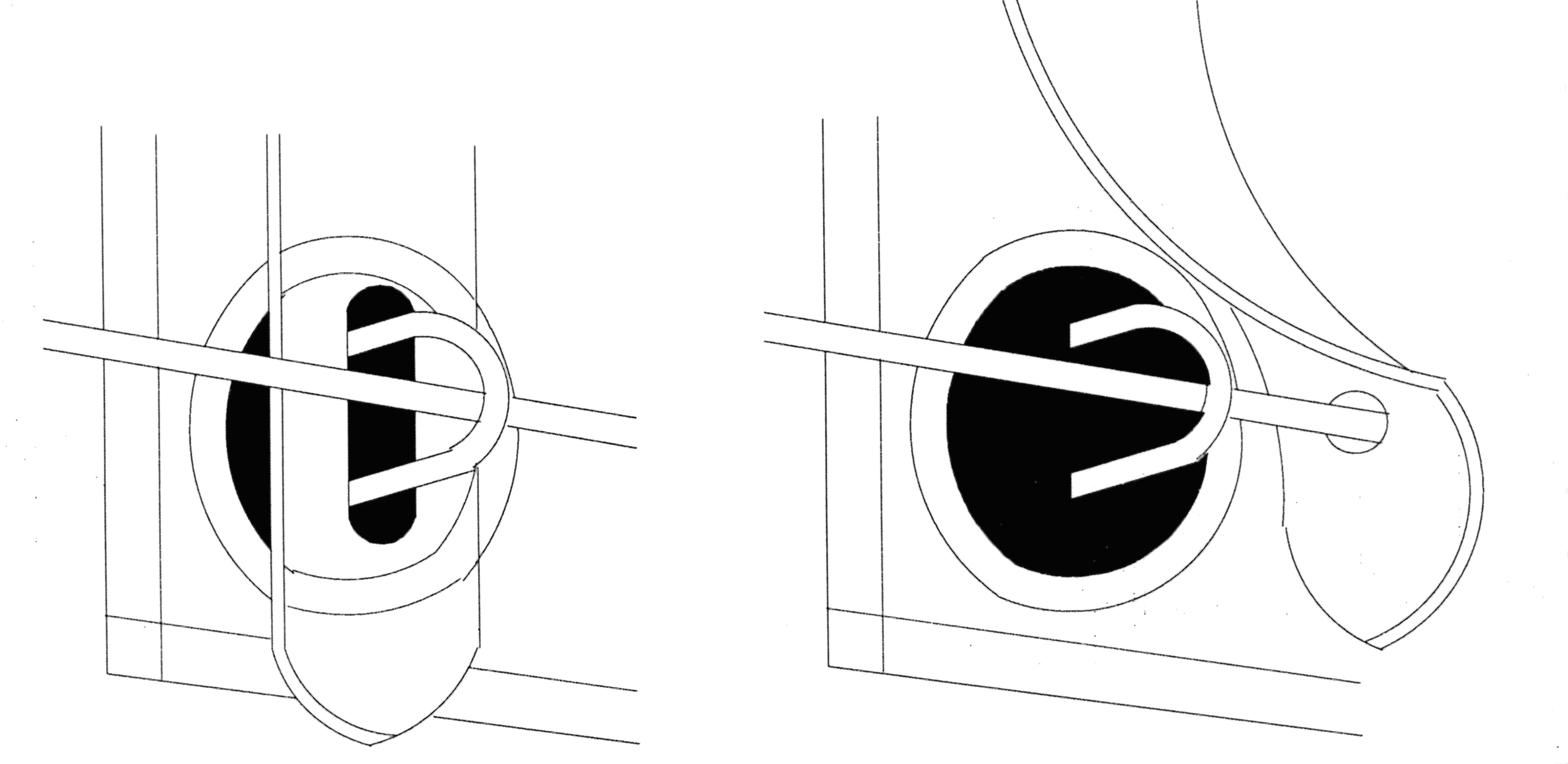
The Administrative Committee is of the opinion that the eyelets in the thong should be reinforced.
{TRANS/GE.30/AC.2/21, paragraph 16}
Securing of thongs
The device illustrated below meets the requirements of Annex 2, Article 3, paragraph 11 (a)(iii).
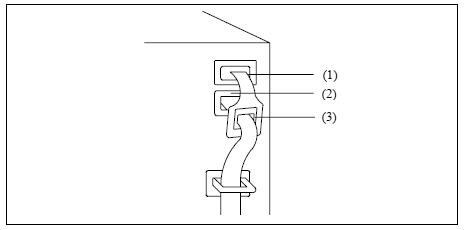
Description
The thong has to be passed through the upper eyelet (1) in the opening of the sheet for loading and unloading, comes out of the load compartment through the lower eyelet (2) and is then passed through the reinforced eyelet (3) at the end of the thong.
{TRANS/WP.30/123, paragraphs 45 - 47 and Annex 3; TRANS/WP.30/AC.2/23, Annex 3}
2.3.11 (a)-3 The device shown in sketch No. 3 appended to Annex 6 meets the requirements of the last part of Annex 2, Article 3, paragraph 11 (a). It also meets the requirements of Annex 2, Article 3, paragraphs 6 (a) and 6 (b).
{ECE/TRANS/17/Amend.15; entered into force on 1 August 1993; ECE/TRANS/17/Amend.17; entered into force on 1 October 1994}
(b) A special locking system holding the edges of the sheets tightly locked when the load compartment is closed and sealed. The system shall be provided with an opening through which a metal ring mentioned in paragraph 6 of this Article can pass and be secured by the rope mentioned in paragraph 9 of this Article. Such a system is described in sketch No. 8 appended to this Annex.
{ECE/TRANS/17/Amend.14; entered into force on 1 August 1992}
Article 4
Vehicles with sliding sheets
1. Where applicable, the provisions of Articles 1, 2 and 3 of these Regulations shall apply to vehicles with sliding sheets. In addition, these vehicles shall conform to the provisions of this Article.
2. The sliding sheets, floor, doors and all other constituent parts of the load compartment shall fulfil either the requirements in Article 3, paragraphs 6, 8, 9 and 11 of these Regulations or the requirements set out in (i) to (vi) below.
(i) The sliding sheets, floor, doors and all other constituent parts of the load compartment shall be assembled in such a way that they cannot be opened or closed without leaving obvious traces.
(ii) The sheet shall overlap the solid parts at the top of the vehicle by at least 1/4 of the actual distance between the tensioning straps. The sheet shall overlap the solid parts at the bottom of the vehicle by at least 50 mm. The horizontal opening between the sheet and the solid parts of the load compartment may not exceed 10 mm measured perpendicular to the longitudinal axis of the vehicle at any place when the load compartment is secured and sealed for Customs purposes.
(iii) The sliding sheet guidance and other movable parts shall be assembled in such a way that closed and Customs sealed doors and other movable parts cannot be opened or closed from the outside without leaving obvious traces. The sliding sheet guidance and other movable parts shall be assembled in such a way that it is impossible to gain access to the load compartment without leaving obvious traces. The system is described in sketch No. 9 appended to these Regulations.
(iv) The horizontal distance between the rings, used for Customs purposes, on the solid parts of the vehicle shall not exceed 200 mm. The space may, however, be greater but shall not exceed 300 mm between the rings on either side of the upright if the construction of the vehicle and the sheets is such as preventing all access to the load compartment. In any case, the conditions laid down in (ii) above shall be complied with.
(v) The distance between the tensioning straps shall not exceed 600 mm.
(vi) The fastenings used to secure the sheets to the solid parts of the vehicle shall fulfil the requirements in Article 3, paragraph 9 of these Regulations.
{ECE/TRANS/17/Amend.20; entered into force on 12 June 2001}
Sketches to Annex 2
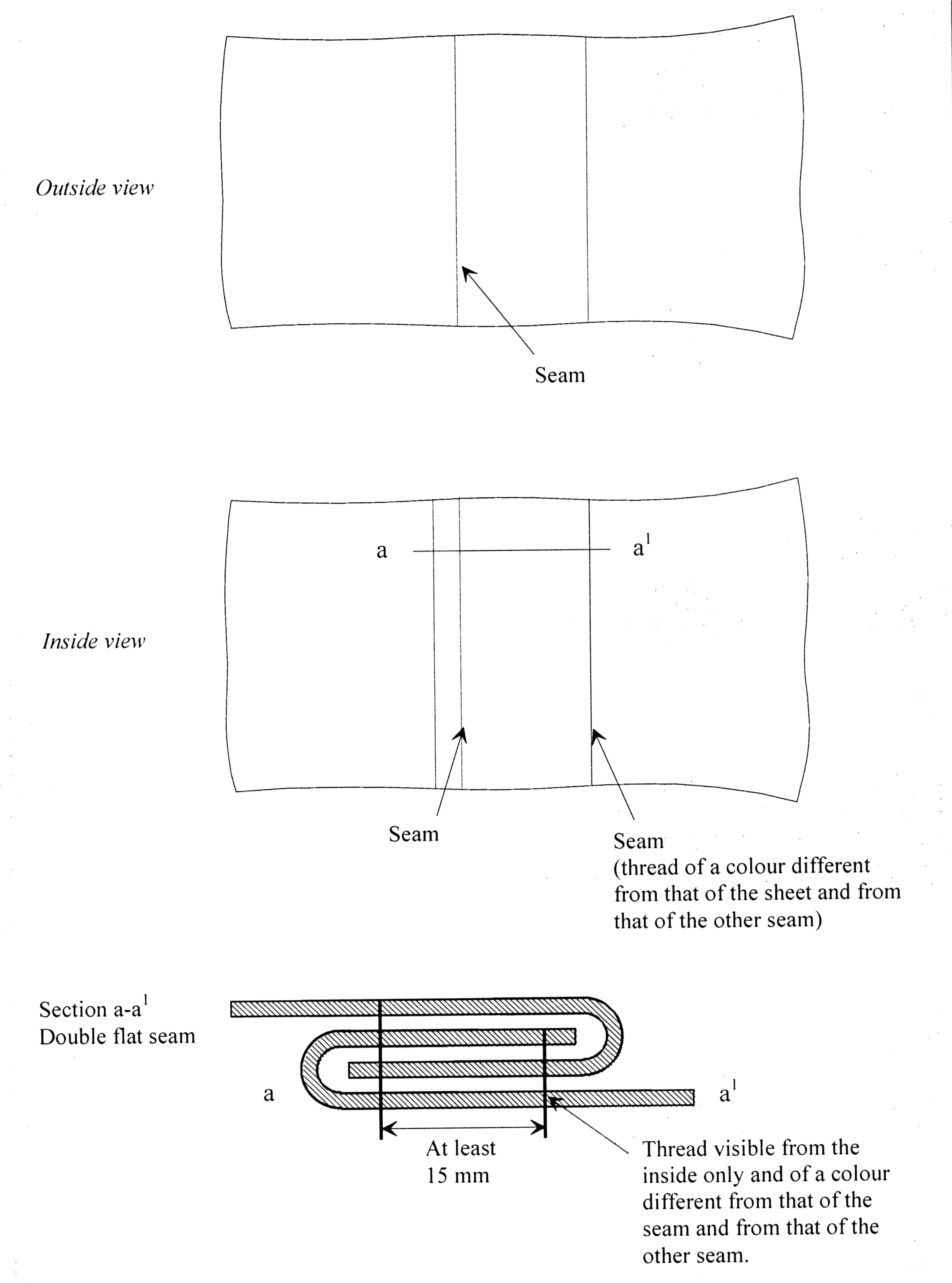
Sketch No. 1. Sheet made of several pieces sewn together
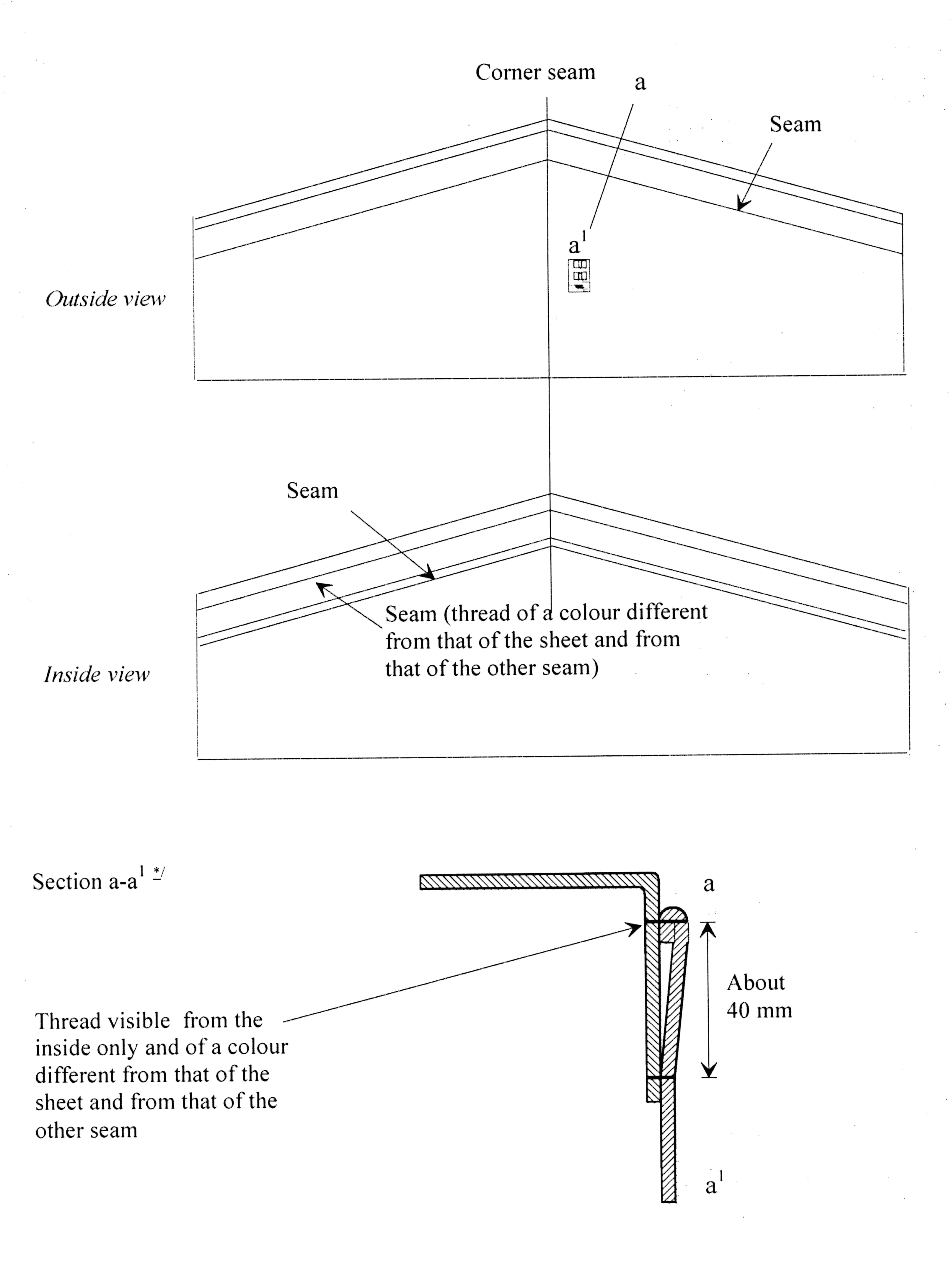
---
<*> This sketch shows the top folded section of the sheet according to Annex 2, Article 3, paragraph 3.
Sketch No. 2. Sheet made of several pieces sewn together
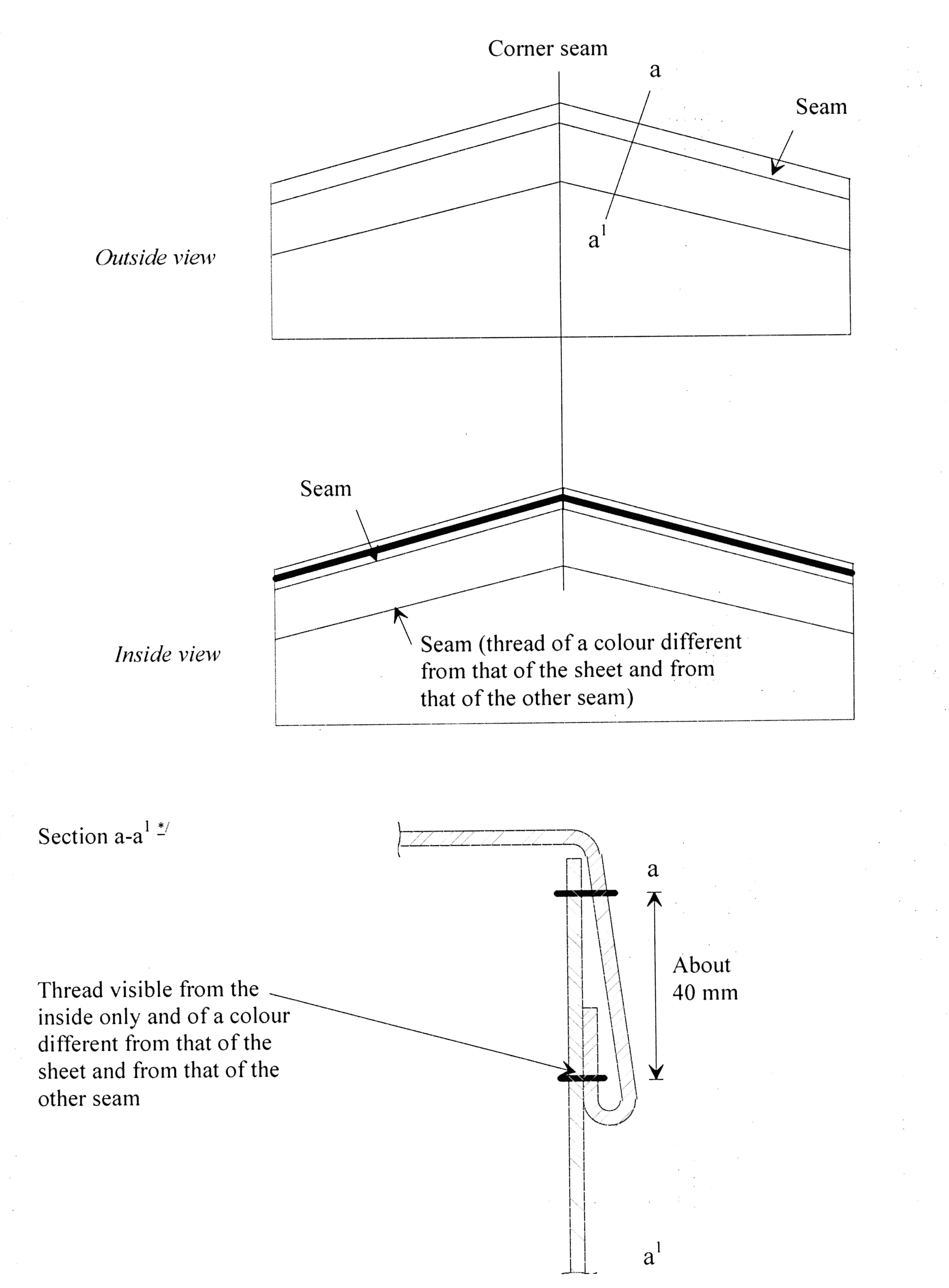
---
<*> This sketch shows the top folded section of the sheet according to Annex 2, Article 3, paragraph 3.
Sketch No. 2 (a). Sheet made of several pieces sewn together
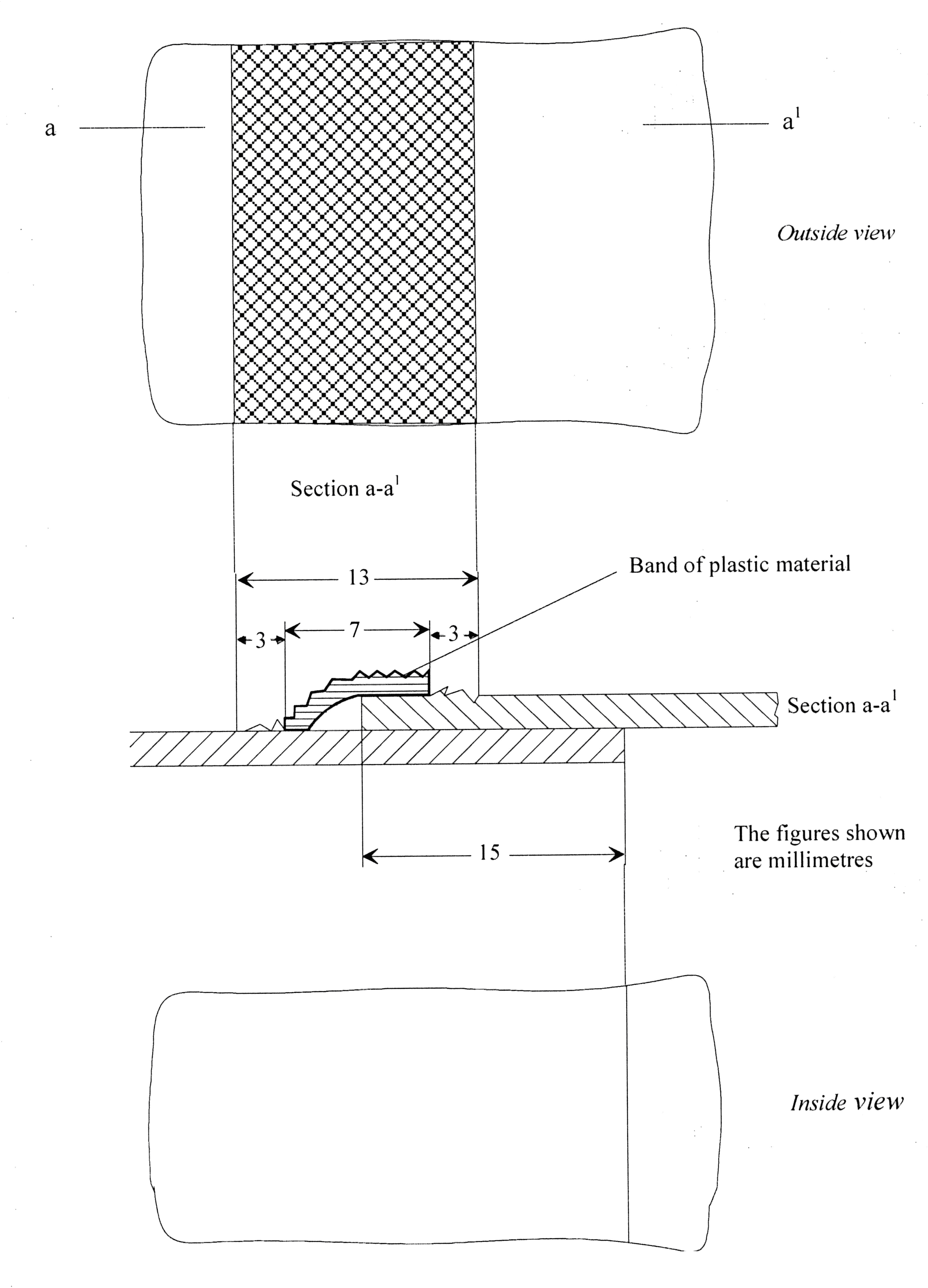
Sketch No. 3. Sheet made of several pieces welded together
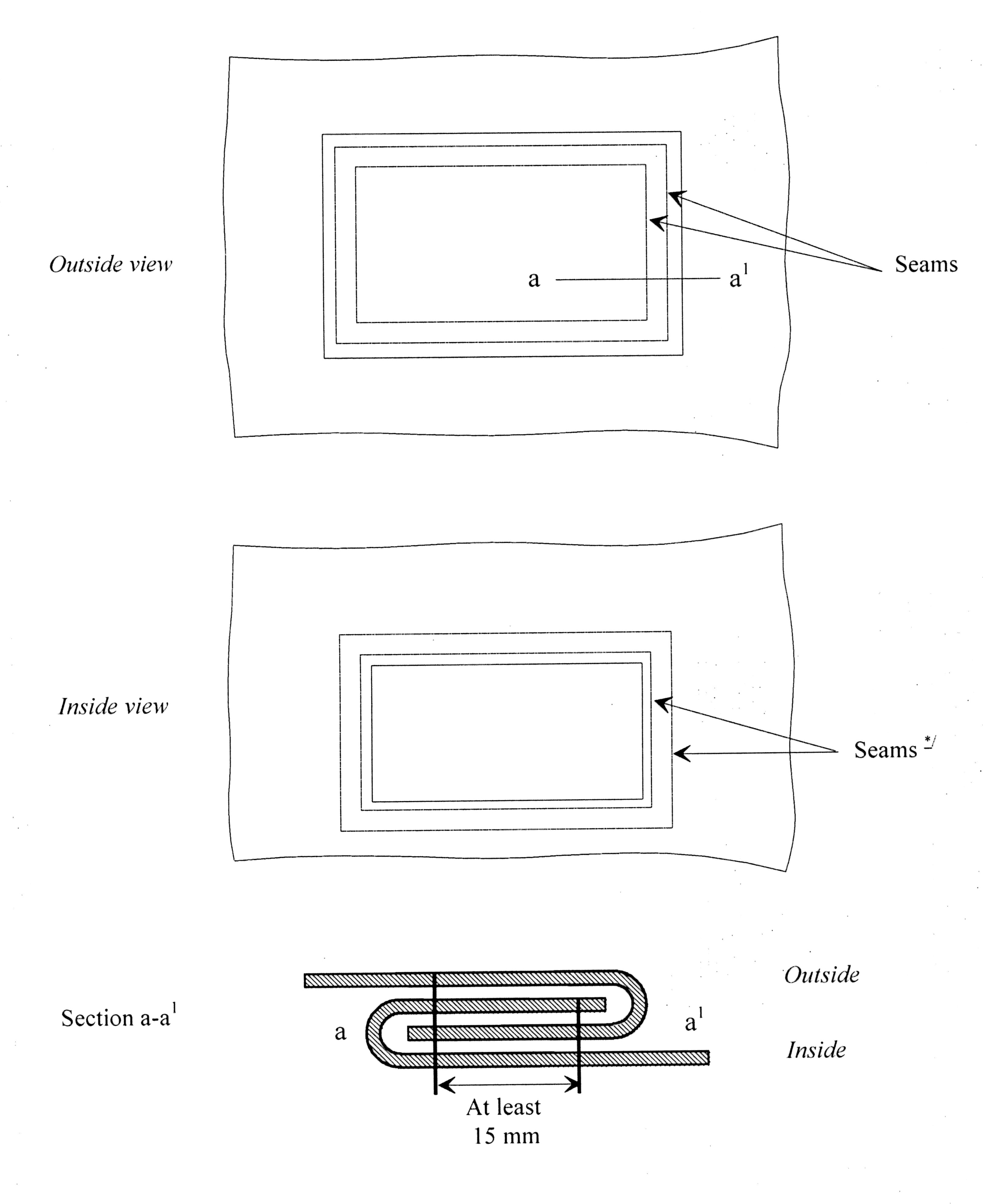
---
<*> Threads visible from the inside shall have a colour different from that of the threads visible from the outside and from that of the sheet.
Sketch No. 4. Repair of the sheet
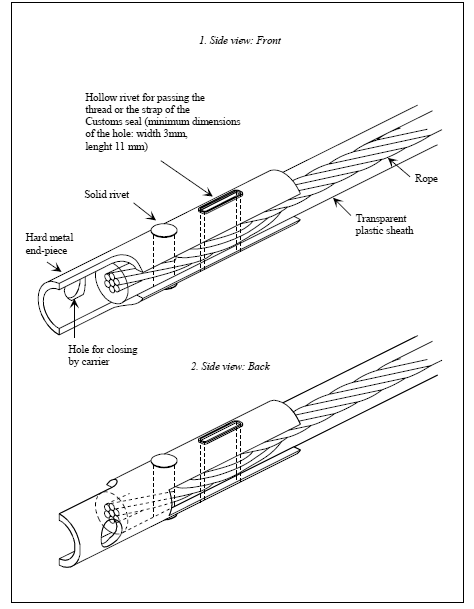
Sketch No. 5. Example of end-piece
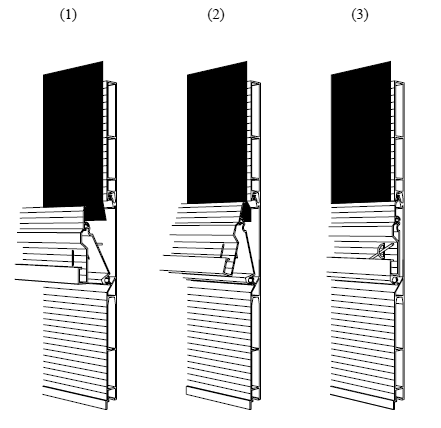
This sheet locking system is acceptable provided that it is fitted with at least one metal ring at each gate end. The openings through which the ring passes are oval and of a size just sufficient to allow the ring to pass through it. The visible part of the metal ring does not protrude more than twice the maximum thickness of the fastening rope when the system is locked.
Sketch No. 6. Example of sheet locking system
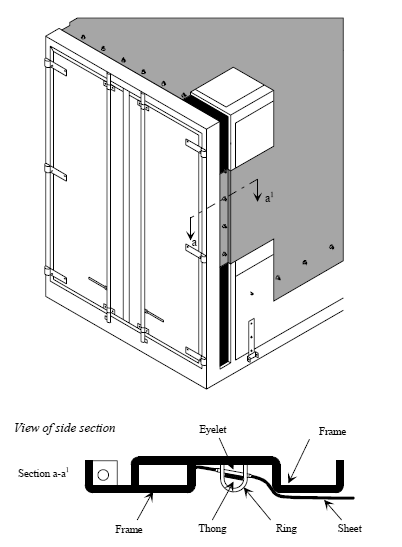
The fastening device of the sheet to the vehicle is acceptable provided that the rings are recessed in the profile and do not protrude more than the maximum depth of the profile. The width of the profile shall be as narrow as possible.
Sketch No. 7. Example of sheets fixed
to special-shaped frame
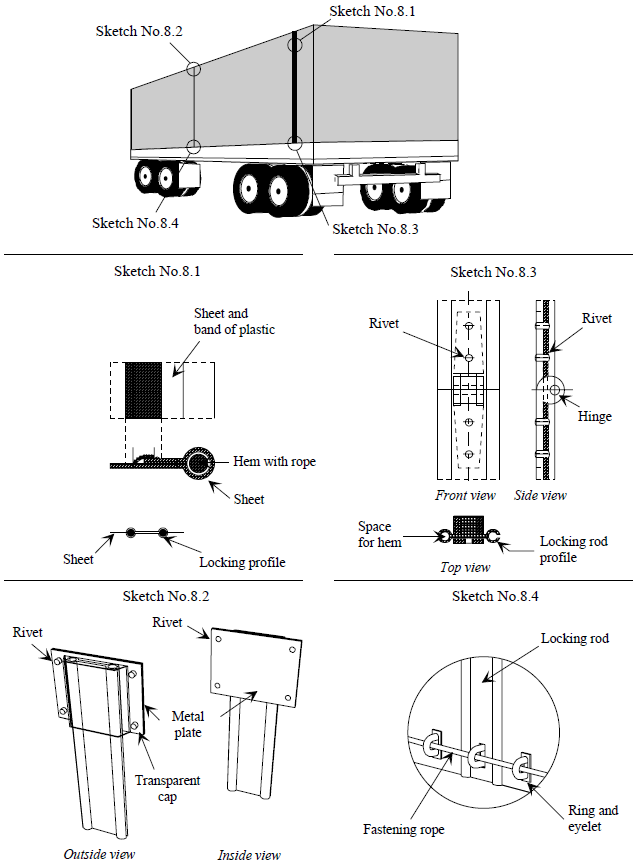
In this locking system the two edges at the openings in the sheet used for loading and unloading are united by means of an aluminium locking rod. The sheet openings are provided with a hem over its entire length enclosing a rope (see sketch No. 8.1). This makes it impossible to pull the sheet out of the locking rod's profile. The hem shall be on the outside and be welded in accordance with Annex 2, Article 3, paragraph 4 of the Convention.
The edges are to be passed into the open profiles on the aluminium locking rod and slid into two parallel longitudinal channels which should be closed at their lower end. When the locking rod is in its upper position the edges of the sheet are united.
At the upper end of the opening the locking rod is stopped by a transparent plastic cap fixed by riveting to the sheet (see sketch No. 8.2). The locking rod consists of two sections, joined by a riveted hinge, to allow folding for easy fitting and removal. This hinge must be designed in such a way so as not to allow the removal of the swivel pin once the system is locked (see sketch No. 8.3).
At the lower part of the locking rod is an opening through which the ring passes. The opening is oval and of a size just sufficient to allow the ring to pass through it (see sketch No. 8.4). The TIR fastening rope will be pulled through this ring to secure the locking rod.
Sketch No. 8. Sheet locking system at openings
for loading and unloading
{Description see next page}
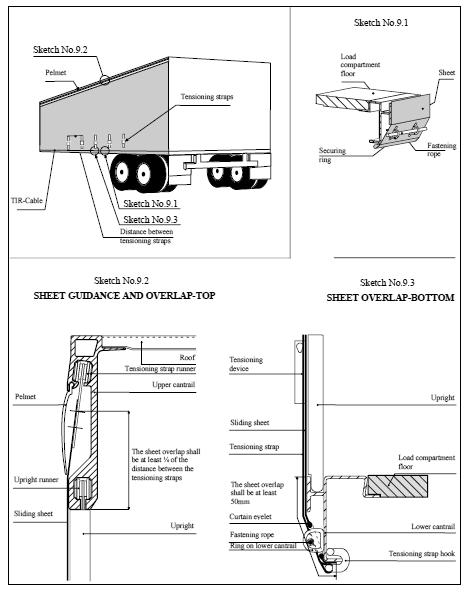
Sketch No. 9. Example of a construction of a vehicle
with sliding sheets
**PROCEDURE**
**FOR THE APPROVAL OF ROAD VEHICLES COMPLYING**
**WITH THE TECHNICAL CONDITIONS SET FORTH IN THE**
**REGULATIONS CONTAINED IN ANNEX 2**
General
Procedure for individual approval
8. The owner, the operator or the representative of either shall apply to the competent authority for individual approval. The competent authority shall inspect the road vehicle produced in accordance with the general rules laid down in paragraphs 1 to 7 above and shall satisfy itself that the vehicle complies with the technical conditions prescribed in Annex 2, and after approval shall issue a certificate conforming to the model in Annex 4.
Procedure for approval by design type
(series of road vehicles)
9. Where road vehicles are manufactured by type series, the manufacturer may apply to the competent authority of the country of manufacture for approval by design-type.
10. The manufacturer shall state in his application the identification numbers or letters which he assigns to the type of road vehicle to which his application for approval relates.
11. The application shall be accompanied by drawings and a detailed design specification of the type of road vehicle to be approved.
12. The manufacturer shall give an undertaking in writing that he will:
(a) produce to the competent authority such vehicles of the type concerned as that authority may wish to examine;
(b) permit the competent authority to examine further units at any time during the production of the type series concerned;
(c) advise the competent authority of any change, however small, in the design or specification before proceeding with such change;
(d) mark the road vehicles in a visible place with the identification numbers of letters of the design-type and the serial number of the vehicle in the type series (manufacturer's number);
(e) keep a record of vehicles manufactured to the approved design-type.
13. The competent authority shall state what changes, if any, must be made to the proposed design-type in order that approval may be granted.
14. No approval by design-type shall be granted unless the competent authority has satisfied itself by examination of one or more vehicles manufactured to the design-type concerned that vehicles of that type comply with the technical condition prescribed in Annex 2.
15. The competent authority shall notify the manufacturer in writing of its decision to grant approval by design-type. This decision shall be dated and numbered. The authority which took the decision shall be clearly designated.
16. The competent authority shall take the necessary steps to issue an Approval Certificate, which it has duly signed, in respect of every vehicle built in conformity with an approved design-type.
17. The holder of the Approval Certificate shall, before using the vehicle for the carriage of goods under the cover of a TIR Carnet, fill in, as may be required, on the Approval Certificate:
- the registration number given to the vehicle (item No. 1); or
- in the case of a vehicle not subject to registration, particulars of his name and business address (item No. 8).
Explanatory Note to paragraph 17
##### 3.0.17 Approval procedure
1. Annex 3 provides that the competent authorities of a Contracting Party may issue a Certificate of Approval in respect of a vehicle constructed within its territory and that no additional approval procedures shall be applied in respect of such a vehicle in the country where it is registered or, as the case may be, where the owner is resident.
2. These provisions are not intended to restrict the right of the competent authorities of the Contracting Party where the vehicle is registered or where the owner is resident to require the production of such a Certificate of Approval either at importation or subsequently for purposes connected with the registration or control of the vehicle or with similar legal requirements.
18. When a vehicle which has been approved by design-type is exported to another country which is a Contracting Party to this Convention, no further approval procedure shall be required in that country on account of its importation.
Procedure for endorsement of the Certificate of Approval
19. When an approved vehicle, carrying goods under cover of a TIR Carnet, is found to have major defects, the competent authorities of Contracting Parties may either refuse to allow the vehicle to continue its journey under a TIR Carnet, or allow the vehicle to continue its journey under a TIR Carnet on its territory while taking the necessary security precautions. The approved vehicle must be restored to a satisfactory state as rapidly as possible, and in any case before it is again used for the transport of goods under cover of a TIR Carnet.
20. In each of these cases the Customs authorities shall make an appropriate endorsement in item No. 10 of the Certificate of Approval of the vehicle. When the vehicle has been restored to a condition which justifies approval, it shall be presented to the competent authorities of a Contracting Party who shall revalidate the Certificate by adding an endorsement to item No. 11 cancelling the earlier observations. No vehicle, the Certificate of which has been endorsed at item No. 10 under the provisions of the preceding paragraph, may again be used for the transport of goods under a TIR Carnet until it has been restored to a satisfactory condition and until the endorsement in item No. 10 has been cancelled as stated above.
Explanatory Note to paragraph 20
##### 3.0.20 Procedure for endorsement of the Certificate of Approval
When an endorsement concerning defects is to be cancelled after the vehicle has been restored to a satisfactory state, it is sufficient to state, under item No. 11 provided for the purpose, "Defects rectified" followed by the name, signature and stamp of the competent authority concerned.
Any defects noted in the sheets or their system of securing may be entered in box No. 10 of the Approval Certificate.
{TRANS/GE.30/33, paragraphs 46 - 49}
21. Each endorsement made on the Certificate shall be dated and authenticated by the competent authorities.
22. When a vehicle is found to have defects which the Customs authorities consider to be of minor importance and not involving the risk of smuggling, the continued use of the vehicle for the transport of goods under cover of a TIR Carnet can be authorized. The holder of the Approval Certificate shall be notified of the defects and shall restore his vehicle to a satisfactory state within a reasonable time.
**MODEL CERTIFICATE OF APPROVAL OF A ROAD VEHICLE**
Comments
Approval Certificate
The Certificate of Approval should be of format A3, folded in two. See sample hereafter.
{TRANS/GE.30/10, paragraph 33; TRANS/WP.30/157, paragraphs 27 - 29; TRANS/WP.30/AC.2/35, Annex 6}
Photographs or diagrams to be attached
Whenever photographs or diagrams need to be attached to the Approval Certificate in accordance with Annex 4 to the Convention, they have to reflect accurately and in an updated manner the actual vehicle.
{TRANS/WP.30/157, paragraph 31}
Approval of demountable bodies
As stipulated in Article 1 (j) of the Convention, demountable bodies are to be treated as containers. Therefore Certificates of Approval as provided for in Annex 4 to the Convention are not required for demountable bodies as defined in Annex 6, Explanatory Note 0.1 (j). Approval plates in line with the provisions of Annex 7, Part II of the Convention are however required.
{TRANS/WP.30/157, paragraph 59}
Place and number of Customs seals
In cases where more than one Customs seal are required for Customs secure sealing, the number of such seals shall be indicated in the Certificate of Approval under point 5 (Annex 4 to the TIR Convention, 1975). A sketch or photographs of the road vehicle shall be attached to the Certificate of Approval showing the exact location of the Customs seals. This provision, which comes into force on 7 August 2003, shall be applicable for road vehicles to be approved for the first time or on the occasion of the biennial inspection and renewal of the approval after entry into force of Explanatory Note 2.2.1 (b)(f) where appropriate. As a consequence, as of 7 August 2005, all road vehicles, requiring more than one seal for Customs secure sealing, shall need to be equipped with a Certificate of Approval in line with Explanatory Note 2.2.1 (b)(f).
{TRANS/WP.30/206, paragraph 62; TRANS/WP.30/AC.2/69, Annex 2; TRANS/WP.30/AC.2/69/Corr.1}
Transition period for the introduction of the new model certificate
The new format of the model certificate of approval of a road vehicle, which came into force on 1 August 1995 (TRANS/WP.30/AC.2/35, Annex 4) shall be required for road vehicles to be approved for the first time or on the occasion of the biennial inspection and renewal of the approval where appropriate of other road vehicles. As a consequence, as of 1 August 1997, all road vehicles would need to be equipped with the new format of the model certificate.
{TRANS/WP.30/R.164, paragraphs 46 - 48; TRANS/WP.30/R.158; TRANS/WP.30/AC.2/37, paragraph 42 and Annex 6}
Model Certificate of Approval of a Road Vehicle <*>
```text
┌─────────────────────────────────────────────────────────────────────────┐
│ │
│ APPROVAL CERTIFICATE │
│ │
│ of a road vehicle for the transport of goods │
│ under Customs seal │
│ │
│ │
│Certificate No ......................................................... │
│ │
│ │
│ TIR Convention of 14 November 1975 │
│ │
│ │
│ Issued by: ............................................................ │
│ (Competent Authority) │
│ │
│ │
│ [page 1] │
└─────────────────────────────────────────────────────────────────────────┘
--------------------------------
<*> {ECE/TRANS/17/Amend.18; entered into force on 1 August 1995}
Model Certificate of Approval of a Road Vehicle (cont'd)
┌─────────────────────────────────────────────────────────────────────────┐
│┌─────────────────────────────────────────────────┬─────────────────────┐│
││ │Certificate No ││
││ └─────────────────────┤│
││ IDENTIFICATION ││
││ 1. Registration No ............................................... ││
││ 2. Type of vehicle ............................................... ││
││ 3. Chassis No .................................................... ││
││ 4. Trade mark (or name of manufacturer) .......................... ││
││ 5. Other particulars ............................................. ││
││ 6. Number of annexes ............................................. ││
│├─────────────────────────────────────────────────┬─────────────────────┤│
││ 7. APPROVAL │Valid until ││
││ ┌─┐ └─────────────────────┤│
││ │ │ individual approval <*> ┌──────────────┤│
││ └─┘ │Stamp ││
││ ┌─┐ │ ││
││ │ │ approval by design type <*> │ ││
││ └─┘ │ ││
││ Authorization No (if applicable) .................... │ ││
││ Place ............................................... │ ││
││ Date ................................................ │ ││
││ Signature ........................................... │ ││
│├────────────────────────────────────────────────────────┴──────────────┤│
││ 8. HOLDER, (manufacturer, owner or operator) (for unregistered ││
││ vehicles only) ││
││ Name and address .................................................... ││
││ ..................................................................... ││
│├───────────────────────────────────────────────────────────────────────┤│
││ 9. RENEWALS ││
│├───────────────────┬──────────────┬────────────────────────────────────┤│
││ Valid until │ │ ││
│├───────────────────┼──────────────┼────────────────────────────────────┤│
││ Place │ │ ││
│├───────────────────┼──────────────┼────────────────────────────────────┤│
││ Date │ │ ││
│├───────────────────┼──────────────┼────────────────────────────────────┤│
││ Signature │ │ ││
│├───────────────────┼──────────────┼────────────────────────────────────┤│
││ Stamp │ │ ││
│└───────────────────┴──────────────┴────────────────────────────────────┘│
│ <*> mark applicable alternative with an "x". │
│ │
│ Please see the "Important Notice" on page 4. │
│ [page 2] │
└─────────────────────────────────────────────────────────────────────────┘
```
Model Certificate of Approval of a Road Vehicle (cont'd)
| REMARKS (reserved for the use of Competent Authorities) | Certificate No |
| 10. Defects noted | 11. Rectification of defects |
| Authority | Stamp | Authority | Stamp |
| Signature | Signature |
| 10. Defects noted | 11. Rectification of defects |
| Authority | Stamp | Authority | Stamp |
| Signature | Signature |
| 10. Defects noted | 11. Rectification of defects |
| Authority | Stamp | Authority | Stamp |
| Signature | Signature |
| 12. Other remarks |
| Please see "Important Notice" on page 4. [page 3] |
Model Certificate of Approval of a Road Vehicle (cont'd)
```text
┌─────────────────────────────────────────────────────────────────────────┐
│ IMPORTANT NOTICE │
│ │
│1. When the authority which has granted the approval deems it necessary,│
│photographs or diagrams authenticated by the authority shall be attached│
│to the approval certificate. The number of those documents shall then be│
│inserted by the competent authority, under item No. 6 of the certificate.│
│2. The certificate shall be kept on the road vehicle. This must be the│
│original of the certificate, not, however, a photocopy. │
│3. Road vehicles shall be produced every two years, for the purposes of│
│inspection and of renewal of approval where appropriate, to the competent│
│authorities of the country in which the vehicle is registered or, in the│
│case of unregistered vehicles, of the country in which the owner or user│
│is resident. │
│4. If a road vehicle no longer complies with the technical conditions│
│prescribed for its approval, it shall, before it can be used for the│
│transport of goods under cover of TIR Carnets, be restored to the│
│condition which had justified its approval so as to comply again with the│
│said technical conditions. │
│5. If the essential characteristics of a road vehicle are changed, the│
│vehicle shall cease to be covered by the approval and shall be│
│re-approved by the competent authority before it can be used for the│
│transport of goods under cover of TIR Carnets. │
│ │
│ [page 4] │
└─────────────────────────────────────────────────────────────────────────┘
```
1.
The dimensions of the plates shall be 250 mm by 400 mm.
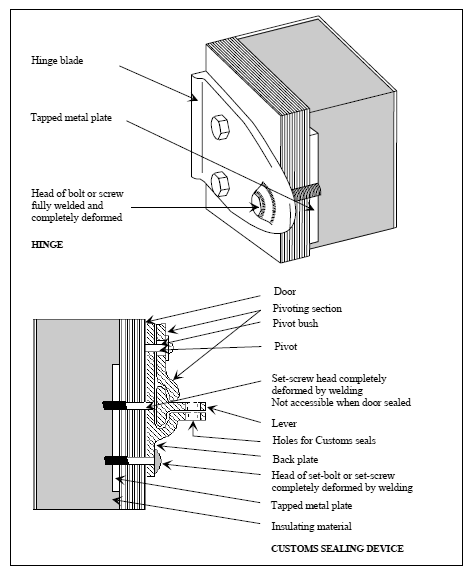
Sketch No. 1. Example of a hinge and customs sealing
device on doors of vehicles having insulated
load compartments
The hinge illustrated below complies with the requirements of Explanatory Note 2.2.1(b), paragraph (b), second sentence. The design of the strap and the hinge-plate make any special protection of the pin unnecessary, since the shoulders of the strap extend behind the edges of the hinge-plate. These shoulders therefore prevent the Customs-sealed door from being opened at the hinged side without leaving obvious traces, even if the unprotected pin has been removed.
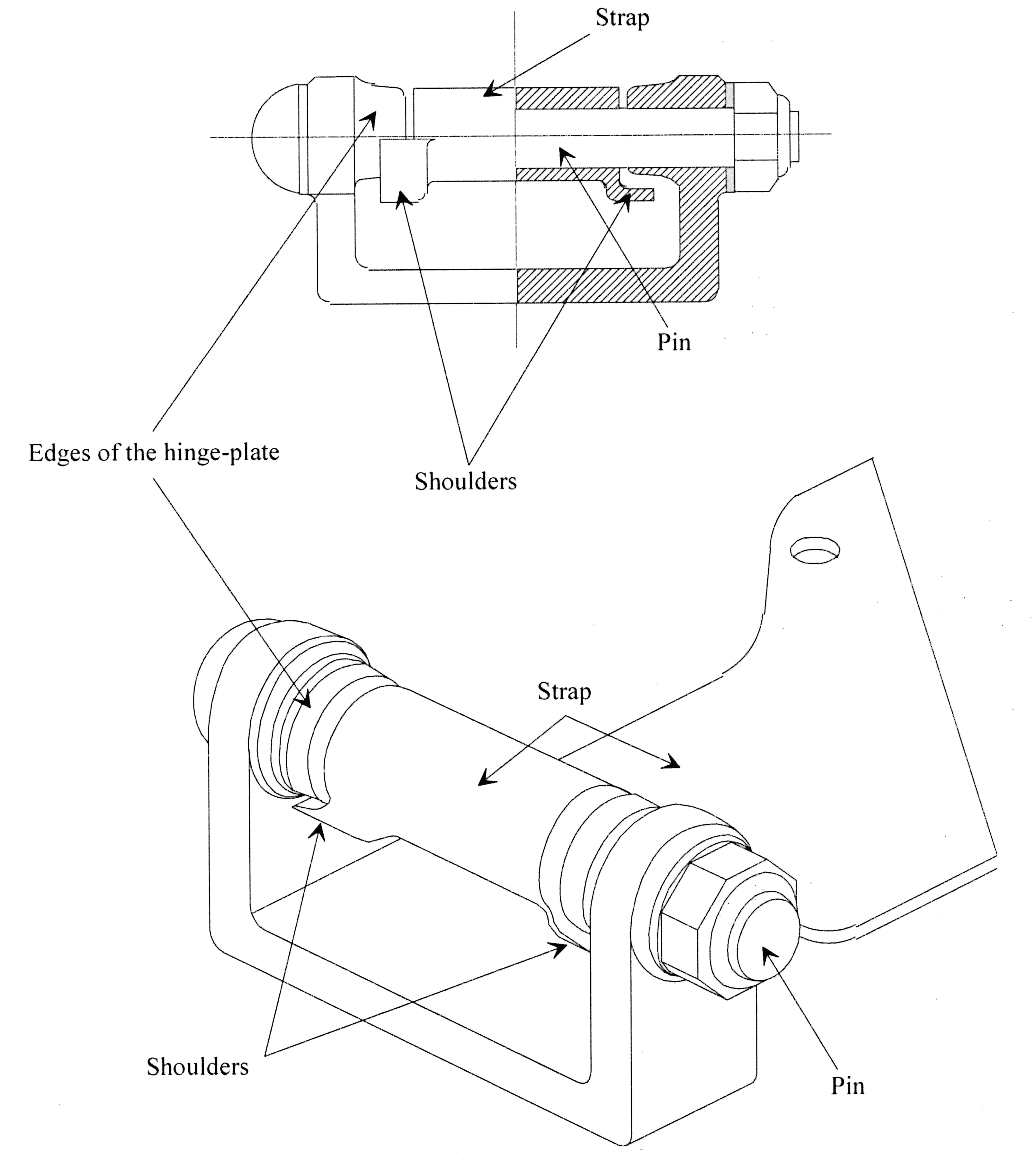
Sketch No. 1a. Example of a hinge not requiring
special protection for the hinge-pin
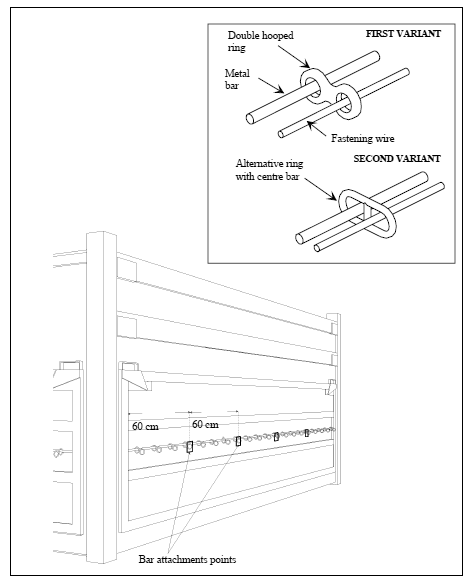
Sketch No. 2. Sheeted vehicle with sliding rings
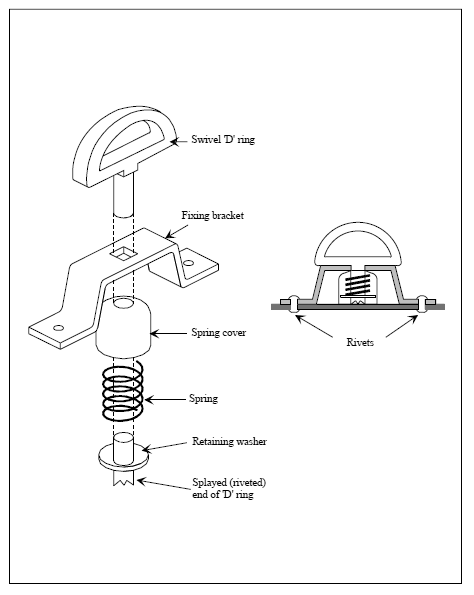
Sketch No. 2a. Example of a swivel ring ("D" ring)
The device illustrated below meets the requirements of the last part of paragraph 11 (a) of Annex 2, Article 3. It also meets the requirements of Annex 2, Article 3, paragraphs (a) and 6 (b).
{ECE/TRANS/17/Amend.17; entered into force on 1 October 1994}
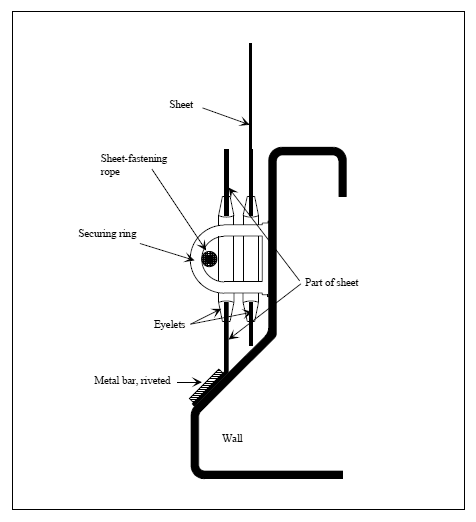
Sketch No. 3. Example of a device for
fastening vehicle sheets
The device illustrated below meets the requirements of Annex 2, Article 3, subparagraphs 6 (a) and 6 (b).
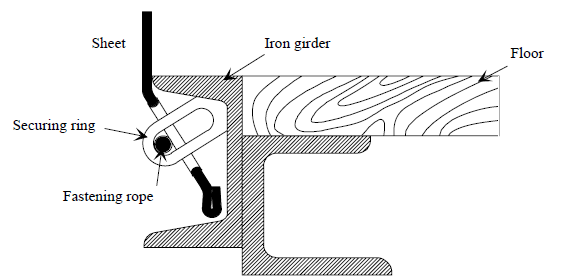
The sketch below is an example of a device for fastening vehicle sheets in accordance with Annex 2, Article 3, paragraphs 6 (a) and 6 (b).
{TRANS/WP.30/147, paragraph 32}
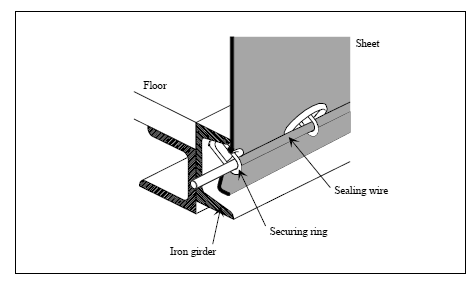
Sketch No. 4. Device for fastening sheets
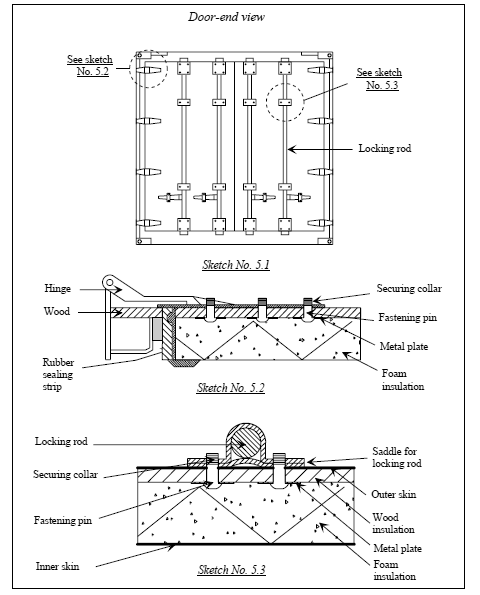
Sketch No. 5. Example of a fastening device
inserted from the inside of insulated door construction
**REGARDING APPROVAL OF CONTAINERS**
Part I
**REGULATIONS ON TECHNICAL CONDITIONS APPLICABLE**
**TO CONTAINERS WHICH MAY BE ACCEPTED FOR INTERNATIONAL**
**TRANSPORT UNDER CUSTOMS SEAL**
Explanatory Notes
The Explanatory Notes to Annex 2 set out in Annex 6 of this Convention apply mutatis mutandis to containers approved for transport under Customs seal for the application of this Convention.
Article 1
Basic principles
Approval for the international transport of goods under Customs seal may be granted only to containers constructed and equipped in such a manner that:
(a) no goods can be removed from, or introduced into, the sealed part of the container without leaving visible traces of tampering or without breaking the Customs seal;
(b) Customs seals can be simply and effectively affixed to them;
(c) they contain no concealed spaces where goods may be hidden;
(d) all spaces capable of holding goods are readily accessible for Customs inspection.
Comment to Article 1
Markings on containers
Paintings, transfers and other similar markings which cannot be torn off the walls or sheets of containers are permissible if they do not cover up the structure of the wall or sheet which should still be clearly visible. Stickers and other similar markings which could hide openings in the containers should, however, not be allowed.
{TRANS/GE.30/57, paragraph 45; TRANS/WP.30/141, paragraph 35; TRANS/WP.30/AC.2/31, Annex 3}
Article 2
Structure of containers
1. To meet the requirements of Article 1 of these Regulations:
(a) the constituent parts of the container (sides, floor, doors, roof, uprights, frames, cross-pieces, etc.) shall be assembled either by means of devices which cannot be removed and replaced from the outside without leaving visible traces or by such methods as will produce a structure which cannot be modified without leaving visible traces. When the sides, floor, doors and roof are made up of various components, these shall meet the same requirements and be of sufficient strength;
(b) doors and all other closing systems (including stopcocks, manhole-covers, flanges, etc.) shall be fitted with a device on which Customs seals can be fixed. This device must be such that it cannot be removed and replaced from outside the container without leaving visible traces, or the door or fastening be opened without breaking the Customs seals. The latter shall be adequately protected. Opening roofs shall be permitted;
Comment to Article 2, paragraph 1 (b)
Protection of Customs seals on containers
As the Convention does not make any specific requirement as to the means for protection of the seal, there is a choice either to protect the seal by covering it with a special device, or to construct the door in such a way that there can be no danger that the seal may be damaged by impact.
{TRANS/GE.30/17, paragraph 93}
(c) apertures for ventilation and drainage shall be provided with a device preventing access to the interior of the container. This device must be such that it cannot be removed and replaced from outside the container without leaving visible traces.
Comment to Article 2, paragraph 1 (c)
Ventilation apertures in containers
Although ventilation apertures should not in principle exceed 400 mm, any competent administration may, provided that all other requirements are complied with, give its approval to an opening greater than 400 mm, if such an opening is presented to it.
{TRANS/GE.30/14, paragraph 102; TRANS/WP.30/143, paragraphs 36 and 37}
2. Notwithstanding the provisions of Article 1 (c) of these Regulations, constituent parts of the container which, for practical reasons, have to include empty spaces (for example, between the partitions of a double wall) shall be permitted. In order that the said spaces cannot be used to conceal goods:
(i) where it covers the full height from floor to roof, or, in other cases, where the space between it and the outer wall is completely enclosed, the lining inside the container shall be so fitted that it cannot be removed and replaced without leaving obvious traces, and
(ii) where a lining is of less than full height and the spaces between the lining and the outer wall are not completely enclosed, and in all other cases where spaces occur in the construction of a container, the number of such spaces shall be kept to a minimum and these spaces shall be readily accessible for Customs inspection.
{ECE/TRANS/17/Amend.8; entered into force on 1 August 1987}
Comment to Article 2, paragraph 2
Elimination of hollow beam structural members
Structural members of containers with enclosed spaces, such as hollow beams shall be kept to a minimum and shall be eliminated gradually in the design of new containers utilizing open profile beams whenever possible. If, for constructional reasons, enclosed spaces in structural members of containers are used, the provision of holes intended to facilitate Customs inspection of hollow spaces are admissible. The presence of such inspection holes shall be noted under item 9 in Model II or item 7 in Model III in the Certificate of Approval of containers (Annex 7, Part II of the Convention).
{TRANS/WP.30/151, paragraphs 33 - 37; TRANS/WP.30/AC.2/33, Annex 7}
3. Windows shall be allowed in demountable bodies as defined in Annex 6, Explanatory Note 0.1 (j) of the Convention, provided that they are made of materials of sufficient strength and that they cannot be removed and replaced from the outside without leaving obvious traces. Glass may nevertheless be permitted, but if glass other than safety glass is used, the windows shall be fitted with a fixed metal grille which cannot be removed from the outside; the mesh of the grille shall not exceed 10 mm. Windows shall not be allowed in containers as defined in Article 1 (j) of the Convention other than in demountable bodies as defined in Annex 6, Explanatory Note 0.1(j) of the Convention.
{ECE/TRANS/17/Amend.17; entered into force on 1 October 1994}
Article 3
Containers capable of being folded or dismantled
Containers capable of being folded or dismantled shall be subject to the provisions of Articles 1 and 2 of these Regulations; in addition, they shall be fitted with a bolting system which locks the various parts together once the container has been erected. This bolting system must be capable of being sealed by the Customs if it is on the outside of the container when the latter has been erected.
Article 4
Sheeted containers
1. Where applicable, the provisions of Articles 1, 2 and 3 of these Regulations shall apply to sheeted containers. In addition, these containers shall conform to the provisions of this Article.
2. The sheet shall be either of strong canvas or of plastic-covered or rubberized cloth, which shall be of sufficient strength and unstretchable. It shall be in good condition and made up in such a way that once the closing device has been secured, it is impossible to gain access to the load without leaving visible traces.
3. If the sheet is made up of several pieces, their edges shall be folded into one another and sewn together with two seams at least 15 mm apart. These seams shall be made as shown in sketch No. 1 appended to these Regulations; however, where in the case of certain parts of the sheet (such as flaps and reinforced corners) it is not possible to assemble the pieces in that way, it shall be sufficient to fold the edge of the top section and make the seams as shown in sketch No. 2 appended to these Regulations. One of the seams shall be visible only from the inside and the colour of the thread used for that seam shall be clearly different from the colour of the sheet itself and from the colour of the thread used for the other seam. All seams shall be machine-sewn.
4. If the sheet is of plastic-covered cloth, and is made up of several pieces, the pieces may alternatively be welded together in the manner shown in sketch No. 3 appended to these Regulations. The edges of the pieces shall overlap by at least 15 mm. The pieces shall be fused together over the whole width of the overlap. The edge of the outer sheet shall be covered with a band of plastic material at least 7 mm wide, affixed by the same welding process. The plastic band and a width of at least 3 mm on each side shall have a well-marked uniform relief stamped on it. The pieces shall be welded in such a way that they cannot be separated and rejoined without leaving visible traces.
Comments to Article 4, paragraph 4
Band of plastic material
The requirement for the band of plastic material is essential for Customs security purposes. Consequently, it should not be permitted to dispense with it.
{TRANS/GE.30/17, paragraph 99; TRANS/WP.30/141, paragraph 35; TRANS/WP.30/AC.2/31, Annex 3}
Overlap of the edges of the pieces of the sheet
While for Customs security purposes, an overlap of the edges of the pieces of the sheet of at least 15 mm is sufficient, an overlap of 20 mm and more is admitted and may be necessary for technical reasons depending on the material of the sheet and its adhesion.
{TRANS/WP.30/162, paragraphs 64 and 65; TRANS/WP.30/AC.2/37, Annex 6}
Methods for welding pieces of the sheet
Methods for welding pieces of sheets which are recognized as Customs secure if applied in accordance with the provisions of Annex 2 to the Convention include the "fusing method", where pieces of sheets are fused using high temperatures and the "high frequency method", where pieces of sheets are welded using high frequency and pressure.
{TRANS/WP.30/162, paragraphs 64 and 65; TRANS/WP.30/AC.2/37, Annex 6}
5. Repairs shall be made in accordance with the method described in sketch No. 4 appended to these Regulations; the edges shall be folded into one another and sewn together with two visible seams at least 15 mm apart; the colour of the thread visible from the inside shall be different from that of the thread visible from the outside and from that of the sheet itself; all seams shall be machine-sewn. When a sheet which has been damaged near the edges is repaired by replacing the damaged part by a patch, the seam can also be made in accordance with the provisions of paragraph 3 of this Article and sketch No. 1 appended to these Regulations. Sheets of plastic-covered cloth may alternatively be repaired in accordance with the method described in paragraph 4 of this Article, but in that case the plastic band must be affixed to both sides of the sheet, the patch being fitted on the inside of the sheet.
{ECE/TRANS/17/Amend.8; entered into force on 1 August 1987}
Comments to Article 4, paragraph 5
Repair of sheets made of plastic covered cloth
The following process is permitted for the repair of such sheets: Vinyl liquefied under pressure and heat is used to secure the piece on the sheet by melting. Obviously in such cases a band of plastic material stamped with a relief pattern will be affixed to the edge of the piece on both sides of the sheet.
{TRANS/GE.30/6, paragraph 40; TRANS/GE.30/GRCC/4, paragraph 33; TRANS/WP.30/141, paragraph 35; TRANS/WP.30/AC.2/31, Annex 3}
Bands of reflective material
Bands of reflective material which can be torn off and which cover up the structure of the sheets of containers are permissible, however, if they are completely welded to the sheets of plastic-covered cloth and are secured in accordance with the requirements of Annex 2, Article 3, paragraph 5 of the Convention (see sketch below).
{TRANS/WP.30/151, paragraph 40}
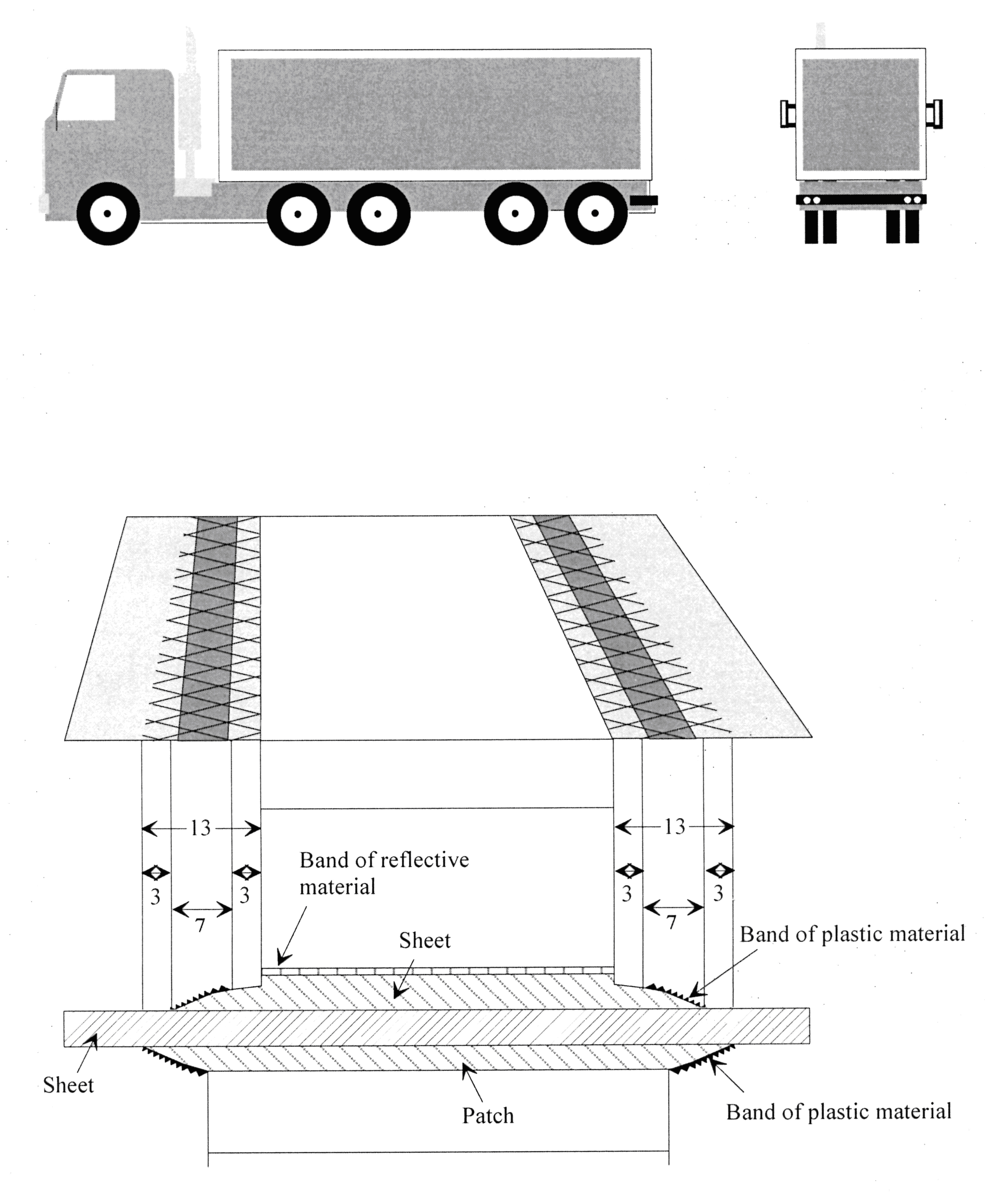
6. The sheet shall be fixed to the container in strict compliance with the conditions set forth in Article 1 (a) and (b) of these Regulations. The following systems can be used:
(a) The sheet can be secured by
(i) metal rings fixed to the containers,
(ii) eyelets let into the edge of the sheet, and
(iii) a fastening passing through the rings above the sheet and visible from the outside for its entire length.
The sheet shall overlap solid parts of the container by at least 250 mm, measured from the centre of the securing rings, unless the system of construction of the container by itself prevents all access to the goods.
Explanatory Note to Article 4, paragraph 6 (a)
Example of a system of affixing sheets around containers' corner-castings, acceptable from Customs point of view, is given in the sketch appended to Annex 7, Part III.
(b) When any edge of a sheet is to be permanently secured to a container, the two surfaces shall be joined together without a break and shall be held in place by strong devices.
(c) When a sheet locking system is used, it shall in locked position join the sheet tightly to the outside of the container (as an example, see sketch No. 6 appended to these Regulations).
{ECE/TRANS/17/Amend.8; entered into force on 1 August 1987}
7. The sheet shall be supported by an adequate superstructure (uprights, sides, arches, slats, etc.).
{ECE/TRANS/17/Amend.8; entered into force on 1 August 1987}
Comment to Article 4, paragraph 7
Supports for sheets
The hoops supporting the sheet are sometimes hollow and might be used as a hiding place. It is, however, always possible to inspect them, as is the case for many other container parts. Under these conditions, hollow hoops are permissible.
{TRANS/GE.30/14, paragraph 90; TRANS/GE.30/12, paragraphs 100 and 101; TRANS/GE.30/6, paragraph 41; TRANS/WP.30/141, paragraph 35; TRANS/WP.30/AC.2/31, Annex 3}
8. The spaces between the rings and the spaces between the eyelets shall not exceed 200 mm. The spaces may however be greater but shall not exceed 300 mm between rings and eyelets on either side of the upright if the construction of the container and the sheet is such as to prevent all access to the interior of the container. The eyelets shall be reinforced.
{ECE/TRANS/17/Amend.8; entered into force on 1 August 1987}
9. The following fastenings shall be used:
(a) steel wire ropes of at least 3 mm diameter; or
(b) ropes of hemp or sisal of at least 8 mm diameter encased in a transparent sheath of unstretchable plastic; or
(c) ropes consisting of batches of fibre-optic lines inside a spirally wound steel housing encased in a transparent sheath of unstretchable plastic; or
(d) ropes comprising a textile cord surrounded by at least four strands consisting solely of steel wire and completely covering the core, under the condition that the ropes (without taking into account the transparent sheath, if any) are not less than 3 mm in diameter.
Ropes in accordance with paragraph 9 (a) or (d) of this Article may have a transparent sheath of unstretchable plastic.
In cases where the sheet has to be fixed to the frame in a system of construction which otherwise complies with the provisions of paragraph 6 (a) of this Article, a thong can be used as fastening (an example of such a system of construction is given in sketch No. 7 appended to this Annex). The thong has to comply with the requirements stipulated in paragraph 11 (a) (iii) with regard to material, dimensions and shape.
{ECE/TRANS/17/Amend.11; entered into force on 1 August 1989; ECE/TRANS/17/Amend.17; entered into force on 1 October 1994; ECE/TRANS/17/Amend.25; entered into force on 1 October 2005}
Comment to Article 4, paragraph 9
Fastening rope
In the latter system of construction instead of a thong a rope could be used, which could consist of two pieces.
{TRANS/WP.30/125, paragraph 33; ECE/TRANS/WP.30/232, paragraph 34 and Annex; ECE/TRANS/WP.30/AC.2/91, paragraph 24}
10. Each type of rope shall be in one piece and shall have a hard metal end-piece at each end. Each metal end-piece shall allow the introduction of the thread or strap of the Customs seal. The fastener of each metal end-piece of ropes in accordance with the provisions of paragraph 9 (a), (b) and (d) of this Article shall include a hollow rivet passing through the rope so as to allow the introduction of the thread or strap of the Customs seal. The rope shall remain visible on either side of the hollow rivet so that it is possible to ensure that the rope is in one piece (see sketch No. 5 appended to these Regulations).
{ECE/TRANS/17/Amend.25; entered into force on 1 October 2005}
11. At the openings in the sheet, used for loading and unloading, the two surfaces shall be joined together. The following systems can be used:
(a) The two edges of the sheet shall have an adequate overlap. They shall also be fastened by:
(i) a flap sewn or welded in accordance with paragraphs 3 and 4 of this Article,
(ii) rings and eyelets meeting the conditions of paragraph 8 of this Article, the rings shall be manufactured of metal, and
(iii) a thong made of appropriate material, in one piece and unstretchable, at least 20 mm wide and 3 mm thick, passing through the rings and holding together the two edges of the sheet and the flap; the thong shall be secured inside the sheet and fitted either with:
an eyelet to take the rope mentioned in paragraph 9 of this Article; or
an eyelet which can be attached to a metal ring mentioned in paragraph 6 of this Article and be secured by the rope mentioned in paragraph 9 of this Article.
A flap shall not be required if a special device, such as a baffle plate, is fitted, which prevents access to the container without leaving obvious traces. Neither shall a flap be required for containers with sliding sheets.
{ECE/TRANS/17/Amend.14; entered into force on 1 August 1992; ECE/TRANS/17/Amend.20; entered into force on 12 June 2001}
(b) A special locking system holding the edges of the sheet tightly locked when the container is closed and sealed. The system shall be provided with an opening through which a metal ring mentioned in paragraph 6 of this Article can pass and be secured by the rope mentioned in paragraph 9 of this Article. Such a system is described in sketch No. 8 appended to this Annex.
{ECE/TRANS/17/Amend.14; entered into force on 1 August 1992}
12. The identification marks, which must appear on the container, and the approval plate provided for in Part II of this Annex, shall in no circumstances be covered by the sheet.
Article 5
Containers with sliding sheets
1. Where applicable, the provisions of Articles 1, 2, 3 and 4 of these Regulations shall apply to containers with sliding sheets. In addition, these containers shall conform to the provisions of this Article.
2. The sliding sheets, floor, doors and all other constituent parts of the container shall fulfil either the requirements in Article 4, paragraphs 6, 8, 9 and 11 of these Regulations or the requirements set out in (i) to (vi) below.
(i) The sliding sheets, floor, doors and all other constituent parts of the container shall be assembled in such a way that they cannot be opened or closed without leaving obvious traces.
(ii) The sheet shall overlap the solid parts at the top of the container by at least 1/4 of the actual distance between the tensioning straps. The sheet shall overlap the solid parts at the bottom of the container by at least 50 mm. The horizontal opening between the sheet and the solid parts of the container may not exceed 10 mm measured perpendicular to the longitudinal axis of the container at any place when the container is secured and sealed for Customs purposes.
(iii) The sliding sheet guidance and other movable parts shall be assembled in such a way that closed and Customs sealed doors and other movable parts cannot be opened or closed from the outside without leaving obvious traces. The sliding sheet guidance and other movable parts shall be assembled in such a way that it is impossible to gain access to the container without leaving obvious traces. The system is described in sketch No. 9 appended to these Regulations.
(iv) The horizontal distance between the rings, used for Customs purposes, on the solid parts of the container shall not exceed 200 mm. The space may, however, be greater but shall not exceed 300 mm between the rings on either side of the upright if the construction of the container and the sheets is such as preventing all access to the container. In any case, the conditions laid down in (ii) above shall be complied with.
(v) The distance between the tensioning straps shall not exceed 600 mm.
(vi) The fastenings used to secure the sheets to the solid parts of the container shall fulfil the requirements in Article 4, paragraph 9 of these Regulations.
{ECE/TRANS/17/Amend.20; entered into force on 12 June 2001}
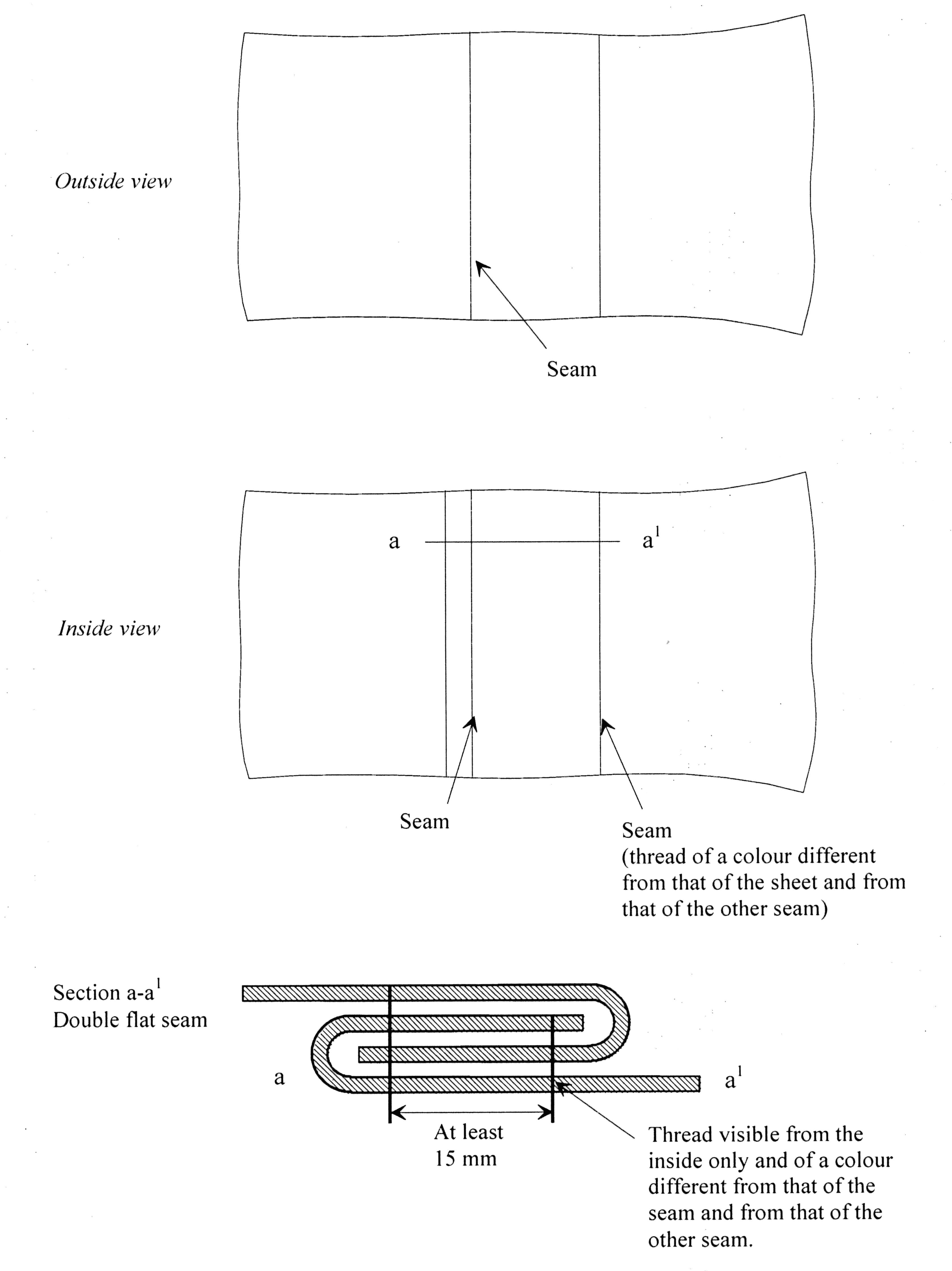
Sketch No. 1. Sheets made of several pieces
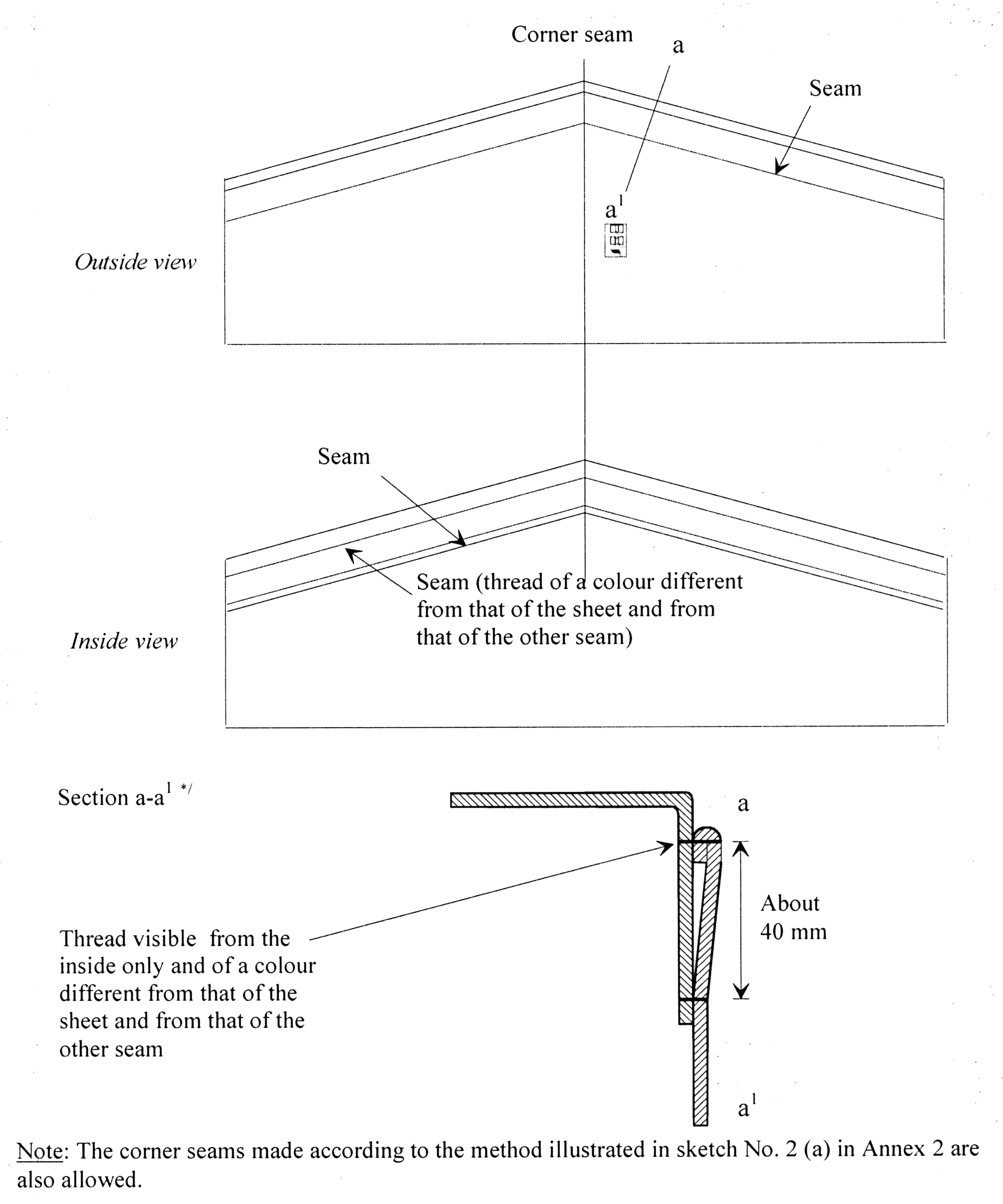
---
<*> This sketch shows the top folded section of the sheet according to Annex 2, Article 3, paragraph 3.
Comment
Sketch No. 2(a) to Annex 2 "SHEETS MADE OF SEVERAL PIECES SEWN TOGETHER" is reproduced here in Annex 7 as an example of an approved method of sewing corner seams according to the above Note.
{TRANS/WP.30/147, paragraph 32}
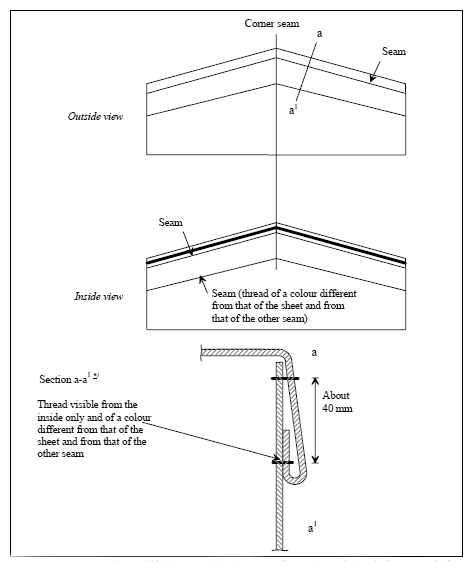
---
<*> This sketch shows the top folded section of the sheet according to Annex 2, Article 3, paragraph 3.
Sketch No. 2. Sheets made of several pieces
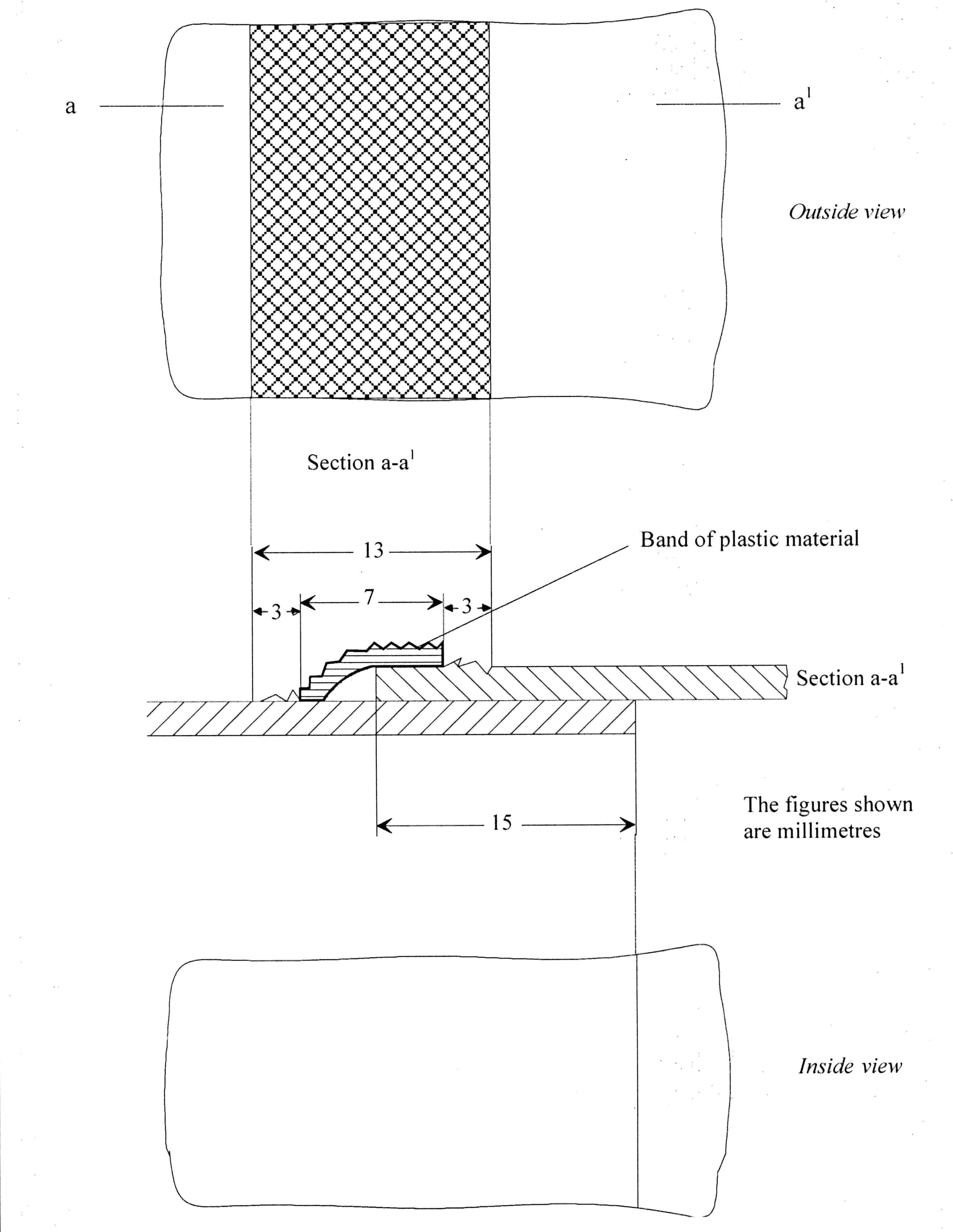
Sketch No. 3. Sheets made of several pieces
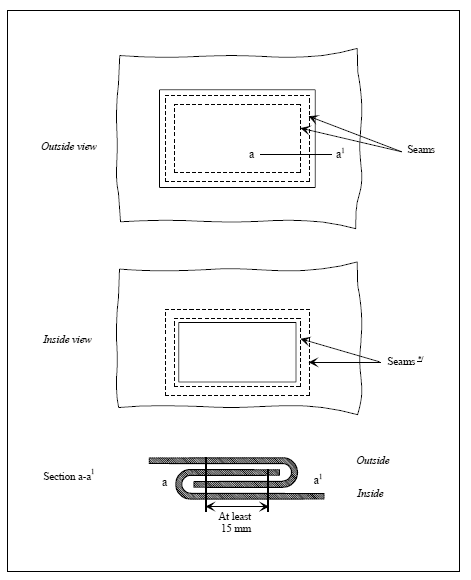
---
<*> Threads visible from the inside shall have a colour different from that of the threads visible from the outside and from that of the sheet.
Sketch No. 4. Repair of the sheet
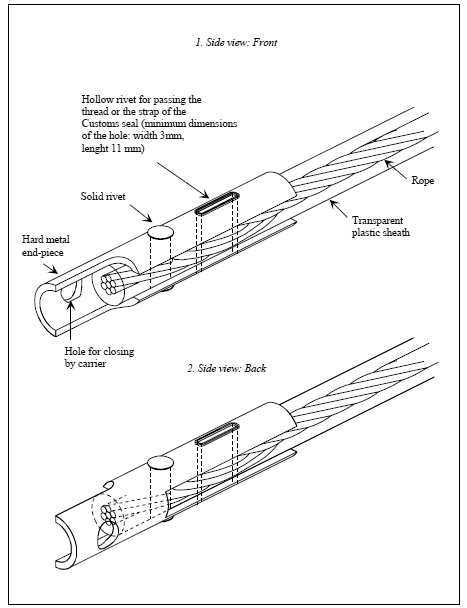
Sketch No. 5. Specimen of end-piece
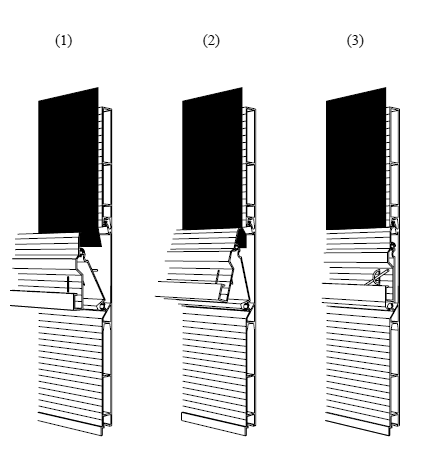
Description
This sheet locking system is acceptable provided that it is fitted with at least one metal ring at each gate end. The openings through which the ring passes are oval and of a size just sufficient to allow the ring to pass through it. The visible part of the metal ring does not protrude more than twice the maximum thickness of the fastening rope when the system is locked.
Sketch No. 6. Example of sheet locking system
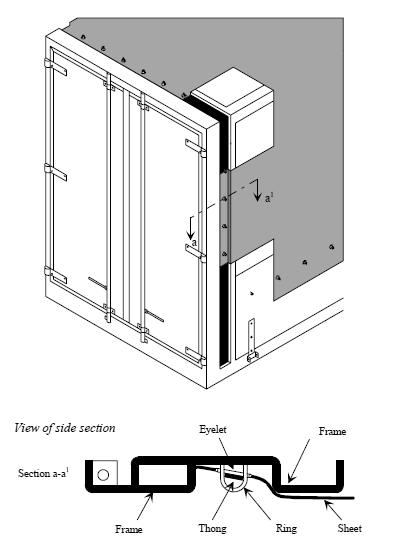
Description
The fastening device of the sheet to the vehicle is acceptable provided that the rings are recessed in the profile and do not protrude more than the maximum depth of the profile. The width of the profile shall be as narrow as possible.
Sketch No. 7. Example of sheets fixed
to special-shaped frames
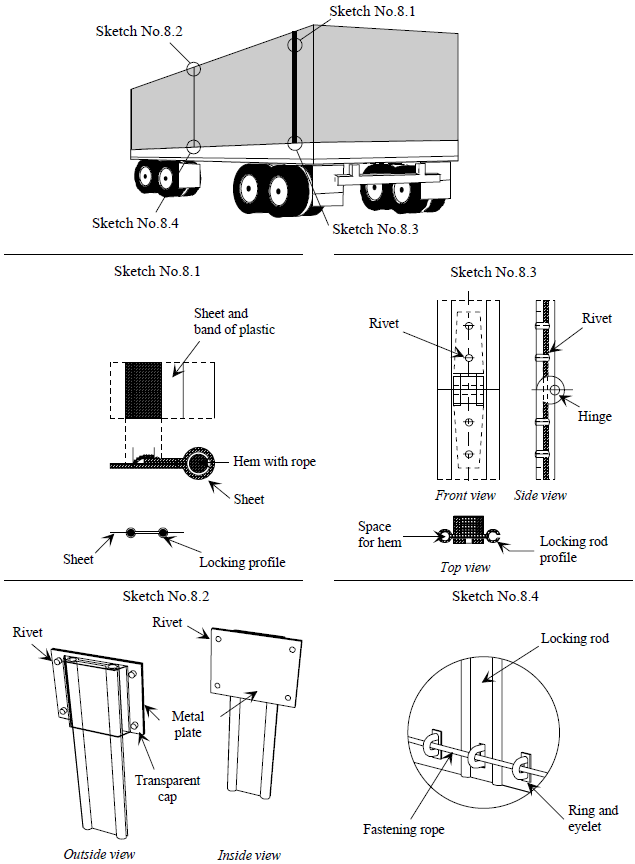
Description
In this locking system the two edges at the openings in the sheet used for loading and unloading are united by means of an aluminium locking rod. The sheet openings are provided with a hem over its entire length enclosing a rope (see sketch No. 8.1). This makes it impossible to pull the sheet out of the locking rod's profile. The hem shall be on the outside and be welded in accordance with Annex 2, Article 3, paragraph 4 of the Convention.
The edges are to be passed into the open profiles on the aluminium locking rod and slid into two parallel longitudinal channels which should be closed at their lower end. When the locking rod is in its upper position the edges of the sheet are united.
At the upper end of the opening the locking rod is stopped by a transparent plastic cap fixed by riveting to the sheet (see sketch No. 8.2). The locking rod consists of two sections, joined by a riveted hinge, to allow folding for easy fitting and removal. This hinge must be designed in such a way so as not to allow the removal of the swivel pin once the system is locked (see sketch No. 8.3).
At the lower part of the locking rod is an opening through which the ring passes. The opening is oval and of a size just sufficient to allow the ring to pass through it (see sketch No. 8.4). The TIR fastening rope will be pulled through this ring to secure the locking rod.
Sketch No. 8. Sheet locking system at openings for loading
and unloading
{Description see next page}
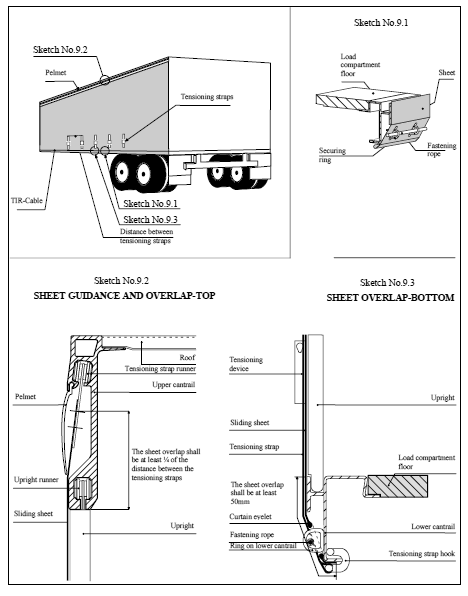
Sketch No. 9. Example of a construction of a container
with sliding sheets
Part II
**PROCEDURES FOR THE APPROVAL OF CONTAINERS COMPLYING**
**WITH THE TECHNICAL CONDITIONS PRESCRIBED IN PART I**
General
1. Containers may be approved for the transport of goods under Customs seal either:
(a) at the manufacturing stage, by design type (procedure for approval at the manufacturing stage); or
(b) at a stage subsequent to manufacture, either individually or in respect of a specified number of containers of the same type (procedure for approval at a stage subsequent to manufacture).
Provisions common to both approval procedures
2. The competent authority responsible for granting approval shall issue to the applicant, after approval, a Certificate of Approval valid, as the case may be, either for an unlimited series of containers of the approved type or for a specified number of containers.
3. The beneficiary of approval shall affix an approval plate to the approved container or containers before their use for the transport of goods under Customs seal.
4. The approval plate shall be affixed permanently and in a clearly visible place adjacent to any other approval plate issued for official purposes.
Fixing of approval plates
The use of strong glue to affix approval plates to containers made of plastic satisfies the requirements of the Convention provided that the approval plates are affixed in such a way as to preclude their easy removal and as long as the requirements of Annex 7, part II of the Convention are complied with.
{TRANS/GE.30/10, paragraphs 35 and 36}
Grouped data plate
The use of a base plate affixed permanently and in a clearly visible place to the approved container on which the required approval plates can be grouped together and are mounted in such a way as to preclude their easy removal, is admissible as long as the requirements of Annex 7, Part II of the Convention are complied with.
The use of decals next to and in addition to approval plates on containers allowing for an easy identification of approval plates by transport operators is admissible, but shall, under no circumstance, be taken to substitute for the approval plates as described.
{TRANS/WP.30/133, paragraphs 18 - 24; TRANS/WP.30/135, paragraphs 15 - 19; TRANS/WP.30/AC.2/27, Annex 3}
5. The approval plate, conforming to model No. I reproduced in Appendix 1 to this Part, shall take the form of a metal plate measuring not less than 20 cm by 10 cm. The following particulars shall be stamped into or embossed on the plate or indicated on its surface in any other permanent and legible way, in at least the English or the French language:
(a) the words "Approved for transport under Customs seal";
(b) an indication of the country in which approval was granted either by name or by means of the distinguishing sign used to indicate the country of registration of motor vehicles in international road traffic, and the number (figures, letters, etc.) of the Certificate of Approval and the year (e.g. "NL/26/73" means "Netherlands, Certificate of Approval No. 26, issued in 1973");
(c) the serial number assigned to the container by the manufacturer (manufacturer's number);
(d) if the container has been approved by type, the identification numbers of letters of the type of container.
Explanatory Note to paragraph 5 (d)
If two sheeted containers, approved for transport under Customs seals have been joined together in such a way that they form one container, covered by a single sheet and fulfilling the conditions for transport under Customs seal, a separate Certificate of Approval, or approval plate, shall not be required for the combination.
6. If a container no longer complies with the technical conditions prescribed for its approval, it shall, before it can be used for the transport of goods under Customs seal, be restored to the condition which had justified its approval, so as to comply again with the said technical conditions.
7. If the essential characteristics of a container are changed, the container shall cease to be covered by the approval and shall be re-approved by the competent authority before it can be used for the transport of goods under Customs seal.
Special provisions for approval by design type
at the manufacturing stage
8. Where the containers are manufactured by type series, the manufacturer may apply to the competent authority of the country of manufacture for approval by design type.
Approval of containers in a country other than the country of manufacture
While the wording of Annex 7, Part II, paragraph 8 does not allow further interpretation, the problems related to the approval of containers in a country other than the country of manufacture could be solved by applying in a practical sense the provisions of Annex 7, Part II, paragraphs 15 - 17 allowing for the approval of containers at a stage subsequent to manufacture.
{TRANS/GE.30/43, paragraph 27}
9. The manufacturer shall state in his application the identification numbers or letters which he assigns to the type of container to which his application for approval relates.
10. The application shall be accompanied by drawings and a detailed design specification of the container type to be approved.
11. The manufacturer shall give an undertaking in writing that he will:
(a) produce to the competent authority such containers of the type concerned as that authority may wish to examine;
(b) permit the competent authority to examine further units at any time during the production of the type series concerned;
(c) advise the competent authorities of any change, of whatever magnitude, in the design or specification before proceeding with such change;
(d) mark the containers in a visible place with, in addition to the markings required on the approval plate, the identification numbers or letters of the design type and the serial number of the container in the type series (manufacturer's number);
(e) keep a record of containers manufactured to the approved design type.
12. The competent authority shall state what changes, if any, must be made to the proposed design type so that approval may be granted.
13. No type-approval by design type shall be granted unless the competent authority has satisfied itself by examination of one or more containers manufactured to the design type concerned that containers of that type comply with the technical conditions prescribed in Part I.
14. When a container type is approved there shall be issued to the applicant a single Certificate of Approval conforming to model No. II reproduced in appendix 2 to this Part and valid for all containers manufactured in conformity with the specifications of the type so approved. Such Certificate shall entitle the manufacturer to affix to every container of the type series an approval plate in the form prescribed in paragraph 5 of this Part.
Special provisions for approval at a stage subsequent
to manufacture
15. If approval has not been applied for at the manufacturing stage, the owner, the operator, or the representative of either, may apply for approval to the competent authority to which he is able to produce the container or containers and for which he seeks approval.
16. An application for approval submitted under paragraph 15 of this Part shall state the serial number (manufacturer's number) placed on each container by the manufacturer.
17. When the competent authority has ascertained that the container or containers comply with the technical conditions prescribed in Part I, by examination of as many containers as it considers necessary, it shall issue a Certificate of Approval conforming to model No. III reproduced in Appendix 3 to this Part and valid solely for the number of containers approved. Such Certificate, which shall bear the manufacturer's serial number or numbers assigned to the container or containers to which it relates, shall entitle the applicant to affix to each container so approved the approval plate prescribed in paragraph 5 of this Part.
Model No. I
Approval plate
(English version)
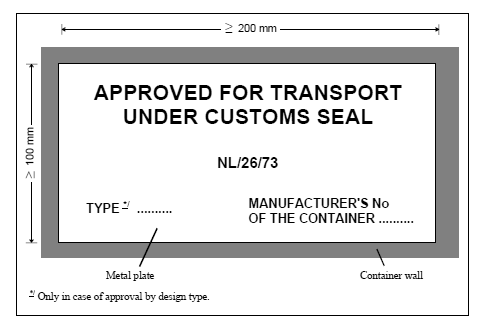
Appendix 1
Approval plate
(French version)
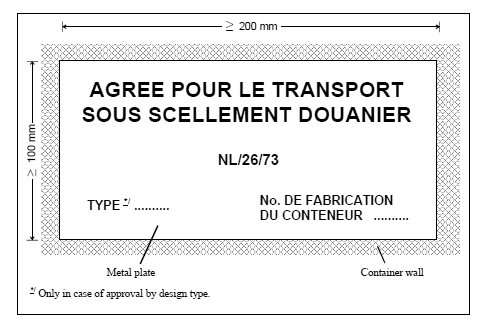
Appendix 2
```text
┌─────────────────────────────────────────────────────────────────────────┐
│ Customs Convention on the International Transport of Goods │
│ under cover of TIR Carnets (1975) │
│ │
│ Certificate of approval by design type │
│ │
│1. Certificate No. <*> ................................................ │
│2. This is to certify that the container design type described below │
│ has been approved and that containers manufactured to this type can │
│ be accepted for the transport of goods under Customs seal. │
│3. Kind of container .................................................. │
│4. Identification number of letters of the design type ................ │
│5. Identification number of the working drawings ...................... │
│6. Identification number of the design specifications ................. │
│7. Tare weight ........................................................ │
│8. External dimensions in cm .......................................... │
│9. Essential characteristics of structure (nature of material, kind of │
│ construction, etc.) ................................................ │
│10. This certificate is valid for all containers manufactured in │
│ conformity with the drawings and specifications referred to above. │
│11. Issued to .......................................................... │
│ (manufacturer's name and address) │
│ who is authorized to affix an approval plate to each container of │
│ the approved design type manufactured by him, │
│ at ............................. on .................... 20...... │
│ (place) (date) │
│ by ................................................................. │
│ (signature and stamp of issuing service or organization) │
│ │
│-------------------------------- │
│<*> Insert the letters and figures, which are to be marked on the │
│approval plate (see Annex 7, Part II, paragraph 5 (b) to the Customs │
│Convention on the International Transport of Goods Under Cover of TIR │
│Carnets, 1975) │
└─────────────────────────────────────────────────────────────────────────┘
{Important notice overleaf}
IMPORTANT NOTICE
(Annex 7, Part II, paragraphs 6 and 7 to the Customs
Convention on the International Transport of Goods under
Cover of TIR Carnets, 1975)
┌─────────────────────────────────────────────────────────────────────────┐
│6. If a container no longer complies with the technical conditions│
│prescribed for its approval, it shall, before it can be used for the│
│transport of goods under Customs seal, be restored to the condition which│
│had justified its approval, so as to comply again with the said technical│
│conditions. │
│7. If the essential characteristics of a container are changed the│
│container shall cease to be covered by the approval and shall be│
│re-approved by the competent authority before it can be used for the│
│transport of goods under Customs seal. │
└─────────────────────────────────────────────────────────────────────────┘
Appendix 3
Model No. III
┌─────────────────────────────────────────────────────────────────────────┐
│ Customs Convention on the International Transport of Goods │
│ Under Cover of TIR Carnets (1975) │
│ │
│ Certificate of Approval │
│ granted at a stage subsequent to manufacture │
│ │
│1. Certificate No. <*> ................................................. │
│2. This is to certify that the container (containers) specified below has│
│ (have) been approved for the transport of goods under Customs seal. │
│3. Kind of container(s) ................................................ │
│4. Serial number(s) assigned to the container(s) by the manufacturer │
│ ..................................................................... │
│5. Tare weight ......................................................... │
│6. External dimensions in cm ........................................... │
│7. Essential characteristics of structure (nature of material, kind of │
│ construction, etc.) ................................................. │
│8. Issued to ........................................................... │
│ (applicants name and address) │
│ who is authorized to affix an approval plate to each container of the │
│ approved design type manufactured by him, │
│ at ............................. on ..................... 20...... │
│ (place) (date) │
│ by .................................................................. │
│ (signature and stamp of issuing service or organization) │
│ │
│-------------------------------- │
│<*> Insert the letters and figures, which are to be marked on the │
│approval plate (see Annex 7, Part II, paragraph 5 (b) to the Customs │
│Convention on the International Transport of Goods Under Cover of TIR │
│Carnets, 1975) │
└─────────────────────────────────────────────────────────────────────────┘
{Important notice overleaf}
IMPORTANT NOTICE
(Annex 7, Part II, paragraphs 6 and 7, to the Customs
Convention on the International Transport of Goods under
Cover of TIR Carnets, 1975)
┌─────────────────────────────────────────────────────────────────────────┐
│6. If a container no longer complies with the technical conditions│
│prescribed for its approval, it shall, before it can be used for the│
│transport of goods under Customs seal, be restored to the condition which│
│had justified its approval, so as to comply again with the said technical│
│conditions. │
│7. If the essential characteristics of a container are changed the│
│container shall cease to be covered by the approval and shall be│
│re-approved by the competent authority before it can be used for the│
│transport of goods under Customs seal. │
└─────────────────────────────────────────────────────────────────────────┘
```
Part III
**EXPLANATORY NOTES**
Explanatory Notes
The Explanatory Notes to Annex 2 set out in Annex 6 to this Convention apply mutatis mutandis to containers approved for transport under Customs seal for the application of this Convention.
Note:
{Explanatory Notes appearing in Part III have been placed with the provisions to which they are related. Sketches related to the Explanatory Notes are included in Part III}
Device for affixing sheets around
containers' corner castings
The device illustrated below meets the requirements of Part I, Article 4, paragraph 6, subparagraph (a)
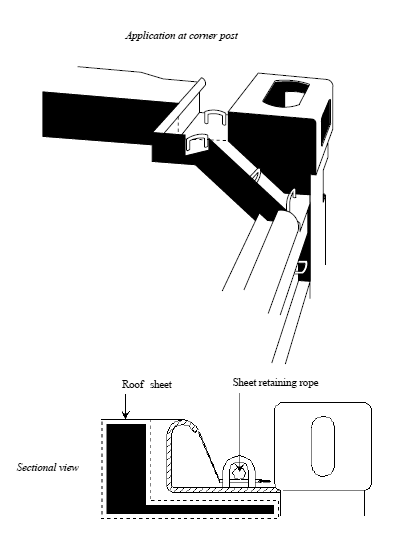
**COMPOSITION, FUNCTIONS AND RULES**
**OF PROCEDURE OF THE ADMINISTRATIVE COMMITTEE**
**AND THE TIR EXECUTIVE BOARD <*>**
---
<*> {ECE/TRANS/17/Amend.19; entered into force on 17 February 1999}
(i) The Contracting Parties shall be members of the Administrative Committee.
(ii) The Committee may decide that the competent administrations of States referred to in Article 52, paragraph 1 of this Convention which are not Contracting Parties or representatives of international organizations may, for questions which interest them, attend the sessions of the Committee as observers.
---
<*> {ECE/TRANS/17/Amend.19; entered into force on 17 February 1999}
1. The Committee shall consider any proposed amendment to the Convention in accordance with Article 59, paragraphs 1 and 2.
2. The Committee shall monitor the application of the Convention and shall examine any measure taken by Contracting Parties, associations and international organizations under the Convention and their conformity therewith.
3. The Committee, through the TIR Executive Board, shall supervise and provide support in the application of the Convention at the national and international levels.
The Secretary-General of the United Nations shall provide the Committee with secretariat services.
The Committee shall, at its first session each year, elect a chairman and a vice-chairman.
The Secretary-General of the United Nations shall convene under the auspices of the Economic Commission for Europe the Committee annually and also at the request of the competent administrations of at least five States which are Contracting Parties.
Proposals shall be put to the vote. Each State which is a Contracting Party represented at the session shall have one vote. Proposals other than amendments to this Convention shall be adopted by the Committee by a majority of those present and voting. Amendments to this Convention and the decisions referred to in Articles 59 and 60 of this Convention shall be adopted by a two-thirds majority of those present and voting.
A quorum consisting of not less than one third of the States which are Contracting Parties is required for the purposes of taking decisions.
{ECE/TRANS/17/Amend.16; entered into force on 24 June 1994}
Before the closure of its session, the Committee shall adopt its report.
In the absence of relevant provisions in this Annex, the Rules of Procedure of the Economic Commission for Europe shall be applicable unless the Committee decides otherwise.
**COMPOSITION, FUNCTIONS AND RULES OF PROCEDURE**
**OF THE TIR EXECUTIVE BOARD <*>**
---
<*> {ECE/TRANS/17/Amend.19; entered into force on 17 February 1999}
Article 9 <*>
---
<*> {ECE/TRANS/17/Amend.19; entered into force on 17 February 1999}
1. The TIR Executive Board established by the Administrative Committee in accordance with Article 58 ter, shall be composed of nine members, each from different Contracting Parties to the Convention. The TIR Secretary will attend the sessions of the Board.
2. The members of the TIR Executive Board shall be elected by the Administrative Committee by a majority of those present and voting. The term of office of each member of the TIR Executive Board shall be two years. The members of the TIR Executive Board may be re-elected. The Terms of Reference for the TIR Executive Board shall be established by the Administrative Committee.
---
<*> {ECE/TRANS/17/Amend.19; entered into force on 17 February 1999}
The TIR Executive Board shall:
(a) supervise the application of the Convention, including the operation of the guarantee system, and fulfil the functions entrusted to it by the Administrative Committee;
(b) supervise the centralized printing and distribution to the associations of TIR Carnets which may be performed by an agreed international organization as referred to in Article 6;
Explanatory Note to Article 10 (b)
8.10 (b) The agreement mentioned in the Explanatory Note to Article 6.2 bis shall also apply to the responsibilities of the international organization set out in (b) of this article, in case the centralized printing and distribution of TIR Carnets is performed by the above-mentioned international organization.
{ECE/TRANS/17/Amend.27; entered into force on 12 August 2006}
(c) coordinate and foster the exchange of intelligence and other information among competent authorities of Contracting Parties;
(d) coordinate and foster the exchange of information between competent authorities of Contracting Parties, associations and international organizations;
(e) facilitate the settlement of disputes between Contracting Parties, associations, insurance companies and international organizations without prejudice to Article 57 on the settlement of disputes;
(f) support the training of personnel of Customs authorities and other interested parties concerned with the TIR procedure;
(g) maintain a central record for the dissemination to Contracting Parties of information to be provided by the international organizations as referred to in Article 6, on all rules and procedures prescribed for the issue of TIR Carnets by associations, as far as they relate to the minimum conditions and requirements laid down in Annex 9;
(h) monitor the price of TIR Carnets.
---
<*> {ECE/TRANS/17/Amend.19; entered into force on 17 February 1999}
1. A session of the Board shall be convened by the TIR Secretary at the request of the Administrative Committee or by at least three members of the Board.
2. The Board shall strive to take decisions by consensus. If no consensus can be reached, decisions shall be put to vote and shall be taken by a majority of those present and voting. A quorum of five members is required for the purposes of taking decisions. The TIR Secretary shall have no vote.
3. The Board shall elect a Chairman and shall adopt any additional rules of procedure.
4. The Board shall report on its activities, including the submission of audited accounts, to the Administrative Committee at least once a year or at the request of the Administrative Committee. The Board will be represented in the Administrative Committee by its Chairman.
5. The Board shall consider any information and queries transmitted to it by the Administrative Committee, Contracting Parties, the TIR Secretary, national associations and international organizations referred to in Article 6 of the Convention. These international organizations shall have the right to attend the sessions of the TIR Executive Board as observers unless its Chairman decides otherwise. If necessary, any other organization may attend the sessions of the Board as observer at the invitation of the Chairman.
---
<*> {ECE/TRANS/17/Amend.19; entered into force on 17 February 1999}
The TIR Secretary shall be a member of the secretariat of the United Nations Economic Commission for Europe and shall execute the decisions of the TIR Executive Board within the Terms of Reference of the Board. The TIR Secretary will be assisted by a TIR secretariat, the size of which shall be determined by the Administrative Committee.
---
<*> {ECE/TRANS/17/Amend.19; entered into force on 17 February 1999}
1. The operation of the TIR Executive Board and the TIR secretariat shall be financed, until such time as alternative sources of funding are obtained, through an amount per TIR Carnet distributed by the international organization as referred to in Article 6. This amount shall be approved by the Administrative Committee.
{ECE/TRANS/17/Amend.28, entered into force on 1 January 2009}
Explanatory Notes to Article 13, paragraph 1 <*>
---
<*> {ECE/TRANS/17/Amend.19; entered into force on 17 February 1999}
8.13.1-1 Financial arrangements
Following an initial period of two years, the Contracting Parties to the Convention envisage the operation of the TIR Executive Board and the TIR secretariat to be financed through the Regular Budget of the United Nations. This does not preclude a prolongation of the initial financing arrangement should financing from the United Nations or alternative sources not be forthcoming.
8.13.1-2 Operation of the TIR Executive Board
The work of the members of the TIR Executive Board will be financed by their respective Governments.
8.13.1-3 Amount
The amount referred to in paragraph 1 shall be based on (a) the budget and cost plan of the TIR Executive Board and TIR secretariat as approved by the Administrative Committee and (b) the forecast of the number of TIR Carnets to be distributed as established by the international organization
{ECE/TRANS/17/Amend.28, entered into force on 1 January 2009}
2. The procedure to implement the financing of the operation of the TIR Executive Board and the TIR secretariat shall be approved by the Administrative Committee <*>.
---
<*> For details of the procedure, please refer to ECE/TRANS/WP.30/AC.2/89, paragraph 38 and Annex II
{ECE/TRANS/17/Amend.28, entered into force on 1 January 2009}
Explanatory Note to Article 13, paragraph 2
8.13.2 Following consultations with the international organization as referred to in Article 6, the procedure referred to in paragraph 2 shall be reflected in the agreement between UNECE, as mandated by and acting on behalf of the Contracting Parties, and the international organization as referred to in Article 6. The agreement shall be approved by the Administrative Committee.
{ECE/TRANS/17/Amend.28, entered into force on 1 January 2009}
---
<*> {ECE/TRANS/17/Amend.19; entered into force on 17 February 1999; ECE/TRANS/17/Amend.29; entered into force on 1 January 2012}
**ACCESS TO THE TIR PROCEDURE**
Part I
**AUTHORIZATION FOR ASSOCIATIONS TO ISSUE TIR CARNETS**
**AND TO ACT AS A GUARANTOR**
Conditions and requirements
1. The conditions and requirements to be complied with by associations in order to be authorized by Contracting Parties to issue TIR Carnets and act as guarantor in accordance with Article 6 of the Convention are:
(a) Proven existence for at least one year as an association established in the Contracting Party where the authorization is issued.
9.I.1 (a) Explanatory note has been deleted.
{ECE/TRANS/17/Amend.29; entered into force on 1 January 2012}
(b) Proof of sound financial standing and organizational capabilities enabling the association to fulfil its obligations under the Convention.
(c) Absence of serious or repeated offences against Customs or tax legislation.
(d) Establishment of a written agreement or any other legal instrument between the association and the competent authorities of the Contracting Party in which it is established, including the acceptance by the association of its duties as set out in paragraph 3.
2. A certified copy of the written agreement or any other legal instrument referred to under paragraph 1(d) together, if necessary, with a certified translation into English, French or Russian, shall be deposited with the TIR Executive Board. Any changes shall be immediately brought to the attention of the TIR Executive Board.
(3) The duties of the association are to:
(i) comply with the obligations laid down in Article 8 of the Convention;
(ii) accept the maximum sum per TIR Carnet determined by the Contracting Party which may be claimed from the association in accordance with Article 8, paragraph 3 of the Convention;
(iii) verify continuously and, in particular, before requesting authorization for access of persons to the TIR procedure, the fulfilment of the minimum conditions and requirements by such persons as laid down in Part II of this annex;
(iv) provide its guarantee for all liabilities incurred in the country in which it is established in connection with operations under cover of TIR Carnets issued by itself and by foreign associations affiliated to the same international organization as that to which it is itself affiliated;
(v) cover its liabilities to the satisfaction of the competent authorities of the Contracting Parties in which it is established with an insurance company, pool of insurers or financial institution. The insurance or financial guarantee contract(s) shall cover the totality of its liabilities in connection with operations under cover of TIR Carnets issued by itself and by foreign associations affiliated to the same international organization as that to which it is itself affiliated.
The time to give notice for the termination of the insurance or financial guarantee contract(s) shall be not less than the time to give notice for the termination of the written agreement or any other legal instrument as referred to in paragraph 1(d). A certified copy of the insurance or financial guarantee contract(s) as well as all subsequent modifications thereto shall be deposited with the TIR Executive Board, including a certified translation, if necessary, into English, French or Russian;
Comment to paragraph 1(f)(v) has been deleted.
{ECE/TRANS/W.30/2010/3/Rev.1
ECE/TRANS/WP.30/AC.2/2010/4/Rev.1 and
ECE/TRANS/WP.30/AC.2/105 paragraph 32}
(vi) provide the TIR Executive Board, annually, as per 1 March, with the price of each type of TIR Carnets it issues;
(vii) allow the competent authorities to verify all records and accounts kept relating to the administration of the TIR procedure;
(viii) accept a procedure for settling efficiently disputes arising from the improper or fraudulent use of TIR Carnets, whenever possible without recourse to courts;
(ix) comply strictly with the decisions of the competent authorities of the Contracting Party in which it is established concerning the revocation or withdrawal of the authorization in line with Article 6 of the Convention and Part II of this Annex or the exclusion of persons in line with Article 38 of the Convention;
(x) agree to implement faithfully all decisions adopted by the Administrative Committee and the TIR Executive Board in as much as the competent authorities of the Contracting Party in which the association is established have accepted them.
4. When a guaranteeing association is asked, in accordance with the procedure set out in Article 11, to pay the sums referred to in Article 8, paragraphs 1 and 2, it shall, in accordance with the written agreement referred to in Explanatory Note 0.6.2 bis-1 to Article 6, paragraph 2 bis, inform the international organization of the reception of the claim.
5. The Contracting Party in which the association is established shall revoke the authorization to issue TIR Carnets and to act as guarantor in case of non-compliance with these conditions and requirements. Should a Contracting Party decide to revoke the authorization, the decision shall become effective at the earliest three (3) months after the date of revocation.
6. The authorization of an association under the terms set out above shall be without prejudice to that association's responsibilities and liabilities under the Convention.
7. The conditions and requirements laid down above are without prejudice to additional conditions and requirements Contracting Parties may wish to prescribe.
Part II
**AUTHORIZATION FOR NATURAL AND LEGAL PERSONS**
**TO UTILIZE TIR CARNETS**
Minimum conditions and requirements
1. The minimum conditions and requirements to be complied with by persons wishing to have access to the TIR procedure are:
(a) Proven experience or, at least, capability to engage in regular international transport (holder of a licence for carrying out international transport, etc.).
(b) Sound financial standing.
(c) Proven knowledge in the application of the TIR Convention.
(d) Absence of serious or repeated offences against Customs or tax legislation.
(e) An undertaking in a written declaration of commitment to the association that the person:
(i) will comply with all Customs formalities required under the Convention at the Customs offices of departure, en route and of destination;
(ii) will pay the sums due, mentioned in Article 8, paragraphs 1 and 2 of the Convention, if requested to do so by the competent authorities in line with Article 11, paragraph 2 of the Convention;
{ECE/TRANS/17/Amend.30; entered into force on 13 September 2012}
(iii) will, as far as national legislation permits, allow associations to verify information on the above minimum conditions and requirements.
2. Additional and more restrictive conditions and requirements for access to the TIR procedure may be introduced by the competent authorities of Contracting Parties and by the associations themselves unless the competent authorities decide otherwise.
3. Contracting Parties will decide, in line with national legislation, the procedures to be followed for access to the TIR procedure on the basis of the minimum conditions and requirements set forth in paragraphs 1 and 2.
Explanatory Note to paragraph 3
9.II.3 Authorization Committee
It is recommended to establish national authorization committees comprising representatives of the competent authorities, national associations and other organizations concerned.
{ECE/TRANS/17/Amend.19; entered into force on 17 February 1999}
4. The competent authorities shall transmit within one week from the date of authorization or withdrawal of authorization to use TIR Carnets, the particulars of each person to the TIR Executive Board in conformity with the specimen authorization attached (MAF).
5. The association shall transmit annually an updated list as per 31 December of all authorized persons as well as of persons whose authorization has been withdrawn. This list shall be transmitted one week following the 31 December to the competent authorities. The competent authorities shall forward a copy thereof to the TIR Executive Board.
6. The authorization for access to the TIR procedure does not constitute in itself a right to obtain TIR Carnets from the associations.
7. Authorization of a person to utilize TIR Carnets under the minimum conditions and requirements set out above, shall be without prejudice to that person's responsibilities and liabilities under the Convention.
Comments to Part II, Procedure
Cooperation between competent authorities
With regard to the authorization of a person to utilize TIR Carnets in line with Annex 9, Part II of the Convention, the competent authorities of the Contracting Party where the person concerned is resident or established should take into due account any information notified by another Contracting Party in accordance with Article 38, paragraph 2 on serious or repeated offences against Customs legislation committed by that person. Thus, in order to allow for efficient consideration of the case by the Contracting Party where the person concerned is resident or established, such notification should contain as many details as possible.
{TRANS/WP.30/196, paragraph 76; TRANS/WP.30/200, paragraph 68; TRANS/WP.30/AC.2/67, paragraph 63 and Annex 3}
Exclusion of a domestic transport operator from the TIR procedure
In order to exclude from the TIR regime a national transport operator guilty of a serious offence against the Customs laws committed in the territory of the country where he is resident or established, the Customs authorities are recommended to use the provisions of Article 6, paragraph 4 and Annex 9, Part II, paragraph 1 (d) rather than the provisions of Article 38, paragraph 1.
{TRANS/WP.30/196, paragraph 77; TRANS/WP.30/200, paragraph 68; TRANS/WP.30/AC.2/67, paragraph 63 and Annex 3}
**MODEL AUTHORIZATION FORM (MAF)**
Country: ......................
Name of association: ....................
Competent authority: ....................
| To be completed by national associations and/or competent authorities |
ID-
number | Name of
person(s)/
enterprise | Business
address | Contact point and access number
(Tel, fax and e-mail number) | Business
registration or licence number,
etc. <*> | Earlier withdrawal of authorization
<**> | Date of
authorization
<**> | Date of
withdrawal of authorization
<**> | Stamp/
signature |
| ... | | | | | | | | |
| ... | | | | | | | | |
| ... | | | | | | | | |
---
<*> if available.
<**> if appropriate.
For each person for which a request for authorization is transmitted by the approved association, the following information shall, at least, be provided to the competent authorities:
- Individual and unique identification (ID) number assigned to the person by the guaranteeing association (in cooperation with the international organization to which it is affiliated) in accordance with a harmonized format. The format of an ID-number shall be determined by the Administrative Committee.
{ECE/TRANS/17/Amend.26; entered into force on 1 April 2006}
- Name(s) and address(es) of the person(s) or enterprise (in case of a business association, also the names of responsible managers).
- Contact point (natural person authorized to provide information on the TIR operation to Customs authorities and associations) with complete telephone, fax and e-mail numbers).
- Commercial registration No. or international transport licence No. or other (if available).
- (if applicable) Earlier withdrawal of authorization, including dates, length and nature of withdrawal of authorization.
Comment to Model Authorization Form (MAF)
Format of an individual and unique identification (ID) number
The Administrative Committee has established the following format of an ID number for TIR Carnet holders being persons who have been authorized to utilize TIR Carnets in accordance with Annex 9, Part II of the TIR Convention:
**"AAA/BBB/XX...X",**
whereby "AAA" represents a 3-letter code of the country where the person utilizing TIR Carnets has been authorized, in line with the classification system of the International Organization for Standardization (ISO). A full list of country codes of the Contracting Parties to the TIR Convention is regularly published as an annex to the agendas and official reports of the Administrative Committee,
whereby "BBB" represents a 3-digit code of the national association through which the holder of the TIR Carnet has been authorized, in accordance with the classification system established by the relevant international organization to which the association is affiliated, allowing for unequivocal identification of each national association. A full list of country codes of the national associations is regularly published as an annex to the agendas and official reports of the Administrative Committee,
whereby "XX...X" represents consecutive numbers (maximum 10 digits), identifying the person authorized to utilize TIR Carnets in accordance with Annex 9, Part II of the TIR Convention. Once an ID-number has been assigned, it cannot be used again, even if the person to whom it has been given has ceased to be a TIR Carnet holder.
{TRANS/WP.30/218, paragraph 36 and Annex 2; TRANS/WP.30/AC.2/77, paragraph 51 and Annex 3}
Part III
**AUTHORIZATION OF AN INTERNATIONAL ORGANIZATION,**
**AS REFERRED TO IN ARTICLE 6, TO TAKE ON THE RESPONSIBILITY**
**FOR THE EFFECTIVE ORGANIZATION AND FUNCTIONING**
**OF AN INTERNATIONAL GUARANTEE SYSTEM AND**
**TO PRINT AND DISTRIBUTE TIR CARNETS**
Conditions and requirements
1. The conditions and requirements to be complied with by an international organization in order to be authorized, in accordance with Article 6.2 bis of the Convention, by the Administrative Committee to take on the responsibility for the effective organization and functioning of an international guarantee system and to print and distribute TIR Carnets are:
(a) Proof of sound professional competence and financial standing for the effective organization and functioning of an international guarantee system and the organizational capabilities to fulfil its obligations under the Convention by means of annual submissions of consolidated financial statements duly audited by internationally recognized independent auditors;
(b) Absence of serious or repeated offences against Customs or tax legislation.
2. Pursuant to the authorization, the international organization shall:
(a) provide the Contracting Parties of the TIR Convention via the national associations affiliated to the international organization with certified copies of the global guarantee contract and proof of guarantee coverage;
(b) provide the competent bodies of the TIR Convention with information on the rules and procedures set out for the issue of TIR Carnets by national associations;
(c) provide the competent bodies of the TIR Convention, on a yearly basis, with data on claims lodged, pending, paid or settled without payment;
(d) provide the competent bodies of the TIR Convention with full and complete information on the functioning of the TIR system, in particular, but not limited to, timely and well founded information on trends in the number of non-terminated TIR operations, claims lodged, pending, paid or settled without payment that might give rise to concerns with regard to the proper functioning of the TIR system or that could lead to difficulties for the continued operation of its international guarantee system;
(e) provide the competent bodies of the TIR Convention with statistical data on the number of TIR Carnets distributed to each Contracting Party, broken down by type;
(f) provide the TIR Executive Board with details of the distribution price by the international organization of each type of TIR Carnet;
(g) take all possible steps to reduce the risk of counterfeiting TIR Carnets;
(h) take the appropriate corrective action in cases where faults or deficiencies with the TIR Carnet have been detected and report these to the TIR Executive Board;
(j) fully participate in cases where the TIR Executive Board is called upon to facilitate the settlement of disputes;
(k) ensure that any problem involving fraudulent activities or other difficulties with regard to the application of the TIR Convention is immediately brought to the attention of the TIR Executive Board;
(l) manage the control system for TIR Carnets, provided for in Annex 10 of the Convention, together with national guaranteeing associations affiliated to the international organization and the Customs authorities and inform the Contracting Parties and the competent bodies of the Convention of problems encountered in the system;
(m) provide the competent bodies of the TIR Convention with statistics and data on the performance of Contracting Parties with regard to the control system provided for in Annex 10;
(n) conclude, not less than two months before the provisional date of entry into force or renewal of the authorization granted in accordance with Article 6.2bis of the Convention, a written agreement with the United Nations Economic Commission for Europe secretariat, mandated by and acting on behalf of the Administrative Committee, which shall include the acceptance by the international organization of its duties set out in this paragraph.
3. When the international organization is informed by a guaranteeing association of a claim for payment, it shall, within a period of three (3) months inform the guaranteeing association of its position concerning the claim.
4. All information acquired, directly or indirectly, by the international organization under the Convention, which is by nature confidential or which is provided on a confidential basis, shall be covered by the obligation of professional secrecy and shall not be used or processed neither for any commercial purpose nor for any other purpose than for which it has been provided or disclosed to any third party without the express permission of the person or authority that provided it. Such information may, however, be disclosed without permission to competent authorities of Contracting Parties to this Convention, where there is an authorization or obligation to do so pursuant to provisions of national or international law or in connection with legal proceedings. The disclosure or communication of information shall take place in full compliance with dataprotection provisions in force.
5. The Administrative Committee shall have the right to revoke the authorization granted in accordance with Article 6.2 bis in case of non-compliance with the above conditions and requirements. Should the Administrative Committee decide to revoke the authorization, the decision will become effective at the earliest six (6) months after the date of revocation.
6. The authorization of an international organization under the terms set out above shall be without prejudice to that organization's responsibilities and liabilities under the Convention.
{ECE/TRANS/17/Amend.31; entered into force on 10 October 2013}
---
<*> {ECE/TRANS/17/Amend.27; entered into force on 12 August 2006}
**INFORMATION**
**TO BE PROVIDED BY CONTRACTING PARTIES TO AUTHORIZED**
**ASSOCIATIONS (UNDER ARTICLE 42 TER) AND AN INTERNATIONAL**
**ORGANIZATION (UNDER ARTICLE 6.2 BIS)**
By virtue of Article 6, paragraph 1 and Annex 9, Part I, paragraph 3 (iii) of this Convention, authorized associations are required to give an undertaking that they shall verify continuously that persons authorized to have access to the TIR procedure fulfil the minimum conditions and requirements as laid down in Annex 9, Part II of the Convention.
On behalf of its member associations and in fulfilment of its responsibilities as an international organization authorized under Article 6, paragraph 2 bis, an international organization shall establish a control system for TIR Carnets to hold data, transmitted by Customs authorities and accessible by the associations and Customs administrations, about the termination of TIR operations at offices of destination. To enable the associations to fulfil their undertaking effectively, Contracting Parties shall provide information to the control system in accordance with the following procedure:
(1) Customs authorities shall transmit to an international organization or to the national guaranteeing associations, if possible via central or regional offices, by the fastest available means of communication (fax, electronic mail, etc.) and if possible on a daily basis, at least the following information in a standard format in respect of all TIR Carnets presented at Customs offices of destination, as defined in Article 1 (l) of the Convention:
(a) TIR Carnet reference number;
(b) Date and record number in the Customs ledger;
(c) Name or number of Customs office of destination;
(d) Date and reference number indicated in the certificate of termination of the TIR operation (boxes 24 - 28 of voucher No. 2) at the Customs office of destination (if different from (b));
(e) Partial or final termination;
(f) Termination of the TIR operation certified with or without reservation at the Customs office of destination without prejudice to Articles 8 and 11 of the Convention;
(g) Other information or documents (optional);
(h) Page number.
(2) The Model Reconciliation Form (MRF) contained in the Appendix may be addressed to Customs authorities by national associations or by an international organization:
(a) in case of discrepancies between the data transmitted and those on the counterfoils in the used TIR Carnet; or
(b) in case no data have been transmitted whereas the used TIR Carnet has been returned to the national association.
Customs authorities shall reply to the reconciliation requests if possible by returning the duly filled-in MRF as soon as possible.
(3) Customs authorities and national guaranteeing associations shall conclude an agreement, in line with national law, covering the above data exchange.
(4) An international organization shall give Customs authorities access to the database of terminated TIR Carnets and to the database of invalidated TIR Carnets.
|
| To be filled-in by the initiator of the request for reconciliation |
| Destination: |
| Regional Customs office (optional): Customs office of destination: Name: Name: |
| Received on: Received on: |
| Date: Date: Stamp Stamp |
| Data to be confirmed |
| Data source: | | TIR Carnet | Control system data |
|
| TIR Carnet Reference Number | Name or number of Custom office of destination <*> | Reference number indicated in the certificate of termination of the TIR operation (boxes 24 - 28 of voucher No. 2) at the Customs office of destination <*> | Date indicated in the certificate of termination of the TIR operation at the Customs office of destination <*> | Page number | Partial / final termination | Termination of the TIR operation certified with or without reservation at the Customs office of destination | Number of packages (optional) |
| | | | | | | |
|
| Attachments: | | Copy of TIR Carnet counterfoils Other: __________________ |
|
| Response from Customs office of destination |
|
| | Confirmation | | Correction | | No reference found |
| (please insert the on the termination corrections below) of the TIR operation |
| TIR Carnet Reference Number | Name or number of Custom office of destination <*> | Reference number indicated in the certificate of termination of the TIR operation (boxes 24 - 28 of voucher No. 2) at the Customs office of destination <*> | Date indicated in the certificate of termination of the TIR operation at the Customs office of destination <*> | Page number | Partial / final termination | Termination of the TIR operation certified with or without reservation at the Customs office of destination | Number of packages (optional) |
| | | | | | | |
| Comments: |
| Date: Stamp and signature of Customs office of destination: |
| Central Customs office (optional) |
| Comments: |
| Date: Stamp and/or signature |
---
<*> Please note that these data refer to the Customs office of destination where the TIR movement terminated.
**CONTRACTING PARTIES TO THE TIR CONVENTION, 1975**
Contracting Parties Countries with which a TIR transit
operation can be established:
(as of 1 January 2010) <*>
Afghanistan Afghanistan
Albania Albania
Algeria -
Armenia Armenia
Austria Austria
Azerbaijan Azerbaijan
Belarus Belarus
Belgium Belgium
Bosnia and Herzegovina Bosnia and Herzegovina
Bulgaria Bulgaria
Canada -
Chile -
Croatia Croatia
Cyprus Cyprus
Czech Republic Czech Republic
Denmark Denmark
Estonia Estonia
Finland Finland
France France
Georgia Georgia
Germany Germany
Greece Greece
Hungary Hungary
Indonesia -
Iran (Islamic Republic of) Iran (Islamic Republic of)
Ireland Ireland
Israel Israel
Italy Italy
Jordan Jordan
Kazakhstan Kazakhstan
Kuwait Kuwait
Kyrgyzstan Kyrgyzstan
Latvia Latvia
Lebanon Lebanon
Liberia -
Lithuania Lithuania
Luxembourg Luxembourg
Malta Malta
Moldova Moldova
Mongolia Mongolia
Montenegro Montenegro
Morocco Morocco
Netherlands Netherlands
Norway Norway
Poland Poland
Portugal Portugal
Republic of Korea -
Romania Romania
Russian Federation Russian Federation
Serbia Serbia
Slovakia Slovakia
Slovenia Slovenia
Spain Spain
Sweden Sweden
Switzerland Switzerland
Syrian Arab Republic Syrian Arab Republic
Tajikistan Tajikistan
The Former Yugoslav Republic The Former Yugoslav Republic
of Macedonia of Macedonia
Tunisia Tunisia
Turkey Turkey
Turkmenistan Turkmenistan
Ukraine Ukraine
United Arab Emirates -
United Kingdom United Kingdom
United States of America -
Uruguay -
Uzbekistan Uzbekistan
European Union
---
<*> Based on information provided by the IRU.
---